资产盘活

Search documents
科森科技: 关于全资子公司签署《资产收回补偿协议》的公告
Zheng Quan Zhi Xing· 2025-06-20 09:43
Core Viewpoint - The company, Kunshan Kosen Technology Co., Ltd., is undergoing an asset recovery process involving its wholly-owned subsidiary, Kunshan Yuancheng Electronic Materials Co., Ltd., with a total compensation amount of RMB 117.87682 million aimed at revitalizing land resources and promoting industrial transformation [1][2]. Transaction Overview - The transaction involves the recovery of assets including land, buildings, and ancillary facilities located in the Kunshan Economic and Technological Development Zone, with a land area of 39,090 square meters [2][5]. - The compensation amount of RMB 117.87682 million is significantly higher than the book value of the assets, which is RMB 57.7619 million [3][4]. Asset Recovery Details - The assets being recovered have a market valuation of RMB 69.0553 million as of April 5, 2025, according to the appraisal reports [4]. - The agreement stipulates that the company must transfer the land use rights and property ownership certificates to the recovery authority within five working days after receiving the first payment [6][7]. Financial Impact - The asset recovery is expected to have a positive impact on the company's financial situation, potentially increasing pre-tax profits by approximately RMB 48 million [7][8]. - The company has already relocated its operations to other facilities, ensuring that production and business activities remain unaffected by this asset recovery [7].

武汉企业急贷融资精准解决方案
Sou Hu Cai Jing· 2025-06-16 13:29
Group 1 - The core viewpoint emphasizes that high-debt companies in Wuhan can overcome financial difficulties through credit record repair and asset revitalization [2][4][5] - Companies are encouraged to analyze their invoicing data from the past six months, as even those with high debt ratios can find financing opportunities in stable cash flow [2][4] - Utilizing property value assessments to redefine collateral can unlock higher credit limits, and companies can leverage green financing options through carbon-neutral upgrades [2][4][6] Group 2 - Many companies in Wuhan are achieving financing breakthroughs by upgrading to carbon-neutral technologies, which can lead to successful loan applications that were previously denied [4][6] - A practical comparison table shows significant interest rate reductions for various green financing products, such as a 1.8%-2.5% reduction for solar energy systems [4] - Companies are advised to prepare credit record repair plans alongside carbon emission verification reports to demonstrate both environmental responsibility and reliability to banks [4][5] Group 3 - Companies facing high-interest mortgage loans can find smarter solutions by reassessing collateral value based on property appreciation, which can lead to lower monthly repayment pressures [5][6] - The use of accounts receivable pledges can quickly release cash flow when properly organized with signed contracts and payment records [5] - The importance of selecting the right financial partners is highlighted, focusing on those who understand manufacturing pain points and can provide flexible repayment options [6] Group 4 - The exploration of financing solutions reveals that combining resources effectively can address urgent financing challenges for companies in Wuhan [6] - Successful cases demonstrate that comprehensive interest rate reductions of 23.6% are achievable by utilizing the right tools and strategies [6] - The current environment presents an opportunity for companies to transform high-debt situations into platforms for growth by leveraging available resources [6]

浙江旅投集团打造数字化长租公寓—— 重塑“沉睡资产”价值
Jing Ji Ri Bao· 2025-05-16 21:56
Core Insights - The transformation of the former Juhua Hotel into the "Zhecai Xiangyu" smart apartment reflects a successful asset revitalization strategy by the Zhejiang Provincial Tourism Investment Group, focusing on digitalization and intelligent management [1][3] - The project has achieved high customer satisfaction, with a reported 98% satisfaction rate and a 60% increase in repurchase rates year-on-year, indicating strong market acceptance [2][3] Group 1: Project Overview - "Zhecai Xiangyu" is a modern, digitalized apartment aimed at attracting young talents from government and enterprises, located in Hangzhou's urban center [1] - The project involved significant renovations, including the merging of smaller rooms into spacious apartments and the introduction of smart technologies like robot delivery and self-check-in [2] Group 2: Operational Strategy - The hotel has implemented a dual rental model of long-term and short-term leases to optimize cash flow and meet diverse tenant needs, while also focusing on cost control through scale operations and long-term supplier relationships [3] - A smart cloud platform has been established to monitor real-time usage of resources and adjust rental strategies dynamically, leading to a 30% increase in gym usage through data analysis [2][3] Group 3: Policy and Support - The success of "Zhecai Xiangyu" is supported by local government policies aimed at attracting high-level talent, including rental subsidies and priority access for qualified individuals [2] - The project has revitalized over 500 million yuan in state-owned assets, showcasing a model for asset management and urban development in the context of state-owned enterprises [3]
上实发展: 上实发展2024年年度股东会会议材料
Zheng Quan Zhi Xing· 2025-05-16 09:22
Core Points - The company held its 2024 annual shareholders' meeting on May 21, 2025, to discuss various proposals and reports [1][2] - The board of directors reported on their work, highlighting the appointment of a new director and the execution of shareholder resolutions [3][4] - The company faced significant challenges in real estate sales, resulting in a loss for the year, but made efforts to improve operational efficiency and risk management [5][6][7] - The company plans to focus on financial stability, inventory reduction, and asset disposal in response to market conditions [9][21] - The company proposed not to distribute dividends for 2024 due to a net loss of approximately RMB 291 million [23][24] Board of Directors Report - The board conducted 36 meetings throughout the year, addressing key issues such as financial reporting and asset impairment [3][4] - The strategic and investment committee reviewed the three-year shareholder return plan and ESG reports [3] - The board emphasized compliance with legal regulations and the protection of shareholder rights [4] Financial Performance - The company reported a total revenue of approximately RMB 7.16 billion in signed contracts, with a significant decline in real estate sales profit [6][20] - The company’s total revenue from property management services increased by 12.87% year-on-year, while rental income decreased by 4.16% [20] - The company incurred a net loss of RMB 291 million for the year, leading to a decision not to distribute dividends [23][24] Future Plans - The company aims to enhance financial management, reduce costs, and improve operational efficiency in response to market changes [9][21] - Plans include increasing asset utilization and transitioning from leasing management to asset management [10][21] - The company will focus on risk management and compliance to protect investor interests [22] Audit and Compliance - The company plans to appoint Ernst & Young Huaming as the auditor for the 2025 fiscal year, following a competitive selection process [27][31] - The audit committee confirmed that the selection process adhered to legal requirements and maintained independence [32]

哈药股份: 哈药集团股份有限公司十届十四次董事会决议公告
Zheng Quan Zhi Xing· 2025-05-15 13:14
公司全资子公司哈药集团三精制药有限公司(以下简称"三精制药") 原持有哈药集团三精千鹤制药有限公司(以下简称"三精千鹤")57.18% 的股权,董事会同意三精制药以2,344.60万元受让自然人持有的三精千鹤 将有利于优化资源配置、深化业务协同,进一步增强业务板块的市场竞争 力。公司董事会授权管理层具体办理本次对外投资相关事宜。 具体内容详见公司同日在上海证券交易所网站(www.sse.com.cn)披 露的《哈药集团股份有限公司关于公司全资子公司收购股权的公告》(公 告编号:2025-019)。 证券代码:600664 证券简称:哈药股份 编号:临 2025-018 哈药集团股份有限公司 十届十四次董事会决议公告 本公 司董事 会及全 体董 事保证 公告内 容不存 在任何 虚假记 载、 误导性 陈述或 者重大 遗 漏,并对其内容的真实性、准确性和完整性承担法律责任。 哈药集团股份有限公司(以下简称"公司")第十届董事会第十四次 会议以书面方式发出通知,于 2025 年 5 月 15 日以现场结合通讯形式召开。 会议应参加董事 9 人,实际参加董事 9 人,会议召开符合《中华人民共和 国公司法》和《公司章程》 ...

赛福天: 关于向有关金融机构申请融资租赁额度的公告
Zheng Quan Zhi Xing· 2025-05-15 11:14
Financing Lease Overview - The company plans to engage in financing lease activities in 2025, including direct financing leases for newly purchased assets and sale-leaseback arrangements for owned assets, with a total financing limit not exceeding RMB 200 million [1][2] - Each financing transaction will have a maximum term of 10 years, and the financing limit is valid for 12 months from the board's approval date [1][3] Authorization and Management - The board has authorized the management to handle all matters related to the financing lease business within the approved limit, including signing agreements and making adjustments based on regulatory changes [3][4] - The authorization is effective for 12 months from the board's approval date [3] Purpose and Impact - The financing lease activities aim to broaden financing channels, revitalize existing assets, and optimize the financing structure, providing financial support for the company's operational development [4]

债转股与资产盘活并进,房企债务重组按下加速键
news flash· 2025-05-14 04:55
Core Viewpoint - The restructuring of debts in the real estate sector is accelerating, with significant progress in debt-to-equity swaps and asset revitalization strategies [1] Group 1: Debt Restructuring Developments - Sunac China announced that its offshore debt restructuring hearing will take place on September 15, 2025, in the Hong Kong High Court [1] - CIFI Holdings has initiated a $6.8 billion offshore debt restructuring voting process, which includes a debt-to-equity swap plan that allows creditors to benefit from equity appreciation [1] - Jinke Property's judicial reorganization case, amounting to 147 billion yuan, has been approved by the court, marking it as the largest restructuring case in the industry [1] Group 2: Industry Trends - According to CRIC data, since 2025, over 59 distressed real estate companies, including Sunac China and Oceanwide Holdings, have disclosed progress in debt restructuring, with 13 companies completing substantial restructuring [1] - Various models such as debt-to-equity swaps and asset-for-debt arrangements are emerging in the industry [1]

中金:促进房地产市场止跌回稳的政策再思考
中金点睛· 2025-05-11 23:45
Core Viewpoint - The framework of China's real estate policy has undergone significant changes since 2022, and it will continue to dynamically respond to market changes and challenges. Despite the richness of policy tools, the need to stabilize the market remains crucial due to external economic uncertainties and internal industry pressures [1]. Group 1: Market Conditions and Policy Framework - The precondition for stabilizing the market is to promote asset liquidity and restore industry fluidity. The current adjustment process in China's real estate market is characterized by declining sales and rising inventory, with a significant challenge being insufficient market liquidity [3]. - The existing policy framework has focused more on demand-side measures, with recent policies including the relaxation of local restrictions and reductions in mortgage rates and down payment ratios. However, there is a need to enhance supply-side policies to create a more balanced policy framework [4][9]. - The market has shown signs of recovery, with overall transaction volumes improving since Q4 2024, although recent external fluctuations have impacted resident expectations [8]. Group 2: Recommendations for Policy Improvement - It is suggested to further refine supply-side policies to achieve a more balanced approach between supply and demand. This includes enhancing asset revitalization efforts and guiding orderly corporate restructuring, which is crucial for stabilizing risks and supporting future capacity recovery [11]. - Innovative liquidity supply mechanisms should be explored, including the development of a distressed asset disposal ecosystem and the promotion of a multi-tiered REITs market to support asset revitalization [5][12]. - Establishing a trading mechanism for land use rights between regions could address the "human-land mismatch" issue in China's real estate market, promoting a more effective balance of supply and demand [17]. Group 3: Future Market Indicators - Key indicators to monitor for market stabilization include corporate financing trends, improvements in asset-liability structures, and the de-inventory cycle. A clear path for de-leveraging and inventory reduction is expected to emerge by 2025 [18][19]. - The recovery of asset prices is anticipated as a natural outcome of improved market conditions, including liquidity restoration and enhanced market confidence [20]. Group 4: Industry Development Trends - The real estate industry is expected to see a shift towards lighter asset models, with some companies transitioning to asset management services as the housing development business contracts [21]. - There is a growing consensus on the importance of asset management across all types of companies, reflecting a global trend towards balancing stock management and new construction [21]. - The future of the industry will likely involve deeper specialization and differentiation, necessitating regulatory adaptations to accommodate diverse business scenarios and foster innovative business models [22].

招商蛇口20250508
2025-05-08 15:31
Summary of the Conference Call for China Merchants Shekou (招商蛇口) Industry and Company Overview - The conference call discusses the performance and strategies of China Merchants Shekou, a prominent player in the real estate industry in China, particularly focusing on its operations in major cities like Beijing, Shanghai, and Chengdu. Key Points and Arguments Financial Performance - In Q1 2025, the company's revenue was 20.448 billion yuan, a decrease of 13.9% year-on-year, while net profit attributable to shareholders reached 445 million yuan, an increase of 34% [4][2][3]. - The overall gross profit margin was 12%, down 2.47 percentage points year-on-year, indicating pressure on industry profit margins [2][4]. Cash Reserves and Debt Management - As of the end of Q1 2025, the company had cash reserves of 88.1 billion yuan, an increase of 4.9 billion yuan year-on-year, reflecting strong liquidity [5][2]. - The comprehensive financing cost for interest-bearing liabilities was reduced to 2.99% by the end of 2024, achieved through equity capital supplementation and debt structure adjustments [5][3]. Sales and Market Trends - The signed sales area and scale in Q1 2025 decreased by 12% year-on-year, attributed to the impact of available saleable value [6][2]. - Despite the decline, the core city real estate markets showed signs of recovery, with projects in Beijing, Hangzhou, and Chengdu performing better than expected [6][2]. Land Acquisition and Investment Strategy - In Q1 2025, the company acquired seven land parcels in major cities, totaling a construction area of 720,000 square meters and a total land price of 20 billion yuan [7][2]. - The company continues to focus on regional concentration and sales-driven investment strategies, paying close attention to land supply in core cities [7][2]. Asset Operations and Property Management - The asset operation business is expected to provide stable cash flow in the long term, although it may not contribute significantly to profits in the short term [8][2]. - The property management service segment is continuously optimizing service quality to enhance competitiveness and drive performance growth [8][2]. REITs and Capital Management - The company is leveraging long-term rental apartment REITs and the expansion plan for the Bosera Shekou Industrial REITs to enhance asset liquidity and balance cash flow [9][2]. - REITs are treated as off-balance-sheet items, allowing the company to recover funds and contribute to profits [22][2]. Market Outlook and Policy Environment - The company remains optimistic about the real estate market's recovery, supported by favorable policies aimed at stabilizing the industry [11][2]. - The government’s land storage and exchange policies are crucial for revitalizing existing resources, with ongoing communication with local governments to expedite these initiatives [19][2]. Challenges and Future Goals - The primary reason for the sales decline is insufficient available saleable value, with a significant drop from approximately 450 billion yuan at the beginning of last year to about 320 billion yuan this year [12][2]. - The company emphasizes cash flow safety and does not have a clear target for sales scale, focusing instead on adjusting investment based on market conditions [13][2]. Development of Fourth-Generation Housing - The company is actively participating in the construction of fourth-generation housing projects, enhancing residential quality through innovative design and technology [20][2]. Other Important Insights - The company is committed to improving operational efficiency and asset management strategies to ensure stable cash flow and profit contributions [9][2]. - The overall market environment is expected to improve, with the company prepared to adapt its strategies accordingly [15][2].

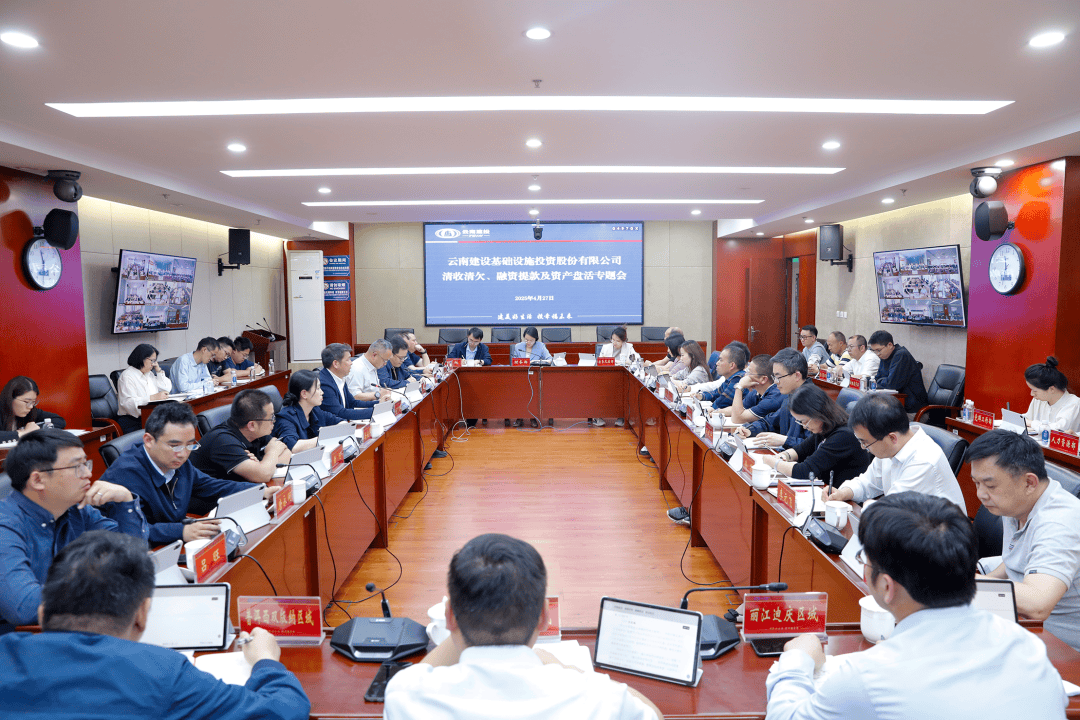
公司召开融资提款及资产盘活专题会
Sou Hu Cai Jing· 2025-04-27 11:51
Core Viewpoint - The company held a meeting to discuss the recovery of debts, financing withdrawals, and asset revitalization, aiming to ensure that economic indicators meet targets halfway through the year [1][5]. Group 1: Meeting Overview - The meeting was attended by key company leaders, including the Chief Financial Officer and the General Manager, to analyze the progress of financial recovery and asset management [3][5]. - The company emphasized the importance of proactive planning and systematic layout in response to various adverse factors affecting operations [5]. Group 2: Key Emphasis - Regional self-balancing is essential for survival, and the core functions of debt recovery, financing, and asset revitalization are critical for regional management [7]. - The company urged all employees to adopt a sense of urgency and responsibility to advance financial recovery and asset management efforts [7]. Group 3: Specific Requirements - The company outlined three main tasks: 1. Clarify debt recovery strategies and ensure effective implementation, with a focus on government policy coordination to secure debt relief funds [9]. 2. Take responsibility for financing goals, emphasizing teamwork and proactive communication with banks to meet funding needs [9]. 3. Enhance asset revitalization through innovation, maximizing asset value, and ensuring cash flow generation [10].