
超级智能

Search documents
刚刚,奥特曼预言:人类「只剩」最后5年!
3 6 Ke· 2025-09-27 07:02
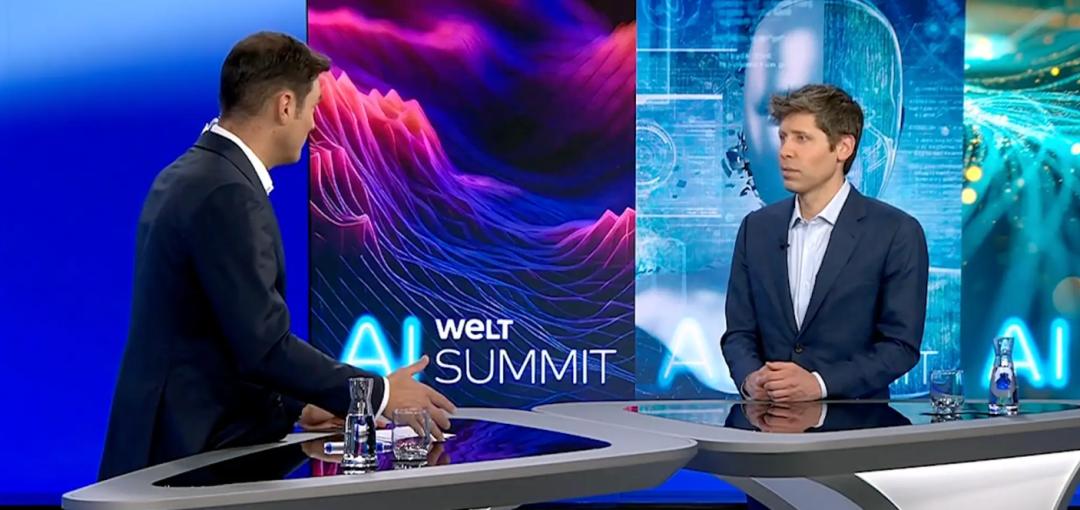
倒计时开始! 奥特曼把「超级智能」实现的时间线拉到了2030年。 5年后,AI将全面超越人类。 几年后的某一天,一个名为GPT-8的系统,平静地告诉你,它攻克了量子引力——那个困扰了爱因斯坦之后所有物理学家的终极难题。 它不仅给出了答案,更能向你娓娓道来其思考过程、灵感来源,以及它为何决定研究这个课题。 这能算是AGI吗? 在和量子计算教父David Deutsch的对谈中,奥特曼抛出这个问题。 David Deutsch也不得不承认,这将成为一个潜在的基准。 假设GPT-8能够解决量子引力问题,它将有资格成为真正的AGI。 倒计时开启,AI五年后超越人类 他在接受德国《世界报》采访时表示: 我可以肯定地说,到2030年底之前,如果我们没能开发出能够完成人类自身无法企及任务的超级智能模型,我会感到非常意外。 奥特曼 他还抛出了一个极具争议的新标准: 刚刚在柏林领取了声誉卓著的阿克塞尔·斯普林格奖,奥特曼紧接着就投下了一颗震撼弹。 在一次深度专访中,他给出了一个惊人预测:到2030年,人工智能将在所有维度上超越人类。 「超级智能何时会出现?」当被问及这个终极问题时,奥特曼的回答平静却极具颠覆性。 「在很多方面, ...

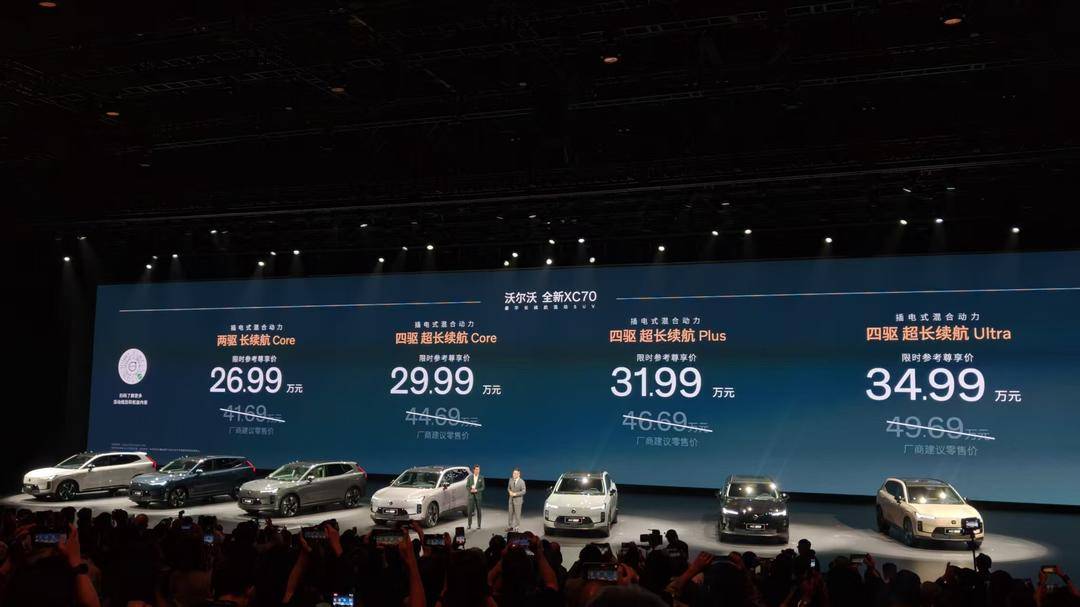
超级混动、超级智能、超级安全,沃尔沃全新XC70上市26.99万元起
Qi Lu Wan Bao· 2025-09-26 23:04
Core Insights - Volvo Cars has launched the new XC70 in the Chinese market, positioning it as the "first luxury super hybrid vehicle" with a starting price of 269,900 yuan and additional purchase benefits valued at over 60,000 yuan, demonstrating its commitment to the Chinese market [1][17] Group 1: Product Features - The XC70 is built on the SMA super hybrid architecture, featuring a "four-wheel drive" system that establishes a technical barrier in the hybrid field, with a thermal efficiency of over 44% for its 1.5T hybrid engine and a fuel consumption of 6.55L/100km [3][5] - It offers a pure electric range of 200 km (CLTC) and a total range of 1200 km, addressing range anxiety for consumers [3] - The vehicle supports seven hybrid modes to cater to various driving scenarios, including urban commuting and high-speed cruising [5] Group 2: Intelligent Features - The XC70 introduces advanced intelligent driving capabilities with the NPA intelligent navigation assistance system, covering speeds from 0 to 150 km/h and simplifying highway driving through features like adaptive speed control and intelligent lane changing [7] - The cabin features a scene assistant with six preset modes and customizable programming, enhancing user experience through AI integration for functions like fault diagnosis [9] Group 3: Safety Innovations - The XC70 maintains Volvo's traditional safety advantages with a boron steel cage structure, 24 collision sensors, and a seven-airbag protection system, significantly enhancing safety standards for electric vehicles [10] - It includes 21 active protection functions supported by 24 intelligent sensing hardware, with a unique "human-machine co-driving" monitoring system that minimizes risks associated with driver assistance misuse [12] Group 4: Market Implications - The launch of the XC70 signifies a critical step in Volvo's transition to new energy vehicles in the Chinese market, filling a gap in the luxury mid-to-large SUV hybrid segment [14] - Volvo's approach emphasizes a return to human-centric technology, potentially reshaping the competitive landscape in the luxury electric vehicle market from mere performance comparisons to deeper ethical considerations in technology [16]
硬件业务四年亏损近5000亿,扎克伯格哪来的底气挑战苹果?
Feng Huang Wang· 2025-09-26 13:24
Core Insights - Meta's hardware division, Reality Labs, has incurred over $68 billion in losses over the past four years, highlighting the challenges of hardware development [1] - Despite launching several products, Meta's hardware efforts have not significantly reversed these losses, with only about 2.8 million units of Ray-Ban smart glasses shipped in the past year, representing approximately 1% of Apple's iPhone sales [1] - Analysts predict that Reality Labs will face an operational loss of nearly $20 billion this year [1] AI Opportunities - Meta is positioning itself for the AI era, believing that Apple's dominance in consumer devices is not unassailable [2] - CEO Mark Zuckerberg emphasizes the importance of smart glasses in achieving a vision of "super intelligence," which refers to AI surpassing human intelligence [2] - The latest Ray-Ban Display smart glasses feature enhanced functionalities, such as real-time subtitles, indicating a shift towards more advanced AI integration [2] Product Development - The new Ray-Ban Display smart glasses are priced at $799, significantly lower than Apple's Vision Pro headset priced at $3,500, but still require further refinement [3] - The glasses are designed to project data directly onto the lenses and include a wristband for gesture control, showcasing innovative features [3] Investment Strategy - Meta's substantial investment in AI is seen as a strategic move to explore new user interactions with AI, moving beyond traditional devices like smartphones and PCs [4] - The company has a competitive edge due to its vast user base of nearly 3.5 billion daily active users and strong profitability from its core advertising business, which supports ongoing investments [4] - Meta's operating profit margin of 44% as of June is 12 percentage points higher than Apple's, despite significant losses in Reality Labs [4] Competitive Landscape - Analysts note that Meta's new smart glasses reflect the company's "full-stack approach" to building an AI platform, leveraging its proprietary hardware and unique data sets [5] - The concept of a "facial computer" is proposed as a product that could naturally align with AI advancements, indicating potential future growth areas for Meta [6]


全面对标iPhone,小米17系列起售价4499元起;特朗普批准TikTok美国运营方案;抖音副总裁回应字节港股上市传言丨邦早报
创业邦· 2025-09-26 00:05
Group 1 - The U.S. government approved a new operational plan for TikTok, establishing a joint venture valued at $14 billion to ensure data and content security in the U.S. [2] - Xiaomi launched its new Xiaomi 17 series smartphones, with starting prices at 4,499 yuan for the 12GB+256GB version and 4,799 yuan for the 12GB+512GB version [5][7] - Xiaomi's CEO compared the Xiaomi 17 to the iPhone 17, highlighting its superior battery life and features [7] Group 2 - The company Xibei deleted a controversial public relations article that faced backlash for being overly sentimental [9] - Wahaha is planning to rebrand to "Wahaozong" starting from the 2026 sales year, with multiple trademarks already under preliminary review [12] - Nio's associated company, Guangxi Nida Automotive Technology, has been ordered to pay over 129 million yuan in a legal execution [12] Group 3 - Amazon agreed to pay $2.5 billion to settle claims of misleading customers regarding Prime membership sign-ups [12] - WeRide was recognized in Fortune's "Change the World" list, marking its second inclusion as a leading autonomous driving technology company [12] - Tesla announced the first highway sign indicating the location of its Supercharger stations, aiming to alleviate range anxiety among users [15] Group 4 - Starbucks plans to lay off approximately 900 employees and close several stores as part of a restructuring effort, with an estimated cost of $1 billion associated with these changes [17][18] - Nestlé's Perrier brand is facing a legal challenge in France over misleading marketing claims regarding its sparkling water [18] - Mercedes-Benz announced a leadership change, with a new CTO set to take over in December [18] Group 5 - BYD's second-generation Qin PLUS series was launched, with prices for the DM-i version starting at 79,800 yuan and the EV version ranging from 89,800 to 99,800 yuan [20] - Jiangsu Province reported an increase in the number of unicorn and gazelle companies, with 101 unicorns and 525 potential unicorns identified [26] - BYD's market share in the EU rose to 1.3% in August, surpassing Tesla's 1.2% share [26]

早报 | 绍兴通报地铁深夜撞人事件;奥尔特曼称超级智能或在2030年前出现;公司回应基金经理赌博被抓;张雪峰团队再回应被禁止关注
虎嗅APP· 2025-09-25 23:55
昨夜今晨 【官方通报绍兴地铁深夜撞人事件:致3死1伤】 大家早上好!这里是今天的早报,每天早上,我都会在这里跟你聊聊昨夜今晨发生了哪些大事儿。 绍兴市轨道交通集团有限公司9月25日发布关于绍兴轨道交通2号线一期存车线事故的公告: 9月13日23时40分许,在车辆非运营期间,绍兴轨道交通2号线一期存车线保洁单位4名保洁人员穿越轨道时, 被一辆返场检修的电客车碰撞,经紧急送医救治,3人抢救无效死亡,1名伤者经治疗正在康复之中。 事故发生后,公司第一时间开展人员救治、家属安抚等工作,遇难人员善后事宜已于9月17日完成。 经初步调查,本次事故系保洁人员未按规定路径进入行车正线区域,被返场检修电客车碰撞而导致的生产安全 事故,暴露出公司安全生产管理责任落实不到位。 目前,公司正积极配合进一步调查,调查结果将及时向社会公布。 【特朗普:不会允许以色列吞并约旦河西岸】 当地时间25日,美国总统特朗普表示,无论是否与以色列总理内塔尼亚胡进行了交谈,他都不会允许以色列吞 并约旦河西岸。 特朗普表示,当日与以色列总理内塔尼亚胡进行了交谈,也与所有中东领导人进行了交谈,他们即将就加沙问 题达成协议,甚至可能实现和平。 【英特尔大涨 ...


第六次突破
3 6 Ke· 2025-09-25 09:26
大约在100万年前,随着现代人类大脑的出现,人类长达40亿年的进化故事终于画上了句号。回首过 去,我们可以开始描绘一幅图景或一个框架,来展现人类大脑和智能的形成过程。我们可以将这些故事 整合到我们前五次突破的框架中。 第一次突破是转向:通过区分外界刺激的好坏,从而趋利避害地进行导航。 迄今为止,人类的历史可以分为两大篇章。第一篇是进化的篇章,讲述现代人类如何从宇宙中的原始无 生命物质中演化而来。第二篇是文化的篇章,描述大约10万年前,社会性的现代人类如何从生物学上大 体相同但文化上尚处于蒙昧状态的祖先中逐步崛起、发展。 尽管进化篇跨越了数十亿年的漫长岁月,但我们在历史课上学习的绝大部分内容,却是在文化篇中相对 较短的时间内展开的——所有的文明、技术、战争、发现、戏剧、神话、英雄与反派,都在这段与进化 篇相比犹如一眨眼的时间里一一上演。 大约6亿年前,原本具有径向对称神经元的类珊瑚动物逐渐演化成两侧对称动物。这种两侧对称的身体 结构将导航决策简化为二元的转向选择,神经网络被整合成第一个大脑,使具有相反效价的信号能够被 整合成单一的转向决策。多巴胺和血清素等神经调质使持续的状态能够更有效地重新定位并局部搜索特 定 ...
第六次突破
腾讯研究院· 2025-09-25 08:33
Core Insights - The article outlines five major breakthroughs in the evolution of intelligence, from the development of basic navigation in early organisms to the potential emergence of superintelligence in artificial entities [2][3][5][11]. Breakthroughs in Intelligence - **First Breakthrough: Turning** - Approximately 600 million years ago, early bilateral animals evolved a simple nervous system that allowed for basic navigation by distinguishing between positive and negative stimuli [2]. - **Second Breakthrough: Reinforcement** - Around 500 million years ago, the first vertebrates developed a brain structure that enabled learning from past experiences, establishing a foundation for emotional and cognitive traits [3]. - **Third Breakthrough: Simulation** - About 100 million years ago, early mammals developed the ability to mentally simulate actions and events, leading to advanced planning and fine motor skills [4]. - **Fourth Breakthrough: Mentalization** - Between 10 to 30 million years ago, early primates evolved the capacity to understand their own and others' mental states, enhancing social interactions and learning [5]. - **Fifth Breakthrough: Language** - Language emerged as a means to connect internal simulations, allowing for the accumulation of knowledge across generations [5]. Evolutionary Context - Human history can be divided into two main chapters: the evolutionary chapter, detailing the biological development of modern humans, and the cultural chapter, which encompasses the rapid advancements in civilization over the last 100,000 years [6][7]. - The article emphasizes the significance of the last 100,000 years in shaping human civilization, contrasting it with the extensive evolutionary timeline [6]. Future of Intelligence - The article posits that the next breakthrough may involve the emergence of superintelligence, where artificial entities surpass biological limitations, leading to unprecedented cognitive capabilities [9][10]. - It discusses the implications of this potential shift, including the redefinition of individuality and the evolution of intelligence beyond biological constraints [10][11]. Philosophical Considerations - The article raises critical questions about the goals of humanity as it approaches the sixth breakthrough, emphasizing the importance of values and choices in shaping the future of intelligence [11][12].

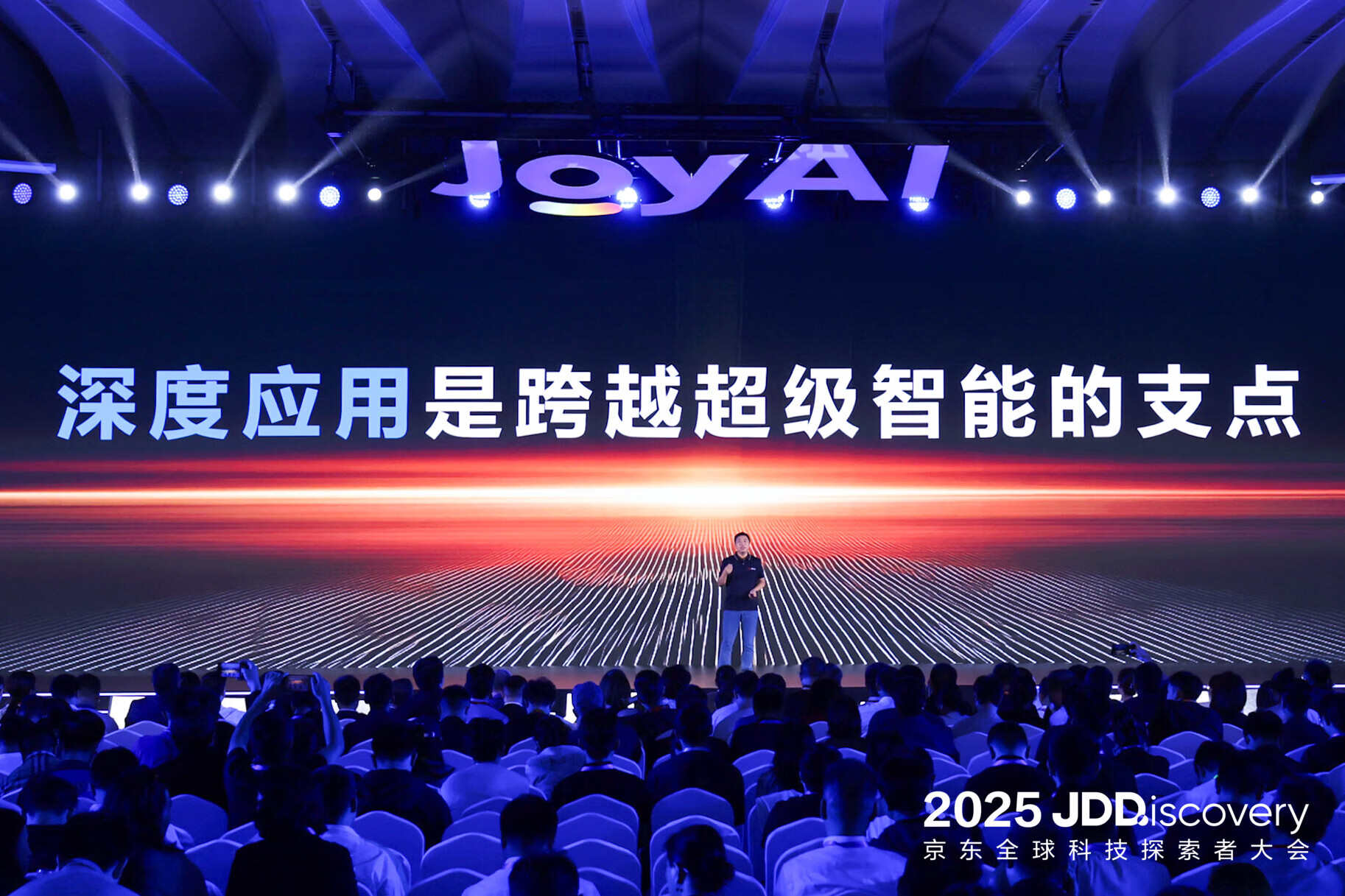
京东(09618)曹鹏:深度应用是跨越超级智能的支点
智通财经网· 2025-09-25 07:02
Core Viewpoint - The core viewpoint of the article emphasizes that deep application of artificial intelligence (AI) is essential for businesses to transition from basic AI tools to fully integrated business processes, which is crucial for achieving superintelligence [1] Group 1: AI Application - Current AI applications are no longer limited to pilot projects but are expanding into comprehensive and deep applications across various sectors [1] - Intelligent agents are driving the transition of AI from mere tools to integral components of business processes [1] Group 2: Business Integration - Deep application involves not building a new application system from scratch but rather integrating AI deeply with existing business processes [1] - This integration is identified as a key factor for companies to achieve superintelligence [1]

海外AI逐步闭环,继续看好AI基建带来高增长 | 投研报告
Zhong Guo Neng Yuan Wang· 2025-09-24 08:42
Core Insights - Nvidia has announced a strategic partnership with OpenAI, committing to invest up to $100 billion in infrastructure, including the deployment of at least 10GW of Nvidia systems, which will consist of millions of GPUs [1][2][3] Investment Details - OpenAI will deploy a minimum of 10GW of Nvidia systems, which translates to approximately 10 million kilowatts, and Nvidia will continuously invest as the computing power comes online [1][2] - The total investment from Nvidia could reach $100 billion (approximately 711.47 billion RMB) [1][2] Infrastructure Development - The first GW-level data center based on Nvidia's Vera Rubin platform is set to be deployed in the second half of 2026 [1][2] - The estimated cost to build 1GW of computing power is around $50-60 billion, with Nvidia's chips and systems accounting for about $35 billion of that cost [3] Market Implications - The investment scale for the 10GW data center project is estimated to be between $500 billion and $600 billion, similar to Nvidia's previously announced Stargate project [3] - OpenAI's CEO, Sam Altman, emphasized that this infrastructure is crucial for achieving OpenAI's goals and delivering services to users [3] AI Industry Trends - The AI landscape is shifting from model competition to a focus on infrastructure expansion, with significant investments being made to overcome computing power bottlenecks [4] - OpenAI has signed a $300 billion five-year contract with Oracle and plans to spend $100 billion on backup servers from cloud service providers over the next five years, in addition to Nvidia's investment [4] Investment Recommendations - The current focus in AI infrastructure is shifting from cloud vendor spending to AIDC cloud computing centers, with companies like Oracle, Coreweave, and others being highlighted for their GPU card advantages [4] - In the domestic market, attention remains on AI infrastructure, with recommendations for companies like Runze Technology and Aofei Data [5]

通信行业点评:海外AI逐步闭环,继续看好AI基建带来高增长
Minsheng Securities· 2025-09-24 07:11
Investment Rating - The report maintains a "Recommended" rating for several key companies in the AI infrastructure sector, including 德科立, 仕佳光子, 中际旭创, 新易盛, 天孚通信, and 润泽科技 [5]. Core Insights - The report highlights a significant investment by NVIDIA in OpenAI, amounting to up to $100 billion (approximately 711.47 billion RMB), aimed at deploying at least 10GW of NVIDIA systems, which includes millions of GPUs [1][2]. - The transition from "selling shovels" to "delivering shovels" is noted, with the estimated cost of building 1GW of computing power being around $50-60 billion, where NVIDIA's chips and systems account for approximately $35 billion [2]. - The AI sector is entering a phase focused on infrastructure expansion rather than just model competition, with OpenAI's mission to drive "superintelligence" being heavily reliant on computational power [3]. - The report suggests that the current focus in AI infrastructure has shifted from cloud vendor spending to AIDC cloud computing centers, recommending companies with a first-mover advantage in GPU cards [4]. Summary by Sections Investment Opportunities - Key companies to watch include Oracle, Coreweave, Nebius, AppliedGigital, and Iris Energy for their GPU card advantages [4]. - In the domestic market, companies like 润泽科技, 奥飞数据, and 润建股份 are highlighted for their potential in AI infrastructure [4]. Financial Projections - The report provides earnings per share (EPS) and price-to-earnings (PE) ratios for several companies, indicating strong growth potential for 2024-2026 [5]. - For example, 中际旭创 is projected to have an EPS of 12.94 RMB by 2026 with a PE ratio of 34, while 新易盛 is expected to reach an EPS of 13.10 RMB with a PE of 27 [5]. Market Trends - The report emphasizes the increasing demand for AI infrastructure, with OpenAI's rapid growth and significant contracts with cloud service providers indicating a robust market environment [3]. - The establishment of a 1GW data center by OpenAI in 2026 is anticipated to mark a milestone in the infrastructure arms race, paving the way for large-scale application deployment [3].