AGI(通用人工智能)

Search documents
六小龙”齐聚乌镇背后:前沿技术已经“飞入寻常百姓家
Xin Jing Bao· 2025-11-11 14:20
Core Insights - The 2025 World Internet Conference in Wuzhen concluded with over 1,600 attendees from more than 130 countries, discussing topics such as AI, smart hardware, and cybersecurity [1] - The "Internet Light" Expo featured 670 exhibitors and attracted over 17,000 visitors in a single day, showcasing the growing public engagement with technology [1][5] Group 1: Technology Discussions - The "Six Little Dragons" forum was the most attended, featuring discussions on cutting-edge technologies and the challenges faced by companies in the tech sector [2] - Companies like Strong Brain Technology and Yushu Technology shared their experiences in overcoming obstacles in their respective fields, emphasizing the importance of innovation and problem-solving [2][3] - The dialogue highlighted the need for advancements in AI models and the challenges of current AI systems, with a focus on creating stable, generalizable learning algorithms [3][9] Group 2: Public Engagement with Technology - The expo showcased interactive products like AI models, robotic dogs, and flight simulators, indicating a shift in public perception and acceptance of advanced technologies [4][5] - The presence of vendors selling small robotic dog toys at the expo reflects the increasing accessibility of technology to everyday consumers [5] Group 3: Reports and Safety Initiatives - Multiple reports were released during the conference, addressing global AI safety and governance, and emphasizing the need for international cooperation in technology development [7][8] - The discussions underscored the dual pressures of internal and external risks associated with AI, highlighting the importance of understanding AI's inherent challenges [8][9]
构建算力基础设施,OpenAI挖来英特尔CTO,陈立武临时接管AI业务
Feng Huang Wang· 2025-11-11 07:26
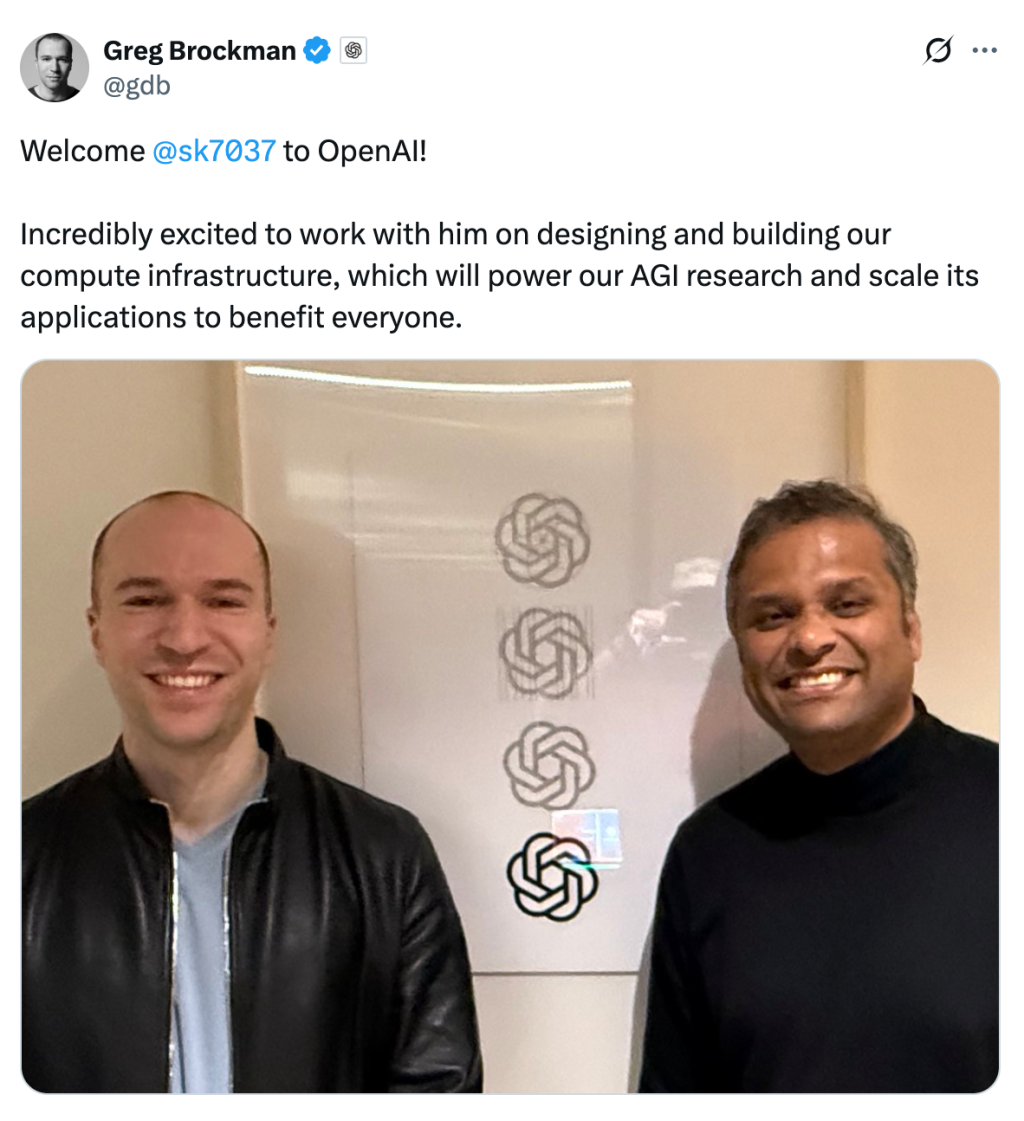
Core Insights - Intel's CTO Sachin Katti has officially joined OpenAI to design and build computational infrastructure for AGI research, aiming to scale its applications [1][3] - Katti previously led Intel's AI strategy and product roadmap, and has a strong academic and entrepreneurial background in wireless communication and AI technologies [3] - Intel's CEO Pat Gelsinger will temporarily take over the AI business, emphasizing that AI remains a top strategic priority for the company [4] Company Developments - OpenAI is actively expanding its infrastructure, having signed agreements worth over $1 trillion with major companies like Oracle, NVIDIA, AMD, Microsoft, and Amazon [4] - OpenAI's CEO Sam Altman stated that significant investment in infrastructure is a strategic gamble, with expectations of exponential growth in AI usage [4] - OpenAI is considering an IPO by 2027, with a potential valuation of around $1 trillion [4]


推动AI产业发展 世界互联网大会乌镇峰会释放重要信号
Zhong Guo Jing Ji Wang· 2025-11-09 23:20
Core Insights - The World Internet Conference in Wuzhen highlighted artificial intelligence (AI) as a key focus, with policies aimed at promoting high-quality development in the AI industry [1][2] - The conference showcased innovations across the AI spectrum, including foundational computing power, core models, advanced chip technology, and diverse industrial applications [1] - The integration of AI into consumer products is accelerating, with significant advancements in AI-enabled devices such as smartphones and glasses [2] Industry Developments - The Ministry of Industry and Information Technology is promoting the deep integration of AI with the real economy, focusing on both supply and application aspects [2][3] - The number of operational computing centers in China reached 10.85 million by mid-2023, with intelligent computing power scaling to 788 EFLOPS, placing China among the global leaders [2] - Companies are increasingly investing in computing clusters, with ZTE leading initiatives to create high-speed interconnected computing resources [3] Technological Innovations - ZTE is developing ultra-nodes based on optical interconnection technology and plans to establish over 5,000 intelligent computing clusters in collaboration with major telecom operators [3] - Ant Group has deployed a large-scale domestic computing cluster to enhance model training and inference services, aiming to improve response speed and knowledge scale for AGI applications [3] - The Ministry of Industry and Information Technology plans to build a computing power interconnection platform to facilitate collaborative innovation between AI models and high-quality datasets [3]
AI 群星闪耀时的时:全球AI六巨头首次同台!纵论四十年AI风云、泡沫之辩与AGI时间表(附对话实录)
美股IPO· 2025-11-08 00:24
Core Viewpoints - The discussion highlights the belief that AI is in its early stages and will increasingly approach human intelligence, with significant advancements expected in the coming years [3][4][25]. Group 1: AI Development and Future Potential - Huang Renxun emphasizes that AI is not just a tool but an enhancement of human capabilities, indicating a future where AI will be integrated into daily life [3][26]. - Li Feifei points out that AI is still a young field, with much potential for new developments, and some machine capabilities may surpass human intelligence [4][30]. - Geoffrey Hinton predicts that machines will likely surpass humans in debate within the next twenty years, indicating rapid advancements in AI capabilities [5][37]. Group 2: AI Bubble and Market Dynamics - Huang Renxun argues that the current demand for AI is genuine, contrasting it with the internet bubble where supply exceeded demand [26][25]. - Yann LeCun acknowledges the existence of an AI bubble, stemming from the belief that current models will directly reach human-level intelligence, which he does not believe will happen without fundamental breakthroughs [28][32]. - Bill Dally highlights the unprecedented demand for computational resources driven by AI's capabilities, suggesting that the industry requires significant investment to meet future needs [26][36]. Group 3: Key Moments and Insights - Yoshua Bengio recalls pivotal moments in his career that shaped his understanding of AI, particularly the impact of Geoffrey Hinton's early work [9][12]. - Bill Dally shares his realization about the potential of GPU computing for deep learning, which laid the groundwork for significant advancements in AI [10][14]. - Li Feifei discusses the creation of a large-scale dataset that became foundational for machine learning, emphasizing the importance of data in AI development [16][17]. Group 4: AI's Role in Society - Bill Dally states that AI should fill gaps in human capabilities, allowing people to focus on more human-centric tasks [6][38]. - Li Feifei stresses the importance of ensuring that AI technology benefits all of humanity, highlighting the need for ethical considerations in AI development [17][30]. - Yoshua Bengio mentions the potential for AI to take on engineering tasks, indicating a shift in how AI could contribute to various fields [39]. Group 5: Predictions and Timelines - Participants express varying timelines for achieving advanced AI capabilities, with estimates ranging from five to twenty years for significant breakthroughs [34][37]. - Li Feifei notes that while some AI capabilities are already realized, others will remain distinct from human intelligence due to their different design purposes [34][35]. - Geoffrey Hinton suggests that the timeline for achieving AGI (Artificial General Intelligence) could be within twenty years, depending on the definition used [37].


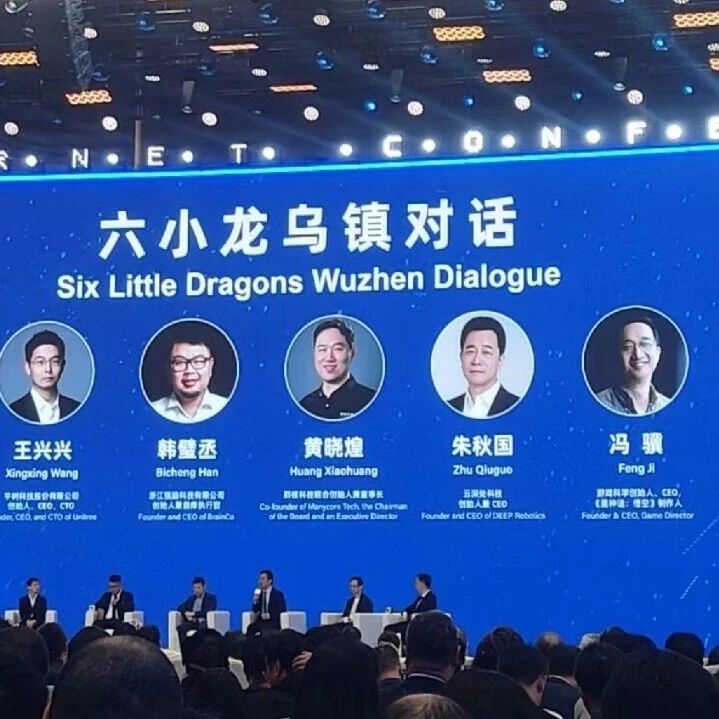
“杭州六小龙”乌镇论道:AI创业十年路与未来破局点
Zhong Guo Zheng Quan Bao· 2025-11-07 14:56
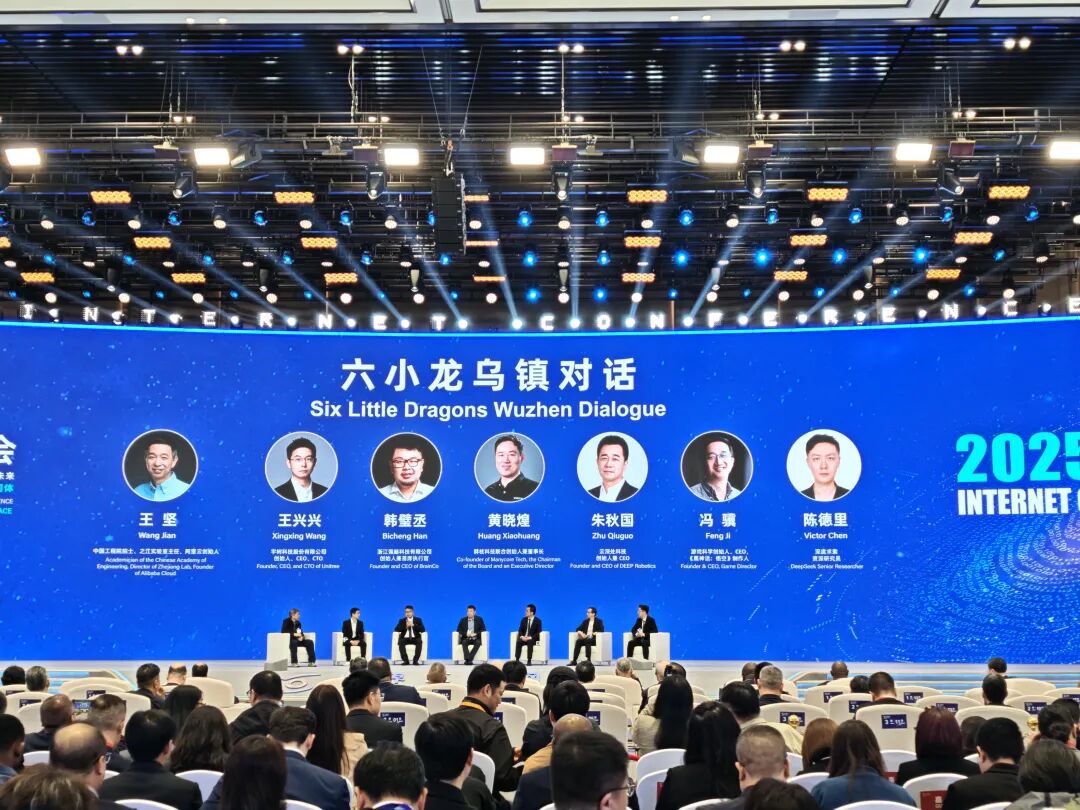
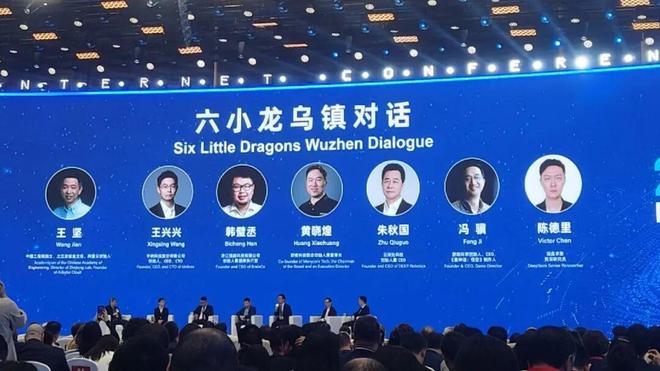
Core Insights - The emergence of the "Hangzhou Six Little Dragons" has drawn global attention to China's AI innovation capabilities and has prompted exploration of the underlying innovation patterns [1] - The dialogue at the World Internet Conference highlighted the entrepreneurial experiences and governance of AI development among these six companies [1][3] Group 1: Past Achievements - The founding of the "Hangzhou Six Little Dragons" primarily occurred within the last decade, coinciding with rapid growth in China's internet and technology sectors [3] - Wang Xingxing from Yushu Technology noted significant advancements in embodied intelligence, stating that recent developments in robotics have made previously sci-fi concepts a reality [4] - Han Bicheng, founder of Qiangnao Technology, emphasized the commercialization of brain-computer interface technology, which has gained momentum in recent years [4] - Huang Xiaohuang of Qunhe Technology discussed the transformation from internet-focused initiatives to AI-driven solutions, reflecting the broader shift from the internet era to the AI era [5] - Zhu Qiuguo expressed optimism about the future of intelligent robotics, aiming for widespread application across various scenarios [5] - Feng Ji highlighted the importance of the gaming industry in showcasing technological advancements and the growing trust in domestic teams [6] Group 2: Future Challenges and Responsibilities - Wang Xingxing identified the main challenge in embodied intelligence as the lack of unified standards and sufficient model structures and data [7] - Zhu Qiuguo mentioned the need for innovation to reduce computational and data requirements for robotics [7] - Han Bicheng pointed out the challenges in data collection and analysis in the brain-computer interface field, emphasizing the need for AI to enhance brain science research [7] - Chen Deli from DeepSeek stated that the AI revolution is still in its early stages, urging tech companies to promote technology accessibility while being aware of potential risks [8] - Feng Ji raised concerns about the concentration of AI technology within a few companies and advocated for embracing advanced AI technologies to enhance human capabilities [8]

“六小龙”乌镇对话:从英伟达“冷板凳”到《黑神话》破圈
Di Yi Cai Jing Zi Xun· 2025-11-07 14:43
Core Insights - The 2025 World Internet Conference in Wuzhen highlighted the rapid advancements in technology over the past decade, particularly in AI and related fields, showcasing six leading tech companies that are leveraging the internet's data accumulation to explore cutting-edge directions [2][3]. Group 1: Industry Trends - The "Six Little Dragons" represent companies in fields such as embodied intelligence, brain-computer interfaces, spatial intelligence, large models, and gaming, all benefiting from the technological and data foundation built over the last ten years [2]. - The gaming industry in China has become the largest market globally, with a significant number of top-grossing games developed by Chinese teams, indicating a strong domestic user base and potential for future growth [4][6]. Group 2: Technological Advancements - Companies like Yushut Technology and Qiangnao Technology are optimistic about the future of embodied intelligence and robotics, noting that many previously sci-fi concepts are becoming reality, with expectations for significant advancements in the coming years [5]. - The brain-computer interface field is seen as a potential solution for various brain-related diseases, with ongoing challenges in data collection and analysis, but promising developments are underway, such as a weight management product expected by 2027 [7]. Group 3: Future Outlook - Experts predict that AI will create more opportunities in the short term but may pose risks in the long run, with expectations that AI will begin to replace certain jobs within 5 to 10 years, fundamentally altering the workforce landscape [6]. - The healthcare sector is heavily impacted by brain-related conditions, with a significant portion of medical expenses related to brain health, highlighting the urgent need for advancements in brain-computer interface technologies [7].
“六小龙”乌镇对话:从英伟达“冷板凳”到《黑神话》破圈
第一财经· 2025-11-07 13:46
Core Viewpoint - The article discusses the significant advancements in technology over the past decade, particularly in the fields of AI, robotics, and gaming, highlighting the emergence of innovative companies that are leveraging the internet's data and technological foundation to explore new frontiers [3][4][6]. Group 1: Technological Advancements - The "Six Little Dragons" of cutting-edge technology, including companies like Yushut Technology and Game Science, are benefiting from the data accumulation of the past decade, transitioning from the internet era to the AI era [3][4]. - The robotics industry has seen substantial progress, with the first untethered robotic dog developed in 2018, overcoming previous challenges related to stability and application [4][5]. - The gaming industry has grown significantly, with China becoming the largest market for gaming, as evidenced by the fact that four of the top ten highest-grossing games globally were developed by Chinese teams [5][6]. Group 2: Future Outlook - Experts predict that the field of embodied intelligence and humanoid robots is closer to realizing its potential than other advanced fields, with expectations for significant advancements in the next few years [6]. - AI is anticipated to create more opportunities in the short term, but may pose greater risks in the long term, with predictions that AI could replace a significant portion of jobs within the next 10 to 20 years [7]. - The brain-computer interface technology is seen as a potential solution for treating brain-related diseases, with ongoing challenges in data collection and analysis [8].
山姆·奥特曼和马斯克再“掐架”,这次两人又吵啥?
Sou Hu Cai Jing· 2025-11-04 00:48
Core Viewpoint - The recent public dispute between OpenAI CEO Sam Altman and Tesla CEO Elon Musk highlights ongoing tensions regarding the direction of artificial intelligence development and business practices in the tech industry, stemming from a refund issue related to the Tesla Roadster [1][3][5] Group 1: Dispute Background - Sam Altman expressed frustration over the delayed delivery and refund process for his pre-ordered Tesla Roadster, which he had reserved in July 2018 [1][3] - Musk's response included a reminder that Altman received his refund within 24 hours, suggesting that Altman's complaints were exaggerated [3][4] - The argument escalated with Musk accusing Altman of misappropriating a non-profit organization, while Altman defended his role in transforming it into a successful entity [3][4] Group 2: Historical Context - Musk and Altman co-founded OpenAI in 2015 with a vision to develop safe AI for humanity, but their differing views on AI commercialization led to Musk's departure from the board in 2018 [4] - Musk established his own AI company, xAI, in 2023, leading to competitive tensions between xAI and OpenAI [4] - Musk has previously criticized OpenAI for deviating from its original mission and has initiated legal actions against Altman and OpenAI's president for alleged breaches of their founding agreement [4] Group 3: Market Implications - OpenAI has recently announced significant partnerships with major companies like Nvidia, Broadcom, and Oracle, indicating a strong position in the AI infrastructure market [5] - Altman expressed optimism about OpenAI's revenue potential, suggesting that the company's actual earnings exceed its current projections [5]


英伟达20亿美元砸向AI新星公司;国家队12亿重仓加持浪潮计算机 | 每周十大股权投资
Sou Hu Cai Jing· 2025-11-03 07:56
Financing Transactions - Inspur Computer completed a Series A financing round of 1.2 billion yuan, with participation from state-backed capital including CPE Yuanfeng and China Mobile Innovation Industry Fund. The company focuses on the research and manufacturing of servers and computing equipment, providing critical infrastructure for key industries [1] - Poolside raised 2 billion dollars in Series C financing, exclusively funded by NVIDIA. The company specializes in AI software and code development solutions, aiming to transition humanity towards AGI (Artificial General Intelligence) [2] - Mifei Technology secured 300 million yuan in a Pre-IPO financing round, exclusively invested by Frontier Capital. The company provides semiconductor AMHS system solutions and has established manufacturing bases and testing centers both domestically and internationally [3] - JBD Display completed a 1 billion yuan B+ round financing, with investments from Lightspeed Venture Partners and GF Xinde. The company is a leader in MicroLED micro-display technology, focusing on AR near-eye displays and automotive electronics [4] - Guoyi Quantum received 131 million yuan in strategic financing, with a post-investment valuation of 8 billion yuan, led by Xingtai Capital. The company specializes in quantum precision measurement technology, serving advanced materials, semiconductors, and life sciences [5] - Huakun Zhenyu completed a 400 million yuan Series A financing round, with undisclosed investors. The company provides full-stack autonomous computing products based on "Kunpeng + Ascend" technology [6] - Wubai Intelligent raised 500 million yuan in Series A financing, with investments from state-owned capital institutions. The funds will be used for the development and commercialization of humanoid robots and quadruped robotic dogs [7] - Vision Micro Imaging completed a D+ round financing, with undisclosed amounts from investors including Cornerstone Capital and Qianhai Mother Fund. The company aims to become a leader in high-end ophthalmic medical devices [8] - Genspark raised 200 million dollars in Series B financing, co-led by Sequoia China and Tencent. The company develops a new search engine based on large language models, enhancing information retrieval efficiency [9] - VoidZero completed a 12.5 million dollar Series A financing round, with investments from Accel Partners and Peak XV Partners. The company focuses on developing a unified high-performance toolchain for Java [10]
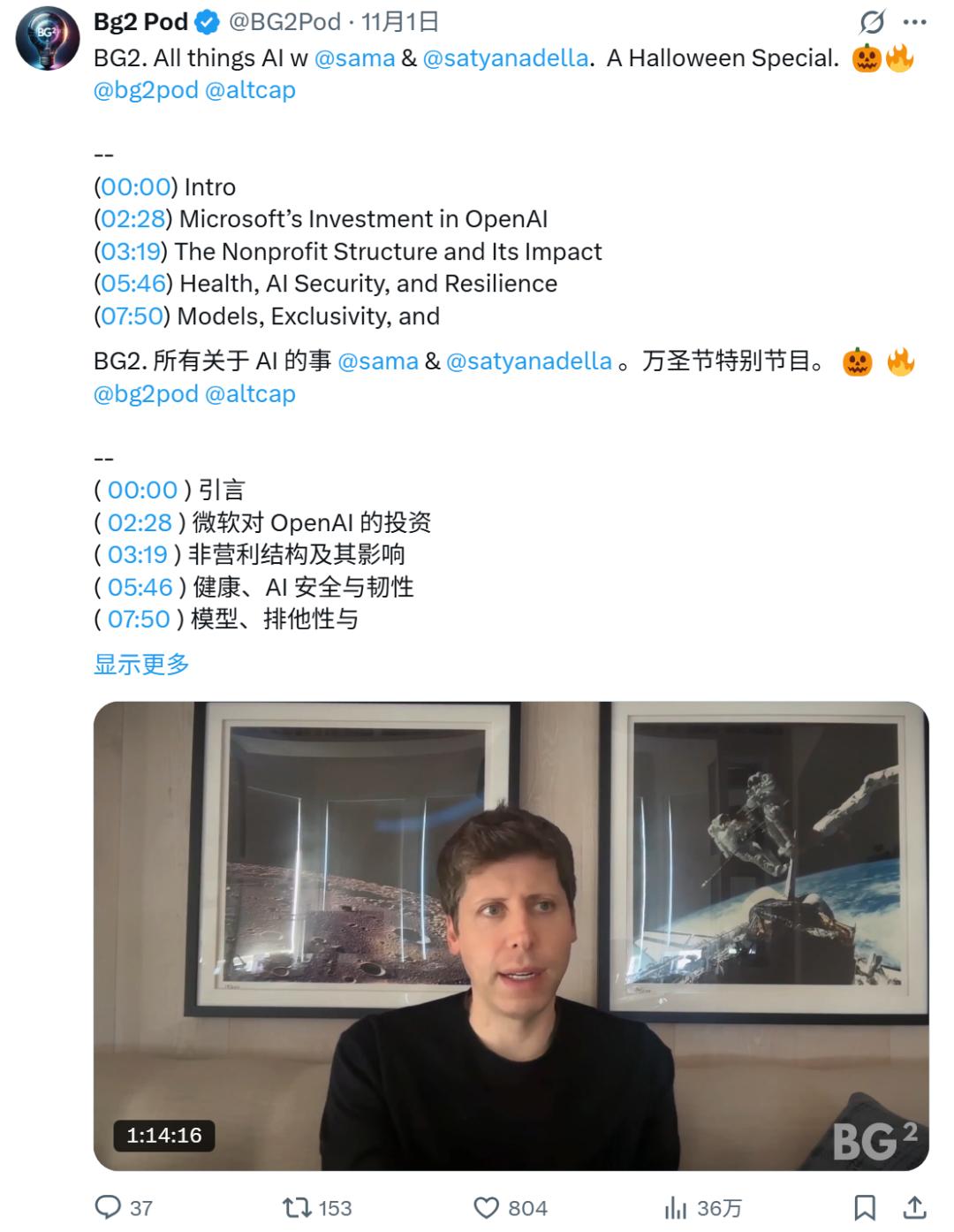
奥特曼回应一切:重组后仍需微软支持,不相信OpenAI的欢迎做空
3 6 Ke· 2025-11-03 01:47
Core Insights - OpenAI has undergone a capital restructuring, renaming its nonprofit entity to OpenAI Foundation, which now holds approximately $130 billion in equity of its for-profit arm, OpenAI Group PBC [1] - The partnership between OpenAI and Microsoft has evolved, with both parties emphasizing a collaborative future [1][5] - Sam Altman described the collaboration with Microsoft as "one of the greatest technology partnerships of all time" [5][8] Partnership Dynamics - Microsoft increased its investment in OpenAI from $1 billion to $10 billion after witnessing early demonstrations of the Codex model [5] - OpenAI's leading models, such as future versions of GPT, will be exclusively hosted on Azure until 2032 or until AGI is validated [5][11] - Other products, including open-source models and agents, can be distributed on different platforms [11] Computational Challenges - Both companies acknowledge that current computational needs are not fully met, with power supply being the primary bottleneck rather than chip availability [6][19][20] - Altman noted that the demand for computational power is expected to increase significantly as costs decrease [17][18] Financial Health and Growth Projections - OpenAI's revenue is reportedly over $13 billion and is experiencing rapid growth, with Altman expressing confidence in future revenue increases [10][15][16] - The company has made a $1.4 trillion spending commitment, which has raised questions about its financial sustainability [10][15] Strategic Focus Areas - OpenAI's nonprofit arm will prioritize funding in health and AI resilience, addressing areas where market forces may not optimally serve public interests [10] - Altman emphasized the transformative potential of AI in healthcare and the need for funding to navigate challenges during societal transitions [10] Future Outlook - Altman anticipates significant advancements in AI capabilities, including the development of agents capable of executing multi-day tasks and automating scientific discoveries [21][22] - Nadella highlighted the changing architecture of SaaS applications, suggesting that traditional business logic layers are being replaced by intelligent agent layers [27]