
AI硬件

Search documents
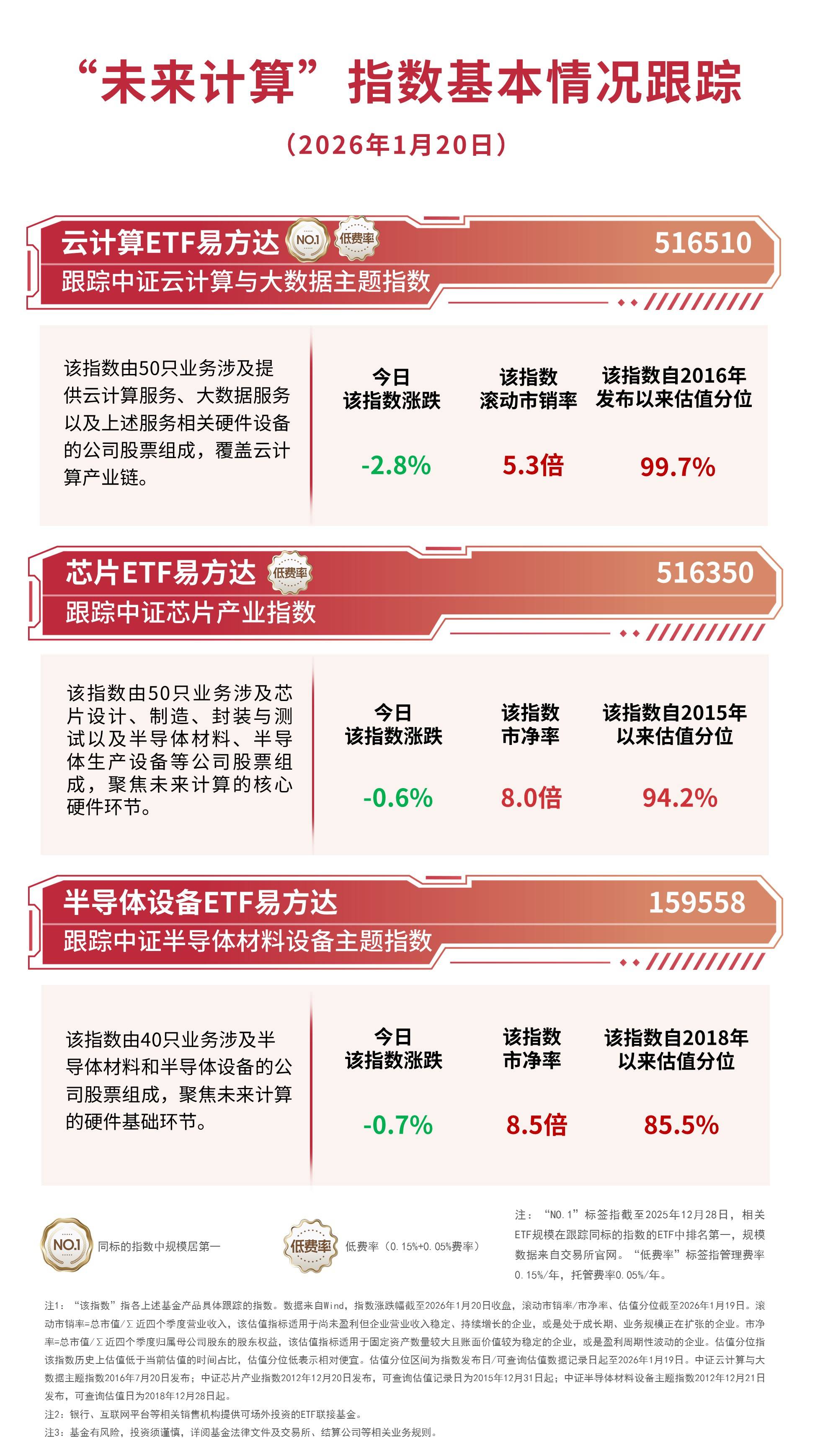
AI硬件板块延续震荡,半导体设备ETF易方达(159558)、云计算ETF易方达(516510)等产品受资金关注
Sou Hu Cai Jing· 2026-01-20 11:20
Group 1 - The AI hardware sector continues to experience fluctuations, with the CSI Cloud Computing and Big Data Theme Index down by 2.8%, the CSI Semiconductor Materials and Equipment Theme Index down by 0.7%, and the CSI Chip Industry Index down by 0.6% as of January 20 [1] - The semiconductor equipment ETF managed by E Fund (159558) saw a net subscription of nearly 30 million units throughout the day, indicating strong investor interest [1] - Year-to-date, the semiconductor equipment ETF and the cloud computing ETF have attracted net inflows of 2.17 billion yuan and 910 million yuan, respectively [1] Group 2 - Dongwu Securities research report highlights that domestic semiconductor equipment is entering a historic development opportunity, with a significant expansion cycle expected to begin in 2026 [1] - The report anticipates that the order growth rate for the entire semiconductor equipment industry will exceed 30% [1]

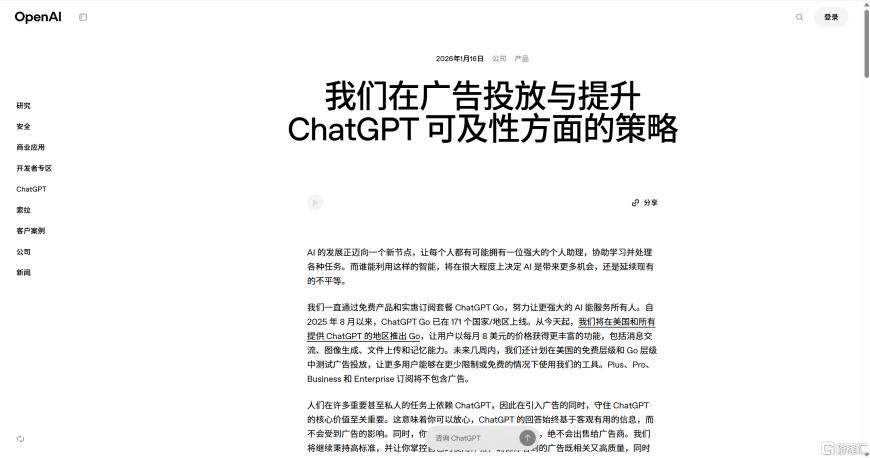
OpenAI押注“现实世界”:首款AI硬件进入倒计时,广告测试启动
Ge Long Hui· 2026-01-20 07:55
Group 1: AI Hardware Development - OpenAI's first AI hardware product is in substantial development and is expected to launch in the second half of this year [1][3] - The project is a collaboration with former Apple Chief Design Officer Jony Ive, involving experts from hardware, manufacturing, and industrial design [3] - The device is designed as a "screenless, voice-centric" AI companion, emphasizing natural interaction with the environment [3][4] Group 2: Product Features and Design - The AI device is anticipated to be compact, weighing around 10 to 15 grams, and designed for portability [3] - It may include features such as built-in microphones and cameras, real-time handwriting conversion, and synchronization with ChatGPT [3] - The internal development code names for the project are "Gumdrop" or "Sweetpea," with progress aligning with expectations [5] Group 3: Commercialization and Advertising Strategy - OpenAI is accelerating its commercialization efforts by launching an advertising test for ChatGPT to enhance revenue capabilities [6][7] - Starting from the 16th, ChatGPT Go will be available for a monthly fee of $8, offering enhanced features while testing ads among free and Go subscription users [7] - The introduction of ads aims to provide users with access to AI tools at low or no cost, while maintaining the integrity of ChatGPT's responses [8][10] Group 4: User Growth and Financial Projections - ChatGPT's weekly active users have surpassed 800 million and continue to grow rapidly, creating pressure on operational costs [10] - OpenAI's CFO projects annual revenue to exceed $20 billion by 2025, up from $2 billion in 2023, with a focus on applying AI in healthcare, research, and enterprise sectors [10][11] - Analysts predict that by 2030, OpenAI's user base could reach 44% of the global adult population, but profitability remains a challenge [10]
OpenAI首款硬件定了,下半年推出
第一财经· 2026-01-20 03:12
Core Viewpoint - OpenAI is set to launch its first hardware device in the second half of 2026, marking a significant shift from software to a combination of software and hardware [3][4]. Group 1: Hardware Development - OpenAI's global affairs officer, Chris Lehane, confirmed that the company is on track to release its first hardware device, although specific details about the product have not been disclosed [3]. - There are rumors that OpenAI is developing a special audio product, codenamed "Sweetpea," designed to replace AirPods, featuring a unique design and metallic material [4]. - Another rumored product, codenamed "Gumdrop," is expected to be a smart pen or wearable audio device, with production planned at Foxconn's factory in Vietnam [6]. Group 2: Product Characteristics - The hardware is expected to be pocket-sized, without a screen, and significantly different in appearance from smartphones and smart glasses [7]. - OpenAI CEO Sam Altman indicated that the company plans to release a series of small devices rather than a single product, aiming to explore more natural AI interaction methods [7]. Group 3: Financial Performance and Business Strategy - OpenAI's CFO, Sarah Friar, announced that the company's annual recurring revenue (ARR) is projected to exceed $20 billion by 2025, with a threefold increase in computing power and revenue from 2023 to 2025 [7][8]. - The company is pursuing aggressive commercialization strategies, including developments in medical products and advertising models, as it prepares to launch its hardware [8].

AI硬件需求碎片化 都想取代手机 谁能定义下一代超级入口
Nan Fang Du Shi Bao· 2026-01-19 12:44
Core Insights - Alibaba has integrated its Qianwen App into its ecosystem, including Taobao, Alipay, and other services, positioning it as a "super agent" to differentiate from competitors like Doubao and Yuanbao [1] - The year 2025 is referred to as the "AI Hardware Year," marking a surge in AI hardware products like AI glasses and headphones, aiming to replace smartphones as essential devices [3][4] - Major tech companies are actively investing in AI hardware, with products like ByteDance's Doubao and ZTE's nubia M153 generating significant buzz [1][9] Trend 1: Hardware Manufacturers Competing in AI Vertical Market - The AI hardware market is experiencing intense competition, with various companies launching products aimed at becoming essential devices [2][3] - Plaud, an AI hardware company, has successfully sold over 1 million units by targeting high-decision, high-dialogue, and high-knowledge-density users [3] - The trend of vertical market products achieving commercial viability is notable, as companies leverage AI to enhance hardware functionality [4] Trend 2: Major Companies Stirring the Hardware Market - Internet giants are diversifying into hardware, with companies like ByteDance and Alibaba launching AI products to complement their existing software ecosystems [9][10] - The strategies include direct hardware development and providing foundational models for other hardware manufacturers [10][11] - Tencent is focusing on robotics and has launched a modular platform for intelligent robots, indicating a shift towards hardware integration [11] Trend 3: Ecosystem Integration of Super Applications - Alibaba's Qianwen App has been upgraded to support over 400 tasks, integrating with various services to enhance user experience [15][17] - Tencent is betting on WeChat as a super application, aiming to create an AI assistant that can understand user needs and execute tasks within its ecosystem [17][18] - The competition among major companies is intensifying as they seek to create comprehensive user experiences through integrated applications [19] Trend 4: New Competitive Logic from Emerging AI Models - Emerging AI model companies, referred to as the "Six Little Tigers," are positioning themselves alongside major tech firms in the race for super applications [22][23] - These companies are focusing on high-value sectors like healthcare, with products that aim to redefine user engagement and application functionality [23][24] - The competition is shifting from traditional metrics of success to a focus on model capabilities and user experience [24][25] Predictions: Who Will Define the Super Entry? - The battle for the next generation of "super entry" is ongoing, with hardware and software companies vying for dominance [29][30] - Challenges remain in the AI hardware sector, including user privacy and the clarity of business models for AI applications [30][31] - The concept of a "super entry" may evolve, with the potential for more neutral and open platforms to emerge as key players [31]



飞书首款AI合作硬件,联手安克创新发布了“一颗豆”
第一财经· 2026-01-19 12:27
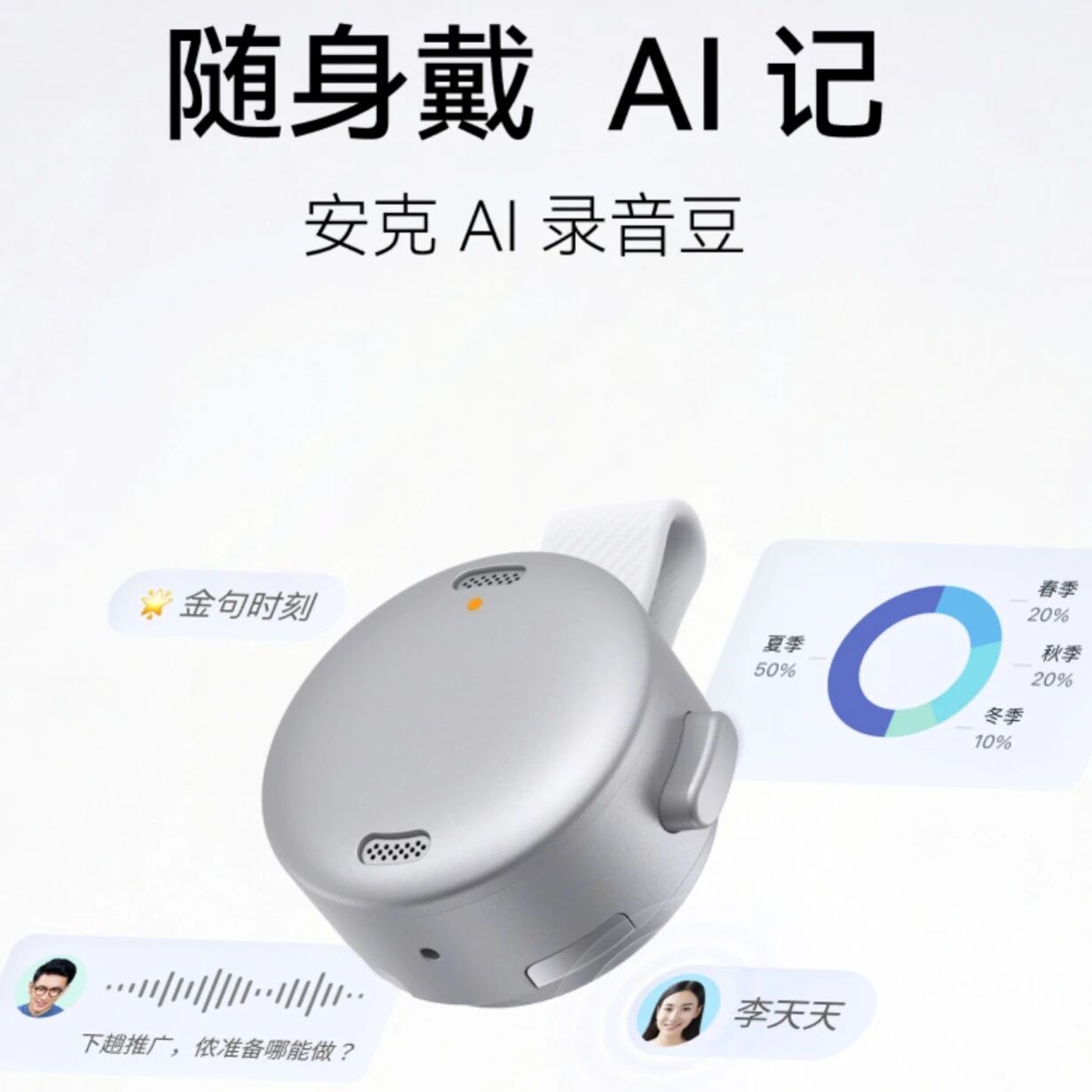
Core Viewpoint - The article discusses the launch of the Anker AI Recording Bean, a new AI hardware product developed in collaboration with ByteDance's Feishu, highlighting its innovative features and market positioning in the AI hardware sector [2][4]. Group 1: Product Overview - The Anker AI Recording Bean weighs approximately 10 grams and features a unique design resembling a round button, differing from traditional recording devices like recording pens [3]. - It supports both Bluetooth and Wi-Fi transmission modes, allowing users to wear it on their clothing or attach it to their mobile devices using magnetic accessories [3]. - The device integrates with Feishu's ecosystem, automatically importing recordings into Feishu documents, enhancing user experience and productivity [4]. Group 2: Market Context - The AI hardware market is becoming increasingly competitive, with major players like Alibaba, ByteDance, and Xiaomi entering the AI glasses segment, and OpenAI planning to launch a new AI device to compete with Apple AirPods [5]. - The article notes that the AI recording hardware sector has seen successful products like Plaud Note, which has sold over 1 million units globally, indicating strong market demand for innovative recording solutions [5]. Group 3: Strategic Implications - Feishu's entry into the AI hardware market represents a strategic move to explore AI integration and enhance its service offerings, primarily targeting professional users [4][5]. - The global investment in AI technology is projected to grow significantly, with IDC forecasting an increase from $315.8 billion in 2024 to $815.9 billion by 2028, indicating a robust market for AI-related hardware and software solutions [6].

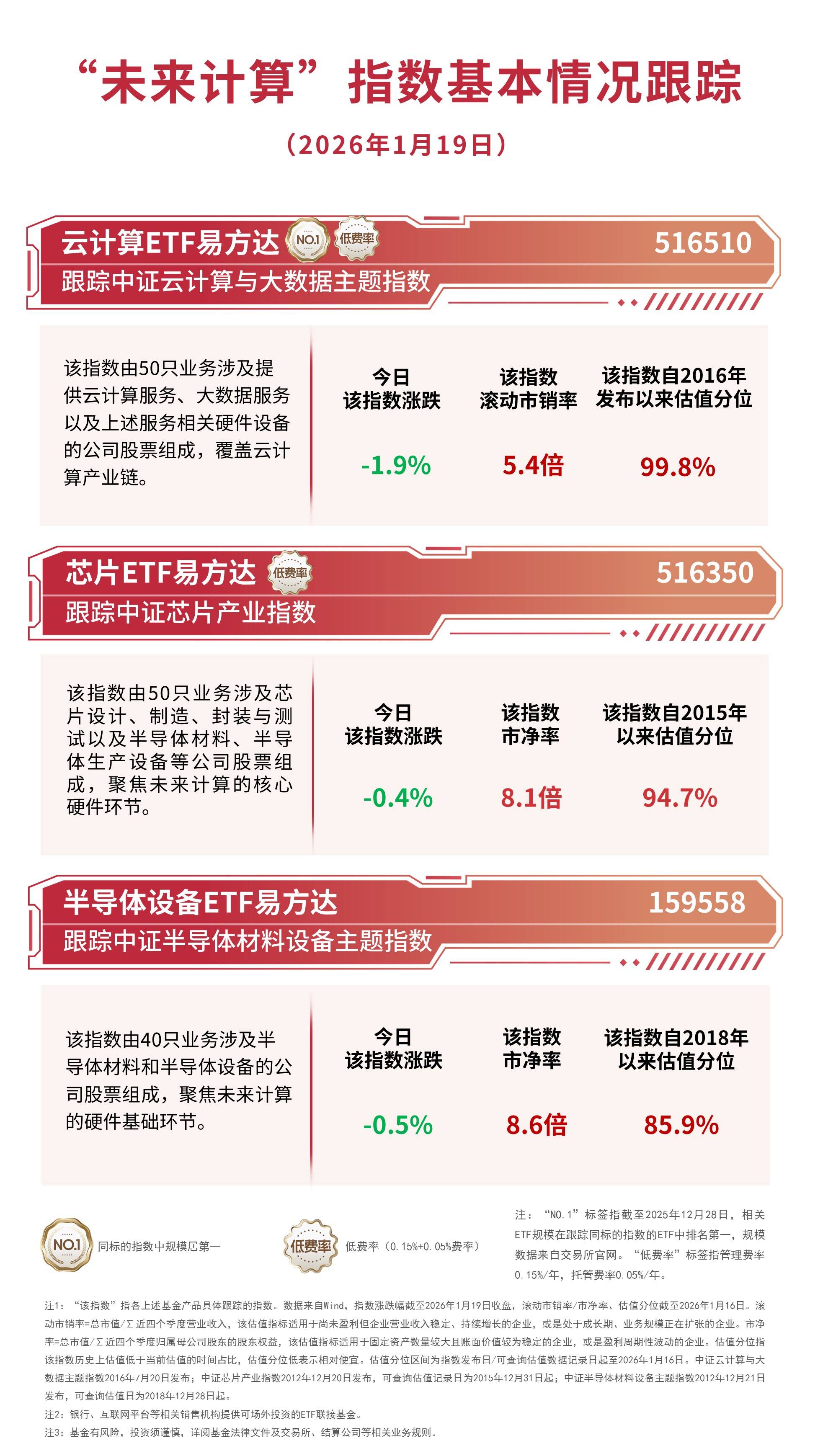
AI硬件板块震荡调整,半导体设备ETF易方达(159558)、云计算ETF易方达(516510)等产品受关注
Sou Hu Cai Jing· 2026-01-19 11:37
Group 1 - The AI hardware sector experienced fluctuations today, with the CSI Cloud Computing and Big Data Theme Index declining by 1.9%, the CSI Semiconductor Materials and Equipment Theme Index down by 0.5%, and the CSI Chip Industry Index falling by 0.4% [1] - Despite the market adjustments, there was a significant capital inflow into semiconductor equipment ETFs, with the E Fund Semiconductor Equipment ETF (159558) seeing a net subscription of over 170 million units throughout the day [1] - According to Dongwu Securities, domestic semiconductor equipment is entering a historic development opportunity, with a strong expansion cycle expected to begin in 2026, and the overall order growth rate for the semiconductor equipment industry is projected to exceed 30% [1] Group 2 - The semiconductor equipment ETF by E Fund tracks the CSI Semiconductor Materials and Equipment Theme Index, which consists of 40 companies involved in semiconductor materials and equipment, focusing on the hardware foundation for future computing [5] - The CSI Semiconductor Materials and Equipment Theme Index is composed of stocks from companies engaged in semiconductor design, manufacturing, packaging, testing, and semiconductor materials and production equipment [3]
涨停复盘:今日全市场共103只股涨停,连板股总数11只,机器人概念五洲新春、日盈电子涨停!
Sou Hu Cai Jing· 2026-01-19 11:10
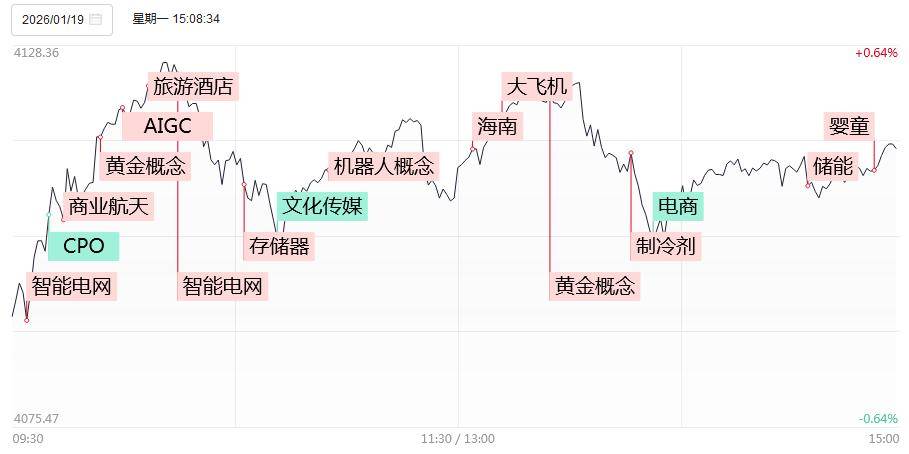
Market Overview - On January 19, the three major indices showed mixed results, with the Shanghai Composite Index performing strongly while the ChiNext Index experienced a pullback [1] - The total trading volume in the Shanghai and Shenzhen markets was 2.71 trillion yuan, a decrease of 317.9 billion yuan compared to the previous trading day [1] - Over 3,500 stocks in the market rose, with 103 stocks hitting the daily limit [1] Sector Performance - The electric grid equipment sector saw significant gains, with over ten constituent stocks hitting the daily limit, including Baobian Electric and China West Electric [1] - The robotics sector experienced fluctuations but ultimately rose, with stocks like Wuzhou New Spring and Riyi Electronics hitting the daily limit [1] - The precious metals sector also performed well, with Sichuan Gold and Zhaojin Gold reaching the daily limit [1] - The tourism and hotel sector strengthened, with stocks such as Dalian Shengya and Jiuhua Tourism hitting the daily limit [1] - The commercial aerospace sector was active, with stocks like Jiuding New Materials and Yuexiu Capital hitting the daily limit, and Chaojie Co. rising over 15% [1] Stock Highlights - A total of 87 stocks hit the daily limit across the market (excluding ST and delisted stocks), with 11 stocks on consecutive limit-up days [1] - Notable stocks included: - Jiamei Packaging, which had 15 limit-up days in 22 days due to a change in actual controller [1] - Victory Energy, also with 15 limit-up days in 22 days [1] - Fenglong Co., with 14 consecutive limit-up days [1] - Youbang Ceiling, with 9 limit-up days in 13 days [1] - Xinhua Department Store, which had 4 limit-up days due to a share transfer [1] - Sanbian Technology in the smart grid sector, with 4 limit-up days in 5 days [1] Related Industry News 1) The State Grid Corporation's fixed asset investment is expected to reach 4 trillion yuan during the 14th Five-Year Plan, representing a 40% increase compared to the previous plan [11] 2) The establishment of a working group for commercial community service robots marks a new phase in standardization efforts in China's robotics sector [11] 3) Huatai Securities reports that the profitability of bulk chemicals is at a ten-year low, indicating a potential upward trend as the industry approaches a dual inflection point in capacity and inventory cycles [11]

飞书史上第一次硬件合作,和安克创新做了一款「AI录音豆」
3 6 Ke· 2026-01-19 00:21
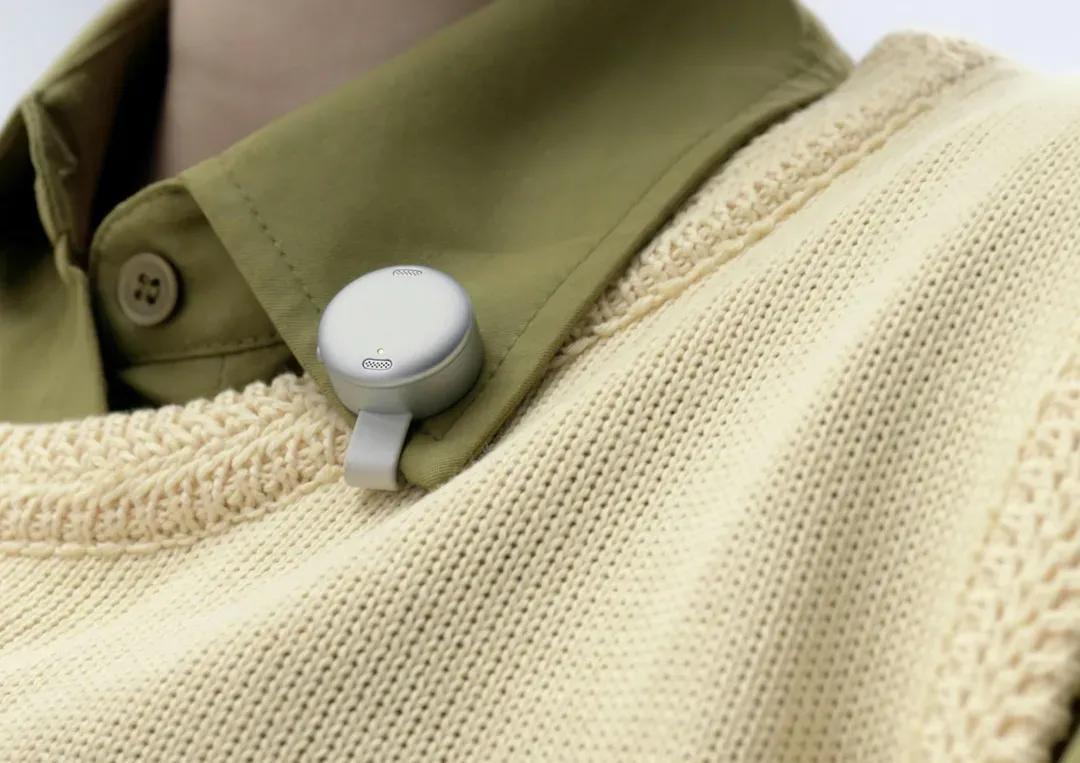
Core Insights - Feishu is set to launch a smart recording device named "AI Recording Bean" in collaboration with Anker Innovation, marking its first foray into hardware since its establishment in 2017 [1][4] - The device is designed to be lightweight at only 10 grams and features dual MEMS microphone arrays, supporting both Bluetooth and Wi-Fi connectivity for seamless recording [1][4] - The AI Recording Bean aims to differentiate itself from competitors by adopting a compact "bean" shape rather than the more common card form factor, emphasizing unobtrusive wearability and all-day accessibility [1][2] Product Features - The AI Recording Bean supports real-time meeting summaries, allowing users to view subtitles and AI-generated summaries during recordings, which enhances the device's usability [4][6] - It boasts a total battery life of over 32 hours with an 8GB storage capacity, capable of saving approximately 250 hours of audio, and features fast charging capabilities [4][6] - All recorded content is automatically stored in the Feishu knowledge base, enabling users to retrieve and interact with historical data through AI assistance [6][7] Market Context - Since 2025, there has been a surge in AI hardware innovations, with various companies introducing products like recording cards and AI cameras, all vying to become the primary AI assistant for users [5] - The competition in the AI recording device market is expected to intensify, with established players like iFlytek and Sogou enhancing their AI voice input technologies [5] - Feishu's entry into the AI hardware space aligns with its existing product ecosystem, which includes document and meeting functionalities, catering to knowledge-intensive industries that require efficient meeting documentation [7] Competitive Advantage - Feishu's product development is supported by ByteDance's advanced technology, particularly the self-developed Doubao model, which enhances multi-modal understanding and transcription accuracy [7] - The ability to continuously refine product experience through engineering insights and user feedback is seen as a significant barrier for new entrants in the AI recording device market [7]
飞书史上第一次硬件合作,和安克创新做了一款「AI录音豆」
36氪· 2026-01-19 00:07
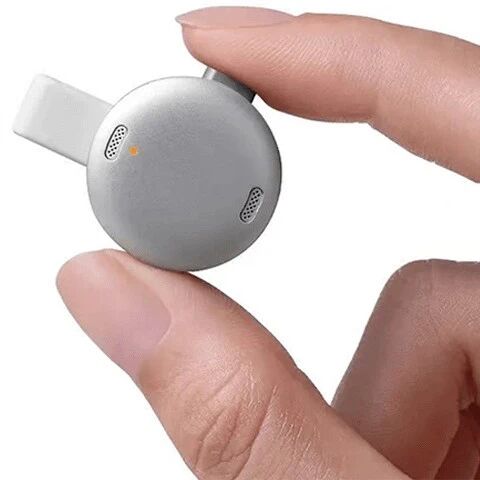
Core Viewpoint - The article discusses the emergence of AI hardware, specifically focusing on the launch of the "AI Recording Bean" by Feishu in collaboration with Anker Innovation, highlighting its innovative design and features aimed at enhancing user experience in daily scenarios [4][5][6]. Product Overview - The "AI Recording Bean" is a lightweight device weighing only 10 grams, designed for seamless wear and recording, with a total weight of approximately 48 grams when combined with its charging case [4]. - It supports both Bluetooth and Wi-Fi transmission modes, emphasizing a user-friendly experience for recording in various situations without the need to interact with a smartphone app [7][9]. Market Context - Since 2025, there has been a surge in AI hardware innovations, including recording cards and AI cameras, as companies seek to create more accessible AI interaction points for users [6][11]. - Feishu's choice of a "bean" shape differentiates it from the more common card form factor, which, while convenient for attachment to smartphones, is bulkier and limits usage scenarios [7]. Functional Features - The device offers real-time summary capabilities, allowing users to view subtitles and AI-generated summaries during recordings, which enhances the efficiency of information capture [9]. - It boasts a total battery life of over 32 hours and an 8GB storage capacity, enabling the storage of approximately 250 hours of audio, with fast charging capabilities [9]. Competitive Landscape - The AI recording device market is characterized by a consensus that while hardware can be replicated quickly, the differentiation in user experience stems from ongoing engineering refinements and insights into various office scenarios [14][15]. - Feishu's integration of its self-developed Doubao model, known for its leading multimodal understanding capabilities, provides a competitive edge in transcription accuracy and intelligent summary generation [15]. User-Centric Design - The design of the AI Recording Bean aligns with the needs of knowledge-intensive industries, where meetings and documentation are prevalent, making it a logical extension of Feishu's existing product ecosystem [13]. - The device is tailored to address common user pain points, such as differentiating speakers in meeting minutes and automatically extracting action items, which are critical for effective collaboration [13].
策略周报:理性降温,景气度仍是避风港-20260118
HWABAO SECURITIES· 2026-01-18 14:33
Group 1 - The report emphasizes a rational cooling in the market, suggesting that the economic climate remains a safe haven for investors [1][3] - The bond market sentiment has improved due to recent central bank operations that injected liquidity, leading to a quick recovery in the 10-year government bond yield, which is expected to fluctuate around 1.85% [2][12] - The report highlights the importance of high coupon bond allocations, especially if government bond supply pressures ease in late January, presenting a potential mid-term buying opportunity [12][13] Group 2 - The stock market is experiencing a shift back to rationality, with regulatory measures aimed at preventing overheating risks, leading to adjustments in major indices like the CSI 300 [3][10] - The report suggests that after the market returns to rationality, it will benefit a slow bull market and attract funds back to high-growth sectors such as AI hardware, robotics, semiconductors, new energy, non-ferrous metals, and chemicals [3][13] - Short-term market indices may still be in a cooling phase, and it is recommended to wait for reduced selling pressure before making new investments [12][13] Group 3 - The report notes that the overseas markets are likely to continue a strong but volatile trend, although geopolitical risks in the Middle East have increased uncertainty [13] - Recent adjustments in financing margin ratios by the China Securities Regulatory Commission aim to lower leverage levels and protect investor rights, which may contribute to long-term market stability [9][10] - The report indicates that the A-share market has seen a significant increase in trading volume, with daily average turnover rising to 34,651 billion, marking a historical high [20]