数字金融

Search documents
南方财经编委王芳艳:我们对大资管、大财富的未来充满期待
2 1 Shi Ji Jing Ji Bao Dao· 2025-08-16 08:05
Core Viewpoint - The wealth management industry is experiencing new opportunities due to changes in resident asset allocation and the deepening development of capital markets, despite challenges posed by a low interest rate environment and fluctuating global economic conditions [1][3]. Group 1: Passive Investment Trends - The rise of passive investment has accelerated, with index-based investment becoming a significant choice for large-scale capital allocation. As of June 30, the total scale of ETFs listed in China reached 4.31 trillion yuan, an increase of over 15% since the beginning of the year [2]. - The active performance of the A-share market, which recently surpassed 3,700 points, reflects the positive impact of emerging sectors such as artificial intelligence, new consumption, and innovative pharmaceuticals [2]. Group 2: Industry Challenges and Adaptations - The wealth management industry is enhancing its research capabilities, risk pricing abilities, asset allocation skills, and investor service capabilities in response to market complexity and product diversity [3]. - The industry is shifting from a sales-driven mindset focused on scale to a service-oriented approach that emphasizes value creation and investor account returns [3]. Group 3: Future Outlook - The Chinese economy has shown strong resilience, with government initiatives aimed at boosting consumption and investment returns, which will further expand the market scale of the wealth management industry [4]. - Innovations in pension finance and digital finance are creating new growth opportunities, with a focus on developing a comprehensive pension service system that meets the wealth management needs across individuals' and families' life cycles [4]. - The acceleration of AI applications and the digital transformation of asset management institutions are expected to enhance the quality and scope of wealth management services [4].
阿布扎比投资办公室与蚂蚁国际集团签署合作谅解备忘录
Shang Wu Bu Wang Zhan· 2025-08-16 04:10
Core Viewpoint - The Abu Dhabi Investment Office (ADIO) has signed a memorandum of understanding with Ant Group to leverage its technological expertise to support the development of the fintech sector in Abu Dhabi [1] Group 1: Partnership Details - The collaboration aims to enable local businesses to benefit from advanced digital solutions [1] - The partnership will connect Abu Dhabi with major global financial markets through digital technology [1] Group 2: Strategic Importance - ADIO Director Badr emphasized that Abu Dhabi has become a leading financial center and a preferred location for fintech companies seeking to enhance regional and global influence [1] - The agreement is considered a significant milestone in the development of digital finance [1]
30亿USDT!中国国风投首度发行稳定币基金,日化1.6%,开启跨境投资新篇章
Sou Hu Cai Jing· 2025-08-15 07:45
Core Viewpoint - The issuance of the first stablecoin-based venture capital fund by China National Capital Venture Investment Co., Ltd. (Guofengtou) marks a significant step into the digital finance sector for state-owned capital in China, with a fund size of 3 billion USDT, providing new solutions for cross-border investment and global capital allocation [1][4]. Group 1: Fund Characteristics - The fund has a scale of 3 billion USDT and offers an innovative daily yield of 1.6%, which translates to an annualized return of over 500%, making it highly attractive to investors seeking stable returns [3][5]. - Stablecoins, such as USDT, are pegged to the US dollar, providing value stability, efficient cross-border transfers, and low costs, thus becoming essential financial tools in cross-border investment and digital finance [3][5]. Group 2: Strategic Implications - The fund's launch signifies a strategic transformation for Chinese state-owned capital in the globalized and digital investment landscape, serving as a strong example for innovation in China's capital markets [4][11]. - The fund aims to invest in strategic resources in global markets, focusing on advanced technology sectors such as smart manufacturing, renewable energy, and artificial intelligence, thereby promoting the "Belt and Road" initiative and deepening global industrial integration [10][11]. Group 3: Global Competitiveness - The stablecoin fund is designed to enhance the efficiency of capital operations and improve global capital allocation capabilities, thereby increasing the competitiveness of Chinese capital in international markets [11][12]. - By utilizing digital asset technology, the fund can effectively mitigate traditional investment risks such as currency fluctuations and transaction costs, providing greater investment flexibility and adaptability for Chinese enterprises [11][12]. Group 4: Risk Management and Compliance - The fund incorporates a strict risk control and compliance framework, ensuring transparency and security in its operations, with third-party custody and regulatory oversight for all investment projects and fund flows [12][13]. - Guofengtou collaborates with well-known financial institutions to provide comprehensive compliance guarantees, ensuring the fund's operations are secure and transparent [12][13]. Group 5: Conclusion - The establishment of the 3 billion USDT stablecoin fund not only represents a significant innovation for Chinese state-owned capital in the digital finance sector but also introduces a new investment model to the global capital market [13]. - With its attractive yield, global investment strategy, and rigorous risk management, Guofengtou is poised to play a more prominent role in cross-border investment and digital asset management in the future [13].


工行河北省分行以高质量金融供给 助力河北经济社会高质量发展
Xin Lang Cai Jing· 2025-08-15 04:27
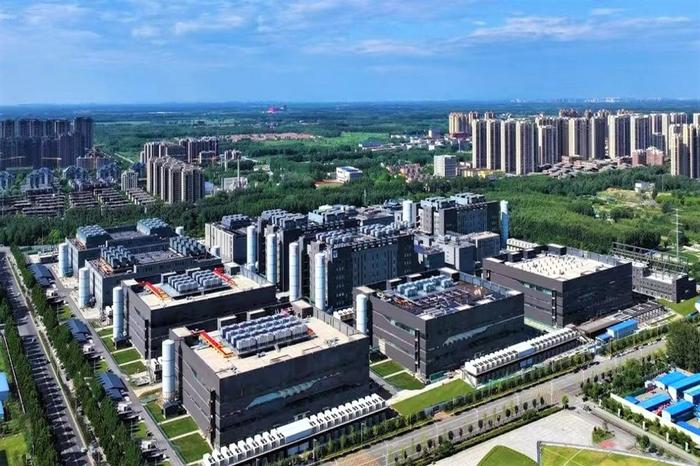
Core Viewpoint - The Industrial and Commercial Bank of China (ICBC) Hebei Branch is actively enhancing financial services to support the real economy in Hebei, focusing on technology finance, green finance, inclusive finance, pension finance, and digital finance to drive high-quality economic development [1][4][5]. Group 1: Technology Finance - ICBC Hebei Branch has established a provincial-level technology finance center and has launched various specialized products to support innovation and transformation in strategic emerging industries [4]. - The branch provided 780 million yuan in technology finance to support the construction of the Runze International Information Port, which includes 22 high-grade data centers [1]. - As of June 2025, the balance of loans to technology enterprises reached 150.9 billion yuan, with a growth rate of 14.62% for specialized and innovative enterprises [4]. Group 2: Green Finance - The branch has actively engaged in green finance initiatives, with a green loan balance of 33.3 billion yuan in Xiong'an as of June 2025, leading the market in this area [5]. - ICBC Hebei Branch has supported various green projects, including a 1 billion yuan loan for a dust pollution control project at a steel plant [6]. - The total green loan balance reached 174 billion yuan, with an increase of 30.3 billion yuan from the beginning of the year, outpacing the overall loan growth by 12 percentage points [6]. Group 3: Inclusive Finance - The branch has implemented a "thousand enterprises, ten thousand households" outreach program to enhance inclusive financial services, achieving full coverage of enterprises on the whitelist [12]. - As of June 2025, the balance of inclusive loans reached 166 billion yuan, with an increase of 46.8 billion yuan, representing a growth rate of 39% [13]. - The bank has tailored financial products to meet the needs of various industries, including a 10 million yuan loan to a bicycle parts manufacturer facing cash flow issues [9]. Group 4: Pension Finance - ICBC Hebei Branch has developed a comprehensive pension finance service system, with 750,000 personal pension accounts opened and a management scale of 56.9 billion yuan [14]. - The branch has established over 690 elderly-friendly service points to cater to the financial needs of senior citizens [15]. - The bank has supported various pension projects, with total loans exceeding 1 billion yuan in the pension industry [15]. Group 5: Digital Finance - The branch has launched a remote online service model, significantly reducing processing times for various banking services [16]. - As of June 2025, the number of personal mobile banking customers reached 28.99 million, and the number of corporate online banking customers reached 116,000 [21]. - The bank has actively promoted the use of digital renminbi, establishing over 4,200 application scenarios across multiple sectors [21].
更好发挥期市的“减震器”“配置器”作用
Qi Huo Ri Bao Wang· 2025-08-15 00:36
Core Insights - The futures market in China has reached a historical high in total funds, reflecting the transformation of futures tools from "financial derivatives" to "operational necessities" during the economic transition [1][2] - The growth in the futures market is driven by a combination of policy support, industry demand, and market dynamics, indicating a positive feedback loop [3][4] Group 1: Market Dynamics - As of July 2025, the total funds in the futures market are approximately 1.82 trillion yuan, representing an 11.6% increase from the end of 2024, amidst global geopolitical tensions and economic recovery disparities [2] - The demand for hedging and asset allocation has surged due to the expansion of China's real economy, with GDP growth of 5.3% in the first half of 2025 [2] - The divergence between CPI and PPI has created a need for enterprises to lock in prices through futures to stabilize cash flow [2] Group 2: Policy and Industry Support - The increase in general corporate client equity by 18.5% by July 2025 is attributed to supportive policies, including the introduction of more futures products and fee discounts for hedging transactions [3] - Leading enterprises are increasingly reliant on futures tools for pricing and inventory management, creating a leverage effect that benefits smaller traders [3] Group 3: Futures Market Evolution - The futures market is evolving across multiple dimensions, including the introduction of carbon futures and data derivatives, indicating a shift towards more complex financial instruments [4] - The market participant structure is changing from retail-dominated to a more balanced distribution among professional institutions and industry clients [4] - Technological advancements such as blockchain and IoT are expected to streamline the delivery process, reducing costs and enhancing participation for small enterprises [4] Group 4: Service to the Real Economy - The establishment of industry chain prosperity indices can guide production and inventory management across supply chains [5] - A tiered toolbox for risk management is being developed to cater to both small and large enterprises, enhancing their ability to hedge against market fluctuations [5] - Collaborative efforts in key commodity hubs are being made to integrate logistics and financial services, providing comprehensive support to businesses [5] Group 5: Strategic Positioning - The futures market is positioned as a stabilizer for the real economy, enabling Chinese enterprises to manage risks proactively and integrate futures into their daily operations [6] - The goal is to establish "Chinese pricing" in global trade contracts, enhancing the competitiveness of Chinese businesses in the international market [6]
这个夏天,“邮”你来辩|第二届中邮保险•紫荆杯全国高校金融普及教育辩论赛初赛圆满落幕
清华金融评论· 2025-08-14 10:21
Core Viewpoint - The article highlights the successful completion of the preliminary round of the second "Zijing Cup" National College Financial Education Debate Competition, focusing on themes such as digital economy, silver-haired industry, inclusive finance, and digital finance [1][6]. Group 1: Competition Overview - The preliminary round featured debate teams from 48 universities across the country, with 24 teams advancing to the next round [1]. - The event was organized by Tsinghua Wudaokou in collaboration with China Post Insurance, showcasing the engagement of young talents in financial discourse [1]. Group 2: Debate Themes - The debates centered on critical issues including the role of young people in upgrading the silver-haired industry, emphasizing the need for professional capability leapfrogging and intergenerational equity [11][23]. - Discussions on digital finance highlighted the necessity of balancing business transformation efficiency with risk prevention, stressing that a robust regulatory framework can accelerate high-quality development [12][13]. Group 3: Key Insights from Judges and Participants - Judges noted the complex mindset of young participants, who seek both professional growth through technological advancements in elder care and emotional fulfillment from their contributions to society [7]. - Participants argued that the silver-haired industry requires a shift in perspective, recognizing elderly individuals as active societal participants rather than passive recipients of services [23]. Group 4: Financial Culture and Economic Service - The debate emphasized that the sustainable development of China's financial culture relies on adhering to the fundamental purpose of serving the real economy while adapting to innovations in the digital economy [18][20]. - The importance of opportunity equality in inclusive finance was highlighted, asserting that without it, sustainability becomes meaningless [15].
服务央企、助力国家战略 国新证券经营质效持续提升
Zhong Guo Jing Ji Wang· 2025-08-14 06:29
凭借走特色化、差异化、专业化的发展道路,这三年,国新证券交出一份亮眼成绩单。2022年至2024年 的营业收入分别为5.97亿元、16.21亿元和17.51亿元,净利润分别为5.01亿元、4.84亿元和3.20亿元。 2025年上半年,国新证券业绩同比大幅增长。 国新证券表示,作为央企券商,将积极响应政策号召,切实履行央企金融机构的责任担当,本次科技创 新债券的募集资金,将用于科技创新债券的投资,进一步助力科技创新领域的发展。 这是国新证券践行使命、服务大局,功能作用不断彰显的一个缩影。2022年8月8日,国新证券正式揭 牌,加入中国国新控股有限责任公司,成为国有资本运营公司的重要功能板块。国新证券党委委员、副 总经理汪强表示:"三年来,国新证券深入推进精神、战略、组织、业务、管理'五个重塑',聚焦'立足 国新、服务央企、助力国家战略'的功能定位,以专业服务赋能央企改革发展,以创新思维搭建资本与 实体的桥梁,以系统观念夯实内部管理基础,以党的建设把牢前行正确方向,初步实现了脱胎换骨的新 发展。" 汪强介绍,国新证券始终将把功能性放在首要位置,紧紧围绕"立足国有资本运营公司服务国资央企改 革大局"这一中心任务, ...
媒体视角 | 全国首批、上交所首单数据中心REITs上市
申万宏源证券上海北京西路营业部· 2025-08-14 02:53
Core Viewpoint - The successful listing of the Southern Universal Data Center REIT marks a significant milestone for the REITs market in China, demonstrating the integration of technology, capital, and the real economy, and promoting high-quality development in the sector [1][2]. Group 1: REITs Market Development - The Southern Universal Data Center REIT is the first data center REIT listed on the Shanghai Stock Exchange, representing a key step in the development of the REITs market under the guidance of the China Securities Regulatory Commission [1]. - As of August 8, 2024, the Shanghai Stock Exchange has launched 49 REITs, including first listings in various sectors such as consumer facilities, hydropower, and data centers, showcasing a positive scale and demonstration effect [2]. - The REITs market is experiencing accelerated regular issuance, with 8 REITs announcing expansion and 3 receiving approval for expansion in 2024 [2]. Group 2: Financial Performance and Projections - The underlying asset of the Southern Universal Data Center REIT is the Guojin Data Cloud Computing Data Center project, which has maintained a 100% signing rate and over 92% billing rate for the past three years, with a projected annual cash distribution rate of 5.07% by 2025 [1]. - The total fundraising scale for the project is 24 billion yuan, with net proceeds primarily allocated to the construction of data centers to enhance computing power supply and support technological innovation and digital transformation [1]. Group 3: Future Directions - The Shanghai Stock Exchange plans to further accelerate the regular issuance of REITs and improve operational standards, aiming to create a high-quality REITs market that better serves national strategies and overall economic development [3].

“双贴息”政策 如何惠企利民?
Sou Hu Cai Jing· 2025-08-13 23:09
Group 1 - The dual subsidy policy for personal consumption loans and service industry operating loans aims to stimulate consumer demand and support residents' consumption through fiscal and financial measures [1][2] - The personal consumption loan subsidy differs from existing installment payment discounts as it is a national-level initiative designed to broaden the scope of eligible consumers, including those with lower income levels [2][3] - The inclusion of consumer credit companies alongside traditional banks in the loan processing institutions is expected to enhance the reach and effectiveness of the subsidy policy [3] Group 2 - The policy targets service industry operating entities, particularly small and micro enterprises, which are crucial for employment and local services [7][8] - By providing direct loan subsidies, the policy aims to lower borrowing costs for these businesses, thereby improving service quality and upgrading consumption scenarios [8] - The broad applicability of the policy is anticipated to effectively boost consumption and stimulate market vitality, contributing positively to the overall economy [8]

金融护航新型工业化,医疗装备迎利好
Wind万得· 2025-08-13 22:36
Core Viewpoint - The article emphasizes the importance of financial support for the successful implementation of new industrialization in China, particularly focusing on high-end, intelligent, and green development in key sectors such as integrated circuits, industrial mother machines, and medical equipment [3][4][7]. Group 1: Financial Support for New Industrialization - New industrialization is characterized by a shift from traditional high-input, high-consumption models to a more efficient, environmentally friendly approach driven by technology [4][7]. - The Chinese government aims to establish a mature financial system by 2027 that supports the high-end, intelligent, and green development of the manufacturing sector, enhancing service adaptability while effectively preventing financial risks [3][4]. Group 2: Financial Support for Medical Equipment - The focus on high-end medical equipment is crucial for achieving the dual goals of economic value and social benefit, linking the "manufacturing upgrade" with the "Healthy China" strategy [8][10]. - Financial tools such as patient capital and various leasing options can help medical institutions acquire advanced diagnostic capabilities while mitigating financial risks associated with high-cost medical devices [9][10]. Group 3: Investment Trends in Medical Devices - In the first half of 2025, the medical device sector saw 279 financing cases totaling 10.937 billion yuan, indicating sustained investor interest despite previous fluctuations in investment activity [11][12]. - The trend reflects a strong confidence among investors in the independent development of innovative medical devices, supported by government policies and market demand [11].