算力

Search documents
算力大单终止引发股价大跌!海南华铁两大股东“火速”护盘,胡丹锋增持计划已完成
Bei Jing Shang Bao· 2025-10-15 12:12
Core Viewpoint - The termination of a significant 3.69 billion yuan computing power contract has led to a sharp decline in Hainan Huatie's stock price, prompting major shareholders to intervene and support the stock price through share buybacks [1][2]. Group 1: Company Actions - Hainan Huatie announced the completion of a share buyback plan by its major shareholder and general manager, Hu Danfeng, who increased his holdings by 644,800 shares, representing 0.32% of the total share capital, with a total investment of 49.9972 million yuan [1][2]. - The company's controlling shareholder, Haikong Chuantou, also initiated a share buyback plan, acquiring 560,400 shares, which increased its ownership from 13.78% to 14.06%, with an investment of 43.0034 million yuan [3]. Group 2: Market Reaction - Following the announcement of the contract termination, Hainan Huatie's stock experienced consecutive trading halts, with a drop of 7.12% on October 14, before a slight recovery of 1.98% on October 15, closing at 7.72 yuan per share, with a total market capitalization of 15.42 billion yuan [2]. - Prior to the contract termination, Hu Danfeng had planned to reduce his stake in Hainan Huatie, but quickly reversed this decision to support the stock price through an increase in holdings [2].

科技股强势反弹,5G通信ETF(515050)盘中拉升涨近1%,移远通信涨超6%
Mei Ri Jing Ji Xin Wen· 2025-10-15 11:29
Core Viewpoint - The A-share market is experiencing a rebound, particularly in the TMT sector, with significant movements in the 5G communication ETF (515050) and related stocks, indicating a positive sentiment towards technology and AI infrastructure investments [1][2]. Group 1: Market Performance - Major A-share indices rose, with technology stocks rebounding, particularly in the computer, communication, and electronics sectors [1]. - The 5G communication ETF (515050) saw a peak increase of nearly 1% during trading, with a trading volume exceeding 1 billion yuan [1]. Group 2: Sector Analysis - The 5G communication ETF tracks the CSI 5G Communication Theme Index, with a total scale exceeding 8 billion yuan, focusing on the supply chains of major companies like NVIDIA, Apple, and Huawei [2]. - The index has a high purity of "hard technology," with communication and electronics sectors accounting for 79.4% of the total weight, where communication holds 44% and electronics 35% [2]. Group 3: AI and Computing Infrastructure - Long-term investments in AI infrastructure are increasing, with OpenAI expanding its ecosystem and securing partnerships for significant computing power [1]. - Global AI infrastructure investments are heating up, with xAI's financing potentially exceeding 20 billion dollars and NVIDIA planning to invest around 2 billion dollars [1].

459.8万个5G基站之后,新基建如何再进阶
2 1 Shi Ji Jing Ji Bao Dao· 2025-10-15 09:41
Core Insights - The construction of new infrastructure in China has made significant progress during the "14th Five-Year Plan" period, with 4.598 million 5G base stations and 30.532 million gigabit ports established, alongside over 20,000 "5G + industrial internet" projects [1][6] - The focus for the upcoming "15th Five-Year Plan" will likely shift towards artificial intelligence (AI), computing power, and 5G technologies, which are seen as critical for industrial structure transformation and sustainable economic development [8][9] New Infrastructure Framework - The new infrastructure framework consists of three main components: information infrastructure, integrated infrastructure, and innovative infrastructure [3][4] - Information infrastructure includes advanced technologies such as 5G, IoT, data centers, AI, satellite communication, and blockchain [3] - Integrated infrastructure refers to the intelligent transformation of traditional infrastructure using new technologies, exemplified by industrial internet and smart city facilities [3] Policy and Development Trends - Numerous policy documents have been released since the "14th Five-Year Plan," emphasizing the importance of digital infrastructure in China's overall development strategy [4][10] - Local governments, including those in Jiangsu, Sichuan, and Beijing, have introduced specific plans to advance new infrastructure construction [4][5] Computing Power and AI - China's computing power is ranked second globally, with 10.85 million standard racks and an intelligent computing capacity of 788 EFLOPS [6] - The "15th Five-Year Plan" is expected to emphasize the balanced distribution of intelligent computing centers across the country, addressing the underutilization of computing resources in the western regions [2][9] Future Directions - The integration of AI with infrastructure is anticipated to be a key focus, with applications in smart transportation, healthcare, and manufacturing [9][11] - The development of a nationwide high-quality computing network and the enhancement of network support for AI applications are critical objectives for the "15th Five-Year Plan" [10][12]
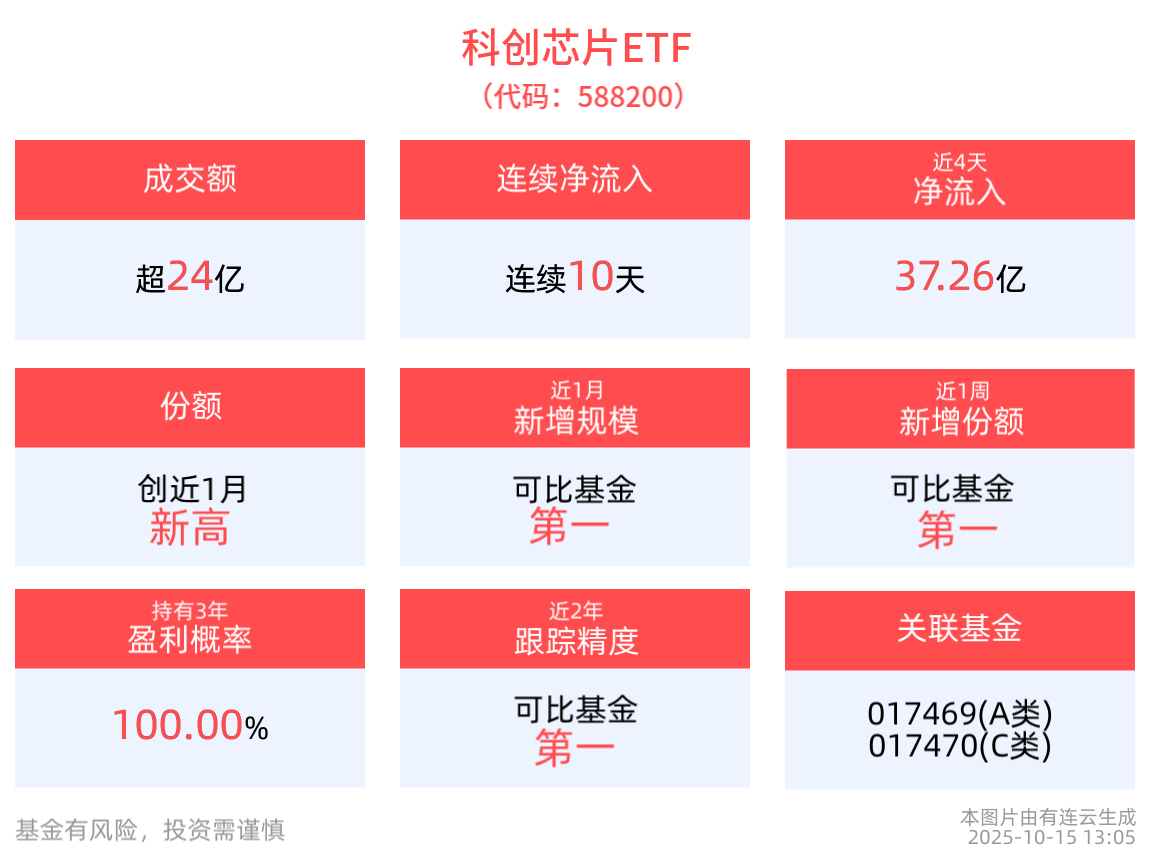
国产模拟芯片突破千倍能效,科创芯片ETF(588200)整固蓄势,近10天合计“吸金”超70亿
Sou Hu Cai Jing· 2025-10-15 05:29
Group 1 - The Shanghai Stock Exchange Sci-Tech Innovation Board Chip Index experienced a slight decline of 0.01% as of October 15, 2025, with mixed performance among constituent stocks [1] - Dongxin Co., Ltd. led the gains with an increase of 7.44%, followed by Chengdu Huami with a rise of 6.68%, and Haiguang Information up by 4.72% [1] - The top ten weighted stocks in the index accounted for 59.69% of the total, with Haiguang Information, Lanke Technology, and SMIC being the most significant contributors [4] Group 2 - The Sci-Tech Chip ETF (588200) saw a trading volume turnover of 5.89% and a transaction value of 2.416 billion yuan, indicating active trading [4] - Over the past month, the ETF's scale increased by 8.994 billion yuan, marking a significant growth and ranking first among comparable funds [4] - The ETF achieved a net inflow of 7.09 billion yuan over the last ten days, with a peak single-day inflow of 2.748 billion yuan [4] Group 3 - Oracle and AMD announced an expansion of their partnership, with Oracle Cloud Infrastructure set to deploy 50,000 AMD GPUs starting in Q3 2026 [5] - Research teams from Peking University developed a high-precision, scalable analog matrix computing chip based on resistive memory, achieving performance comparable to digital processors [5] - Analysts from Guangfa Securities and Galaxy Securities expressed optimism about the AI industry chain and the necessity for domestic chip production, highlighting continued investment in computing power [5]







硅谷巨头抱团押注AI算力,中国跟不跟?
3 6 Ke· 2025-10-15 00:27
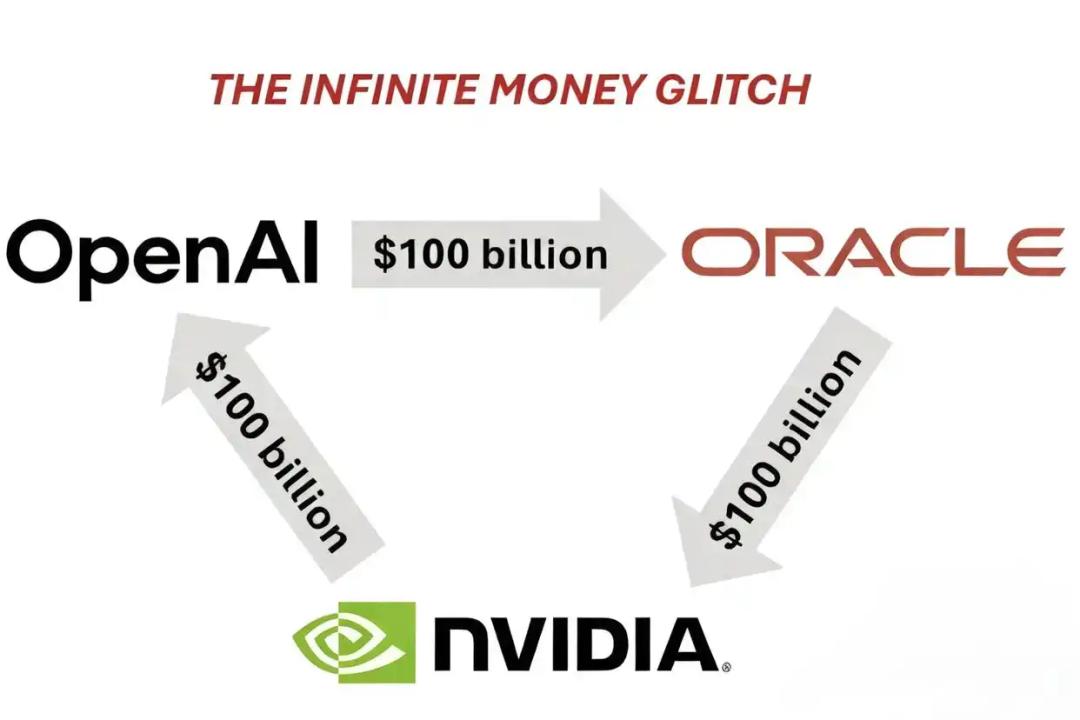
Core Viewpoint - From September 2025, major U.S. tech giants are abandoning their rivalries to collaborate on computing power, forming a strategic alliance centered around AI capabilities, significantly boosting their market valuations [1][4]. Group 1: Strategic Collaborations - OpenAI has placed a $300 billion order for computing power from Oracle, which has a close partnership with Nvidia, indicating a surge in demand for computing chips [1]. - Nvidia announced a $100 billion investment in OpenAI to jointly build large-scale AI data centers, creating a powerful "AI triangle" among OpenAI, Oracle, and Nvidia [1][4]. - AMD has also entered into a strategic agreement with OpenAI to deploy a total of 6 gigawatts of AMD GPU computing power, potentially granting OpenAI nearly 10% equity in AMD [4]. Group 2: Market Dynamics - The AI industry is experiencing a "computing power anxiety," which is a critical bottleneck for development and technological advancement [9][12]. - AI computing power expenditure has increased from 9% of total computing power spending in 2016 to an estimated 25% by 2025, indicating a rapid shift towards AI capabilities [10]. - The high costs associated with computing power are a significant barrier for AI companies, with OpenAI's computing costs reaching $16 billion annually, surpassing its human resources and R&D expenses combined [13][14]. Group 3: Political and Economic Context - The Trump administration's relaxed regulations on large tech companies have facilitated this collaboration among Silicon Valley firms, contrasting with the more interventionist approach of the Biden administration [15][16]. - The Biden administration's focus on market intervention has limited large-scale cooperative projects among tech giants, highlighting the importance of a favorable business environment for industry growth [17][22]. Group 4: Comparison with China - China's AI industry, while rapidly developing, lacks the collaborative spirit seen in the U.S. due to regulatory constraints and a less mature computing power infrastructure [23][26]. - The disparity in computing power supply in China, characterized by both surplus and scarcity, complicates the potential for large-scale collaboration among tech firms [26][28]. - Despite these challenges, China's AI market holds significant potential, and with the right market conditions, it could narrow the gap with U.S. counterparts [29].


英维克前三季研发费用率7.39% 算力浪潮下净利3.99亿增13%
Chang Jiang Shang Bao· 2025-10-14 23:34
Core Viewpoint - The demand for liquid cooling in data centers is increasing due to the rise of the computing power era, leading to steady growth in the operating performance of Invec (002837.SZ) [1][3]. Financial Performance - For the first three quarters of 2025, Invec achieved operating revenue of 4.026 billion yuan, a year-on-year increase of 40.19% [1][3]. - The net profit attributable to shareholders was 399 million yuan, up 13.13% year-on-year, while the net profit excluding non-recurring gains and losses was 384 million yuan, reflecting a 14.76% increase [1][3]. - R&D expenses reached 297 million yuan, a 31.36% increase year-on-year, accounting for 7.39% of the operating revenue during the same period [2][6]. Business Growth Drivers - The growth in revenue is primarily attributed to increased sales of energy-saving temperature control products for server rooms and cabinets [2][4]. - Invec's temperature control products serve major clients in the data center sector, including ByteDance, Tencent, Alibaba, and major telecommunications companies [4]. Market Position and Technology - Invec is recognized as a leading provider of precision temperature control solutions, with a strong focus on cooling solutions for cloud computing data centers and communication networks [3][5]. - The company has established a comprehensive R&D system and has been recognized by Intel for its cooling products, becoming a key partner in Intel's liquid cooling innovation program [5][6]. Inventory and Demand Indicators - As of September 2025, Invec's inventory reached 1.232 billion yuan, a 39.32% increase from the end of 2024, indicating strong downstream customer demand [7]. - The company's contract liabilities also increased by 42.37% to 326 million yuan, reflecting ongoing robust demand from clients [7].

OpenAI多点下注,联手英伟达、AMD、博通,狂揽26吉瓦算力
美股研究社· 2025-10-14 12:30
Core Viewpoint - The rapid development of AI technology, particularly large language models (LLMs) and multimodal models, has made computing power a strategic resource for AI companies. OpenAI is transitioning from being a mere consumer of computing power to a co-designer and strategic controller of the computing ecosystem through significant hardware collaborations [5][6]. Group 1: OpenAI and Broadcom Collaboration - OpenAI and Broadcom announced a partnership to develop a custom AI accelerator with a scale of 10 gigawatts (GW), with deployment expected to start in the second half of 2026 and complete by the end of 2029 [7]. - OpenAI will lead the design of the AI accelerator and system architecture, utilizing Broadcom's Ethernet and connectivity solutions [7]. - The collaboration aims to optimize the entire technology stack for improved performance, faster model responses, and lower operational costs [7][8]. Group 2: OpenAI and AMD Partnership - OpenAI has reached an agreement with AMD to deploy a total of 6 GW of AMD GPU computing power over the coming years, using a "technology + equity" dual-driven model [9]. - AMD will issue warrants for up to 160 million shares of common stock to OpenAI, allowing OpenAI to acquire approximately 10% of AMD if all warrants are exercised [9]. - The first phase of 1 GW deployment is set to begin in the second half of 2026, utilizing AMD's next-generation AI acceleration products [9]. Group 3: OpenAI and NVIDIA Agreement - OpenAI signed a letter of intent with NVIDIA for a potential investment of up to $100 billion to support the deployment of at least 10 GW of NVIDIA AI systems [11]. - This investment will be tied to the progress of computing power deployment, with the first 1 GW expected to be operational by the second half of 2026 [11][12]. - The scale of 10 GW is estimated to be equivalent to the total computing power of 4 to 5 million top-tier GPUs, significantly surpassing any existing AI data center [11][12]. Group 4: Strategic Implications - The three collaborations collectively amount to a staggering 26 GW of computing power, indicating a major leap in OpenAI's infrastructure and capabilities by the second half of 2026 [13]. - The partnerships with both NVIDIA and AMD suggest a diversification strategy to reduce reliance on a single supplier and enhance supply chain resilience [12]. - OpenAI's collaboration with Broadcom reflects an effort to design proprietary accelerators tailored for AI workloads, achieving optimal hardware-software synergy [12].


A股三季报预告超八成预喜,鲁股韧性凸显
Qi Lu Wan Bao Wang· 2025-10-14 10:31
Core Insights - The overall performance of A-share listed companies for the first three quarters of 2025 is positive, with over 84% of companies reporting favorable earnings forecasts, indicating a recovery in profitability amid supportive economic policies and structural optimization [1][2]. Group 1: Earnings Performance - As of October 14, 2025, 72 companies have released earnings forecasts, with 18 companies expecting slight increases, 4 companies turning losses into profits, and 41 companies forecasting significant profit growth [2]. - Notably, 22 companies are projected to achieve profits exceeding 500 million yuan, with New China Life Insurance leading at a net profit of 32.05 billion yuan, a year-on-year increase of 45%-65% [2]. - Other companies with substantial profits include Luxshare Precision at 11.12 billion yuan (20%-25% growth), Salt Lake Industry at 4.5 billion yuan, and Yuexiu Capital at 3.008 billion yuan [2]. Group 2: Profit Growth Rates - 22 companies are expected to see a year-on-year profit growth of over 100%, with 5 companies exceeding 300% growth [3]. - Chujiang New Materials is highlighted as the "profit growth king," with an estimated net profit of 350-380 million yuan, reflecting a staggering increase of 2057.62%-2242.56% [3]. - Other notable performers include Yinglian Co. (1602.05% growth), Guangdong Mingzhu (964.95%), and Liming Co. (659.48%) [3]. Group 3: Sector Performance - The semiconductor industry is experiencing a significant recovery, with the global semiconductor market reaching $346 billion in the first half of 2025, a year-on-year increase of 18.9% [3]. - Changchuan Technology, a leading semiconductor equipment company, anticipates a net profit of 827-877 million yuan, marking a year-on-year increase of 131.39%-145.38% [3]. - Yangjie Technology expects a net profit of 937-1,004 million yuan, driven by strong growth in automotive electronics, artificial intelligence, and consumer electronics [3]. Group 4: Regional Performance - Shandong stocks have shown resilience, particularly in traditional industries and resource-based enterprises, achieving growth through internal reforms and cost reductions [4]. - Jinling Mining reported a revenue of 1.247 billion yuan, a 12.98% increase, with a net profit of 220 million yuan, up 47.09% [4]. - Shandong Steel successfully turned losses into profits by implementing cost control measures, achieving a gross margin increase to 6.02%, up 4.15 percentage points [4]. Group 5: Market Trends and Opportunities - The current market is entering a "policy + performance" window, with earnings becoming the core criterion for selecting stocks [5]. - The technology sector is experiencing a broad rally, with significant growth in computing power and AI-related stocks, although there is internal differentiation based on earnings support [5]. - The gaming sector is also highlighted, with expectations of recovery driven by normalized issuance of game licenses and strong product pipelines from leading companies [5][6].


果然财经|A股三季报预告超八成预喜,鲁股韧性凸显
Qi Lu Wan Bao· 2025-10-14 07:56
Core Insights - The overall performance of A-share listed companies in the first three quarters of 2025 is positive, with over 84% of companies reporting favorable earnings forecasts, indicating a recovery in profitability amid supportive economic policies and structural optimization [2][3] Earnings Performance - As of October 14, 2025, 72 A-share companies have released earnings forecasts, with 41 companies expecting profit increases, 4 companies turning losses into profits, and 18 companies showing slight increases [2] - Notable profit figures include: - New China Life Insurance: 32.054 billion yuan net profit, up 45%-65% year-on-year - Luxshare Precision: 11.117 billion yuan net profit, up 20%-25% year-on-year - Salt Lake Industry: 4.5 billion yuan net profit - Yuexiu Capital: 3.008 billion yuan net profit - Lingyi iTech: 2.005 billion yuan net profit [2] Profit Growth - 22 companies achieved year-on-year profit growth exceeding 100%, with 5 companies exceeding 300% growth. Chujiang New Materials leads with an expected net profit of 350-380 million yuan, reflecting a staggering growth of 2057.62%-2242.56% [3] - Other significant performers include: - Yinglian Co.: 1602.05% growth - Guangdong Mingzhu: 964.95% growth - Limin Co.: 659.48% growth - Morning Light Bio: 372.8% growth [3] Sector Performance - The semiconductor industry is experiencing a robust recovery, with the global semiconductor market expected to reach 346 billion USD in the first half of 2025, a year-on-year increase of 18.9% [3] - Leading domestic semiconductor equipment company Changchuan Technology anticipates a net profit of 827-877 million yuan, a year-on-year increase of 131.39%-145.38%, with a record quarterly profit surge of 180.67% [3] Regional Performance - Shandong companies, particularly in traditional industries and resource sectors, are showing resilience through internal reforms and cost reductions, leading to profit growth or turnaround [4] - Jinling Mining reported a revenue of 1.247 billion yuan, up 12.98% year-on-year, and a net profit of 220 million yuan, up 47.09% year-on-year, attributed to increased sales and reduced production costs [4] - Shandong Steel achieved a turnaround by implementing cost control measures, resulting in a gross margin increase to 6.02%, up 4.15 percentage points [4] Market Trends - Analysts suggest that the current market is entering a "policy + performance" phase, where earnings become the core criterion for selecting stocks, with clearer opportunities emerging across different sectors [5] - The gaming sector is highlighted as a promising area, with normalized issuance of game licenses and improved industry dynamics, suggesting a focus on leading companies with strong product pipelines and R&D capabilities [6]
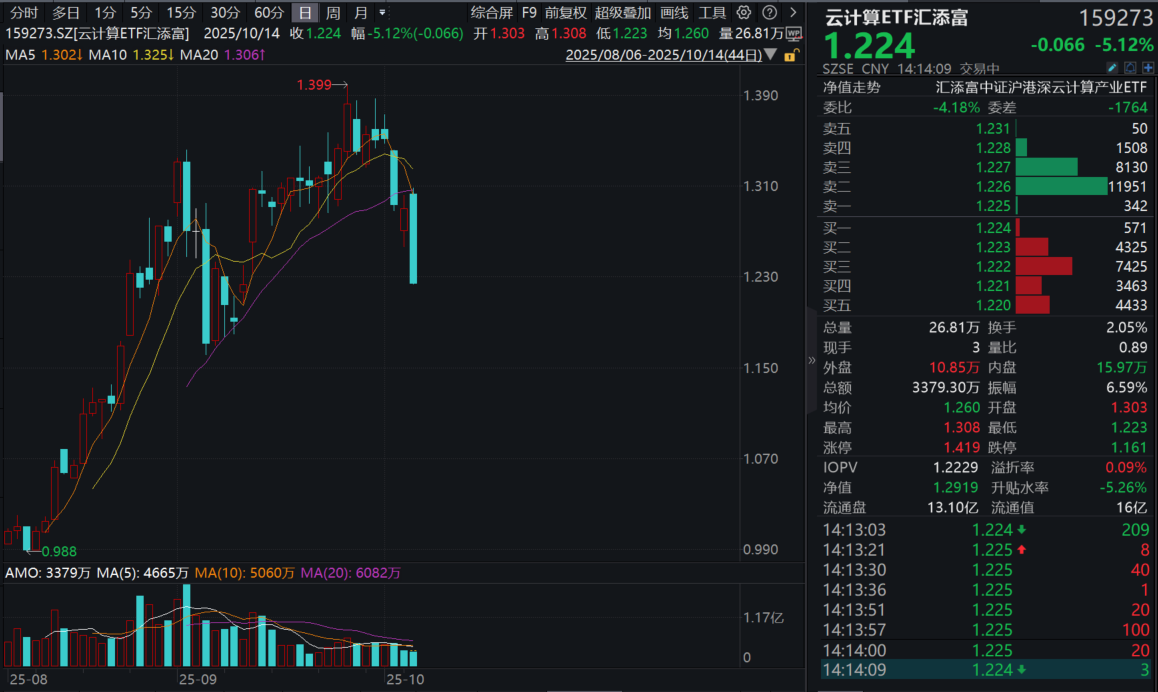
CPO不行了?新易盛、中际旭创纷纷跌8%!云计算ETF汇添富(159273)大幅回调超5%,盘中再度吸金!机构:如何看待光模块龙头估值?
Xin Lang Cai Jing· 2025-10-14 06:52
Group 1 - A-share CPO concept stocks experienced a collective pullback, with the cloud computing ETF Huatai (159273) declining over 5% and achieving a trading volume of nearly 400 million yuan, surpassing the previous day's total [1][3] - The latest scale of the cloud computing ETF Huatai exceeded 1.69 billion yuan, maintaining a leading position among similar funds [1] - Major stocks within the ETF, including Alibaba, Tencent, and others, saw significant declines, with New Yisheng dropping over 8% and Alibaba down over 4% [3][4] Group 2 - Market sentiment indicates increased volatility in overseas computing power chains, influenced by profit-taking pressures and concerns over U.S.-China trade tensions [5] - Long-term securities view the valuation of leading optical module companies as having upward potential, despite current performance being below consensus expectations [5] - The domestic AI industry is accelerating, with significant advancements in model capabilities and computing power deployment, leading to optimism for core segments like optical modules and fiber optics [5]