
十五五规划

Search documents
乘势而上实现“十五五”良好开局——论贯彻落实中央经济工作会议精神
Jing Ji Ri Bao· 2025-12-13 11:44
朝着2035年基本实现社会主义现代化的目标迈进,"十五五"时期要夯实基础、全面发力,做好经济工作 意义重大。习近平总书记出席中央经济工作会议并发表重要讲话,全面总结"十四五"规划收官之年经济 工作,深刻分析当前经济形势,系统部署"十五五"开局之年经济工作,为"十五五"时期乘势而上迈好第 一步定向领航。 乘势而上,我们有高质量发展的坚实基础。 2025年,面对外部压力加大和内部困难较多的复杂局面,构建新发展格局、发展新质生产力等战略先手 棋的效果逐步显现,我国经济顶压前行、向新向优发展,继续展现出强大韧性和活力。在"十四五"这5 年,我们有效应对各种冲击挑战,经济、科技、国防等硬实力和文化、制度、外交等软实力明显提升, 经济增速继续领跑全球主要经济体,中国式现代化迈出新的坚实步伐。这是以习近平同志为核心的党中 央团结带领全党全国各族人民迎难而上、奋力拼搏的结果,充分彰显了"两个确立"的决定性意义。 乘势而上,我们对机遇与挑战有着深刻洞察。 经济发展中老问题、新挑战仍然不少,外部环境变化影响加深,国内供强需弱矛盾突出,重点领域风险 隐患较多——摆在我们面前的大多是发展中、转型中的问题,经过努力是可以解决的。我国经 ...
确保“十五五”开好局起好步——一论学习贯彻中央经济工作会议精神
Xin Hua Wang· 2025-12-13 09:00
新华社北京12月12日电 接续奋斗,再启新程。在"十四五"圆满收官在即、"十五五"即将开启的重要历 史节点,中央经济工作会议在京举行。习近平总书记出席会议并发表重要讲话,总结2025年经济工作, 分析当前经济形势,部署2026年经济工作,为我们扎实做好明年经济工作,确保"十五五"开好局、起好 步指明了努力方向、提供了根本遵循。 办好中国的事情,关键在党。坚持和加强党的全面领导是做好经济工作的根本保证,是高质量发展的必 然要求。要坚持党中央集中统一领导,各地区各部门结合实际、因地制宜,全面落实党中央关于明年经 济工作的思路、任务、政策,形成统一意志和强大合力。要树立和践行正确政绩观,坚持为人民出政 绩、以实干出政绩,自觉按规律办事,努力创造经得起历史、实践和人民检验的业绩。要按照党的二十 届四中全会《建议》编制国家和地方"十五五"规划及专项规划,推动高质量、可持续的发展。 实现社会主义现代化是一个阶梯式递进、不断发展进步的历史过程,需要不懈努力、接续奋斗。"十五 五"时期是基本实现社会主义现代化夯实基础、全面发力的关键时期,在基本实现社会主义现代化进程 中具有承前启后的重要地位。让我们更加紧密地团结在以习近平同 ...
行业年度策略报告:新兴需求领航,传统消费破局-20251213
Ping An Securities· 2025-12-13 08:08
Group 1 - The core viewpoint of the report emphasizes that emerging demand is leading the way, while traditional consumption is breaking through. The year 2026, as the start of the 14th Five-Year Plan, is expected to see continued implementation of consumption stimulus policies, effectively releasing residents' consumption willingness and promoting a steady recovery in consumption demand [4][11] - The report suggests that the traditional consumption industry is likely to experience a rebound, while new demands such as "new products, new channels, and new business formats" will continue to drive the rapid development of new consumption [4][11] - The report highlights the importance of the 14th Five-Year Plan, which emphasizes the need to stimulate consumption and enhance domestic demand as a key driver of economic growth [11][12] Group 2 - In the textile and media sectors, new demand is leading to new supply, and new supply is creating new demand. The report recommends focusing on investment opportunities in three segments: outdoor sports, gold jewelry, and cultural and trendy IP in 2026 [4][30] - The outdoor sports segment is identified as a growing trend, with social aspects becoming increasingly important for young consumers. The report notes that outdoor activities such as cycling, hiking, and climbing are gaining popularity [32][33] - The gold jewelry market is expected to see continued growth in consumer spending, with a positive outlook for retail sales in 2026. The report suggests focusing on leading gold jewelry brands [32][33] Group 3 - The social services sector is evolving, with a focus on leading companies that actively respond to changes in consumer demand. The report indicates that tourism and beauty industries are experiencing changes, with a shift towards rational consumption and a focus on value for money [4][30] - The food and beverage sector is expected to stabilize, with signs of recovery emerging. The report notes that the industry is closely tied to macroeconomic conditions and consumer income expectations [4][30] - The agricultural, forestry, animal husbandry, and fishery sectors are experiencing a cyclical upturn, particularly in the pig farming segment, which is expected to stabilize due to policy-driven transformations [4][5] Group 4 - The home appliance industry is characterized by resilience in demand, with policies such as "trade-in for new" supporting consumption. The report suggests looking for structural highlights within the home appliance sector, particularly in high-dividend white goods and rapidly growing new consumption categories [4][5] - The report emphasizes the importance of exploring new consumption trends and adapting to changing consumer preferences, particularly in the context of the ongoing economic recovery [4][5]






好评中国|锚定高质量发展,奋力实现“十五五”良好开局
Huan Qiu Wang· 2025-12-13 07:45
Core Insights - The Central Economic Work Conference held on December 10-11, 2025, is crucial for setting the direction for China's economic work in 2026 and ensuring a good start for the "15th Five-Year Plan" [1][2] - The conference emphasizes the importance of unity in thought, consensus, and confidence to navigate the complexities of the current economic landscape and achieve high-quality development [2][3] Economic Strategy - The conference outlines a series of strategic deployments focused on stabilizing and advancing economic growth, with a priority on domestic demand and building a strong domestic market [3] - Key tasks include boosting consumption, optimizing investment, fostering innovation, and addressing risks in real estate and local debt [3][4] Leadership and Governance - Strengthening the Party's comprehensive leadership over economic work is highlighted as essential for overcoming challenges and achieving targets [4] - The need for a correct performance view that prioritizes people's well-being and practical results is emphasized, along with avoiding bureaucratic tendencies [4] Future Outlook - The conference sets a clear roadmap for 2026, aiming for a robust start to the "15th Five-Year Plan" and a commitment to high-quality development [5] - A call for collective effort and determination to overcome obstacles and achieve economic goals is made, reinforcing the vision for a modern socialist country [5]
2026年年度策略展望:挣脱牢笼:打破历史经验的桎梏
GF SECURITIES· 2025-12-13 07:43
Group 1 - The global equity market is characterized by a "two-eight" differentiation, with a significant number of stocks in various countries experiencing declines, while A-shares show a more uniform upward trend [29] - Leading sectors in the market include technology and resources/energy, driven by the acceleration of the AI industry cycle and the revaluation of resource prices [33] - The concentration of market capitalization in major countries has reached new highs, with the top 10 companies in many markets accounting for 30%-50% of total market capitalization [41] Group 2 - A/H shares are currently at a historical low valuation compared to US stocks, providing a substantial margin of safety for investors [49] - The profitability of A-shares has shown signs of stabilization, with a notable contribution from technology-related sectors and external demand [17] - The investment landscape for 2026 is expected to see an influx of foreign capital, driven by the depreciation of the US dollar and improving fundamentals in A-shares [66] Group 3 - The AI sector remains a key investment theme, with significant opportunities in both domestic and overseas supply chains [85] - The electric power sector is experiencing a turnaround, with demand recovery and capacity clearance improving asset turnover rates [57] - The copper market is closely tied to global manufacturing trends, with its performance expected to correlate with the PMI index [58]
重磅会议定调!外资机构:坚定看好
Zhong Guo Ji Jin Bao· 2025-12-13 06:31
Group 1 - The core message of the Central Economic Work Conference emphasizes a proactive and forward-looking macro policy framework to foster a positive economic environment for the "14th Five-Year Plan" [1] - The conference outlines a three-dimensional policy framework of "income increase - deregulation - quality enhancement" aimed at boosting consumption and addressing core issues related to consumer capacity and willingness [2][3] - The focus on enhancing domestic demand is deemed necessary in light of potential external demand weaknesses, with a commitment to implement special actions to stimulate consumption [2][3] Group 2 - The emphasis on hard technology innovation is identified as a key link connecting consumption upgrades, effective investment, and combating "involution," making it a priority for foreign investment in the Chinese market [4] - The support for hard technology is expected to increase, providing foreign investors with strong, long-term investment opportunities as the "14th Five-Year Plan" approaches [5] - The conference's focus on innovation-driven growth aligns with the goal of "self-reliance and strength in technology," highlighting the importance of technological innovation in enhancing national competitiveness [6]
征求对市委“十五五”规划《建议》的意见
Nan Jing Ri Bao· 2025-12-13 05:11
Core Viewpoint - The Nanjing Municipal Committee of the Communist Party of China held a meeting to gather opinions from various democratic parties and non-party representatives regarding the formulation of the 15th Five-Year Plan for economic and social development, emphasizing the importance of collective effort and collaboration in achieving the plan's goals [1][2]. Group 1: Meeting Outcomes - The meeting was chaired by Secretary Zhou Hongbo, who highlighted the significance of democratic participation and collective wisdom in addressing major issues and formulating important documents [2]. - Representatives from various democratic parties and the Federation of Industry and Commerce expressed high praise for the achievements during the 14th Five-Year period and supported the suggestions for the 15th Five-Year Plan [1]. Group 2: Suggestions and Focus Areas - Specific suggestions were made regarding the development of a new power system, acceleration of the biopharmaceutical industry, promotion of digital economy to enhance consumer upgrades, and strengthening the development of the private economy [1]. - Additional focus areas included urban innovation, enhancing financial support, optimizing the business environment for Taiwanese enterprises, exploring modern agricultural development, and tapping into the consumption potential of cultural and tourism industries [1].
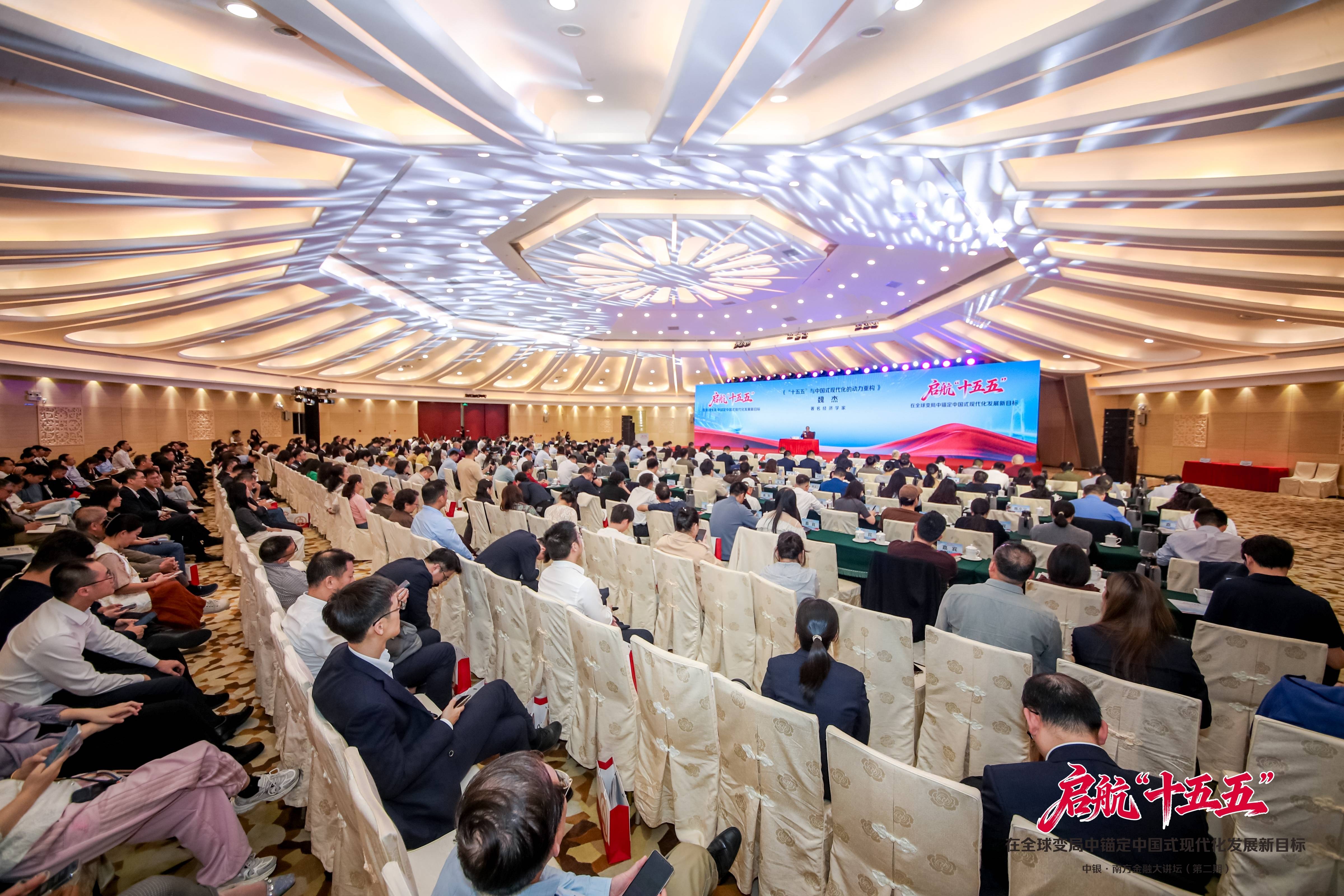
著名经济学家魏杰解码“十五五”动力重构:调整出口、有效投资、启动消费
Sou Hu Cai Jing· 2025-12-13 02:08
Core Viewpoint - The event highlighted the importance of the upcoming "15th Five-Year Plan" (2021-2025) as a critical phase for China's modernization, emphasizing the need for structural adjustments in economic growth drivers, particularly in export, investment, and consumption strategies [4][5]. Group 1: Export Adjustments - The need to reduce reliance on exports is emphasized, suggesting a shift from an export-driven economy to a more balanced approach that mitigates risks associated with global uncertainties [8]. - China should stabilize its trade relationships with ASEAN and the EU while exploring emerging markets in South America, Africa, and Central Asia to diversify export destinations [9]. - The export structure should focus on advanced manufacturing and high-tech industries, increasing the share of service trade, including intellectual property and project consulting [10]. - Future export strategies should prioritize "scarcity" by offering unique products to avoid low-price competition and associated tariff risks [13]. - Promoting the use of the Renminbi in international trade can enhance export security and reduce foreign exchange volatility [14]. - The concept of exporting production capacity is introduced, suggesting that overseas investments can yield economic returns while creating local jobs and tax revenues [15]. Group 2: Effective Investment - Investment quality, efficiency, and structure are crucial for economic growth, with a focus on meeting market demands and aligning with the modern industrial system [16]. - Key investment areas include traditional manufacturing, strategic emerging industries (like renewable energy and biotechnology), advanced manufacturing, future industries (like quantum technology), foundational industries (like agriculture), and services [17][18][22][23][24]. Group 3: Consumption Activation - Consumption is projected to be the main driver of economic growth during the "15th Five-Year Plan," with strategies to stimulate it through fiscal policies, monetary support, and innovation in supply [30][31][34]. - Adjusting housing supply and implementing supportive policies can help release pent-up demand in the real estate sector [36]. - Encouraging service-oriented consumption across various sectors can further activate domestic demand [37]. Group 4: Industry Insights - Companies should avoid low-level competition by understanding industry cycles and technological advantages, ensuring they have a sustainable competitive edge [40]. - Businesses need to interpret the "15th Five-Year Plan" by analyzing the industrial landscape, recognizing shifts in themes towards safety and high-quality development, and assessing social acceptance of their projects [42][43]. - Financial institutions should align funding with industry characteristics, particularly in strategic emerging industries and advanced manufacturing, to support long-term growth [47].

坚定信心、勠力进取,奋力实现“十五五”良好开局
Shan Xi Ri Bao· 2025-12-12 23:49
Group 1: Economic Strategy and Development - The Central Economic Work Conference emphasized the importance of domestic demand as a driver for building a strong domestic market [1] - The conference highlighted the need for innovation-driven growth, focusing on cultivating new momentum and addressing key technological challenges [1] - The meeting called for deepening reforms to enhance the vitality of high-quality development, particularly through state-owned enterprise reforms and innovative financial mechanisms [1] Group 2: Environmental and Green Transition - The conference outlined a commitment to achieving dual carbon goals, promoting a comprehensive green transition in development planning and industrial adjustments [2] - Key areas of focus include pollution prevention, energy conservation, and solid waste management to ensure ecological safety and resilience [2] Group 3: Social Welfare and Employment - The meeting stressed the importance of prioritizing people's livelihoods and enhancing employment services to support higher quality job opportunities [3] - Local employment services will focus on aligning with industry needs and providing targeted support for key demographics, including recent graduates and those facing employment challenges [3]
乘势而上实现“十五五”良好开局 ——论贯彻落实中央经济工作会议精神
Jing Ji Ri Bao· 2025-12-12 23:05
经济发展中老问题、新挑战仍然不少,外部环境变化影响加深,国内供强需弱矛盾突出,重点领域风险 隐患较多——摆在我们面前的大多是发展中、转型中的问题,经过努力是可以解决的。我国经济基础 稳、优势多、韧性强、潜能大,长期向好的支撑条件和基本趋势没有变,中国特色社会主义制度优势、 超大规模市场优势、完整产业体系优势、丰富人才资源优势更加彰显——坚定信心,用好优势,在把握 规律的基础上实现变革创新,就能不断通过化解难题开创高质量发展新局面。 乘势而上,我们纲举目张谋划战略战术与工作重点。 深刻总结发展实践,此次会议提炼了"五个必须"的认识与体会,对于我们在激烈国际竞争中赢得战略主 动具有重大指导作用。准确把握历史方位,明确了明年经济工作的总体要求和政策取向,释放了以高质 量发展的确定性应对各种不确定性的鲜明信号。"八个坚持"的重点任务,瞄准的是需求不足的突出症 结,对应的是练好内功的紧迫要求,展现的是做强大市场的坚定方向,彰显的是更好统筹国内经济工作 和国际经贸斗争、更好统筹发展和安全的忧患意识,体现了"十五五"规划建议的部署要求。千头万绪中 抓住主要矛盾、纷繁复杂中抓住关键环节,方能谋定而动,牢牢把握发展主动权。 乘 ...