硬科技

Search documents
上交所举办 科创板六周年线上路演活动
Jin Rong Shi Bao· 2025-08-26 02:35
Group 1 - The event "Focusing on SSE - 6th Anniversary of Sci-Tech Innovation Board" was held to enhance international investors' understanding of the Sci-Tech Innovation Board and its representative listed companies, with nearly 50 institutions from major markets participating [1][2] - Over the past six years, the Sci-Tech Innovation Board has implemented a series of institutional innovations, becoming the preferred listing venue for domestic "hard technology" companies, with over 80% of listed companies in emerging industries such as new generation information technology, biomedicine, and high-end equipment manufacturing [1][2] - The introduction of the "1+6" policy measures by the China Securities Regulatory Commission aims to further deepen reforms and enhance the demonstration effect of the Sci-Tech Innovation Board [2] Group 2 - The Sci-Tech Innovation Board has made significant achievements in guiding capital towards "hard technology" enterprises and has seen a rich development of index and ETF categories, playing an important role in attracting incremental funds and supporting key core technology innovations [2] - Founders and CEOs of four Sci-Tech Innovation Board companies engaged in deep discussions with industry analysts, sharing the unique value of the board in fostering hard technology innovation [2] - The entrepreneurs expressed that the Sci-Tech Innovation Board provides strong support for corporate financing and development, anticipating that reforms like "1+6" will further enhance support for technology enterprises and industrial transformation [2]
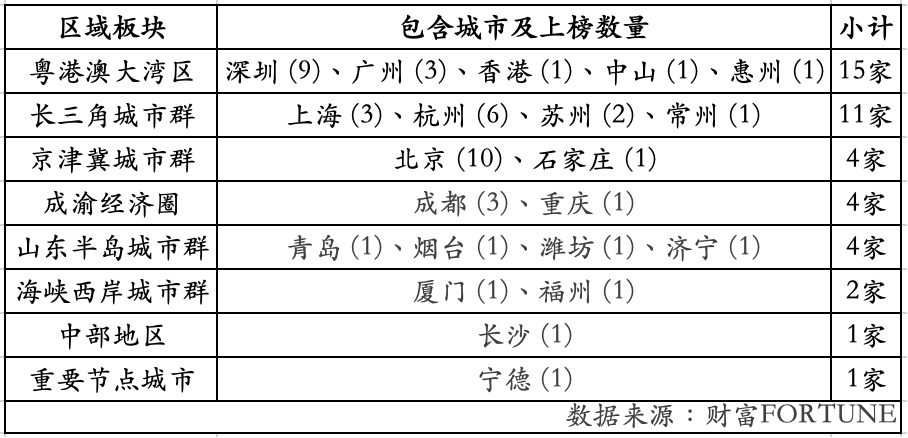
“硬科技”崛起:15家大湾区企业上榜中国科技50强
2 1 Shi Ji Jing Ji Bao Dao· 2025-08-25 14:22
Core Insights - The 2025 China Technology Top 50 list published by Fortune magazine highlights the leading technology companies in China, with a significant representation from the Guangdong-Hong Kong-Macao Greater Bay Area [1][2]. Regional Overview - The Greater Bay Area leads the nation with 15 companies on the list, followed by the Yangtze River Delta with 12 and the Beijing-Tianjin-Hebei region with 10, indicating a concentration of technological innovation in these areas [2][3]. - Shenzhen stands out with 9 companies, while Guangzhou has 3 new entrants, showcasing its growing innovation capabilities [3]. Company Highlights - The list includes established leaders like Huawei, Tencent, and BYD, as well as emerging companies such as DJI, Dazhong Laser, and WeRide, covering sectors like telecommunications, digital technology, new energy vehicles, and life sciences [4][5]. - Notable companies from the Greater Bay Area include: - Huawei Investment Holding (Shenzhen) - Tencent Technology (Shenzhen) - BYD Co., Ltd. (Shenzhen) - DJI Innovations (Shenzhen) - Dazhong Laser Technology Group (Shenzhen) - SF Technology Co., Ltd. (Shenzhen) - Shenzhen BGI Technology Co., Ltd. (Shenzhen) - Kingfa Sci. & Tech. Co., Ltd. (Guangzhou) - Xian Dao Technology Group (Guangzhou) - WeRide (Guangzhou) - Zhongshan Kangfang Biopharmaceutical Co., Ltd. (Zhongshan) - TCL Technology Group (Huizhou) - Bern Optical Holdings Limited (Hong Kong) [5][9]. Evaluation Criteria - The evaluation criteria for the list have evolved from focusing on revenue and market share to emphasizing technological influence, key industry roles, and sustainable innovation [6][8]. - The new standards assess companies based on patent quality, technological independence, R&D investment intensity, and the practical application of technology [6][8]. Industry Trends - The strong performance of Guangdong technology companies reflects a shift from traditional manufacturing to technology-driven innovation, highlighting the rise of "hard technology" and the increasing importance of AI, energy, and biomedicine [4][10]. - The Guangdong government has implemented policies to foster an innovative ecosystem, aiming to build a modern industrial system that integrates technology and industry [10][11].



投资者指南:科技自主浪潮下,如何布局通信与硬科技核心赛道?(附111页PPT)
材料汇· 2025-08-25 13:17
Core Viewpoints - The article emphasizes the advancement of China's technology across the entire supply chain, driven by external pressures and domestic policies supporting innovation and self-reliance [1][3]. Group 1: Technology Competition - The U.S. has imposed export controls on Chinese companies, leading to unexpected growth in certain sectors as companies adapt to these challenges [3][8]. - The "Entity List" has expanded, with 586 Chinese companies affected, indicating a long-term strategy by the U.S. to restrict access to advanced technologies [8][9]. - China's semiconductor industry has made significant strides, with domestic production capabilities for lithography machines being announced, suggesting a failure of U.S. containment strategies [8][9]. Group 2: Investment Strategies - The article suggests that investment strategies should focus on domestic technology development, particularly in high-elasticity sectors that can provide significant returns [1][9]. - The communication sector has seen a notable increase in fund holdings, with a 1.09 percentage point year-on-year increase in heavy holdings in the communication industry [5][7]. - The performance of AI-related companies is improving, with the communication sector's revenue and net profit showing positive growth, indicating a favorable investment environment [5][6]. Group 3: Mergers and Acquisitions - The regulatory environment is becoming more favorable for mergers and acquisitions, particularly in the technology sector, with new policies aimed at facilitating these processes [9][13]. - The number of merger events in the communication sector has decreased in recent years, but the expectation is for an increase in 2025 as policies take effect [9][13]. - State-owned enterprises are expected to drive value through mergers and acquisitions, particularly in the context of market management and optimization [9][13]. Group 4: Funding Support - The Chinese government is set to issue long-term bonds to support strategic industries, with an initial issuance of 1 trillion yuan planned for 2024 [19][23]. - A 100 billion yuan fund has been established to support the satellite internet industry, indicating strong governmental backing for technological advancements [23][24]. - The government's focus on "new quality productivity" highlights a commitment to fostering innovation and technological self-sufficiency [19][22]. Group 5: Industry Opportunities - The article identifies significant opportunities in hard technology sectors, particularly in satellite internet and computing power, as domestic capabilities improve [1][30]. - The demand for domestic chips is increasing, with initial orders for Huawei's new AI chips valued at approximately 2 billion USD, reflecting a growing market for local technology [53][54]. - The overall computing power in China is expected to continue its upward trajectory, with projections indicating a substantial increase in capacity by 2024 [54][75].


彻底火了!A股半日成交额破2万亿,巨额增量资金待入市,如何布局顺大势?
Sou Hu Cai Jing· 2025-08-25 05:23
Core Viewpoint - A-shares continue to perform strongly with a midday trading volume exceeding 2 trillion yuan, indicating robust market activity and investor interest [1] Group 1: Market Performance - The Shanghai Composite Index rose by 0.86% at midday, while the ChiNext Index increased by 2.22%, reaching a three-year high [1] - The trading volume increased by 571.3 billion yuan compared to the previous day, reflecting strong market participation [1] Group 2: Capital Inflow - There is a strong willingness for new capital to enter the market, supported by substantial household savings waiting to be invested and a margin financing balance remaining above 2 trillion yuan [1] - External factors include the potential for the Federal Reserve to lower interest rates in September and the first inflow of active foreign capital into A-shares since October of the previous year, as per EPFR data [1] Group 3: Investment Strategies - Over 5,000 stocks showed mixed performance, indicating increased difficulty in single-stock investments amid a rapidly rotating market [1] - Broad-based ETFs are highlighted as a strategy to capture different market hotspots while providing inherent resistance to rotation risks: - Tianhong ChiNext ETF (159977, linked 001593) has risen over 36% since June 23, with a current PE (TTM) of 38.86, ranking in the lowest historical percentile for the past decade [1] - Tianhong Sci-Tech ETF (589860, linked 023722) covers 97% of the Sci-Tech board's market value, focusing on hard technology with balanced allocations in semiconductors, artificial intelligence, and biomedicine [1] - Tianhong CSI A500 ETF (159360, linked 022429) tracks 500 constituent stocks that represent core assets of the Chinese economy, serving as a stabilizing investment to effectively hedge against rotation risks [1]
A股半日成交额破2万亿,巨额增量资金待入市,如何布局顺大势?
Sou Hu Cai Jing· 2025-08-25 05:13
Group 1 - A-shares continue to perform strongly with a half-day trading volume exceeding 2 trillion yuan, an increase of 571.3 billion yuan compared to the previous day [1] - The Shanghai Composite Index rose by 0.86% at midday, while the ChiNext Index increased by 2.22%, reaching a three-year high [1] - There is a strong willingness for new capital to enter the market, supported by substantial household savings waiting to be invested and a margin financing balance remaining above 2 trillion yuan [1] Group 2 - Foreign capital has begun to flow into A-shares for the first time since October of last year, coinciding with expectations of a potential interest rate cut by the Federal Reserve in September [1] - Over 5,000 stocks showed mixed performance at midday, indicating increased difficulty in single-point investments amid a rapidly rotating market [1] - Broad-based ETFs are highlighted as a strategy to capture different market hotspots while providing inherent resistance to rotation risks [1] Group 3 - Tianhong's ChiNext ETF (159977, linked to 001593) has risen over 36% since June 23, with the latest PE (TTM) at 38.86, ranking in the lowest historical percentile for the past decade [1] - Tianhong's Sci-Tech Innovation Index ETF (589860, linked to 023722) covers 97% of the Sci-Tech board's market value, providing balanced exposure to hard technology sectors such as semiconductors, artificial intelligence, and biomedicine [1] - Tianhong's CSI A500 ETF (159360, linked to 022429) tracks 500 constituent stocks that represent core assets of the Chinese economy, serving as a stabilizing force for balanced allocation and effectively hedging against rotation risks [1]
科创50ETF(588000)持仓股大全能源涨超16%,机构称密切关注科技算力芯片等行业
Mei Ri Jing Ji Xin Wen· 2025-08-25 03:55
科创50ETF(588000)追踪科创50指数,指数持仓电子行业63.74%,医药生物行业11.78%,合计 75.52%,行业分布集中。同时涉及半导体、医疗器械、软件开发、光伏设备等多个细分领域,硬科技 含量高。从当前位置来看,科创50指数仍在基点附近,参照创业板历史走势,未来成长空间值得期待。 看好中国硬科技长期发展前景的投资者建议持续关注。相关ETF:科创50ETF(588000)。 8月25日早盘三大股指集体高开,科创50指数盘初快速拉升涨超4%,科创50ETF(588000)持续走 强,截至9点46,上涨1.28%,近5日上涨13.27%。持仓股大全能源强势领涨,涨超16%。 消息面上,英伟达暂停H20芯片生产,市场预期国内AI芯片厂商将加速填补高端算力缺口,科创 50ETF(588000)持仓股寒武纪上周涨幅接近35%市值超过5000亿元,带动半导体板块情绪升温; DeepSeek-V3.1大模型发布,AI算力需求持续超预期,推动算力基础设施板块爆发,算力龙头海光信息 上周上涨超过20%。 中信建投建议关注高景气赛道。随着上市公司逐步进入半年报披露密集期,市场整体对业绩关注的 力度将会加大,业绩超 ...

帮主郑重:213股被券商“点名买入”!这波机会咋抓?
Sou Hu Cai Jing· 2025-08-25 03:37
Group 1 - The core viewpoint is that recent brokerage recommendations signal potential mid-to-long-term investment opportunities, with 213 stocks rated as "buy" and some target prices suggesting increases of over 50% [1][3] - Notable stocks include HaiSiKe with a target increase of 50.56%, DongA AJiao at 48%, and FuNeng Shares at 47%, indicating strong institutional interest in these companies due to their respective breakthroughs and market conditions [3] - The sectors with the most brokerage activity are Materials II, Capital Goods, and Food & Beverage, highlighting a focus on "hard technology" and consumer recovery as key investment themes [3] Group 2 - Two stocks received upgraded ratings and six received initial ratings, indicating new discoveries of value and validated investment logic, respectively [3] - Yangnong Chemical is under close observation by six brokerages, while Huali and Muyuan are followed by five and four brokerages, respectively, suggesting a high level of consensus among institutions [3] - It is advised to consider performance and policy factors when evaluating stocks, particularly in Materials II and Food & Beverage sectors, to identify those with solid growth logic [3][4]


税务部门支持科技创新和制造业发展 深圳“独角兽”勇闯“硬科技”赛道
Zhong Guo Chan Ye Jing Ji Xin Xi Wang· 2025-08-25 00:33
Core Insights - The 2025 China (Shenzhen) Unicorn Enterprise Conference highlighted the growth of unicorn companies in Shenzhen, with 42 unicorns valued at $159.9 billion and an average valuation of $3.71 billion, marking Shenzhen as the leader in new unicorns with 13 new additions [1] - Shenzhen's unicorn companies are primarily focused on "hard technology," with significant representation in integrated circuits and robotics, reflecting the city's industrial development ecosystem [1] - The Shenzhen government has implemented four action plans this year to foster the growth of unicorn companies, emphasizing support for strategic emerging industries and establishing a comprehensive service mechanism for the entire lifecycle of unicorn enterprises [1] Group 1: Unicorn Companies in Shenzhen - The report indicates that 66.7% of Shenzhen's unicorn companies are in cutting-edge technology sectors, showcasing the city's innovation capabilities [1] - The tax department in Shenzhen has introduced various policies to support technology innovation and manufacturing, enhancing the operational environment for unicorn companies [1] Group 2: Case Study - Yuanxiang XVERSE - Yuanxiang XVERSE, established in 2021, is among the new unicorns, leveraging both AI and 3D technologies, and has quickly become a leader in the VR market by launching five VR products across 33 cities [2] - The company has benefited from the Shenzhen tax department's streamlined services, which include one-stop tax handling and personalized support for complex tax matters [2] Group 3: Globalization of Unicorn Companies - A significant trend among Shenzhen's unicorns is their global expansion, with 80% of the 42 unicorns being global companies [3] - Companies like Xinwanda have established overseas production bases and received tailored tax services to facilitate their international operations, including expedited export tax refunds [3] Group 4: Credit Taxation Mechanism - In Qianhai, the tax department has implemented a "credit taxation" mechanism, allowing high-credit unicorn companies to enjoy expedited services such as instant invoice approvals [4] - Shenzhen has a robust ecosystem of specialized and innovative small and medium enterprises, with over 10,000 such companies supporting the city's innovation drive [4]

科技“硬碰硬” 机构投研凸显真功夫
Zhong Guo Zheng Quan Bao· 2025-08-24 22:15
Group 1 - The core viewpoint of the articles highlights the increasing interest and investment in hard technology sectors, such as integrated circuits, electronic components, application software, and biotechnology, by various institutional investors [1][2][4] - As of August 23, 2023, there has been a surge in institutional research activities, with 21 companies in the integrated circuit sector receiving attention from institutions, including a notable event where 135 institutions participated in a performance briefing for Naxin Microelectronics [2][3] - The nature of inquiries from institutions has become more technical and focused, with questions directed at companies regarding their technological routes, commercialization scenarios, and pipeline progress, indicating a shift towards a more rigorous investment approach [1][3][6] Group 2 - The investment preferences of public funds have shifted towards hard technology, with sectors like innovative pharmaceuticals, hard technology, and new consumption becoming primary targets for investment [4][5] - The professional expertise of institutional investors has significantly increased, leading to greater pressure on companies' investor relations departments to provide detailed and technical responses [3][6] - Recruitment trends in the investment sector are reflecting this shift, with a focus on hiring candidates with engineering and financial backgrounds to enhance the research capabilities in hard technology investments [6][7] Group 3 - The A-share market has shown strong performance in the TMT (Technology, Media, and Telecommunications) sector, driven by factors such as the expansion of AI computing power and the anticipated launches of new consumer electronics [7][8] - Institutions maintain an optimistic outlook on the future opportunities within the hard technology sector, particularly in semiconductors and domestic supply chain innovations [8]
甲子光年:2025中国科技投资痛点、趋势与展望报告
Sou Hu Cai Jing· 2025-08-24 04:37
Core Insights - The report indicates that China's technology investment in 2025 is at a "crossroads," showing signs of recovery but still facing significant challenges [1] - The first half of 2025 marks the first positive growth in fundraising, investment, and exit activities in four years, indicating a potential turning point in the market [2] Fundraising and Investment Trends - In the first half of 2025, the number and scale of fundraising funds increased compared to the same period in 2024, marking a recovery in the primary market for equity investment [2] - The exit situation has improved, with a partial recovery in the IPO market for Chinese companies, and the proportion of exits through IPOs and equity transfers has risen [2] - However, challenges remain, including prolonged IPO timelines and significant disparities in approval rates across different sectors in the A-share market [2][3] Investment Challenges - Over 70% of companies funded by venture capital funds established between 2014 and 2017 have not exited, and the number of venture capital fund liquidations has increased for four consecutive years [2] - Key issues include pressure on Limited Partners (LPs) for returns, a shift in General Partners (GPs) from "investment-driven" to "exit-driven" strategies, and a significant focus on popular sectors like AI, semiconductors, and new energy, leading to market saturation [2][3] Emerging Trends - Hard technology is leading the investment narrative, with significant activity in AI and hard tech sectors, where investment events and amounts have seen substantial year-on-year growth [3] - The strategic value premium in these sectors can reach between 20% to 200%, indicating a strong market interest [3] - There is a notable difference in AI investment logic between China and the U.S., potentially leading to a dual-core model in AI investment [3] Institutional Evolution - The capabilities of GPs are evolving from being mere "catchers" of funds to becoming "partners" who understand industries and build ecosystems [3] - The rise of "patient capital" is gaining attention, with market responses gradually aligning with policy initiatives [3] - New institutional forms are emerging, with technology companies investing along the entire industrial chain, driving a reconstruction of venture capital logic [3]