先进制造业

Search documents
高质量发展进入全面推进和提升期
Shanxi Securities· 2025-10-24 09:17
Economic Development Goals - The "15th Five-Year Plan" emphasizes economic construction as the top priority, aiming for per capita GDP to reach the level of moderately developed countries by 2035[3] - High-quality development is a significant focus, with a marked improvement in self-reliance in technology compared to the "14th Five-Year Plan" period[3] - The plan aims for substantial increases in economic, technological, defense, and comprehensive national strength, highlighting the importance of national defense in response to complex international situations[3] Strategic Opportunities and Risks - The current environment presents both opportunities and risks, with the need to maintain strategic determination and confidence in overcoming challenges[2] - China's economic foundation remains strong, with advantages in its socialist system, large market, complete industrial system, and rich talent resources[2] Industrial Development Focus - The core development directions for advanced manufacturing include intelligent, green, and integrated approaches, aiming to build a modern industrial system centered on advanced manufacturing[4] - Key tasks include optimizing traditional industries, nurturing emerging industries, promoting high-quality service development, and constructing modern infrastructure[4] Innovation and Domestic Demand - Emphasis on enhancing independent innovation capabilities and addressing key technology challenges to improve industrial competitiveness and security[5] - The strategy includes expanding domestic demand, boosting consumption, and fostering a dynamic balance between supply and demand[5] Social Welfare and Living Standards - The report highlights the importance of improving people's livelihoods, focusing on employment, income distribution, education, social security, and housing[6] - There is a commitment to promoting high-quality development in the real estate sector, emphasizing the construction of affordable housing and urban renewal[6] Risk Considerations - Potential risks include prolonged stabilization in the real estate market, unexpected changes in U.S. tariff policies, and the effectiveness of measures to counteract "involution" may fall short of expectations[6]
20cm速递|科创创业ETF(588360)涨超3.6%,政策支撑与产业升级驱动科技主线
Mei Ri Jing Ji Xin Wen· 2025-10-24 08:33
Group 1 - The core viewpoint of the article emphasizes the importance of advanced manufacturing as the backbone of a modern industrial system, driven by technological innovation and original innovation in key core technologies [1] - The article outlines eight strong nation-building initiatives, including manufacturing, quality, aerospace, transportation, and cyber power, with aerospace and transportation being newly highlighted [1] - The article stresses the need to maintain a reasonable proportion of manufacturing and to build a modern industrial system centered on advanced manufacturing [1] Group 2 - The Sci-Tech Innovation and Entrepreneurship ETF (588360) tracks the Sci-Tech Innovation 50 Index (931643), which saw a daily fluctuation of 20%, selecting 50 emerging industry stocks with good liquidity and large market capitalization from the Sci-Tech and Entrepreneurial boards [1] - The index focuses on hard technology and mature innovative enterprises, reflecting the technological barriers and growth performance of China's frontier industries, with a third-quarter performance exceeding 65%, significantly outperforming the Sci-Tech 50 (49.02%) and Entrepreneurial 50 (59.45%) [1]

刚刚,集体大涨!A股,重磅来袭!
券商中国· 2025-10-24 08:22
Core Viewpoint - The A-share market experienced a significant rally on October 24, with major indices reaching new highs, driven by strong performances in technology stocks, particularly in sectors like chips, commercial aerospace, and quantum technology [1][2]. Market Performance - On October 24, the Shanghai Composite Index rose by 0.71% to 3950 points, marking a ten-year high. The Shenzhen Component Index increased by 2.02%, the ChiNext Index by 3.57%, and the STAR 50 Index by 4.35%. Over 3000 stocks in the market saw gains [2]. - Chip stocks saw substantial increases, with companies like Xiangnong Chip and Purun Co. hitting the 20% limit up, while others like Huahong Semiconductor and Jiangbolong rose over 15% [2]. - The commercial aerospace sector also experienced a surge, with multiple stocks hitting the limit up or rising over 10% [2]. Policy and Strategic Directions - The Central Committee of the Communist Party of China held a press conference on October 24, discussing the spirit of the Fourth Plenary Session of the 20th Central Committee. The meeting emphasized the development of emerging pillar industries, including new energy, new materials, and aerospace, which are expected to create trillion-yuan markets [3]. - The National Development and Reform Commission highlighted the importance of forward-looking layouts in future industries, aiming to make quantum technology, biomanufacturing, and nuclear fusion new economic growth points [3]. Investment Focus Areas - Short-term market expectations are bolstered by the Fourth Plenary Session, which is likely to enhance investor confidence and focus on specific sectors [5]. - Mid to long-term perspectives suggest that the meeting's strategic directions will provide solid support for the A-share market, reinforcing confidence in China's economic resilience [5]. - Key sectors to watch during the 14th Five-Year Plan include digital technology, space economy, high-end manufacturing, and biotechnology [6][7]. Industry Trends - The focus on modern industrial systems and high-end manufacturing highlights the importance of sectors like artificial intelligence, low-altitude economy, and semiconductors [7]. - The green transition is also emphasized, with sectors such as photovoltaics and wind power gaining attention [7].


构建现代化产业体系,为何要以先进制造业为骨干
2 1 Shi Ji Jing Ji Bao Dao· 2025-10-24 06:49
Core Viewpoint - The Fourth Plenary Session of the 20th Central Committee of the Communist Party of China emphasizes the construction of a modern industrial system, prioritizing the strengthening of the real economy and advanced manufacturing as the backbone of this system [1][4]. Group 1: Modern Industrial System - The session highlights the importance of building a modern industrial system that focuses on the real economy, with an emphasis on intelligent, green, and integrated development [1][3]. - The strategy includes optimizing traditional industries while fostering emerging and future industries, aiming for a collaborative upgrade of the three industrial sectors [2][8]. - The estimated market space to be generated in the next five years is around 10 trillion yuan, driven by the quality enhancement of key industries such as chemicals, machinery, and shipbuilding [2][6]. Group 2: Advanced Manufacturing - Advanced manufacturing is recognized as crucial for a country's position in the global industrial and value chains, with a focus on vertical leaps in the industrial chain through technological penetration [2][5]. - The session aims to transition China from a manufacturing power to a manufacturing stronghold, enhancing the quality and competitiveness of its manufacturing sector [5][6]. - The development of advanced manufacturing clusters is expected to create significant scale effects and competitive advantages, promoting innovation and efficiency [5][6]. Group 3: Emerging and Future Industries - The session outlines plans to cultivate new pillar industries and strategically position future industries, including quantum technology, biomanufacturing, and hydrogen energy, which could generate a market scale equivalent to recreating China's high-tech industry over the next decade [6][7]. - The focus on new industries is expected to inject continuous new momentum into China's economic growth and high-quality development [6][7]. Group 4: Service Industry and Infrastructure - The service industry is identified as having substantial potential for expansion and quality improvement, with initiatives aimed at enhancing its integration with advanced manufacturing and modern agriculture [7][8]. - A modern infrastructure system is to be constructed, leveraging China's existing extensive infrastructure network to support efficient industrial operations and ensure high-quality development across various sectors [7][8].
构建现代化产业体系,为何要以先进制造业为骨干丨四中全会解读
2 1 Shi Ji Jing Ji Bao Dao· 2025-10-24 06:43
Core Viewpoint - The Fourth Plenary Session of the 20th Central Committee of the Communist Party of China emphasizes the construction of a modern industrial system with advanced manufacturing as its backbone, aiming to strengthen the foundation of the real economy [1][4]. Group 1: Strategic Focus - The session prioritizes the development of the real economy, advocating for a focus on advanced manufacturing, intelligent, green, and integrated development [3][4]. - The strategy aims to enhance traditional industries while fostering emerging and future industries, promoting high-quality development in the service sector, and establishing a modern infrastructure system [6][8]. Group 2: Economic Impact - The manufacturing value added in China is projected to grow from 26.6 trillion yuan to 33.6 trillion yuan from 2020 to 2024, contributing over 30% to global manufacturing growth [3]. - An estimated market space of around 10 trillion yuan is expected to be added in the next five years through the quality upgrade of key industries such as chemicals, machinery, and shipbuilding [2][6]. Group 3: Industry Development - The focus on advanced manufacturing is seen as crucial for enhancing China's position in the global industrial and value chains, transitioning from "Made in China" to "Intelligent Manufacturing in China" [5]. - The development of advanced manufacturing clusters is expected to create significant economies of scale and competitive advantages, facilitating collaborative innovation and resource efficiency [5][6]. Group 4: Infrastructure and Services - The session highlights the need for optimizing traditional industries and expanding the service sector, which has substantial room for growth and quality improvement [7][8]. - A modern infrastructure system is essential for supporting the efficient operation of various industries, ensuring a robust environment for high-quality development [7][8].
二十届四中全会公报学习体会学习体会:“夯实基础、全面发力”
Bank of China Securities· 2025-10-24 01:47
Economic Development Goals - The "15th Five-Year Plan" aims for significant improvements in economic strength, technological capability, national defense, and international influence by 2035, with a target of achieving a per capita GDP at the level of moderately developed countries[3] - The focus is on solidifying the foundation and making comprehensive efforts in advanced manufacturing and new productive forces as key areas for future economic development[2] Consumption and Investment Strategies - The meeting emphasizes the importance of boosting consumption and expanding effective investment, with a strategic focus on building a strong domestic market[2] - It highlights the need to combine "investment in goods and investment in people," suggesting that effective investment in innovation can drive new consumer demand[2] - The government plans to enhance residents' income levels as a fundamental basis for increasing consumer spending, indicating that income growth will be a key driver of consumption during the "15th Five-Year Plan" period[2] Policy Implementation and Economic Stability - The meeting stresses the need to achieve annual economic and social development goals, focusing on stabilizing employment, enterprises, and market expectations[2] - Macro policies are expected to continue to exert force, with a recent announcement of 500 billion yuan allocated to local governments from debt limits, indicating ongoing fiscal support[2] - The "steady real estate" policy is anticipated to yield positive effects, contributing to overall economic stability[2] Risks and Challenges - Potential risks include overseas recession and uncertainties in geopolitical relations, which could impact economic performance[2]
保持战略定力,增强必胜信心,“十五五”蓝图令世界瞩目
Huan Qiu Shi Bao· 2025-10-23 23:32
Group 1 - The core message of the article emphasizes the significance of the 15th Five-Year Plan, which aims to achieve high-quality development, enhance technological self-reliance, and deepen reforms during the critical period of socialist modernization [2][3][4] - The meeting highlighted the importance of maintaining a reasonable proportion of the manufacturing industry and building a modern industrial system centered on advanced manufacturing [4][6] - The plan outlines major goals for the next five years, including significant improvements in social civilization, quality of life, and national security [3][5] Group 2 - The focus on technological innovation and self-reliance is seen as a response to increasing global uncertainties and competition, particularly in high-tech sectors like semiconductors and artificial intelligence [6][7] - The plan is expected to contribute to global stability by promoting fair trade, infrastructure cooperation, and climate collaboration, positioning China's development as a model for other developing countries [8][9] - The emphasis on solidifying the foundation of the real economy indicates a shift towards a more practical development focus, which is crucial for job creation and social stability [6][9]
抢占科技发展制高点,不断催生新质生产力!党的二十届四中全会公报要点速览
Zhong Guo Zheng Quan Bao· 2025-10-23 14:05
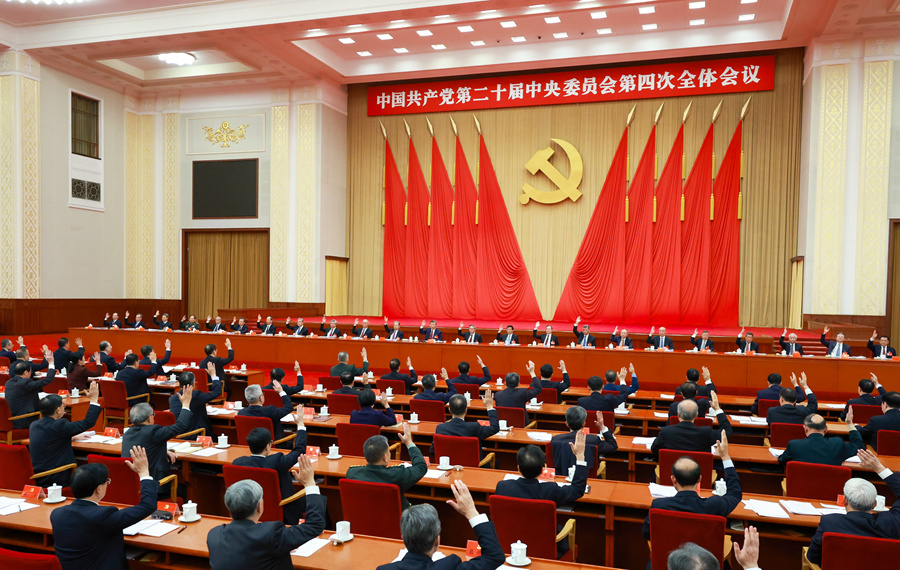
Group 1: Economic Development Goals - The "15th Five-Year Plan" aims for significant achievements in high-quality development, technological self-reliance, and comprehensive reforms [1] - By 2035, the goal is to elevate China's economic, technological, defense, and comprehensive national strength, achieving a per capita GDP at the level of moderately developed countries [1] Group 2: Industrial and Technological Advancements - The Ministry of Industry and Information Technology emphasizes new industrialization, focusing on high-quality development and the integration of technological and industrial innovation [2] - Plans include nurturing emerging industries and future sectors, with a focus on advanced manufacturing and technology-driven growth [2] Group 3: Market and Economic Structure - The strategy includes expanding domestic demand and enhancing the domestic market's resilience to external risks [4][5] - A unified national market will be promoted by eliminating unreasonable market entry restrictions and ensuring fair competition [4][5] Group 4: Agricultural and Rural Development - The focus is on modernizing agriculture and rural areas, with goals set for 2035 to achieve agricultural modernization and improved living conditions in rural areas [6] - Efforts will be made to enhance agricultural productivity and quality, while promoting rural revitalization [6] Group 5: Social Welfare and Employment - The plan emphasizes improving people's livelihoods and promoting common prosperity through enhanced social welfare systems and employment opportunities [7] - Key initiatives include improving income distribution, education, and healthcare services [7] Group 6: Environmental Sustainability - The "15th Five-Year Plan" includes a commitment to green transformation and building a beautiful China, focusing on carbon neutrality and ecological protection [8][9] - Policies will be implemented to promote a circular economy and sustainable resource management [9] Group 7: Macro-Economic Stability - The government aims to stabilize employment, businesses, and market expectations to maintain economic stability [10] - Continuous macroeconomic policy adjustments will be made to support economic recovery and growth [10]
四中全会公报划重点:目标明确,脚步坚定
Yin He Zheng Quan· 2025-10-23 12:24
Economic Growth and Development Goals - The "14th Five-Year Plan" aims for an economic growth target of around 5% during the period, aligning with the long-term goal of achieving modernization by 2035[2] - By 2024, China's per capita GDP is projected to be $13,303, indicating the need for further efforts to reach the level of middle-income developed countries[2] Modern Industrial System - The plan emphasizes the construction of a modern industrial system, with advanced manufacturing as a key focus, to ensure the stability of the manufacturing sector[3] - The strategy includes enhancing the safety of industrial supply chains and promoting high-end equipment and aerospace industries as main areas for growth[3] Technological Innovation - The report highlights the importance of self-reliance in technology, with a focus on original innovation and tackling key core technologies, particularly in semiconductors and industrial software[3] - Basic research funding is expected to increase from the current 6% to support these initiatives[3] Domestic Demand and Economic Circulation - The emphasis on domestic demand has shifted to a model where new demand leads to new supply, aiming to strengthen the domestic economic cycle[3] - The construction of a unified national market is prioritized to enhance the resilience and reliability of domestic circulation[3] Agricultural and Rural Modernization - The plan includes improving rural living conditions and services to reduce urban-rural disparities, with a focus on modernizing agriculture[4] - Key regions like the Greater Bay Area and Yangtze River Delta are expected to play significant roles in national development[4] Cultural Development - The "14th Five-Year Plan" stresses the strategic importance of cultural development in enhancing national strength and international influence[4] - It aims to foster cultural innovation and creativity to support the overall development of socialism[4] Social Welfare and Real Estate - The principle of "people first" is emphasized, indicating a commitment to social welfare and high-quality development in the real estate sector[4] - The report suggests that real estate will be treated as part of social welfare rather than a risk sector, indicating potential support for the industry[4] Economic Stability Measures - The meeting underscored the need to achieve annual economic and social development goals, with a focus on maintaining a 5% growth target for 2025[4] - Recent policies include the introduction of 500 billion yuan in new policy financial tools to support economic stability[4]
冲刺千亿级园区 助制造业提能级
Si Chuan Ri Bao· 2025-10-16 20:06
Group 1 - The core investment projects in Chongzhou, such as the 2.25 billion yuan production base of Zhongfa Tianxin (Sichuan) Aerospace Technology Co., Ltd. and the 2 billion yuan OLED polarizer production base of Nichia Materials Technology (Chengdu) Co., Ltd., are crucial for enhancing the manufacturing capacity of the region [2][3] - Chongzhou is positioned as an "advanced manufacturing cluster" within Chengdu's development strategy, aiming to achieve 80 billion yuan in revenue this year and 100 billion yuan by 2027, thereby entering the list of the top 100 manufacturing counties in China [2][3] - The county-level new cities in Chengdu have significantly contributed to the city's manufacturing growth, with Chongzhou attracting major companies in electronics and home furnishings, accounting for 45% of the province's home furnishing industrial output [3][4] Group 2 - Chongzhou is accelerating the development of new growth points in aerospace, commercial satellites, and low-altitude economy, with plans for infrastructure such as the Tian Gong Airport [4][5] - The establishment of the Chengdu Clean Energy Innovation and Transformation Base and the high-end energy equipment industry is supported by Chengdu's policies regarding land use and industrial introduction [5][6] - The Chongzhou Aerospace Technology Industrial Park is being developed to support the entire industry chain for commercial satellite research, manufacturing, and operation, with significant investments from companies like Guoxing Aerospace Technology Co., Ltd. [6]