
反向过年

Search documents
宏观周脉博系列5:从消费政策看开年消费发力
Changjiang Securities· 2026-02-08 00:33
Group 1: National Subsidy Policies - The central government has timely issued "two new" subsidies and extended loan interest subsidy policies, with an expanded scope and scale, expected to boost consumption from both supply and demand sides[3] - The national consumption subsidy scale for Q1 2026 is projected at 62.5 billion, down from 81 billion in Q1 2025, mainly due to reduced subsidy amounts in appliances and automobiles[7] - The loan interest subsidy policy has been extended, with the maximum subsidy per loan increased from 1 million to 10 million, and the cancellation of previous limits on single loan amounts[8] Group 2: Local Consumption Initiatives - The Ministry of Commerce has launched the "Happy Shopping Spring Festival" initiative, encouraging local governments to stimulate holiday markets, with 12 provinces already implementing consumption voucher activities[9] - Local governments are expected to issue consumption vouchers totaling over 3 billion for the Spring Festival, with Guangdong and Zhejiang leading in financial support[24] Group 3: Financial Backing and Debt Issuance - The issuance of special government bonds is being expedited, with a forecast of 500 billion for 2026, including 200 billion for equipment updates and 300 billion for old-for-new consumption[30] - As of February 6, 2026, local general bonds and project special bonds have seen significant increases, with 136.3 billion and 432.5 billion issued respectively, indicating strong local government engagement[9] Group 4: Consumption Trends and Expectations - The service sector is expected to show strong performance, with tourism consumption significantly increasing during the Spring Festival, driven by a longer holiday and pent-up demand[11] - The CPI for Q1 2026 is anticipated to rise due to seasonal price increases, particularly in pork and premium liquor, indicating a potential upward trend in consumer prices[12]
反向过年,拿回“春节主动权”
Xin Lang Cai Jing· 2026-02-07 19:44
Group 1 - The core concept of "reverse New Year" refers to the phenomenon where parents travel to their children's work cities to celebrate the New Year, contrasting with the traditional practice of children returning home [2][3] - Young individuals are increasingly sharing online posts about how to entertain their parents during the New Year, indicating a growing trend in planning activities for family members visiting [3] - The idea of "finding a New Year buddy" has emerged among young people who cannot return home, allowing them to connect with others in similar situations for companionship during the holiday [4] Group 2 - Young people are actively seeking ways to avoid uncomfortable questions from relatives during family gatherings by redirecting conversations towards shared activities or interests [5][6] - Experts suggest that the differing expectations between generations regarding holiday celebrations can lead to anxiety for young people, who may feel pressured by traditional family dynamics [6][7] - Recommendations for improving communication between generations include rephrasing questions to be more supportive and understanding, fostering a more relaxed atmosphere during family interactions [7]

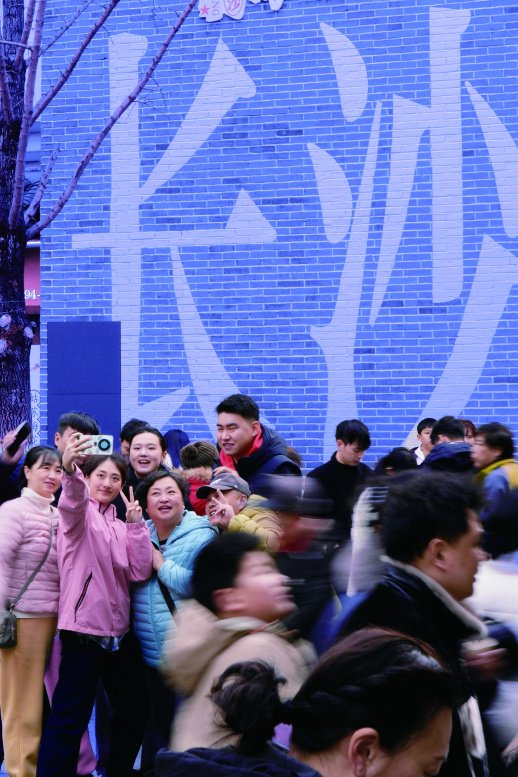
“反向过年”兴起:银发族进城,“Z世代”入村
Zhong Guo Xin Wen Wang· 2026-02-07 06:08
Core Viewpoint - The rise of "reverse New Year" celebrations in China, where elderly parents travel to cities to celebrate with their children, marks a shift from the traditional pattern of children returning home for the holidays [2]. Group 1: Trends in Travel - The ticket booking volume for "reverse New Year" has significantly increased, with a year-on-year growth of 84% for flights during the Spring Festival period from early February to mid-February 2026 [2]. - Major cities, particularly first-tier and new first-tier cities, are the most popular destinations for this trend, leading airlines to introduce programs like "Parents' Travel Assurance" [2]. Group 2: Economic and Social Implications - The trend of parents traveling to cities for the New Year enhances family bonding and emotional interaction in a new urban environment, while also promoting intergenerational understanding [2]. - Economically, this shift is expected to boost urban consumption, particularly in areas such as dining, local tourism, and shopping, while indirectly upgrading rural consumption by spreading modern consumer concepts and brand awareness [2]. Group 3: Youth Trends - Many members of Generation Z are opting to travel to rural areas or small towns for unique experiences, such as pottery workshops or leisurely stays in countryside accommodations [4][5]. - A report indicates that young people are moving away from merely visiting popular tourist spots to seeking deeper cultural experiences, with hotel bookings covering over a thousand county-level cities during the Spring Festival [5].
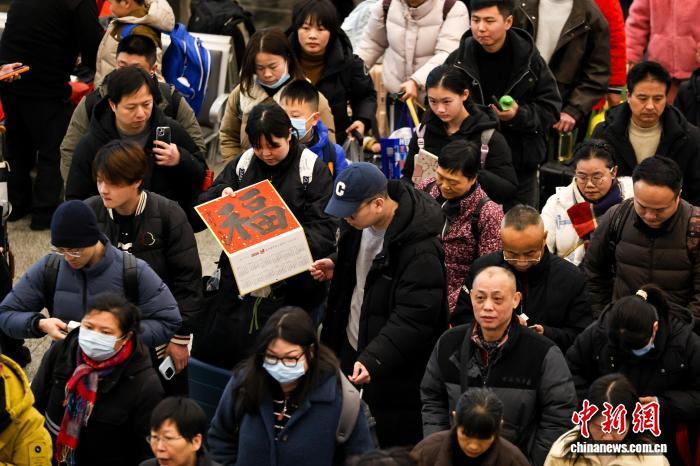
让“反向过年”更好发挥正向价值
Xin Lang Cai Jing· 2026-02-07 01:11
Group 1 - The core viewpoint of the articles highlights the increasing trend of "reverse Spring Festival travel," which is becoming a new norm during the Spring Festival travel rush, with significant growth in ticket bookings for this trend [1][2]. - During the Spring Festival travel period in 2026, there is a notable increase in ticket bookings, with flight reservations rising by 84% and train ticket bookings increasing by over 50% compared to the previous year [1]. - The "reverse Spring Festival" helps alleviate the pressure on transportation systems by maximizing the utilization of available capacity, allowing for better service to travelers heading to cities [1][2]. Group 2 - Factors contributing to the rise in "reverse Spring Festival" travelers include discounts on tickets by transportation departments and the rational choice made by individuals facing high demand and prices for return tickets [2]. - Changes in family structures, such as the increase in single-child families, have led to a shift in how families celebrate the New Year, with more families opting for "reverse Spring Festival" to be together in urban areas [2]. - The phenomenon of "reverse Spring Festival" reflects changing social customs, where the emphasis is less on returning home and more on family togetherness, regardless of location [2]. Group 3 - While the positive changes associated with "reverse Spring Festival" are commendable, the situation where some elderly individuals feel compelled to choose this option for their children's convenience should not be overlooked [3]. - There is a need for transportation departments to enhance capacity and services to ensure smooth travel for migrant workers returning home, as well as to implement staggered holidays and paid leave policies [3]. - Improving accessibility for elderly travelers and providing comprehensive public services for those participating in "reverse Spring Festival" can enhance the overall experience and promote this new cultural practice [3].
顺风车预测数据揭示春运新动向:返乡预约成主流,“反向过年”趋势显现
Xin Lang Cai Jing· 2026-02-06 10:41
Group 1 - The core viewpoint of the article is that the ride-sharing model, particularly through platforms like Dida Chuxing, is becoming a significant indicator of changes in population movement during the Spring Festival travel season in 2026 [1] - The peak travel day for cross-city ride-sharing during the Spring Festival is expected to be February 12, with a significant portion of users preferring to book rides in advance, with 70% of orders placed more than one hour ahead and over 40% placed more than 12 hours in advance [1] - More than 15% of return orders are anticipated to start directly from workplaces, highlighting the flexibility of ride-sharing in connecting commuting and returning home scenarios [1] Group 2 - The report also notes a trend of "reverse New Year," where the proportion of cross-city ride-sharing orders from lower-tier cities to new first-tier cities has been increasing over the past three years, while orders from first-tier cities to lower-tier cities have been declining [2] - This shift is associated with recent trends in population employment mobility, with some individuals moving back from first-tier cities to new first-tier cities [2]
滴滴预计今年春运异地出行上涨45% 充电需求增长超六成
Bei Ke Cai Jing· 2026-02-06 08:53
Core Insights - Didi Chuxing predicts a 45% increase in intercity ride-hailing demand before the Spring Festival compared to the pre-Spring Festival period [1] - The demand for rides to major transportation hubs like airports and train stations is expected to rise by 40% [1] - Significant increases in demand for rides to beauty salons and shopping malls are forecasted at 67% and 49% respectively [1] Demand Forecast - Ride-hailing demand is expected to surge starting February 8, peaking on February 13, with subsequent peaks on February 22, February 24, and during the Lantern Festival on March 3-4 [1] - A 21% year-on-year increase in ride-hailing demand is anticipated in first-tier cities before the Spring Festival, with a notable rise in intercity users [1] - Third-tier and lower cities are expected to experience a prolonged peak in ride-hailing demand, lasting until February 15 before continuing from February 23 to March 5 [1] Spring Festival Trends - Since the beginning of the Spring Festival travel season, intercity ride-hailing demand has increased by 23%, with specific demands for tourist attractions, ski resorts, and shopping districts rising by 75%, 60%, and 38% respectively [2] - Didi plans to distribute 1.1 billion yuan in driver subsidies during the Spring Festival and will trial a driver service fee during peak travel times to better meet demand [2] Charging and Fuel Demand - National charging demand is expected to grow by over 60%, with cities like Beijing, Shanghai, Chengdu, Chongqing, and Tianjin seeing increases exceeding 80% [2] - Fuel demand in transportation hub cities and popular tourist destinations is projected to rise by over 10% during the Spring Festival travel period [2]

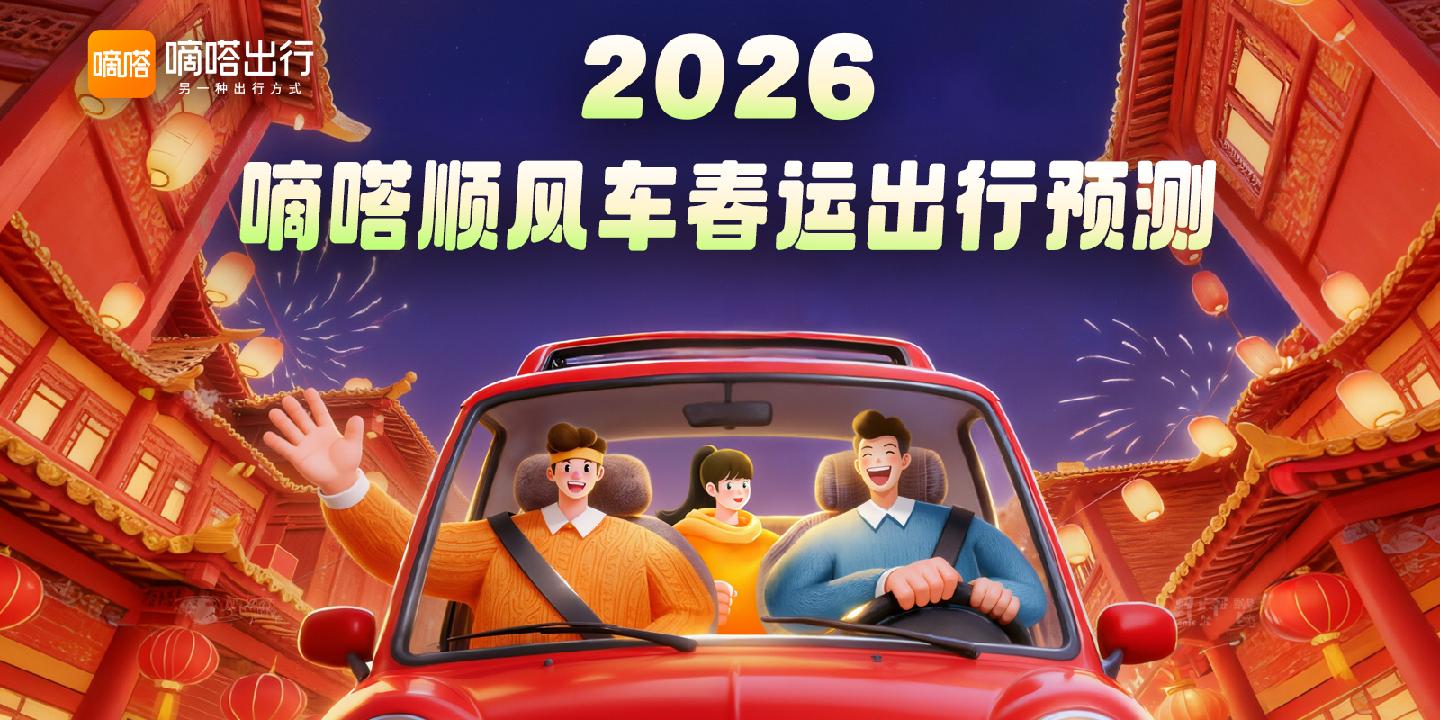
嘀嗒出行发布2026春运顺风车出行预测:春节顺风车返乡下单高峰将从2月8日开始 2月12日出发人数将最多
Jing Ji Guan Cha Wang· 2026-02-04 09:43
Core Insights - The 2026 Spring Festival travel season is expected to see significant trends in ride-sharing, particularly for cross-city trips during the holiday period [2][4][5] Group 1: Travel Trends - Peak days for ride-sharing bookings and departures for outbound trips are projected to be February 11 and 12, while return trip peaks are expected on February 22 and 23 [2][5] - The volume of ride-sharing bookings for outbound and return trips will remain high in the days surrounding these peak dates [2][5] - The ratio of ride-sharing bookings for hotel and tourism destinations compared to residential destinations is estimated to be approximately 1:2, indicating a growing trend in holiday travel [4][10][14] Group 2: User Behavior - Over 15% of cross-city ride-sharing bookings for residential destinations are expected to originate directly from workplaces, allowing for more efficient travel for those still working [10][19] - A significant portion of users (about 67.6%) are expected to book rides more than one hour in advance, with over 40.5% booking more than 12 hours ahead [7][10] - The majority of ride-sharing users tend to book their trips within two days of travel, reflecting the flexibility of ride-sharing as a transportation option during the Spring Festival [7][10] Group 3: Popular Routes and Cities - The top five popular routes for return trips are expected to be Shenzhen to Dongguan, Shenzhen to Guangzhou, Shenzhen to Huizhou, Beijing to Langfang, and Shanghai to Suzhou [25][28] - Cities predicted to experience the fastest growth in ride-sharing popularity during the Spring Festival include Chengmai, Wuzhishan, Zhuzhou, Qujing, and Yuxi [4][14][17] - Following the recent opening of Hainan, cities like Danzhou have seen a significant increase in ride-sharing bookings, with some cities reporting over a 145% increase since December 18, 2025 [17][19] Group 4: Changing Travel Patterns - There is a noticeable trend of increased ride-sharing bookings from lower-tier cities to new first-tier cities, with the proportion rising from 7.72% in 2022 to 9.07% in 2025 [20][24] - Conversely, the proportion of bookings from first-tier cities to lower-tier cities has decreased by over 3 percentage points during the same period [20][24]
旅游市场供需两旺 多地掀起抢客潮
Jin Rong Shi Bao· 2026-02-04 01:01
Core Insights - The upcoming 9-day Spring Festival holiday is expected to ignite a surge in travel demand, with various travel products already entering a "booking frenzy" [1] - The proportion of travelers during the 2026 Spring Festival is anticipated to increase, gradually catching up with the "returning home" crowd, highlighting a trend towards "segmented New Year" and "composite Spring Festival" experiences [1] Group 1: Travel Trends - "Non-cross-province" travel is gaining popularity, with many travelers preferring local trips to avoid delays in visiting family and friends [2] - Approximately 20% of the top 100 cities for hotel bookings during the Spring Festival are located in provinces with a high number of migrant workers, such as Henan, Anhui, Sichuan, and Jiangxi [2] - The "reverse New Year trend" is notable, with young people in major cities bringing their parents from rural areas to celebrate together [2] Group 2: Regional Highlights - Regions like Guangdong, Fujian, and Sichuan are launching campaigns to attract tourists, with Guangdong's hotel bookings increasing by 169% compared to last year [3] - Fuzhou has entered the top five for hotel bookings during the Spring Festival, with an increase of over 80% year-on-year [3] - Sichuan's New Year activities, including the famous lantern festival, are making it a sought-after destination, with hotel prices rising significantly [3] Group 3: Emerging Travel Patterns - A report indicates a clear trend towards segmented travel, with nearly 35% of users opting for early bird trips before the holiday peak [5] - The highest travel peak is expected on February 18, following family reunions and traditional New Year celebrations [6] - There is a growing interest in "niche" travel destinations and experiences, with social media playing a significant role in promoting lesser-known locations [6]
2026年春运首日观察:反向过年 一线城市热度最高
Zhong Guo Jing Ying Bao· 2026-02-03 05:32
Core Insights - The 2026 Spring Festival travel season has begun, with a notable increase in travel demand due to the late timing of the holiday and extended vacation periods, leading to a mix of returning home, student travel, and tourism [1] Group 1: Travel Trends - First-tier cities remain the most popular destinations, with "reverse New Year" and "North-South travel" emerging as new trends this year [1][2] - The top ten destinations before the Spring Festival include Beijing, Chengdu, Shanghai, Guangzhou, Shenzhen, Haikou, Kunming, Chongqing, Sanya, and Harbin, indicating strong appeal from major cities and key tourist locations [1][3] - On the first day of the Spring Festival travel, long-distance travel trends show a significant interest in western cities, with Chengdu and Chongqing leading hotel bookings among non-first-tier cities [1] Group 2: Flight and Hotel Data - The most popular flight routes during the Spring Festival include Guangzhou-Shanghai, Beijing-Shenzhen, and Beijing-Chengdu, primarily connecting first-tier cities [3] - Hotel search interest in first-tier cities surged over 70% on the first day of the Spring Festival travel, with many hotels near train stations and airports already sold out [3] - There is a notable increase in interest for less popular routes driven by the "reverse New Year" trend, with some routes seeing over a 300% increase in popularity compared to last year [4] Group 3: Travel Logistics - Many cities are enhancing transfer services between airports and high-speed rail stations to facilitate smoother travel experiences [5] - Predictions indicate multiple travel peaks during the Spring Festival, with February 7 expected to be the first major travel peak, leading to rising ticket prices [6] - Ticket prices for popular routes have already begun to increase, with a notable rise observed from February 6 to February 7 [6]
春运大考需要用心作答
Hai Nan Ri Bao· 2026-02-03 04:34
2月2日,2026年春运拉开帷幕,我省机场、港口、车站游人如织,空气中弥漫着归来的喜悦和出游 的欢欣。为迎接封关首年的首个春运,我省交通运输、旅文等多部门提前部署,以系列扎实举措对接旅 客需求,呵护每一段美好旅程。 对不少旅客而言,春运是一场甜蜜的奔赴,而对于交通保障等部门而言,春运是一场全方位、多维 度的"大考"。这是封关之后首个春运,适逢"史上最长"春节假期,人气旺、流量高。数据显示,琼州海 峡春运期间预计运送旅客超466万人次、车辆超117万台次,同比分别增长12%和10%。做好今年的春运 保障,不仅是对运输能力的考验,更是对封关后协同机制、通关效率、服务效能的全面检验。 保障春运,运力是"硬支撑",是旅客最为关注的焦点。为应对激增的客流量,我省"海陆空"加大运 力,优化供给。比如,琼州海峡新增两艘新能源专业化运输船舶,新能源车运输保障能力由去年的日均 3500台次提升至5000台次;美兰机场联合多家航空公司在海口至北京、上海、广州、深圳等热门航线增 加航班;铁路部门加开广州白云站至海口站临时旅客列车。以强运力对接高客流,让出行选择更便捷, 护航旅客安心出行。 春运涉及交通运输方方面面,在提升运力的同时 ...