固态电池

Search documents
宁德亿纬等推出员工持股及激励计划,美国OBBBA法案细则更新
Zhong Guo Neng Yuan Wang· 2026-02-24 01:54
Industry Dynamics - The solid-state battery industry is accelerating its commercialization, with the first national standard for automotive solid-state batteries expected to be reviewed and approved in April and officially released in July [2] - Lingge Technology has won a bid for a hundred-ton-level sulfide solid electrolyte production line [2] - Dangsheng Technology has partnered with Huineng Technology to work on solid-state batteries and the new energy industry, while Guoxuan High-Tech is collaborating with BASF to develop solid-state battery technology [2] Company Updates - CATL (300750) announced an employee stock ownership plan on February 9, 2026, with an estimated total funding of up to 743 million yuan, corresponding to a stock scale of no more than 4.0468 million shares, accounting for 0.09% of the total share capital [2] - The plan includes a lock-up period and performance assessment conditions for employees, with a total share payment expense expected to be 657 million yuan, amortized over 2026-2029 [2] Incentive Plans - Yiwei Lithium Energy (300014) announced its seventh stock option and restricted stock incentive plan on February 13, 2026, proposing to grant a total of 150 million shares, accounting for 7.23% of the total share capital [3] - The plan targets approximately 2,438 individuals, with stock option exercise prices set at 64.86 yuan and restricted stock grant prices at 62.95 yuan [3] - The company aims for a profit growth rate of no less than 30%/60%/90%/120% over the four accounting years from 2026 to 2029, based on the net profit of 2025 [3] Market Data - In January 2026, domestic new energy vehicle sales reached 945,000 units, a slight year-on-year increase but a 45% decrease month-on-month, with a penetration rate of 40.3% [5] - In January 2026, new energy vehicle sales in nine European countries totaled 205,200 units, a year-on-year increase of 20% but a 37% decrease month-on-month, with a penetration rate of 30.6% [5] - In the U.S., new energy vehicle sales in January 2026 were 77,600 units, a year-on-year decrease of 31% and a month-on-month decrease of 30%, with a penetration rate of 7.0% [5] Price Trends - Lithium salt prices have declined, while battery cell prices have increased; as of February 13, 2026, lithium carbonate prices were 144,000 yuan per ton, down 17,000 yuan from two weeks prior [6] - Prices for ternary cathodes, lithium iron phosphate cathodes, electrolytes, and lithium hexafluorophosphate have decreased, while prices for anodes and separators remained stable [6] - Prices for square ternary power cells, lithium iron phosphate power cells, and energy storage cells have seen slight increases compared to two weeks ago [6] Investment Recommendations - Companies in the lithium battery industry with low valuations and strong demand, such as CATL, Yiwei Lithium Energy, and others, are recommended for attention [8] - Leading companies in the low-altitude economy and robotics industry, as well as those involved in solid-state and sodium battery materials, are also highlighted [8] - Companies leading in charging pile and high-voltage direct current relay sectors are suggested for consideration [8]




国家能源局:主要国家加大氢能、固态电池等前沿技术研发应用,AI成重塑国际能源格局的新变量
Xin Lang Cai Jing· 2026-02-23 13:30
Core Viewpoint - Technological innovation is injecting stronger momentum into the development of new productive forces in the energy sector [1] Group 1: International Perspective - Major countries are enhancing their energy technology strategies, leading to an active period of energy technology innovation [1] - Increased investment in frontier technologies such as hydrogen energy, solid-state batteries, advanced nuclear power, and ocean energy is observed [1] - Artificial intelligence is emerging as a new variable reshaping the international energy landscape, potentially driving systemic changes in energy production, transmission, and consumption [1] Group 2: Domestic Perspective - China's energy technology is entering a key stage characterized by a mix of catching up and leading in certain areas [1] - A significant number of new technologies and industries are thriving, with renewable energy and new energy storage technologies maintaining a world-leading position [1] - Challenges remain, including insufficient original innovation capabilities, gaps in key core technologies and equipment, and the need for improved collaboration among industry, academia, and research [1]
锂电产业链双周报(2026年2月第2期):宁德亿纬等推出员工持股及激励计划,美国OBBBA法案细则更新
Guoxin Securities· 2026-02-23 10:45
Investment Rating - The investment rating for the lithium battery industry is "Outperform the Market" (maintained) [1] Core Insights - The lithium salt price has decreased, while the prices of battery cells have increased slightly. As of February 13, the price of lithium carbonate is 144,000 CNY per ton, down by 17,000 CNY from two weeks ago. The prices of ternary cathodes, lithium iron phosphate cathodes, electrolytes, and lithium hexafluorophosphate have also decreased, while the prices of anodes and separators remain stable. The prices for square ternary power cells, lithium iron phosphate power cells, and energy storage cells have increased slightly [2][3] - The solid-state battery industry is accelerating its commercialization, with the first national standard for automotive solid-state batteries expected to be reviewed and approved in April and officially released in July. Companies like Gotion High-Tech and BASF are collaborating to develop solid-state battery technology [3][10][11] - The domestic new energy vehicle sales in January 2026 reached 945,000 units, a slight year-on-year increase, while the penetration rate is 40.3%, up by 1.3 percentage points year-on-year [3][12] Industry Dynamics - The report highlights several leading companies in the lithium battery sector that are undervalued amid improving demand, including CATL, EVE Energy, and others. It also points to companies leading in low-altitude economy and robotics, solid-state and sodium battery materials, and charging pile industries [3] - The U.S. Treasury Department has updated details regarding the OBBBA Act, tightening certification for specific foreign entities and detailing the calculation of material assistance ratios [3][13][14] - The report notes significant investments in battery production projects, including an 80GWh project by Chuangneng in Wuhan and a 33 billion CNY investment by Penghui Energy for new battery production lines [10][18] Price Trends - The report provides a detailed overview of lithium battery material prices as of February 13, 2026, indicating a decrease in lithium carbonate prices by 10.4% compared to two weeks prior, while other materials like nickel sulfate and cobalt sulfate have shown varying price changes [19] - The price of square lithium iron phosphate batteries has increased by 1.5% to 0.336 CNY/Wh, while the price of square ternary power cells remains stable at 0.582 CNY/Wh [19]
固态电解质膜新进展追踪
高工锂电· 2026-02-23 09:56
Core Viewpoint - The article discusses the strategic moves of Enjie Co., Ltd. in the solid-state battery sector, highlighting its partnerships and product development efforts aimed at enhancing its position in the lithium battery industry [2][3]. Group 1: Strategic Partnerships - Enjie signed a strategic cooperation agreement with Enli Power on January 20, 2026, to jointly develop high-performance electrolyte separators for solid-state batteries, establishing a collaborative mechanism for process synergy and product application [2]. - Shortly after, Enjie’s subsidiary, Shanghai Enjie, signed another strategic cooperation agreement with Guoxuan High-Tech, focusing on technical collaboration for separators and solid-state electrolytes, and proposing joint efforts in building zero-carbon factories and intelligent mobile energy storage charging stations [2][3]. Group 2: Product Development and Production Capacity - Enjie has extended its focus beyond separators to include key materials in the sulfide system for solid-state batteries, with plans for high-purity lithium sulfide and solid-state electrolyte production [4]. - The company’s Yuxi base is advancing a pilot project for solid-state electrolyte with a planned capacity of thousands of tons, with an investment of approximately 250 million yuan [4]. - Enjie aims to validate its production process through a phased approach of small-scale verification, pilot amplification, and large-scale production lines to seize the market window for sulfide solid-state electrolyte materials [4]. Group 3: Order and Supply Framework - Enjie has signed a procurement framework agreement with Beijing Weilan New Energy, expecting to receive orders for no less than 300 million square meters of semi-solid and solid-state battery electrolyte separators and at least 100 tons of solid-state battery electrolytes from 2025 to 2030 [5]. - The agreement stipulates that 80% of Weilan's material procurement will be directed to Shanghai Enjie and its affiliates, indicating a strategic shift from traditional wet-process separators to new forms of materials in the solid-state system [5]. - The current agreements primarily outline cooperation directions and framework arrangements, with specific procurement scales, pricing terms, and delivery schedules yet to be disclosed, leaving the strength of future implementations dependent on actual orders and project progress [5].

锂电产业链双周报(2026年2月第2期):宁德亿纬等推出员工持股及激励计划,美国OBBBA法案细则更新-20260223
Guoxin Securities· 2026-02-23 07:54
Investment Rating - The investment rating for the lithium battery industry is "Outperform the Market" (maintained) [1] Core Insights - The lithium salt price has decreased, while cell prices have increased. As of February 13, the price of lithium carbonate is 144,000 yuan/ton, down 17,000 yuan/ton from two weeks ago. The prices of ternary cathodes, lithium iron phosphate cathodes, electrolytes, and lithium hexafluorophosphate have also decreased, while the prices of anodes and separators remain stable. The prices for square ternary power cells, lithium iron phosphate power cells, and energy storage cells have increased slightly [2][3] - The solid-state battery industry is accelerating, with the first national standard for automotive solid-state batteries expected to be reviewed and approved in April and officially released in July. Companies like Gotion High-Tech and BASF are collaborating to develop solid-state battery technology [3][10] - The report suggests focusing on leading companies in the lithium battery industry with low valuations amid improving demand, including CATL, EVE Energy, and others [3] Industry Dynamics - The domestic new energy vehicle sales in January 2026 reached 945,000 units, a slight year-on-year increase but a 45% decrease month-on-month. The penetration rate of new energy vehicles in China is 40.3%, up 1.3 percentage points year-on-year [3] - In January 2026, new energy vehicle sales in nine European countries reached 205,200 units, a 20% year-on-year increase but a 37% month-on-month decrease. The penetration rate in Europe is 30.6%, up 7.1 percentage points year-on-year [3] - The U.S. saw new energy vehicle sales of 77,600 units in January 2026, a 31% year-on-year decrease and a 30% month-on-month decrease, with a penetration rate of 7.0% [3] Company Developments - CATL announced an employee stock ownership plan on February 9, 2026, with a total investment of no more than 743 million yuan, involving approximately 404,680 shares [3][15] - EVE Energy released its seventh stock option and restricted stock incentive plan on February 13, 2026, with a total of 150 million shares to be granted [3][18] - The U.S. Treasury Department updated details on the OBBBA Act on February 12, 2026, tightening certification for specific foreign entities and detailing the calculation of material assistance ratios [3][13][14] Market Performance - Over the past two weeks, the lithium battery sector has increased by 4.1%, while the battery chemicals sector has risen by 4.7%. The lithium-specific equipment sector has decreased by 1.8% [7] - Key stock price changes from February 8 to February 13 include a 1.0% decrease for CATL and a 12.3% increase for Enjie [7]
涨价题材能与科技股媲美!马年研究哪些主线?
Sou Hu Cai Jing· 2026-02-21 13:02
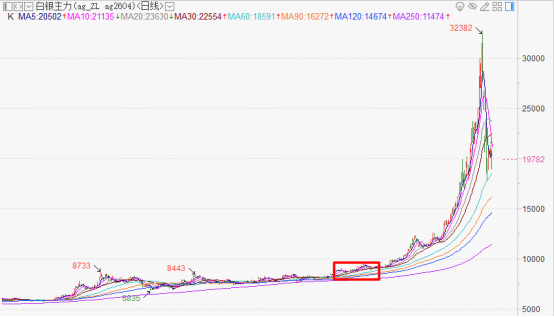
Group 1 - The core theme of the article revolves around the investment opportunities in price-increasing themes within the A-share market, particularly in the context of the upcoming horse year [1][2] - Price-increasing themes have gained significant recognition, with notable stocks emerging, such as Xingye Yinxin, Zhongtung Gaoxin, and Zhaojin Gold [1][2] Group 2 - Various price-increasing themes have been identified, including export-controlled metals like rare earths, the impact of US dollar depreciation on gold, silver, copper, and aluminum prices, and the demand from AI driving up prices of tin, electronic fabrics, fiberglass, copper-clad laminates, passive components, and sputtering targets [3][4][5][6] - It is suggested that capturing two or three of these price-increasing varieties can be considered a success [7] Group 3 - Six insights are provided regarding investment in price-increasing themes: 1. Avoid buying high-priced varieties to maintain a better safety margin [8] 2. Focus on varieties with expanding demand rather than those with declining demand [10] 3. Choose companies that directly benefit from price increases, such as mining companies over smelting companies [11][12] 4. Be aware of the high volatility of price-increasing stocks [8] 5. Select varieties with accessible information for better judgment [8] 6. Low-priced varieties may experience a rebound if positive news emerges [16] Group 4 - For the horse year, potential price-increasing themes under consideration include lithium carbonate and vanadium battery storage, with lithium carbonate expected to benefit from controlled production and increased demand for energy storage batteries [19][20] - The global demand for lithium is projected to double by 2030, with significant price increases anticipated for lithium products [20] - The vanadium battery market is expected to grow due to the increasing scale of wind and solar power generation, which requires long-duration energy storage solutions [21][22]
全球首款500Wh/kg级固态电池量产
DT新材料· 2026-02-20 11:59
Core Viewpoint - Ganfeng Lithium has developed a high-energy density eVTOL battery with a capacity of 320Wh/kg, which has been successfully integrated into the WoFei ChangKong AE200-100 model, with the first phase of manned test flights scheduled for December 2025 [1][2]. Group 1: Battery Development and Collaboration - Ganfeng Lithium's eVTOL battery has passed manufacturing compliance checks and received approval certificates from relevant authorities [2]. - The company is collaborating with WoFei ChangKong to establish a sustainable supply system for eVTOL battery cells, focusing on battery inspection and recycling throughout the product lifecycle [1][4]. - The battery features a high energy density of 320Wh/kg, with a performance capability of 2C charge and 5C discharge, and a cycle life exceeding 1000 cycles, meeting GB38031 safety standards [4]. Group 2: Technological Advancements - Ganfeng Lithium is advancing both silicon-based and lithium metal anode technologies, with a focus on lithium metal anode technology to enhance high-energy battery production [4][6]. - The company has achieved a cycle life of over 800 cycles for a 400Wh/kg battery, indicating potential for large-scale application, and has produced the world's first 500Wh/kg 10Ah product in small batches, setting a benchmark for lithium metal battery industrialization [4][6]. - The silicon-based anode technology has achieved a product range of 320-450Wh/kg, with the 320Wh/kg cell cycle life exceeding 1000 cycles and the 450Wh/kg technology reaching industry-leading levels [6].

新股前瞻|星源材质:营收稳增长VS盈利承压,锂电隔膜巨头冲刺“A+H”仍可期?
智通财经网· 2026-02-20 02:23
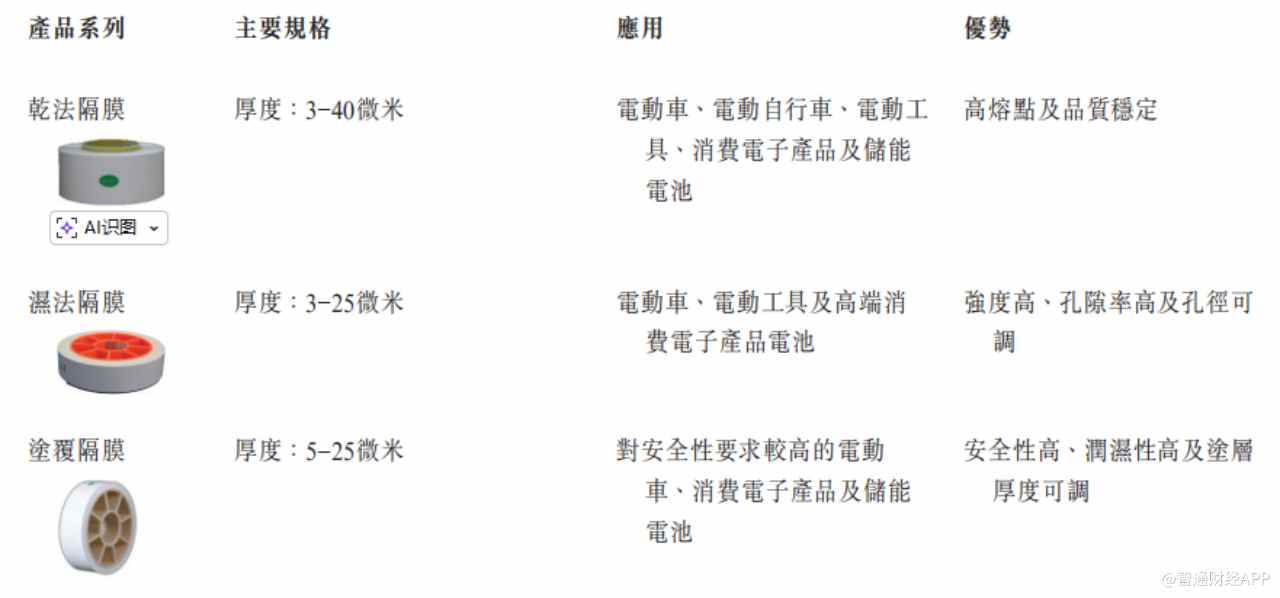
Core Viewpoint - Shenzhen Xingyuan Material Technology Co., Ltd. is seeking to list on the Hong Kong Stock Exchange, aiming to raise funds for R&D, global capacity expansion, investment in new materials, and debt repayment [1][14]. Company Overview - Xingyuan Material, founded in 2003, is a leading manufacturer of lithium-ion battery separators with over 20 years of industry experience. It is the first company to achieve bulk exports of lithium-ion battery separators and one of the few in China with dry, wet, and coated separator production technologies [2][4]. - The company has established six production bases in China and is building overseas bases in Europe, Southeast Asia, and the United States. It has R&D centers in China, Japan, and Sweden, with plans for more in Southeast Asia and the U.S. [4][11]. Product Offerings - The company produces three main types of separators: - **Dry separators** (3-40 microns) for mid-to-low-end markets, widely used in electric vehicles and consumer electronics [3]. - **Wet separators** (3-25 microns) for high-end batteries, enhancing energy density and cycle life [3]. - **Coated separators** (5-25 microns) for applications requiring high safety standards [3]. Market Position - Xingyuan Material ranks second globally in lithium-ion battery separator shipments, with a market share increasing from 11% in 2020 to an expected 14.4% in 2024. It holds the largest market share in dry separators and the second-largest in wet separators by shipment volume [4][11]. Financial Performance - The company's revenue has shown stable growth, with figures of 2.867 billion RMB in 2022, 2.982 billion RMB in 2023, and a projected 3.506 billion RMB in 2024. However, net profit has declined from 748 million RMB in 2022 to an expected 371 million RMB in 2024 [7][8]. - The average selling prices of its products have significantly dropped, impacting profitability. For instance, the average price of dry separators fell by 38.6% to 0.35 RMB per square meter in 2024 [8][9]. Industry Outlook - The global battery separator market is projected to grow from 27.7 billion square meters in 2024 to 84.1 billion square meters by 2029, with a compound annual growth rate (CAGR) of 24.8% [11]. - The company plans to leverage its listing funds to develop solid-state battery products and invest in semiconductor materials, aiming to create a second growth curve [14][15].
耐火材料龙头,布局固态电池和商业航天
DT新材料· 2026-02-17 16:17
Core Viewpoint - Beijing Lier, a leading refractory materials company, plans to raise up to 1.034 billion yuan for projects including the annual production of 30,000 tons of composite zirconia and zirconium-based materials for new energy and aerospace applications, as well as the establishment of an innovation research center and a refractory materials production base in Vietnam [3][4]. Group 1: Fundraising and Project Highlights - The key highlight of the fundraising project is the "annual production of 30,000 tons of composite zirconia and zirconium-based materials for new energy and aerospace," with a total investment of approximately 365 million yuan, of which 297 million yuan will be funded through the raised capital [4]. - This strategic move signifies Beijing Lier's transition from traditional refractory material competition to high-value emerging sectors [4]. Group 2: Market Potential and Applications - Zirconium-based materials are essential not only as key raw materials for high-end refractory materials but also as core materials in advanced industries, with applications spanning solid-state batteries, aerospace, and nuclear energy [5]. - In the new energy sector, zirconium-based materials are becoming mainstream electrolyte solutions for all-solid-state batteries due to their high ionic conductivity and interface stability [5]. - In aerospace, their high melting point, low thermal conductivity, excellent thermal shock resistance, and high-temperature stability make them widely used in thermal barrier coatings, rocket nozzles, and key auxiliary materials for high-temperature alloy smelting [5]. Group 3: Innovation and R&D Investment - To support its high-end transformation, Beijing Lier will allocate 243 million yuan to establish an "innovation research center," which will introduce advanced R&D testing equipment and create a comprehensive development, testing, and process platform [5]. - The center aims to integrate industry innovation resources and foster collaboration among upstream and downstream entities to address technological bottlenecks in refractory materials and enhance technological positioning in new energy and aerospace sectors [5]. Group 4: Company Background - Beijing Lier High Temperature Materials Co., Ltd. was established in 2000 and successfully listed on the Shenzhen Stock Exchange in 2010, with over 20 subsidiaries offering a wide range of products including amorphous high-temperature materials, pressed shaped high-temperature materials, and functional high-temperature materials [6].
技术破局先行 马年车市换车有道
Xin Lang Cai Jing· 2026-02-16 03:39
Core Insights - The Chinese automotive market is at a crossroads of inventory competition and technological transition as it enters the Year of the Horse, moving away from price wars to a focus on technology and brand differentiation [1][3] Group 1: Market Dynamics - The automotive industry in China is shifting from low-price competition to a more sophisticated phase characterized by technological, brand, and international competition, driven by a saturated market and rising production costs [3][4] - The China Association of Automobile Manufacturers (CAAM) projects a slight increase of about 1% in domestic car sales by 2026, indicating a new normal of "high base, low growth" [3] - The competition is intensifying as the penetration rate of new energy vehicles surpasses 50%, leading to fierce rivalry among fuel vehicles, new energy vehicles, domestic brands, and joint ventures [3][4] Group 2: Technological Advancements - The Year of the Horse is expected to be pivotal for technological breakthroughs in the automotive sector, particularly in smart driving and solid-state batteries, with domestic brands taking the lead [3][4] - L3 autonomous driving is set to become commercially viable, with companies like Huawei and XPeng making significant advancements in smart driving technology [4][5] - Solid-state battery technology is also progressing, with companies like Dongfeng and Chery achieving breakthroughs in energy density and charging capabilities, indicating a shift towards more efficient battery solutions [5][6] Group 3: Policy Changes and Consumer Guidance - The 2026 vehicle trade-in policy has been revamped to focus on precise upgrades rather than broad incentives, with new subsidy standards and expanded eligibility for older vehicles [6][7] - Consumers are advised to consider trading in older vehicles for new models, especially those with significant depreciation or those seeking enhanced safety and technology features [7][8] - The new policy encourages consumers to make informed decisions rather than following trends, emphasizing the importance of upgrading to safer and more efficient vehicles [7][8]