数字化

Search documents
数字化与人工智能驱动阿联酋旅游业
Shang Wu Bu Wang Zhan· 2026-01-24 02:33
Core Viewpoint - The UAE is solidifying its leading position in the tourism and hospitality sector through the application of digital solutions and artificial intelligence, enhancing its image as an innovative travel destination [1] Group 1: Digital Solutions and AI in Tourism - The UAE is leveraging advanced infrastructure and a nationwide fiber-optic network to rank high in regional and global digital competitiveness indices [1] - Tourism enterprises are widely adopting AI technologies to improve efficiency in booking, travel, and service experiences for visitors [1] Group 2: Industry Growth and Innovation - The focus on digital innovation is fostering the incubation of startups and driving digital practices, which accelerates growth in the tourism sector [1]
天秤座的欧洲,在平衡中前行丨书评
Xin Lang Cai Jing· 2026-01-23 22:58
的确,欧盟在数据使用及其保护方面是极其严格的。2012年欧盟委员会公布了《一般数据保护条例》(GDPR),计划对此前的个人数据保护 指令进行修订,经过充分讨论,2016年4月,《一般数据保护条例》得以通过并于2018年5月生效。许多观点都认为,GDPR意味着欧盟对数据 保护更加严格。 另外,欧盟于2017年以滥用搜索引擎市场支配地位为由,对谷歌处以24.2亿欧元反垄断罚款的案件,也令人印象深刻。所以,足以看出,欧洲 人在数据使用、电子化以及数字化方面,相对比较谨慎,宁可像作者书中写到的"慢一拍"。书中也写到,他们有些人觉得现状也不错,也保持 了原有比较"纯粹"的生活方式,比如大街小巷仍然随处可见明信片和贺卡。 《欧洲是个天秤座》是一本对欧洲的观察笔记,作者的视角既专业又细微,既理性又感性,既冷静又活泼,像极了该书的名字——天秤座蕴含 的种种特征。这本个人视角的"欧洲笔记"是作者傅苏在旅居欧洲的观察、个人专栏文字为基础写成,作者深谙欧洲文化,对日常现象中的文化 因素解读非常到位,值得阅读。生动的文字描述,仿佛带读者畅游了欧洲一般。 书名极具考究,天秤座这个星座的特质,可能最为人所知的就是其以追求平衡为核心特质, ...


以数字要素双向流动驱动城乡融合新发展
Xin Lang Cai Jing· 2026-01-23 16:48
Core Viewpoint - Digitalization is a crucial force driving economic and social development, but the flow of factors between urban and rural areas is currently restricted, hindering comprehensive rural development [2]. Group 1: Digitalization and Factor Flow - New digital technologies such as big data, 5G, artificial intelligence, blockchain, and cloud computing are reshaping the flow of material factors between urban and rural areas, endowing this flow with intelligent characteristics [3]. - Data, as a new production factor, is contributing to the market input alongside traditional factors like land, labor, capital, and technology, thereby increasing the digital development gap between urban and rural areas [3]. Group 2: Digital Infrastructure Disparities - There is an imbalance in the material basis of digital infrastructure between urban and rural areas, with urban areas leveraging technological advantages to dominate rural data resources [4]. - The 56th "Statistical Report on Internet Development in China" indicates that urban internet users account for 71.3% of the total, while rural users only make up 28.7%, highlighting the digital divide [4]. Group 3: Labor Alienation Risks in Rural Digital Transformation - Data production in the digital society involves both professional and non-professional laborers, leading to a separation between data producers and data ownership [5]. - The 56th "Statistical Report on Internet Development in China" shows a significant disparity in digital literacy between urban and rural netizens, with 63.1% of urban users and only 31.7% of rural users proficient in any surveyed digital skills [5]. Group 4: Unidirectional Flow of Material Factors - The imbalance in data flow exacerbates the material disconnection between urban and rural areas, with urban areas attracting digital resources due to their economic and cultural advantages [6]. - In 2020, 841 counties in China had no social capital investment, representing 31.8% of effective sample counties, indicating a lack of investment in rural digital infrastructure [6]. Group 5: Modernization of Agriculture and Rural Areas - Addressing the "three rural issues" is a priority for the government, aiming to promote urban-rural integration and enhance rural living conditions [7]. - The digitalization of material factor flow is transforming urban-rural relationships, with data becoming a key element in this process [7]. Group 6: Promoting Bidirectional Flow of Digital Factors - The "Rural Comprehensive Revitalization Plan (2024-2027)" emphasizes urban-rural integration as a key strategy, aiming to create a unified land market and facilitate the flow of talent and technology to rural areas [8]. Group 7: Collaborative Development of Industries - Digital factors can enhance the efficiency of material circulation in rural agriculture, manufacturing, and distribution, necessitating digital transformation for agricultural advancement [9]. - The establishment of a unified market for urban-rural collaboration is essential for balanced resource allocation and flow [9]. Group 8: Empowering Farmers as Digital Subjects - Farmers' digital subjectivity is constrained by various factors, and enhancing their digital skills is crucial for achieving rural revitalization goals [10]. - The socialization of digital production materials and clear data ownership rights can empower farmers, ensuring their participation in the digital economy [10].
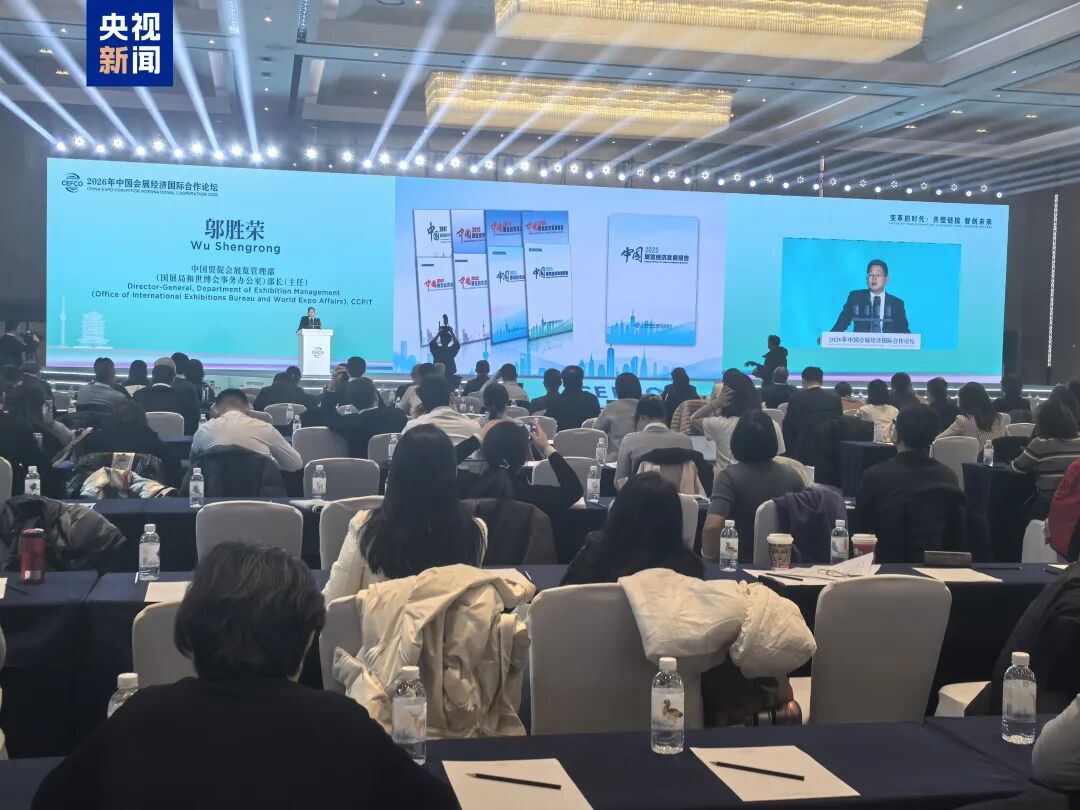
【总台央视】《中国展览经济发展报告2025》发布:国内展会数量与面积再创新高
Xin Lang Cai Jing· 2026-01-23 13:09
在今天(1月23日)召开的2026年中国会展经济国际合作论坛上,中国贸促会对外发布了《中国展览经济发展报告2025》。《报告》显示,中国国内展览 继续呈现稳中有进的良好态势,展会数量与面积再创新高。 2025年,出国展览呈现出"总体平稳、结构优化"的特征,项目数量延续增长态势。机械、交通运输物流是中国企业海外参展办展项目数量最多的行业。消 费品行业项目数量占比增长势头也比较突出。 来源:总台央视 编辑:游万龙 《报告》显示,2025年,中国国内共举办经贸类展会4095项,展览总面积1.59亿平方米,同比分别增长6.53%和2.5%。 与此同时,中部和西部地区展会数量增速较快,分别同比增长11.51%和14.94%。 中国贸促会展览管理部部长 邬胜荣:数字化、绿色化转型成效显著。人工智能、数字孪生等技术快速迭代,为展览业数字化水平提升注入强劲动能。 中国贸促会展览管理部部长 邬胜荣:区域集聚特征显著,东部地区举办的经贸类展会数量和展览面积占全国比重均超六成,京津冀、长三角、珠三角三 大区域贡献了全国53.85%的展会数量和62.48%的展出面积。 在今天(1月23日)召开的2026年中国会展经济国际合作论坛上, ...
世界在向中国买什么?一组数据分析带你看
Xin Lang Cai Jing· 2026-01-23 08:35
Core Viewpoint - The export data for 2025 shows growth despite a complex external environment, with Asia being the largest contributor to this increase, followed by Africa and Europe [1][3]. Group 1: Export Trends by Region - In Asia, the growth is concentrated in integrated circuits, data processing equipment, and smartphones, which are essential for digitalization, industrial upgrading, and green transformation [3]. - In Europe, there is a notable increase in the sales of air conditioners and tower fans from China, meeting local climate and consumption changes [3]. - In Africa, there is a significant rise in exports of offshore production platforms, container ships, engineering machinery, and energy equipment such as solar and energy storage devices [5]. Group 2: Key Export Products - The export of electromechanical products has surpassed 60% for the first time, with transformers and drones emerging as key products [5]. - Transformers are crucial for the expansion of power grids, data centers, and stable integration of renewable energy, with global demand for grid upgrades increasing [7]. - Drones have evolved beyond aerial photography to serve in public service applications, such as digital modeling in Germany, high-altitude monitoring in Peru, and marine protection in Thailand [10]. Group 3: Reliability of Chinese Manufacturing - The certainty of Chinese manufacturing in terms of timely delivery, stable operation, and the ability to support long-term systems is increasingly valued in uncertain environments [11]. - The capabilities that are repeatedly chosen by the world will ultimately return to the domestic market, resulting in more stable supply, complete industrial chains, and sustained innovation [11].

为“一县一业”,江苏专门省级立法
Xin Hua Ri Bao· 2026-01-23 05:54
□ 本报记者 陈月飞 1月20日,省十四届人大常委会第二十次会议审议通过《江苏省保障和促进宜兴陶瓷高质量发展条例》 (以下简称《条例》),这是省级层面罕见为"一县一业"量身定制的法规,也是全国陶瓷产区首部省级 立法。1月21日,《条例》新闻发布会在宜兴市丁蜀陶瓷二厂召开,深度解读立法背后的考量和制度设 计特点。 省级立法:既彰显支持力度,又预留发展空间 《条例》是省级层面聚焦县域特色产业的一次"小切口"立法实践,也是本届省人大五年立法规划中,唯 一专门助力县域发展的项目。 无锡本身拥有地方立法权,为什么省级层面要"下探"为县域产业立法?省工业和信息化厅副厅长李剑澄 给出解答:一方面,更高层级的立法,既能集中体现省、无锡市及有关部门的支持,又能给宜兴这个县 级市更充分的决策空间和适配政策,通过明确无锡市和宜兴市政府及有关部门责任,实现上下联动、协 同发力;另一方面,这样的"小切口"精准立法探索,有利于实现法治供给与改革发展需求的精准对接, 为县域特色产业高质量发展提供可复制、可推广的样本。 产业布局不能四面出击,《条例》为推进宜兴陶瓷产业升级明确了方向,即支持重点发展应用于新能 源、节能环保等领域的先进陶瓷产业 ...
资本围猎“零食量贩一哥”:鸣鸣很忙IPO背后的零售新战事
Sou Hu Cai Jing· 2026-01-23 03:34
Core Insights - The company, Mingming Hen Mang, is set to launch its IPO on January 20, 2026, marking the first capital market appearance for China's snack retail industry, reflecting the business model's appeal amid a trend of consumption downgrade [2][9] - The IPO has attracted significant institutional investment, with a total subscription amount of $195 million (approximately HKD 1.52 billion) from eight major global investors, indicating strong market confidence in the company's growth potential [2][3] Investment Highlights - Major investors include Tencent and Temasek, each investing $45 million, alongside other global asset management firms like BlackRock and Fidelity, showcasing a dual recognition of the business model by both industrial and long-term capital [3] - The IPO plans to issue 14.1011 million shares, with a median offer price of HKD 233.10, aiming to raise approximately HKD 3.124 billion for supply chain upgrades, store network expansion, and digital transformation [3] Business Performance - Mingming Hen Mang has achieved remarkable growth, with revenue soaring from CNY 4.286 billion in 2022 to CNY 39.344 billion in 2024, reflecting a compound annual growth rate (CAGR) of 203% [4] - The company reported a net profit increase from CNY 0.81 billion to CNY 9.13 billion during the same period, with a CAGR of 234.6%, positioning it among the top performers in the retail chain industry [4] Market Strategy - The company's unique snack retail model combines supply chain efficiency, a franchise system, and competitive pricing, creating a robust competitive barrier [6] - By leveraging a large-scale procurement strategy with over 1,000 suppliers and a product range exceeding 4,000 SKUs, the company offers prices 20%-30% lower than traditional supermarkets, meeting consumer demand for high value [6] Digital Transformation - Mingming Hen Mang has established a comprehensive digital system covering procurement, warehousing, logistics, and sales, enhancing supply chain efficiency and providing real-time data to franchisees [7] - This digital capability supports better inventory management and operational guidance, reducing risks and improving profitability for franchise partners [7] Industry Dynamics - The IPO signifies a shift in the snack retail industry towards a more regulated and capitalized phase, with increasing competition from both established brands and regional players [8] - The market is evolving from a focus on store count to a more comprehensive competition involving supply chain efficiency, digital capabilities, and brand strength [8] Future Outlook - The listing is seen as a new starting point for Mingming Hen Mang, with challenges ahead in maintaining growth while balancing expansion and profitability [9] - The company's success could set a benchmark for the snack retail sector, encouraging others to focus on supply chain optimization and consumer experience enhancement [9]

三泰公司获评甘肃省基础级智能工厂
Zhong Guo Hua Gong Bao· 2026-01-23 03:11
Core Viewpoint - The Gansu Provincial Industry and Information Technology Department has recognized Silverlight Group's SanTai Company as a "Basic Level Intelligent Factory" for the year 2025, highlighting its commitment to digital and intelligent construction in manufacturing [1] Group 1: Company Achievements - SanTai Company aims to achieve full-process visualization monitoring and management in its production by investing in smart factory construction [1] - The company has implemented over 10 monitoring and control systems that feature data collection, process control, real-time monitoring, and intelligent detection [1] Group 2: Performance Improvements - Through a series of upgrades and system integrations, SanTai Company has achieved a 17.4% reduction in operating costs [1] - The production efficiency has increased by 25.6% [1] - The rate of product quality has improved by 2.5% [1] - Energy utilization has grown by 12.9% [1]
河南:打造中西部高端石化产业基地
Zhong Guo Hua Gong Bao· 2026-01-23 02:55
Core Viewpoint - During the "14th Five-Year Plan" period, the petrochemical industry in Henan Province has made significant progress in transformation and upgrading, focusing on the "dual carbon" goals and high-quality industrial development strategies, achieving breakthroughs in industrial upgrading, layout optimization, and green transformation [1] Group 1: Innovation-Driven Empowerment - The petrochemical industry in Henan has prioritized innovation development, establishing a deep integration of "production, education, research, and application" innovation system, with major breakthroughs in key core technologies [2] - By the end of the "14th Five-Year Plan," R&D investment of large-scale chemical enterprises in the province accounted for over 3% of their main business income, with significant technological breakthroughs in high-end polyolefins, electronic chemicals, lithium battery materials, and bio-based materials [2] - The China Nylon City park has gathered 37 R&D platforms and 26 high-tech enterprises, with R&D investment expected to reach 1.281 billion yuan in 2024, achieving over 90% coverage of R&D activities [2] Group 2: Accelerated Industry Integration - The Henan petrochemical industry has accelerated integration during the "14th Five-Year Plan," successfully constructing eight leading specialty chemical industry chains, forming a multi-point support and multi-polar development pattern [3] - A total investment of 27.8 billion yuan in a million-ton ethylene project will significantly enhance the petrochemical industry chain in Central and Western China, establishing an important high-end petrochemical industry base [3] - The merger of Henan Energy and Pingmei Shenma will result in an asset scale exceeding 550 billion yuan and a combined revenue of over 280 billion yuan by September 2025 [3] Group 3: Optimized Layout and Enhanced Park Level - Henan has continuously optimized the spatial layout of the petrochemical industry, promoting industrial concentration in parks, achieving a qualitative leap in base, park, and cluster levels [4] - By the end of the "14th Five-Year Plan," 50 chemical parks have been recognized in the province, with park output accounting for over 70% of the industry's total output value, and four parks ranked among the top 100 in national comprehensive competitiveness [4] - The Pingdingshan Nylon New Materials Development Zone has successfully created a national-level green chemical park, ranking 40th in the national comprehensive competitiveness list [4] Group 4: Green and Safe Transformation - The Henan petrochemical industry has integrated green and low-carbon transformation throughout its development process, with a continuous decrease in pollutant emissions and an increase in safety and environmental compliance rates [5] - The self-control rate of major production units in key sectors has reached over 95%, with approximately three smart chemical demonstration parks established, achieving precise management through digital carbon management centers [5] - The proportion of green products in industries such as fertilizers, tires, and coatings has continuously increased, with rapid development of biodegradable and bio-based materials, promoting the organic unity of economic, social, and ecological benefits [5]
人民眼·县域经济丨提振消费看县域
Ren Min Ri Bao· 2026-01-23 02:45
Core Insights - The article highlights the rapid growth and transformation of county-level commerce in China, driven by digitalization, instant retail, and the introduction of well-known brands into these markets [1][9][10] Digitalization - Instant retail services have expanded significantly in county areas, with platforms enabling delivery within an hour, enhancing convenience for residents [3][4] - The digitalization of local businesses has improved inventory management and sales tracking, leading to increased revenue and operational efficiency [4][5] - The establishment of digital rural platforms has allowed local farmers to sell their products directly to consumers, increasing their income opportunities [7][8] E-commerce and Live Streaming - Counties like Ningjin are embracing live streaming e-commerce to boost local industries, with training programs helping businesses adapt to digital sales methods [5][6] - The integration of online and offline sales strategies has proven effective, with local businesses seeing increased customer engagement and sales [6][10] Brand Penetration - Well-known brands are increasingly entering county markets, creating a more diverse shopping experience for residents and enhancing local consumption [9][10] - The establishment of commercial complexes in counties has attracted numerous brands, leading to a significant increase in foot traffic and sales [10][12] Standardization - The standardization of products and services in rural areas has improved quality and consumer trust, addressing issues related to counterfeit goods [13][14] - Initiatives to standardize local food production have led to better quality control and increased marketability of local specialties [15][16][17]