第二增长曲线

Search documents
秦安股份拟8.85亿元收购亦高光电99%股权
Zhi Tong Cai Jing· 2025-11-11 12:59
Core Viewpoint - Qin'an Co., Ltd. plans to acquire 99% equity of Anhui Yigao Optoelectronics Technology Co., Ltd. for a cash consideration of 885 million yuan, aiming to enhance its business structure and drive growth through dual business segments [1] Group 1: Acquisition Details - The acquisition will be executed through the wholly-owned subsidiary Chongqing Luling Mountain Stream Enterprise Management Co., Ltd. [1] - Upon completion, Yigao Optoelectronics will become a controlling subsidiary and will be included in the consolidated financial statements of the company [1] - The company will assume joint liability for the payment of the transaction price and any penalties related to the acquisition [1] Group 2: Performance Commitment - The sellers have committed to achieving a cumulative net profit of no less than 240 million yuan over the three years from 2025 to 2027 [1] Group 3: Strategic Implications - The acquisition focuses on high-end vacuum coating business, which will create a dual-driven and synergistic business model combining "automotive parts manufacturing" and "vacuum coating" [1] - This strategic move is intended to establish a "second growth curve" and inject strong momentum for sustainable high-quality development [1]

秦安股份(603758.SH):子公司拟8.85亿元收购亦高光电99%股权
Ge Long Hui A P P· 2025-11-11 12:38
Core Viewpoint - Qin'an Co., Ltd. plans to acquire 99% equity of Yigao Optoelectronics for a total cash consideration of RMB 884.6264 million, aiming to enhance its product matrix and market competitiveness through this strategic acquisition [1][2]. Group 1: Transaction Details - The acquisition involves Qin'an's wholly-owned subsidiary, Luling Shanxi, which will pay cash for the equity stake in Yigao Optoelectronics [1]. - The transaction sets a performance commitment, with the target company required to achieve a cumulative net profit of no less than RMB 240 million over the years 2025, 2026, and 2027 [1]. Group 2: Strategic Implications - Yigao Optoelectronics is a leader in high-end vacuum coating technology, with applications in consumer electronics and automotive sectors, indicating a strong growth potential [2]. - The acquisition aligns with the company's strategy of "external development and long-term expansion," aiming to create a dual-driven growth model by integrating its automotive parts business with Yigao's vacuum coating products [2]. - Post-acquisition, the company plans to leverage synergies in customer resources, sales channels, brand building, and technology research and development to enhance market competitiveness [2].
秦安股份:子公司拟8.85亿元收购亦高光电99%股权
Ge Long Hui· 2025-11-11 12:30
Core Viewpoint - Qin'an Co., Ltd. plans to acquire 99% equity of Yigao Optoelectronics for a cash consideration of RMB 884.6264 million, aiming to enhance its product matrix and market competitiveness through this strategic move [1][2]. Group 1: Transaction Details - The acquisition involves Qin'an Co., Ltd. and its wholly-owned subsidiary Luling Mountain Stream signing a transaction agreement with multiple parties [1]. - The total transaction amount is RMB 884.6264 million, and Yigao Optoelectronics will become a subsidiary included in the consolidated financial statements post-transaction [1]. - The transaction includes performance commitments, with the target company expected to achieve a cumulative net profit of no less than RMB 240 million over the years 2025, 2026, and 2027 [1]. Group 2: Strategic Implications - Yigao Optoelectronics is a leader in high-end vacuum coating technology, with applications in consumer electronics, automotive displays, and emerging technologies like electrochromic coatings [2]. - The acquisition aligns with the company's strategy of "external development and long-term expansion," aiming to create a "second growth curve" by integrating its automotive parts business with Yigao's vacuum coating products [2]. - Post-acquisition, the company plans to leverage synergies in customer resources, sales channels, brand building, and technology research and development to enhance market competitiveness [2].
微醺情绪价值“稀释” 百润股份的威士忌梦能否“救场”
Bei Jing Shang Bao· 2025-11-11 11:01
Core Viewpoint - RIO's market position has weakened significantly, with its products being replaced by competitors in the low-alcohol beverage segment, leading to declining sales and financial performance for its parent company, Bairun Co. [1][5] Group 1: Market Position and Sales Performance - RIO's products, once dominating low-alcohol beverage shelves, now occupy less than one-third of the space, with many products nearing expiration dates [3][4] - Bairun Co. reported a revenue decline of approximately 5% and a net profit decrease of about 4% in the first three quarters of the year [4][5] - The company's inventory turnover days have increased significantly, indicating slower sales, with the latest figure reaching 468.66 days [4] Group 2: Competitive Landscape - The low-alcohol beverage market is becoming increasingly competitive, with brands like Suntory's Holo and 196°C gaining popularity among consumers [7][8] - The market is shifting from a blue ocean to a red ocean, with various brands, including traditional liquor companies, entering the low-alcohol segment, further squeezing RIO's market share [8][9] Group 3: Future Growth Strategies - Bairun Co. is exploring whiskey as a second growth curve, having initiated its whiskey business in 2016 and launching brands like "Laizhou" and "Bailide" [9][10] - The domestic whiskey market is expanding, with a projected capacity of 5 to 8 billion yuan and an annual growth rate of at least 15% [10][11] - However, Bairun Co. faces challenges in brand recognition and sales performance in the whiskey segment, as its products are less known compared to established brands [10][11]


核心条款未协商一致 德固特重大资产重组或终止
Zhong Guo Jing Ying Bao· 2025-11-11 06:25
Core Viewpoint - The proposed "elephant swallowing snake" acquisition by Degute (300950.SZ) is likely to be terminated due to the inability to reach an agreement on key terms with the target company, Haowei Cloud Computing Technology Co., Ltd. [2][6] Group 1: Acquisition Details - Degute plans to terminate the acquisition of 100% equity in Haowei Technology and the associated fundraising due to challenges in meeting the demands of all parties involved [2][6] - The revenue difference between Degute and Haowei Technology is over 6 times, and the net asset difference is over 3 times for the year 2024 [3][4] - Degute's current main business is energy-saving and environmental protection equipment manufacturing, while Haowei Technology provides digital and intelligent solutions to global telecom operators and enterprise clients [3][4] Group 2: Strategic Intentions - Degute aims to build a "second growth curve" through this acquisition, seeking strategic synergy and effective integration with Haowei Technology [2][3] - The company has expressed that horizontal integration has been challenging due to market competition and fragmentation, thus it is looking to acquire quality assets that align with national industrial policies and have strong growth prospects [3][4] Group 3: Negotiation Challenges - The termination of the acquisition is attributed to a lack of consensus on the valuation and performance commitments between Degute and Haowei Technology's major shareholders [6][7] - Despite multiple rounds of discussions, key terms such as transaction price and scheme have not been agreed upon, leading to the decision to terminate the deal [6][7] Group 4: Future Outlook - Following the termination of the acquisition, Degute's main business remains stable, although there has been a downward trend in performance since 2025, attributed to revenue recognition and rising management costs [7] - The company maintains an open attitude towards constructing a "second growth curve" despite the current challenges [7]
科思股份(300856):防晒主业承压筑底,关注需求回暖催化
Western Securities· 2025-11-09 11:37
Investment Rating - The report maintains a "Buy" rating for the company, indicating that it is expected to outperform the market benchmark by over 20% in the next 6-12 months [6][11]. Core Insights - The company reported a revenue of 1.116 billion yuan for the first three quarters of 2025, a year-on-year decline of 39.93%, with a net profit attributable to shareholders of 78 million yuan, down 84.84% year-on-year [1][6]. - The decline in revenue is attributed to two main factors: a slowdown in demand growth for sunscreen products and intensified competition leading to a decrease in market prices, resulting in a "double whammy" of volume and price pressure [1][2]. - The company is actively transforming its product structure and growth drivers, focusing on personal care new products such as amino acid surfactants and carbomers, which are expected to form a second growth curve [2][3]. Summary by Sections Financial Performance - In Q3 2025, the company achieved a revenue of 395 million yuan, a year-on-year decrease of 12.82%, and a net profit of 13 million yuan, down 86.36% year-on-year [1][2]. - The gross margin for Q3 2025 was 25.26%, a decrease of 12.11 percentage points year-on-year, with a net margin of 2.67%, down 17.76 percentage points year-on-year [2][3]. Future Outlook - The company's performance improvement in the short term is highly dependent on the recovery of downstream demand and the progress of inventory destocking [3]. - If the terminal sunscreen market demand rebounds in Q4, along with a reduction in customer inventory to reasonable levels, the shipment volume and prices of sunscreen agents are expected to stabilize, leading to marginal improvements in revenue and gross margin [3]. Key Financial Metrics - Projected revenues for 2025 are estimated at 1.534 billion yuan, with a significant decline of 32.6% year-on-year, followed by a recovery in 2026 and 2027 [4][10]. - The estimated EPS for 2025 is 0.25 yuan, with a projected P/E ratio of 55.3 [4][10].
万华化学穿越周期:“变革年”能否突围?
Zhong Guo Jing Ying Bao· 2025-11-08 10:05
Core Viewpoint - Wanhua Chemical is undergoing a transformative year, aiming to navigate through industry cycles despite facing declining revenue and net profit in the first three quarters of 2024 [1][2]. Financial Performance - In 2024, Wanhua Chemical reported revenue of 182.07 billion yuan, a year-on-year increase of 3.83%, while net profit was 13.03 billion yuan, down 22.49% [2]. - For the first three quarters of 2025, the company achieved revenue of 144.23 billion yuan, a decrease of 2.29%, and net profit of 9.16 billion yuan, down 17.45% [2]. Quarterly Analysis - The third quarter of 2025 showed signs of recovery with revenue reaching 53.32 billion yuan, up 5.52% year-on-year, and net profit of 3.03 billion yuan, up 3.96% [3]. - In the first two quarters of 2025, revenue was 43.07 billion yuan and 47.83 billion yuan, with net profits of 3.38 billion yuan and 3.04 billion yuan respectively [3]. Business Segment Performance - The polyurethane segment saw sales volume of 4.58 million tons in the first three quarters, an increase of 11.7%, but revenue was 55.14 billion yuan, only a slight increase of 1.66% due to price fluctuations [3]. - The petrochemical segment experienced a sales volume decline of 13%, with revenue of 59.32 billion yuan, down 4.35% [3]. - Fine chemicals and new materials showed growth, with sales volume of 1.84 million tons, up 29.6%, and revenue of 23.81 billion yuan, up 19% [3]. Strategic Initiatives - Wanhua Chemical is focusing on lithium battery materials as a strategic growth area, with a new battery materials industrial park project in Yantai, Shandong, starting construction with a total investment of 16.8 billion yuan [6]. - The company aims to enhance its technological innovation in battery materials to become a leader in the industry, with plans for a full industrial chain layout in battery materials [6][7]. Shareholder Actions - The company announced a reduction in shareholding by Prime Partner International Limited to 4.98% and initiated a share buyback program, repurchasing 9.275 million shares at an average price of 53.90 yuan per share [4].

300950,终止重大资产重组!
中国基金报· 2025-11-08 02:14
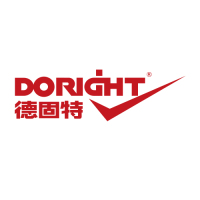
Core Viewpoint - Deguot plans to terminate the acquisition of 100% equity in Haowei Technology due to difficulties in reaching an agreement on key terms of the transaction, which was intended to create a second growth curve for the company [2][4][10]. Group 1: Transaction Details - Deguot intended to acquire Haowei Technology through a combination of issuing shares and cash payments, which was expected to constitute a major asset restructuring [4][15]. - The transaction involved multiple parties, including ZTE Corporation, but negotiations on transaction price and core terms have not reached consensus [7][10]. - Deguot announced that it would not pursue major asset restructuring for at least one month following the termination announcement [11]. Group 2: Financial Performance - As of November 7, Deguot's stock price was 32.66 yuan per share, with a total market capitalization of 4.98 billion yuan [4]. - Deguot's net profit for the years 2022 to 2024 was reported as 65.58 million yuan, 38.66 million yuan, and 96.72 million yuan, respectively, indicating a decline in net profit in 2023 [16]. - In the first three quarters of 2025, Deguot's net profit decreased by 26.39% to 72.26 million yuan, with a non-recurring profit decline of 31.86% to 65.24 million yuan [18][19]. Group 3: Haowei Technology Overview - Haowei Technology is an international software and IT service provider, primarily offering digital transformation solutions based on cloud computing, big data, and AI to telecom operators, government, and enterprise clients [20][23]. - The company has three main business lines: telecom software development and services, cloud and AI software development and services, and industry digital solutions, with significant potential for future growth [20][23]. - Haowei Technology's net profit for 2023, 2024, and the first quarter of 2025 was reported as 202 million yuan, 205 million yuan, and -13.3 million yuan, respectively [20].

京基智农(000048):养殖成本优势稳固,新业务布局未来
HUAXI Securities· 2025-11-07 09:08
Investment Rating - The investment rating for the company is "Buy" [1] Core Insights - The company reported a revenue of 3.67 billion yuan for the first three quarters of 2025, a year-on-year decrease of 20.12%, and a net profit attributable to shareholders of 298 million yuan, down 50.50% year-on-year [2] - The decline in performance is primarily attributed to falling pig prices and the real estate sector's transition to inventory clearance, although the core breeding business remains resilient [3] - The company has optimized breeding costs, with the overall cost of pig breeding reduced to approximately 13.3 yuan/kg by the end of August 2025, maintaining profitability despite declining sales prices [4] - The real estate business is being steadily cleared, with inventory at 590 million yuan as of June 2025, while a new business initiative in trendy fashion and art IP is expected to open new growth avenues [5] - The company plans to increase pig output to approximately 2.3 million heads in 2025, with a focus on improving production efficiency and disease prevention [6] Summary by Sections Financial Performance - For the first three quarters of 2025, the company achieved a revenue of 3.67 billion yuan, down 20.12% year-on-year, and a net profit of 298 million yuan, down 50.50% year-on-year [2] - The third quarter alone saw a revenue of 1.28 billion yuan, a decrease of 32.25% year-on-year, and a net profit of 71.76 million yuan, down 80.41% year-on-year [2] Business Analysis - The core breeding business showed resilience despite market challenges, with revenue from breeding activities at approximately 2.9 billion yuan, a decline of 1.86% year-on-year, and a net profit of about 308 million yuan, down 26.29% year-on-year [3] - The company has maintained a competitive edge in cost control, with breeding costs decreasing consistently [4] Strategic Outlook - The real estate business is undergoing planned inventory clearance, with remaining inventory valued at 590 million yuan as of June 2025 [5] - The new IP business launched in May 2025 is expected to create a second growth curve for the company [5] - The company has set a target of 2.3 million pigs for 2025, with a focus on enhancing production performance and disease management [6] Earnings Forecast - Revenue projections for 2025-2027 have been adjusted to 7.25 billion yuan, 9.37 billion yuan, and 11.88 billion yuan, respectively, with net profit estimates revised to 257 million yuan, 790 million yuan, and 966 million yuan [6]

片仔癀的“中年危机”,同仁堂也有
Xin Lang Cai Jing· 2025-11-07 08:01
Core Insights - The two major traditional Chinese medicine brands, Pian Zai Huang and Tong Ren Tang, are facing significant challenges, reflecting a broader struggle for traditional brands in the modern market [2][3] - Pian Zai Huang's price has dropped from 1600 yuan in 2021 to 650 yuan by Q3 2025, marking a significant decline in its market value [2] - Tong Ren Tang reported a 12.8% year-on-year decline in net profit for the first three quarters of 2025, with a nearly 30% drop in Q3 alone [2] Group 1: Market Challenges - Both Pian Zai Huang and Tong Ren Tang are experiencing a "mid-life crisis," with their core products facing declining sales and market relevance [3] - The traditional positioning of Tong Ren Tang's flagship product, An Gong Niu Huang Wan, as a "stroke prevention miracle drug" has led to over-marketing and a subsequent correction in consumer perception [5][10] - The 2024 National Medical Insurance Directory has significantly narrowed the reimbursement scope for An Gong Niu Huang Wan, further impacting sales [5] Group 2: Brand and Consumer Dynamics - The generational shift in consumer demand is reshaping the traditional Chinese medicine market, with younger consumers favoring convenient and trendy health products [9] - Tong Ren Tang has failed to adapt its marketing strategy to appeal to younger consumers, leading to a disconnect between its products and the new generation's needs [9][10] - The complexity of Tong Ren Tang's brand structure, with multiple entities like Beijing, Nanjing, and Tianjin Tong Ren Tang, has created consumer confusion and diluted brand trust [10][11] Group 3: Innovation and R&D - The traditional Chinese medicine industry, including Tong Ren Tang, suffers from low R&D investment, with an average of only 2.96% of revenue allocated to R&D compared to 10.93% for chemical pharmaceutical companies [13] - Tong Ren Tang's R&D spending has remained low, focusing primarily on traditional products rather than innovative new offerings [13][15] - The company has not identified new growth avenues, relying heavily on its historical brand strength rather than adapting to market changes [13][18]