
经济高质量发展

Search documents
前11个月税收数据显示 经济高质量发展动能强劲
Jing Ji Ri Bao· 2025-12-08 23:43
Group 1 - The core viewpoint of the articles highlights the positive trends in China's economy, driven by effective tax policies and increased investment in various sectors [1][2] - In the first 11 months, the sales revenue of the equipment manufacturing industry increased by 8.3%, with significant growth in computer communication equipment and instrument manufacturing, indicating a shift towards high-end manufacturing [2] - The number of active enterprises in China increased by 9.8% year-on-year in the first 10 months, reflecting a growing business environment supported by stable economic conditions and an active capital market [1] Group 2 - The sales revenue of clean energy sectors, including wind, solar, and hydropower, grew by 14.9% in the first 11 months, indicating a rapid transition towards a greener energy structure [2] - Tax reductions and refunds related to technology innovation and manufacturing amounted to 23.725 billion yuan in the first 10 months, supporting the growth of innovative industries [2] - High-tech industries saw a sales revenue increase of 14.7% year-on-year in the first 11 months, showcasing the impact of innovation on economic development [2]
税务总局:前11月征收税费收入超29万亿元 结构持续优化
Sou Hu Cai Jing· 2025-12-08 14:37
整体税费收入结构进一步优化,进一步夯实经济高质量发展和社会民生改善的财力基础。 新京报贝壳财经讯(记者潘亦纯)12月8日,国家税务总局举行例行新闻发布会。从最新的发票等税收 数据看,1-11月份,全国企业采购机械设备金额同比增长10.7%,反映企业设备投资力度加大;纳入消 费品以旧换新政策支持范围的家电、通信零售业销售收入同比分别增长26.5%和20.3%,反映促消费政 策效应持续释放;全国税务部门为企业办理出口退税同比增长6.8%,反映我国企业出口韧性足。 从涉税经营主体看,今年前10个月全国在营活跃的企业数量同比增长9.8%,占全部企业的比重同比提 高4.7个百分点。 得益于经济稳中向好以及资本市场活跃等因素带动,1-11月份税务部门征收税费收入超29万亿元,其 中,税收收入(未扣除出口退税)超过16万亿元,同比增长3.1%;社保费收入超过8万亿元,同比增长 4.9%;国有土地使用权出让收入、矿产资源专项收入等非税收入近5万亿元,同比小幅下降。 编辑 杨娟娟 校对 王心 ...
税务总局:1—11月税务部门征收税费收入超29万亿元
Zhong Guo Zheng Quan Bao· 2025-12-08 10:55
蔡自力表示,今年我国经济高质量发展主要呈现四个特点:经济形势稳中向好,经济结构不断优 化,经济动能持续增强,经济秩序不断规范。下一步,税务部门将持续深入学习贯彻党的二十届四 中全会精神,对标"十五五"规划建议的各项部署,结合实际细化制定税务领域改革实施方案,并积 极加强与财政、人社、医保等部门密切协作配合,以"钉钉子"精神抓好各项改革任务贯彻落实,更好 发挥税收在国家治理中的基础性、支柱性和保障性作用,为顺利实现"十五五"规划目标贡献税务力 量。 国家税务总局副局长蔡自力表示,今年我国经济高质量发展主要呈现四个特点:经济形势稳中向好,经 济结构不断优化,经济动能持续增强,经济秩序不断规范。 12月8日,国家税务总局副局长蔡自力在国家税务总局例行新闻发布会上表示,得益于经济稳中向 好以及资本市场活跃等因素带动,1—11月份税务部门征收税费收入超过29万亿元。 具体而言,1—11月份税收收入(未扣除出口退税)超过16万亿元,同比增长3.1%;社保费收入超 过8万亿元,同比增长4.9%;国有土地使用权出让收入、矿产资源专项收入等非税收入近5万亿 元,同比小幅下降。整体税费收入结构进一步优化,经济高质量发展和社会民生 ...
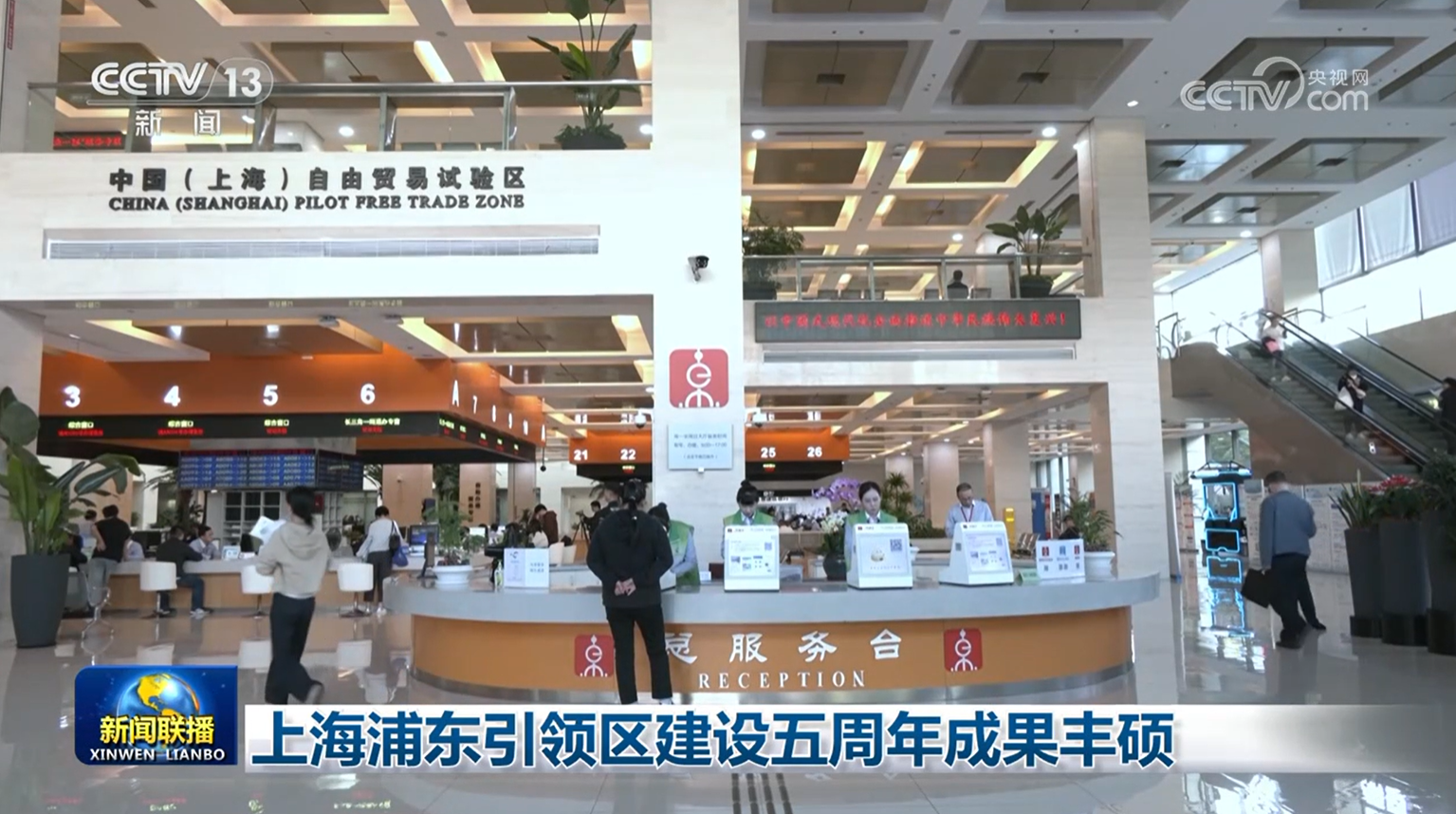
上海浦东引领区建设五周年成果丰硕
Yang Shi Wang· 2025-12-07 12:45
Group 1 - The core viewpoint is that the Pudong New Area has made significant progress in high-level reform and opening up over the past five years, leading to innovative achievements that drive high-quality economic development [1][3]. Group 2 - The overall plan for institutional opening has been largely implemented, with 77 pilot experiences being replicated and promoted to a broader scope [3]. - The implementation of data exit management measures and a negative list has been initiated, along with the first national pilot for expanding value-added telecommunications business [3]. - Functional platforms such as the Shanghai International Reinsurance Registration Trading Center and the Comprehensive Service Center for Enterprises Going Global are being accelerated in construction [3]. Group 3 - The capabilities for technological innovation and high-end industry leadership have significantly strengthened, with 14 large scientific facilities built, under construction, or planned in Pudong [5]. - Breakthroughs have been achieved in core technological equipment, including the first domestically produced large cruise ship [5]. - The number of high-tech enterprises, specialized and innovative enterprises, and "little giant" enterprises in the region has increased by 1.4 times, 5.2 times, and 19.3 times, respectively, since 2020 [5].

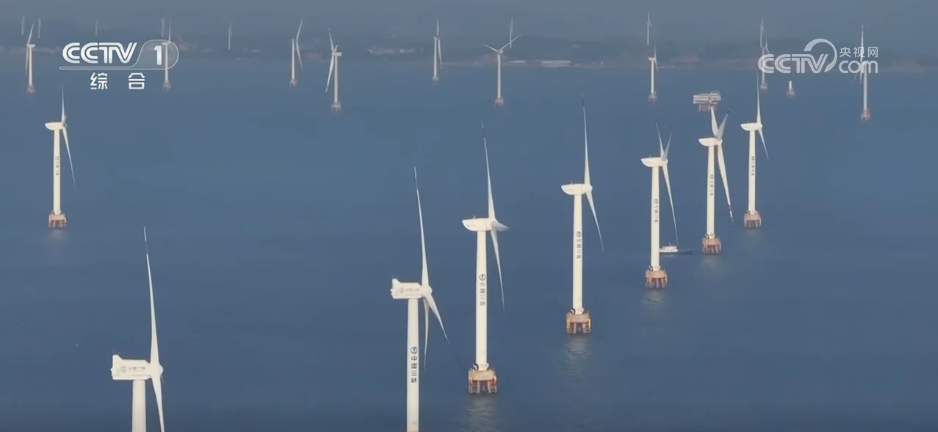
多项重大工程刷新建设“进度条” 激发经济高质量发展强劲动能
Yang Shi Wang· 2025-12-07 01:32
Group 1 - China's offshore wind power installed capacity exceeds 50% of the global total, which is approximately 83 million kilowatts [5] - In 2023, China's newly connected offshore wind power capacity surpassed 3.5 million kilowatts, maintaining the top position globally for five consecutive years [5] - The first round of water storage for the Guangxi Nanning pumped storage power station was completed, with four 300,000-kilowatt units expected to generate 2.26 billion kilowatt-hours annually, reducing carbon dioxide emissions by 2.2 million tons [9] Group 2 - The core structure of the Hubei Hannan Yangtze River Bridge has been completed, with the south anchor block weighing 160,000 tons, which is crucial for supporting the main cable [13] - The Hannan Yangtze River Bridge is a key project for the Wuhan metropolitan area, aimed at enhancing the regional highway network and optimizing the Yangtze River crossing system [13]
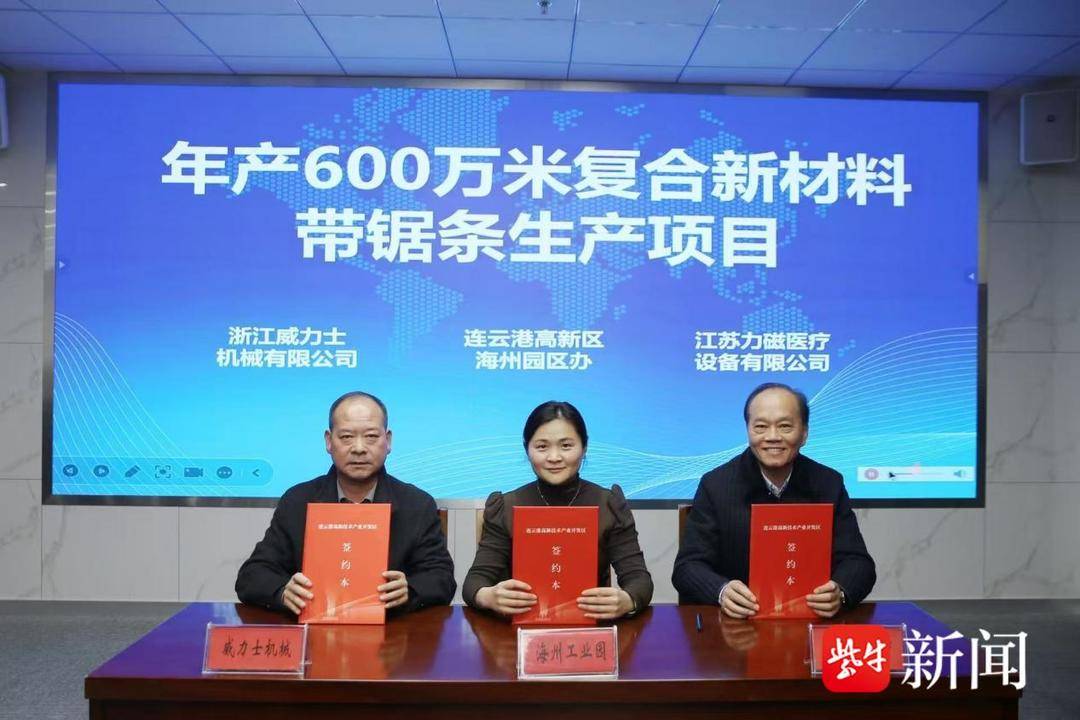
连云港海州:两大重点产业项目落地 补链强链赋能高质量发展
Yang Zi Wan Bao Wang· 2025-12-06 10:54
Core Insights - The signing of the high-performance membrane material project and the composite saw blade project in Lianyungang's Haizhou District marks a significant step towards upgrading the regional industrial chain and boosting economic development [1][3]. Group 1: High-Performance Membrane Material Project - The project focuses on the research, production, and sales of special functional membrane materials, which are widely used in new energy, environmental protection, and electronic information sectors [3]. - It aims to build modern production workshops and R&D centers, introducing advanced international production equipment and testing instruments to tackle core technologies such as high light transmittance, high barrier properties, and extreme environment resistance [3]. - Upon production, the project will provide critical support for industries related to new energy batteries and energy-saving environmental protection equipment, contributing to the establishment of a functional membrane material industrial cluster in Haizhou District [3]. Group 2: Composite Saw Blade Project - This project focuses on the manufacturing of high-end cutting tools, including saw blades for metal cutting, wood processing, and stone processing, characterized by high cutting precision, durability, and efficiency [3]. - Plans include the construction of an intelligent production line utilizing a digital production management system to optimize production processes and product performance, meeting the high precision demands of the high-end manufacturing sector [3]. - The establishment of this project will enhance the equipment manufacturing industry chain in Haizhou, improving local supply capabilities for mechanical processing and building materials production [3]. Group 3: Support and Development Strategy - The project leaders highlighted that Haizhou District's complete industrial support, efficient government services, and favorable market environment provide a solid foundation for project development [5]. - The district will adopt a "full lifecycle service" approach to continuously optimize the business environment, offering precise services in project approval, land guarantees, and talent introduction [5]. - The signing of these two projects exemplifies Haizhou District's commitment to the development strategy of "activating stock and breaking through increment," promising substantial economic benefits and job creation while enhancing the industrial chain and elevating industrial capabilities for high-quality regional economic growth [5].

2026年利率债投资策略:破局而立,波段致胜
Guohai Securities· 2025-12-03 14:03
Group 1 - The bond market in 2025 experienced a "fast bull and slow bear" phase, with institutional behavior and market narratives becoming key factors in market pricing [3] - For 2026, three factors are expected to provide a ceiling for interest rates: real estate data, local government debt management, and bank interest margins [3] - Low interest rates are seen as essential for stabilizing the real estate market, reducing policy costs, and managing local government debt risks [3][4] Group 2 - The policy environment is expected to provide moderate support rather than strong stimulus, with fiscal and monetary policies likely to act in concert [4] - The economic growth target for 2026 is projected to be around 4.5%-5%, with fiscal policies maintaining a deficit rate near 4% and potential expansion of policy financial tools [4] - The balance between monetary easing and fiscal efforts will be crucial for identifying opportunities in the bond market [4] Group 3 - Institutional behavior and market narratives remain at the forefront of bond market strategies, with a focus on discovering trading strategies and interpreting market sentiments [4] - The current low net interest margin and the pressure on banks to manage liabilities indicate a challenging environment for bond investments [4] - The introduction of new regulations affecting fund redemptions may lead to short-term adjustments in the bond market [4] Group 4 - The real estate market is undergoing a slow recovery, with significant time needed to achieve repair goals [20] - The downward trend in real estate prices is impacting banks' collateral values, which could lead to increased risk exposure for banks [24] - The high leverage levels in both government and household sectors limit the potential for further demand in the real estate market [23]
国际前政要们展望中国“下一个五年”|全球财经连线
2 1 Shi Ji Jing Ji Bao Dao· 2025-12-03 11:40
比利时前首相伊夫·莱特姆(Yves Leterme)亦对"十五五"规划建议给予高度关注,尤其认可规划建议 中"以高水平科技自立自强推动经济高质量发展"的核心方向,认为这将对全球经济格局将产生深远影 响。 论坛期间,多位国际前政要接受了南方财经记者采访,分享了对中国新发展格局与未来规划的最新观察 与见解。 谈及"十五五"规划建议,玻利维亚前总统豪尔赫·基罗加(Jorge Quiroga)表示:"中国在量子计算领域 展现的雄心令人赞赏,将海南自贸港打造为开展公平竞争贸易的全球贸易枢纽同样振奋人心,而中国在 人工智能领域的布局也值得关注。" (原标题:国际前政要们展望中国"下一个五年"|全球财经连线) 南方财经 21世纪经济报道记者杨雨莱 广州报道 12月1日至3日,"2025从都国际论坛"在广州举办。来自全球各地的200余位嘉宾齐聚羊城,其中包括30 多位前国家元首、政府首脑及国际组织负责人,以及100多位中外知名专家学者、国际友人与商界领 袖,众人共商全球发展大计,共话合作共赢未来。 此外,围绕中外合作前景,加拿大前总理金·坎贝尔(Kim Campbell)、挪威前首相谢尔·马格纳·邦德维 克(Kjell Ma ...
我国“领跑”全球! 国内有效发明专利拥有量超500万件
Mei Ri Jing Ji Xin Wen· 2025-12-01 14:55
专利密集型产业增加值达到16.87万亿元,占GDP的比重提升到13.04%;全球前5000个品牌中我国品牌 价值达1.81万亿美元,位居全球第二;地理标志产品直接产值接近9700亿元,保持良好增长势头。 鼓励民营经济组织开展高质量知识产权布局 日前,国家知识产权局举行11月例行新闻发布会。 《每日经济新闻》记者在会场了解到,目前,我国已经成为世界上首个国内有效发明专利拥有量超过 500万件的国家,PCT(《专利合作条约》)国际专利申请量连续6年位居全球第一。 我国每万人口高价值发明专利拥有量超15件 国家知识产权局战略规划司司长梁心新介绍,"十四五"以来知识产权工作有三个比较突出的特点。 首先是高价值专利加速积累有力支撑了高水平科技自立自强。截至2025年6月底,我国每万人口高价值 发明专利拥有量达到15.3件,超额实现规划设定的预期目标;其中,战略性新兴产业发明专利有效量超 过140万件,保持较快增长。 从最新国家专利奖获奖情况来看,人工智能、先进制造、集成电路、生物医药、新能源等重点领域涌现 出一大批原创性、引领性创新成果。这充分说明,我国在关键核心技术领域的高价值专利储备不断增 强,正在加快从"量的积累 ...
2025鲸潮奖评选评审团阵容正式公布!首席经济学家、首席分析师等产学研各界评委联合评审
Sou Hu Cai Jing· 2025-11-27 13:15
蓝鲸新闻11月27日讯(编辑 李梦琪)即将开启的"十五五"规划提到要强化标准引领、提升国际化水 平,加强品牌建设,这意味着中国品牌发展正站在从量变向质变转变的关键节点。当品牌从本土走向全 球,各方力量的努力实践汇聚成经济持续高质量发展的强劲动力。 究竟哪些企业品牌能够以创新为帆、以品质为舵,在这个时代锚定发展方向,引领产业未来发展?致敬 时代浪潮中的商业力量,聚焦全球优秀品牌,鲸潮奖结合自主申报信息、评委推荐、公开数据,综合品 牌影响力、商业价值、创新力等评价维度,评选出相关领域具有突出贡献的企业、机构及个人,打造品 牌全球发展的标杆案例,助力品牌全球发展。 针对不同维度奖项评选,2025鲸潮奖评选邀请产学研各方组成专家评审团,现正式对外公布评委阵容: 宋雪涛 国金证券首席经济学家 汪 毅 长城证券首席经济学家 张 瑜 华创证券研究院副所长 孔 蓉 国联民生研究所副总经理兼海外研究首席分析师 朱 芸 华源证券海外联席首席&教育首席分析师 朱 珠 华鑫证券研究所传媒新消费首席分析师 胡麒牧 中国数实融合50人论坛副秘书长 李 辉 蓝鲸新闻副总编辑 于焕永 蓝鲸新闻副总编辑 杨德龙 前海开源基金董事总经理、首席经 ...