耐心资本

Search documents
万亿养老金迎来长周期考核
证券时报· 2026-01-05 03:44
Core Viewpoint - The introduction of a long-term assessment mechanism for pension funds in China is expected to significantly promote long-term investment, encouraging more medium to long-term capital to enter the market [1][3]. Group 1: Long-term Assessment Mechanism - The Ministry of Human Resources and Social Security (MoHRSS) has initiated the development of a long-term assessment mechanism for pension funds, which includes extending contract periods and optimizing evaluation mechanisms to focus on medium to long-term goals [3][4]. - The shift from short-term performance metrics to long-term assessments aims to mitigate the short-termism prevalent in pension fund investments, thereby enhancing the stability and returns of these funds [4][6]. Group 2: Investment Environment Changes - The investment environment for pension funds has become increasingly challenging due to declining yields on fixed-income assets, which have historically been a primary investment category for these funds [6][8]. - As fixed-income contributions decrease, equity investments are expected to play a more significant role in pension fund portfolios, particularly with the implementation of the long-term assessment mechanism [6][8]. Group 3: Policy Framework and Implementation - The long-term assessment mechanism is part of a broader policy initiative aimed at increasing the participation of medium to long-term capital in the market, as outlined in various government documents [8][9]. - The establishment of this mechanism is seen as a critical step in transitioning the regulatory framework from quantity-based restrictions to a more cautious approach, which is anticipated to benefit the development of medium to long-term capital in China [9].


独家!万亿养老金迎来长周期考核
券商中国· 2026-01-04 23:34
Core Viewpoint - The introduction of a long-term assessment mechanism for pension funds is expected to significantly enhance long-term investment strategies, promoting the entry of more medium- and long-term capital into the market [2][3][5]. Group 1: Long-term Assessment Mechanism - The Ministry of Human Resources and Social Security has issued guidelines to improve the long-term assessment of pension funds, which is a crucial step towards fostering long-term investments [2][3]. - The new assessment mechanism will extend contract periods and evaluation cycles, focusing on medium- to long-term goals, thereby encouraging pension funds to adopt a long-term investment approach [3][4]. - The shift from short-term performance metrics to a three-year cumulative return metric is seen as a practical step to guide pension funds towards long-term investments [3][4]. Group 2: Impact on Investment Behavior - Historically, pension funds have been evaluated based on annual returns, leading to a focus on short-term gains, which has hindered the allocation of funds to long-term quality assets [4]. - The new long-term assessment mechanism is expected to encourage investment managers to adopt a longer-term perspective, improving risk control and cross-cycle asset allocation [4][6]. - The decline in fixed-income asset yields has prompted a shift towards equity investments, which are anticipated to play a more significant role in pension fund portfolios under the new assessment framework [6]. Group 3: Broader Market Implications - The implementation of long-term assessments is part of a broader strategy to enhance the participation of medium- and long-term capital in the market, addressing external challenges faced by pension funds [5][7]. - The regulatory shift from quantity-based restrictions to cautious management rules is expected to facilitate the growth of medium- and long-term capital in China's capital markets [8].

告别舒适区,银行从“债主”变身“股东”
Xin Lang Cai Jing· 2026-01-03 12:02
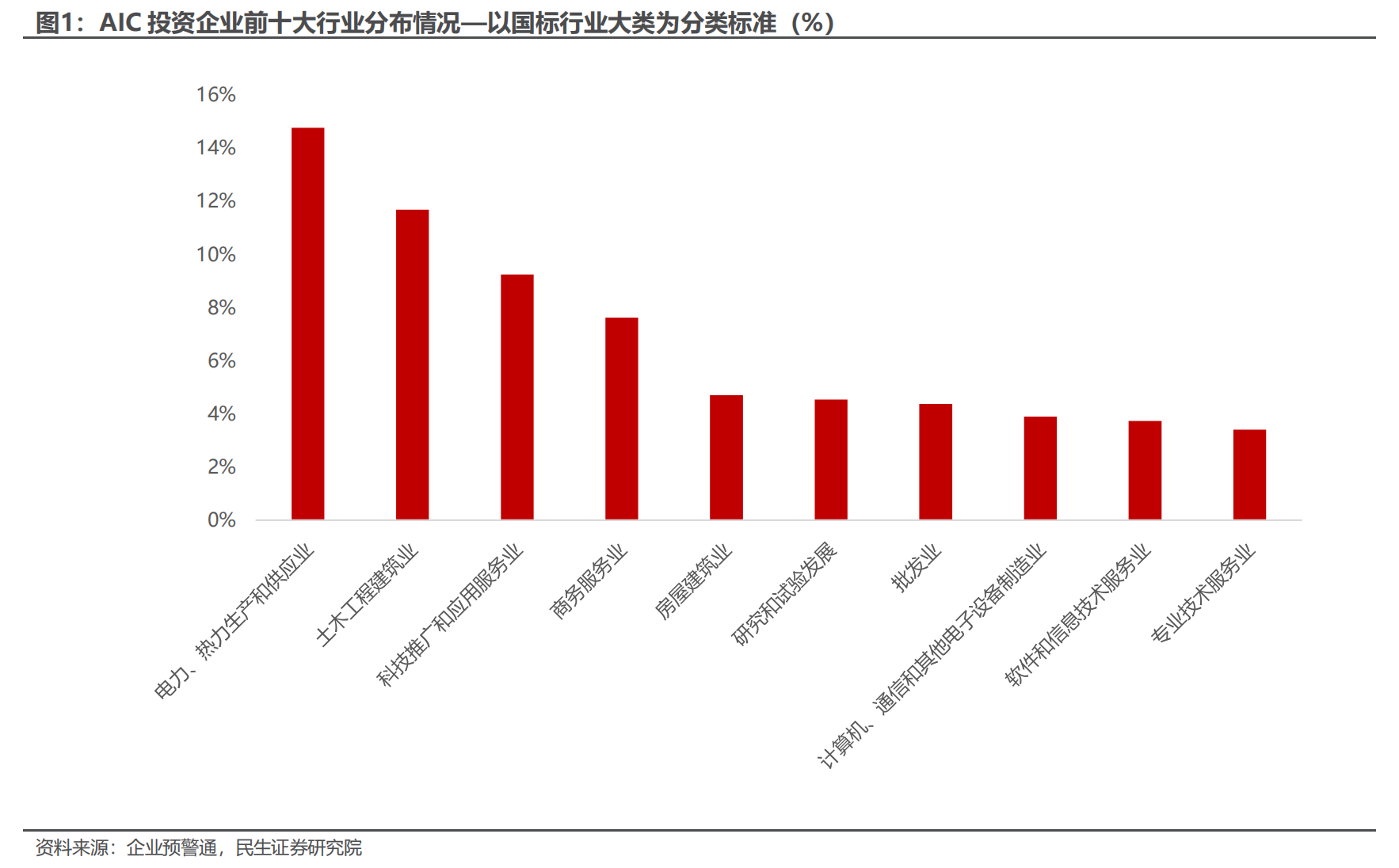
Core Insights - The investment of 500 million yuan by China Merchants Bank's subsidiary, CM Investment, in Deep Blue Automotive marks a significant shift in the banking sector from traditional interest margin earnings to equity investments, reflecting a broader trend in the industry [1][2] Group 1: Investment Trends - CM Investment's acquisition of a 2.42% stake in Deep Blue Automotive is seen as a pioneering move for banks to engage directly in equity investments through Asset Investment Companies (AICs) [1] - The establishment of AICs is viewed as a response to declining net interest margins, which have fallen from approximately 2.5% in 2015 to below 1.8% by 2025, prompting banks to seek new growth avenues [6] - AICs are expected to play a crucial role in supporting the real economy through equity investments, with total registered capital exceeding 100 billion yuan across various banks [2][6] Group 2: Strategic Focus - AICs are concentrating their investments in strategic emerging industries, particularly in sectors like renewable energy, new information technology, and high-end equipment manufacturing, aligning with national policies [8][10] - The investment strategy of AICs emphasizes a diversified approach, with around 80% of holdings below 50% and nearly 40% under 5%, indicating a preference for strategic partnerships rather than outright control [8][9] Group 3: Financial Performance - AICs demonstrate significantly higher profitability, with an average return on assets (ROA) of 3.05% projected for the five major state-owned banks' AICs by the end of 2024, compared to just 0.74% for traditional banking operations [7] - The shift from being creditors to equity holders allows banks to align their interests more closely with the long-term growth of enterprises, enhancing their ability to navigate economic cycles [7][10] Group 4: Market Impact - The rise of AICs is expected to transform the financial landscape, reducing reliance on retail investors and increasing the role of institutional investors, which may lead to greater market stability and efficiency [10][11] - AICs are filling a critical financing gap for innovative, asset-light companies that struggle to secure traditional bank loans, thereby fostering a positive cycle between technology, industry, and finance [10]

创新科技金融服务驱动“科技—产业—金融”良性循环|展望2026
Guo Ji Jin Rong Bao· 2025-12-31 13:36
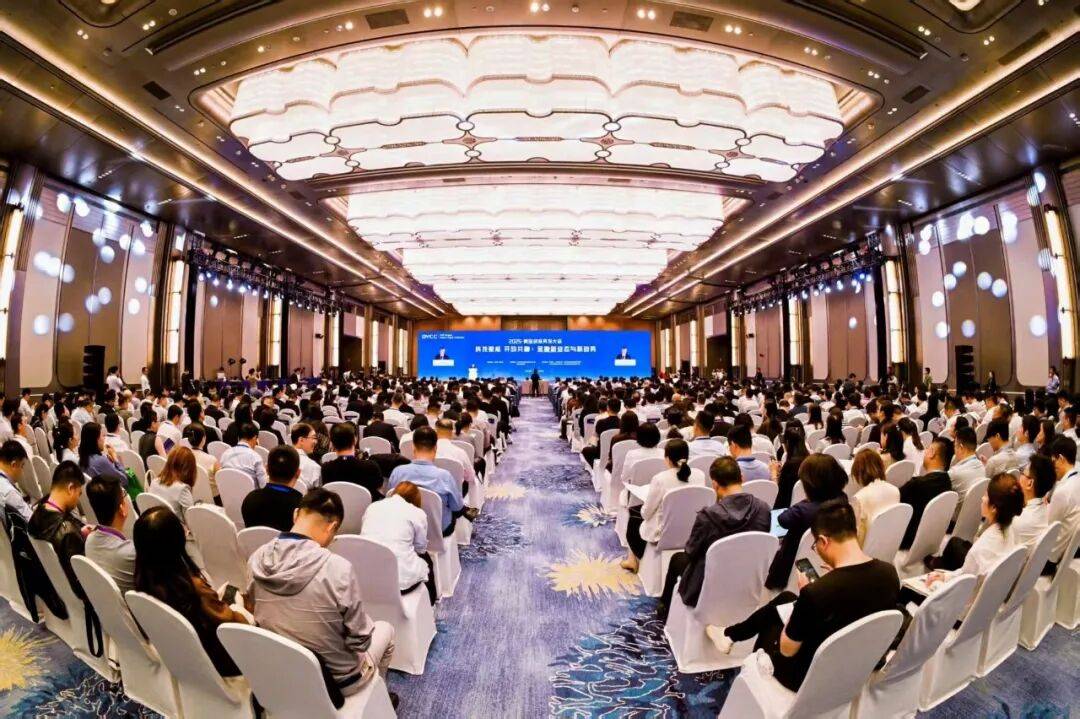
Core Insights - The central theme of the articles emphasizes the importance of innovation-driven economic growth in 2026, particularly through the enhancement of technology financial services as a key focus of the Central Economic Work Conference [1] Group 1: Innovation in Technology Financial Services - The core objective is to establish a virtuous cycle connecting technology, industry, and finance, ensuring that financial resources are accurately matched to the development needs of hard technology enterprises throughout their lifecycle [2] - Key initiatives for 2026 include improving the intellectual property pledge financing mechanism, expanding the pilot scope of "investment-loan linkage" and "investment-insurance linkage," and fostering patient capital through the development of AIC equity investments and technology innovation bonds [2][8] Group 2: Financing Tools and Mechanisms - The articles highlight the need for innovative financing tools to support technology enterprises, including the establishment of a bond market "technology board" and the encouragement of technology companies to issue innovation bonds and asset-backed securities [4] - The focus is on making intellectual property pledge financing more accessible and effective, with efforts to standardize processes and introduce risk compensation mechanisms to alleviate banks' lending hesitance [4][6] Group 3: Patient Capital and Long-term Investment - The government aims to cultivate a "long money, long investment" ecosystem by establishing a national venture capital guiding fund with a 20-year duration, directing 70% of funds to seed and early-stage enterprises [12] - Measures to support hard technology enterprises include optimizing the listing review process, enhancing the inclusivity for unprofitable and high R&D companies, and promoting long-term capital investment [13][14] Group 4: Market Dynamics and Future Outlook - The articles suggest that the listing process for hard technology companies on the STAR Market will accelerate, with a focus on supporting enterprises with core technologies and clear commercialization paths while maintaining strict quality standards [14] - The emphasis will be on creating a favorable environment for genuine innovation while preventing "pseudo-innovation" from entering the market [14]
创新科技金融服务驱动“科技—产业—金融”良性循环
Guo Ji Jin Rong Bao· 2025-12-31 13:16
Core Insights - The central theme of the news is the emphasis on innovation-driven economic growth in 2026, particularly through the enhancement of technology financial services as a key focus of the Central Economic Work Conference [1] Group 1: Innovation in Financial Services - The core of innovative technology financial services is to establish a virtuous cycle between technology, industry, and finance, ensuring that financial resources are accurately matched to the development needs of hard technology enterprises throughout their lifecycle [2] - In 2025, significant explorations were made in technology financial services, including the launch of the National Venture Capital Guidance Fund, which has reached a scale of one trillion yuan, focusing on seed, startup, and early-stage enterprises [1][2] - The expansion of financial asset investment company (AIC) equity investment trials to 18 cities nationwide aims to guide bank capital to invest early, small, and in hard technology [1][2] Group 2: Financing Mechanisms - The establishment of a knowledge property pledge financing mechanism is crucial, with initiatives such as trial programs for "pre-compensation" loans for light asset technology enterprises to gain more financing support [2][4] - The exploration of innovative financing tools includes the promotion of knowledge property pledge financing, which has shifted from being merely feasible to being more practical, with standardized processes for patent and trademark pledges [3][5] - The introduction of a bond market "technology board" has seen nearly 100 institutions issue over 250 billion yuan in technology innovation bonds within seven months [3] Group 3: Long-term Capital Cultivation - The government is focused on cultivating "patient capital" to guide long-term investments into early and mid-stage hard technology sectors, establishing a closed-loop system for fundraising, investment, management, and exit [9] - The National Venture Capital Guidance Fund is designed with a 20-year duration, directing 70% of its funds towards seed and startup phases, alongside optimizing state-owned capital assessments [9][10] - The capital market is expected to support hard technology enterprises in their IPO processes, with measures to enhance the inclusivity of unprofitable, high-R&D companies [10][11] Group 4: Collaborative Financial Models - The "investment-loan linkage" model encourages collaboration between banks and investment institutions, integrating credit lending with equity investment to share risks and returns [6][7] - The "insurance-investment linkage" model aims to combine insurance with investment to mitigate risks associated with technology financing, enhancing banks' willingness to lend [7][8] - In 2026, the expansion of the "investment-loan linkage" and "insurance-investment linkage" trials will prioritize regions with concentrated technology enterprises and active equity investment [8]
截至2025年末,青岛企业吸引股权投资超900亿!
Sou Hu Cai Jing· 2025-12-31 09:57
Core Insights - The establishment of the National Venture Capital Guidance Fund marks a significant step in promoting venture capital and patient capital, aiming to attract diverse participation and create a fund scale of trillions [1][3] - The launch of the Laoshan Sci-tech Industry Mother Fund with a total scale of 3 billion yuan aims to build a stable and controllable long-term capital pool for the development of the Qingdao Sci-tech Corridor [1] Group 1: National and Local Fund Initiatives - The National Venture Capital Guidance Fund officially started operations on December 26, 2025, to enhance venture capital development [1] - The Laoshan Sci-tech Industry Mother Fund was announced on the same day, with a total scale of 3 billion yuan, focusing on building a sustainable capital pool [1] - Qingdao has established multiple industry-specific funds to support its "10+1" innovative industrial system, enhancing competitiveness in key industries [4][5] Group 2: Fund Establishments and Investments - The Qingdao Dikuang Venture Capital Fund, with a total scale of 500 million yuan, was registered in early December, aiming to support the low-altitude economy [7] - The Huazi Zhishu Fund, with a total scale of 1 billion yuan, made its first strategic investment in a semiconductor technology company [10] - By the end of October, Qingdao had established eight funds in collaboration with state-owned enterprises, totaling 5.7 billion yuan, to support the innovative industrial system [12] Group 3: Government Guidance and Capital Matrix - The Qingdao government has established a "3+N" government guidance fund system, with a total scale exceeding 150 billion yuan, to attract social capital [14] - As of October 31, 2025, the Qingdao government guidance fund has participated in 150 funds, with total investments exceeding 640 billion yuan [14] - The establishment of three 10 billion yuan funds reflects Qingdao's commitment to high-quality development through government guidance [16] Group 4: Investment Trends and Outcomes - The private equity and venture capital funds have significantly contributed to the growth of technology companies, with a notable increase in investments in high-tech and startup enterprises [27] - Recent investments in companies like Qingdao SIRUI Intelligent Technology and Guohua Intelligent Equipment highlight the active role of patient capital in supporting innovation [21][23] - The local venture capital landscape in Qingdao has grown to over 300 private fund managers, managing more than 220 billion yuan, ranking among the top in the country [27]
投资300+早期项目,麓山投资打造国有创投“湖南模式”
Sou Hu Cai Jing· 2025-12-31 03:57
Core Insights - The "Red Maple Plan" and the Hunan University Student Entrepreneurship Investment Fund are innovative initiatives launched by Hunan Lushan Technology Investment Co., Ltd. amidst a contracting venture capital market, showcasing a unique strategic vision and outlining a path for innovation in Hunan's science and technology finance [2][11] - The company adheres to a core strategy of "investing early, investing small, and investing in technology," focusing on early-stage investments in a challenging environment, and has invested in over 300 early-stage science and technology projects [2][5] Investment Strategy - The company emphasizes a stable funding attribute as "patient capital," allowing it to support early-stage projects through long development cycles without the pressure for short-term returns [8][10] - It integrates resources effectively, leveraging its state-owned background to connect with government departments, universities, and industry leaders, providing comprehensive support for projects [8][10] - The investment layout is forward-looking, focusing on strategic emerging industries such as advanced manufacturing, new materials, and biomedicine, rather than short-term trends [8][10] Project Discovery and Support - The "funnel" system is a dynamic mechanism for discovering, investing in, and empowering future technology entrepreneurs, involving strategic partnerships with universities and participation in high-level entrepreneurial competitions [11][12] - The company provides a comprehensive support system for projects, including industry resource connections, follow-up financing assistance, and entrepreneurial training [11][12] Risk Management and Long-term Value - A systematic risk control strategy is in place, encompassing technical validation, market research, team evaluation, and post-investment monitoring to mitigate risks associated with early-stage investments [10][12] - The definition of "value preservation and appreciation" is multi-dimensional, focusing not only on financial returns but also on the growth of projects and their positive impact on the regional economy [10][12] Future Directions - The company aims to deepen cooperation with universities and research institutions, enhance its empowerment system, and promote collaborative investment mechanisms with other state-owned and market-oriented investment institutions [19] - The goal is to cultivate a more fertile environment for innovation in Hunan, ultimately leading to the emergence of more industry-leading enterprises [19]

200亿,今年第5个省的社保科创基金来了
母基金研究中心· 2025-12-31 03:47
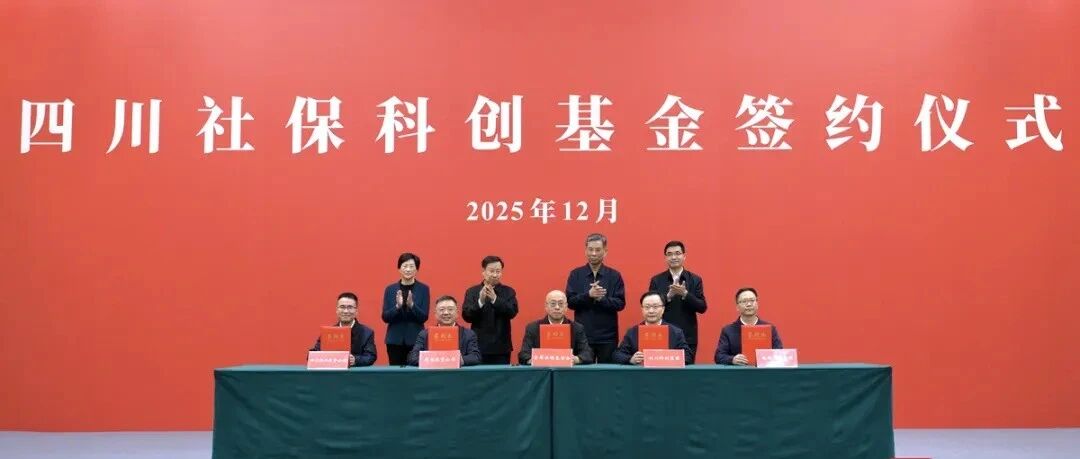
Core Viewpoint - The establishment of various social security science and technology innovation funds across multiple provinces in China, including Sichuan, Zhejiang, and others, aims to support key industries and technological advancements, with a focus on long-term capital and patient investment strategies [3][6][7]. Group 1: Fund Establishment and Scale - The Sichuan Social Security Science and Technology Innovation Fund has an initial scale of 200 billion yuan, focusing on key industries and technological innovation in the Sichuan and Chengdu-Chongqing economic circle [3][4]. - The Zhejiang Social Security Science and Technology Innovation Fund has a larger initial scale of 500 billion yuan, targeting sectors such as artificial intelligence and biomedicine [5]. - The combined initial scale of social security science and technology innovation funds in five regions, including Zhejiang, Jiangsu, Fujian, Hubei, and Sichuan, has reached 1.6 trillion yuan [6]. Group 2: Long-term Investment Strategies - Sichuan's measures emphasize the importance of "patient capital," which is characterized by long-term support and a high tolerance for risk and failure, aligning with the long growth cycles of technology companies [6][9]. - The government aims to attract social capital by implementing a profit-sharing model between government-guided funds and market-oriented funds, with a focus on long-term investment horizons [8][10]. Group 3: Policy and Regulatory Framework - The Sichuan government has set ambitious targets, including a goal of 4 trillion yuan in fund management scale by 2030, and has introduced specific measures to enhance the investment environment for venture capital [8][10]. - Recent national policies encourage the relaxation of restrictions on government investment funds, promoting a more open and pragmatic approach to fund management and investment [10][12]. - The average return ratio requirement for government-guided funds has decreased significantly, with many funds now allowing for lower return expectations, reflecting a shift towards more flexible investment strategies [11][12]. Group 4: Risk Tolerance and Investment Focus - The Sichuan policy allows for a maximum loss tolerance of 100% for individual projects, indicating a willingness to support high-risk, high-reward investments in emerging technologies [13][14]. - The focus on hard technology investments has shifted the venture capital landscape, necessitating a longer investment horizon and a more patient approach from both general partners (GPs) and limited partners (LPs) [9][10].
洞察2025|险资“变形记”!长钱解锁“牛市”新副本
Bei Jing Shang Bao· 2025-12-31 02:59
Core Insights - The concept of "patient capital" is emerging as a key theme in China's financial landscape, emphasizing long-term investments that prioritize sustainable growth over short-term gains [2][3] - Insurance capital is positioned as a central player in this "patient capital" movement, with significant resources and a focus on supporting the real economy and technological innovation [1][2] Policy Support for Long-term Investment - The China Securities Regulatory Commission is advocating for a more attractive environment for long-term investments, aiming to create conditions that encourage medium to long-term capital to enter and thrive in the market [2][3] - A series of regulatory measures have been implemented to enhance the investment environment for insurance funds, including adjustments to asset allocation ratios and risk factor settings [3][4] Growth in Insurance Capital Investment - As of Q3 2023, the total investment balance of insurance companies reached 37.46 trillion yuan, a year-on-year increase of 16.5%, with stock investments accounting for 3.6 trillion yuan [5][6] - The number of times insurance capital has made significant equity purchases reached 39 in 2023, the highest since 2016, indicating a growing trend towards long-term value investments [5][6] Focus on Hard Technology - Insurance capital is increasingly investing in hard technology sectors, with a diversified approach that includes direct and indirect investments in advanced manufacturing, AI, semiconductors, and biotechnology [7][8] - By mid-2025, insurance capital's direct equity investments in technology sectors reached 425.93 billion yuan, reflecting a commitment to supporting innovation and strategic emerging industries [7][9] Challenges and Upgrades in Investment Practices - The insurance sector faces challenges such as macroeconomic fluctuations and increased uncertainty in technology investments, necessitating enhanced professional capabilities and risk management [10][11] - There is a need for insurance companies to evolve from being mere investors to becoming knowledgeable partners in the investment process, focusing on professional development and comprehensive risk management [12][11]
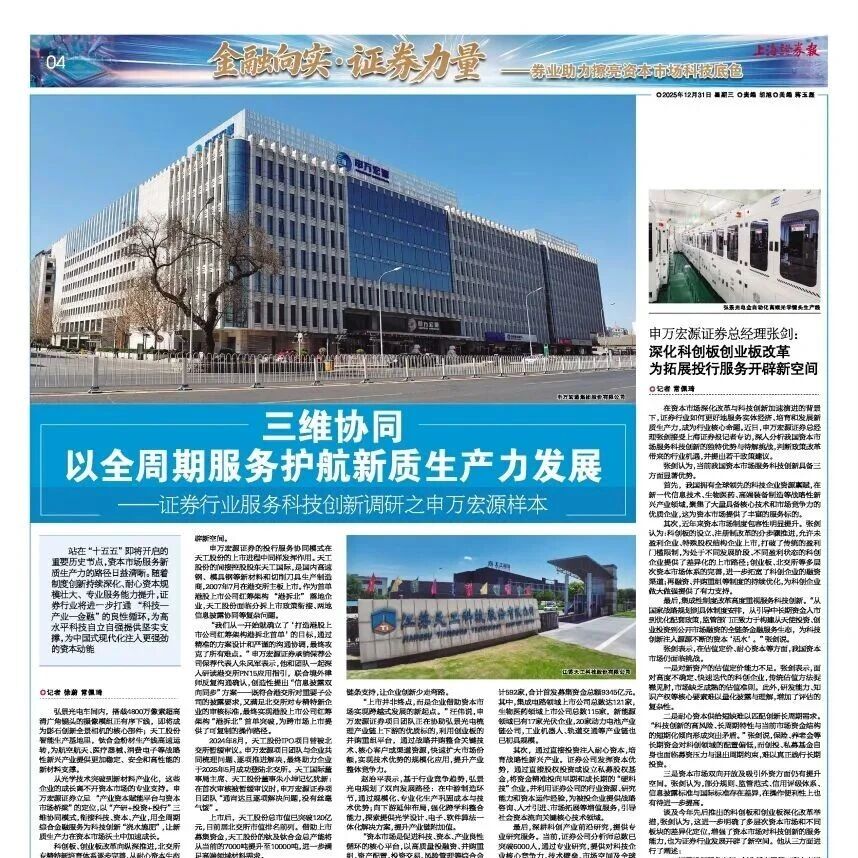
洞见 | 申万宏源证券总经理张剑:深化科创板创业板改革 为拓展投行服务开辟新空间
申万宏源证券上海北京西路营业部· 2025-12-31 02:24
其次,近年来资本市场制度包容性明显提升。张剑认为:科创板的设立、注册制改革的分步骤推进,允许未盈利企业、特殊股权结构企业上市,打破了传统的 盈利门槛限制,为处于不同发展阶段、不同盈利状态的科创企业提供了差异化的上市路径;创业板、北交所等多层次资本市场体系的完善,进一步拓宽了科创企业 的融资渠道;再融资、并购重组等制度的持续优化,为科创企业做大做强提供了有力支持。 最后,集成性制度改革高度重视服务科技创新。"从国家战略规划到具体制度安排,从引导中长期资金入市到优化配套政策,监管部门正致力于构建从天使投 资、创业投资到公开市场融资的全链条金融服务生态,为科技创新注入源源不断的资本'活水'。"张剑说。 张剑表示,在估值定价、耐心资本等方面,我国资本市场仍面临挑战。 三是资本市场双向开放及吸引外资方面仍有提升空间。张剑认为,部分规则、监管范式、信用评级体系、信息披露标准与国际标准存在差异,在操作便利性上 也有待进一步提高。 在资本市场深化改革与科技创新加速演进的背景下,证券行业如何更好地服务实体经济、培育和发展新质生产力,成为行业核心命题。近日,申万宏源证券总 经理张剑接受上海证券报记者专访,深入分析我国资本市场服务 ...