AIGC

Search documents
德邦快递开通中东6国物流专线;Temu与电商服务平台Base达成合作|36氪出海·要闻回顾
36氪· 2025-10-12 13:34
Group 1 - Debon Logistics has launched a logistics line connecting China to six Middle Eastern countries, including the UAE and Saudi Arabia, with tailored customs and delivery solutions for various product categories [5][6] - Temu has partnered with e-commerce platform Base.com to enhance operational efficiency for cross-border sellers in markets like the UK and the US, offering streamlined order fulfillment and inventory management [5][6] - SHEIN plans to open its first physical stores in France in November, marking its first foray into brick-and-mortar retail after focusing primarily on online sales [6] Group 2 - TikTok is testing a self-operated e-commerce feature called "Trendy Beat" in the UK, aiming to sell products directly sourced by TikTok, enhancing its e-commerce strategy [6] - Xiaomi is accelerating its European expansion by opening flagship stores in Germany and Spain, with plans to sell electric vehicles by 2027 [7] - BYD has officially rolled out its 14 millionth new energy vehicle in Brazil, with the Brazilian president becoming a car owner, highlighting BYD's dominance in the Brazilian market [8] Group 3 - Hesai Technology has become the first company globally to produce over one million lidar units annually, maintaining a leading market share in the ADAS sector [8] - Natural堂 has completed a new financing round, raising 300 million RMB, with a valuation exceeding 7 billion RMB, and plans for an IPO in Hong Kong [9] - Anlan Power has secured angel funding to develop electric smart jet skis, targeting markets in North America, Europe, and emerging regions [9] Group 4 - Dap Bio has completed a Series B financing round to accelerate the global commercialization of its high-end life science instruments, focusing on drug discovery and synthetic biology [9] - Saudi Arabia will implement new freight regulations requiring advance declaration of cargo through the FASAH platform, effective October 29, 2025, to enhance logistics efficiency [11] - The trend of Chinese innovative drugs going global continues, with notable partnerships and licensing agreements, reflecting the global recognition of China's R&D capabilities [12]





预计25Q3剪刀差持续:计算机行业2025Q3业绩前瞻
Shenwan Hongyuan Securities· 2025-10-12 12:01
Investment Rating - The report maintains a positive outlook for the computer industry, expecting a continued "scissor difference" in Q3 2025, indicating structural growth despite varying performance among companies [3][4][11]. Core Insights - The report predicts that 22% of the tracked companies will see net profit growth exceeding 50%, with notable performers including 深信服 (1528%), 卡莱特 (998%), and 新国都 (235%) [4][5]. - The report highlights a trend of cost reduction through layoffs and non-essential cost cuts, leading to improved efficiency and profitability across the industry [3][4]. - The report identifies key investment targets in various segments, including AIGC, digital economy leaders, and data innovation [3][4]. Summary by Sections Q3 2025 Performance Forecast - Among 54 tracked companies, 11 are expected to exceed 50% profit growth, while 9 will see growth between 30%-50% [4][5]. - 36% of companies are projected to have growth between 0%-30%, and 22% are expected to experience a decline [5][6]. Key Company Performances - 深信服 is projected to achieve a staggering 1528% profit growth, while 卡莱特 is expected to see 998% growth [4][5]. - Companies like 海康威视 and 金山办公 are expected to maintain stable growth rates of around 9% and 15%, respectively [8][10]. - 联想集团 is forecasted to face a significant decline of 99% in profit, indicating challenges in its operational strategy [6][10]. Investment Targets - The report categorizes investment targets into four segments: AIGC, digital economy leaders, data innovation, and AIGC computing power [3][4]. - Notable companies in the AIGC segment include 金山办公 and 道通科技, while 海光信息 and 软通动力 are highlighted in the data innovation category [3][4].




谷歌新一代文生视频模型样片流出:8秒720P视频自带配乐;Figure AI发布Figure 03,可端茶送水等丨AIGC日报
创业邦· 2025-10-12 01:08
Group 1 - OpenAI and Sur Energy have signed a memorandum of understanding to initiate the "Gateway to the Stars" project in Argentina, which includes the construction of a large data center with a capacity of up to 500 megawatts, representing an investment of up to $25 billion, making it one of the largest tech and energy infrastructure projects in Argentina's history [2] - Figure AI has launched its third-generation humanoid robot, Figure 03, which showcases multi-tasking capabilities across home and commercial settings, with improvements in speed and torque density, designed for high-volume manufacturing to reduce costs [2] - Google's new video generation model, Veo 3.1, has entered testing, allowing users to create 8-second 720p videos with synchronized audio, featuring enhanced emotional expressiveness in background music compared to previous versions [2] - Solidigm has established an AI central laboratory equipped with high-performance, high-density storage testing clusters, located in Rancho Cordova, California, to study real AI workloads and enhance cluster efficiency [3]

阜博集团(03738):多模态AI受益者
GOLDEN SUN SECURITIES· 2025-10-11 11:21
Investment Rating - The report maintains a "Buy" rating for the company [4] Core Insights - The company is a leading global provider of digital content asset protection and transaction SaaS services, leveraging AI technology and Web3 infrastructure to enhance digital rights management and transaction capabilities [15][18] - The company achieved significant revenue growth in its two core business segments, with subscription service revenue reaching HKD 610 million in the first half of 2025, a year-on-year increase of 11.8%, and value-added service revenue reaching HKD 846 million, a year-on-year increase of 33.3% [27][28] - The company has developed two major platforms, VobileMAX and DreamMaker, to enhance its competitive edge in the AI era, facilitating content registration, rights management, distribution, and revenue tracking [50][52] Summary by Sections Business Performance - The company reported a robust growth trajectory, with subscription services benefiting from partnerships with major platforms and an increase in active assets managed on social media platforms, which reached 4.29 million, up over 25% year-on-year [27][23] - The acquisition of audio recognition company PEX in April 2025 has strengthened the company's capabilities in music copyright protection, integrating over 23 billion audio fingerprint data into its system [28][15] Market Trends - The report highlights the transformative impact of multi-modal AI technology on the media and entertainment industry, with significant opportunities arising from the growing demand for copyright management and monetization solutions [32][45] - The shift towards fragmented monetization models is expected to drive demand for platforms like the company that possess strong copyright management and transaction capabilities [45][44] Financial Projections - The company is projected to achieve revenues of HKD 30 billion, HKD 37.9 billion, and HKD 49.9 billion for the years 2025, 2026, and 2027, respectively, with corresponding net profits of HKD 2.37 billion, HKD 3.51 billion, and HKD 5.3 billion [8][9] - The report maintains its earnings forecasts, reflecting confidence in the company's growth trajectory and market positioning [8][56]
又一标杆案例惊艳落地!万兴科技旗下万兴天幕赋能湖南卫视中秋之夜视频海报创制
智通财经网· 2025-10-11 06:59
Core Insights - The article highlights the innovative use of AI technology in creating a visually stunning video poster for the "Hunan TV Mid-Autumn Night" event, showcasing the integration of traditional culture with modern technology [1][4] - The AI video poster was developed using Wanxing Technology's AIGC software, Wanxing Tianmu 2.0, which emphasizes the company's commitment to merging AI with cultural heritage [1][4] Company Overview - Wanxing Technology is a leading A-share listed company in China's digital creative software sector, with a broad product range and significant global presence, covering over 200 countries and regions [4] - The company has launched several popular products, including Wanxing Miaoying and Wanxing Bobo, and has been actively attracting global talent to enhance its AI capabilities [4] Product Development - Wanxing Tianmu 2.0 has seen a 90% average performance improvement compared to its predecessor, enabling more accessible and controllable AI video generation [5] - The AI video generation cost can be as low as 0.25 yuan per video, making it accessible for various user groups, including students and professionals [5] Market Potential - The global generative AI market is projected to exceed $1.8 trillion by 2032, with an expectation that 90% of digital content will be AI-generated by 2030, indicating vast market opportunities [5] Cultural Integration - Wanxing Technology has previously created benchmark cases of AIGC empowering cultural creativity, demonstrating the successful fusion of AI and culture [6] - The collaboration with Hunan TV for the Mid-Autumn festival poster is a significant step in showcasing AI's ability to rejuvenate traditional culture and expand its application in advertising and film [6]

智谱否认上市前夕裁员,47个岗位需求待招
3 6 Ke· 2025-10-11 02:51
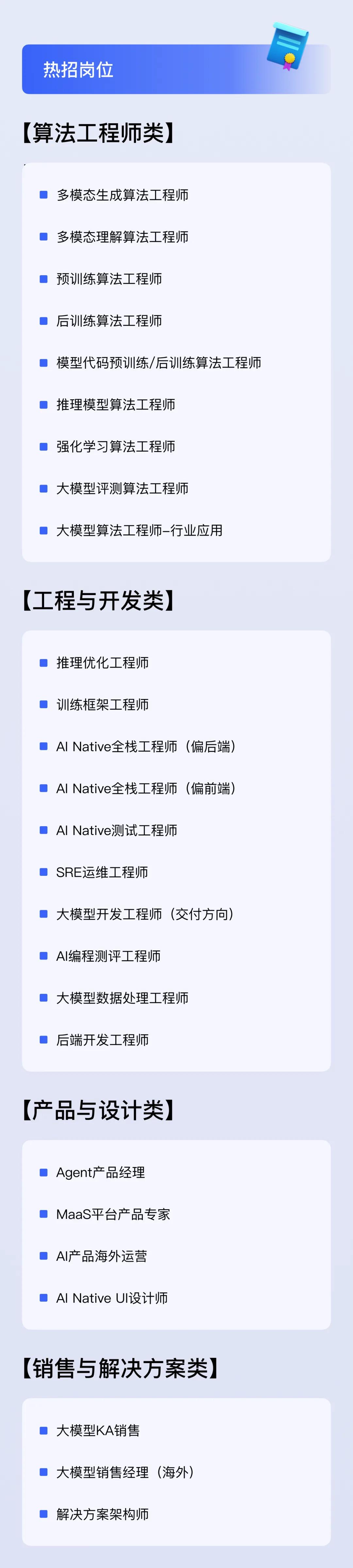
Core Insights - The company Zhiyu, one of the "AI Six Dragons," is facing layoffs ahead of its IPO, but it claims that these rumors are isolated incidents and that there are currently around 50 job openings available [1] - Zhiyu has submitted its listing guidance to the Beijing Securities Regulatory Bureau, with China International Capital Corporation as its advisory firm [1] - The company has recently posted job openings for various positions, including algorithm engineers, product managers, and sales roles, totaling 47 positions [1][7] Company Overview - Zhiyu, officially known as Beijing Zhiyu Huazhang Technology Co., Ltd., was established in 2019 and is headquartered in Beijing, originating from the technology transfer of Tsinghua University's Knowledge Engineering Laboratory [7] - The founding team includes notable figures such as Chief Scientist Tang Jie, Chairman Liu Debing, CEO Zhang Peng, and President Wang Shaolan, with Tang having previously served as a professor at Tsinghua University [7] Product Development - The company has developed a product matrix that includes AIGC models such as Zhiyu Qingyan, CodeGeeX, CogVLM, and CogView, and has launched a large model MaaS open platform [8] - On September 30, Zhiyu released and open-sourced its next-generation large model GLM-4.6, which reportedly achieved a 27% improvement in core capabilities compared to its predecessor GLM-4.5 [8] Financial Background - In March, Zhiyu completed a strategic financing round exceeding 1 billion RMB, with participation from various investment firms, indicating strong financial backing [8] - The company has completed over 10 rounds of financing, attracting investments from well-known institutions such as Meituan, Ant Group, Alibaba, Tencent, Xiaomi, and Sequoia [8] Industry Challenges - Domestic large model startups, including Zhiyu, are facing multiple challenges, including difficulties in transitioning technology from labs to real-world applications and low consumer willingness to pay [9] - The company must navigate pressures from larger tech giants like Baidu, Alibaba, and Huawei, which have advantages in data, scenarios, and funding [9] - Industry predictions suggest that only a few foundational large models will survive, emphasizing the need for Zhiyu to differentiate itself in technology and application [9]
“AI六小龙”之一智谱否认上市前夕裁员
Xin Lang Cai Jing· 2025-10-11 02:45
Core Viewpoint - The company Zhiyu, one of the "AI Six Dragons," is facing rumors of layoffs before its IPO, but it claims to have nearly 50 job openings available, indicating ongoing recruitment efforts [2][12]. Company Overview - Zhiyu, officially known as Beijing Zhiyu Huazhang Technology Co., Ltd., was established in 2019 and is headquartered in Beijing. It is a leading player in the domestic large model sector and the first among the "AI Six Dragons" to apply for an IPO [12]. - The founding team includes notable figures such as Chief Scientist and Founder Tang Jie, Chairman Liu Debing, CEO Zhang Peng, and President Wang Shaolan, with backgrounds in Tsinghua University [12]. Recruitment and Job Openings - Zhiyu has recently announced 47 job openings across various categories, including algorithm engineers, engineering and development roles, product and design positions, and sales and solutions roles [2][12]. Financial Background - In March, Zhiyu completed a strategic financing round exceeding 1 billion RMB, with participation from several well-known investment firms, indicating strong financial backing [13]. - The company has completed over 10 rounds of financing, attracting investments from major players such as Meituan, Ant Group, Alibaba, Tencent, Xiaomi, and Sequoia [13]. Product Development - Zhiyu has developed a product matrix that includes AIGC models such as Zhiyu Qingyan, CodeGeeX, CogVLM, and CogView. Recently, it released and open-sourced a new generation large model, GLM-4.6, which reportedly shows a 27% improvement in core capabilities compared to its predecessor [13]. Industry Challenges - Domestic large model startups, including Zhiyu, are facing multiple challenges, such as the difficulty of transitioning models from laboratory settings to real-world applications, low consumer willingness to pay, and the pressure from larger tech companies like Baidu, Alibaba, and Huawei [14]. - The founder of Zero One Wanwu, Li Kaifu, predicts that only a few companies, including DeepSeek, Alibaba, and ByteDance, will remain in the competitive landscape of foundational large models [14].

万兴天幕赋能湖南卫视中秋之夜视频海报创制
Zheng Quan Ri Bao Zhi Sheng· 2025-10-10 11:40
Core Insights - The article highlights the collaboration between Wanjing Technology and Hunan TV in creating an AI-generated video poster for the "Hunan TV Mid-Autumn Night" event, showcasing the integration of traditional culture with advanced AI technology [1][3] - Wanjing Technology aims to explore deeper integration of AIGC (AI Generated Content) with cultural elements, enhancing the representation of Chinese traditional culture [1][2] Group 1: Company Developments - Wanjing Technology has attracted global talent through various initiatives, including competitive salaries and a "platform + entrepreneur" model, to capitalize on the AI era [2] - The company launched the upgraded Wanjing Tianmu 2.0 model in June, which boasts a 90% performance improvement over its predecessor, Wanjing Tianmu 1.0, and aims to democratize content creation [2] - Wanjing Technology has developed a series of benchmark cases in cultural and technological integration using Wanjing Tianmu 2.0, including collaborations with Shenzhen Broadcasting and Hubei TV [2] Group 2: Industry Trends - AIGC technology is actively empowering the cultural industry to evolve towards "intelligent creation," with Wanjing Technology's recent projects exemplifying this trend [3] - The global market for generative AI is expected to expand significantly, with projections indicating that by 2030, 90% of digital content will be generated by AI [2]
南财携手可灵AI走进大湾区高校,首站暨大开讲十五运AI实操
2 1 Shi Ji Jing Ji Bao Dao· 2025-10-10 10:31
Core Insights - The event "AI Guangdong? Youth Creation Plan" aims to engage university students in the Greater Bay Area by promoting AI creativity in preparation for the upcoming Fifteenth Sports Games and the Special Olympics [1][3] - The initiative includes a video creation competition leveraging AIGC technology, with participation open to the public and a focus on exploring the cultural and historical aspects of cities [3][4] Group 1: Event Overview - The "AI Creation Camp Campus Tour" will kick off on October 16 at Jinan University, followed by visits to other key universities such as Guangzhou Academy of Fine Arts and Shenzhen University [1][2] - The event is organized by Southern Finance Media Group and supported by Keling AI, with multiple submission channels available for participants [1][4] Group 2: Expert Involvement - A diverse panel of experts, including AIGC technology specialists and scholars from relevant fields, will provide insights on AI tools and creative methodologies [2][3] - The event will feature demonstrations of Keling's core functionalities, such as "text-to-video" and "dynamic emoji generation," aimed at enhancing the understanding of AI's application in sports [3] Group 3: Competition Details - The AIGC video creation competition encourages participants to explore the intersection of urban culture and sports, aiming to produce visually impactful and culturally resonant video works [3][4] - Participants can submit their works through the 21 Finance App or the Keling AI website, with the competition designed to energize the image of the Greater Bay Area [4]
万兴科技信创布局再获认可 旗下万兴图示入编高校专业教材
Zhi Tong Cai Jing· 2025-10-10 08:44
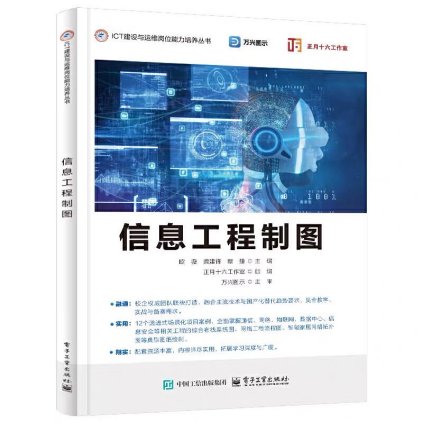
Core Insights - AIGC software company Wanjing Technology (300624.SZ) has successfully integrated its product, Wanjing Diagram, into higher education by collaborating with the Electronic Industry Press to publish a professional textbook titled "Information Engineering Drawing" [1][2][7] - This collaboration aligns with national policies promoting the use of domestically developed, secure, and controllable information technology products in education [2][7] Product Strength - Wanjing Diagram offers over 210 drawing types, a symbol library of more than 21,000, and over 100,000 professional templates, catering to diverse educational and research scenarios [4] - The software integrates AI capabilities, allowing users to generate flowcharts and mind maps with a single click based on keywords, meeting modern educational demands for intelligent tools [4] Compatibility and Adaptability - Wanjing Diagram has received over 300 compatibility certifications from upstream and downstream vendors, ensuring it works seamlessly within mainstream domestic software and hardware environments [4] - The software supports the import and export of Visio and CAD files, facilitating cross-platform interoperability and reducing the barriers for educational users [4] Industry Positioning - Wanjing Technology is recognized as a leading player in the digital creative software sector, with a presence in over 200 countries and regions, and a strong portfolio of products including Wanjing Miao Ying and Wanjing MindMaster [6] - The company has been awarded as one of the "Best Collaborative Office Software Vendors" in China's 2025 initiative and has established strategic partnerships with major players like Huawei Cloud and Zhongke Hongqi [6] Educational Impact - The inclusion of Wanjing Diagram in higher education textbooks signifies a shift from reliance on foreign software to the adoption of domestic tools, addressing the need for compatibility and localization in educational settings [7] - This initiative supports the goal of achieving over 70% domestic software localization in key industries by 2027, emphasizing the importance of training new talent proficient in advanced domestic tools [7]