具身智能

Search documents
智元机器人等入股具身智能算力提供商辉羲智能
Xin Lang Cai Jing· 2026-02-24 02:00
Group 1 - The core point of the article is the recent changes in the shareholder structure and registered capital of Beijing Huixi Intelligent Information Technology Co., Ltd, indicating potential growth and investment interest in the company [1] - The registered capital of the company increased from approximately 26.09 million RMB to about 30.91 million RMB, reflecting a significant investment [1] - New shareholders include Zhiyuan Innovation (Shanghai) Technology Co., Ltd, Beijing Qishui Huayu Intelligent Technology Partnership (Limited Partnership), and Wuxi Bozhi Future Industry Investment Fund Partnership (Limited Partnership) [1] Group 2 - Beijing Huixi Intelligent Information Technology Co., Ltd was established in April 2022 and is involved in various sectors including integrated circuit design and artificial intelligence software development [1] - The company is co-owned by Wei Wei, Xu Ningyi, and Jingwei Hengrun (688326), indicating a diverse ownership structure [1] - Huixi Intelligent is positioned as a provider of embodied intelligent computing power, with products spanning the fields of embodied intelligence and autonomous driving [1]


博泰车联:产业链自主突围 可控即竞争力
Sou Hu Wang· 2026-02-24 01:58
Group 1 - The Hong Kong stock market has seen 24 new listings since 2026, raising over 87 billion HKD, with sectors like robotics and port shipping performing actively [1] - Investment banks are reassessing the value anchors of Chinese companies in light of AI technology reshaping industries and geopolitical factors altering global supply chains [1] - Goldman Sachs has shifted its investment narrative for Weichai Power from "heavy truck-driven (cyclical)" to "power generation equipment-driven (structural)," indicating that the AIDC power generation business accounts for over 50% of the company's total valuation [1] Group 2 - The founder of Botai Car Union emphasizes the importance of controlling the supply chain, particularly for stable chip supply, as well as having autonomy over technology and adaptability to business rules [2] - The competitive logic is shifting from "being safe because of leadership" to "being able to lead and sustain leadership because of safety and control" [2] Group 3 - Botai Car Union is undergoing a systematic restructuring focused on "controllability," which includes three main areas: 1. Reconstructing the technology base and supply chain by investing in autonomous operating system development and enhancing chip supply security [3] 2. Innovating operational models to address actual bottlenecks, such as improving compliance and supply chain risk analysis efficiency through self-developed AI platforms [3] 3. Redefining globalization from merely "market expansion" to "capability co-creation and supply chain resilience building" through collaboration with international partners [3] Group 4 - Botai Car Union asserts that mastering chip, operating system, and supply chain dominance is essential for gaining pricing power, leading technology cycles, and realizing long-term valuations [4]
信达国际控股港股晨报-20260224
Xin Da Guo Ji Kong Gu· 2026-02-24 01:53
Market Overview - The Hang Seng Index is expected to hold at 26,000 points, influenced by the hawkish stance of the newly appointed Federal Reserve Chair and a rebound in the US dollar index, which has led to profit-taking in the commodity market [2] - The Chinese GDP growth target for 2026 is anticipated to be set at 4.5%-5%, lower than the previous target of around 5% for 2025, as many provinces have lowered their GDP goals ahead of the Two Sessions [2] - Regulatory measures have been implemented to cool the market, including increased financing margin ratios on the Shanghai and Shenzhen stock exchanges, leading to a collective reduction in leverage across the three markets [2] Sector Focus - AI stocks are expected to perform well due to intensive upgrades in AI large models and rapid growth in the semiconductor industry [3] Corporate News - Estun (002747.SZ), a company specializing in industrial robots, has passed the Hong Kong Stock Exchange listing hearing, targeting high-end industrial equipment markets [10] - Alibaba's Qianwen App facilitated nearly 200 million "one-sentence orders" during the Spring Festival, indicating a significant increase in user engagement [10] - Ant Group reported that its "AI Payment" and Ant Assistant App have both surpassed 100 million users, marking a significant milestone in AI-driven payment solutions [10] - JD Group reported a fourfold increase in user visits to its robot products during the Spring Festival, highlighting a growing interest in robotics and AI-related products [8][10] Economic Indicators - The Hang Seng Index closed at 27,081 points, up 668 points or 2.5%, with a total market turnover of HKD 173 billion [6] - The CRB Commodity Index decreased by 0.28% year-to-date, while gold prices increased by 2.35% [5] - The vacancy rate for Grade A offices in Central Hong Kong fell to 10.1%, the lowest level since 2023, indicating a recovery in leasing demand driven by financial institutions [8][10]
深圳诞生百亿估值具身智能独角兽,被称为“中国版特斯拉机器人”
Xin Lang Cai Jing· 2026-02-24 01:50
Core Insights - The core point of the news is that Zhifang, a general intelligent robotics company, has recently completed a Series B financing round exceeding 1 billion RMB, achieving a valuation of over 10 billion RMB, making it the first unicorn in Shenzhen's embodied intelligence sector in 2026 [2][12]. Financing and Valuation - Zhifang has become one of the fastest-growing companies in the global embodied intelligence sector, completing a total of 12 financing rounds within a year, including five rounds in the recent financing cycle [2][12]. - The investment consortium includes major players such as Baidu, CRRC Capital, and Tesla ecosystem leaders, indicating strong interest from both internet and AI giants as well as state-owned enterprises [13]. Industry Context - The embodied intelligence sector is currently one of the hottest investment areas, with 744 investment events and a total financing amount of 73.543 billion RMB reported in the robotics field by the end of 2025 [3][13]. - Zhifang was founded in April 2023 by Guo Yandong, a former core AI team member at Microsoft, focusing on productivity-oriented general intelligent robots [3][14]. Technological Development - Zhifang specializes in developing its own embodied large model, GOVLA, which has shown significant performance improvements compared to similar models from Google, achieving over 80% performance enhancement despite being only 1/20th the size [4][14]. - The company has introduced an end-to-end model that integrates various functionalities, allowing robots to perform complex tasks across different scenarios [5][14]. Commercialization Efforts - Zhifang has made significant strides in commercialization, including a partnership with a major semiconductor panel manufacturer, Huike, which has resulted in a large-scale delivery plan for 1,000 robots over three years [18]. - The company plans to establish 1,000 modular intelligent service spaces, covering various commercial and tourism scenarios in the next three years [18]. Future Outlook - Starting in 2026, the focus will be on leveraging stable intelligent hardware to create a closed-loop of commercial and data applications in real-world scenarios [8][19]. - The industry is expected to see a significant increase in humanoid robot shipments, with projections indicating that global shipments could exceed 50,000 units by 2026 [19].

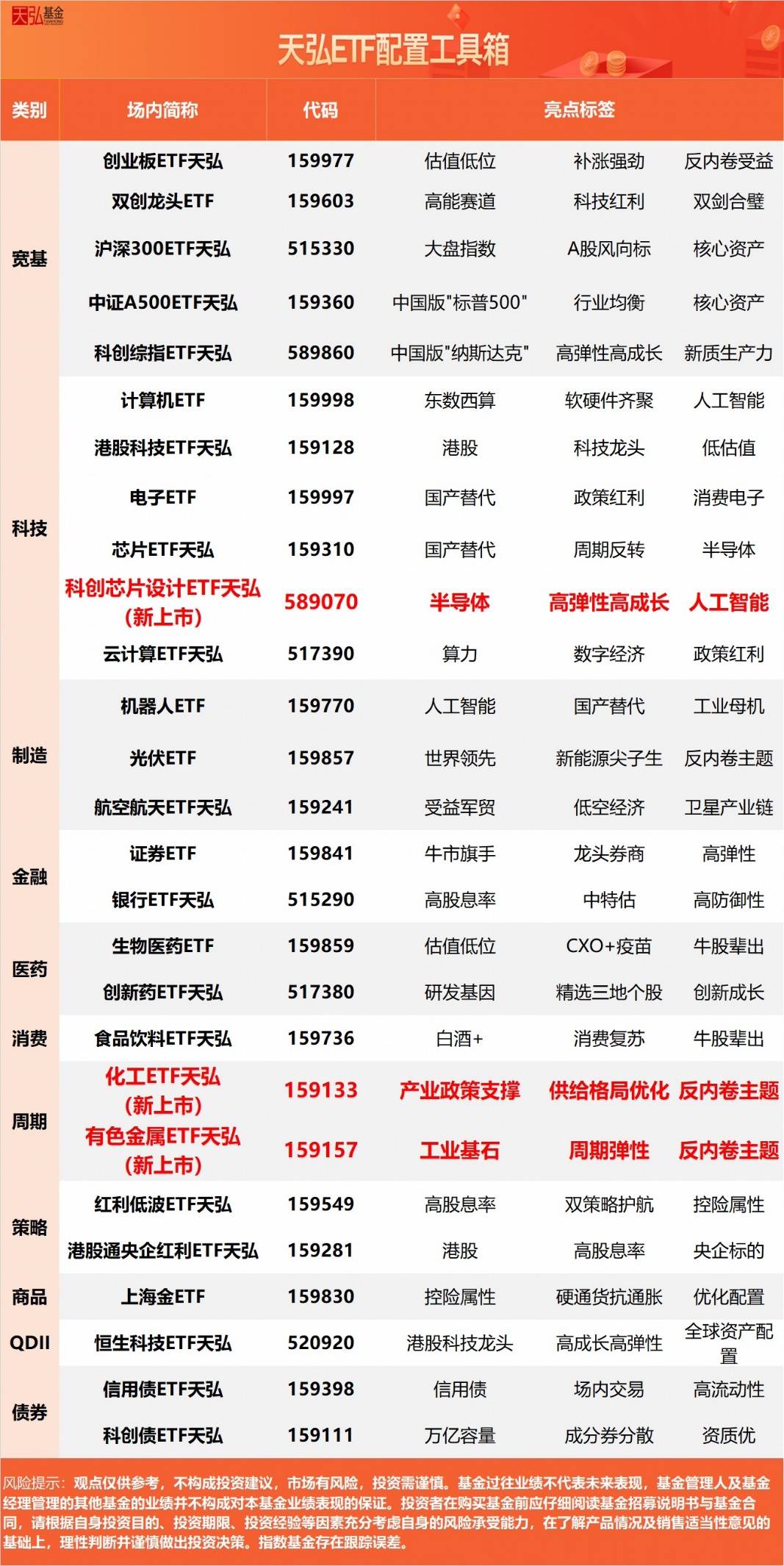
2026春晚国产机器人集群亮相,机器人ETF(159770)标的指数高开涨近1%,最新单日净流入超1亿元
Sou Hu Cai Jing· 2026-02-24 01:50
Core Insights - The Robot ETF (159770) has seen significant trading activity, with a transaction volume of 141 million yuan and a net inflow of 10.9 million yuan on a single day, indicating strong investor interest in the sector [1] - The underlying index, the CSI Robot Index (H30590), increased by 0.77%, with notable gains from constituent stocks such as Huachangda (+3.57%) and Dazhu Laser (+3.23%) [1] - The Robot ETF has reached a new high in scale at 10.371 billion yuan and 9.265 billion shares as of February 13, 2026, reflecting growing investor confidence [1] Product Highlights - The Robot ETF (159770) is the largest robot-themed ETF in the Shenzhen market, covering various segments including humanoid robots, industrial robots, and service robots, allowing investors to easily access the entire robot industry chain [1] - Related products include the off-market linked funds A (014880) and C (014881) [1] Market Trends - During the Spring Festival, there was a notable increase in user engagement with robot products, with visits rising over four times year-on-year and a 25-fold increase in searches for "robots" [2] - The demand for robot rentals surged, with the rental platform Qingtian expected to exceed 5,000 orders during the holiday period [2] - The advancements in robot technology have led companies to expand into various application scenarios such as performances, education, and retail, with expectations for growth in order volume and delivery scale in 2026 [2] Institutional Perspectives - According to Open Source Securities, the Spring Festival Gala has sparked a robot craze in China, showcasing the transition of humanoid robot technology from concept to practical application through performances by companies like Songyan Power and Yushu Technology [2] - In the international arena, Agility Robotics has partnered with Toyota Canada to deploy its humanoid robot Digit in a manufacturing setting, highlighting the global advancements in humanoid robotics [2]
新兴产业周报20260223
Western Securities· 2026-02-24 01:50
Investment Rating - The report suggests an "Overweight" rating for humanoid robots, AI applications, innovative drugs, and new consumption sectors [5][19]. Core Insights - The report highlights a strong growth potential in humanoid robots, with a projected shipment of nearly 18,000 units globally by 2025, representing a year-on-year increase of 508% [5]. - AI applications are expected to maintain steady growth, supported by the Ministry of Industry and Information Technology's initiative to build a national computing network [5]. - The innovative drug sector is experiencing a shift towards platform capabilities, as evidenced by a significant partnership between Innovent Biologics and Eli Lilly, valued at over $8 billion [9]. - New consumption trends are emerging, with adjustments in CPI statistics reflecting the inclusion of new categories such as dishwashers and medical beauty services [5]. Summary by Category Humanoid Robots - Rating: Overweight - Technical Indicators: Strong - Growth Expectation: Medium, stable growth anticipated - Key Data: IDC forecasts a shipment of nearly 18,000 humanoid robots by 2025, a 508% increase year-on-year [5]. AI Applications - Rating: Neutral + Overweight - Technical Indicators: Weak, but stabilizing - Growth Expectation: Medium, slight downward adjustment expected - Key Data: The Ministry of Industry and Information Technology has initiated the construction of a national computing network [5]. Innovative Drugs - Rating: Overweight - Technical Indicators: Strong - Growth Expectation: Low, upward revision expected - Key Data: Significant partnership between Innovent Biologics and Eli Lilly, valued at over $8 billion, marks a new phase in China's innovative drug export strategy [9]. New Consumption - Rating: Overweight - Technical Indicators: Strong - Growth Expectation: Low, stable growth anticipated - Key Data: CPI adjustments include new consumption categories, indicating a shift in consumer behavior [5].
智能轮椅四十年:从移动工具到智能伙伴,一场为了自由的漫长奔赴(1986-2026)
Tai Mei Ti A P P· 2026-02-24 01:39
Core Insights - The development of smart wheelchairs has evolved over 40 years, transitioning from laboratory prototypes to practical applications aimed at enhancing mobility for individuals with disabilities [1][2][3] Group 1: Historical Development - From 1986 to 2005, the focus was on proving the feasibility of robotic technology in wheelchairs, with early prototypes demonstrating basic autonomous movement but lacking effective obstacle avoidance [2][3] - The period from 2006 to 2015 marked a turning point as advancements in computing power and sensor technology allowed for the integration of smart modules into traditional electric wheelchairs, enhancing their functionality without completely reinventing the product [4][5][6] - Between 2016 and 2022, the introduction of AI and deep learning enabled wheelchairs to better understand their environment, significantly improving navigation and obstacle avoidance capabilities [8][9][10] Group 2: Technological Advancements - The integration of deep learning and advanced sensors allowed smart wheelchairs to identify and differentiate between various objects and obstacles, enhancing user safety and experience [8][9] - The emergence of edge AI technology has improved the responsiveness and energy efficiency of smart wheelchairs, addressing previous concerns about power consumption and operational reliability [13][15] - Innovations such as brain-computer interfaces (BCI) are being explored, potentially allowing users to control wheelchairs through thought alone, which could revolutionize mobility for individuals with severe disabilities [14][15][24] Group 3: Market Challenges - Despite technological advancements, smart wheelchairs remain a niche market due to high costs, complex user interfaces, and reliability issues that deter widespread adoption [21][22][23] - The market is fragmented, with traditional wheelchair manufacturers, tech startups, and large corporations each facing unique challenges in innovation, production, and user engagement [21][22] - User feedback highlights a need for improved reliability, ease of use, and affordability, which are critical for increasing market penetration and user satisfaction [22][23] Group 4: Future Trends - The next five years are expected to see significant trends such as the introduction of solid-state batteries, which will alleviate concerns about battery life and charging times [23][24] - AI capabilities are anticipated to evolve, allowing for more natural interactions and personalized assistance, making smart wheelchairs more intuitive and user-friendly [24][25] - A shift towards subscription-based models may lower the financial barriers for users, making advanced smart wheelchair technology more accessible to a broader audience [25][26]
新型光传输系统问世
Huan Qiu Wang Zi Xun· 2026-02-24 01:28
Core Viewpoint - The development of a lightweight coherent optical transmission system based on integrated micro-light comb technology addresses the limitations of traditional optical communication devices, enabling high-capacity data transmission essential for edge computing applications [1][2]. Group 1: Technological Innovation - The research teams from Peking University and Huazhong University of Science and Technology have created a micro-sized chip that significantly reduces the size of optical communication systems to about one-hundredth of traditional systems while achieving high-capacity transmission [1][2]. - The innovative use of self-injection locking technology has allowed the creation of a high-quality optical frequency comb, which compresses the laser linewidth to below 600 Hz, surpassing the coherence of high-performance commercial lasers [2]. Group 2: Performance Metrics - The new system achieves a single-wavelength transmission rate exceeding 1 Tbit/s and a total transmission rate of 215.04 Tbit/s in multi-core optical fibers [2]. - A micro-platform, only about one-hundredth the size of traditional systems, successfully supports an aggregated capacity of 5 Tbit/s over a 10-kilometer transmission distance [2]. Group 3: Industry Implications - This "high-capacity, low-power, miniaturized" transmission system is poised to become essential for various advanced fields, including low-altitude intelligence, embodied intelligence, and green data centers, providing a solid technological foundation for the construction of next-generation high-density computing networks in China [3]. Group 4: Edge Computing Context - Edge computing decentralizes processing power, allowing for faster response times and reduced network congestion by processing data locally rather than relying on distant cloud servers [4]. - This approach enhances the efficiency of data handling, enabling immediate decision-making in critical applications, such as autonomous vehicles, by processing data at the edge rather than sending it to a central server [4].
【硬科技头条】深圳诞生百亿估值具身智能独角兽,被称为“中国版特斯拉机器人”
Xin Lang Cai Jing· 2026-02-24 01:12
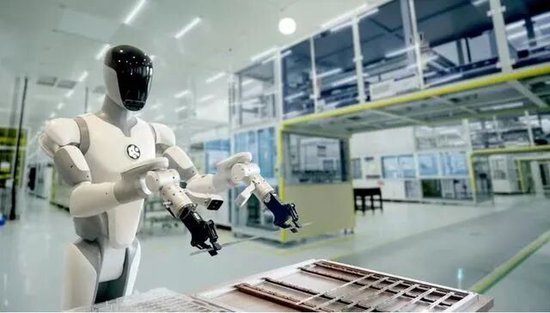
Core Insights - The article highlights that Zhifang Intelligent Robotics has recently completed a Series B financing round exceeding 1 billion RMB, achieving a valuation of over 10 billion RMB, making it one of the highest-valued embodied intelligence companies in Shenzhen [1][3] - The company is recognized as one of the fastest-growing players in the global embodied intelligence sector, having completed a total of 12 financing rounds within a year [1][3] - The investment round attracted a prestigious lineup of investors, including Baidu, CRRC Capital, and Tesla ecosystem leaders, indicating strong market confidence in the company's technology and growth potential [1][3] Company Overview - Zhifang was founded in April 2023 by Guo Yandong, a former core AI team member at Microsoft, focusing on productivity-oriented general intelligent robots [3][4] - The company has developed its own embodied large model, GOVLA, which significantly enhances performance while being smaller in scale compared to similar models from Google [4][6] - The company aims to leverage its proprietary technology to drive the iteration of its AlphaBot series of robots and expand production lines [1][4] Industry Context - The embodied intelligence sector is currently one of the hottest investment areas, with 744 investment events and a total financing amount of 73.543 billion RMB reported in 2025 [3] - The industry has seen a shift from hardware-focused development to a focus on embodied large models and their commercial applications [3][5] - The competition in the humanoid robot market is intensifying, with companies like Zhifang aiming to establish themselves as leaders in the sector, particularly in Shenzhen [9] Technological Advancements - The GOVLA model allows for full-body control and movement trajectory, enabling robots to perform tasks across various scenarios without needing retraining [6][7] - The company has implemented a unique training acceleration system using a kilowatt-level computing cluster to enhance robot perception and operational speed [7] - Zhifang's robots are designed to provide humanoid services in real-world settings, which is seen as a critical competitive advantage in the market [8][9] Commercialization Efforts - Zhifang has secured significant commercial contracts, including a three-year order for 1,000 robots from a major semiconductor panel manufacturer, recognized as one of the largest single orders in the field [8] - The company plans to deploy 1,000 modular embodied intelligent service spaces in various public and commercial settings over the next three years [8] - The collaboration with CRRC Capital highlights the strategic alignment between high-end manufacturing and embodied robotics, providing a fertile ground for product testing and deployment [8]
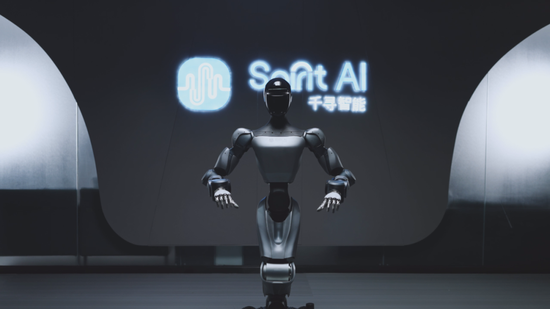
云锋红杉20亿重仓「顶配玩家」:千寻智能跃升百亿独角兽
Xin Lang Cai Jing· 2026-02-24 01:11
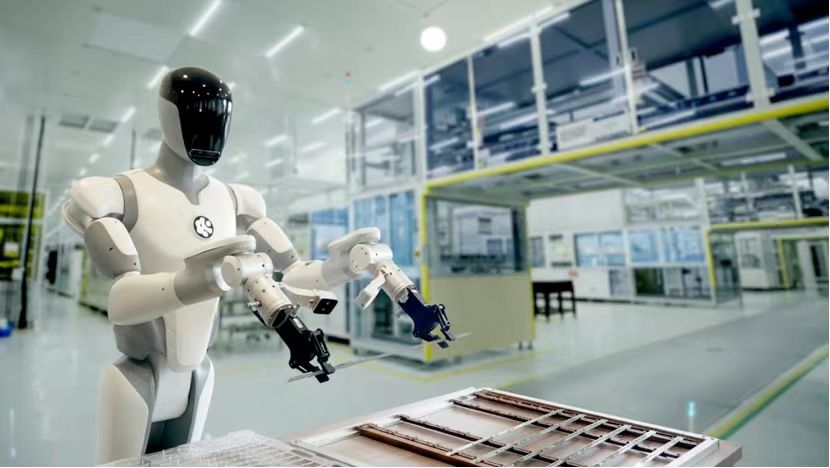
Group 1 - The core message of the news is that Spirit AI, a leading company in the field of embodied intelligence, has successfully completed two rounds of financing totaling nearly 2 billion yuan, setting a new record in the recent financing landscape of the industry [1][21] - The financing attracted top-tier investment institutions such as Yunfeng Fund, Sequoia China, and various state-owned capital, indicating strong confidence in the company's technology and growth prospects [1][21][30] - The company has achieved a valuation exceeding 10 billion yuan, marking it as another unicorn in the embodied intelligence sector, which is transitioning from a "hundred flowers blooming" era to a "multi-hero competition" phase [3][23] Group 2 - Spirit AI focuses on building a "general brain" for robots, with a founding team that includes experienced entrepreneurs and top scientists, giving the company a competitive edge in both technological exploration and commercialization [2][22] - The company has made significant advancements in model development, with its open-source model Spirit v1.5 becoming the first in China to surpass the performance of Pi0.5, showcasing strong zero-shot generalization capabilities [11][31] - The company has accumulated 200,000 hours of high-quality interaction data, with plans to exceed 1 million hours by 2026, significantly reducing data collection costs by 90% through self-developed equipment [12][32] Group 3 - The collaboration with CATL has become a benchmark case for commercializing embodied intelligence, with the Mozi robot demonstrating high efficiency and reliability in real production environments [16][36] - The market for humanoid robots in China is expected to see significant growth, with projections of 28,000 units sold in 2026, reflecting a 133% increase from previous estimates [16][36] - The company is exploring diverse commercial applications across industrial, retail, and household scenarios, indicating a strategic approach to scaling its technology in various sectors [19][39]