
新能源汽车

Search documents
汽车早报|吉利控股集团年销量首次突破400万辆 宝马集团2025年交付量同比增长0.5%
Xin Lang Cai Jing· 2026-01-10 00:41
Group 1: Industry Developments - The State Administration for Market Regulation will accelerate the development of national standards for the new energy vehicle, lithium battery, and photovoltaic industries [1] - The China Passenger Car Association forecasts that domestic retail sales of new energy passenger vehicles will reach 12.809 million units in 2025, a year-on-year increase of 17.6% [2] Group 2: Company Performance - Geely Holding Group's total sales for 2025 are projected to exceed 4 million units, reaching 4,116,321 vehicles, a 26% year-on-year increase, with new energy vehicle sales at 2,293,099 units, up 58% [3] - Honda's total vehicle sales in China for 2025 are expected to be 645,345 units, a decrease of 24.28% from the previous year [4] - BMW Group anticipates delivering 2,463,715 vehicles in 2025, a 0.5% increase year-on-year, with electric vehicle deliveries reaching 642,087 units, an 8.3% increase [7] - BAIC Group aims for a total sales volume of 1.752 million vehicles in 2025, with a 25% year-on-year growth in its self-owned brands [8] - Dongfeng Motor's total vehicle sales for 2025 are projected at 119,016 units, a decline of 23.22% year-on-year [10] Group 3: Product Launches and Innovations - The Avita 12 will launch a new version offering three electric drive options, with upgrades in intelligence and performance [6] - Zhao Changjiang predicts that the new flagship MPV, the Zhijie V9, will have no competitors for at least three years [5]



南通人常州创业,年入40亿,即将赴港IPO
Sou Hu Cai Jing· 2026-01-10 00:31
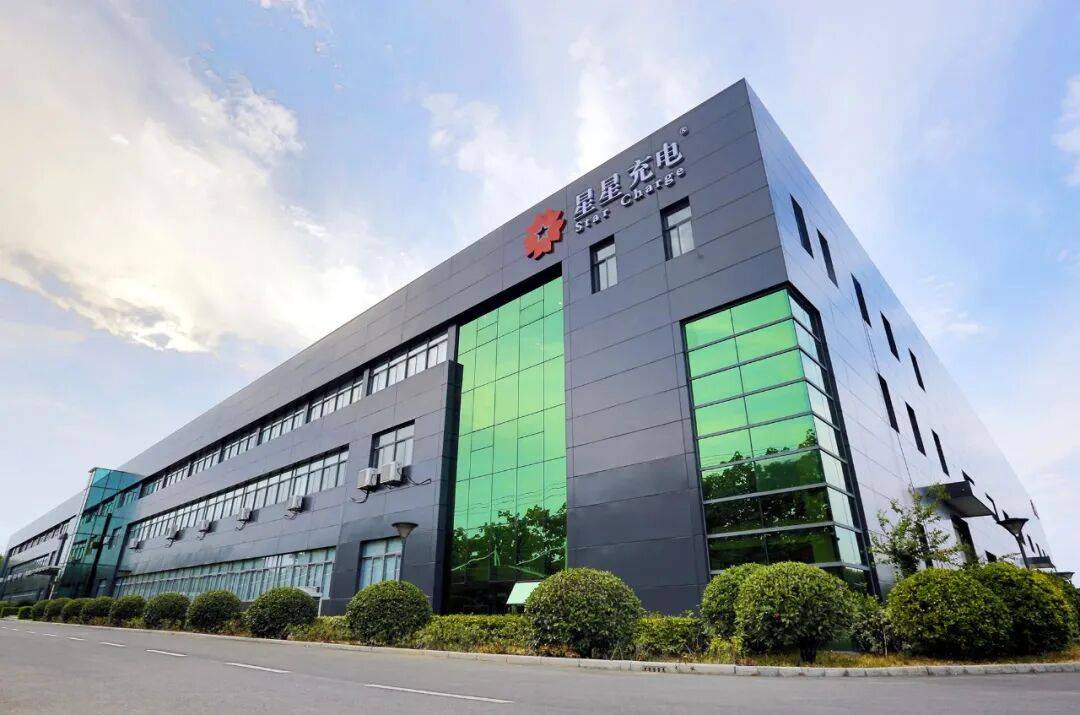
Core Viewpoint - Wanbang Digital Energy, the parent company of Xixing Charging, is planning to go public on the Hong Kong Stock Exchange after unsuccessful attempts to list in China, indicating a strategic shift in its business focus [1][14]. Company Overview - Wanbang Energy was established in 2014 and is based in Changzhou, Jiangsu Province, serving as a leading operator of charging stations in China [3]. - The company is controlled by Shao Danwei and Ding Feng, who have significant backgrounds in the automotive and energy sectors [3][10]. Business Adjustments - Wanbang Digital Energy has restructured its business by spinning off its energy operation entities into a newly formed Wanbang Taiyi Group, with a transaction value of 474 million yuan, leaving Xixing Charging out of the IPO entity [1][16]. - The company aims to focus on energy equipment manufacturing rather than charging station operations, which it deems non-core to its strategic direction [16]. Financial Performance - The company has faced challenges with profitability, with revenues for 2023, 2024, and the first three quarters of 2025 reported at 3.474 billion yuan, 4.182 billion yuan, and 3.072 billion yuan respectively [16]. - Net profit has decreased from 493 million yuan to 336 million yuan, with a significant portion of the profit in 2025 coming from a one-time asset transfer [16]. - The gross margin has declined from 33.4% in 2023 to 24.6% in the first three quarters of 2025, indicating increased pressure from industry price wars [16]. Market Expansion - Wanbang Digital Energy is looking to expand its overseas market presence, with overseas sales revenue for 2023, 2024, and the first three quarters of 2025 at 874 million yuan, 692 million yuan, and 573 million yuan respectively [17]. - The company has established a joint venture with Schneider Electric in Europe to promote charging equipment and services, aiming to leverage high entry barriers in the European market for future expansion [18]. IPO Strategy - The funds raised from the Hong Kong IPO will be allocated for building and operating R&D centers, expanding global markets, investing in smart charging equipment production lines, and pursuing strategic investments and acquisitions [18]. - The company maintains a strong control structure, with Shao Danwei and Ding Feng holding approximately 87.16% of the voting rights, ensuring they steer the company's strategic direction [18]. Industry Context - The upcoming IPO coincides with favorable policy developments in the charging infrastructure sector, which are expected to support industry growth [18]. - The competitive landscape is intensifying, with significant price reductions in charging modules, highlighting the challenges faced by companies in the sector [16][19].


以旧换新精准激活车市消费潜力
Jing Ji Ri Bao· 2026-01-09 22:06
Core Viewpoint - The Chinese government continues to support automotive consumption policies despite the adjustment of the new energy vehicle purchase tax from full exemption to a 50% reduction, signaling a strong commitment to boosting domestic demand and the automotive market [1] Group 1: Policy Implementation and Impact - The central economic work conference proposed the continuation of the "two new" policies until 2026, leading to the rapid release of implementation details for the vehicle trade-in subsidy, which clarifies the support scope, subsidy standards, and work requirements for the new year [1] - The latest data from the Ministry of Commerce indicates that by 2025, over 11.5 million vehicles will be traded in under the old-for-new policy, driving new car sales exceeding 1.6 trillion yuan [1] - The old-for-new policy is expected to activate the used car market gradually, contributing significantly to the stability of the automotive market and macroeconomic growth [1] Group 2: Subsidy Structure and Consumer Benefits - The new policy expands the range of eligible vehicles for trade-in subsidies, allowing more consumers to benefit from the subsidies, thus unlocking the consumption potential of the old-for-new program [2] - The subsidy amount is now linked to the sales price of new vehicles, addressing previous issues with fixed subsidies that lacked price elasticity and did not effectively guide consumer choices [2] - The new subsidy structure aims to enhance fairness and precision in policy implementation while promoting green consumption through higher subsidies for new energy vehicles [2] Group 3: Standardization and Market Transition - A unified national standard for trade-in subsidies will be implemented in 2026, with personal consumers receiving an 8% subsidy (up to 15,000 yuan) for new energy vehicles and a 6% subsidy (up to 13,000 yuan) for fuel vehicles [3] - The updated policy emphasizes the transition towards green and low-carbon vehicles, with nearly 60% of vehicles traded in under the old-for-new program expected to be new energy vehicles by 2025 [3] - The increasing "green content" in vehicle purchases is seen as a driving force for both consumption and industrial upgrades [3] Group 4: Market Dynamics and Consumer Behavior - The automotive consumption landscape in China has shifted from first-time purchases to a focus on replacement purchases, with an estimated 12 million trade-in applications expected by 2026, potentially driving an additional 2.6 million vehicle sales [4] - Consumers are increasingly prioritizing the quality and experience of vehicles, particularly in terms of smart technology, as the automotive market evolves [4] - The optimized old-for-new policy, combined with the wave of industrial transformation, is anticipated to further stimulate consumer activity and market potential in the automotive sector [4]
热点追踪周报:由创新高个股看市场投资热点(第 226 期)-20260109
Guoxin Securities· 2026-01-09 15:20
- The report introduces a quantitative model named "250-day new high distance" to track market trends and identify investment hotspots. The model is based on momentum and trend-following strategies, emphasizing the effectiveness of monitoring stocks near their 52-week high prices[11][19][20] - The construction process of the "250-day new high distance" model is as follows: Formula: $ 250\text{-day new high distance} = 1 - \frac{Close_t}{ts\_max(Close, 250)} $ Explanation: - $ Close_t $ represents the latest closing price - $ ts\_max(Close, 250) $ represents the maximum closing price over the past 250 trading days If the latest closing price reaches a new high, the distance equals 0; otherwise, it is a positive value indicating the degree of price fallback[11] - The report evaluates the model positively, highlighting its ability to capture market trends and identify leading stocks in various sectors. It references studies by George (2004), William O'Neil, and Mark Minervini, which support the effectiveness of tracking stocks near their high prices[11][19] - The model's testing results show that as of January 9, 2026, major indices such as the Shanghai Composite Index, Shenzhen Component Index, and CSI 500 have a "250-day new high distance" of 0.00%, indicating they are at their peak levels. Other indices like CSI 300 and ChiNext have distances of 0.66% and 0.06%, respectively[12][13][33] - A quantitative factor named "Stable New High Stocks" is constructed to identify stocks with smooth price paths and consistent momentum. The factor incorporates analyst attention, relative price strength, price path smoothness, and sustained new high performance[26][28] - The construction process of the "Stable New High Stocks" factor includes: - Analyst attention: At least five buy or overweight ratings in the past three months - Relative price strength: Top 20% in 250-day price change - Price path smoothness: Evaluated using metrics like price displacement ratio - Sustained new high performance: Average "250-day new high distance" over the past 120 days and the last five days[26][28] - The factor is positively evaluated for its ability to capture stocks with strong and consistent momentum, supported by studies on smooth price paths and investor underreaction to gradual price changes[26][28] - Testing results for the "Stable New High Stocks" factor show that 50 stocks were selected, with the highest representation in cyclical and technology sectors. Notable stocks include Yuanjie Technology, Yaxiang Integration, and Xinwei Communication[29][34]


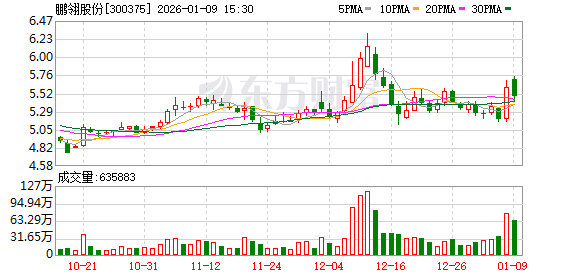
新能源浪潮下的创新蝶变 鹏翎股份详解转型之道
Zhong Guo Zheng Quan Bao· 2026-01-09 15:05
Core Insights - The core philosophy of the company emphasizes the importance of market respect and competition for maintaining corporate vitality [2] - The company has been deeply engaged in the automotive parts industry for over 30 years, maintaining a leading position in the automotive fluid pipeline sector [3] - The explosive growth of the new energy vehicle market presents unprecedented strategic opportunities for the company [2][4] Financial Performance - The company achieved operating revenues of 1.952 billion, 2.461 billion, and 1.960 billion yuan for the years 2023, 2024, and the first three quarters of 2025, reflecting year-on-year growth rates of 14.95%, 26.08%, and 16.37% respectively [3] Product Development and Strategy - The company is transitioning from a traditional auto parts supplier to a system assembly provider, with a focus on high-value, high-tech products [2][3] - The company has identified two main product upgrade directions: increasing demand for nylon-related products in new energy vehicles and a shift towards delivering complete assembly products [3] - The company is actively entering the thermal management sector, developing lightweight and highly integrated thermal management assembly products [2][6] Market Adaptation and Client Relationships - The company has established solid partnerships with major automotive manufacturers, including BYD, Changan Automobile, Geely, and others, to develop new models in the new energy vehicle sector [3] - The company emphasizes the need for agile supply capabilities to meet fluctuating market demands, which enhances its competitive edge [3] Future Growth and Strategic Planning - The company aims to become a technologically advanced manufacturing enterprise within three years, focusing on the core business of fluid pipelines and seals while exploring new opportunities in intelligent machinery components [4][8] - The company plans to establish a research and development center in Shanghai and has initiated a second growth curve focused on thermal management water-side modules [6][8] - The strategic plan for 2026-2028 includes a focus on the electrification, intelligence, and connectivity of the automotive industry, with an emphasis on electric vehicle thermal management and automotive electronics [8] Operational Efficiency and Profitability - The company aims to enhance its net profit margin through internal integration, production optimization, and new material applications [10] - The company is focusing on optimizing material performance, structural design, and heat transfer efficiency in its pipeline systems to improve overall profitability [10]

21对话|比亚迪孙华军:反超特斯拉,藏着死磕磷酸铁锂的20年
2 1 Shi Ji Jing Ji Bao Dao· 2026-01-09 14:52
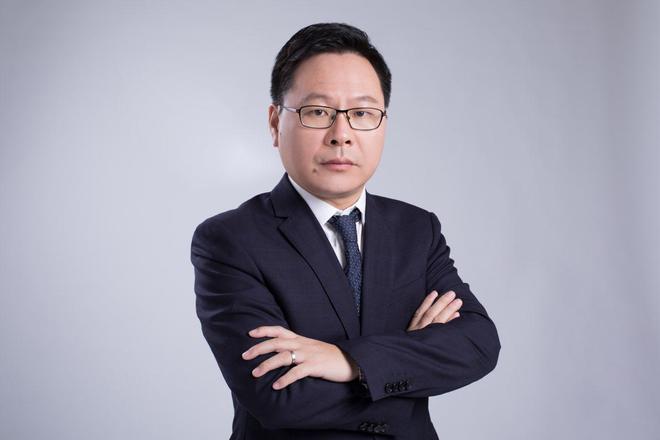
Core Insights - BYD has surpassed Tesla in global electric vehicle sales for the first time, achieving a total of 2.2567 million pure electric vehicles sold in 2025, marking a year-on-year growth of 27.86% [2] - The foundation of BYD's success lies in the development of lithium iron phosphate (LFP) batteries, which were initially considered unsuitable for electric vehicles due to their lower energy density [2][3] - The strategic decision to focus on LFP batteries was driven by safety concerns and the availability of raw materials in China, as opposed to the reliance on cobalt and nickel used in ternary batteries [3][4] Development Timeline - BYD began exploring LFP technology in 2002, with the first LFP battery used in a plug-in hybrid model, the F3DM, launched in 2008 [4] - The company faced challenges between 2017 and 2019 when the electric vehicle market cooled, leading to a temporary shift in focus towards ternary batteries due to their higher energy density [5][6] - In 2019, BYD made a pivotal decision to refocus on LFP technology, leading to the development of the "blade battery" which improved space utilization and safety [6][7] Technological Innovations - The blade battery design allowed for a higher space utilization rate of over 60%, enabling a range of 600 kilometers, which was a significant improvement over previous designs [6][18] - The manufacturing process for the blade battery involved overcoming significant engineering challenges, including precision in stacking and cutting the battery cells [20][21] - BYD's commitment to LFP technology has resulted in a robust R&D team of approximately 10,000 members, emphasizing the company's dedication to innovation in battery technology [21] Market Position and Future Outlook - BYD's sales began to recover in the latter half of 2020, with total electric vehicle sales reaching 190,000 units that year, and over 600,000 units sold in 2021 [7] - The company has established a competitive edge through vertical integration of its supply chain, which became particularly advantageous during global shortages of chips and batteries [7][8] - Looking ahead, BYD plans to continue investing in LFP technology while also addressing challenges such as charging speed and safety standards in response to new regulations [24][25]

新能源浪潮下的创新蝶变,鹏翎股份详解转型之道
Zhong Guo Zheng Quan Bao· 2026-01-09 14:33
Core Insights - The core philosophy of the company is to embrace competition and maintain market vitality, which has been crucial for its growth over the past 30 years in the automotive parts industry [1][2] - The explosive growth of the new energy vehicle market presents unprecedented strategic opportunities for the company, which is transitioning from a traditional auto parts supplier to a systems provider [1][2] Financial Performance - The company achieved revenues of 1.952 billion yuan, 2.461 billion yuan, and 1.960 billion yuan for the first three quarters of 2023, 2024, and 2025 respectively, with year-on-year growth rates of 14.95%, 26.08%, and 16.37% [2] Product Development and Market Strategy - The company is focusing on two main product upgrade directions: increasing demand for nylon-related products in new energy vehicles and shifting towards delivering complete assembly products instead of just components [2] - The company has established strong partnerships with major automotive manufacturers, including BYD, Changan Automobile, and Geely, to develop new models in the new energy vehicle sector [2] Innovation and Future Growth - The company plans to enhance its R&D investment to keep pace with the trends of electrification, intelligence, and connectivity in the automotive industry [3] - A new growth curve is being initiated with the establishment of a research center in Shanghai, focusing on thermal management modules, which will leverage the company's existing customer and supply chain advantages [5] Strategic Planning - The company has outlined a three-year strategic plan (2026-2028) focusing on the intelligent and connected aspects of new energy vehicles, aiming to become a technology-driven advanced manufacturing enterprise [7] - The strategy includes optimizing production processes and enhancing material performance to improve profit margins, while also exploring opportunities in related core component investments [8]
长安汽车:2025年长安汽车总体销量291.3万辆,同比增长8.5%
Zheng Quan Ri Bao Wang· 2026-01-09 14:15
证券日报网讯1月9日,长安汽车(000625)在互动平台回答投资者提问时表示,2025年长安汽车总体销 量291.3万辆,同比增长8.5%,创9年新高;新能源方面,2025年销量突破百万大关,达到110.9万辆, 同比增长51%,成为驱动长安增长的新引擎;海外方面,2025年销量达63.7万辆,同比增长18.9%,海 外市场已成为长安稳健增长的新动能。2026年公司总体销量目标330万辆,同比增长13.3%;其中,新 能源140万辆,同比增长26.2%;海外75万辆,同比增长17.7%。 ...

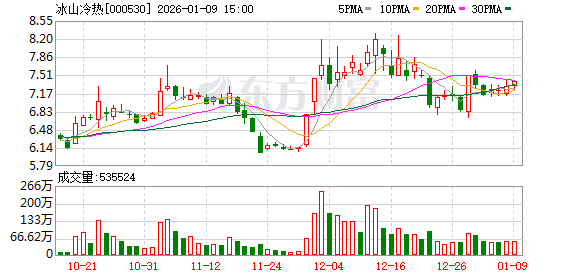
冰山冷热:公司风洞技术可应用于军工及新能源汽车领域
Zheng Quan Ri Bao· 2026-01-09 13:12
Group 1 - The company, Iceberg Cold, has indicated that its wind tunnel technology can be applied in both the military and new energy vehicle sectors [2]

亚普股份:公司收购赢双科技旨在通过产业资源整合,进一步强化公司在新能源汽车关键零部件领域的布局
Zheng Quan Ri Bao Wang· 2026-01-09 13:11
证券日报网1月9日讯,亚普股份(603013)在接受调研者提问时表示,公司收购赢双科技旨在通过产业 资源整合,进一步强化公司在新能源汽车关键零部件领域的布局,助力公司业务转型,同时依托标的公 司和公司在技术、客户资源、生产布局上的互补,助力相关产品国际化业务拓展。 ...
