
智能驾驶

Search documents
零跑汽车(09863.HK):毛利率持续提升 海外表现超预期
Ge Long Hui· 2025-11-19 20:04
Core Insights - The company achieved a revenue of 19.45 billion yuan in Q3 2025, with a gross margin of 14.5% and a net profit attributable to shareholders of 150 million yuan [1] Group 1: Financial Performance - In Q3 2025, the company reported a sales volume of 174,000 vehicles, representing a year-on-year increase of 107.3% and a quarter-on-quarter increase of 29.6% [1] - The revenue of 19.45 billion yuan in Q3 2025 reflects a year-on-year growth of 97.3% and a quarter-on-quarter growth of 36.7% [1] - The average revenue per vehicle was 112,000 yuan, showing a year-on-year decrease of 600 yuan but a quarter-on-quarter increase of 600 yuan [1] - The gross margin of 14.5% in Q3 2025 improved by 6.4 percentage points year-on-year and by 0.9 percentage points quarter-on-quarter [1] - The company achieved a net profit of 150 million yuan in Q3 2025, marking a turnaround from losses year-on-year, but a quarter-on-quarter decrease of 6.3% [1] Group 2: Operational Highlights - The company plans to launch 2-3 new products globally each year over the next three years, with the B10 and B01 already launched in 2025 and an additional model, Lafa5, planned for release within the year [2] - As of September 30, 2025, the company had 866 sales outlets in China, including 367 core stores and 499 experience centers, covering 292 cities [2] - The company exported 38,000 vehicles from January to September 2025, with a significant increase in overseas customer contracts in October [2] - The company has established over 700 sales and service points in approximately 30 international markets, including over 650 in Europe [2] Group 3: Strategic Initiatives - The company is leveraging its technological advantages to create a strong price-performance ratio, which is expected to drive continued sales growth [3] - A partnership with Stellantis, the fourth-largest automotive group globally, is aimed at utilizing its extensive sales and service network for efficient international expansion [3] - The company anticipates net profits of 630 million yuan, 5.01 billion yuan, and 8.37 billion yuan for the years 2025 to 2027, with corresponding price-to-earnings ratios of 112.2X, 14.2X, and 8.5X [3]

慧翰股份(301600) - 2025年11月18日投资者关系活动记录表
2025-11-19 16:12
Company Overview - The company focuses on ICT core technologies, initially specializing in Bluetooth, WiFi, and GPS for automotive communication modules, establishing a strong position in a niche market despite limited market size [2] - In 2012, the company entered the automotive communication sector, launching the first generation of connected vehicle terminal products, TBOX 1.0, and became a primary supplier for SAIC Group [2][3] - The company has developed a diverse business matrix centered around TBOX, eCall systems, digital energy management solutions, and IoT smart modules [4] Product Development and Market Position - The company has achieved significant milestones in eCall technology, obtaining the first domestic EU eCall certification in 2019 and the next-generation NG eCall certification in January 2025, making it one of the first globally to achieve these certifications [3] - The TBOX market is expected to grow due to increasing consumer demand for smart driving and connectivity features, with the introduction of 5G-V2X technology enhancing the value per vehicle [5] - The company has established long-term partnerships with leading domestic and international automotive manufacturers, including SAIC, BYD, and Toyota, and is expanding its global footprint [4][5] Market Penetration and Future Growth - The penetration rate of TBOX products is anticipated to rise as automotive manufacturers increase investments in smart connectivity [5] - The eCall product's technical barriers include reliability and compliance with stringent safety standards, which the company has successfully navigated to gain a competitive edge [6] - The implementation of national standards (AECS) is expected to drive eCall system adoption to 100% in the domestic market [6] International Strategy and Revenue - The company is transitioning from "on-vehicle export" to "export on-vehicle" to enhance its international strategy, aiming to increase overseas revenue [7] - Current overseas revenue is low due to eCall products being classified as domestic income when installed in vehicles exported by domestic manufacturers [7] - The company has received the German VDA6.3 certification, enhancing its capabilities in quality management and compliance, which supports future international collaborations [7]
智能汽车系列报告(四):小鹏25Q3亏损收窄,盈利拐点在望
Shanghai Aijian Securities· 2025-11-19 12:50
Investment Rating - The report assigns an investment rating of "Outperform the Market" for the automotive industry, indicating a positive outlook compared to the relevant market index [5]. Core Insights - The report highlights that Xiaopeng Motors reported a narrowing net loss of 380 million yuan in Q3 2025, with a gross margin exceeding 20%. The company anticipates Q4 2025 vehicle deliveries to be approximately 125,000 to 132,000 units, representing a year-on-year growth of about 36.6% to 44.3% [2]. - Xiaopeng's total revenue for Q3 2025 reached 20.38 billion yuan, with a year-on-year increase of 101.8%. The automotive sales revenue was 18.05 billion yuan, up 105.3% year-on-year [2]. - The report emphasizes the strong growth in vehicle deliveries, with Q3 2025 deliveries reaching 116,007 units, a year-on-year increase of 149.3% [2]. - The company is focusing on dual-energy products and plans to launch several long-range extended-range models in 2026, aiming to capture the traditional fuel vehicle market in northern and inland cities [2]. - Xiaopeng is advancing its technology strategy centered on physical AI, with plans for significant upgrades in smart driving capabilities and the introduction of Robotaxi models by 2026 [2]. Summary by Sections Financial Performance - Xiaopeng's Q3 2025 total revenue was 20.38 billion yuan, with a gross margin of 20.1%, reflecting a year-on-year increase of 4.8 percentage points. The net loss narrowed to 380 million yuan, showcasing improved cost control [2]. Market Expansion - The company reported a strong increase in overseas deliveries, surpassing 5,000 units in September 2025, with a year-on-year growth of 79%. The global sales network now covers 52 countries and regions [2]. Technological Development - Xiaopeng is focusing on the development of its self-researched Turing AI chip and plans to launch the VLA 2.0 model in Q1 2026, which is expected to enhance the smart driving experience significantly [2].
从技术路线到人员更迭,为什么智能驾驶又开始了“新造词”?
3 6 Ke· 2025-11-19 12:19
Core Insights - The automotive and intelligent driving industry is experiencing rapid technological iterations, leading to new terminologies and concepts that challenge user understanding and acceptance [1] - The transition from rule-based systems to end-to-end and world model architectures is reshaping the landscape of autonomous driving, with significant implications for company strategies and personnel [2][4][10] Industry Trends - The shift towards end-to-end systems, exemplified by Tesla's FSD V12, has prompted other companies like Huawei, Xpeng, and NIO to explore similar approaches, indicating a trend towards more integrated solutions [2][4] - The industry recognizes the upcoming critical period for the implementation of advanced driver assistance technologies, particularly from Q4 2023 to mid-2024, as companies race to adopt and refine these technologies [1] Technical Developments - Current autonomous driving systems, whether rule-based or end-to-end, primarily rely on mimicking human driving through extensive data collection and learning, which presents challenges in efficiency and adaptability [4][5] - The introduction of VLA (vision-language-action) models aims to enhance understanding of the physical world, moving beyond mere imitation to a more human-like comprehension of driving scenarios [7][11] Company Strategies - Companies like Xpeng and Li Auto are pivoting towards VLA models, with Xpeng's second-generation VLA eliminating the language translation step to improve efficiency and data utilization [8][11] - The restructuring of R&D departments within companies such as Li Auto and NIO reflects a strategic shift towards prioritizing VLA and world model approaches, indicating a broader industry trend towards adapting organizational structures to new technological demands [15][17] Competitive Landscape - The competition between self-developed autonomous driving technologies and third-party solutions is intensifying, with companies increasingly opting for partnerships with specialized suppliers to enhance their capabilities [18][21] - The financial burden of self-development is prompting companies to reconsider their strategies, as seen in Xpeng's significant investment in computing resources and the need for profitability in Q4 2023 [19][22]


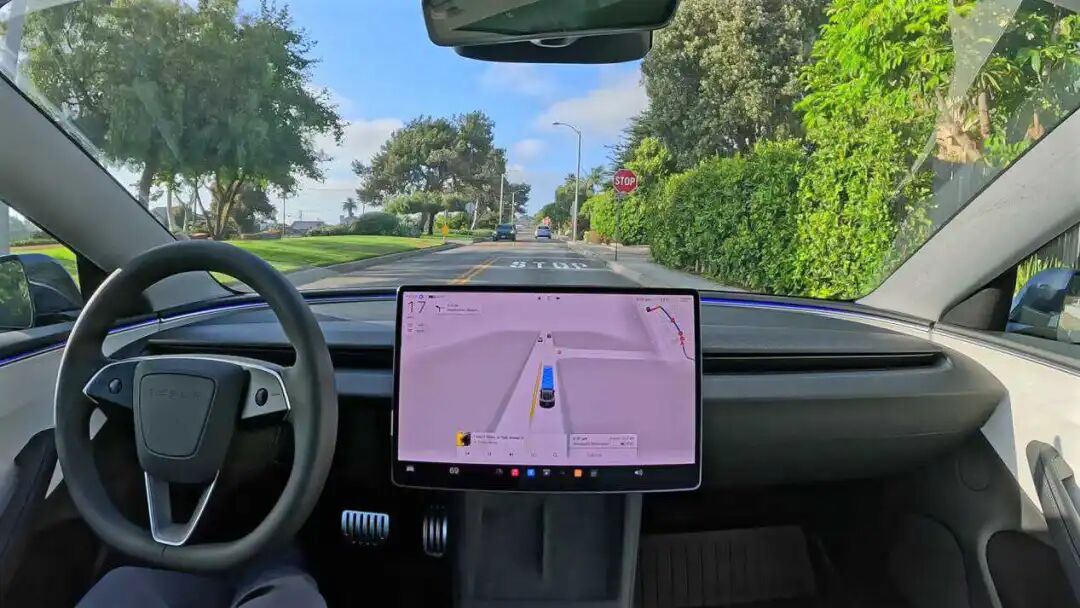
从技术路线到人员更迭,为什么智能驾驶又开始了“新造词”? | 电厂
Xin Lang Cai Jing· 2025-11-19 10:20
Core Insights - The automotive and smart driving industry is experiencing rapid technological iterations, leading to new terminologies and concepts that challenge user understanding and acceptance [1] - The transition from rule-based systems to end-to-end and world model architectures is reshaping the industry, with significant implications for company strategies and personnel [2][6] Group 1: Technological Evolution - The shift from rule-based to end-to-end systems has highlighted the limitations of modular approaches, particularly in terms of latency and information loss [2] - Tesla's introduction of the end-to-end FSD V12 has sparked interest among other companies like Huawei, Xpeng, and NIO, who are also developing similar solutions [2][5] - The industry is moving towards VLA (vision-language-action) models, which aim to better understand the physical world and improve driving actions [8][12] Group 2: Challenges in Implementation - Current systems, whether rule-based or end-to-end, rely heavily on passive learning from vast amounts of driving data, which limits their ability to adapt to new scenarios [5][6] - The VLA model faces challenges such as multi-modal feature alignment and the inherent limitations of language models in processing complex real-world situations [11][15] - Companies like Ideal Auto and Xpeng are exploring innovative VLA approaches to enhance their systems' capabilities and efficiency [8][12] Group 3: Organizational Adjustments - The transition to new technological routes has led to significant organizational restructuring within companies like Xpeng, Ideal Auto, and NIO, reflecting a shift in focus towards foundational models [13][14] - Xpeng's leadership changes indicate a strategic pivot from traditional VLA to innovative VLA, emphasizing the need for a robust foundational model [14] - NIO and Ideal Auto have also undergone multiple organizational adjustments to align their resources with the evolving technological landscape [15][17] Group 4: Competitive Landscape - The trend of self-research in autonomous driving technology is shifting towards partnerships with specialized suppliers, as seen with companies like Chery and Great Wall [18][19] - Suppliers are gaining an edge in flexibility and rapid iteration capabilities compared to traditional automakers, which face constraints in their development processes [21] - The competition is intensifying, with suppliers expected to play a more dominant role in the market as they advance their solutions [18][22]

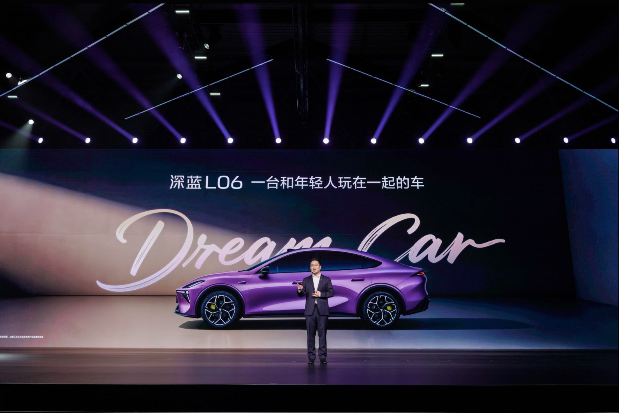
深蓝L06正式上市
Huan Qiu Wang· 2025-11-19 10:18
Core Insights - The Deep Blue L06, a long-range magnetorheological laser smart coupe, has officially launched with a starting price of 132,900 yuan [1] Group 1: Vehicle Specifications - The Deep Blue L06 features a magnetorheological suspension system with a response speed of up to 1000 times per second and an expanded range of soft-hard adjustments [3] - The vehicle utilizes integrated die-casting body technology, CTV battery integration, and a rear-drive dedicated platform, achieving a moose test score of 85.6 km/h [3] - It is equipped with a 3nm automotive-grade chip in the cabin, enabling the industry's first four-image fusion real-time lane-level navigation [3] Group 2: Advanced Driving Assistance - The Deep Blue L06 comes standard with laser radar and two Horizon J6M chips, featuring the Deep Blue intelligent driving assistance system DEEPAL AD Max [3] - The vehicle includes over 30 active safety features and offers a one-button parking function, along with autonomous route planning capabilities for enhanced user convenience [3] Group 3: Safety and Battery Technology - The vehicle is equipped with CATL lithium iron phosphate battery cells and a battery system that boasts a performance of "600,000 kilometers with no perceptible degradation" and "660,000 vehicles with zero overheating" [4] - It features the I-TECH active power control technology, which mitigates the impact of low battery on acceleration, and supports 15-minute fast charging for a range of 335 kilometers [4] - The Deep Blue L06 has a remarkable range of 670 km on a single charge and includes a heat pump air conditioning system to enhance range in low temperatures [4] Group 4: Market Positioning - The Deep Blue L06 is designed to meet the driving and intelligent needs of the younger demographic, with its advanced features such as laser radar and high-performance suspension system [6]
德赛西威(002920) - 2025年11月17日-18日投资者关系活动记录表
2025-11-19 09:34
Group 1: Investor Relations Activity - The report documents an investor relations activity conducted by Desay SV Automotive Co., Ltd. on November 17-18, 2025, in Huizhou [1][2] - Participants included representatives from various securities firms and investment funds, such as Dongwu Securities and Guotai Junan [2] Group 2: Key Discussion Points - The impact of new intelligent driving regulations was discussed, emphasizing the need for higher performance and safety standards in vehicle configurations [3] - The company has secured new project orders from several international automotive giants, including Toyota, Volkswagen, and Volvo, indicating a strong internationalization process [3] - Progress in the company's robotics domain control business was highlighted, with strategic partnerships established with notable robotics firms and the launch of AI Cube for enhanced reliability and adaptability in various environments [3]
五菱汽车(00305.HK)已成立附属广西元控智驱主营低速智能驾驶系统及解决方案业务
Ge Long Hui· 2025-11-19 08:44
董事会认为,以元控智驱为独立主体开展智能驾驶业务符合集团发展战略,有利于提升业务转化效能, 完善创新机制,优化资源配置及鼓励团队自主性。董事会相信,元控智驱成立将与集团现有业务形成协 同效应,并为集团的长期发展注入新动力。 格隆汇11月19日丨五菱汽车(00305.HK)公告,为把握汽车产业智能化战略机遇,集团已成立一家间接非 全资拥有附属公司—广西元控智驱科技有限公司("元控智驱"),以独立业务主体主营低速智能驾驶系统 及解决方案业务。该等业务目前由公司直接非全资拥有附属公司—柳州五菱汽车工业有限公司("五菱工 业")(现时由公司持有约60.9%权益及由公司控股股东—广西汽车集团有限公司持有约39.1%权益)负责经 营。元控智驱目前为五菱工业直接全资拥有附属公司。 元控智驱主要从事低速智能驾驶业务,专注于线控底盘与低速智能无人车研发及制造,并提供其解决方 案。主要产品包括系列化线控底盘产品及场景化整车产品,其均可满足智能充电机器人、无人接驳、无 人物流等方面的需求,部份产品已成功推出市场。元控智驱的成立旨在借助本集团现有资源及优势,进 一步精准孵化、赋能及促进本集团智能驾驶业务发展。 ...
深蓝L06上市 邓承浩:科技运动品牌是深蓝汽车未来的定位
Xin Jing Bao· 2025-11-19 08:43
Core Viewpoint - The launch of the Deep Blue L06 marks a significant step for Deep Blue Automotive, targeting young consumers with a focus on safety over speed [2]. Group 1: Product Launch Details - The Deep Blue L06 was officially launched on November 18, featuring four models with a price range of 134,900 to 156,900 yuan [2]. - The L06 is the first mass-produced vehicle equipped with magnetorheological suspension [2]. - All models come standard with laser radar and the DEEPAL AD Max intelligent driving assistance system, which includes features like highway navigation assistance and intelligent parking [2]. Group 2: Technical Specifications - The L06 is equipped with the Dimensity S1 Ultra 3nm automotive-grade cockpit chip, enabling lane-level precise navigation [2]. - The pure electric version features a 68.8 kWh lithium iron phosphate battery, offering a maximum range of 670 km under CLTC conditions [2]. Group 3: Brand Positioning - Deep Blue Automotive is positioned as a mid-to-high-end new energy vehicle brand under Changan Automobile, specifically targeting the young demographic [2]. - The brand aims to establish itself as a technology-driven sports brand in the future [2].

通达电气:公司联合相关智驾方案提供商开展无人物流车项目
Ge Long Hui· 2025-11-19 07:44
Core Viewpoint - The company is currently in the technical research phase of a project involving unmanned logistics vehicles in collaboration with relevant autonomous driving solution providers, and has not yet developed products or generated revenue [1] Group 1 - The unmanned logistics vehicle project is a joint effort with autonomous driving solution providers [1] - The project is still in the technical research stage and has not yet resulted in any products or revenue [1] - Investors are advised to be cautious regarding investment risks associated with this project [1]
