
全球化

Search documents
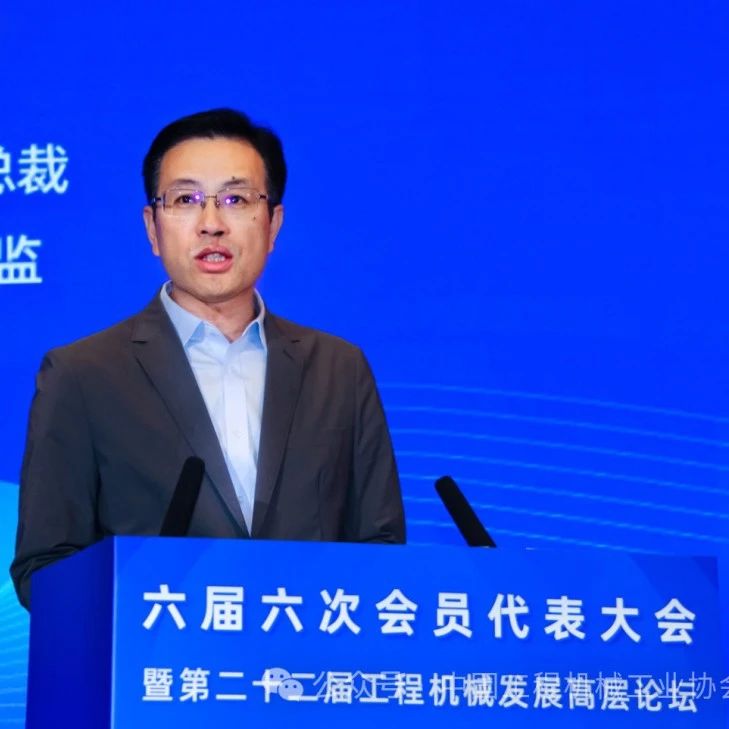
向儒安:三化引领 质赢未来:探索工程机械行业高质量发展新路径
工程机械杂志· 2025-05-16 03:01
Core Viewpoint - The engineering machinery industry is currently facing more opportunities than challenges, driven by the Chinese Dream and the dual revolutions of the Fourth Industrial Revolution and the Third Energy Revolution [3][4]. Group 1: Industry Opportunities - The Chinese market is the largest single market globally, presenting significant potential for growth [3]. - The rapid development of new technologies, such as AI, is reshaping global development patterns, while the Third Energy Revolution is expected to create new economic growth engines [3]. Group 2: Industry Challenges - The industry faces challenges from global changes, including geopolitical instability and rising protectionism, which have weakened global growth momentum [4]. - The current era is characterized by uncertainty and complexity, leading to potential "black swan" and "gray rhino" events [4]. - The transition of the Chinese economy is causing market downturns and intensified competition, making traditional high-margin business models less viable [4]. Group 3: Strategic Initiatives - The company has proposed a new strategy focusing on globalization, digitalization, and low-carbon development to explore new paths for high-quality development in the engineering machinery sector [4][5]. - Globalization efforts include establishing a sustainable global operating capability with over 400 overseas subsidiaries and a localization rate of nearly 70% for overseas personnel [6][7]. - Digital transformation is viewed as a critical strategic shift, with initiatives to enhance smart manufacturing and product innovation [7][8]. Group 4: Digitalization and Smart Manufacturing - The company has completed the smart manufacturing upgrade of all traditional factories, achieving a leading position in the industry [8][9]. - Smart products and operational efficiencies are being developed through comprehensive data collection and analysis, exemplified by the "excavator index" as an economic indicator [9][10]. Group 5: Low-Carbon Development - The company is committed to becoming a leader in low-carbon and electric products, with significant advancements in electric machinery and related technologies [10][11]. - A dual approach to low-carbon development focuses on product electrification and the expansion of renewable energy sectors, including wind, solar, and hydrogen [11]. Group 6: Quality and Safety in Development - High-quality development emphasizes safety, with a focus on efficiency, brand value, and long-term sustainability [12][14]. - The company advocates for a collective industry commitment to quality, aiming to elevate the standards of Chinese engineering machinery on a global scale [19][20].


松芝股份分析师会议-20250515
Dong Jian Yan Bao· 2025-05-15 14:16
松芝股份分析师会议 调研日期:2025年05月15日 洞见研报 出品 : 机构调研pro小程序致力于为金融证券投资者提供最新最全的调研会议纪要。 来机构调研pro小程序,了解最新的:行业投资风向、热门公司关注、权威机构分析... 权威完善的信息持续更新! 更多精彩的机构调报告请移步机构调研pro小程序~ 调研行业:汽车零部件 参与调研的机构:投资者网上提问等 / DJvanbao.com 机构调研pro小程序 一解投资机构行业关注度。 频判市场 | Gallia | | | --- | --- | | 11 2 12 200 2 110 | | | 1:给我们 = 影片面临官 = | | | 阿里巴巴佩尼 | | | 钢铁机之题。 8 | 图纸制图: 23 | | 20GB Millio Aller 19 | | | 海双集团 | | | 1 1 80.0 0 | 总机构建 23 | | LOGA: REGH, KETA: 1986 | | | 小麦具日 | | | 的研究次数:8 | 上机构馆:23 | | 定年代的:用者点击:我要的中:主要原因 | | | START SHILL CARD | | | 颜 ...

强邦新材(001279) - 001279强邦新材投资者关系管理信息20250515(2)
2025-05-15 10:00
Group 1: Industry Trends and Strategic Response - The global printing plate industry is expected to exhibit three core trends: "greening, intelligence, and globalization" [1] - To address these changes, the company plans to increase R&D investment to launch green and low-carbon products [1] - The company aims to enhance automation and smart upgrades in production lines as part of its intelligence strategy [1] - The company will consolidate its existing market share while actively expanding into overseas markets to boost international recognition and influence [1] Group 2: Risk Management and Response Plans - The company locks in raw material procurement quantities and prices promptly after receiving customer orders to mitigate risks from price fluctuations [3] - The company has a certain degree of price transmission ability to customers, which helps in managing related risks effectively [3] Group 3: R&D and Innovation Plans - The company plans to increase R&D investment, focusing on developing green and environmentally friendly printing plates and new flexible plate formulations [3] - Collaboration with universities and research institutions will be strengthened to accelerate technological breakthroughs [3] - The company intends to recruit high-end talent to enhance the overall strength of its R&D team [3] Group 4: Financial Performance and Market Position - The company's financial status is reported to be overall good, with total assets, net assets, and operating income all showing year-on-year growth [5] - Specific financial data will be detailed in the company's 2024 annual report [5] Group 5: Digital Printing Technology - The development of digital printing technology presents new opportunities for the company [4] - The company plans to collaborate with domestic partners to enhance technical cooperation and market investment in digital printing products [4] - Increased investment in R&D for digital printing technology is also planned to improve the company's competitive edge [4]
强邦新材(001279) - 001279强邦新材投资者关系管理信息20250515(1)
2025-05-15 09:58
Group 1: Industry Trends and Strategic Response - The global printing plate industry is expected to exhibit three core trends: "greening, intelligence, and globalization" [1] - The company plans to increase R&D investment to launch low-carbon, environmentally friendly products [1] - The company aims to enhance automation and smart transformation of production lines [1] - The company will consolidate existing market share while actively expanding overseas markets to enhance international visibility [1] Group 2: Risk Management and Response - The company locks in raw material procurement quantities and prices promptly after receiving customer orders to mitigate risks from price fluctuations [2] - The company's product pricing is directly related to raw material costs, allowing for a certain degree of price transmission to customers [2] Group 3: R&D and Innovation Plans - The company plans to increase R&D investment, focusing on developing green and environmentally friendly printing plates and new flexible plate formulations [3] - Collaboration with universities and research institutions will be strengthened to accelerate technological breakthroughs [3] - The company intends to recruit high-end talent to enhance the overall strength of its R&D team [3] Group 4: Governance and Transparency - Independent directors will supervise related party transactions based on relevant laws, company regulations, and internal policies to ensure fairness and transparency [4] - Detailed reviews of transaction necessity, pricing fairness, and compliance with decision-making procedures will be conducted [4] Group 5: Digital Printing Development - The development of digital printing technology presents new opportunities for the company [5] - The company plans to collaborate with domestic partners to enhance technical cooperation and market investment in digital printing products [5] - Increased investment in R&D for digital printing technology is planned to improve the company's competitive edge [5] Group 6: Financial Performance - The company's overall financial status is reported to be good, with total assets, net assets, and operating income all showing year-on-year growth [6]
松芝股份(002454) - 002454松芝股份投资者关系管理信息20250515
2025-05-15 09:04
| | 答:感谢您的关注!公司一直关注投资者回报工作。2022-2024 | | | | | --- | --- | --- | --- | --- | | | 年,公司累计及拟现金分红金额已超过过去三年的平均利润水平。2024 | | | | | | 年利润分配方案为每 10 股派发现金红利 1.00 元(含税)。后续公司将 | | | | | | 继续严格执行相关法律法规要求,在满足公司业务发展需要的前提下, | | | | | | 持续加大现金分红力度,用更好的利润分配方案回报投资者。谢谢! | | | | | | 其他情况说明: | | | | | | 会议过程中,公司严格按照有关规定与投资者进行沟通与交流, | | | | | | 没有出现未公开重大信息泄露等情况。 | | | | | 附件清单 | 无 | | | | | 日期 | 2025 05 月 | 年 | 15 | 日 | 证券代码: 002454 证券简称:松芝股份 上海加冷松芝汽车空调股份有限公司 投资者关系活动记录表 编号:20250515 | | □特定对象调研 □分析师会议 | | --- | --- | | 投资者关系活 | □ ...
安聪慧将出任吉利控股集团CEO 吉利回归主业的决心有多大?
Zhong Guo Jing Ji Wang· 2025-05-15 08:16
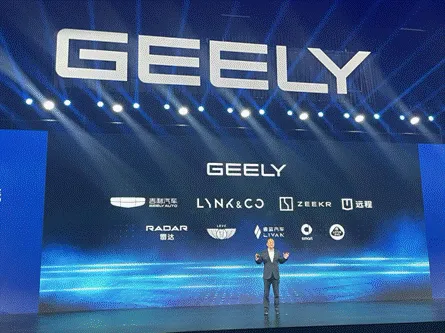
Core Insights - The integration of Lynk & Co into Zeekr and Zeekr's subsequent delisting to merge back into Geely signifies a decisive return to the automotive sector by Li Shufu, highlighting his commitment to the core business after years of diversifying into education and methanol energy [1][6][10] - Geely aims to become a "Volkswagen Group of the new energy vehicle era," with a diverse portfolio of nine independent brands, including Geely Auto, Lynk & Co, and Zeekr, alongside Volvo and Polestar [3][10] - The automotive industry in China is experiencing intense competition in 2024, leading to price wars and significant pressure on sales, prompting Geely to initiate a strategic focus and consolidation [5][13] Company Strategy - The strategic contraction initiated by Geely is characterized by a rapid and comprehensive restructuring, with the merger of Lynk & Co into Zeekr and the appointment of An Conghui as CEO of Geely Holding Group post-merger, indicating a shift towards a more unified operational structure [6][10][15] - An Conghui's leadership is expected to enhance collaboration among Geely's core brands, leveraging synergies in technology, supply chain, and cost management [8][15] - The recent adjustments within Geely include multiple rounds of brand and business line integrations, aimed at refocusing on the core automotive business [13][14] Financial Performance - Geely's Q1 2025 financial report shows a revenue of 72.5 billion, a 25% year-on-year increase, with a net profit of 5.67 billion, reflecting a 264% growth, driven by improved profitability in the new energy sector [16][17] - Zeekr's first quarter revenue reached 22 billion, with vehicle sales contributing 19.1 billion, marking a 16.1% increase year-on-year, and achieving a profit of 510 million under Hong Kong accounting standards [17]

达沃斯“教皇”的退场
阿尔法工场研究院· 2025-05-15 03:47
Core Viewpoint - Klaus Schwab, the founder of the World Economic Forum (WEF), is facing serious allegations regarding the misuse of funds and a toxic workplace culture, leading to an internal investigation and his potential exit from the organization [1][2][3]. Group 1: Allegations and Investigations - The foundation's audit committee recommended investigating new allegations against Klaus Schwab and his wife, Hilde, regarding the improper mixing of personal finances with the nonprofit's accounts [1][2]. - Schwab sent a threatening email to the board's audit committee, demanding the retraction of the allegations and expressing concerns about the organization's future [1][2]. - The WEF's board has unanimously decided to initiate an independent investigation into the allegations, supported by Swiss regulatory authorities [3][4]. Group 2: Organizational Dynamics - Schwab has historically controlled the WEF's executive appointments and has been involved in the selection of board members, including royal and political figures [3][4]. - The organization generates approximately $500 million in annual revenue, primarily from corporate partnerships [4][5]. - There is a growing faction within the trust committee discussing the need for Schwab to designate a successor and initiate a power transition [6][7]. Group 3: Internal Conflicts and Management Changes - Schwab's management style has led to conflicts with his deputy, Børge Brende, and has complicated internal operations [6][7]. - Following the allegations, there have been discussions about personnel changes, particularly concerning Schwab's son, Olivier Schwab, who has been implicated in mishandling harassment complaints [11][12]. - The board has approved a restructuring plan, which includes significant changes to the management structure and the responsibilities of key executives [13][14]. Group 4: Public Perception and Response - The WEF has faced scrutiny from corporate partners regarding the allegations, prompting the board to form a committee to address the situation [9][16]. - Schwab has publicly defended his legacy and contributions, claiming that he has been recognized for his efforts in promoting economic development and reconciliation [10][18]. - The ongoing internal tensions and investigations have raised concerns about the effectiveness of the organization's governance and oversight [16][17].

打工人的悲歌:为什么普通美国人在财富上落伍了?
虎嗅APP· 2025-05-14 23:42
Core Viewpoint - The article highlights the growing disparity between ordinary workers and capital holders in wealth accumulation, emphasizing that relying solely on labor income is increasingly insufficient to keep pace with capital appreciation. Group 1: Economic Changes and Wealth Disparity - The gap between ordinary workers and capital holders has expanded significantly, with a 7.8 times difference in wealth accumulation [2][3]. - The long-term low interest rate policies and monetary easing have inflated asset prices without significantly increasing wages, leading to a situation where nominal wealth rises but purchasing power diminishes for wage earners [5][7][8]. - The return on capital has accelerated, with capital returns typically outpacing economic growth and wage growth over the long term [9][10][11]. Group 2: Impact of Compounding and Technology - The power of compounding favors asset holders, with an investment of $10,000 in the S&P 500 in 1971 potentially growing to approximately $1.7 million by 2024, compared to a mere $55,000 if saved as wages [15][16][17]. - Technological advancements have created significant wealth but have also widened the wealth gap, benefiting high-skilled workers while adversely affecting low-skilled laborers [18][19][20][21][22]. Group 3: Industry and Globalization Effects - High-return industries like technology and finance have exacerbated wealth accumulation disparities compared to traditional sectors [23][24]. - Globalization has suppressed wage growth for ordinary workers in developed countries due to competition from lower-cost labor markets, further diminishing their bargaining power [25]. Group 4: Barriers to Wealth Accumulation - The efficiency of converting labor income into passive income has decreased, with the required market value of the S&P 500 to replace annual salary rising from 25 times in 1971 to 33 times in 2024 [26][27][28]. - The path to financial freedom has become longer and more challenging, necessitating a dual approach of earning both wage and capital income [30][32].

微创医疗(0853):2024年利润端达到业绩指引,公司扭亏为盈在即
China Securities· 2025-05-14 13:25
Investment Rating - The report maintains a "Buy" rating for the company, indicating a potential relative price increase of over 15% within the next six months [4][29]. Core Views - The company is expected to achieve profitability in 2024, with significant improvements in net loss, which narrowed by 58.6% year-on-year to a loss of 269 million USD [2][3]. - Revenue for 2024 reached 1.031 billion USD, reflecting a year-on-year growth of 9.6% (excluding exchange rate effects), although this growth was slightly below expectations due to price adjustments from domestic industry procurement policies [2][3][8]. - The company is focusing on cost reduction and efficiency improvements, which are anticipated to support its path to profitability [12][14]. Summary by Sections Financial Performance - In 2024, the company reported a revenue of 1.031 billion USD, with a year-on-year growth of 9.6% [2][3]. - The net loss for 2024 was 269 million USD, a significant reduction from the previous year's loss of 646 million USD [2][3]. - EBITDA turned positive, improving from a loss of 370 million USD in the previous year to a profit of 60 million USD [2][3]. Business Segments - The coronary business generated 166 million USD in revenue, growing by 9.9%, with domestic sales increasing by 2.0% and overseas sales by 47.0% [9]. - The orthopedic segment achieved 253 million USD in revenue, up 6.2%, with domestic sales rising by 26.1% [9]. - The self-owned product export business saw a remarkable growth of 84.7%, reaching 96 million USD in revenue [3][10]. Future Outlook - For 2025, the company is expected to continue its growth trajectory, with projected revenues of 1.141 billion USD, representing a growth rate of 10.67% [15][16]. - The company anticipates achieving a significant reduction in losses, with a forecasted net profit of -53 million USD for 2025, followed by a profit of 91 million USD in 2026 [15][16]. - The ongoing global expansion of self-owned products is expected to be a key growth driver, with the company entering over 100 countries and regions [10][11].
打工人的悲歌:为什么普通美国人在财富上落伍了?
Hu Xiu· 2025-05-14 09:16
Core Insights - The article highlights the growing disparity between ordinary workers and capital holders in wealth accumulation, emphasizing that it now takes significantly more labor hours for an average worker to purchase a share of the S&P 500 index compared to 1971 [2][4]. Economic Factors - The era of loose monetary policy and low interest rates has inflated asset prices, with cheap capital flowing into stock and real estate markets rather than significantly increasing wages [6][8]. - Over the past 20 years, quantitative easing and money printing in the U.S. have led to soaring asset prices, while real wages have stagnated when adjusted for inflation [10][11]. Capital Returns - Historically, the return on capital tends to exceed economic growth rates and wage growth rates, leading to a widening gap between capital accumulation and labor income [12][13]. - From 1971 to 2024, the S&P 500 index surged from approximately 10 points to around 5000 points, a nearly 50-fold increase, while average weekly wages only increased tenfold from about $120 to $1200 [14][15]. Compounding Effects - An investment of $10,000 in the S&P 500 in 1971 would grow to about $500,000 by 2024, and with reinvested dividends, it could reach approximately $1.7 million, contrasting sharply with the modest growth of savings from wages [18][19]. Technological Impact - Technological advancements have created significant wealth but have also exacerbated the wealth gap, as high-skilled workers benefit more than low-skilled laborers [22][24]. - The technology sector has outperformed traditional service industries, further widening the wealth accumulation gap [25][26]. Globalization and Industry Disparities - High-return industries like technology and finance have consistently outperformed traditional sectors, contributing to wealth inequality [28]. - Globalization has pressured wages in developed countries, as capital seeks lower costs while local labor faces increased competition [30][31]. Barriers to Wealth Accumulation - The efficiency of converting labor income into passive income has decreased, with the required market value of the S&P 500 to replace annual salary rising from 25 times in 1971 to about 33 times in 2024 [33]. - The time needed to accumulate passive income equivalent to one year’s salary has increased from approximately 16 years in 1971 to about 25 years in 2024 [34]. Investment Strategy - Ordinary individuals are encouraged to recognize the importance of combining wage income with capital income to navigate the growing wealth gap [36][38].