
国产替代

Search documents
中科仪闯关冲刺IPO,利润大半靠炒股撑起,主业造血能力存疑
Sou Hu Cai Jing· 2026-01-16 07:55
Core Viewpoint - The company Zhongke Instrument is preparing for its IPO on the Beijing Stock Exchange, aiming to raise 825 million yuan to enhance its main business, but its financial performance raises questions about the sustainability of its profits, heavily influenced by financial asset returns [1][6]. Group 1: Business Foundation - Zhongke Instrument has a strong industrial foundation, specializing in vacuum technology since 1958, focusing on dry vacuum pumps and vacuum scientific instruments, which are critical components in semiconductor manufacturing, accounting for over 70% of the main processes in integrated circuits [3][5]. - The company has participated in significant national research projects and holds over 100 invention patents, contributing to the establishment of 13 national and industry standards, making it the largest domestic supplier of dry vacuum pumps in the integrated circuit sector [3][5]. Group 2: Financial Performance - From 2022 to 2024, the company's revenue is projected to grow from 698 million yuan to 1.082 billion yuan, with a compound annual growth rate of 24.51%, while net profits show significant volatility, reaching 498 million yuan, 600 million yuan, and dropping to 193 million yuan [6][8]. - The fluctuations in net profit are primarily due to changes in the fair value of financial assets, which accounted for 25.8% of total assets, with returns from these assets significantly boosting profits in the first two years of the reporting period [8][10]. Group 3: Challenges and Opportunities - The company's gross margin has declined from 32.6% to 28.15% from 2022 to mid-2025, falling below industry averages, indicating pressure on profitability amid increasing competition from international giants like Edwards and Ebara [10][12]. - Inventory levels have risen from 283 million yuan to 583 million yuan, raising concerns about inventory management, while historical compliance warnings suggest a need for improved governance [12][14]. - The IPO proceeds will be used to enhance the industrialization and R&D of dry vacuum pumps, which is crucial for strengthening the company's operational capabilities and reducing reliance on financial asset returns [14].


中泰证券:医用耗材国采明确反内卷+创新倾斜 国产龙头有望持续受益
智通财经网· 2026-01-16 07:42
Group 1 - The core viewpoint of the article highlights that the optimization of the national procurement rules for medical consumables signals a positive trend towards "anti-involution" and stabilizing expectations, with limited short-term disruption to the industry price system, while benefiting leading companies with strong product capabilities and nationwide supply capacity in the medium to long term [1] - The sixth batch of national centralized procurement for high-value medical consumables will take place on January 13, 2026, involving 12 types of medical consumables, with 496 products from 227 companies bidding, and 440 products from 202 companies selected [1] - The introduction of a "reference price" mechanism aims to rationalize price competition, with 8 out of 20 competitive groups triggering this rule, effectively curbing extreme low-price behaviors by some companies [2] Group 2 - The multi-layer selection rules significantly increased the selection rate, with an overall selection rate of 89% for both companies and products, supporting functional innovation products with reasonable pricing space [3] - The ongoing push for domestic substitution is particularly prominent in the urology intervention sector, with market share increasingly shifting towards domestic companies like Guichuang Tongqiao and Weili [4] - The distribution mechanism strengthens the revenue predictability for leading companies, with different rules corresponding to 70%-100% of demand allocation, which is expected to enhance industry concentration in the medium to long term [5]




欧陆通(300870) - 2026年1月12日-1月16日投资者关系活动记录表
2026-01-16 07:34
Financial Performance - In the first three quarters of 2025, the company achieved a revenue of CNY 3.387 billion, a year-on-year increase of 27.16% [2] - The gross profit margin for the first three quarters was 20.47%, a decrease of 0.80 percentage points year-on-year [2] - The net profit attributable to shareholders for the first three quarters was CNY 222 million, a year-on-year increase of 41.53%, with a net profit margin of 6.54% [3] - The operating net profit, excluding stock incentive and convertible bond expenses, was CNY 257 million, a year-on-year increase of 57.63% [3] Expense Overview - Total expenses for the first three quarters amounted to CNY 409 million, a year-on-year increase of 22.98%, with an expense ratio of 12.06% [4] - Sales expenses for the first three quarters were CNY 77.27 million, an increase of 8.88% year-on-year [4] - R&D expenses for the first three quarters were CNY 211 million, a year-on-year increase of 38.31%, with an R&D expense ratio of 6.22% [5] Product Development - The company offers a range of data center power products, including various power supply solutions for servers, with a focus on high-power and high-efficiency products [6][7] - Future plans include enhancing capabilities in high-power server power supplies and expanding into AI server power solutions [8] Business Expansion - The company is actively expanding its overseas business, establishing teams in Taiwan and the USA to target global markets [10] - The company aims to leverage opportunities in the AI sector and domestic market replacements to drive growth [8] Convertible Bond Projects - The company plans to use proceeds from convertible bonds for projects including the construction of a new headquarters and R&D lab, and an annual production capacity of 1.45 million data center power supplies [11] Revenue Targets - The revenue growth targets for 2025 and 2026 are set at 28%, 52%, and 72% for the trigger values, with target values of 35%, 65%, and 90% respectively [13] Shareholder Actions - The controlling shareholder plans to reduce holdings by up to 2.1 million shares, representing no more than 1.91% of the total share capital, within a specified period [14]

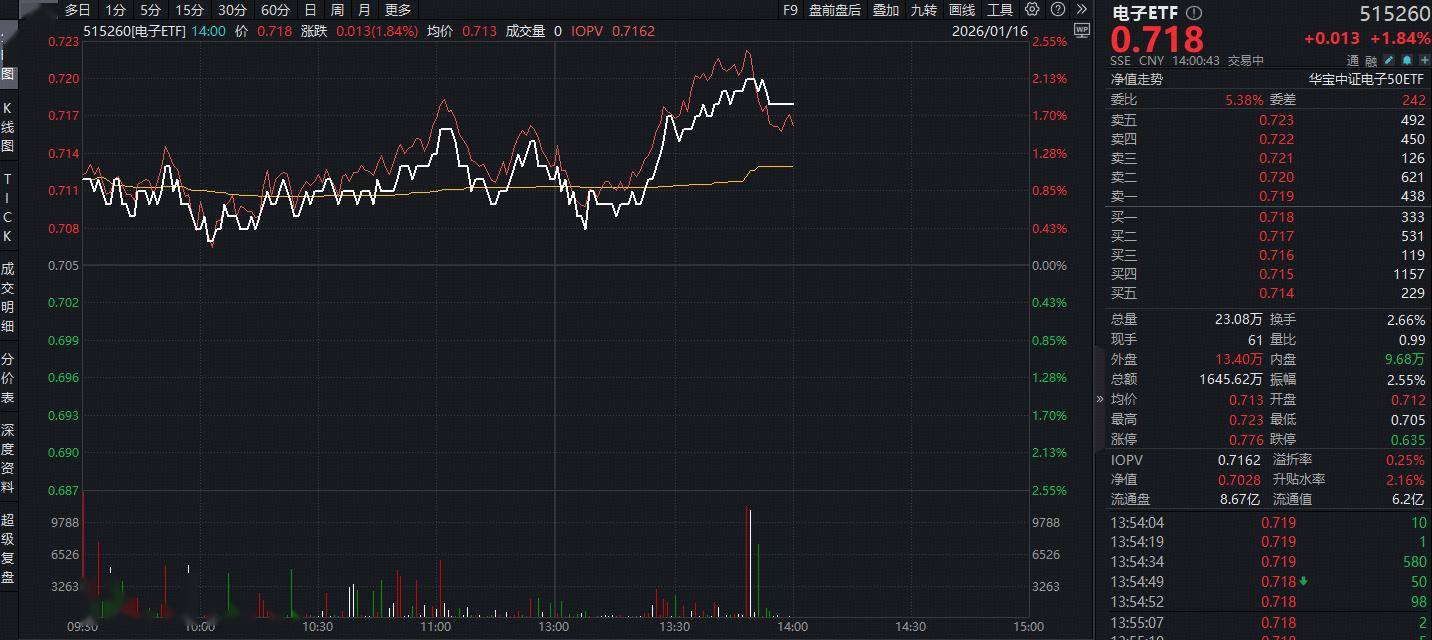
ETF盘中资讯|超300亿主力资金爆买!电子板块领涨两市,长电科技等3股涨停!电子ETF(515260)盘中拉升2%,冲击3连阳
Sou Hu Cai Jing· 2026-01-16 06:33
Core Viewpoint - The electronic sector is experiencing significant growth, with major stocks seeing substantial gains amid a broader market correction in A-shares, driven by macroeconomic factors and industry trends [1][6]. Group 1: Market Performance - The A-share market is consolidating, with all three major indices in the red, while the electronic sector is leading with a net inflow of 31.058 billion yuan, ranking first among 31 primary industries [1]. - The electronic ETF (515260) saw an intraday price increase of over 2.1%, currently up 1.84%, marking three consecutive days of gains [3]. Group 2: Stock Performance - Key stocks in the electronic sector include: - Huazhong Microelectronics up 13.39% with a market cap of 90.8 billion yuan [5] - Tongfu Microelectronics and Beiyi Innovation both up 10% [5] - Sanan Optoelectronics up 9.06% [5] - Other notable stocks include Jinghe Integration and Huahai Qingke, which also experienced significant increases [4]. Group 3: Industry Drivers - Macroeconomic factors include the U.S. government's announcement on January 14 to impose a 25% tariff on specific semiconductors, which may enhance domestic substitution sentiment in the market [6]. - The explosive growth in global AI computing power demand is driving a strong market for storage chips, with prices for certain chips expected to rise dramatically by 2025, including a 1800% increase for DDR4 16Gb chips [6]. - On the individual company level, Unisoc announced plans to acquire Ruineng Semiconductor, aiming to enhance its power semiconductor product matrix and strengthen its competitive position in the semiconductor industry [6]. Group 4: Investment Tools - The electronic ETF (515260) and its linked funds are designed to passively track the electronic 50 index, focusing on semiconductor and consumer electronics sectors, and include major stocks like Luxshare Precision and Cambricon [6].

台积电季报提振市场信心,科创半导体ETF(588170)、半导体设备ETF华夏(562590)强势上涨
Mei Ri Jing Ji Xin Wen· 2026-01-16 06:17
Group 1 - The Shanghai Stock Exchange's Sci-Tech Innovation Board semiconductor materials and equipment index (950125) surged by 5.32%, with constituent stocks like Tianyue Advanced rising by 20.00% and Jingsheng Shares by 12.66% [1] - The China Securities semiconductor materials and equipment index (931743) also saw a strong increase of 3.63%, with similar gains in constituent stocks [1] - The Sci-Tech semiconductor ETF (588170) and the semiconductor equipment ETF Huaxia (562590) both experienced significant price increases, indicating active market trading [1] Group 2 - TSMC reported strong Q4 earnings and optimistic outlook, raising its capital expenditure to $56 billion to capitalize on AI opportunities, which positively impacted stocks like Nvidia and Broadcom [2] - The memory market is experiencing a price surge due to anticipated shortages in server DRAM, driven by increased demand from companies like Google and Microsoft for AI services [2] - IDC data indicates that the cost share of memory semiconductors in smartphones has risen from approximately 15% to over 20%, suggesting ongoing upward price trends in the memory sector throughout 2026 [2] Group 3 - The Sci-Tech semiconductor ETF (588170) tracks the semiconductor materials and equipment index, focusing on companies in semiconductor equipment (60%) and materials (25%) [3] - The semiconductor equipment ETF Huaxia (562590) also emphasizes semiconductor equipment (63%) and materials (24%), highlighting the importance of domestic substitution in the industry [3]


超300亿主力资金爆买!电子板块领涨两市,长电科技等3股涨停!电子ETF(515260)盘中拉升2%,冲击3连阳
Xin Lang Cai Jing· 2026-01-16 06:11
Core Viewpoint - The electronic sector is experiencing significant growth, with a net inflow of 31.058 billion yuan, leading among 31 primary industries in the A-share market, despite overall market consolidation [1][9]. Group 1: Market Performance - The electronic ETF (515260) saw an intraday price increase of over 2.1%, currently up 1.84%, marking three consecutive days of gains [10]. - Key stocks in the electronic sector, such as Longji Technology, Zhaoyi Innovation, and Tongfu Microelectronics, reached their daily limit, with Huazhong Microelectronics rising over 13% and Sanan Optoelectronics increasing by more than 9% [4][12]. Group 2: Macro Factors - On January 14, the U.S. government announced a 25% tariff on specific semiconductors, including Nvidia's H200 chip and AMD's MI325X AI accelerator chip, which may enhance market sentiment for domestic alternatives [2][14]. Group 3: Industry Trends - The explosive growth in global AI computing demand has led to a surge in the storage chip market, with prices for storage chips increasing dramatically, including a projected 1800% rise for DDR4 16Gb chips by 2025 [3][14]. - The semiconductor industry is expected to see a trend towards "self-control" and AI synergy, with a focus on domestic computing and semiconductor equipment, as well as potential recovery opportunities in consumer electronics by Q2 2026 [3][14]. Group 4: Company Developments - Unigroup Guowei announced plans for a private placement to acquire Ruineng Semiconductor, aiming to enhance its power semiconductor product matrix and strengthen its competitive position in the semiconductor industry [3][14]. Group 5: Investment Tools - The electronic ETF (515260) and its linked funds passively track the electronic 50 index, focusing on semiconductor and consumer electronics sectors, and include key stocks like Luxshare Precision and SMIC [5][14].
台积电财报超预期且展望乐观,科创半导体ETF、科创半导体设备ETF、中韩半导体ETF大涨
Xin Lang Cai Jing· 2026-01-16 04:40
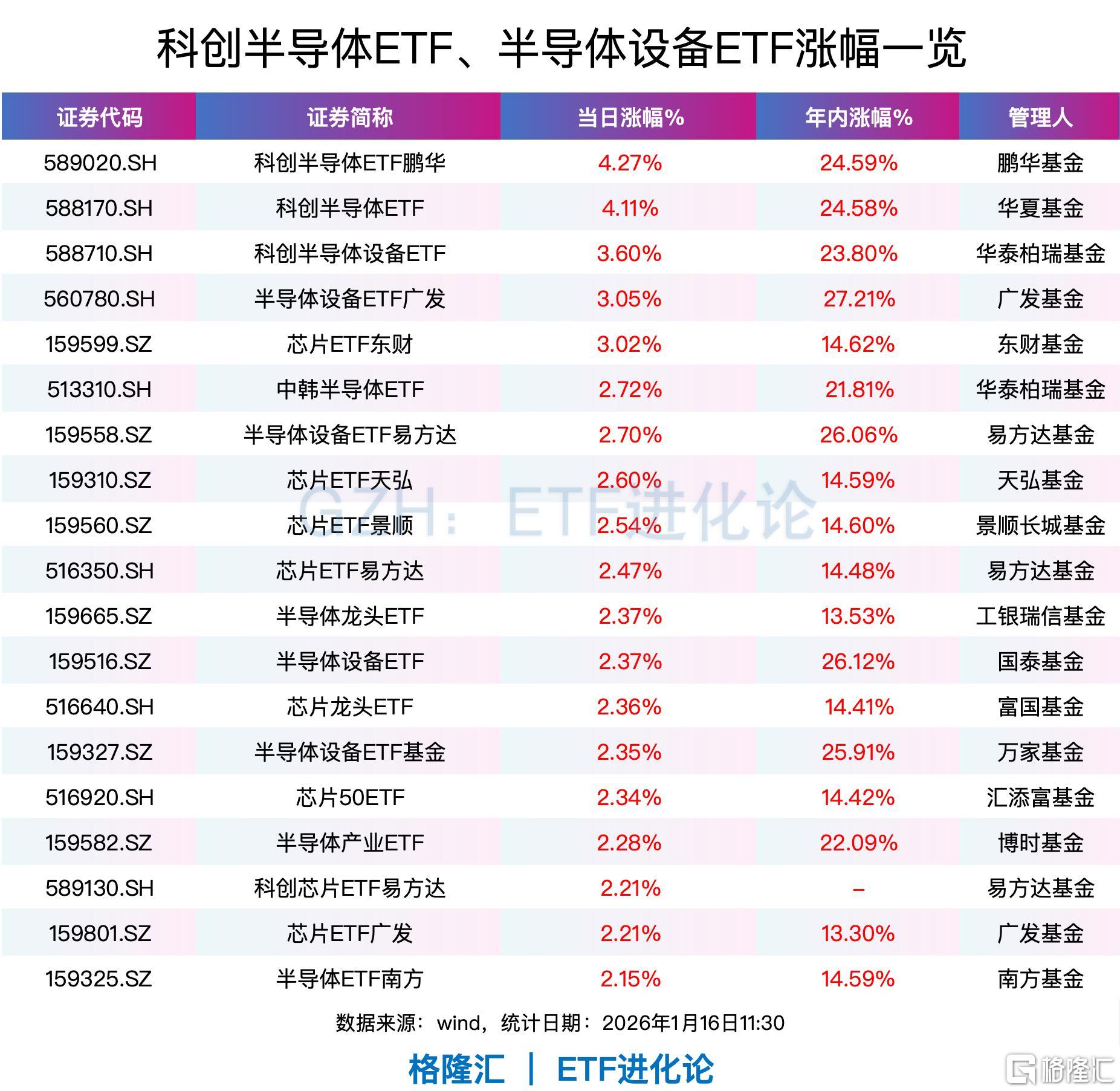
Core Viewpoint - The A-share market showed mixed performance with major indices declining slightly, while the semiconductor sector surged due to positive earnings from TSMC, indicating strong demand driven by AI applications [1][8]. Market Performance - The three major A-share indices closed lower: Shanghai Composite Index down 0.22% at 4103.45 points, Shenzhen Component Index down 0.1%, and ChiNext Index down 0.01% [1]. - The total market turnover reached 200.63 billion yuan, an increase of 11.11 billion yuan from the previous day, with over 3300 stocks declining [1]. Semiconductor Sector - TSMC's earnings report exceeded expectations, leading to a rise in semiconductor and photolithography sectors, with stocks like Blue Arrow Electronics and Baiwei Storage increasing over 10% [1]. - Various semiconductor ETFs saw significant gains, with the Penghua Sci-Tech Semiconductor ETF rising by 4.27% and other related ETFs also showing strong performance [3]. TSMC Financial Outlook - TSMC reported a projected net profit growth of 35% year-on-year for Q4 2025, with operating margin expectations between 54% and 56%, surpassing market estimates [8]. - The company anticipates capital expenditures to reach up to 56 billion USD in 2026, a 37% increase from 40.9 billion USD in 2025, marking a historical high [8]. AI and Semiconductor Demand - The demand for AI servers is significantly higher than for traditional servers, consuming 53% of global memory production capacity, leading to a "super bull market" in the storage sector [9]. - The semiconductor industry is experiencing a strong recovery driven by AI computing power, with a cumulative increase of 33.5% in the A-share electronics sector year-to-date [10].
存储测试设备创新企业鸾起科技完成近亿元B轮融资 | 融资动态
Tai Mei Ti A P P· 2026-01-16 04:26
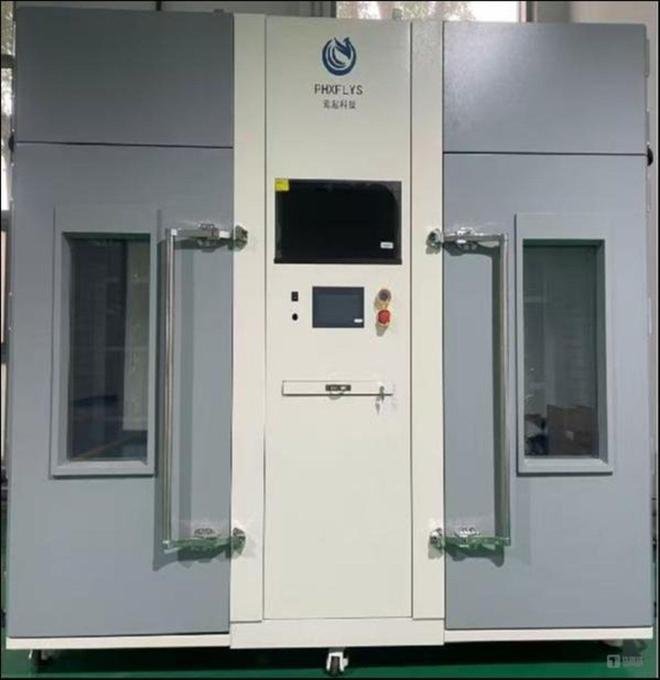
Core Viewpoint - Luanqi Technology has completed nearly 100 million yuan in Series B financing, led by Zhongke Chuangxing, with funds aimed at expanding production, increasing R&D investment, and developing new product lines [1] Group 1: Company Overview - Luanqi Technology was established in 2022, with core members having over 10 years of experience at leading global semiconductor and technology companies such as AMD, Samsung, and Huawei [1] - The company focuses on providing efficient storage testing equipment and services for the storage industry, addressing the critical issue of the lack of high-end domestic storage chip testing equipment [1][3] Group 2: Technology and Products - The core technology of the company is based on NAND Flash particle testing verification, filling a gap in the domestic high-end storage testing equipment market [3] - Luanqi Technology specializes in the R&D and sales of testing equipment for SSDs, UFS, and NAND particles, offering comprehensive testing solutions that cover all stages from R&D testing to mass production testing [3][5] Group 3: Market Potential - According to IDC and Expert Market Research, the global semiconductor testing equipment market for NAND Flash testing devices is expected to exceed 20 billion USD by 2025, with the global SSD market projected to surpass 175 billion USD, maintaining a 15% annual compound growth rate [5] - The high technical barriers in the storage field and the long-term monopoly by foreign manufacturers create a pressing demand for domestic alternatives, presenting significant growth opportunities for Luanqi Technology [5] Group 4: Investment Insights - Zhongke Chuangxing emphasizes that storage chips are the largest category of integrated circuit products and are crucial for the AI era, with the rise of domestic storage chip companies likely to foster the development of excellent domestic storage testing equipment firms [5][6] - Hetang Capital views Luanqi Technology as a leading domestic storage testing equipment manufacturer that has completed a technological and commercial closed loop, with a promising future ahead [6] - Yixin Capital notes that the demand for domestic storage testing equipment is significantly increasing, with new generation testing devices expected to see a growth cycle of 3 to 5 years starting in 2025 [7]
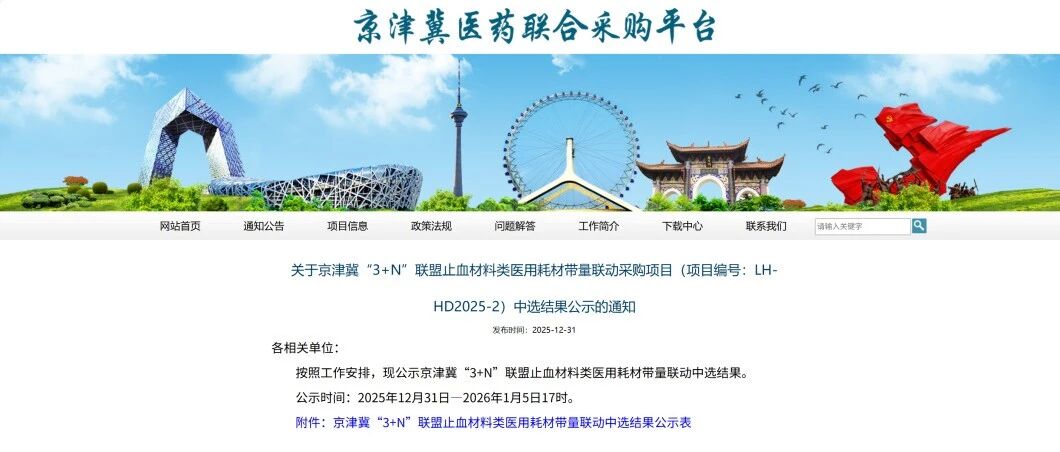
京津冀集采落地!国产高端止血材料迎来发展新机遇
思宇MedTech· 2026-01-16 03:52
Core Viewpoint - The article discusses the recent results of the "3+N" alliance procurement project for hemostatic materials in the Beijing-Tianjin-Hebei region, highlighting the shift in medical device procurement policies towards higher value products and the opportunities for domestic companies with innovative technologies [1][3]. Group 1: Procurement Policy Changes - The volume-based procurement policy is significantly altering the landscape of the medical device market, particularly in the hemostatic materials sector, where there is a growing demand for efficient, safe, and user-friendly innovative products [2][3]. - The recent procurement project indicates a trend towards higher value products, moving away from a focus solely on low-cost consumables to include clinical value and innovation in the evaluation criteria [3][5]. Group 2: Successful Bids and Innovations - The successful bid of Maipu Medical's Ji Su Ting® absorbable regenerated oxidized cellulose hemostatic product is attributed to its unique material properties and clinical applicability [6][9]. - The product is designed for various surgical procedures, demonstrating superior performance in promoting platelet aggregation and reducing surgical time and complication risks compared to traditional materials [8][9]. Group 3: Industry Trends and Future Outlook - The selection of Ji Su Ting® reflects the broader trend of domestic high-end hemostatic materials gaining traction in the market, as domestic companies enhance their R&D capabilities and clinical trial data [9][10]. - The volume-based procurement policy provides a pathway for innovative products to enter hospitals more rapidly, allowing for the accumulation of clinical usage data and feedback for further optimization [9][10]. - Maipu Medical plans to continue investing in R&D to optimize existing product performance and expand its product line to meet diverse clinical needs [9][10].
台积电财报以及乐观预测点燃AI行情,为半导体行业注入一剂强心针!科创半导体ETF(588170)、半导体材料ETF(562590)上涨,资金持续净买入
Ge Long Hui· 2026-01-16 03:41
Group 1 - TSMC, the world's largest chip foundry, reported impressive earnings and provided an optimistic outlook, indicating that capital expenditures will reach a record high this year [1] - TSMC's financial results and positive forecast triggered a chain reaction in the US stock market, significantly boosting the semiconductor sector and leading ASML's market value to surpass $500 billion [1] - The semiconductor industry ETFs, such as the Sci-Tech Semiconductor ETF and the Chip ETF, experienced notable increases in value and net inflows, reflecting strong investor interest [1] Group 2 - According to Caixin Securities, the AI computing power explosion is leading a strong recovery in the semiconductor industry, with revenue and net profit growth rates of 14.0% and 49.2% respectively in the first three quarters of 2025 [2] - The semiconductor industry's robust performance is solidifying the foundation for recovery, with structural opportunities remaining in AI computing power, terminal innovation, and semiconductor equipment materials as AI penetrates end-user scenarios by 2026 [2]