绿色转型

Search documents
深化改革开放,培育竞争新优势——江苏“十四五”经济社会发展综述之四
Xin Hua Ri Bao· 2025-10-17 23:15
Core Insights - Jiangsu has achieved significant economic milestones during the "14th Five-Year Plan," including a continuous A-level rating for state-owned enterprise reform and a cumulative exploration of over 450 institutional innovations in the free trade zone [1][2] - The province's foreign trade has surpassed 5 trillion yuan, maintaining its position as the second-largest in the country for 22 consecutive years, while actual foreign investment has led the nation for seven years [1][2] Group 1: Economic Strength and Reforms - All 13 prefecture-level cities in Jiangsu are ranked among the top 100 nationwide, with five cities projected to exceed 1 trillion yuan in GDP by 2024 [2] - The per capita GDP in Jiangsu has surpassed 160,000 yuan, ranking first among all provinces for 16 consecutive years [2] - State-owned enterprises in Jiangsu have seen a revenue increase of 5.5% and a profit increase of 9.9% year-on-year [2] Group 2: Private Sector Development - Jiangsu has implemented policies to support private enterprises, including a 20-point measure to address financing, land use, and competition challenges [3] - The added value of the private economy in Jiangsu has increased from 5.1 trillion yuan in 2018 to 7.98 trillion yuan in 2024, contributing over 50% of the province's GDP [3] Group 3: Industrial Collaboration - Jiangsu's industrial economy is transitioning towards high-end and intelligent production, with a 6.8% year-on-year increase in industrial added value from January to August 2025 [4] - Companies like Wuxi Yicai and Suzhou Xinda Biopharmaceuticals are leveraging smart production and regulatory support to enhance product value and accelerate market entry [4] Group 4: Open Economy and Trade - Jiangsu is enhancing its open economy through institutional innovations, with the Wuxi Comprehensive Bonded Zone achieving a 207% year-on-year increase in import-export value [5] - The Taicang Port has seen a significant increase in automobile exports, with a 58.78% year-on-year growth in the first seven months of 2025 [6] Group 5: Foreign Investment and Trust - Jiangsu has become a preferred destination for foreign investment, with over 408 Fortune 500 companies operating in the province and actual foreign investment exceeding 100 billion USD from 2021 to 2024 [7] - The province's foreign investment reinvestment has increased by 1.2 times compared to the entire year of 2020 [7] Group 6: Green Transformation - Jiangsu has invested over 13 billion yuan in environmental upgrades and low-emission transformations, achieving significant cost savings and environmental benefits [10] - The province has established 443 national-level green factories and 51 green industrial parks, leading the nation in green manufacturing systems [10] Group 7: Future Outlook - Jiangsu aims to continue its reform and opening-up efforts, focusing on overcoming challenges and enhancing its economic landscape as it transitions into the "15th Five-Year Plan" [11]
绿色转型与产能优化齐头并进 钢铁行业力稳基本盘
Zheng Quan Shi Bao· 2025-10-17 19:21
Core Viewpoint - The Ministry of Industry and Information Technology and other departments have issued a "Steel Industry Stabilization and Growth Work Plan (2025-2026)" to provide policy guidance for the development of China's steel industry, addressing challenges such as excessive supply and insufficient effective demand [1][2]. Industry Growth Targets - The plan sets an annual average growth target of approximately 4% for the steel industry's added value over the next two years, aiming for economic stability and recovery [2]. - The China Iron and Steel Association expresses confidence in achieving this target due to improving economic conditions and ongoing upgrades in the steel industry [2]. Structural Improvements - 2024 is projected to be a turning point for the structure of China's steel products, with the production of medium-thick wide steel strips expected to exceed 200 million tons, surpassing rebar for the first time [4]. - The ratio of construction steel to industrial steel is expected to reach a balanced "50-50" for the first time, reflecting a shift driven by real estate adjustments and industrial upgrades [4]. Demand and Supply Dynamics - Domestic steel demand has decreased by 160 million tons compared to peak levels, with crude steel production expected to decline to 1.005 billion tons in 2024, a 1.7% decrease from the previous year [4]. - The industry anticipates a gradual stabilization of total steel demand over the next decade, with projections indicating a decline to 880 million tons by 2030 and 820 million tons by 2035 [6]. Technological Advancements - The steel industry has made significant technological progress, with Chinese companies now capable of producing high-end steel products that were previously reliant on imports [7]. - By 2025, leading global steel companies are expected to have launched 153 new steel products, showcasing advancements driven by independent research and development [7]. Environmental Upgrades - The steel industry has made notable strides in achieving ultra-low emissions, with significant investments leading to improved environmental performance [8]. - By the end of 2025, the industry aims to complete ultra-low emission upgrades for over 80% of its production capacity, reflecting a commitment to sustainable development [8]. Corporate Transformations - Many steel companies are actively transforming their product structures to adapt to changing demand, focusing on high-value-added products such as plates and specialty steels [9][10]. - Companies like Shagang and Hualing Steel have successfully shifted from traditional construction steel to manufacturing steel, demonstrating resilience in a challenging market [9][10]. AI Integration - Domestic steel enterprises are increasingly adopting AI technologies to enhance operational efficiency, with Baosteel launching an AI transformation project that aims to cover over 85% of key processes by mid-2025 [11]. - AI applications have proven beneficial in areas such as scrap steel evaluation, showcasing the industry's commitment to innovation and modernization [11].
中国是世界经济发展最稳定最可靠的动力源
Xin Hua She· 2025-10-17 13:59
Core Insights - China's average contribution to global economic growth from 2021 to 2024 is expected to remain around 30%, making it a stable and reliable driving force for world economic development [1][2] - Despite facing complex external environments and the impact of the COVID-19 pandemic, China's economy has maintained a steady development trend, continuously providing momentum for the uncertain global economy [1] - During the "14th Five-Year Plan" period, China's energy consumption supported an average economic growth of 5.5% with an average energy consumption growth of 4.7%, resulting in an 11.6% cumulative decrease in energy intensity, making it one of the fastest countries in the world to reduce energy intensity [1] - China's ecological civilization practices have broken the traditional path of "pollute first, control later," contributing significantly to global climate change response and green transformation [1] - China is increasingly becoming a source of global innovation breakthroughs, with its innovation index entering the global top ten for the first time, marking it as one of the fastest economies in terms of innovation improvement over the past decade [1] - Rapid development of new industries such as artificial intelligence, robotics, and biomedicine is driving China's industrial upgrade towards the mid-to-high end of the value chain, providing technical references and market paradigms for the development of emerging industries globally [1]

绘就便捷出行新画卷 实地探寻宝鸡公交创新发展路径
Zhong Guo Qi Che Bao Wang· 2025-10-17 13:29
Core Insights - The public transportation system in Baoji has achieved significant milestones, including a passenger volume exceeding 168 million trips in 2024, reflecting the city's commitment to sustainable urban development and public satisfaction [3][15] - Baoji's public transport strategy emphasizes a "people-oriented" approach, integrating various modes of transport and enhancing service quality through innovative solutions [6][14] Group 1: Public Transport Development - Baoji has established a comprehensive public transport network with 1,101 buses, 66 regular routes, and 113 customized routes, achieving a bus coverage rate of 87% within 500 meters [5][15] - The city has implemented a "four priorities" policy framework focusing on support, funding, land use, and road rights to enhance public transport services [3][5] - The introduction of 979 new energy buses has led to a reduction of approximately 40,000 tons of carbon emissions annually, showcasing Baoji's commitment to green transformation [5][6] Group 2: Innovative Service Models - Baoji has launched various innovative bus services, including "on-demand buses" and customized routes for commuting, education, and community needs, improving accessibility and convenience for residents [12][14] - The integration of cultural and ecological resources into the public transport system has resulted in unique thematic routes, enhancing the cultural experience for passengers [6][12] - The city has developed a multi-faceted revenue model, generating over 30 million yuan in non-fare income by diversifying into advertising, training, and logistics services [9][11] Group 3: Community Engagement and Support - Baoji's public transport system actively engages with the community, ensuring services are aligned with local needs, such as adjusting routes for major events and enhancing connectivity to key areas [11][14] - The company prioritizes public welfare, maintaining a focus on service quality and community support, even amidst operational challenges [11][15] - The introduction of the "Baoji Xing" app for on-demand bus services has significantly improved user experience, allowing for flexible and convenient travel options [12][14]


中国经济圆桌会丨中国是世界经济发展最稳定最可靠的动力源
Xin Hua She· 2025-10-17 13:20
Core Insights - China's contribution to global economic growth remains around 30% annually from 2021 to 2024, positioning it as a stable and reliable driver for world economic development [1][2] - Despite facing complex external challenges, including the impact of the COVID-19 pandemic, China's economy has maintained a steady growth trajectory, continuously providing momentum for the uncertain global economy [1] - During the 14th Five-Year Plan period, China's energy consumption supported an average economic growth of 5.5% per year, with energy intensity decreasing by 11.6%, making it one of the fastest countries in reducing energy intensity globally [1] - China's ecological civilization practices have broken the traditional "pollute first, control later" model, contributing significantly to global climate change responses and green transitions [1] - China is increasingly recognized as a source of global innovation breakthroughs, with its innovation index entering the global top ten, marking it as one of the fastest improving economies in terms of innovation over the past decade [1] - Rapid development of new industries such as artificial intelligence, robotics, and biomedicine is driving China's industrial upgrade towards the mid-to-high end of the value chain, providing technical references and market paradigms for emerging industries worldwide [1]
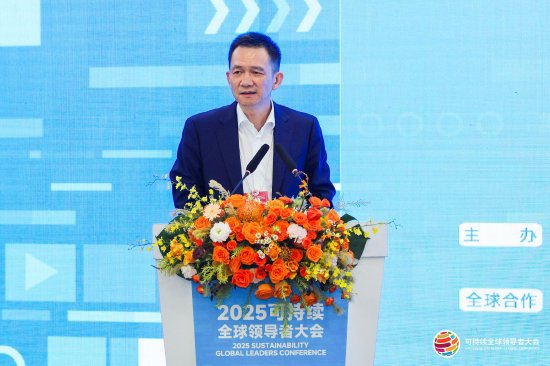
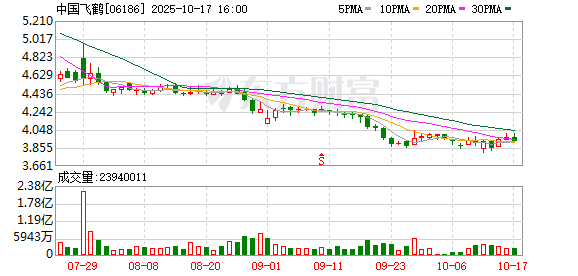
飞鹤董事长冷友斌:乳业绿色发展是建设可持续发展社会的重要推动力量
Zheng Quan Ri Bao· 2025-10-17 12:13
Core Insights - The 2025 Sustainable Global Leaders Conference was held in Shanghai, focusing on "Facing Challenges Together: Global Action, Innovation, and Sustainable Growth" [2] - China Feihe Limited, a leader in the green transformation of the dairy industry, emphasized the importance of sustainable development and collaboration for a better future [2][3] Company Initiatives - Feihe has actively responded to China's "dual carbon" strategy, developing a sustainable path that balances ecological and social benefits [2] - The company has implemented a "crop-livestock circular" ecological model, processing 40,000 tons of corn straw and 100,000 tons of manure annually, which enhances soil organic matter by 1% across 14,000 acres [2] - This model reduces carbon emissions by nearly 400,000 tons per year, equivalent to planting over 20 million trees, and has been recognized by the United Nations as a replicable solution for agriculture in high-altitude regions [2] Industry Collaboration - Feihe is working with partners across the entire industry chain to create a green packaging ecosystem, achieving 100% recyclable packaging materials [3] - The company has introduced an innovative "factory within a factory" model, which reduces transportation processes and costs while lowering carbon emissions and improving supply chain efficiency [3] - Feihe aims to deepen its green transformation by collaborating with industry partners, thereby injecting new momentum into sustainable development [3] Strategic Framework - Feihe has developed an effective model consisting of three key chains: a "green symbiosis" industry chain with partners, a "win-win sharing" chain with social forces, and an "innovation co-creation" chain with research institutions [3] - The company is committed to contributing to a sustainable world through collaboration and shared efforts with more partners in the future [3]
绿色产业五年增五亿元,把握“十五五”发展要求
2 1 Shi Ji Jing Ji Bao Dao· 2025-10-17 11:41
Group 1 - The global warming has surpassed the critical threshold of 1.5 degrees Celsius, marking the first climate tipping point, with significant coral reef deaths as a notable indicator [1] - The "14th Five-Year Plan" period has seen a comprehensive acceleration in China's green transition, establishing green as the foundation for high-quality economic development [2][3] - By 2025, the value added of the green industry is expected to increase by 5 trillion yuan compared to 2020, driven mainly by new energy, green transportation, and green finance sectors [2] Group 2 - China's green transition is reflected in multiple key areas, including the establishment of green factories and supply chains, with green factories accounting for 20% of manufacturing output [3] - The country has built the world's largest clean steel production system and renewable energy infrastructure, with one-third of electricity consumption coming from green sources [3] - China has effectively protected 90% of terrestrial ecosystem types and 74% of key wildlife species, achieving significant progress in ecological civilization construction [3] Group 3 - As of mid-2025, the balance of green loans in China reached 42 trillion yuan, and the balance of green bonds exceeded 2.2 trillion yuan, supporting the green transition [4] - The innovation in new energy technologies has led to a significant reduction in global wind and solar power generation costs, contributing to global emission reductions [5] Group 4 - The period from the "15th Five-Year Plan" to 2035 is crucial for China's modernization, presenting both challenges and opportunities for green low-carbon transition [6] - The transition faces structural pressures and high carbon characteristics in the energy structure, with significant challenges in balancing high-quality development and high-level protection [6][7] - The improvement of the green institutional framework and the enhancement of public awareness of low-carbon living are seen as foundational supports for the green transition [7] Group 5 - The traditional pollution control and environmental management models are evolving, with a focus on new environmental quality requirements and risk management [8] - Recommendations include leveraging existing experiences, innovating governance models, and enhancing market mechanisms supported by artificial intelligence [8] Group 6 - There is a need for better data support and monitoring for sustainable development indicators, with a significant portion lacking effective tracking [9] - Suggestions include aligning China's ecological civilization indicators with the United Nations Sustainable Development Goals for better international understanding [9][10]
全文丨上海财经大学姚洋:一个城市想在科技创新方面走在世界前列离不开一个发达的金融环境
Xin Lang Cai Jing· 2025-10-17 11:14
Core Insights - The 2025 Sustainable Global Leaders Conference is scheduled to take place from October 16 to 18 in Shanghai, focusing on sustainable development and industry upgrades [1] - The conference is co-hosted by the World Green Design Organization and Sina Group, with support from the Shanghai Huangpu District Government [1] - Key discussions will revolve around Shanghai's role in global transformation and sustainable development, emphasizing the need for innovation and collaboration [1][3] Industry Insights - Shanghai's manufacturing sector remains a significant contributor to its GDP, accounting for over 20%, which is higher than many other global metropolises [4] - The city is recognized for its leadership in sectors such as integrated circuits, biomedicine, and artificial intelligence, indicating a strong competitive advantage [4] - Future growth will require Shanghai to transition from a manufacturing hub to a center for scientific innovation, leveraging its educational institutions and research capabilities [5] Economic Development - The need for Shanghai to enhance its financial environment is critical for fostering innovation and attracting investment [6] - A well-developed capital market is essential for supporting technological advancements and startups, with a call for reforms in the financial sector to revitalize direct financing [6] - The city aims to become a global financial center, which is seen as a prerequisite for achieving its innovation goals [6] Talent and Population Mobility - Attracting talent is crucial for Shanghai's transformation into a science and innovation hub, with discussions on reforming the household registration system to facilitate talent influx [5][8] - The importance of a diverse talent pool is emphasized, advocating for the removal of barriers to population mobility to enhance the city's vibrancy and economic dynamism [8][9] Future Vision - Shanghai is positioned to become a leader in multiple domains, including scientific innovation, openness, and service industries, with a strategic focus on enhancing its economic structure [7][9] - The city is expected to achieve its goals of becoming a center for innovation and services, reflecting its potential for sustainable growth and development [9]
上海财经大学姚洋分享“落户上海”:我住的楼里,我是最年轻的,虽然我已经过了60岁
Xin Lang Cai Jing· 2025-10-17 11:11
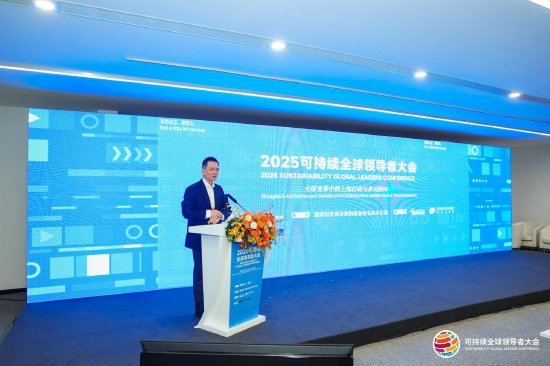
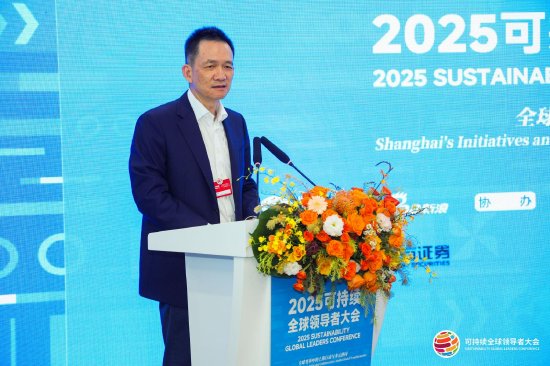
专题:2025可持续全球领导者大会&首届绿色产业与可持续消费博览会 责任编辑:张恒星 申能集团作为大会全球合作伙伴,在"申能集团专场分论坛"上,围绕"全球变革中的上海行动与多元协 同"这一核心议题,热议"打造可持续发展的东方样板"、"解码上海产业升级的可持续动力"、"探索上海 五大中心的增长新范式"等话题。 上海财经大学滴水湖高级金融学院院长姚洋出席并发表主题演讲,从经济学视角深度解码上海产业升级 的可持续动力——如何平衡经济增长与绿色转型,如何以创新驱动产业高质量发展。 2025可持续全球领导者大会于10月16日-18日在上海市黄浦区世博园区召开。 2025可持续全球领导者大会由世界绿色设计组织(WGDO)与新浪集团联合主办,国际财务报告准则 基金会(IFRS Foundation)北京办公室协办,新浪财经与世界绿色设计组织北京代表处承办,上海市黄 浦区人民政府支持。 姚洋在谈到要成为科创中心,上海需要人才时分享了自己"落户上海"的故事。姚洋称,我住的楼里面, 我和我太太过了60(岁),但是我们是楼里头最年轻的,我要从北京把户口迁来,听说需要陈书记批 准,我觉得有点"过分",所以非常感谢财大(上海财经大学) ...
上海财经大学姚洋:上海还应该成为一个“金融之都”、“开放之都”和“服务之都”
Xin Lang Cai Jing· 2025-10-17 10:49
Core Insights - The 2025 Sustainable Global Leaders Conference is scheduled to take place from October 16 to 18 in Shanghai, focusing on sustainable development and industry upgrades [1] - The conference is co-hosted by the World Green Design Organization and Sina Group, with support from the Shanghai Huangpu District Government [1] - Key discussions will revolve around Shanghai's role in global transformation and sustainable development, emphasizing the city's manufacturing strengths and innovation potential [1][3] Group 1: Economic and Industrial Insights - Shanghai's manufacturing sector contributes over 20% to its GDP, which is significant compared to other major cities like Beijing, Tokyo, and New York [3] - The city is recognized for its leadership in sectors such as integrated circuits, biomedicine, and artificial intelligence, as well as in advanced manufacturing like large aircraft and nuclear fusion [3][4] - To sustain its development, Shanghai must focus on significant advancements in industrial upgrades while maintaining its manufacturing advantages [4] Group 2: Innovation and Talent Development - Shanghai aims to transition towards becoming a global center for scientific innovation, aligning with national goals for economic growth [4] - The city has two universities ranked among the top 50 globally, indicating a strong foundation for research and development [4] - To achieve its ambition as a science and innovation hub, Shanghai needs to attract more talent and enhance its status as a financial, open, and service-oriented city [4]