
国产替代

Search documents
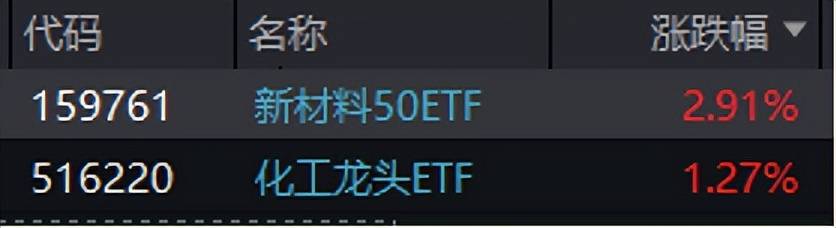
化工板块景气度有望回升,关注新材料50ETF(159761)、化工龙头ETF(516220)
Sou Hu Cai Jing· 2026-01-16 01:44
Core Viewpoint - The chemical sector is expected to experience a recovery in its business cycle, with current chemical prices at historical lows and a decline in the growth rate of ongoing projects [3] Group 1: Industry Overview - The chemical industry is currently at the bottom of its cycle, with chemical prices at historical lows and a negative year-on-year growth rate in ongoing projects [3] - The implementation of anti-competition policies in specific segments such as PTA, polyester filament, and organic silicon is optimizing the supply structure through self-discipline and policy constraints [3] - The exit of outdated production capacity is accelerating, particularly in high-cost sectors like large-scale refining, spandex, and chlor-alkali [3] Group 2: Demand Drivers - The recovery in downstream industries such as automotive, textiles, and home appliances, driven by policy support, is expected to boost demand for chemical products [3] - Emerging industries like semiconductors and energy storage are significantly increasing the demand for new chemical materials [3] - Key raw materials for the semiconductor industry, including photoresists, electronic specialty gases, and polishing materials, are seeing accelerated domestic substitution [3] - Breakthroughs in solid-state battery technology are increasing the demand for new chemical materials like specialty carbon black [3] - The development of the photovoltaic and wind power industries is driving the recovery in demand for chemical products such as silicon materials, photovoltaic adhesive films (EVA/POE), and carbon fiber [3] Group 3: Investment Opportunities - Investors interested in the chemical sector may consider focusing on the New Materials 50 ETF (159761) and the Chemical Leader ETF (516220) as potential investment opportunities [3]

2025年中国被动元器件行业政策背景、发展现状、细分市场未来发展趋势研判:国产替代纵深突破,MLCC市场增长潜力凸显[图]
Chan Ye Xin Xi Wang· 2026-01-16 01:07
Core Viewpoint - The passive components industry is crucial for electronic devices, providing essential functions such as signal regulation and energy storage without external power. The industry is supported by various national policies aimed at promoting innovation and domestic production, with significant growth expected in both global and Chinese markets by 2024 [1][4][7]. Industry Overview - Passive components, also known as passive devices, operate without external power and rely on physical properties to perform functions like current/voltage regulation and energy storage. They are essential for ensuring signal transmission and circuit stability, forming the backbone of the electronic industry [2][3]. Policy Support - China has implemented several key policies to support the passive components industry, including reforms in management systems, strategies to expand domestic demand, and guidelines for energy electronics development. These policies aim to enhance local companies' capabilities in high-end material research and precision manufacturing [4][5]. Industry Chain - The upstream of the passive components industry consists of raw material and equipment suppliers, with critical materials largely imported. The midstream includes manufacturing of capacitors, inductors, and resistors, with domestic companies like Fenghua Advanced Technology and SanHuan Group leading in mid-to-low-end markets. The downstream market is driven by consumer electronics, automotive electronics, and emerging fields like AI and 5G [5][6]. Market Dynamics - The global passive components market is expected to reach $39.1 billion by 2024, with a growth rate of 7.7%. The Asia-Pacific region dominates, accounting for over 70% of the market share. China, as the largest demand market, is projected to grow to 142.3 billion yuan in 2024, with a compound annual growth rate of 15.2% from 2020 to 2024 [7][8]. Competitive Landscape - The competitive landscape of the passive components industry in China is characterized by international giants dominating high-end markets, while domestic companies are making strides in mid-to-low-end segments. Key players like Fenghua Advanced Technology and SanHuan Group are focusing on high-end product certifications and technological advancements [9][10]. Development Trends - The future of the passive components industry in China will focus on three main areas: technological upgrades, deepening domestic substitution, and ecological collaboration. Products will evolve towards higher capacitance, miniaturization, and reliability, with a strong emphasis on self-sufficiency in materials and core technologies [11][12].


工信部透露“国产光刻胶最新进展” ,2026年相关行业国产替代或大提速
Jin Rong Jie· 2026-01-16 00:56
Group 1 - The Ministry of Industry and Information Technology highlighted the development of a glass bottle for photoresist, which is a significant technological breakthrough, ensuring that photoresist remains uncontaminated during transport and storage, thus ending China's historical reliance on foreign imports for nearly 100% of its photoresist industry [1] - Previously, China relied heavily on imports for not only finished photoresist but also its raw materials, with dependence on core materials like photoinitiators exceeding 95% in recent years [1] - The national integrated circuit industry investment fund's third phase has a scale of 160 billion yuan, with approximately 18% of the funds directed towards photoresist and other semiconductor materials [1] Group 2 - Domestic wafer fabs' expansion plans have directly driven the demand for photoresist, with an estimated consumption of about 5 tons of photoresist for every 10,000 12-inch wafers produced, leading to a projected demand of over 6,000 tons by 2025 [2] - With domestic leading companies achieving breakthroughs in ArF and KrF photoresist technology and moving towards large-scale production, the market anticipates a significant acceleration in the domestic photoresist substitution process driven by both policy and demand [2] - The A-share market is expected to benefit from the continuous release of policy dividends, which may drive the valuation recovery of photoresist-related sectors, particularly for companies benefiting from technological innovation, especially industry leaders in niche segments [2]
摩根、高盛、瑞银罕见联合扫货,光刻机唯一隐形王炸浮出水面,芯片+
Xin Lang Cai Jing· 2026-01-16 00:35
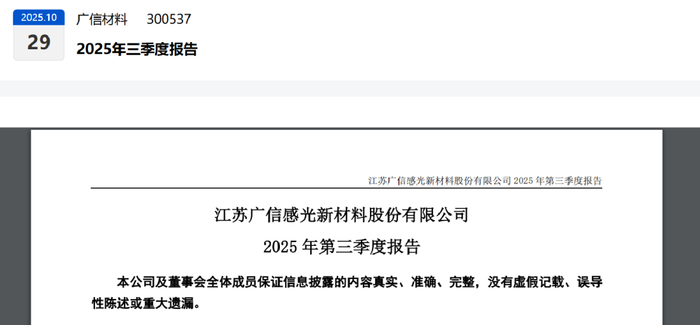
Core Viewpoint - The company, Guangxin Materials, reported a significant year-on-year decline of 75.65% in its third-quarter performance, yet major global investment banks like Goldman Sachs, Morgan Stanley, UBS, and others are shareholders, raising questions about the underlying reasons for their investment despite the poor financial results [1][3]. Financial Performance - The company's net profit stands at only 8.77 million, which is concerning given the drastic decline in performance [3]. - Despite the net profit drop, the gross profit margin is notably high at 34.71%, indicating that the product's profitability is not the issue [5]. - The net cash flow increased by 183.62% to 47.06 million, surpassing the net profit, suggesting a potential increase in orders [6][7]. Cash Flow Insights - The significant improvement in cash flow may indicate a growing order backlog, which is a positive sign for future revenue [7]. - The company operates in multiple high-demand sectors, including PCB, display, semiconductor, and photovoltaic materials, where breakthroughs could lead to substantial order increases [8]. Inventory Management - The slight increase in inventory by 1.93% may reflect strategic preparations for anticipated order growth, which is common in the light of strict shelf-life requirements for raw materials and finished products in the photoresist industry [10]. Industry Impact - A breakthrough in high-end photoresist technology could have profound implications for the entire semiconductor manufacturing supply chain, potentially lowering costs and supply chain risks [12]. - The domestic production of display photoresist could enhance the competitiveness of local panel manufacturers [12]. - Advancements in photovoltaic adhesives could lead to technological upgrades and cost reductions in solar component production [13]. Investment Perspective - The collective investment by international banks suggests a belief in the company's potential to achieve breakthroughs in critical semiconductor materials, reflecting a broader trend towards domestic substitution in the industry [16]. - The financial report's contradictions highlight the typical growth pattern of tech companies, which often experience initial losses before achieving profitability [17].

突发特讯!白宫通告全球:美国对特定半导体等加征25%关税,引发国际舆论
Sou Hu Cai Jing· 2026-01-15 19:21
Core Viewpoint - The U.S. government's imposition of a 25% tariff on imported semiconductors and related equipment is reshaping the global semiconductor industry, testing the resilience of Chinese companies and the maturity of the semiconductor ecosystem [1] Group 1: Impact of Tariffs - The U.S. government announced a 25% tariff on imported semiconductors effective January 15, 2026, following a previous proposal for 100% tariffs in August 2025, aiming to force the semiconductor supply chain back to North America [1] - The new tariff policy will increase the investment cost for a single production line by nearly $200 million, as over 60% of the procurement cost for SMIC's 28nm process equipment comes from imports [2] - The combination of tariffs and tightened technology export controls has led to a 42% year-on-year drop in China's imports of semiconductor manufacturing equipment in Q4 2025, while domestic equipment manufacturer Northern Huachuang saw a 300% surge in orders [2] Group 2: Technological Innovation and Self-Reliance - Chinese semiconductor companies are focusing on technological self-reliance, with Huawei testing a fully de-Americanized 28nm production line using equipment from Shanghai Micro Electronics and Zhongwei Semiconductor [3] - The third-generation semiconductor materials developed by the Institute of Physics at the Chinese Academy of Sciences have achieved automotive-grade certification, matching the performance of similar products from U.S. company Cree [3] - The State-owned Assets Supervision and Administration Commission has linked the performance of semiconductor executives to domestic production rates, incentivizing companies to enhance self-innovation [3] Group 3: Market Diversification - Chinese semiconductor firms are diversifying their markets, with Changdian Technology shifting packaging and testing capacity to Southeast Asia, contributing 32% to total revenue in 2025 from its Malaysian factory [5] - Weir Semiconductor acquired Korean Magnachip to gain display driver chip technology, successfully entering Apple's supply chain, demonstrating the evolution from "market for technology" to "technology for market" [5] Group 4: Emerging Opportunities - The signing of a $10 billion computing power agreement between OpenAI and Cerebras, utilizing non-traditional chip architectures, suggests potential for technological diversification in the semiconductor industry [7] - The Chinese semiconductor industry is transitioning from passive adaptation to proactive innovation, moving from reliance on imports to self-sufficiency, and is poised to ascend the global value chain [7]

1300+份新材料报告下载:做新材料领域的「攻坚者」
材料汇· 2026-01-15 15:38
Core Viewpoint - The article discusses the rapid growth and investment opportunities in the advanced packaging materials sector, highlighting the potential for domestic companies to replace foreign imports in critical areas of technology [7][8]. Market Overview - The global market for advanced packaging materials is projected to reach $2.032 billion by 2028, with the Chinese market expected to grow to 9.67 billion yuan by 2025 [8]. - Specific materials such as PSPI and Al-X photoresist are identified as key growth areas, with PSPI's market size in China estimated at 7.12 billion yuan in 2023 [8]. Investment Opportunities - The article outlines various advanced packaging materials and their projected market sizes, indicating significant growth potential in sectors like conductive adhesives, chip bonding materials, and epoxy encapsulants [8]. - For instance, the conductive adhesive market is expected to reach 3 billion yuan by 2026, while the epoxy encapsulant market is projected to grow to 99 million USD by 2027 [8]. Competitive Landscape - The article lists both domestic and international players in the advanced packaging materials market, emphasizing the competitive dynamics and the potential for domestic companies to capture market share from established foreign firms [8]. - Companies such as 鼎龙股份, 国风新材, and 三月科 are highlighted as key domestic players in the PSPI segment, while international competitors include Fujifilm and Toray [8]. Investment Strategies - Different investment stages in the new materials industry are discussed, with a focus on the varying risk levels and investment strategies appropriate for each stage, from seed funding to pre-IPO [10]. - The article emphasizes the importance of assessing team capabilities, market potential, and product maturity when considering investments in this sector [10].



缩量万亿!明日A股怎么走?
Guo Ji Jin Rong Bao· 2026-01-15 15:00
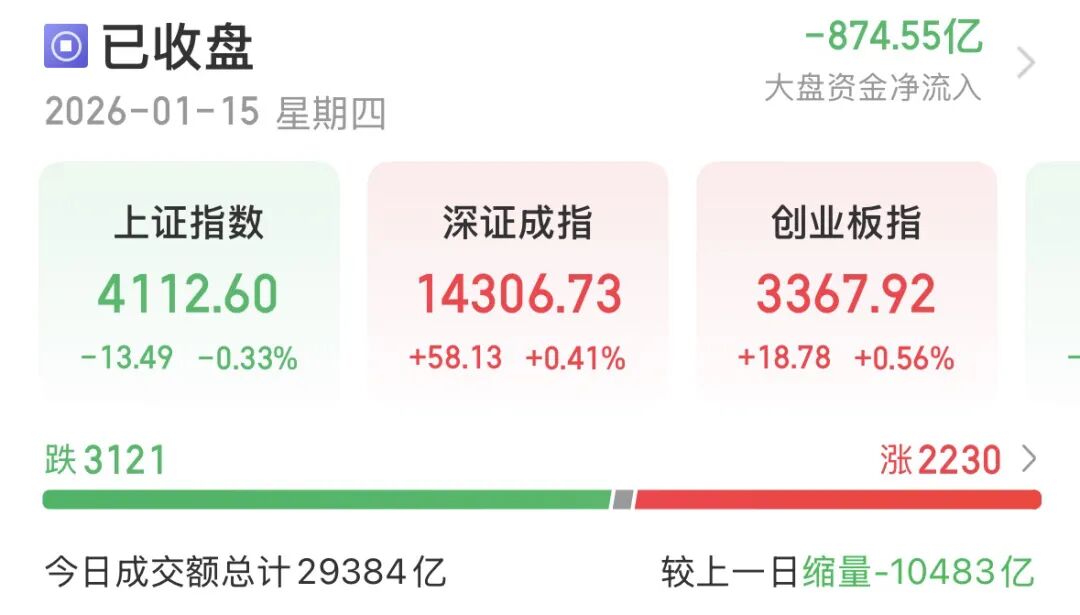
Market Overview - A-shares experienced a volume contraction with a total turnover dropping below 3 trillion yuan, indicating a healthy turnover despite the market's mild pullback [5][13] - The Shanghai Composite Index closed down 0.33% at 4112.6 points, while the ChiNext Index rose 0.56% to 3367.92 points [5][12] Sector Performance - The semiconductor, storage chip, CPO concept, and electronic device manufacturing sectors performed well, while previously popular sectors like commercial aerospace and satellite navigation saw significant pullbacks [6][11] - Only 11 out of 28 sectors in the Shenwan classification closed in the green, with electronics, basic chemicals, and non-ferrous metals leading the gains [6][11] Notable Stocks - Several electronic stocks hit the daily limit up, including Blue Arrow Electronics and Silicon Power, both achieving a 20% increase [8][9] - China Satellite and other previously popular stocks faced significant declines, with China Satellite dropping 10% [12][11] Market Sentiment - Analysts suggest that the recent market behavior reflects a healthy correction rather than a signal of a downturn, as profit-taking and technical adjustments are common after substantial gains [4][13] - The adjustment in financing margin requirements from 80% to 100% has impacted short-term trading sentiment, leading to a cautious approach among investors [5][13] Investment Strategy - Investors are advised to avoid chasing high-flying stocks and focus on sectors with strong performance and earnings support, such as semiconductors and basic chemicals [16][17] - The market is expected to enter a phase of consolidation, with potential volatility around key support levels [15][16]



央行释放宽松信号
Tebon Securities· 2026-01-15 13:36
Market Analysis - The A-share market shows a "weak Shanghai, strong Shenzhen" pattern, with the Shanghai Composite Index closing at 4112.60, down 0.33%, marking three consecutive days of decline, while the Shenzhen Component Index rose 0.41% to 14306.73 [2] - The overall market turnover decreased significantly to 2.94 trillion yuan, down approximately 1 trillion yuan from the previous day, indicating a contraction in trading activity [2][7] - The market saw a divergence in performance, with 2226 stocks rising and 3121 falling, reflecting a notable reduction in profit-making opportunities compared to earlier periods [2] Sector Performance - Technology and cyclical sectors led the gains, with advanced packaging, photolithography machines, semiconductor materials, and HBM index rising by 3.79%, 3.76%, 3.66%, and 3.27% respectively, driven by U.S. tariffs on certain semiconductor imports [5] - Conversely, sectors that had previously surged, such as commercial aerospace and AI applications, faced significant declines, with commercial aerospace down 4.46% and AI application stocks experiencing a drop of 5.78% [5][7] Policy and Economic Signals - The People's Bank of China (PBOC) is signaling a loosening monetary policy, with structural interest rate cuts expected to support credit growth and stabilize the market [12] - The PBOC's recent actions include a net injection of liquidity through reverse repos and a reduction in the rates for relending and rediscounting, aimed at enhancing support for key sectors [12] - The M1 and M2 growth rates indicate a widening gap, suggesting that while liquidity is ample, short-term corporate vitality remains weak, necessitating further policy measures to boost economic activity [11][12] Commodity Market - The commodity index fell by 0.51%, with a mixed performance across sectors; however, non-ferrous metals showed strength, particularly tin, which surged by 8.30% [15] - Tin prices remain robust due to supply disruptions from geopolitical tensions in the Democratic Republic of Congo and production issues in Myanmar, alongside increased demand from the semiconductor industry [15] Investment Opportunities - Key sectors to watch include AI applications, commercial aerospace, nuclear fusion, quantum technology, brain-computer interfaces, and robotics, all of which are supported by government policies and technological advancements [17] - The report suggests a continued bullish trend in non-ferrous metals, indicating potential investment opportunities in this area [20]
冲刺“A+H”双融资平台!国恩股份通过港交所聆讯,“一体两翼”构建全球化新版图
Xin Lang Cai Jing· 2026-01-15 12:48
Core Viewpoint - Guoen Technology Co., Ltd. is set to achieve a dual listing in Hong Kong after passing the main board listing hearing, aiming to enhance its "chemical new materials + health" dual business strategy and accelerate overseas capacity layout [1][4]. Group 1: Business Strategy - The company has established a unique "one body, two wings" business structure, leveraging vertical integration to create significant scale advantages [1]. - In the chemical sector, Guoen is the second-largest supplier of organic polymer modified materials and organic polymer composite materials in China, with a market share of approximately 2.5% as of 2024 [1]. - The health segment, through its subsidiary Dongbao Biological, has formed a complete closed loop in the collagen industry, benefiting from domestic substitution and consumption upgrades [2]. Group 2: Financial Performance - Guoen has demonstrated robust revenue growth, with a compound annual growth rate (CAGR) of 19.6% from fiscal year 2022 to fiscal year 2024, achieving revenues of RMB 134.06 billion, RMB 174.39 billion, and RMB 191.88 billion respectively [3]. - The company recorded revenue of RMB 174.44 billion in the first ten months of fiscal year 2025, continuing its stable growth trajectory [3]. - The combination of stable chemical business and high-barrier health business enhances overall operational resilience and profitability [3]. Group 3: Future Outlook and Expansion Plans - The company plans to establish a new production base in Thailand to better serve overseas customers and mitigate trade barriers [4]. - Domestic capacity expansion is planned in Yixing, Jiangsu, to further consolidate market share [5]. - A regional headquarters will be set up in Hong Kong to deepen global research and development and capital operations [6].

航天智造:目前拥有汽车零部件、油气装备以及高性能功能材料三大主营业务
Zheng Quan Ri Bao Wang· 2026-01-15 12:11
Core Viewpoint - Aerospace Intelligence (航天智造) is positioned as a public platform for the Aerospace Seventh Academy, focusing on three main business areas: automotive components, oil and gas equipment, and high-performance functional materials [1] Group 1: Business Segments - The automotive components segment has strong R&D and synchronous development capabilities in automotive interior and exterior parts, as well as intelligent cockpit components, serving major domestic automotive manufacturers and actively entering the new energy vehicle market [1] - The oil and gas equipment business is technologically advanced in the fields of oil and gas well perforation and completion equipment, achieving localization of several key technologies [1] - In the high-performance functional materials sector, the company has developed a series of new products, including pressure testing membranes and photosensitive dry films, with key technologies and equipment being independently controllable [1] Group 2: Future Projects - The company is currently constructing an automated upgrade project for military explosive materials production lines, with an expected annual revenue of 150 million 27 thousand yuan upon reaching production capacity [1]
