
关税政策

Search documents
【环球财经】IMF总裁:全球经济的真正考验可能即将到来
Xin Hua She· 2025-10-08 22:41
Core Insights - The global economy is performing better than expected but has not reached the necessary level, with signs of potential challenges ahead [1] - Geopolitical changes, technological revolutions, and demographic shifts are contributing to rising global uncertainty, which is becoming the new normal [1] - The full impact of tariff policies has yet to be realized, with potential inflationary pressures arising from compressed corporate profits in the U.S. [1] - A loose financial environment is masking underlying weaknesses, and a significant valuation correction could hinder global economic growth, particularly affecting developing countries [1] - Despite disruptions, global trade is largely adhering to rules, and maintaining trade as an engine for economic growth is crucial [1] Economic Forecast - The International Monetary Fund (IMF) projected a global GDP growth rate of 3% for this year, with a slowdown expected in 2024 [2] - An update on economic growth forecasts will be provided during the IMF's annual meeting in Washington from October 13 to 18 [2]
美国2025财年预算赤字达1.8万亿美元 关税收入飙升难掩财政压力
智通财经网· 2025-10-08 22:25
Core Insights - The U.S. federal government recorded a budget deficit of approximately $1.8 trillion for the fiscal year 2025, nearly unchanged from 2024, with a slight reduction of $80 billion [1][2] - Despite a significant increase in tariff revenue, government spending growth outpaced fiscal improvements, highlighting fiscal vulnerability amid economic expansion [1] Revenue Summary - Federal government revenue increased by 6% year-on-year, amounting to approximately $3.08 trillion [1] - Customs revenue reached $195 billion, more than doubling from the previous year's $77 billion, largely due to new tariffs imposed by the Trump administration [1][2] - Corporate income tax revenue decreased by about 15% compared to 2024, attributed to the Tax and Expenditure Act allowing greater investment deductions for corporations [1] Expenditure Summary - Government spending grew by 4%, totaling approximately $3.01 trillion, with interest on public debt surpassing $1 trillion for the first time [1] - Social Security expenditures increased by $121 billion due to cost-of-living adjustments and new eligibility criteria for public sector employees [2] - Education Department spending plummeted by $234 billion, primarily due to student loan accounting adjustments and significant cuts to the department's functions [2] Fiscal Outlook - The estimated budget deficit as a percentage of GDP for fiscal year 2025 is approximately 5.9%, a slight decrease from 6.4% in the previous fiscal year [2] - The Treasury Secretary aims to reduce the deficit ratio to 3% by 2028, the end of Trump's term, amidst concerns over maintaining a deficit close to 6% during non-crisis periods [2]
特朗普宣布11月起对输美中型和重型卡车征25%关税
Qi Lu Wan Bao· 2025-10-08 21:54
Core Points - President Trump announced a 25% tariff on medium and heavy trucks imported to the U.S. starting November 1 [1] - This tariff follows a previous announcement on September 25 regarding a similar 25% tariff on heavy truck imports, justified by national security concerns [1] - The implementation of this tariff policy was delayed due to opposition from major U.S. automakers [1] - The U.S. Supreme Court is set to hear oral arguments in the first week of November regarding the legality of many tariffs imposed by the Trump administration [1]
特朗普态度很强硬,美国土安全部紧急发声:哪怕美政府停摆,关税也照收不误
Sou Hu Cai Jing· 2025-10-08 19:44
据报道,美国政府再度面临停摆的边缘,这一次的政治危机比以往更为复杂,甚至可能在历史上写下最 为严峻的一章。如今,政府关门的"恐惧"已经从一场政策博弈,变成了特朗普政府的战略博弈。而这一 切的背后,却隐藏着对关税收入的深刻依赖,以及对美国经济和民众生活成本的潜在影响。 9月30日的政府资金截止日临近,特朗普政府和国会的预算谈判仍然僵持不下。按照惯例,政府必须达 成协议以延续资金供应,否则部分政府职能将面临停摆。但不同于以往,特朗普此次的策略显然有所变 化——他不再全力推动两党之间的妥协,而是通过为他的关税政策"上保险",确保即使在政府停摆的情 况下,也能持续征收关税。 美国国土安全部发布的官方文件显示,尽管政府停摆不可避免,但关税的征管工作将继续进行。美国海 关和边境保护局(CBP)以及移民与海关执法局(ICE)等核心部门将被列为"必要职能",确保在停摆 期间持续执行他们的工作。具体来说,约94.8%的国土安全部员工将继续坚守岗位,负责确保关税和移 民执法工作不会中断。 但无论从哪个角度来看,特朗普的关税政策似乎都与美国本土企业的实际利益相悖。即使特朗普政府 以"减税和就业"为口号,关税的增加还是在悄然提高着普 ...

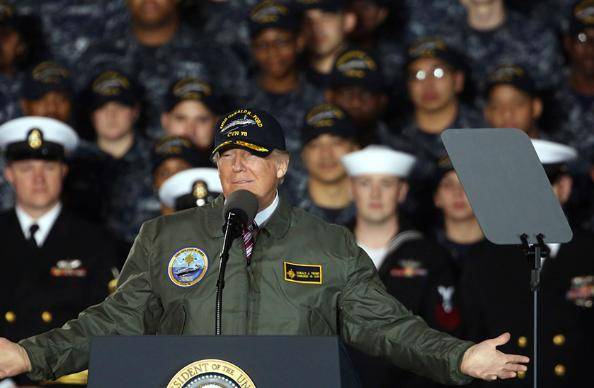
特朗普宣布从10月起对药品加征新关税
Shang Wu Bu Wang Zhan· 2025-10-08 17:28
根据彭博经济的研究,对品牌药品的征税可能使美国平均关税税率提高3.3个百分点,尽管对在当 地建设生产设施给予关税豁免可能抵消部分影响。 (原标题:特朗普宣布从10月起对药品加征新关税) 《爱尔兰时报》9月26日转载彭博社报道,美国总统特朗普周四在社交媒体上发布消息称,从2025 年10月1日起,将对所有品牌或专利的制药产品征收100%的关税,除非相关企业在美国建设制药工厂。 特朗普此次宣布的关税措施是多项针对特定行业的新关税政策之一,将于下周三正式生效。进口重 型卡车将被征收25%的关税,厨房橱柜和浴室柜将被征收50%的关税,软垫家具进口将被征收30%的关 税。综合来看,这些举措构成了特朗普关税体系的快速扩张,此体系在其上任不久就开始构建。 在特朗普总统上任的几个月里,包括默克、阿斯利康和强生在内的主要制药公司宣布了数十亿美元 的美国生产设施投资计划,此前特朗普多次威胁要对进口药品征收关税。 尽管如此,部分企业仍可能面临风险。跨国制药公司表示,他们主要依靠美国工厂供应国内市场, 但并非所有企业都着手推进承诺的扩建计划。 受影响最大的国家是新加坡和瑞士。英国对美国也有一些重要的制药出口——其与美国的贸易协议 提 ...
美国关税政策影响智利葡萄酒对美出口
Shang Wu Bu Wang Zhan· 2025-10-08 17:28
Core Insights - Chilean wine exports to the United States have decreased by 13% in the first seven months of the year due to a 10% tariff policy imposed by the U.S. [1] - Initially, the cost of tariffs was absorbed by wine producers and importers, but over time, these costs have been passed on to consumers, leading to a recession in the U.S. market [1] - In contrast, Brazil's economy is thriving, solidifying its position as the largest export destination for Chilean wine, with export volumes increasing by nearly 10% during the same period [1] Industry Analysis - Chile holds nearly half of the market share for imported wine in Brazil, indicating significant growth potential for Chilean wine in the Brazilian market [1] - Chile's wine exports are expected to remain stable by 2025, with growth anticipated in markets such as Canada, Japan, Ireland, and South Korea, while exports to Mexico, the Netherlands, and the UK are projected to decline [1]
IMF总裁:今明两年全球增长略有放缓,关税走向成关键不确定因素
Sou Hu Cai Jing· 2025-10-08 14:45
Core Insights - The global economy is exhibiting stronger resilience than expected amidst multiple shocks, but the growth momentum is weakening [1] - Current resilience has not been fully tested, and uncertainty is expected to remain the new normal [1] - Global growth is projected to slow slightly over the next two years, with tariff policies becoming a key variable affecting the world economic outlook [1]
美国前财长鲁宾:关税收入于赤字杯水车薪,将伤害经济增长
新浪财经· 2025-10-08 07:12
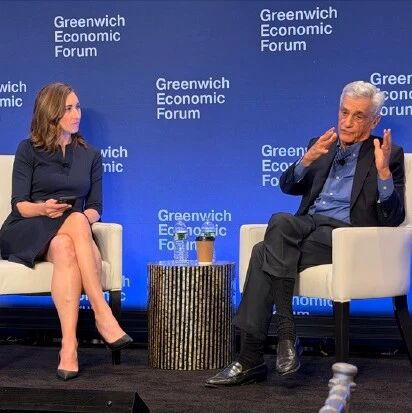
Core Insights - Robert Rubin, former U.S. Treasury Secretary, expressed concerns about global market risks, tariff policies, inflation outlook, and the impact of artificial intelligence at the Greenwich Economic Forum [2] Tariff Policies - Rubin criticized the current direction of tariff policies, stating that open trade has historically benefited the U.S. economy, and that tariffs represent a "one-time cost increase" rather than a sustained inflationary measure [4] - He emphasized that tariffs raise producer costs, weaken corporate competitiveness, and ultimately pass costs onto consumers, arguing that viewing tariffs as a means of fiscal revenue is a serious misjudgment [4] - Rubin noted that tariff revenue is negligible in the context of overall deficits and ultimately harms consumers and economic growth [4] Artificial Intelligence - Rubin expressed cautious optimism regarding AI, suggesting that it could significantly enhance productivity and improve fiscal and growth rates [4] - However, he warned about the substantial employment displacement effects that AI could cause, as it transitions from routine tasks to complex cognitive functions [4] Monetary Policy - Rubin opposed the idea proposed by some Federal Reserve officials to use looser monetary policy to buffer AI-related unemployment, arguing that overheating the economy could lead to inflation, a weaker dollar, and rising interest rates, which would have negative repercussions [5] - He stressed that the Federal Reserve should prioritize price stability in its dual mandate [5] U.S. Economic Foundation - Despite his criticisms of current policies, Rubin maintained confidence in the U.S. economic foundation, citing a flexible labor market, unparalleled capital markets, top universities, and a strong culture of innovation [5] - He warned, however, that actions such as attacking universities, cutting research budgets, and tightening immigration policies are undermining long-term competitiveness [5] Gold Prices - Regarding the recent rise in gold prices, Rubin remained calm, viewing gold as a psychological hedge rather than a tool with intrinsic value or a reliable indicator of macroeconomic trends [5]
特朗普只要再输一次,中国将完胜中美关税战,后果对美国不堪设想
Sou Hu Cai Jing· 2025-10-08 07:11
Core Viewpoint - The ongoing trade war between the U.S. and China is significantly influenced by a legal battle within the U.S., where American companies, state governments, and trade associations are challenging the legality of the tariffs imposed by the Trump administration, which could lead to a potential refund of up to $1 trillion in tariffs if the Supreme Court rules against the government [1][20]. Group 1: Legal Framework and Implications - The legal basis for the tariffs stems from the International Emergency Economic Powers Act (IEEPA), which grants the U.S. President emergency powers to impose economic measures in response to significant threats [3]. - The Trump administration utilized the IEEPA to implement extensive tariffs, escalating from an initial 10% to as high as 100%, effectively bypassing Congress [5][6]. - A significant ruling from the Federal Circuit Court in August 2025 deemed most of the global tariff policies illegal, stating that the President lacked the authority to impose such broad taxation under the invoked law [8][10]. Group 2: Economic Consequences - As of August 2025, U.S. companies had already paid over $210 billion in what are considered illegal tariffs, with potential refunds reaching $750 billion to $1 trillion if the case extends into 2026 [13][15]. - The financial implications of a Supreme Court ruling against the Trump administration could lead to a catastrophic impact on the U.S. economy, equating to the annual defense budget [13][15]. - The tariffs have resulted in significant job losses in the U.S., with over 42,000 manufacturing jobs reportedly lost since the new tariffs were implemented, affecting sectors such as automotive, appliances, and electronics [18]. Group 3: Strategic Outcomes - The trade war, initially aimed at protecting American workers and manufacturing, has ironically led to job losses and economic burdens on U.S. consumers and small businesses, while China has managed to maintain its economic stability [17][20]. - The legal challenges against the Trump administration's tariffs highlight the checks and balances within the U.S. government, particularly the judiciary's role in curbing executive power [17]. - The upcoming Supreme Court hearings scheduled for November 5, 2025, will be pivotal in determining the future of these tariffs and the broader implications for U.S.-China trade relations [22].
国元证券每日观察-20251008
Guoyuan Securities2· 2025-10-08 07:11
Economic Indicators - The 2-year U.S. Treasury yield decreased by 1.85 basis points to 3.564%[4] - The 5-year U.S. Treasury yield fell by 3.12 basis points to 3.699%[4] - The 10-year U.S. Treasury yield dropped by 2.90 basis points to 4.123%[4] Market Performance - The Baltic Dry Index closed at 1932.00, up by 1.63%[5] - The Nasdaq Index closed at 22788.36, down by 0.67%[5] - The Dow Jones Industrial Average closed at 46602.98, down by 0.20%[5] - The S&P 500 closed at 6714.59, down by 0.38%[5] Currency and Commodities - The price of ICE Brent crude oil was $65.73, up by 0.40%[5] - The spot price of London gold was $3984.34, up by 0.64%[5] - The USD/CNY exchange rate was 7.12, down by 0.03%[5]