
自动驾驶

Search documents
看好跨年行情,关注价格改善的信号 | 券商晨会
Sou Hu Cai Jing· 2026-01-05 08:17
Group 1 - The A-share market is expected to experience a favorable cross-year trend, supported by a strong liquidity environment and a robust RMB exchange rate, which is better than the previous two years [1] - Positive external factors and improved macroeconomic expectations are likely to contribute to a "good start" for the A-share market after the New Year [1] - The Hong Kong stock market has seen significant gains at the beginning of the year, driven by multiple favorable factors, which may also influence the continuation of the A-share cross-year trend [1] Group 2 - The current market risk appetite remains high, providing room for high-elasticity technology themes to continue their upward trajectory [2] - Despite the overall high valuation levels in the technology sector, it has not yet reached a frenzy stage, indicating a significant gap from historical bubble periods [2] - Global liquidity expectations are anticipated to further support high-valuation technology assets, with a focus on sectors like robotics, sports, and non-bank financials, while caution is advised in crowded areas like commercial aerospace [2] Group 3 - The improvement in industry prosperity is primarily reflected in price increases, with significant price rises observed in precious metals, basic chemicals, and electric equipment [3] - The semiconductor sales cycle is on the rise, indicating sustained industry prosperity, with several foundries and storage manufacturers signaling price increases [3] - In addition to thematic investment opportunities like robotics and autonomous driving, there is a recommendation to increase focus on "price increase" varieties such as basic chemicals, electric equipment (lithium batteries), and electronic semiconductors [3]
看好跨年行情,关注价格改善的信号
Mei Ri Jing Ji Xin Wen· 2026-01-05 08:15
Group 1 - The A-share market is expected to experience a favorable cross-year trend, supported by a better liquidity and exchange rate environment compared to previous years [1] - The strong performance of the RMB and a generally loose domestic liquidity environment are anticipated to contribute to a "good start" for the A-share market after the New Year [1] - Multiple positive factors, including RMB appreciation, concentrated benefits in the technology sector, improved macroeconomic expectations, and positive signals in the funding environment, are likely to drive the continuation of the cross-year trend in the A-share market [1] Group 2 - The current market risk appetite remains high, providing room for high-elasticity technology themes to continue their upward trajectory [2] - Despite the overall valuation level of the technology sector being relatively high, it has not yet entered a frenzy stage, indicating a significant gap from historical bubble periods [2] - Global liquidity expectations are anticipated to further support high-valuation technology assets, with a focus on sectors such as robotics, sports, and non-bank segments, while caution is advised against overcrowded areas like commercial aerospace [2] Group 3 - The improvement in industry prosperity is primarily reflected in price increases, with significant price rises observed in precious metals like gold and silver, as well as in base metals such as copper [3] - The basic chemical sector has seen marginal price increases in methanol, asphalt, natural rubber, and in power equipment, particularly lithium carbonate and lithium hydroxide [3] - The semiconductor sales cycle is on the rise, maintaining industry prosperity, with several foundries and storage manufacturers recently signaling price increases [3]



朱江明:新技术从热潮到真正落地,需要挤压泡沫
Xin Jing Bao· 2026-01-05 06:23
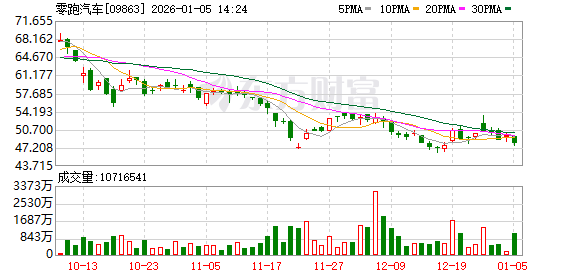
Core Insights - The core perspective is that China is expected to nurture a number of globally competitive automotive companies, fundamentally reshaping the competitive landscape of the global automotive industry [3][4]. Company Strategy - Leap Motor aims to become a world-class automotive enterprise by 2025, having received strategic investment from FAW Group and deepening collaboration with Stellantis [2]. - The company emphasizes a business approach focused on cost recovery within three years, ensuring that all investments return to the essence of business [2][5]. - Leap Motor's product philosophy is centered on providing high-quality products at reasonable prices, aiming to create value for users while reducing costs and improving efficiency [2][6]. Market Position - Leap Motor has risen to the sixth or seventh position in domestic new energy vehicle sales by 2025, with plans to steadily improve its global market position [4]. - The company has set an ambitious sales target of 1 million vehicles by 2026, supported by its technological reserves, product planning, and user recognition [6][5]. Technological Development - Leap Motor adheres to a fully self-research and development (R&D) approach, controlling about 65% of its core components in-house, including the three electric systems and intelligent driving controllers [9]. - The company believes that new technologies must demonstrate real value to users and improve operational efficiency, with AI being integrated into various aspects of R&D, manufacturing, and service [11][7]. Industry Outlook - The automotive industry is experiencing a significant aggregation trend, with the potential for several Chinese companies to reach an annual production scale of 4 million vehicles, similar to the current landscape of the 3C and mobile phone industries [3]. - Leap Motor's CEO highlights that the true competitive advantage lies in a combination of deep R&D capabilities, cost control systems, and a user-centric response mechanism [10].

78ms的VLA推理!浪潮信息开源自驾加速计算框架,大幅降低推理时延
自动驾驶之心· 2026-01-05 03:33
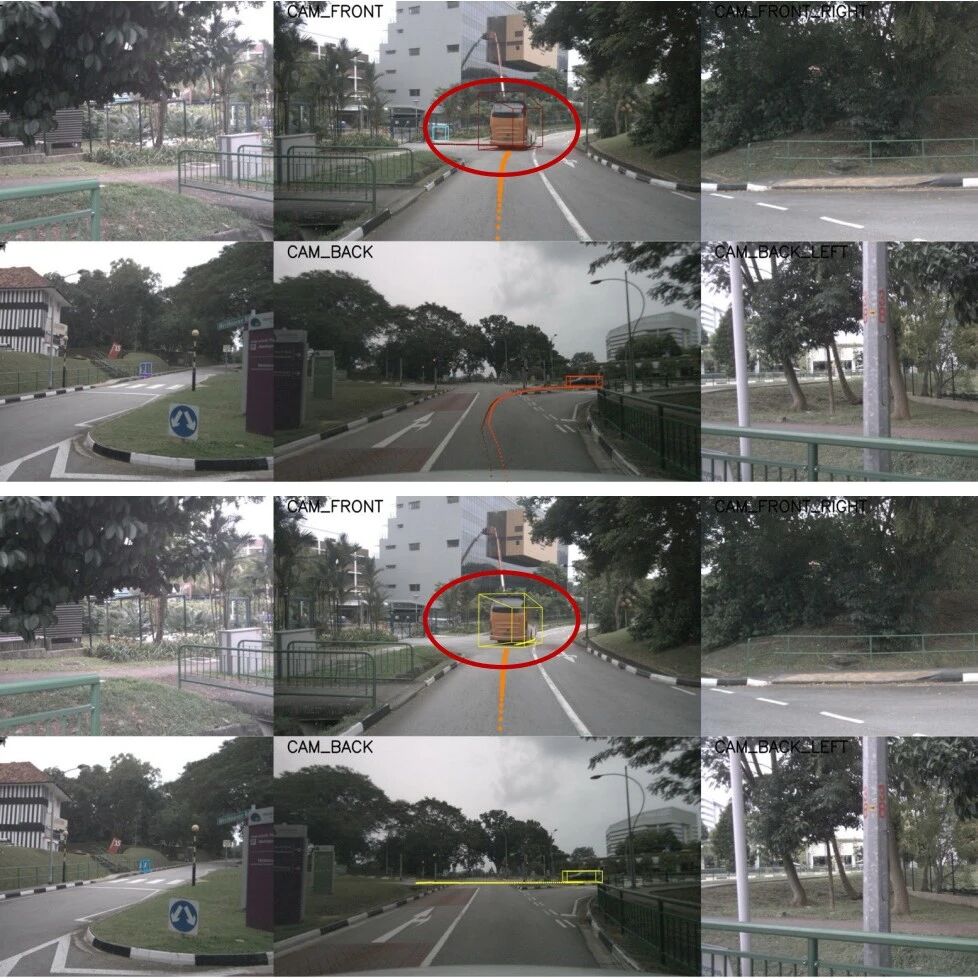
Core Viewpoint - The article discusses the advancements in autonomous driving technology, particularly focusing on the Vision-Language-Action (VLA) model, which integrates visual perception, semantic understanding, and logical decision-making to enhance the capabilities of autonomous vehicles. The introduction of the AutoDRRT 3.0 framework aims to address the challenges of real-time processing and system optimization for VLA models in automotive applications [2][3][8]. Summary by Sections VLA Model and Challenges - The VLA model is becoming the preferred solution for autonomous driving, enabling vehicles to understand and reason like humans. However, the model's parameter scale has increased to billions, leading to processing delays exceeding 100ms, necessitating optimization of hardware and software systems for real-time performance [2][5][6]. AutoDRRT 3.0 Framework - The AutoDRRT 3.0 framework, developed by Inspur Information, is an open-source solution designed to accelerate the deployment of VLA models in vehicles. It reduces the end-to-end latency of VLA models from 8000ms to 78ms, achieving a performance improvement of 102 times [3][13][23]. Innovations in Computation - AutoDRRT 3.0 introduces several computational innovations, including parallel decoding, visual pruning, and operator fusion. These techniques significantly enhance the efficiency of the VLA model's inference process, allowing for smoother and faster action outputs [9][12][13]. Communication Mechanism - The framework also features a high-performance communication mechanism that optimizes data transfer between heterogeneous computing units, reducing latency and improving the overall responsiveness of the system. This mechanism allows for zero-copy data transfer, enhancing efficiency during large data loads [16][17][23]. Scheduling Innovations - AutoDRRT 3.0 implements a unified scheduling framework for heterogeneous computing resources, ensuring efficient task management and resource allocation. This approach minimizes idle computing time and enhances the overall system stability and performance [18][21][20]. Future Prospects - The article concludes that the AutoDRRT 3.0 framework not only validates the feasibility of real-time operation of VLA models in vehicles but also lays a solid foundation for the transition of autonomous driving technology towards scalable and replicable solutions across various applications [23].


港股异动 小马智行-W(02026)高开逾6% 年底车队将突破千辆 机构看好公司自驾领域占据重要市场份额
Jin Rong Jie· 2026-01-05 02:49
招商证券指出,小马智行-W属L4领域先行者,技术及商业化能力构筑护城河。公司依托于世界模型和 虚拟司机技术公司在L4领域深耕,更在商业化应用方面取得了实质性突破,尤其是去年第三季度在广 州实现的Robotaxi单车盈利转正,标志着其商业化迎来阶段性的里程碑式时刻。该行认为,小马智行凭 借先发优势和行业地位,在自动驾驶出行服务和自动驾驶货车领域占据重要的市场份额,随着第七代车 型的加速部署和车队规模扩大,强劲的增长势头有望延续。 智通财经获悉,小马智行-W(02026)高开逾6%,截至发稿,涨6.29%,报123.4港元,成交额76.51万港 元。 本文源自:智通财经网 消息面上,近期,小马智行联合创始人、CFO王皓俊在接受采访时透露,依托第七代Robotaxi的规模化 投放,公司已在广州实现单车盈利(UE 转正),日均营收每车达299元,2025年底车队规模将突破1000 辆,2026年目标扩容至3000辆,远期计划2030年达成10万辆运营规模。此次在广州市场实现单车盈利的 核心支撑,来自第七代Robotaxi的技术突破与成本优化。 ...
信达国际:维持禾赛-W(02525)“买入”评级 目标价200港元
智通财经网· 2026-01-05 01:47
Core Viewpoint - Company Hesai Technology (禾赛-W) demonstrates superior profitability and cash flow compared to peers, supporting a valuation premium with a maintained "Buy" rating and a target price of HKD 200 [1] Group 1: Financial Performance - Hesai achieved a net income of RMB 795 million in Q3, a year-on-year increase of 47.5%, with a net profit of RMB 256 million, marking a record high compared to a loss of RMB 70.4 million in the same period last year [2] - Cumulative net profit for the first three quarters reached RMB 283 million, exceeding the annual target of RMB 200 million to RMB 350 million, prompting an upward revision of the full-year net profit guidance to RMB 350 million to RMB 450 million [2] Group 2: Market Position and Product Development - Hesai remains the industry leader in the automotive lidar sector, with a market share of 46% in August, and has secured over 120 models for mass production [4] - The company is set to deliver new products for L3-level autonomous driving from 2025 to 2027, with expectations that each L3 vehicle will require 3-6 lidar units, an increase from 1-2 units for L2 vehicles [4] Group 3: Industry Trends and Regulatory Environment - The approval of the first batch of L3-level conditional autonomous driving models in mainland China indicates a clearer regulatory environment, which could enhance the valuation of the autonomous driving industry [3] - Major players like Xiaomi and XPeng have also received L3-level autonomous driving road testing licenses, reflecting a shift towards commercialization in the industry [3] Group 4: Growth in Robotics Sector - Hesai's JT series lidar products are experiencing strong overseas demand, with cumulative shipments exceeding 100,000 units by the end of May, and expectations to surpass 200,000 units for the year [5]
小马智行-W高开逾6% 年底车队将突破千辆 机构看好公司自驾领域占据重要市场份额
Zhi Tong Cai Jing· 2026-01-05 01:39
Core Viewpoint - The company, Pony.ai-W (02026), has achieved single-vehicle profitability in Guangzhou with its seventh-generation Robotaxi, marking a significant milestone in its commercialization efforts [1] Group 1: Financial Performance - The stock opened over 6% higher, currently up 6.29% at HKD 123.4, with a trading volume of HKD 765,100 [1] - Daily revenue per vehicle has reached CNY 299 [1] Group 2: Growth Projections - The company plans to expand its fleet to over 1,000 vehicles by the end of 2025 and aims for 3,000 vehicles by 2026, with a long-term goal of 100,000 vehicles by 2030 [1] Group 3: Technological Advancements - The profitability in Guangzhou is supported by technological breakthroughs and cost optimization from the seventh-generation Robotaxi [1] - The company is recognized as a pioneer in the Level 4 (L4) autonomous driving sector, leveraging world models and virtual driver technology [1] Group 4: Market Position - According to China Merchants Securities, Pony.ai-W has established a competitive moat through its technological and commercialization capabilities [1] - The company holds significant market share in both autonomous ride-hailing services and autonomous trucking, benefiting from its first-mover advantage and industry position [1]
港股异动 | 小马智行-W(02026)高开逾6% 年底车队将突破千辆 机构看好公司自驾领域占据重要市场份额
智通财经网· 2026-01-05 01:34
Core Viewpoint - Pony.ai has achieved single-vehicle profitability in Guangzhou with its seventh-generation Robotaxi, marking a significant milestone in its commercialization efforts [1] Group 1: Financial Performance - The company reported an average daily revenue of 299 yuan per vehicle [1] - The stock price increased by 6.29%, reaching 123.4 HKD, with a trading volume of 765,100 HKD [1] Group 2: Growth Plans - By the end of 2025, the fleet size is expected to exceed 1,000 vehicles, with a target of expanding to 3,000 vehicles by 2026 [1] - The long-term goal is to achieve an operational scale of 100,000 vehicles by 2030 [1] Group 3: Technological Advancements - The profitability in Guangzhou is supported by technological breakthroughs and cost optimization from the seventh-generation Robotaxi [1] - The company is recognized as a pioneer in the L4 autonomous driving sector, leveraging world models and virtual driver technology [1] Group 4: Market Position - According to招商证券, Pony.ai's early mover advantage and industry position allow it to capture significant market share in autonomous ride-hailing and freight services [1] - The acceleration of the deployment of the seventh-generation vehicles is expected to sustain strong growth momentum [1]
帝国理工VLA综述:从世界模型到VLA,如何重构自动驾驶(T-ITS)
自动驾驶之心· 2026-01-05 00:35
Core Insights - The article discusses the transition of autonomous driving technology from "perception-planning" to an end-to-end Vision-Language-Action (VLA) paradigm, highlighting the significance of world models and generative simulation in this evolution [2][3]. Group 1: Technological Evolution - The review article from Imperial College London systematically analyzes 77 cutting-edge papers up to September 2025, focusing on three main dimensions: end-to-end VLA, world models, and modular integration, providing a comprehensive learning roadmap for developers [2]. - The emergence of VLA signifies a shift from simple multi-modal fusion to a collaborative reasoning flow between vision and language, directly outputting planning trajectories [10]. - The article emphasizes the importance of world models in leveraging generative AI to address corner cases in autonomous driving [6]. Group 2: Modular Integration - Despite the popularity of end-to-end architectures, modular solutions are experiencing a resurgence, demonstrating the potential of large models in traditional perception stacks, such as semantic anomaly detection and long-tail object recognition [7]. - The review highlights models like Talk2BEV and ChatBEV that utilize Vision-Language Models (VLM) for enhanced perception capabilities [7]. Group 3: Challenges and Solutions - The article identifies three major challenges facing VLM deployment in autonomous vehicles: reasoning latency, hallucinations, and computational trade-offs [9][13]. - Solutions discussed include visual token compression, chain-of-thought pruning, and optimization strategies for NVIDIA OrinX chips to address latency issues [12]. - To mitigate hallucination problems, techniques like "hallucination subspace projection" and rule-based safety filters are proposed [15]. Group 4: Future Directions - The review outlines four unresolved challenges in the field: standardized evaluation, edge deployment, multi-modal alignment, and legal and ethical considerations [17]. - It emphasizes the need for a unified scoring system for VLA safety and hallucination rates, as well as the importance of ensuring semantic consistency across different modalities in complex scenarios [17]. Group 5: Resource Compilation - The paper includes nine detailed classification tables and a review of key datasets and simulation platforms, such as NuScenes-QA and CARLA, to support community research and highlight the transition from open-loop metrics to closed-loop evaluations [14][16].
元旦假期出行活力足 运输新场景成为假期经济新动力
Zhong Guo Zheng Quan Bao· 2026-01-04 22:17
Core Insights - The travel market experienced significant growth during the New Year holiday, with a total of 595 million cross-regional trips made from January 1 to January 3, 2026, representing a 19.62% increase compared to the same period last year [1] Group 1: Transportation Statistics - Railway passenger volume reached 48.09 million during the New Year holiday, with a daily average of 16.03 million, marking a year-on-year increase of 52.66% [2] - Self-driving remains the dominant mode of travel, with non-commercial small passenger vehicles accounting for 442 million trips, averaging 147 million trips per day, a 14.6% increase year-on-year [2] - Waterway passenger volume was 2.25 million, with a daily average of 749,300, reflecting a 32.9% year-on-year growth [2] - Civil aviation passenger volume reached 5.88 million, averaging 1.96 million per day, up 10.4% year-on-year [2] Group 2: Travel Trends and Innovations - The launch of the "China Snow Capital: My Altay" ice-themed train service aims to enhance the ice and snow tourism experience, reducing travel time by up to 4 hours [3] - The rental car market saw a surge, with Didi's rental bookings increasing by 243% during the holiday, with about half of users planning 2 to 4-day self-driving trips [2][5] - The development of autonomous driving technology is enhancing the self-driving experience, with L4 autonomous vehicles being piloted in Hainan, providing a unique travel experience [6] Group 3: Future Outlook - The integration of travel and tourism is expected to create new consumption scenarios, with the number of tourist trains increasing by 33.6% in 2025 [3] - The cruise and yacht sectors are anticipated to become significant growth points in transportation consumption [4]
