体验经济

Search documents
北京“双节”消费复盘:体验式消费火热 小众目的地崛起
Sou Hu Cai Jing· 2025-10-09 18:54
Core Insights - The consumption market in Beijing showed significant growth during the National Day and Mid-Autumn Festival holiday, with key enterprises achieving sales of 9.51 billion yuan and foot traffic in 60 key business districts reaching 59.668 million, a year-on-year increase of 13.9% [1][7] - There is a notable shift from traditional physical goods consumption to experiential consumption, with services like dining, tourism, and entertainment outperforming traditional retail categories [3][4] - New commercial projects are emerging, characterized by smaller, themed, and unique offerings that cater to diverse consumer groups, breaking away from traditional shopping center models [5][6] Consumption Trends - Experiential consumption has overtaken physical goods consumption, with significant growth in dining, tourism, and entertainment sectors, while traditional categories like home appliances and clothing are experiencing slower growth [3][4] - The holiday period saw the launch of 364 commercial performances and over 2,100 shows, with box office revenues exceeding 58 million yuan, indicating a strong demand for cultural and entertainment experiences [3][4] - The rise of niche destinations and themed commercial projects reflects a consumer preference for unique experiences over mere product ownership [5][6] Night Economy and Cross-Industry Integration - Nighttime consumption has become a highlight, with foot traffic in 60 key business districts reaching 28.116 million, a year-on-year increase of 23.3% [6][8] - Events like light shows and music festivals have successfully created all-day consumption scenarios, integrating culture, technology, and art [6][8] Market Challenges and Opportunities - Traditional shopping centers face challenges such as stagnant growth and difficulty in converting foot traffic into sales due to a lack of innovation and engaging experiences [6][8] - Experts suggest that the future of commercial competition will focus on understanding consumer needs and creating engaging environments rather than merely expanding size or variety [9] - The current market presents both opportunities and challenges for commercial entities, with those embracing experiential and cross-industry trends likely to emerge as winners [9]

首席观察室|双节消费 何以沸腾?
Sou Hu Cai Jing· 2025-10-09 15:05
Core Insights - The National Day and Mid-Autumn Festival holiday saw a total of 2.432 billion cross-regional trips, averaging 304 million trips per day, representing a year-on-year increase of 6.2% [3] - The total box office for films during the holiday period reached over 1.8 billion yuan, indicating a vibrant market and strong consumer spending, reflecting China's transition to high-quality economic development [3] Group 1: Consumer Trends - Chengdu received 28.623 million tourists during the holiday, a 5.3% increase year-on-year, with online and offline consumption totaling 76.75 billion yuan, up 11.0% [3] - The city ranked second in the top 10 travel destinations according to Meituan Travel, and second in popular long-distance destinations according to Ctrip [3] - The holiday period featured over 300 themed activities and unique scenes, with more than 200 promotional events attracting 14.591 million visitors and generating 1.84 billion yuan in consumption [6] Group 2: Experience Economy - The demand for experiential consumption has increased, with significant foot traffic reported at various attractions, such as the flagship store of Mixue Ice Cream in Zhengzhou, which saw over 65,000 visitors in a single day [8] - The focus on enhancing consumer experience is crucial, as evidenced by the popularity of events and activities that provide immersive experiences [9][10] Group 3: Market Diversification - There is a growing trend towards personalized and niche markets, with younger consumers favoring unique experiences over traditional tourist attractions [12] - Events like the World Line Animation Exhibition and the Munich Beer Festival in Chengdu attracted large crowds, showcasing the demand for diverse cultural experiences [12][13] - The emergence of vertical markets catering to specific interests indicates a shift towards more segmented consumer demands, emphasizing the importance of quality and personalization in consumption [13]

2025年三季度广州零售市场回顾与展望
Sou Hu Cai Jing· 2025-10-09 13:50
体验消费与宠物经济持续升级 全运会助推营商环境提升 广州,2025年10月9日——戴德梁行发布2025年三季度广州零售市场报告。报告指出,三季度广州长隆 万博商圈迎来新项目入市,广州多核发展步伐加快。得益于暑期消费旺季及过境免签政策的积极带动, 市场需求稳步释放。体验经济与宠物经济持续升级,市场围绕情绪价值推陈出新。随着第十五届全运会 筹备工作的深入推进,相关基础设施与商业配套升级步伐加快,为广州营商环境注入新动能。 优质商业体量持续扩容,租金策略更加灵活 本季,市场迎来广州K11 Select的入市,全市优质购物中心总存量推升至616万平方米。戴德梁行广州公 司总经理罗进良表示:"新项目释放出长隆万博商圈向世界级商圈进阶的重要信号。多个广州乃至华南 首店齐聚,为万博商圈的首店经济注入了新活力。这也表明,当前优质业态与品牌在广州的选址策略, 正突破天河路商圈的单核局限,呈现多核发展趋势。" 受暑期旺季及过境免签政策带动,家庭、学生及外国游客数量显著增长,推动广州消费需求进一步释 放。多个品牌积极把握季节性消费机遇,通过快闪、跨界联名等营销方式吸引客流。例如,泡泡玛特在 天环广场推出Labubu"怪味便利店"华 ...
北京“双节”消费复盘:体验式消费成新潮流,小众目的地悄然崛起
Xin Jing Bao· 2025-10-09 11:57
Group 1: Market Performance - Beijing's consumption market showed strong performance during the National Day and Mid-Autumn Festival holiday, with key enterprises achieving sales of 9.51 billion yuan and foot traffic in 60 key business districts reaching 59.668 million, a year-on-year increase of 13.9% [1] - The holiday period saw significant engagement in experiential consumption, with service-related sectors like dining, tourism, and entertainment outperforming traditional goods sectors such as home appliances and clothing [2][3] Group 2: Experiential Consumption Trends - Experiential consumption has overtaken physical goods consumption, with tourism and cultural activities becoming the main drivers of holiday economic growth [2] - Events like the China Open and WTT Grand Slam not only attracted large audiences but also stimulated related sectors through promotional activities linked to event tickets [2][3] Group 3: Emerging Business Models - New commercial projects in Beijing, characterized by smaller, themed, and unique experiences, are gaining traction, breaking away from traditional shopping center models [4][5] - The rise of "lifestyle centers" that combine various services and experiences is evident, with new projects like Dtunli and Weigong·Fanghua becoming popular destinations [4] Group 4: Night Economy and Cross-Industry Integration - The night economy emerged as a highlight, with night-time foot traffic in key business districts increasing by 23.3% to 28.116 million [6] - Innovative events combining culture, technology, and art are reshaping consumption patterns, although some traditional business areas are struggling to adapt [6][7] Group 5: Consumer Behavior Insights - Experts indicate a shift in consumer behavior, where individuals are now more inclined to seek content and experiences rather than just shopping [8] - The competition in the commercial sector is evolving, focusing on understanding user needs and creating engaging environments rather than merely expanding size or variety [8]
“味蕾游”点燃超级黄金周 餐饮消费活力迸发
Xin Hua Cai Jing· 2025-10-09 08:16
Core Insights - The 2025 National Day holiday coinciding with the Mid-Autumn Festival has sparked a surge in consumer spending, particularly in the food and beverage sector, highlighting a shift towards experiential consumption [1][2] Group 1: Consumer Trends - The "must-eat" list on Dazhong Dianping saw a nearly 180% increase in traffic during the holiday, with cities like Shanghai, Beijing, and Guangzhou leading the way [1] - There is a notable trend of restaurant consumption expanding into lower-tier markets, with some small towns experiencing over 217% growth in traffic on the list, and order volumes for local shops increasing by over 222% [1] Group 2: Brand Performance - Popular restaurant chains like Haidilao reported high customer traffic during the holiday, with some locations achieving a table turnover rate exceeding 12 times in three days [2] - New seasonal products have been launched by major dining brands to cater to consumer preferences, such as the "Jinguiguan Yin" series from Chabaidao, which sold nearly 1.3 million cups during the holiday [2] Group 3: Economic Impact - The explosion of restaurant consumption during the holiday reflects a deepening trend of consumption upgrading, with quality dining becoming a key driver of holiday economic activity [2] - The phenomenon of localized dining migration indicates a shift in consumer decision-making from sightseeing to emotional resonance, reshaping the meaning of travel [3]
“鸡排哥”爆火背后:6元鸡排如何卖出600元情绪价值?
Xin Lang Cai Jing· 2025-10-09 04:32
Core Insights - The phenomenon of "Chicken Brother" in Jiangxi Jingdezhen highlights the power of emotional value in consumer behavior, where a 6 yuan chicken fillet is perceived to have a 600 yuan emotional value, showcasing the new flow of the digital age [2] Group 1: Emotional Economy and Consumer Behavior - The "Chicken Brother" case exemplifies the emotional economy, where consumers are willing to pay a premium for experiences that provide joy and emotional resonance, as evidenced by an 11.1% increase in restaurant revenue during the National Day holiday, surpassing the growth rate of product sales [4] - The success of "Chicken Brother" is attributed to three underlying logics: the contrast of urban and artisanal scenes, emotional resonance with customers, and the creation of social currency through shareable content [3] Group 2: Localized Business Strategies - "Chicken Brother" has effectively utilized localized social engagement by consistently operating at the same school for five years, fostering a sense of community and regional pride [5] - The ability to transform everyday experiences into replicable content symbols, such as humorous interactions and relatable gestures, has made "Chicken Brother" a perfect fit for the short video era [5]
湖北“双节”接待游客超1862万人次 武汉居全国热门城市前十
Chang Jiang Shang Bao· 2025-10-09 03:08
Core Insights - The 2025 National Day and Mid-Autumn Festival "super long golden week" in Hubei has shown significant growth in the tourism market, with A-level tourist attractions receiving 18.62 million visitors, a year-on-year increase of 13.85% [1][2] - The average occupancy rate of star-rated hotels reached 73.17%, up by 6.8 percentage points compared to 2024 [1][2] - Wuhan has emerged as a popular domestic travel destination, ranking among the top ten cities alongside major cities like Shanghai and Beijing, highlighting its role as a central tourism hub [1][4] Tourism Market Performance - A-level tourist attractions in Hubei welcomed 18.62 million visitors, reflecting a 13.85% increase from 2024 [2] - The average occupancy rate of star-rated hotels was 73.17%, marking a 6.8 percentage point rise year-on-year [2] - The rise in tourism is attributed to an optimized consumption structure and the emergence of new travel trends, such as a significant increase in chartered tours, which surged by 83% [2] Changing Consumer Demographics - The tourism market is increasingly dominated by younger consumers, with those born after 1995 accounting for nearly 25% of travelers [3] - The even younger generation (post-2005) has shown a strong desire for independent travel, with their order volume increasing by 61% [3] - Young travelers prioritize unique experiences, interactivity, and social sharing, driving the popularity of niche destinations and immersive performances [3] Integration of Culture and Tourism - Hubei is actively expanding the "cultural tourism +" model, creating new consumption scenarios [3] - Events like "Know Your Hubei, Ticket to Explore Jingchu" and "Super Cultural Tourism Day" have enhanced the economic value of ticket sales [3] - Local initiatives, such as the distribution of consumption vouchers and themed events, have successfully increased foot traffic and sales [3] Wuhan's Role as a Tourism Hub - Wuhan's status as a core tourism hub has strengthened, with traditional hotspots like Yichang and Xiangyang showing steady growth [4] - The city has hosted various engaging activities, attracting significant visitor numbers and enhancing its appeal [4] - The combination of low-cost flights and reduced hotel prices has maintained market momentum towards the end of the holiday [4] Emerging Destinations and Unique Experiences - Other cities like Yichang and Enshi have attracted tourists due to their natural resources, while places like Jingzhou and Suizhou have seen rapid growth due to cultural heritage [5] - Unique experiences, such as the integration of non-material cultural heritage with technology in performances, have enhanced visitor engagement [6] - The focus on refined products and deep experiences has shifted Hubei's tourism from a ticket-based economy to an experience-driven economy [6]
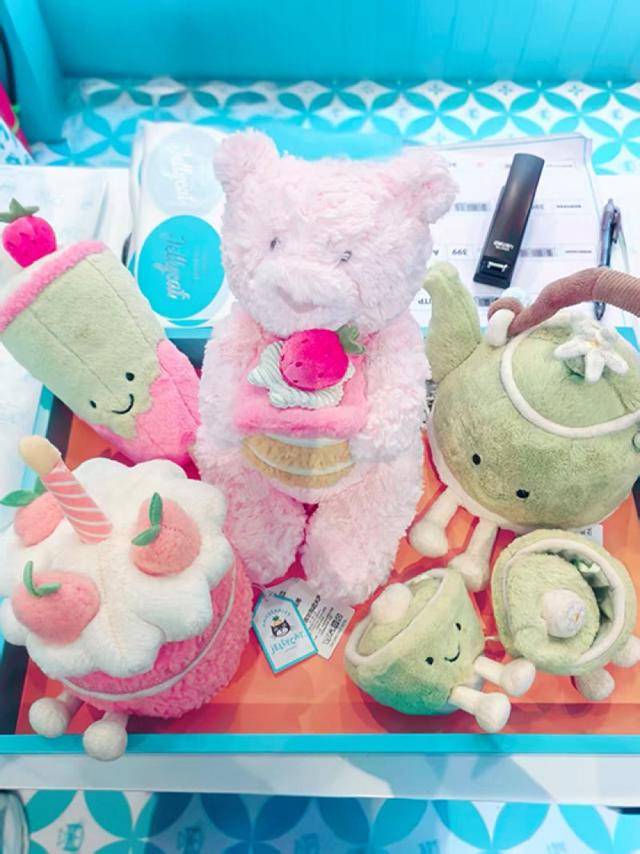
3000元扫货、均价超百元仍疯抢!Jellycat凭情绪价值拿捏全龄段钱包|华夏双节观察
Sou Hu Cai Jing· 2025-10-08 12:03
Core Insights - The article highlights the transformation in consumer behavior, emphasizing the growing importance of emotional and experiential value in purchasing decisions [4][12][17] - The popularity of Jellycat, a high-end plush toy brand, reflects this trend, as consumers are increasingly willing to queue for products that offer emotional connections and unique experiences [5][14][15] Consumer Behavior Trends - Consumers are prioritizing emotional value and experiential aspects over mere functionality when making purchases, as seen in the long queues for Jellycat's limited edition plush toys [4][12] - The phenomenon of queuing for products signifies a shift towards valuing the emotional significance and shopping experience, rather than just the product itself [4][12][17] Jellycat Brand Insights - Jellycat's global sales were estimated at approximately £150 million in 2022, with projections suggesting sales could exceed £200 million (around 18-20 billion RMB) by 2024 [14] - The brand's success is attributed to its innovative anthropomorphism in design, which resonates emotionally with consumers, particularly adults [14][15] Emotional Consumption - The article discusses how consumers view plush toys as companions that provide emotional comfort, reflecting a broader trend of seeking emotional solace through purchases [5][12][17] - The interactive experiences offered in stores, such as virtual dessert decoration, enhance the emotional connection consumers feel towards the products, making the shopping experience more memorable [10][12] Market Implications - The shift towards emotional and experiential consumption indicates that businesses must focus on unique experiences and emotional design to meet the evolving demands of consumers [17] - As consumers increasingly seek products that offer emotional fulfillment, companies like Jellycat are positioned to thrive by catering to these desires [14][17]
为情绪买单,为体验付费:超级黄金周收官,中国旅游迈向“体验经济”新时代
Yang Zi Wan Bao Wang· 2025-10-08 09:08
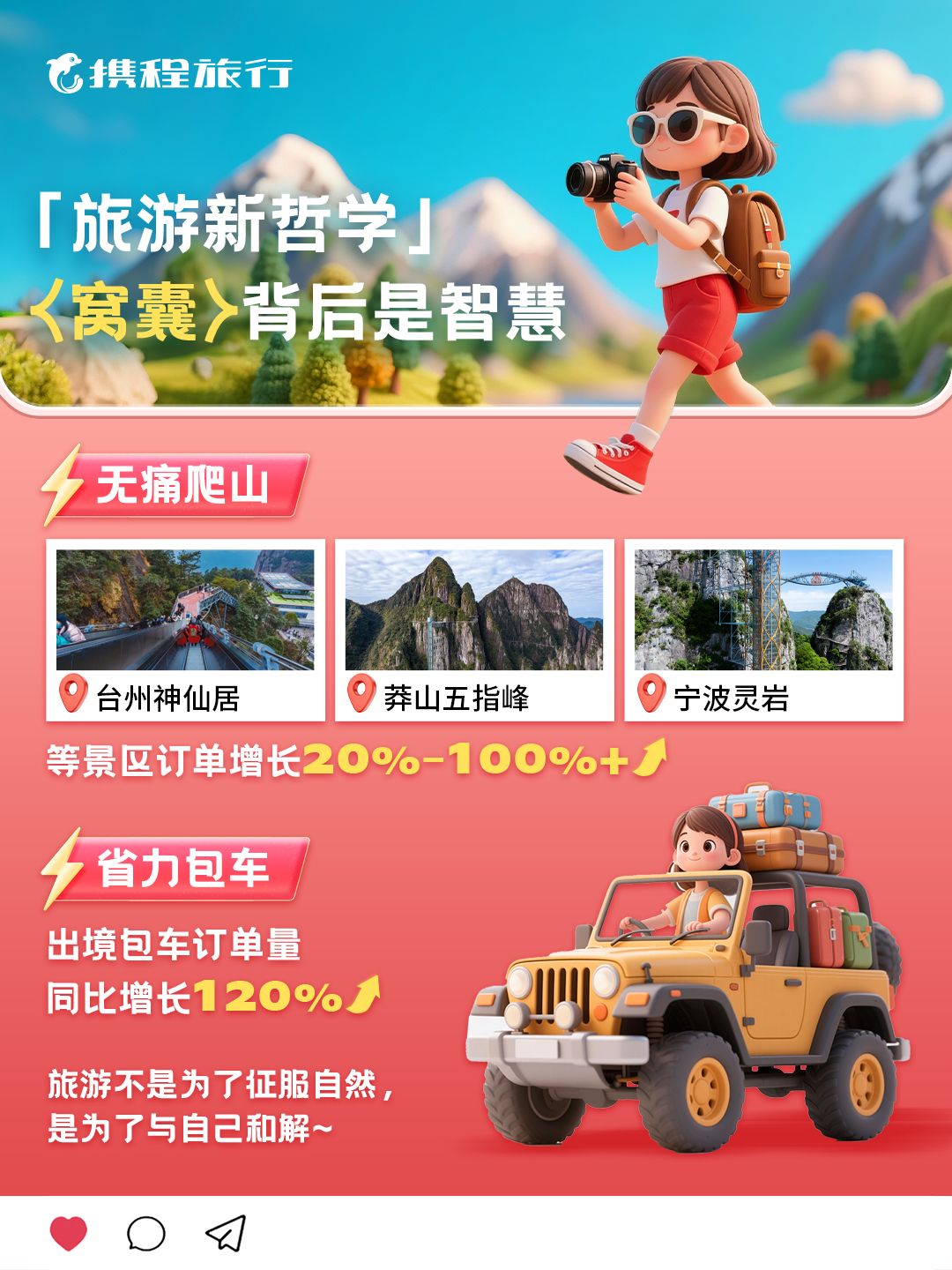
Group 1 - The core viewpoint of the articles highlights a significant shift in Chinese tourists' travel preferences towards long-distance and immersive experiences during the recent "super golden week" holiday, reflecting a deeper understanding of the meaning of travel [1][15][16] - Domestic long-distance travel orders increased by 3 percentage points year-on-year, while outbound long-distance travel orders saw a rapid growth, with several European destinations experiencing order increases of over 100% [1][15] - The rise of "relaxed tourism" emphasizes comfort and low-energy travel experiences, with ticket orders for attractions equipped with convenient facilities increasing by 20% to 100% [2][11] Group 2 - Popular long-distance travel destinations in China include Beijing, Chengdu, Shanghai, and Nanjing, with orders from remote areas like Urumqi and Lhasa increasing by nearly 30% [6][7] - Lesser-known cities are gaining popularity, with significant order growth in places like Enshi and Yuncheng, driven by their unique cultural offerings and slower pace of life [7] - The trend of segmented and staggered travel is becoming the norm, with travelers saving costs by traveling before or after the peak holiday period, leading to a notable increase in orders for off-peak travel [11] Group 3 - Outbound travel is recovering, with Japan, Thailand, and Malaysia being top choices for Chinese tourists, while European destinations like Iceland and Spain also see substantial order increases [15][16] - The inbound tourism market is thriving, with foreign tourists engaging in traditional Chinese cultural activities during the holiday, showcasing a growing interest in local experiences [16] - The overall trend indicates a shift in tourism consumption towards experiential travel, where travelers seek to immerse themselves in the destination rather than merely visiting [16]

沈阳这里连续六天,全国第一!大东区政协实施提振消费专项行动工作!|栋察楼市早报(10.8)
Sou Hu Cai Jing· 2025-10-08 05:41
Group 1: Consumer Activity and Economic Impact - Shenyang has experienced a significant increase in consumer activity during the National Day and Mid-Autumn Festival holidays, with the city ranking first in the country for six consecutive days in terms of foot traffic at shopping centers [5][6]. - The foot traffic index at Zhongjie Dayuecheng reached 52.79, representing a 112.49% increase compared to regular days [6]. - The overall tourism in Liaoning province saw a year-on-year increase of 20.55% in visitor numbers on the Mid-Autumn Festival, with a total increase of 17.60% during the holiday period [21]. Group 2: Retail and Service Sector Performance - Various shopping malls and commercial areas in Shenyang reported vibrant holiday atmospheres, with promotional activities such as discounts and loyalty programs driving consumer enthusiasm [6][7]. - The home appliance market also showed strong performance, with Su Ning's promotional activities leading to a 46% increase in store traffic [6]. - The service sector, particularly in dining and accommodation, thrived, with many restaurants experiencing long wait times and hotels reporting full occupancy during the holiday [8][9]. Group 3: Cultural and Experiential Activities - The "Museum Night" initiative allowed nine key museums in Shenyang to extend their hours, attracting large crowds and enhancing the cultural experience for visitors [16][17]. - Interactive events, such as quizzes and performances, were organized in museums to engage visitors and enrich their experience [18][19]. - Innovative activities like the immersive game "Centennial Secret" at Zhang Xueliang's former residence showcased a blend of culture and entertainment, appealing to a diverse audience [20]. Group 4: Government Initiatives and Local Development - The Dadong District Council is actively promoting consumer confidence and service sector development through specialized actions and collaborative efforts with local businesses [12][13]. - The district has seen a continuous increase in service sector value, with a reported 3.8% growth in the first half of 2025 [13]. - Local government initiatives aim to enhance market dynamics and consumer engagement through targeted policies and community involvement [15].