反内卷政策

Search documents
公募顶流四季报揭秘 科技冲锋与价值深蹲下的业绩分野
2 1 Shi Ji Jing Ji Bao Dao· 2026-01-28 23:23
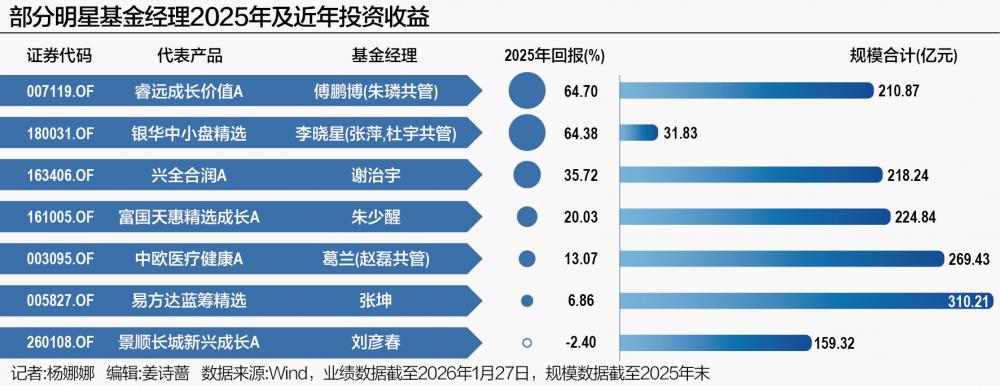
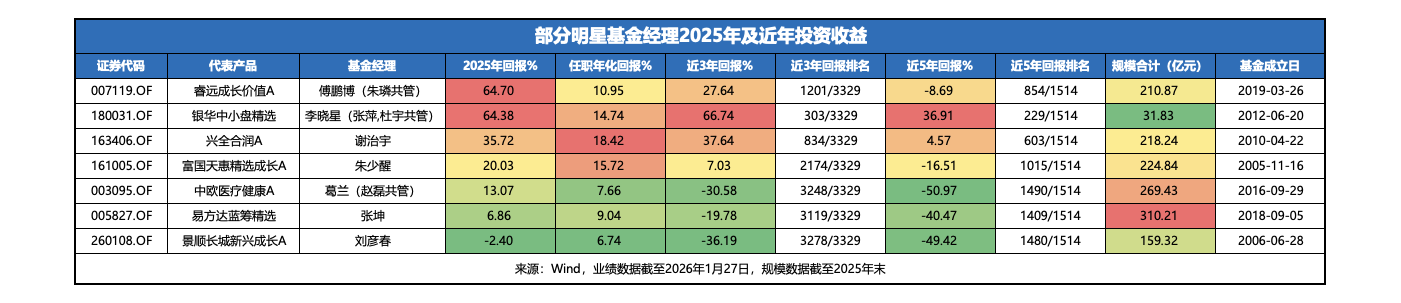
Core Viewpoint - The fourth quarter of 2025 saw increased market volatility, with A-shares and Hong Kong stocks ending the year amidst structural market trends. Major indices showed mixed performance, while sectors like AI computing and semiconductors thrived, contrasting with weaker performances in real estate, pharmaceuticals, and computing [1][2]. Group 1: Performance of Funds - Star fund managers like Fu Pengbo and Li Xiaoxing achieved significant excess returns in 2025, with their funds rising over 60% for the year, primarily due to heavy investments in AI computing and semiconductors [1]. - Balanced funds, such as Zhu Shaoxing's, demonstrated stable performance with a yearly increase of over 20%, benefiting from diversified holdings across various sectors [2][11]. - Traditional value-focused funds faced considerable net value pressure, with notable losses in the fourth quarter, particularly in sectors like consumption and pharmaceuticals [2][10]. Group 2: Investment Strategies - Funds focusing on technology growth, such as Fu Pengbo's and Li Xiaoxing's, increased allocations to data center cooling and semiconductor-related companies, reflecting a shift in their top holdings [5][6]. - Zhu Shaoxing's balanced approach, which included investments in banking and consumer sectors, effectively mitigated market volatility, leading to a net value increase [11]. - Fund managers emphasized the importance of stock selection in a concentrated market, with a focus on companies with core technological advantages and strong performance metrics [16]. Group 3: Sector Insights - The technology sector, particularly AI and semiconductors, remains a key focus for fund managers, with expectations of continued growth driven by domestic advancements [6][12]. - The pharmaceutical sector is undergoing positive changes, with improved policy environments and innovation capabilities, although some funds still faced challenges due to market adjustments [9][10]. - The consumer market is viewed positively, with strong domestic demand expected to support technological innovation and economic growth [8][10].





固定收益点评报告:2025年工业企业利润:中游利润占比持续提升
Huaxin Securities· 2026-01-28 14:50
Group 1: Report Industry Investment Rating - Not provided in the content Group 2: Core Viewpoints of the Report - In 2025, the year - on - year growth rate of the cumulative revenue of national industrial enterprises above designated size was 1.1% (2.1% in 2024), and the year - on - year growth rate of the total annual profit was 0.6% (-3.3% in 2024). Price improvement was the dominant factor, while the growth rate of industrial added value and operating profit margin remained basically stable. In December 2025, the profit growth rate turned positive, rising from -13% to 5.3%, driven by both volume and price increases [2]. - The stabilization of prices was the core of the annual profit growth. The growth rate of industrial added value of enterprises above designated size remained basically stable compared with 2024, and the policy of "anti - involution" led to an upward trend in PPIRM and PPI year - on - year growth rates since the second half of 2025, with CPI returning to the level of early 2023 by the end of the year. The operating profit margin of industrial enterprises above designated size in 2025 was 5.31% (5.39% at the end of 2024) [3]. - The proportion of mid - stream profits continued to increase, and the equipment manufacturing industry was the core engine. The profit structure of industrial enterprises was further optimized, with the profit share of upstream, mid - stream, and downstream industries being 16:48:36 in 2025 (21:44:36 in 2024). The equipment manufacturing industry's profit increased by 7.7% in 2025, driving the growth of all industrial enterprises' profits by 2.8 percentage points [4]. - The willingness of enterprises to expand their operations was weak. The year - on - year growth rate of finished product inventory of industrial enterprises above designated size in 2025 was 3.9%, 0.6 percentage points higher than in 2024. At the end of December, the asset - liability ratio of industrial enterprises was 57.6%, a slight increase of 0.1 percentage points year - on - year, and the liability growth rate was 4.2%, a decrease of 0.6 percentage points year - on - year. Inventory turned to passive destocking at the end of the year [7]. - Overall, the continuous recovery of industrial enterprises' profits in 2025 was the result of the effectiveness of "anti - involution" and industry policies, price stabilization, and industrial upgrading. High - tech manufacturing provided the core growth impetus. The market's core driver may gradually shift from "risk preference repair" and "policy expectation" to "profit verification" and "industry trend" [8]. Group 3: Summary by Related Catalogs Price Stabilization as the Core of Annual Profit Growth - Volume: The year - on - year growth rate of industrial added value of enterprises above designated size was 5.9% in 2025, basically the same as in 2024, indicating stable expansion of industrial production [3]. - Price: The policy of "anti - involution" led to an upward trend in PPIRM and PPI year - on - year growth rates since the second half of 2025, and CPI had recovered to the level of early 2023 by the end of the year [3]. - Profit Margin: The operating profit margin of industrial enterprises above designated size in 2025 was 5.31%, compared with 5.39% at the end of 2024 [3]. Mid - stream Profit Proportion Continued to Increase, with Equipment Manufacturing as the Core Engine - Industry Profit Structure: The profit share of upstream, mid - stream, and downstream industries was 16:48:36 in 2025 (21:44:36 in 2024), showing an optimization of the profit structure of industrial enterprises [4]. - Equipment Manufacturing Industry: In 2025, the profit of the equipment manufacturing industry increased by 7.7% compared with the previous year, driving the growth of all industrial enterprises' profits by 2.8 percentage points. Seven out of the eight major industries in the equipment manufacturing industry saw profit growth, with double - digit growth in the railway, ship, aerospace, and electronics industries [4]. - Upstream Raw Material Industry: Supported by the "anti - involution" policy and the recovery of some commodity prices, the profit decline of industries such as coal mining and non - ferrous metal smelting continued to narrow or the growth rate turned positive [4][6]. - Consumer Goods Manufacturing Industry: Affected by the relatively slow recovery of terminal demand, the year - on - year profit growth rates of consumer goods industries such as food manufacturing and textiles were still negative or at a low level, showing obvious structural weakness [6]. Weak Willingness of Enterprises to Expand Operations - Inventory: The year - on - year growth rate of finished product inventory of industrial enterprises above designated size in 2025 was 3.9%, 0.6 percentage points higher than in 2024. At the end of the year, inventory turned to passive destocking under the background of profit improvement and rising upstream raw material prices [7]. - Asset - Liability Ratio and Liability Growth Rate: At the end of December, the asset - liability ratio of industrial enterprises was 57.6%, a slight increase of 0.1 percentage points year - on - year, and the liability growth rate was 4.2%, a decrease of 0.6 percentage points year - on - year [7]. Asset Allocation Viewpoint - The continuous recovery of industrial enterprises' profits in 2025 was the result of the effectiveness of "anti - involution" and industry policies, price stabilization, and industrial upgrading. High - tech manufacturing provided the core growth impetus. The market's core driver may gradually shift from "risk preference repair" and "policy expectation" to "profit verification" and "industry trend" [8].
“化工牛”引热议:行业景气度迎来拐点还是阶段性反弹?
Xin Hua Cai Jing· 2026-01-28 13:30
具体来看,化工板块内部不同品种走势驱动逻辑存在一定差异。新湖期货化工研发总监施潇涵指出,合 成橡胶、PX、PTA等品种靠基本面支撑,乙二醇为超跌反弹,甲醇、LPG等受伊朗地缘因素扰动,PVC 则属于跟随上涨,宏观资金对板块轮动、产能大周期的预期也成为推涨因素。 2026年开年化工市场强势反弹,芳烃、聚酯产业链及合成橡胶等品种期价大幅走高,与此同时A股化工 板块与期货市场形成共振,"化工牛"成资本市场热议话题。这是长期下行趋势终结的信号,还是短期情 绪推动的昙花一现?行业景气度能否就此迎来根本性改善? "股期共振"下化工市场热度非凡 进入新一年,化工品市场多个品种表现亮眼。以芳烃产业链为例,纯苯、苯乙烯等期货价格自年初以来 持续攀升,截至1月28日,两个品种月度涨幅均超12%;聚酯产业链价格重心也持续上移,其中表现强 势的PTA期货价格较2025年10月的低点已涨超20%;此外,橡胶板块中,合成橡胶因原料丁二烯供应紧 张,价格涨势凌厉。股票市场上,化工ETF基金已连续上涨近半年,1月份多只龙头个股创阶段新高, 板块涨停股频现。 现货端价格同样有好转迹象。新华指数数据显示,截至2026年1月27日,中国能化现货估 ...
公募顶流四季报揭秘:科技冲锋与价值深蹲下的业绩分野
2 1 Shi Ji Jing Ji Bao Dao· 2026-01-28 12:31
Core Viewpoint - The market experienced increased volatility in Q4 2025, with A-shares and Hong Kong stocks showing mixed performance, while sectors like AI computing and semiconductors thrived, contrasting with weaker performances in real estate and pharmaceuticals [1] Group 1: Market Performance - The Shanghai Composite Index rose by 2.22% in Q4 2025, while the Hang Seng Index fell by 4.56% [1] - The technology growth sector, particularly AI computing and semiconductors, showed significant gains, while industries such as real estate and pharmaceuticals faced challenges [1] Group 2: Fund Manager Performance - Star fund managers like Fu Pengbo and Li Xiaoxing achieved over 60% returns in 2025, focusing on AI computing and semiconductors [2] - Balanced allocation funds, such as Zhu Shaoxing's, demonstrated stability with a 20% annual return, benefiting from diversified investments across various sectors [3][14] Group 3: Investment Strategies - Fu Pengbo's fund increased its allocation to data center cooling and computing-related companies, with a top ten stock concentration of 70.38% [5] - Li Xiaoxing emphasized AI hardware innovation and semiconductor investments, with a focus on domestic advancements in the semiconductor industry [6] Group 4: Traditional Value Investments - Fund managers like Zhang Kun and Liu Yanhun maintained positions in traditional sectors like consumer goods and pharmaceuticals, despite facing net value pressures [8][12] - Liu Yanhun's fund experienced a 5.85% decline in Q4, reflecting the challenges faced by traditional value sectors [12] Group 5: Policy and Market Outlook - Fund managers noted the impact of "anti-involution" policies on corporate fundamentals, suggesting a shift towards supply-side optimization [17] - Despite market rebounds, equity assets are still viewed as attractive, with a focus on high-quality listed companies as scarce income-generating assets [18]


半年20倍规模跃升,鹏华化工 ETF(159870)成化工领域机构配置标杆
Cai Fu Zai Xian· 2026-01-28 10:33
Core Insights - The chemical-themed ETF (159870) has experienced remarkable growth, expanding from 1.5 billion yuan in July 2025 to over 32 billion yuan by early 2026, marking a 20-fold increase in just six months [1][2] - The ETF has gained significant traction among institutional investors, being heavily favored by 24 public fund of funds (FOFs), indicating strong market confidence in its performance and liquidity [1][3] Group 1: Growth Trajectory - The ETF's growth trajectory is characterized by a pivotal moment in July 2025 when its size was around 1.5 billion yuan, followed by accelerated investments as the chemical industry's fundamentals improved and policy benefits were realized [2] - By the end of August 2025, the fund's size surpassed 10 billion yuan, and it continued to grow rapidly, reaching 20 billion yuan by January 12, 2026, and 32.5 billion yuan by January 28, 2026, leading the market among comparable ETFs [2] Group 2: Institutional Endorsement - The ETF has become a preferred choice for institutional investors, with 24 FOFs reported in the fourth quarter of 2025, up from 18 in the previous quarter, highlighting its appeal among professional fund managers [3][4] - The FOFs, known for their rigorous selection criteria, have recognized the ETF's strong performance, stability, and long-term investment value, further solidifying its position in the market [3] Group 3: Performance and Liquidity - The ETF has demonstrated impressive performance, with a net value growth rate of 59.33% over the past year, significantly outperforming mainstream market indices [5] - Its liquidity is robust, with an average daily trading volume of 1.5 billion yuan since the beginning of 2026, facilitating large transactions and attracting both institutional and retail investors [5] Group 4: Structural Strength - The ETF tracks the CSI sub-sector chemical industry index, which selects 50 large-cap, liquid companies, effectively capturing structural opportunities in the transition from traditional production to high-end and new energy materials [6] - The top five holdings account for 29.61% of the index, ensuring representation of leading companies while mitigating concentration risks, with notable firms like Wanhua Chemical and Salt Lake Potash among the top stocks [6] Group 5: Macro Trends - The ETF's explosive growth is a result of macroeconomic trends and industry transformations, driven by a reshaping of the global chemical landscape and the release of domestic policy benefits [7] - The shift in global chemical market shares towards China and the Middle East, coupled with domestic policies aimed at reducing competition and promoting sustainable growth, are expected to sustain high industry prosperity [8] Group 6: Future Outlook - The ETF's growth from 1.5 billion to 30 billion yuan is just the beginning, with the potential for further expansion as it continues to capture the benefits of industry transformation and global shifts [9] - The ETF serves as an efficient investment tool, offering low-cost, high-transparency, and diversified exposure to leading companies in the chemical sector, aligning with the broader trends of high-end, intelligent, and green manufacturing in China [9]
石化ETF(159731)年内吸金8亿!从有色到石化,没有一个新周期不会到来
Xin Lang Cai Jing· 2026-01-28 07:33
周期反转的号角已经吹响,聪明资金悄然布局。 数据显示,2025年12月,石油和化工行业景气指数回升至100.91,环比上涨3.7个百分点,总体呈现复苏 迹象。值得注意的是,燃料加工业景气指数为114.45,环比上升19.77个百分点,显现出强劲反弹势头。 细分领域表现更加亮眼。在"减油增化"趋势推动下,炼化企业稳步推进转型升级。同时,传统石化品逐 步向高端化转型,国产替代加速,科技助力新兴产业崛起,新材料需求空间广阔。 今年以来,石化板块悄然走强。截至1月27日,石化ETF(159731)今年以来收益率已达11.82%,远超 沪深300指数1.64%的水平。更引人注目的是,该基金连续获得资金净流入,今年以来累计"吸金"达8亿 元,规模从去年底的2.45亿元迅速飙升至1月27日的10.45亿元,创下成立以来新高。 这一持续资金流入的背后,是市场对石化产业周期底部反转的强烈预期。 01 周期、政策与资金共振 首先,行业周期反转是最大驱动力。有研究机构指出,在基本面有所改善的背景下,化工板块的配置占 比在去年四季度出现触底回升。当前板块扩产周期基本结束,盈利仍处于周期底部。 华泰证券指出,2025年下半年以来化学原 ...
四大证券报精华摘要:1月28日
Xin Hua Cai Jing· 2026-01-28 05:55
Group 1 - The core focus of the news is on the strong performance of the non-ferrous metal sector in the A-share market, with fund managers adjusting their portfolios to include cyclical sectors like coal, oil and gas, and transportation to balance their holdings [1] - As of January 27, 2025, 1,201 A-share companies disclosed their annual performance forecasts, with 475 companies expecting positive results and 107 companies predicting a doubling of net profits year-on-year [2] - The public fund of funds (FOF) has shown a significant preference for resource-related assets, with the Huaan Gold ETF being heavily favored in the first three quarters of 2025, indicating a trend towards resource investment [3] Group 2 - The Hong Kong stock market has become a key focus for public funds, with 26 new products reported in 2026, primarily targeting technology, pharmaceuticals, and cyclical sectors, and a notable net inflow of nearly 30 billion yuan into Hong Kong-themed ETFs [4] - The gold and jewelry industry is expected to undergo significant changes in 2026 due to high gold prices, leading to a shift from price competition to value competition, favoring high-quality development [5] - The private equity fund management scale reached a record high of 22.15 trillion yuan by the end of 2025, with private securities investment funds being the main contributors to new registrations [7] Group 3 - Several listed brokerages have reported positive earnings forecasts for 2025, with net profits expected to grow significantly, indicating a strong performance across the brokerage sector [8] - Over 150 companies are projected to achieve record high net profits in 2025, with the electronics industry being the largest contributor, highlighting a robust recovery in various sectors [9] - Nearly 1,250 companies have disclosed performance forecasts, with a median net profit exceeding 173 billion yuan, reflecting a nearly 100% increase compared to the previous year, indicating a strong market recovery [10] Group 4 - Insurance capital is increasingly investing in private equity funds, with China Life announcing significant investments in two funds, reflecting a trend towards diversifying asset allocation [11] - The Ministry of Human Resources and Social Security plans to expand the scale of entrusted investments for basic pension insurance funds, indicating ongoing reforms in social security systems [12] - In 2025, profits of large-scale industrial enterprises in China increased by 0.6% compared to 2024, with a notable recovery in December, particularly in the manufacturing sector [13][14]
供给收缩,需求回暖!化工ETF天弘(159133)盘中申购1.2亿份,连续20日净流入累计超10.7亿
Ge Long Hui· 2026-01-28 03:35
Group 1 - The chemical sector continues to experience strong growth, with the Tianhong Chemical ETF (159133) index rising by 2.47%, and a cumulative increase of 27.93% since December 17 of last year [1] - The Tianhong Chemical ETF has seen continuous inflows, with a net subscription for 20 consecutive days, totaling 1.07 billion yuan, and a net subscription of 121 million shares today, aiming for a "21-day capital absorption" [1] - Factors driving the inflow into the chemical ETF include supply contraction, demand recovery, and the implementation of "anti-involution" policies [1] Group 2 - Supply-side contraction is evident as global chemical production capacity is being reduced, with multiple ethylene cracking units being shut down in Europe and major reductions announced by South Korean companies [1] - Demand recovery is driven by surging needs in emerging sectors such as new energy, electronic information, aerospace, and biomedicine, particularly for chemical materials like lithium battery materials and electronic-grade polyphenylene ether [1] - The Ministry of Industry and Information Technology has introduced a "Stabilizing Growth Work Plan for the Petrochemical Industry," which aims to strictly control new production capacity and eliminate outdated capacity, thereby optimizing corporate strategies and enhancing profitability [1] Group 3 - Currently, 1,201 listed companies in A-shares have disclosed their performance forecasts for 2025, with noticeable performance recovery in sectors such as non-ferrous metals, chemicals, and semiconductors [1] - According to Baocheng Futures, the current growth in the chemical sector is not merely a result of short-term speculative capital but is supported by four core factors: stabilization of costs, optimization of supply, recovery of demand, and policy empowerment [1]



综合晨报-20260128
Guo Tou Qi Huo· 2026-01-28 02:56
Group 1: Energy and Metals Crude Oil - Nighttime oil prices rebounded significantly, with Brent crude approaching $67 per barrel and NTI close to $63 per barrel. Winter storms led to a maximum daily production loss of 2 million barrels in the US, about 15% of the national output. API inventory data showed a drawdown in crude oil, which was bullish. However, the inventory pressure in the global crude oil market in January 2026 was significant, and the long - term factor suppressing oil price increases was the loose supply - demand situation [2]. Precious Metals - The US dollar index hit a four - year low overnight, and precious metals continued to perform strongly. Gold had a solid logic, while silver and platinum had high volatility risks. Attention was paid to the Middle East situation and the Fed meeting guidance [3]. Copper - Copper prices oscillated overnight, but recovered losses in the US session. The LME spot discount widened to $93. Market focus shifted to geopolitical issues, the potential US government "shutdown" at the end of the month, and internal US conflict risks. Copper prices were expected to oscillate at a high level with a tendency to adjust [4]. Aluminum - Shanghai aluminum oscillated at a high level overnight. Spot premiums and discounts in East China, Central China, and Foshan were - 170 yuan, - 280 yuan, and 165 yuan respectively. Geopolitical games made the financial market sentiment fluctuate. Attention was paid to whether the high - level oscillation range could form a directional breakthrough [5]. Cast Aluminum Alloy - Cast aluminum alloy followed the fluctuations of Shanghai aluminum, with low market activity. Due to macro - driving and high prices, the seasonal spread between cast aluminum alloy and Shanghai aluminum would be weaker than in previous years [6]. Alumina - The operating capacity of domestic alumina remained high, with an increase in maintenance but no long - term production cuts. The alumina balance was in significant surplus. The cash cost support might be below 2,500 yuan. Alumina needed large - scale production cuts to stabilize, and short - selling on rallies was recommended when the basis was low [7]. Zinc - The external market strengthened, driving the domestic market up. The import loss of zinc ingots expanded to over 2,500 yuan per ton. Domestic traders' price - supporting sentiment rose again, and the spot premium stopped falling. High natural gas prices in Europe and the US and low TC pushed up overseas zinc smelting costs, supporting zinc prices at a high level. However, the consumption off - season still restricted the price, and zinc was expected to oscillate between 24,000 - 25,000 yuan per ton before the Spring Festival [8]. Lead - Transportation in Central and East China recovered, and primary lead smelters resumed production in late January. With insufficient downstream demand, Shanghai lead prices fell. The import profit of lead ingots narrowed to 86 yuan per ton. As lead prices dropped to 17,000 yuan, downstream inventory - building willingness increased. The refined - scrap spread was 100 yuan per ton, and the loss of recycled lead expanded. Shanghai lead was expected to oscillate between 16,800 - 17,000 yuan per ton [9]. Nickel and Stainless Steel - Shanghai nickel oscillated at a high level with active trading. After the increase in stainless steel spot prices, downstream buyers were cautious, and actual transactions were weak. The inventory of pure nickel increased by 2,700 tons to 66,000 tons, nickel - iron inventory was 29,300 tons, and stainless steel inventory was basically stable at 844,000 tons. Caution was advised due to the market's fear of high prices [10]. Tin - Overnight, the price fluctuations of domestic and international tin increased. Shanghai tin rose and then fell, with strong volume - price guidance. There had been tin ingot trading on the Indonesian exchange this month, and the domestic tin concentrate processing fee increased slightly. The tin market was closely related to silver prices, and the technical pattern was still intact. Cautious trading was recommended [11]. Lithium Carbonate - Lithium carbonate prices rose again, but market trading declined. Exchange policies affected market participation. High prices might have led to the closing of many hedging positions, with strong spot and speculative long positions being dominant, and the持仓 structure was fragile. The total market inventory decreased by 800 tons to 109,000 tons. The overall de - stocking speed slowed down. Lithium carbonate futures were in high - level oscillation, with high short - term uncertainty [12]. Polysilicon - Polysilicon futures oscillated upward, but the spot price declined. The average spot price of N - type re -投料 was 52,500 yuan per ton, down 1,500 yuan per ton from the previous day. The futures - spot spread narrowed. Battery cell prices dropped to 0.47 yuan/W, approaching the cash cost. Battery cell manufacturers were cautious about increasing production in February, mainly focusing on de - stocking. The acceptance of polysilicon price increases by downstream was low, and polysilicon had high inventory pressure. The upward space of polysilicon prices was expected to be limited [13]. Industrial Silicon - The supply of industrial silicon decreased, with production cuts in Inner Mongolia and planned cuts by large factories in Xinjiang at the end of the month. The demand in each sector was weak. The production of polysilicon in February might fall to 90,000 tons. The weekly operating rate of organic silicon was stable at around 66%. The operating rate of recycled aluminum alloy was expected to decline. Industrial silicon inventory increased to 556,000 tons. The industrial silicon market was driven by production cut expectations, and attention was paid to whether it could break through 9,000 yuan per ton. It was expected to oscillate [14]. Group 2: Steel and Related Products Rebar and Hot - Rolled Coil - Steel prices oscillated weakly overnight. In the off - season, the apparent demand for rebar decreased, production increased, and inventory accumulated. The demand and production of hot - rolled coil both declined slightly, and inventory continued to decrease. Steel mill profits were poor, and downstream acceptance ability was insufficient. The resumption of blast furnace production slowed down, and hot metal production stabilized. Domestic demand was weak, and steel exports remained high. The spot supply - demand contradiction was not significant, and the market sentiment was volatile. The market was expected to oscillate in a range [15]. Iron Ore - Iron ore prices weakened overnight. Global shipments increased and were stronger than the same period last year. Vale's reservoir had an accident. Domestic arrivals decreased from the high level, and port inventory accumulated significantly. Terminal demand was low in the off - season, and hot metal production was affected by the accident and remained low. Steel mills' imported ore inventory increased but was still at a low level. The iron ore market was generally loose, but considering the phased inventory - building demand, the price was expected to continue to oscillate [16]. Coke - Coke prices declined during the day. The first round of price increase was shelved, coking profits were average, and daily production decreased slightly. Coke inventory increased slightly, and traders' purchasing willingness was general. The carbon element supply was abundant, and downstream hot metal production was at an off - season level. It was necessary to observe whether winter inventory - building continued. Steel mills had a strong desire to suppress raw material prices. Coke futures were at a premium, and the price was likely to oscillate downward in the short term [17]. Coking Coal - Coking coal prices declined during the day. The prices of most imported coals increased, providing some support to domestic coal prices. The Mongolian coal customs clearance volume was 1,402 tons. The production of coking coal mines increased slightly, and the spot auction transactions were at a high level. Terminal inventory increased significantly. The total coking coal inventory increased slightly. The carbon element supply was abundant, and downstream hot metal production was at an off - season level. It was necessary to observe whether winter inventory - building continued. Steel mills had a strong desire to suppress raw material prices. Coking coal futures were at a premium to Mongolian coal, and the price was likely to oscillate downward in the short term [18]. Silicomanganese - Silicomanganese prices declined during the day. Manganese ore spot prices decreased. Manganese ore port inventory might start to accumulate slowly. The mine's shipping volume increased month - on - month, but the mine cost was higher than in previous years, and the price - concession space was limited. Hot metal production was at a seasonal low. The weekly production of silicomanganese changed little. Silicomanganese inventory decreased slightly. Short - selling on rallies was recommended due to oversupply and the influence of "anti - involution" policies [19]. Ferrosilicon - Ferrosilicon prices declined during the day. The power cost in some production areas decreased, but the semi - coke price increased slightly. The main production areas were still in a loss. Hot metal production was at an off - season level. The export demand was over 30,000 tons, with a marginal impact. The production of magnesium metal increased month - on - month, and the secondary demand increased marginally. The overall demand was still resilient. Ferrosilicon supply changed little, and inventory decreased slightly. Short - selling on rallies was recommended due to oversupply and the influence of "anti - involution" policies [20]. Group 3: Shipping and Fuels Container Freight Index (European Line) - In the spot market, Maersk's new cabin quotes for Week 7 - Week 9 were 1,200/1,900/2,000 and 1,260/1,995/2,100, with some routes slightly lower than the previous period. Facing the pre - holiday return cargo pressure, spot quotes continued to decline. The new threat from the Houthi rebels in the Red Sea had limited impact on near - month contracts, and the impact on far - month contracts was also expected to be limited. Before the Spring Festival, the market lacked driving forces and was expected to oscillate. After the festival, the focus would be on whether the export tax rebate "roll - back" policy could trigger "rush shipments" and its actual implementation [21]. Fuel Oil and Low - Sulfur Fuel Oil - Driven by geopolitical factors, bad weather in North America, and the fire at a Kazakhstani oil field, the cost of crude oil increased, driving fuel oil prices up. The uncertainty of the Middle East geopolitical situation provided support for high - sulfur fuel oil. The congestion at the Singapore port made the spot market slightly tight, making fuel oil perform relatively strongly in the oil product system. For low - sulfur fuel oil, the supply in Singapore was previously tight but the spot structure changed from premium to discount, indicating a marginal relief of the tight situation. The strengthening of diesel cracking supported the strengthening of low - sulfur cracking. In the medium term, the supply was expected to increase slightly. Fuel oil was expected to continue to oscillate strongly following crude oil, but the differentiation between high - and low - sulfur fundamentals still existed [22]. Asphalt - Nighttime oil prices rose sharply, and asphalt followed. Kpler data showed that the shipment of Venezuelan oil to China had decreased significantly since January, and refineries were expected to face problems such as increased costs of alternative raw materials in the later part of the first quarter. The cost - end support made asphalt oscillate strongly [23]. Group 4: Chemicals Urea - The spot prices of urea in the mainstream regions were stable with a slight increase. Before the Spring Festival, the industrial downstream demand was expected to decline, and the large - scale spring plowing fertilizer - stocking demand had not started, with only sporadic purchases. The supply pressure remained, and the snow and rain weather affected the transportation in some inland markets. However, downstream enterprises had inventory - building needs before the festival, and the price would continue to fluctuate within a range [24]. Methanol - The overseas methanol plant operating rate remained low, and the coastal demand decreased. The concentrated unloading of foreign vessels led to a slight increase in port inventory. The Ningbo Fude MTO plant restarted over the weekend, but the olefin plants of Sierbang and Shandong Hengtong stopped. The high port inventory might suppress the market. The short - term geopolitical situation was still highly uncertain, and the market was expected to oscillate firmly [25]. Pure Benzene - The import volume of traditional benzene increased, and the inventory at Jiangsu ports increased slightly. The profit of downstream styrene improved, and the operating rate increased, driving up the demand for pure benzene. The short - term geopolitical situation and cost fluctuations were large, and the market might be under pressure as the supply increased [26]. Styrene - The cost end continued to provide support. In terms of supply - demand fundamentals, although some plants resumed production, the domestic supply still decreased, and the downstream demand decreased steadily. As the pre - Spring Festival stocking period was coming to an end, the price was under short - term pressure [27]. Polypropylene, Plastic, and Propylene - The futures of polypropylene and plastic showed a strong performance, and local downstream inventory - building drove up the buying enthusiasm. Propylene enterprises' inventory was at a low level, and the offers were raised to different extents. The actual order auction premiums were obvious, and the transaction center increased significantly. The futures of plastic and polypropylene showed a top - divergence pattern. For polyethylene, the production enterprise's plant maintenance decreased, and the import resources arrived successively, increasing the market supply pressure. The downstream factories were gradually on holiday, and the production load decreased. For polypropylene, the rising propane and international oil prices strengthened the cost support, and the enterprise's ex - factory prices were continuously raised, boosting the market's high - price atmosphere. However, the new orders were insufficient, and the downstream enterprises were more resistant to high - price raw materials [28]. PVC and Caustic Soda - PVC prices oscillated overnight. The factory inventory decreased, but the social inventory increased, and the overall inventory still had pressure. The number of maintenance increased slightly, and the operating rate decreased slightly. The export orders were good, but the domestic demand was average. The calcium carbide price decreased, weakening the cost support. PVC was expected to reduce production capacity this year, and with possible rush exports, the price center was expected to rise. Caustic soda prices oscillated overnight. The purchase price of liquid caustic soda for Shandong alumina decreased. The industry inventory fluctuated slightly and remained at a high level. The liquid chlorine price was strong, and the profit of chlor - alkali integration was acceptable. The caustic soda operating rate was high. The downstream alumina operating rate remained high, with rigid demand, but the industry was generally in a loss, and it was necessary to continue to track whether there would be production cuts; non - aluminum demand was mainly for rigid purchases. The industry was in a situation of high operating rate and high inventory, and the profit of chlor - alkali integration was expected to be further compressed [29]. PX and PTA - The chemical market declined yesterday, and PX and PTA partially gave back their recent gains. However, the overnight oil price increase slowed down their adjustment. Polyester de - stocked smoothly before the Spring Festival. PX would have new capacity in the second half of the year, while PTA had none, so they were recommended for long - position allocation in the first half of the year. However, the current demand was declining, and there was an expectation of inventory accumulation around the Spring Festival, with a weak reality. In the second quarter, based on the PX maintenance and polyester production increase expectations, opportunities for long - position allocation of PX processing margin on dips and positive spreads after the spread decline could be considered, but it needed the cooperation of downstream demand. Attention should be paid to the post - festival PX and polyester balance [30]. Ethylene Glycol - The port inventory increased on Monday compared with last Thursday, and there was an expectation of continuous inventory accumulation around the Spring Festival. Ethylene glycol faced resistance at the 4,000 - yuan integer level and fell back. In the second quarter, there were expectations of concentrated maintenance and demand recovery, and the supply - demand situation might improve temporarily. However, due to capacity growth, ethylene glycol was still under long - term pressure, and it was recommended to focus on band trading [31]. Short - Fiber and Bottle - Grade PET - Short - fiber enterprises had a high operating rate and low inventory. However, the downstream orders were weak, and the profit was thin. As the Spring Festival approached, textile enterprises would gradually go on holiday, and the terminal production tended to stop. Short - fiber prices followed the raw material adjustment. The operating rate of bottle - grade PET decreased, and the processing margin improved under the low - load and relatively low - inventory situation. In the short term, it followed the raw material adjustment and declined. In the medium term, attention should be paid to the post - Spring Festival inventory performance, and spread opportunities could be considered. In the long term, there was still capacity pressure [32]. Group 5: Building Materials Glass - Glass prices oscillated overnight. The spot price center slightly increased, and the inventory fluctuated slightly. As the downstream was about to go on holiday, there might be inventory accumulation pressure. All three types of fuel production lines were in a loss, and the production capacity changed little recently. The processing orders were still sluggish, with southern orders better than northern ones. As the downstream was approaching the holiday, glass might experience seasonal inventory accumulation, but the current valuation was low, and it might fluctuate with the macro - sentiment. Attention should be paid to the subsequent production capacity changes [33]. 20 - Rubber, Natural Rubber, and Butadiene Rubber - International crude oil futures prices rose, and the prices of raw materials in the Thai market varied. The global natural rubber supply entered the production - reduction period, with the Vietnamese production area gradually stopping production. The operating rate of domestic butadiene rubber plants slightly decreased last week, while the operating rate of upstream butadiene plants increased again. The operating rate of domestic all - steel tires slightly decreased, and the operating rate of semi - steel tires continued to increase significantly. The finished - product inventory of Shandong tire enterprises continued to increase. The total natural rubber inventory in Qingdao slightly decreased to 584,400 tons, the social inventory of Chinese butadiene rubber increased to 15,600 tons, and the
数据点评 | 12月工企利润:8月故事再现(申万宏观·赵伟团队)
申万宏源研究· 2026-01-28 01:23
Core Viewpoints - December profits showed a significant rebound, primarily driven by other income items rather than revenue and cost contributions, resembling the performance in August [3][9] - The overall industrial enterprise profit in December increased by 5.1 percentage points year-on-year to 18.5%, with profit margins contributing 21.7 percentage points to profit growth [3][9] - The increase in profits was largely attributed to short-term indicators such as investment income and miscellaneous expenses, which rose significantly compared to the previous month [3][9] Industry Analysis - In December, certain industries such as non-ferrous processing and coal mining saw substantial profit increases, contributing 5.7 and 4 percentage points to overall profit growth, respectively [3][16] - The revenue and cost pressures in these industries did not exhibit "excessive" changes, indicating that other income sources played a significant role in profit increases [3][16] - Similar to August, the beverage and alcohol sectors also contributed significantly to overall industrial profits, with a 7.8 percentage point increase [3][16] Cost Analysis - In December, the cost pressure for industrial enterprises slightly improved, with the overall cost rate falling to 83.6%, remaining stable compared to the previous year [4][27] - The cost rates for the petrochemical and metallurgy sectors improved significantly, dropping to 84.3% and 84.5%, respectively, lower than the previous year's figures [4][27] - Specific industries such as non-ferrous rolling, petroleum and coal processing, and metal products also experienced a decline in cost rates [4][27] Revenue Analysis - December saw a decline in industrial enterprise revenue, with actual revenue growth dropping 3.9 percentage points year-on-year to -2.1% [4][39] - All three major industrial chains experienced revenue declines, with the petrochemical, metallurgy, and consumer chains showing year-on-year decreases of 1.2, 2.8, and 4.2 percentage points, respectively [4][39] - The revenue decline was particularly pronounced in the automotive, metal products, and furniture sectors, with significant drops in growth rates [4][65] Summary - High cost rates remain a key constraint on profit recovery, with the "anti-involution" policy expected to accelerate in 2026, necessitating close attention to its impact on industrial enterprise cost pressures [5][93] - The current increase in profit pressure is primarily due to downstream involution-style investments, leading to rising fixed cost pressures [5][93] - Future improvements in cost pressures are anticipated as the "anti-involution" policy is further implemented and enterprises accelerate debt repayments [5][93]