
新型城镇化

Search documents
熊征宇调研黄陂区、新洲区:抓实项目建设做强产业支撑,统筹推进新型城镇化和乡村全面振兴
Chang Jiang Ri Bao· 2025-12-24 01:00
Group 1 - The core message emphasizes the importance of high-quality development and the integration of urban and rural areas, as well as the need to implement the directives from the Party's 20th Central Committee and the significant speeches by General Secretary Xi Jinping [1] - In Huangpi District, the focus is on advancing new industrialization, enhancing investment attraction, and developing advanced manufacturing industry clusters, while also addressing ecological and environmental issues [1] - The development of modern urban agriculture and the integration of cultural tourism are highlighted as essential for improving living standards and creating livable rural areas [1] Group 2 - In Xinzhou District, the emphasis is on seizing opportunities in the commercial aerospace industry and enhancing the "China Star Valley" initiative through targeted investment and technological advancements [2] - The district aims to improve urban infrastructure and public services to enhance urban capacity and attractiveness, while also promoting rural revitalization and the integration of agriculture with other industries [2] - The focus on increasing agricultural productivity and quality is aimed at boosting farmers' income and overall rural development [2]
经济日报:理性看待房地产开发投资下降
Xin Lang Cai Jing· 2025-12-24 00:17
Group 1 - The core viewpoint of the articles indicates a significant decline in real estate development investment, with a year-on-year decrease of 15.9% from January to November, reflecting both the implementation of control measures and a natural market adjustment [1] - The decline in real estate investment is attributed to strict control over new developments, leading to a structural shift from high demand to an oversupply situation, making it impossible to rely on land sales for fiscal revenue [1] - The increasing role of second-hand housing is highlighted, with second-hand transactions accounting for 45% of total housing transactions by November 2025, and major cities like Shenzhen and Shanghai seeing transaction volume growth of 20% to 30% [1] Group 2 - The total transaction volume of new and second-hand homes in 30 key cities has stabilized, indicating a halt in the decline, despite adjustments in new home sales due to high base figures from the previous year [2] - The current situation shows that the sales area of commercial housing exceeds the area of new construction, indicating effective inventory reduction, and calls for tailored policies to manage supply and demand [2] - Long-term prospects for new urbanization in China remain positive, with significant potential for optimizing urban stock and meeting the public's expectations for high-quality housing [2]
深学笃行聚合力 实干担当促发展
Xin Lang Cai Jing· 2025-12-23 22:11
在贵州广电大数据园区综合体二标段项目,该项目党支部开展"学习贯彻党的二十届四中全会精神"主题 党日活动,全体党员逐字逐句研读全会《公报》,结合项目竣工收尾阶段的重点任务开展专题研讨。当 前,该项目结算确权、清收清欠、安全维稳等工作交织,党支部党员主动亮身份、扛责任,带头加班加 点攻坚突破,积极与建设单位沟通对接,成功完成近3000万元的重计量确权工作,为项目结算收款打通 了关键一环。 转自:贵州日报 劳动竞赛热潮涌动,冲刺年度任务号角嘹亮;"共产党员 守护安全"行动扎实推进,为企业安全稳定保 驾护航……党的二十届四中全会召开以来,中铁建设西南公司党委闻令而动、迅速部署,通过党委理论 学习中心组专题学、"三会一课"系统学、主题党日实践学等多种形式,在全公司上下掀起学习贯彻全会 精神的热潮。全体干部职工坚持以学促思、以思促行、以行促效,不断把学习成效转化为破解难题、推 动企业高质量发展的强劲动能。 "我们要围绕新质生产力、绿色低碳、数字化转型等重点,推动传统业务与战略性新兴产业协同发 展。"在该公司党委理论学习中心组学习研讨会上,班子成员结合企业改革发展实际,围绕全会公报核 心要义及"十五五"规划建议重点内容展开 ...
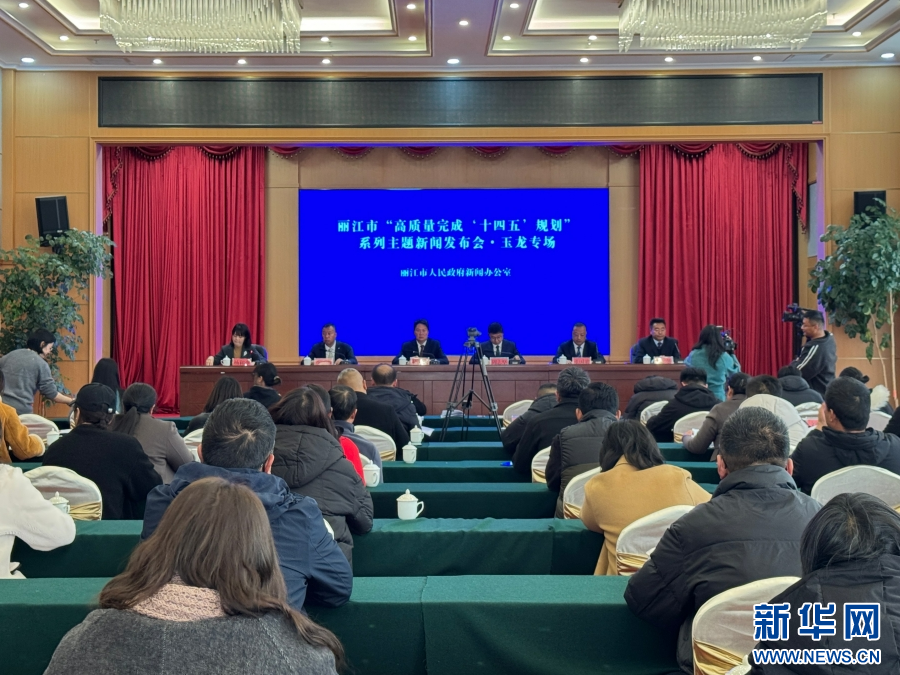
“十四五”以来丽江市玉龙县锚定做“美”定位 筑牢发展根基
Xin Hua Wang· 2025-12-23 14:59
Core Viewpoint - The Yulong Naxi Autonomous County in Lijiang, Yunnan Province, is focusing on high-quality development aligned with the "14th Five-Year Plan," emphasizing ecological safety, rural revitalization, and tourism as key growth areas [1][2]. Economic Development - The GDP of Yulong County is projected to increase from 9.015 billion in 2020 to 12.908 billion in 2024, indicating steady economic growth [2]. - The county is enhancing its agricultural sector, with over 30,000 households engaged in traditional Chinese medicine cultivation and the development of various fruit crops [2]. - Infrastructure improvements include the completion of major projects like the Lijiang-Shangri-La Railway and the Dagu Jinsha River Bridge, expanding the total road mileage to 5,700 kilometers [2]. Urbanization and Rural Revitalization - Yulong County is advancing urbanization and rural revitalization, with the urbanization rate rising to 40.65% [2]. - The county is implementing the "Ten Million Project" to support rural development and promote local industries through initiatives like "One Town, One Feature" and "One Village, One Product" [2]. Ecological and Social Development - The county is committed to ecological development, achieving a forest coverage rate of 70.95% and enhancing the income of over 8,000 farming households through the development of the forest economy [3]. - Employment initiatives have led to the creation of 7,735 new jobs, with 5,011 jobs generated through entrepreneurship, and a significant increase in educational opportunities with 2,700 new urban school placements [3]. - The overall satisfaction and sense of security among residents exceed 96%, reflecting a harmonious social environment [3].

合肥城建涨2.04%,成交额2.62亿元,主力资金净流出2162.75万元
Xin Lang Cai Jing· 2025-12-23 03:34
Core Viewpoint - Hefei Urban Construction's stock price has shown significant volatility, with a year-to-date increase of 55.13% and a recent 2.04% rise, indicating strong market interest despite some fluctuations in trading volume and net capital outflow [1][2]. Group 1: Stock Performance - As of December 23, Hefei Urban Construction's stock price reached 11.03 CNY per share, with a trading volume of 2.62 billion CNY and a turnover rate of 3.01%, resulting in a total market capitalization of 8.86 billion CNY [1]. - The stock has experienced an 8.78% increase over the last five trading days, a 0.99% decrease over the last 20 days, and a 65.37% increase over the last 60 days [1]. - The company has appeared on the trading leaderboard eight times this year, with the most recent instance on November 24, where it recorded a net buy of -110 million CNY [1]. Group 2: Financial Performance - For the period from January to September 2025, Hefei Urban Construction reported a revenue of 6.36 billion CNY, reflecting a year-on-year growth of 17.00%, while the net profit attributable to shareholders was -39.25 million CNY, a decrease of 144.55% compared to the previous year [2]. - The company has distributed a total of 603 million CNY in dividends since its A-share listing, with 108 million CNY distributed over the last three years [3]. Group 3: Shareholder Information - As of September 30, 2025, the number of shareholders for Hefei Urban Construction increased to 48,300, marking an 11.01% rise, while the average circulating shares per person decreased by 9.91% to 16,618 shares [2]. - Among the top ten circulating shareholders, Hong Kong Central Clearing Limited holds 5.54 million shares, an increase of 20,600 shares from the previous period, while the Southern CSI Real Estate ETF has reduced its holdings by 37,300 shares to 5.08 million shares [3].

节能铁汉跌2.22%,成交额3236.51万元,主力资金净流出46.21万元
Xin Lang Cai Jing· 2025-12-23 02:48
Core Viewpoint - The stock price of Energy Iron Han has experienced a significant decline of 23.81% this year, with recent trading showing no recovery in the last five days, indicating potential challenges for the company in the market [2]. Group 1: Stock Performance - As of December 23, Energy Iron Han's stock price fell by 2.22% to 1.76 CNY per share, with a trading volume of 32.37 million CNY and a turnover rate of 0.61% [1]. - The company has seen a net outflow of 462,100 CNY in principal funds, with large orders accounting for 19.02% of purchases and 20.45% of sales [1]. - Year-to-date, the stock has dropped 23.81%, with a 12.00% decline over the past 20 days and no change in the last five days [2]. Group 2: Company Overview - Energy Iron Han, established on August 7, 2001, and listed on March 29, 2011, is based in Shenzhen, Guangdong Province, focusing on ecological and environmental governance [2]. - The company's main business segments include ecological environmental protection (49.61% of revenue) and ecological landscape (48.75%), with other segments contributing 1.65% [2]. - The company operates within the construction decoration and basic infrastructure sectors, with involvement in concepts such as rural revitalization and new urbanization [2]. Group 3: Financial Performance - For the period from January to September 2025, Energy Iron Han reported a revenue of 606 million CNY, reflecting a year-on-year decrease of 37.09%, and a net profit attributable to shareholders of -878 million CNY, down 38.61% year-on-year [2]. - The company has not distributed any dividends in the last three years, with a total payout of 428 million CNY since its A-share listing [3]. - As of September 30, 2025, the number of shareholders increased to 53,200, while the average circulating shares per person decreased by 0.23% to 55,771 shares [2].

蕾奥规划(300989) - 2025年12月19日投资者关系活动记录表
2025-12-22 09:30
Company Overview - The company aims to become a "smart city planning and operation expert" and is focusing on internal management and operational efficiency to address challenges in traditional planning business due to market shrinkage and increased competition [2][3]. Financial Performance - In the first three quarters of 2025, the company achieved revenue of 1,128.05 million CNY, with a year-on-year increase of 2.22% and a net profit of 403.27 million CNY, reflecting a significant growth of 141.98% [2][3]. R&D and Innovation - R&D expenses reached 2,148.75 million CNY, accounting for nearly 10% of total revenue, with several innovative platforms developed, including "Urban Radar" and "CIM" service platforms [3][4]. Low-altitude Economy Development - The company has made significant progress in the low-altitude economy sector, successfully winning multiple project bids and becoming a member of the Guangdong-Hong Kong-Macao Greater Bay Area Low-altitude Economy Industry Alliance [4][5]. New Urbanization Strategy - The company is aligning with the new urbanization trends, focusing on integrated urban operation services and promoting replicable project models to enhance service offerings [5][6]. "Hundred Cities, Thousand Enterprises, Trillion" Plan - The company has established a "City Operation Industry Alliance" to foster collaboration among various stakeholders, linking over 300 resources related to scene operation and promoting standardized product offerings [6]. International Expansion - The company is actively pursuing international markets in line with the Belt and Road Initiative, establishing a subsidiary in Hong Kong and exploring opportunities in countries like Thailand and Nigeria [6].
华设集团涨2.06%,成交额8023.91万元,主力资金净流出177.93万元
Xin Lang Zheng Quan· 2025-12-22 03:05
Group 1 - The core viewpoint of the news is that Huasheng Group's stock has shown fluctuations, with a recent increase in price and changes in trading volume, indicating market interest and potential investment opportunities [1][2]. - As of December 22, Huasheng Group's stock price was 7.91 yuan per share, with a market capitalization of 5.409 billion yuan. The stock has decreased by 2.47% year-to-date but has increased by 8.06% in the last five trading days [1]. - The company reported a revenue of 2.543 billion yuan for the period from January to September 2025, a year-on-year decrease of 5.52%, and a net profit of 186 million yuan, down 19.99% year-on-year [2]. Group 2 - Huasheng Group's main business segments include surveying and design (49.75%), low-carbon and environmental services (12.81%), and comprehensive testing (11.14%), among others [1]. - The company has distributed a total of 1.249 billion yuan in dividends since its A-share listing, with 455 million yuan distributed in the last three years [3]. - As of November 10, the number of shareholders increased to 30,500, with an average of 22,400 circulating shares per person, indicating a slight decrease in individual shareholding [2].

坚持全国“一盘棋” ——优化区域经济布局,促进区域协调发展
Ren Min Ri Bao· 2025-12-22 00:50
Core Viewpoint - Regional coordinated development is an inherent requirement of Chinese-style modernization, emphasizing the need for balanced growth across diverse regions with varying natural resources and economic capabilities [1]. Group 1: Regional Development Strategies - The "14th Five-Year Plan" suggests leveraging the strategic overlay of regional development, major strategic initiatives, and new urbanization to optimize productivity layout and enhance regional economic structures [1]. - The focus is on creating new growth engines in key areas such as Beijing-Tianjin-Hebei, Yangtze River Delta, and Pearl River Delta, which are expected to drive high-quality national development [1]. Group 2: Case Studies of Regional Success - Anhui province has emerged as a leader in the automotive manufacturing sector, with a production volume of 2.404 million vehicles and exports of 802,000 vehicles in the first three quarters of the year, both ranking first in the country [3]. - Qinghai province is developing a green, low-carbon circular economy centered around salt lake resources, with an expected revenue exceeding 100 million yuan this year from lithium extraction technologies [3]. Group 3: Collaborative Development Initiatives - The establishment of the Sichuan-Chongqing Gaotong New Area represents a pioneering effort in cross-provincial collaboration, with significant reforms in tax policies and administrative processes to enhance economic integration [7]. - The region has signed 10 major projects this year with a total investment of 2.94 billion yuan, showcasing the effectiveness of collaborative governance [7]. Group 4: Urbanization and Economic Growth - The urbanization rate in China is projected to exceed 70% during the "14th Five-Year Plan" period, indicating substantial potential for urban development and economic growth [11]. - The integration of rural and urban economies is highlighted as a key driver for new urbanization, with significant improvements in logistics and e-commerce in rural areas, such as the Hanfu industry in Shandong [10].
坚持全国“一盘棋”——优化区域经济布局,促进区域协调发展
Ren Min Ri Bao· 2025-12-21 23:42
Group 1 - Regional coordinated development is an inherent requirement of Chinese-style modernization, addressing the significant disparities in natural resource endowments across different regions [1] - The "14th Five-Year Plan" emphasizes the need to leverage the strategic overlay effects of regional coordination, major strategic initiatives, and new urbanization strategies to optimize productivity layout and promote high-quality regional economic development [1] - The focus is on forming new driving forces for high-quality development, particularly in key regions such as Beijing-Tianjin-Hebei, Yangtze River Delta, and Pearl River Delta [1] Group 2 - Anhui province has emerged as a leader in the automotive manufacturing industry, with a significant increase in production and exports, showcasing the benefits of strategic positioning and regional collaboration [2][3] - Qinghai province is developing a green low-carbon circular industry centered around salt lake resources, with a projected revenue exceeding 100 million yuan this year, highlighting the importance of technological advancements and ecological safety [3] - The integration of regional advantages and tailored strategies is crucial for promoting high-quality development across various regions, as demonstrated by the initiatives in Hebei, Guangdong, Hunan, and Heilongjiang [4] Group 3 - The "14th Five-Year Plan" calls for regions to identify their strengths and avoid simple imitation, focusing on comparative advantages to enhance regional economic layouts [5] - The establishment of the Sichuan-Chongqing Gaotong New Area represents a pioneering effort in cross-provincial collaboration, with significant reforms and investments aimed at fostering economic vitality [6][7] - The integration of coastal city clusters such as Beijing-Tianjin-Hebei, Yangtze River Delta, and Guangdong-Hong Kong-Macau Greater Bay Area is driving high-quality development, with regional GDP reaching new heights [8] Group 4 - Urbanization is a critical pathway to modernization, with a focus on promoting new urbanization centered on human needs, particularly in county-level economies [9][10] - The transformation of traditional agricultural counties into vibrant e-commerce hubs illustrates the potential of rural revitalization and urban-rural integration [10] - The urbanization rate is expected to exceed 70% during the "14th Five-Year Plan" period, with initiatives aimed at reducing regional and urban-rural disparities [11]