
智能网联汽车

Search documents
车市2025|从监管智驾到准许L3上路 十大事件解码多维博弈
Xin Jing Bao· 2026-01-08 08:45
Core Insights - The Chinese automotive market in 2025 is undergoing a multifaceted transformation driven by policy regulations, capital restructuring, technological breakthroughs, and safety standards, marking a significant shift from mere technological iterations to a comprehensive industry evolution [1] Regulatory Changes - The Ministry of Industry and Information Technology (MIIT) has mandated that automotive companies clarify system functionalities and safety responses, effectively ending the use of vague terms like "L2.999" and "quasi-L3" in marketing, promoting a focus on safety over flashy terminology [2] - A new regulation requires large enterprises to pay small and medium-sized suppliers within 60 days, significantly reducing the previous average payment period of 170-200 days, thus improving cash flow for smaller suppliers and enhancing the overall supply chain stability [3][4] Industry Restructuring - The establishment of the China Changan Automobile Group as a new state-owned enterprise marks a significant shift in the industry landscape, enhancing decision-making autonomy and financing capabilities, and allowing a concentrated focus on new energy and intelligent vehicles [5] - Dongfeng Group has accelerated its transformation by divesting inefficient fuel assets and focusing on high-end new energy brands, exemplifying a successful capital operation strategy in the traditional automotive sector [6][7] Safety and Quality Standards - New safety regulations for hidden door handles in vehicles emphasize that aesthetics should not compromise safety, requiring mechanical emergency functions to be retained in designs, thus addressing safety concerns in the industry [8] - A significant lawsuit against battery manufacturer Xinwanda highlights the critical importance of quality in the battery sector, as a major claim for 2.314 billion yuan has been filed due to quality issues, prompting a shift towards prioritizing quality over mere scale in the industry [12][13] Strategic Collaborations - A partnership between FAW Group and Leap Motor, involving a 3.74 billion yuan investment, illustrates a strategic collaboration aimed at leveraging each other's strengths in manufacturing and technology, potentially enhancing both companies' market positions [14]
Robotaxi-行业近况更新
2026-01-08 02:07
Summary of Robotaxi Industry Conference Call Industry Overview - The Robotaxi industry is experiencing accelerated development due to the opening of autonomous driving road rights, expanding from remote areas like Shanghai Lingang to the entire Pudong and Minhang districts. Other cities such as Beijing, Guangzhou, Shenzhen, and Hangzhou are following similar trends, with large-scale rollout expected by 2026 [1][2]. Key Points and Arguments Policy and Regulatory Changes - Significant changes in policy and enterprise progress in L4 and L3 autonomous driving are noted, with 2025 being seen as the "Robo Taxi Year." The opening of road rights has expanded significantly, with Shanghai allowing operations in popular areas by 2025 [2]. - Platforms must now apply for demonstration operation licenses through local ride-hailing or taxi companies, limiting the direct operational profitability of tech platforms [1][2]. - The assessment for intelligent connected vehicle licenses involves three stages: road testing, demonstration application, and demonstration operation, with a total of 12 types of licenses being gradually integrated across regions [3]. Technological Approaches - Three main technological routes are identified: 1. High-precision map solutions, exemplified by companies like Baidu and Pony.ai, which are mature but costly [4]. 2. Clear map or no-map solutions that rely on advanced algorithms, reducing mapping costs but increasing algorithm complexity [4]. 3. Pure visual end-to-end solutions, like those used by Tesla, which can operate without signals or navigation, closely mimicking human driving [4]. Market Participants - The domestic Robotaxi market consists of three main groups: 1. Technology companies (e.g., Baidu, Pony.ai) with high single-vehicle costs. 2. OEM-backed platforms (e.g., T3 Mobility, Cao Cao Mobility) with lower vehicle costs but weaker algorithm capabilities. 3. Traffic platforms (e.g., Didi, Amap) leveraging user data to enhance competitiveness [5][6]. Commercialization Progress - Companies are nearing single-vehicle breakeven, with Baidu and Pony.ai optimizing hardware and service quality to expand market coverage [7]. - Baidu has deployed 3,000 vehicles, primarily in Wuhan, with daily rides averaging 12-18. Pony.ai operates in major cities but on a smaller scale [11]. Financial Metrics - Baidu's vehicle cost is approximately 280,000 RMB, with daily operational costs around 290 RMB, achieving breakeven in Wuhan and profitability in Shanghai. Pony.ai's daily revenue in Guangzhou is about 299 RMB with a 40% utilization rate [15][16]. Future Industry Landscape - The Robotaxi industry is expected to evolve into three main player types: license holders (local taxi or ride-hailing companies), OEMs with vehicle manufacturing capabilities, and traffic platforms benefiting from data and mapping services [18]. - Amap is positioned to gain significant market share in the autonomous driving sector due to its large user base and partnerships with OEMs [19]. Cost Differences - Operational costs for overseas Robotaxi services are significantly higher than in China, with costs in regions like the Middle East and Europe being 1.5 times higher, and vehicle prices three times higher than in China [21]. Data and Connectivity Costs - Robotaxi operations incur substantial data costs, with each vehicle generating approximately 40GB of data daily, leading to high monthly expenses for data storage and processing [20]. Additional Important Insights - The industry is witnessing a shift towards lower vehicle-to-driver ratios, which will reduce data transmission volumes and associated costs, indicating a trend towards profitability and cost reduction in the Robotaxi sector [22][23].

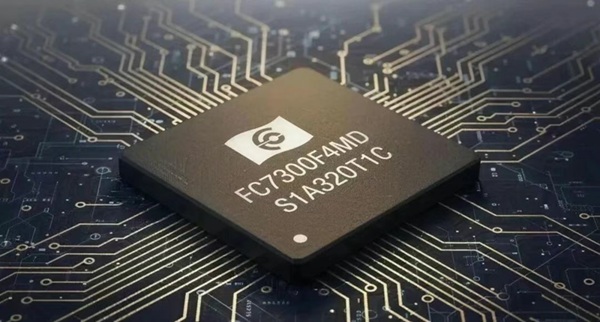
旗芯微: FC7300F4MDS 控制器完成测试 2026 年 2 月供样 筑牢汽车安全计算核心
Zhong Guo Qi Che Bao Wang· 2026-01-08 01:19
Core Insights - The new generation functional safety ASIL D level controller FC7300F4MDS from Qichip Micro has successfully completed full-process testing and is scheduled to provide samples to customers by February 2026, marking a breakthrough in the company's technology in the core computing field of intelligent connected vehicles [1] Group 1: Product Features - ASIL D certification is the highest level of automotive functional safety, applicable to safety-critical automotive electronic components, including Electronic Power Steering (EPS) and Automatic Emergency Braking (AEB) [3] - The FC7300F4MDS targets high-demand applications such as EPS, Battery Management Systems (BMS), Vehicle Control Units (VCU), onboard terminals (T-box), AEB, and suspension control, adapting to the evolution of vehicle architecture from "central computing + regional control" [3] Group 2: Hardware and Performance - The FC7300F4MDS features significant hardware upgrades, including a new SSI interface and an enhanced PWM module (eFTU), supporting various protocols for complex sensor data collection [4] - The product offers flexible SRAM allocation capabilities, allowing customization of TCM and public RAM capacity ratios based on different application scenarios, enhancing resource utilization [4] - The controller is equipped with a dual Cortex-M7 core, supporting two flexible configuration modes for ASIL D or ASIL B applications, with a maximum frequency of 300MHz, providing robust computational support for safety-critical tasks [5] - It integrates multiple CAN-FD interfaces to meet high bandwidth and low latency transmission requirements for in-vehicle networks, and includes an EVITA Full+ level hardware security module (HSM) to protect against network attacks [5] Group 3: Software Ecosystem - Qichip Micro has developed a comprehensive software support system for the FC7300F4MDS, including an open-source SDK and development samples compatible with major IDEs, enhancing customer development efficiency [7] - The product supports FULL AUTOSAR architecture and can adapt to standalone AUTOSAR CAN/LIN/Ethernet protocol stack applications, facilitating software-hardware decoupling and reducing integration costs for manufacturers [7]

我省规范智能网联汽车道路测试与示范
Da Zhong Ri Bao· 2026-01-08 00:58
Core Viewpoint - The Shandong Provincial Departments of Industry and Information Technology, Public Security, and Transportation have jointly issued the "Shandong Province Intelligent Connected Vehicle Road Testing and Demonstration Application Management Measures (Trial)" to regulate road testing and demonstration of intelligent connected vehicles, supporting large-scale testing and commercial applications of these vehicles [1][2]. Group 1: Management Framework - The Provincial Department of Industry and Information Technology will lead the development of the intelligent connected vehicle industry and hold regular meetings to coordinate daily affairs [1]. - The Public Security Department is responsible for traffic safety management related to intelligent connected vehicles [1]. - The Transportation Department will manage road transportation related to intelligent connected vehicles [1]. Group 2: Testing and Demonstration Stages - The management measures outline three main stages for road testing and demonstration applications: 1. **Road Testing Stage**: Vehicles conduct automated driving function tests on designated roads, with city roads confirmed by local departments and inter-city roads confirmed by provincial departments [2]. 2. **Demonstration Application Stage**: After a minimum of 240 hours or 1,000 kilometers of road testing in automated driving mode, vehicles can apply for passenger and cargo operations on testing roads [2]. 3. **Demonstration Operation Stage**: Vehicles must complete at least 240 hours or 1,000 kilometers of demonstration applications, and the operation entity must have conducted a total of at least 100,000 kilometers of demonstration applications or road tests nationwide, or at least 50,000 kilometers within the province to apply for market-based charging for passenger and cargo operations [2]. Group 3: Compliance and Management Requirements - The measures specify requirements for the management of road testing, demonstration applications, and demonstration operations, including compliance regulations for testing entities and vehicles, penalties for violations, and principles for handling traffic violations or accidents [2].
汽车早报|雷军称改款小米SU7做不到“加量不加价”广汽集团2025年汽车销量同比下降14.06%
Xin Lang Cai Jing· 2026-01-08 00:37
Group 1: Industry Standards and Regulations - The Ministry of Industry and Information Technology is soliciting opinions on the revision plan for seven mandatory national standards, including "Safety Requirements for Automatic Parking Systems of Intelligent Connected Vehicles" [1] Group 2: Automotive Market Performance - In December, the national retail sales of passenger cars reached 2.296 million units, a year-on-year decrease of 13%, but a month-on-month increase of 3%. Cumulatively, retail sales for the year reached 23.779 million units, a year-on-year increase of 4% [2] - In December, wholesale sales of passenger cars were 2.759 million units, a year-on-year decrease of 10% and a month-on-month decrease of 8%. Cumulatively, wholesale sales for the year reached 29.524 million units, a year-on-year increase of 9% [2] Group 3: Company Announcements and Product Launches - Xiaomi's new generation SU7 is expected to launch in April 2026, with a starting pre-sale price of 229,900 yuan [3] - Xiaomi's founder Lei Jun stated that the new SU7 model's price increase of up to 14,000 yuan compared to the previous generation is due to rising costs and added features, indicating that price reductions are unlikely [4] - The new SU7 will feature a silicon carbide high-voltage platform and will have a range of 720 km for the standard version, 902 km for the Pro version, and 835 km for the Max version, all equipped with lidar and advanced driving assistance [4] - Ideal Auto announced the launch of 140 new charging stations, bringing the total to over 3,900 across 286 cities in China [6] Group 4: Company Performance and Sales Data - GAC Group reported a December automobile production of 165,302 units, a year-on-year decrease of 20.23%, with total production for the year at 1,744,429 units, down 8.98%. December sales were 187,453 units, down 33.82%, with total sales for the year at 1,721,489 units, down 14.06% [7] - Volvo Cars reported a December global sales figure of 75,049 units, a year-on-year increase of 2%, but a total annual sales decrease of 7% to 710,042 units [8] - Yueda Kia's December sales reached 20,666 units, maintaining over 20,000 units for ten consecutive months, with total annual sales of 253,964 units, a year-on-year increase of 2.3% [9][10] Group 5: Corporate Developments - Xiaopeng Motors has announced a patent for a robot vision calibration method that allows for fully automated calibration processes [10] - Horizon Robotics and the Omnivision Group's joint venture, Smart Driving Mainland neueHCT, has completed nearly $200 million in financing, with investments from several leading industry and market funds [10] - Volvo Cars appointed Thomas Ingenlath as Chief Design Officer, effective February 1, 2026, to lead the global design department [11]



【研选行业】2030年市场规模剑指115亿!EMB成智能网联汽车“必选项”,产业链迎来爆发前夜,核心产业链标的全面梳理
Xin Lang Cai Jing· 2026-01-07 11:01
Group 1 - The core viewpoint highlights the significant growth potential in the smart connected vehicle market, targeting a market size of 11.5 billion by 2030, with a critical period identified between 2025 and 2026 [1] - The solid-state battery sector is experiencing a global race for dominance, with key milestones set for equipment specification in 2026 and mass production in 2027, indicating three main investment themes [1] - A price increase of 60% by overseas giants has sparked a bullish trend in the storage chip market, confirming the ongoing prosperity cycle [1] - NVIDIA is intensifying its investment in autonomous driving, leading to a potential revaluation of the industry chain [1]
北汽与地平线合资设立智驭科技,聚焦智能网联汽车核心领域
Ju Chao Zi Xun· 2026-01-07 09:44
天眼查显示,北京智驭科技有限公司于2025年12月29日成立,注册资本为300万元,主要经营业务包括人工智能应用软件开发、人工智能基 础软件开发、人工智能行业应用系统集成服务、智能车载设备制造、汽车零配件批发、汽车零配件零售、电子元器件批发等。 | 工商信息 历史工商信息0 | | | | | | 미 导出 | | --- | --- | --- | --- | --- | --- | --- | | 企业名称 | 北京智歌科技有限公司 | | | | | | | 法定代表人 | + 干磊 x 关联企业 39 | 登记状态 2 | 存续 | 天眼评分 ⑦ | 63 # | | | | | 成立日期 | 2025-12-29 | | | | | 统一社会信用代码 ⑦ | 91110108MAK482E3X3 | 注册登本 (2 | 300万人民币 | 年增后本 | | | | 工商注册号 | 110108046527231 | 纳税人识别号 ② | 91110108MAK482E3X3 | 组织机构代码 ② | MAK482E3-X | | | 菅业期限 | 2025-12-29 至 无固定期限 | 纳税人资质 ...
杭州东站近4000个车位 实现“从路网到车位”精准导航
Hang Zhou Ri Bao· 2026-01-07 03:19
此次改造融合高精地图、室内蓝牙信标等技术,实现了车位信息展示、分配、导航、预约及反向寻 车等功能,将有效缓解"停车难、找车难"问题。市民驾车前往杭州东站,可通过百度地图App将车辆精 准导航至具体车位,离场时也可借助"反向寻车"功能快速找到车辆。 2024年,杭州入选"车路云一体化"首批试点城市,并审议通过了《杭州市打造国家智能网联汽 车"车路云一体化"应用标杆城市实施方案》。通过车路云一体化协同,车辆能实时获取车位信息、道路 状况等数据,实现精准导航与高效停车,进一步助力推动智能交通发展与城市数字化转型。杭州东站此 次改造升级,为后续"车路云一体化"建设、深化智能网联汽车场景应用,提供了可复制、可推广的宝贵 经验。 由杭州市城投集团下属开发集团负责组织实施、杭停股份负责技术支持的"杭州东站车路云项目"近 日正式交付验收。杭州东站东、西广场地下P1—P6六大停车场区域全面升级,近4000个车位实现"从路 网到车位"精准导航。 ...
2026 民营航天火箭发射潮将到来,星河动力航天官宣最新商业火箭发射任务;黄仁勋:未来十年里,世界上大部分汽车将实现自动驾驶或高度自动驾驶——《投资早参》
Mei Ri Jing Ji Xin Wen· 2026-01-07 00:44
Market Performance - The three major U.S. stock indices closed higher, with the Dow Jones up 0.99%, the Nasdaq up 0.65%, and the S&P 500 up 0.62%, marking historical closing highs for both the Dow and S&P 500 [1] - Major tech stocks showed mixed performance, with Amazon rising over 3%, Microsoft and Intel up more than 1%, while Tesla fell over 4% and Apple dropped more than 1% [1] - The Nasdaq Golden Dragon China Index decreased by 0.78%, with notable gains in companies like Hesai and Pony.ai, which rose over 10% and 5% respectively [1] Commodity Prices - International oil prices saw a significant decline, with U.S. oil down 2.38% at $56.93 per barrel and Brent crude down 2.06% at $60.49 per barrel [1] - Gold prices increased, with spot gold rising 0.97% to $4492.07 per ounce and COMEX gold futures up 1.15% to $4502.9 per ounce [1] - Silver prices surged, with spot silver up 6.15% to $81.23 per ounce and COMEX silver futures up 5.85% to $81.14 per ounce [1] Industry Insights - Star River Dynamics announced a significant commercial rocket launch task, aiming to become the first private aerospace company to complete a launch by 2026, which could invigorate the private aerospace sector in China [2] - The satellite internet sector is projected to grow significantly, with the satellite communication industry expected to exceed 200 billion to 400 billion yuan by 2030, driven by technological advancements and cost reductions [3] - Strong Brain Technology completed approximately 2 billion yuan in financing, positioning itself as a major player in the brain-computer interface sector, with products that have received FDA and CE certifications [4] Automotive Technology - NVIDIA's CEO announced that most cars will achieve automated or highly automated driving within the next decade, introducing new AI models for autonomous vehicle development [5] - The integration of vehicle-road-cloud systems is projected to generate significant economic value, with an estimated increase of 725.9 billion yuan by 2025 and 25,825 billion yuan by 2030 [6]
汽车行业深度报告:EMB线控制动是发展智能底盘、实现主动安全的关键基础,2026有望迎来量产元年
LIANCHU SECURITIES· 2026-01-06 12:18
Investment Rating - The report maintains a "Positive" investment rating for the industry [6] Core Insights - The EMB (Electro-Mechanical Brake) system is identified as a key foundation for developing intelligent chassis and achieving active safety in vehicles, with mass production expected to begin in 2026 [1][3] - The EMB system features a decoupled hardware and software architecture, eliminating components like the iBooster and hydraulic lines, allowing for direct control of braking force at the wheel hub, which meets the rapid and precise braking demands of Advanced Driver Assistance Systems (ADAS) [3][4] - The domestic EMB market is projected to grow at a CAGR of over 70% from 2026 to 2030, with an expected market size exceeding 11.5 billion yuan by 2030 [4][48] Summary by Sections 1. Overview of Brake Technology Development - Traditional fuel vehicles used vacuum boosters for braking, which are expected to be phased out due to their complexity and slow response times [10] - The transition to electric vehicles has led to the adoption of electric vacuum pumps, but they have not been widely accepted due to issues like noise and short lifespan [11] - In the era of intelligent and connected vehicles, both EHB (Electro-Hydraulic Brake) and EMB systems are expected to develop concurrently, with EMB being more suitable for future intelligent chassis technology [13][14] 2. Introduction to EMB Line Control Braking - EMB achieves soft and hard decoupling by directly controlling the braking force at each wheel through electrical signals, enhancing response time and efficiency [27] - The EMB system includes electronic brake calipers, controllers, and various sensors, making it the control center for multiple safety algorithms [27] - The commercial application of EMB in commercial vehicles is anticipated to be faster than in passenger vehicles due to higher demands for braking performance and safety [37] 3. Market Size and Growth Potential - The EMB market is expected to see significant growth, with projections indicating a market size of over 11.5 billion yuan by 2030, driven by the rapid development of intelligent connected vehicles [48][51] - The report outlines a detailed forecast for EMB penetration rates, estimating a market size of approximately 1.42 billion yuan in 2026, with a projected CAGR of over 70% from 2026 to 2030 [51][52] 4. Participating Companies - Several domestic companies are accelerating their layout in the EMB market, with mass production timelines generally targeting 2025-2026 [52] - Key players include traditional brake system manufacturers like Bosch and Continental, as well as domestic firms such as Berteli and Asia-Pacific Co., which are preparing for mass production [52][54] - Startups like Coordinate Systems and Huasheng Ruili are also making strides, with some already achieving prototype development and testing [53][54]