
消费者权益保护

Search documents
兴业银行信用卡中心:践行金融为民理念,有力有效保护消费者权益
Ren Min Wang· 2025-12-15 01:32
Core Viewpoint - The company emphasizes consumer rights protection in its credit card business, integrating it into all processes and enhancing customer feedback channels while promoting digital transformation in consumer rights protection [2] Group 1: Consumer Demand and Problem Solving - The company prioritizes listening to consumer demands and addressing urgent issues as part of its commitment to financial service for the public [3] - It employs the "Pujiang Experience" and the "Fengqiao Experience" to resolve grassroots governance and frontline conflicts, establishing a standardized complaint handling mechanism [3] - The company has achieved a 100% mediation execution rate for credit card disputes over the past two years, collaborating with various financial dispute mediation organizations [3] Group 2: Innovative Digital Technology Application - The company utilizes digital technology to combat illegal financial activities, implementing remote identity verification and real-time algorithms in consumer complaint processes [4] - As of October 2023, the company has completed over 80,000 identity comparisons to help curb the spread of illegal financial activities [4] - It collaborates with external entities to address illegal intermediary issues, launching a special campaign against "illegal agency complaints" since 2023 [4] Group 3: Comprehensive Financial Education System - The company explores innovative methods for financial education, integrating it into consumers' daily lives to protect their financial interests [6] - It has conducted nearly 30 financial education events, reaching almost 1,000 participants, and published over 80 educational materials with a total readership exceeding 6 million [6] - The company focuses on educating vulnerable groups, such as the elderly and students, through community engagement and collaboration with educational institutions [6] Group 4: Multimedia Financial Education Initiatives - The company has launched several short films aimed at educating consumers about financial fraud, with one film winning an award in 2025 [7] - Financial education videos are integrated into the company's app, promoting interactive learning alongside financial knowledge [7]


常德市消保委开展消费教育进农村活动
Sou Hu Cai Jing· 2025-12-14 10:46
Core Viewpoint - The event aims to enhance consumer rights protection in rural areas, supporting rural revitalization and creating a trustworthy consumption environment [1] Group 1: Event Overview - On December 11, a consumer rights protection event was held in Tea'anpu Town, organized by the Changde Consumer Rights Protection Committee in collaboration with local market supervision and consumer rights bodies [1] - The event featured consultation, science popularization, and identification of counterfeit products, attracting many villagers seeking information [3] Group 2: Educational Activities - Villagers were educated on key issues such as agricultural product selection, prevention of scams related to health products for the elderly, safe use of household appliances, and consumer rights in online shopping [3] - Interactive sessions included a quiz on consumer rights knowledge, fostering engagement and understanding among participants [3] Group 3: Future Plans - The Changde Consumer Rights Protection Committee plans to establish a sustainable rural consumer education mechanism to further enhance consumer awareness and rights protection [4] - The initiative is part of a broader effort to address practical issues in rural consumption and to ensure that consumers feel confident and willing to make purchases [4]

航班“以锁促付”当摒弃
Jing Ji Ri Bao· 2025-12-12 00:17
各方应携手保障广大旅客的合法权益,提升民航业的公信力与竞争力,让每一位旅客都能享受到公平、 便捷、舒适的服务,提升旅客获得感、安全感、幸福感。(本文来源:经济日报 作者:崔国强) 公平交易是市场经济的基本原则。消费者享有知悉服务真实情况的权利,航空公司未公开"锁座"范围、 比例及收费标准,侵害了消费者知情权;同时,航空公司锁定座位,迫使消费者额外付费才能获得较为 舒适的座位,变相提高了票价,侵害了消费者的选择权和公平交易权。 当前,航空市场竞争压力大,航空公司增收愿望迫切,但决不能以损害消费者权益为代价。航空公司应 当摒弃"以锁促付"的短视经营模式,开展全面自查整改,限定锁座范围。规范选座服务规则,制定清晰 透明的收费标准,在购票页面等显著位置公示锁座情况、免费座位分布图及付费选座细则,通过短信、 弹窗等方式主动告知消费者,保障消费者选择权。 行业监管部门、消费者协会也应积极保护旅客的合法权益,营造公平的市场环境。今年5月,中国民航 局在全行业启动"民航服务提振消费年"主题活动,其中提到"以解决问题为牵引,不断增强服务管理能 力"。制止飞机"锁座"侵权行为,应当成为民航业不断提高服务质量、帮助旅客排忧解难的实 ...
弘康人寿:以客户为中心 筑牢消费者权益保护防线
Bei Jing Shang Bao· 2025-12-10 11:39
Core Viewpoint - The company emphasizes the importance of consumer protection in the financial sector, aligning its operations with the principles of political and public service, and aims to enhance consumer rights and satisfaction through a comprehensive protection system [1][2]. Group 1: Consumer Protection Framework - The company is committed to building a comprehensive consumer protection responsibility system, ensuring accountability at all levels, and integrating consumer protection into corporate governance and business development [2][3]. - A multi-channel approach is adopted to facilitate consumer complaints and dispute resolution, ensuring that consumer voices are heard and addressed promptly [3]. Group 2: Customer-Centric Approach - The company integrates consumer protection principles throughout the sales process, from product development to after-sales service, to prevent risks to consumer rights [4]. - The company has achieved a high online claims application rate of 87.85%, with an average claim payment cycle reduced to 1.13 days, demonstrating efficiency in service delivery [4]. Group 3: Claims and Compensation - The company adheres to a commitment of "paying all that should be paid," exemplified by a case where a customer received a higher compensation amount due to thorough evaluation of their claim [5]. - Cumulatively, the company has paid out 1.23 billion in claims, with average compensation amounts ranking among the top in the industry [5]. Group 4: Financial Literacy and Consumer Education - The company actively promotes consumer rights education through various platforms and campaigns, aiming to enhance public financial literacy and create a harmonious financial consumption environment [7]. - The company participates in significant consumer education events, focusing on raising awareness about consumer rights and risks associated with financial products [7].
经济治理,有效为矛、有为为盾
Di Yi Cai Jing Zi Xun· 2025-12-10 04:12
Core Viewpoint - The article emphasizes the importance of enhancing quality and efficiency in economic governance for the upcoming year, focusing on proactive fiscal and monetary policies to stimulate domestic demand and improve macroeconomic management [2][3]. Group 1: Economic Governance Strategy - The Central Political Bureau outlined eight key principles for economic governance in 2026, including prioritizing domestic demand, innovation, reform, and maintaining social stability [2]. - The shift from "promoting stability through progress" to "enhancing quality and efficiency" indicates a more dynamic and effective approach to policy-making, emphasizing the interaction between policy and market trends [2][3]. Group 2: Domestic Demand and Consumption - The core issue facing the Chinese economy is insufficient effective demand, particularly in consumer spending, which requires systemic reforms to broaden consumption capacity [3][4]. - Enhancing consumer purchasing power is essential for increasing consumption rates, necessitating reforms in income distribution and social welfare systems [4]. Group 3: Consumer Protection and Market Transparency - There is a pressing need to improve consumer rights protection laws and policies to foster a more consumer-friendly market environment [4][5]. - The introduction of collective litigation and clearer consumer rights is advocated to reduce information asymmetry in the market, thereby enhancing pricing power and risk management capabilities [5].

消费金融罚单背后:合规问题不容忽视
Jin Rong Shi Bao· 2025-12-10 02:02
Core Viewpoint - The consumption finance industry is expanding its services to rural areas, providing financial support to over 85.43 million county-level customers, while emphasizing the need for compliance and maintaining the principle of "finance for the people" [1] Group 1: Industry Growth and Compliance - In 2024, consumption finance companies provided services to 85.43 million county-level customers, highlighting the industry's growth potential [1] - The average consumption finance company collaborates with approximately 21.66 third-party lending platforms, indicating a trend towards resource integration and risk-sharing [1] - Regulatory scrutiny has increased, with the National Financial Supervision Administration issuing fines totaling 8.85 million yuan to six consumption finance companies for inadequate management of third-party collaborations [2][3] Group 2: Consumer Rights Protection - The "14th Five-Year Plan" emphasizes the importance of consumer rights protection, which has become a regulatory requirement for consumption finance companies [4] - New regulations will link consumer rights protection efforts to the regulatory ratings of consumption finance companies, making it a critical compliance area [4] - Companies are encouraged to enhance transparency and consumer rights protection mechanisms, integrating these responsibilities into their governance and operational processes [4][5] Group 3: Technological Integration and Industry Collaboration - Some financial institutions are leveraging digital technology to improve consumer rights protection, forming collaborative networks to combat financial misconduct [6] - The industry is moving towards a balance between growth and compliance, ensuring that financial services remain vibrant yet secure [6]
上海这个商业区太离谱!想上厕所,先提供手机号码注册会员
Xin Lang Cai Jing· 2025-12-10 01:52
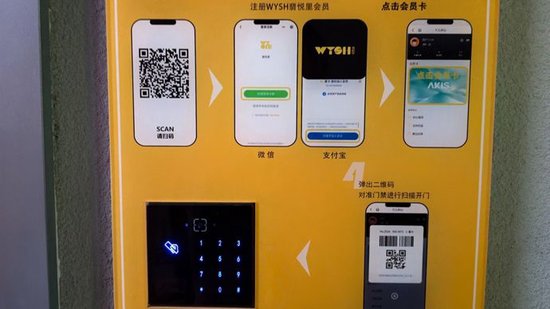
Core Viewpoint - The requirement for consumers to register as members to use restrooms in commercial areas raises concerns about convenience and consumer rights, highlighting a growing trend of "toilet exploration" notes on social media that reflect consumer experiences and frustrations [2][18][29] Group 1: Membership Registration Process - The restroom access at WYSH Feiyue Li requires consumers to complete a four-step process involving scanning a QR code, registering as a member, and using a member card to unlock the door [3][19] - Consumers face difficulties with the registration process, including failed verification codes and lengthy user agreements that require personal data submission [6][23] - Many consumers, including those interviewed, only registered to use the restroom, indicating a lack of understanding of the necessity for membership [9][25] Group 2: Consumer Rights and Legal Concerns - The practice of requiring personal information for restroom access has been deemed unreasonable and potentially illegal, violating consumer rights and privacy laws [29][30] - Industry experts suggest that there are more humane ways to manage restroom access without infringing on consumer privacy, such as providing temporary access codes or physical tokens [30][31] - The rationale provided by property management for the membership requirement is to "statistically track" restroom usage, which has been criticized as an inadequate justification for data collection [28][29]
“加价选座”不应成为“行业潜规则”
Zheng Quan Shi Bao· 2025-12-09 00:36
Core Viewpoint - The phenomenon of airlines "locking seats" is a controversial practice that appears to segment service levels but is essentially a method to increase revenue at the expense of passenger rights [1][4]. Group 1: Revenue Generation Tactics - Airlines are locking seats in the economy class, particularly those near the front or by emergency exits, requiring passengers to either redeem miles or pay fees to unlock these seats, which has become a significant pain point in the industry [1][4]. - One airline categorizes locked seats into three tiers: preferred seats (2000 points), first-choice seats (1600 points), and standard seats (1000 points), with additional fees of 400 yuan, 320 yuan, and 200 yuan respectively for unlocking these seats [1][4]. Group 2: Consumer Rights Violations - The practice of charging for seat selection infringes on multiple consumer rights, including the right to be informed about the true nature of the services purchased, as airlines do not clearly indicate which seats require additional fees or the basis for these fees [1][5]. - According to the Consumer Rights Protection Law, consumers have the right to choose products or services freely, and the airlines' practice of linking seat selection to additional fees restricts this freedom [2][5]. Group 3: Fair Trading Principles - The airlines' pricing strategy lacks a basis in actual service provided, as the economy class service remains the same regardless of seat selection, thus violating the principle of fair trading [2][5]. - The shift from a "first-come, first-served" model to a "pay-to-select" model exploits the airlines' market position, turning a previously free service into a revenue-generating mechanism, which increases the financial burden on consumers [2][5]. Group 4: Regulatory Concerns - The "pay-for-seat" practice may also violate pricing laws that require clear pricing and prohibit additional charges beyond the listed price [3][6]. - There is a call for coordinated action from relevant parties to compel airlines to enhance service levels and restore passenger rights, with a push for regulations to prevent the normalization of such practices in the industry [3][6].
推动消费金融长远健康发展
Jin Rong Shi Bao· 2025-12-08 02:43
Core Viewpoint - The 20th Central Committee of the Communist Party of China emphasizes the importance of economic construction and expanding domestic demand, positioning the consumer finance industry as a key driver for stimulating consumption and supporting economic growth [1] Group 1: Industry Development - By the end of 2024, the consumer finance industry is projected to reach an asset scale of 1.384859 trillion yuan, providing inclusive financial services to 85.43 million rural customers, thus becoming a significant "financial engine" in the strategy to expand domestic demand [1] - The industry is undergoing profound changes driven by policy guidance, technological innovation, and demand upgrades, while also facing severe challenges that require solutions during its transformation [2] Group 2: Trends in Consumer Finance - The consumer finance industry is exhibiting three major trends: 1. Policy restructuring that shifts the industry focus from "high-speed growth" to "high-quality development" [2] 2. Technological integration that enhances service innovation, breaking traditional boundaries and providing accessible credit support to underserved markets [2] 3. Demand upgrades leading to structural optimization, with consumer spending shifting towards education, healthcare, and new consumption areas, thus raising expectations for inclusivity and quality in consumer finance [2] Group 3: Challenges in Transformation - The industry faces several challenges during its critical transformation phase, including: 1. The need for clearer boundaries and compliance in business operations, as some platforms may overstep their financial roles [3] 2. The necessity to enhance the collaborative efficiency between banks and enterprises, as traditional models may hinder banks' risk control capabilities [3] 3. The requirement for improved consumer rights protection, as financial literacy among certain consumer groups remains low, leading to potential borrowing risks [3] Group 4: Strategic Directions for Development - To promote the long-term healthy development of consumer finance, the industry must adhere to licensed operations, build a new ecosystem of bank-enterprise collaboration, and strengthen consumer rights protection, focusing on inclusivity, digitalization, and quality [4] - The establishment of a comprehensive protection system for consumer rights is essential, which includes enhancing financial literacy, optimizing risk warning mechanisms, and ensuring careful design of operational processes [7] Group 5: Future Outlook - The long-term development of consumer finance is crucial for implementing the spirit of the 20th Central Committee and supporting the "14th Five-Year Plan" [9] - The industry must focus on key groups such as rural areas and new citizens, integrating into new consumption scenarios to ensure sustainable growth and contribute to the overall economic cycle [9]
买票后还要“付费选座”,飞机大比例“锁座”引热议
Xin Hua Wang· 2025-12-07 00:12
有航空公司设置优选、首选、标准座位,旅客选座需额外支付400元、320元、200元 买票后还要"付费选座",飞机大比例"锁座"引热议 阅读提示:经济舱前排、靠窗、靠过道等较为便利舒适的座位常被单独锁定,旅客要么无法选择, 要么需额外付费或用积分兑换。航空公司的"锁座"行为看似是对服务的层级细分,实则是变相增加收益 的手段,损害了旅客合法权益。 "最近坐飞机去杭州旅游,为了选靠前的座位,我花了3100里程。"12月4日,北京市朝阳区的孙女 士告诉记者,她经常遇到机票"锁座"的现象,想选靠前或安全出口附近的座位,需要花费里程或者现 金。 买了机票还得再"付费选座"?近日,航空公司(以下简称航司)机票"锁座"现象引发热议。不少旅 客反映,在线选座时,经济舱前排、靠窗、靠过道等较为便利舒适的座位常被单独锁定,要么无法选 择,要么需额外付费或用积分兑换。 专业人士表示,航司"锁座"行为看似是对服务的层级细分,实则是变相增加收益的手段,损害了旅 客合法权益。近日,江苏省消费者权益保护委员会线上约谈了10家航司,要求其对现有选座规则进行全 面梳理,重点解决"锁座"范围过度问题,不得将普通经济舱基础座位大比例纳入付费范畴。 ...