
科技成果转化

Search documents
从实验室到生产线,临沂科技大市场架起科技成果转化“高速路”
Qi Lu Wan Bao· 2026-01-22 13:31
Core Viewpoint - The establishment of the Linyi Technology Market aims to enhance the efficiency of technology transfer and innovation by creating a platform that connects enterprises with resources, talents, and services, thereby promoting regional innovation and economic development [1][2]. Group 1: Platform Overview - The Linyi Technology Market is a public service platform designed to facilitate the transformation of scientific and technological achievements, guided by local government bodies and in collaboration with the Shanghai Technology Exchange [1]. - The platform focuses on "building a platform, linking resources, and promoting cooperation," addressing the innovation needs of key industrial chains in Linyi [1][2]. Group 2: Resource Aggregation - The market has linked 106 universities and research institutions nationwide, gathering over 6,000 experts and more than 2,700 high-value technological achievements [2]. - A dynamic "enterprise demand database" has been established to accurately identify the technology, talent, and financial needs of enterprises through both online and offline methods [2]. Group 3: Matching Mechanism - An AI matching tool, referred to as "AI Technology Broker," has been developed to facilitate real-time matching between enterprise needs and available talents and technological resources [2]. - The platform has successfully matched technology achievements with enterprises, exemplified by a project that generated a conversion amount of 1.2 million yuan [2]. Group 4: Offline Engagement - The market has initiated a "Talent Technology Fair" model, organizing regular events to foster direct interactions between universities, key enterprises, and technology service organizations [3]. - Since its launch in July 2025, the fair has served 1,029 enterprises and facilitated 137 technology cooperation agreements [3]. Group 5: Local Integration - Local universities, such as Linyi University, have actively participated by providing on-site services and integrating their research outputs into the market, resulting in the successful application of several technology transfer projects [3]. - The Linyi Technology Market is evolving into a hub for regional innovation and a catalyst for technology transfer, aiming to enhance the competitiveness of local enterprises [3].
在临港 打造青年创业理想城 “临港科创城”建设方案发布 建设国际科创中心重要基地
Jie Fang Ri Bao· 2026-01-22 01:31
Core Points - The "Lingang Science and Technology Innovation City" construction plan aims to leverage the innovative advantages of the new area, promoting innovation and entrepreneurship, and establishing Lingang as a key hub for technology transfer, emerging industries, and youth entrepreneurship [1] - The plan sets two phased goals for 2027 and 2030, including the establishment of at least 7 high-level laboratories and research institutions, maintaining R&D expenditure at over 5.5% of GDP, nurturing over 2,000 high-tech enterprises, and attracting over 40,000 innovative talents [1] Group 1: Goals and Communities - The plan outlines four benchmark science and technology innovation communities: 1. Dishui Lake AI Innovation Port focusing on digital culture, automotive electronics, and smart terminals 2. Dishui Lake IC Innovation Port concentrating on integrated circuits, brain-machine science, and new materials 3. Dishui Lake Financial Bay targeting overseas services and cross-border finance 4. Dishui Lake International Data Port emphasizing digital services and e-commerce live streaming [2] Group 2: Action Plans - Five major action plans are proposed: 1. Strengthening technology transfer by leveraging high-level research institutions and major scientific facilities, focusing on key industries like integrated circuits and civil aviation [3] 2. Leading frontier industries by nurturing future industry tracks such as fourth-generation semiconductors and controlled nuclear fusion [3] 3. Attracting innovative and entrepreneurial talent through the "Blue Whale Plan" targeting digital nomads and entrepreneurs [3] 4. Accelerating capital empowerment with a 600 million yuan fund to support innovative projects in civil aviation and biomedicine [3] 5. Building an innovation ecosystem by providing over 300,000 square meters of low-cost entrepreneurial space and 5,000 youth apartments within five years [4]

打出有力有效监督“组合拳”
Liao Ning Ri Bao· 2026-01-22 01:03
在关于数字政府建设的专题询问上,经过多轮深入问答后,与会者形成了这样的共识—— 提问方开门见山,句句直击痛点。面对提问,应询方坦诚应答,既剖析问题症结,也明确了整改时 间表和路线图。 "要树立全省一盘棋思想,直面数字政府建设的短板和问题,靶向施策、标本兼治,以钉钉子精神 攻克难点、打通堵点……" "将以立行立改的效率,闭环落实询问意见建议,确保每条建议都落地有声,每个问题都整改有 效。" 人大监督,是具有法定权威、代表人民的监督。正是这样有力有效的监督,破难点、凝共识、聚合 力,助力高质量发展。 发展所需、改革所向、群众所盼,监督所至。听取和审议专项工作报告17项,开展执法检查6项, 开展专题询问3项,开展专题调研18项……一年来,省人大常委会综合运用法定监督方式实行正确监 督、有效监督、依法监督,打出监督"组合拳",助力经济社会发展,为奋力谱写中国式现代化辽宁篇章 贡献人大力量。 寓支持于监督 确定监督项目是人大监督的"头道工序"。一年来,省人大常委会坚持党中央及省委工作重心在哪 里,人大监督就跟进到哪里,力量就汇聚到哪里,作用就发挥到哪里,寓支持于监督之中,寓监督于促 进发展之中。 去年9月23日,省十四 ...
深耕领域 履职为民
Xin Lang Cai Jing· 2026-01-21 18:32
Core Viewpoint - The Provincial Political Consultative Conference's Education, Science, Health, and Sports Committee is actively engaged in enhancing public welfare through various initiatives in education, healthcare, and community service, focusing on high-quality development in Qinghai province. Group 1: Committee's Role and Responsibilities - The committee serves as a vital link between members and the public, facilitating communication and consensus-building while focusing on education, science, health, and sports development in Qinghai [4] - The committee emphasizes political and ideological education to ensure that its work aligns with the correct direction and serves the public effectively [5] Group 2: Focus on Major Issues - The committee has prioritized topics such as high-altitude health and wellness, technology innovation, and the transformation of scientific achievements, leading to actionable results from discussions and recommendations [7][9] - A significant focus has been placed on the development of the high-altitude wellness industry, which has been recognized as a strategic priority by provincial leadership [8] Group 3: Community Engagement and Public Welfare - The committee has initiated various programs to address public concerns, such as improving pediatric healthcare services and enhancing educational resources in rural areas [10][11] - Over the past five years, the committee has contributed over 50 million yuan in donations and support for community health and education initiatives, demonstrating a commitment to tangible public service [11][12]

聚焦“从1到10”,临港未来5-10年建成国际一流科创城
Di Yi Cai Jing· 2026-01-21 14:34
Core Viewpoint - The establishment of the "Lingang Innovation City" aims to transform Lingang from an "industrial highland" to an "innovation and entrepreneurship highland," supporting Shanghai's development as an international technology innovation center [1][2]. Group 1: Development Goals - By the end of 2027, Lingang aims to establish at least 7 world-class research institutions, over 2,000 high-tech enterprises, and attract more than 40,000 innovative talents [3]. - By 2030, Lingang seeks to solidify its strategic technological capabilities and significantly enhance its technology transfer capabilities, becoming an important base for Shanghai's international technology innovation center [3]. Group 2: Unique Advantages - Lingang's strengths lie in its robust industrial foundation and open institutional environment, making it an ideal area for the transformation of results from "1 to 10" and the industrial expansion from "10 to 100" [2]. - The region contributes over 1/9 of the city's industrial output value, gathers about 1/5 of manufacturing fixed asset investment, and accounts for 2/5 of major advanced manufacturing projects [2]. Group 3: Solutions for Technology Transfer - Lingang proposes a solution characterized by "low cost, supportive environment, and practical scenarios" to facilitate technology transfer [4]. - The area offers attractive low-cost entrepreneurial spaces, with 100,000 square meters of "zero rent" incubation space and 200,000 square meters of low-cost development space [4]. Group 4: Financial Support and Ecosystem - A comprehensive financial support system covering the entire lifecycle of enterprise development has been established, including the Lingang Qihang Fund and various specialized support programs [4]. - The region encourages major enterprises to open application scenarios and engage in "challenge-based" initiatives to help startups quickly secure initial orders [4]. Group 5: Future Industry Layout - Lingang Innovation City has outlined five major action plans focusing on technology transfer, leading edge industries, talent aggregation, capital acceleration, and innovation ecosystem construction [6]. - The region aims to leverage its strengths in integrated circuits, civil aviation, smart vehicles, and high-end equipment to foster future industry sectors such as fourth-generation semiconductors and controlled nuclear fusion [6][7]. Group 6: Support for Emerging Technologies - Lingang will support existing successful models like the "photovoltaic hydrogen production and hydrogen integration" demonstration project to accelerate the application and commercialization of new technologies [7]. - A collaborative approach will be taken in the fourth-generation semiconductor field to establish specialized transformation platforms and industry clusters [8].
发布“一揽子”创新举措,2026临港科创城大会启幕
Guo Ji Jin Rong Bao· 2026-01-21 12:57
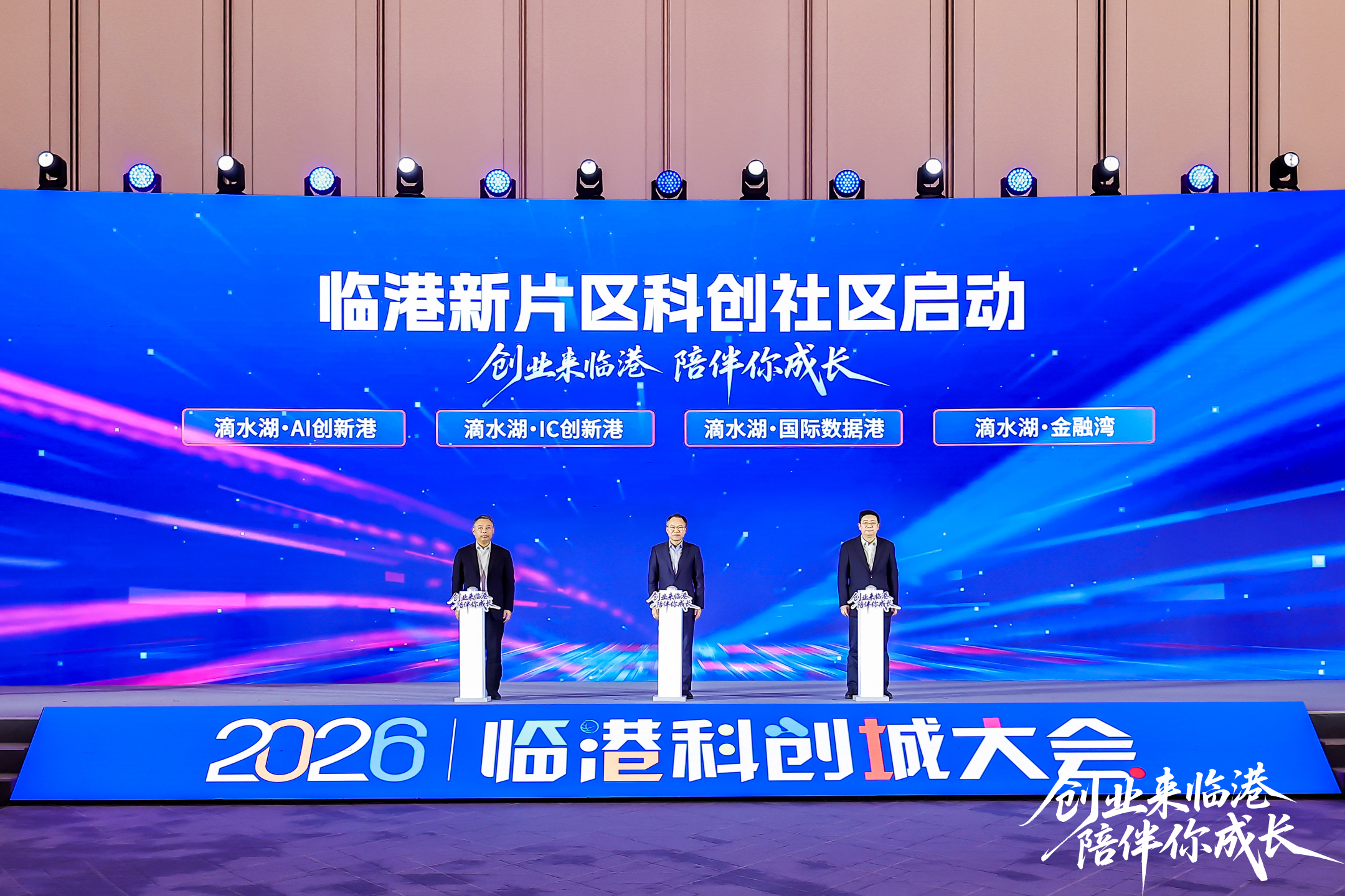
Group 1 - The "2026 Lingang Science and Technology Innovation City Conference" was held in Shanghai, focusing on creating an international first-class innovation city with lower costs, better ecology, and higher success rates for startups [1] - The conference introduced a comprehensive set of innovative measures, including the launch of the "Entrepreneurship Fund" and the establishment of a "Science and Technology Innovation Ecological Map" [1] Group 2 - The "Shanghai Lingang Science and Technology Innovation City Construction Plan" was officially released, aiming to strengthen the "1-10" link of technological innovation and become a key area for technology transfer and new industry development [2][3] - The plan outlines two goals to be achieved by the end of 2027, including the establishment of at least 7 international first-class research institutions and over 2,000 high-tech enterprises [4] Group 3 - The plan includes the establishment of four benchmark innovation communities, focusing on various industry sectors such as digital culture, integrated circuits, and cross-border finance [4] - Five major action plans were introduced to enhance technology transfer, cultivate future industry tracks, attract high-level talent, accelerate capital empowerment, and build an innovative ecosystem [5] Group 4 - Three major entrepreneurial funds were launched, including the Lingang Youth Innovation Fund, to support enterprises at different stages [8] - The conference also introduced new "Dew Lake Innovation Stations" to provide low-cost spaces and comprehensive services for entrepreneurs [9] Group 5 - The "Dew Lake Youth Innovation Community" was officially launched, offering a platform for entrepreneurs to connect and share resources through various activities [10] - A total of over 50 high-growth technology companies with valuations exceeding 1 billion yuan have emerged in Lingang, with more than 70% in later financing stages [10]


锚定“十五五”起好步 四川天府新区划定八大重点任务
Mei Ri Jing Ji Xin Wen· 2026-01-21 08:45
突出开放合作,加力加劲集聚优质资源要素。坚持对外对内双向发力,以自身工作的确定性应对外部环 境的不确定性。要着力建强开放平台,加快发展开放型经济,持续深化区域协同。 会议指出,2026年天府新区工作以建设新发展理念的公园城市先行区为统揽,以高质量发展、高品质生 活、高效能治理一体推进为目标,全力推动经济社会持续协调发展,为奋力实现新区"十五五"良好开局 打下坚实基础。具体提出八大重点任务: 突出美丽宜居,加力加劲深化公园城市建设。坚定贯彻"突出公园城市特点,把生态价值考虑进去"重大 要求,努力探索城市内涵式发展新路径。要擦亮绿色低碳发展底色,健全城市更新实施体系,做优公园 城市乡村表达,彰显城市特色文化内涵。 突出企业引育,加力加劲推动产业转型升级。坚定落实"立园满园""立楼满楼""进解优促"部署要求,大 力开展企业招引培育专项行动,圈链融合加快产业转型。要大力引育市场主体,着力做强主攻产业,加 快发展镇街经济,切实强化场景赋能。 突出有效需求,加力加劲拓展投资消费空间。坚决落实"内需主导"重大部署,更好把惠民生和促消费、 投资于物和投资于人结合起来。要在扩大有效益的投资上下功夫,在激发有潜能的消费上出实招。 ...
北京产权交易所赋能238家企业壮大高精尖产业集群 交易金额超3000亿元
Sou Hu Cai Jing· 2026-01-21 03:36
Core Insights - During the "14th Five-Year Plan" period, Beijing Property Exchange has played a significant role in promoting the orderly flow and efficient allocation of various resource elements, maintaining a trading scale of over 10 trillion yuan for several consecutive years [1][2] Group 1: Support for State-Owned Enterprises - The exchange has facilitated the strengthening and optimization of state-owned capital, completing 58,972 projects in areas such as state-owned property transfer and asset leasing, with a total transaction amount of 2.198 trillion yuan and a value increase of over 160 billion yuan [1] - Over the past five years, state-owned enterprises have utilized the exchange for capital operations, focusing on key sectors like new energy and artificial intelligence, enabling the development of 238 enterprises in high-tech industries with a cumulative transaction amount exceeding 300 billion yuan [1] Group 2: Optimization of Economic Structure - The exchange has promoted the optimization of asset allocation by facilitating the transfer of over 2,600 non-core and non-advantageous enterprises, recovering over 180 billion yuan in funds [2] - It has supported the efficient revitalization of idle assets, completing 7,521 leasing projects with a transaction amount of 104.63 billion yuan and disposing of over 2,000 idle assets with a transaction amount of 2.075 billion yuan [2] Group 3: Collaboration Among Different Ownership Types - The exchange has fostered collaboration between state-owned and private enterprises, facilitating 626 projects that introduced over 455 billion yuan in private capital [2] Group 4: Government Asset Management - The exchange has completed over 97,600 asset disposals for government departments, with a transaction amount of 1.573 billion yuan, and has maintained a leading transaction rate in the country [2] Group 5: Expansion of Service Offerings - The exchange has expanded its service range to include mergers and acquisitions, cultural tourism resource transactions, and crisis asset disposal, serving over 300 listed companies with a transaction amount exceeding 21 billion yuan [3] - It has promoted green development by facilitating over 60 projects in new energy and environmental protection, with a transaction amount exceeding 220 billion yuan [3] Group 6: Technology and Innovation - The exchange has supported the transformation of technological achievements, completing 103,000 projects with a transaction amount of nearly 980 billion yuan, and has assisted over 200 high-tech enterprises in securing financing of over 6 billion yuan [4] - It has integrated into the national unified market, promoting the free flow of resources across regions and establishing strategic cooperation with Shanghai Trading Group [4] Group 7: Financial Services Innovation - The exchange has introduced various financial products, including merger loans and green financing, collaborating with over 100 financial institutions to provide financing of 12.6 billion yuan [5] Group 8: Digital Transformation - The exchange has enhanced its digital capabilities by launching new platforms and applications, improving the efficiency of asset transactions and international business services, completing 108 foreign asset transactions with a transaction amount exceeding 37 billion yuan [6] Group 9: Future Outlook - The exchange aims to continue innovating and enhancing its core functions of resource flow and financing to promote high-quality economic and social development [6]
市人大代表审议相关报告 和“十五五”规划纲要草案
Xin Lang Cai Jing· 2026-01-21 00:01
Group 1 - The government work report emphasizes the importance of strengthening the hub economy, which has energized many business representatives [2] - The opening of Jiaxing Nanhu Airport is expected to enhance cross-border trade, reflecting the optimism among entrepreneurs regarding business development [2] - The report mentions the iteration and upgrade of the "10-minute quality cultural life circle," indicating a future increase in local cultural activities [2] Group 2 - Representatives provided feedback on accelerating the transformation of scientific and technological achievements, expanding and improving modern service industries, and enhancing the quality of the central urban area [2]
广州探索促进科技成果转化新模式:财政资金由“无偿资助”转向“股权投资”
Ke Ji Ri Bao· 2026-01-20 23:57
Core Viewpoint - The "first investment then equity" pilot program is seen as a funding tool, signaling system, empowerment framework, and ecological catalyst for the Hong Kong University of Science and Technology (Guangzhou) [1] Group 1: Policy and Implementation - Guangzhou has introduced the "Guangzhou Technology Achievement Transformation 'Supplementary Reform Investment' Pilot Work Method (Trial)" to address the lack of investment in early-stage technology projects by leveraging government funds to attract social capital [1][2] - The "first investment then equity" model aims to support early-stage technology projects from universities and research institutions that have not yet secured equity financing, with government funds matched 1:1 by transformation partners [2][3] - The "Supplementary Reform Investment" model will convert 100 million yuan from the Guangzhou Innovation and Entrepreneurship Competition into equity investments for award-winning companies, providing 2 million yuan in equity investment to those in need of financing [2] Group 2: Financial Mechanisms and Support - The "Supplementary Reform Investment" funds can be held long-term or exited through agreements, with proceeds prioritized for reinvestment, creating a sustainable funding cycle [3] - The initiative emphasizes a "tolerance for failure" mechanism, allowing for normal investment risks without penalizing based on individual project performance [2][3] - Guangzhou plans to allocate no less than 15% of its annual technology innovation development special funds for "Supplementary Reform Investment" work over the next three years, aiming to stimulate innovation [5] Group 3: Collaboration and Outcomes - The collaboration between the Guangzhou Science and Technology Bureau and the Hong Kong University of Science and Technology (Guangzhou) has initiated a pilot cooperation of 30 million yuan, establishing a clear workflow among the university, government, and market institutions [3] - The "first investment then equity" policy has led to significant positive changes, providing clarity for nascent projects and encouraging alumni to engage in entrepreneurial initiatives [3] - A total of 106 quality projects have been submitted for review under the first round of entrepreneurial projects at the Hong Kong University of Science and Technology (Guangzhou) [3]