
财富管理

Search documents
安稳的底、增强的策、回暖的市 三位普通理财人的2026心愿清单
Zhong Guo Zheng Quan Bao· 2026-01-07 22:33
Core Insights - The wealth management market in China is experiencing significant growth, with the bank wealth management market size surpassing 32 trillion yuan in 2025, marking a historical high [1] - Ordinary investors are increasingly seeking stable returns in a low-interest-rate environment, reflecting a shift in investment strategies [1] Group 1: Investor Perspectives - Investor Cheng, nearing sixty, aims for a stable return of over 3% in 2026, planning to diversify between long-term closed-end products and short-term liquid products [2] - Cheng's transition from traditional fixed deposits to exploring wealth management products highlights a broader trend among investors adapting to changing interest rates [3] - Young professional Zhang expresses a desire for more transparent investment products, having learned from her initial negative experiences with pure bond funds [4] Group 2: Market Expectations - Experienced investor Yang anticipates a recovery in the equity market in 2026, hoping for improved returns on his mixed-asset wealth management products [5] - Yang's positive outlook is based on his successful investment strategies in 2025, where he achieved notable returns from a pension product and a mixed-asset product [6] - The collective experiences of these investors illustrate the evolving landscape of wealth management in a low-interest-rate era, emphasizing the importance of stable returns [6]
三角度观察券商财富管理新叙事
Zheng Quan Ri Bao· 2026-01-07 17:26
Core Viewpoint - The wealth management sector in the securities industry has become a key driver of performance growth, with a focus on high-quality development and the establishment of an open ecosystem [1] Development Model - The transition from a "sales-driven" model to a "buy-side advisory" and "service ecosystem" approach is underway, emphasizing client interests over mere sales performance [2] - The proportion of investment advisors among all employees has increased by nearly 6 percentage points over the past six years, yet advisory income remains in single digits, indicating limitations of the traditional sales model [2] Service Ecosystem - The construction of a service ecosystem is evolving beyond single product sales to encompass comprehensive services that address clients' full lifecycle needs [3] - Service logic has shifted from "single product sales" to "lifecycle management," with customized service plans for different client stages [3] - Advisory services have moved from "standardized recommendations" to personalized asset allocation based on individual client characteristics [3] Product Innovation - Wealth management is aligning with national strategies and long-term resident needs, focusing on technology and green finance products [4] - Major firms are establishing specialized asset management plans and investment funds to support high-tech and specialized enterprises, as well as launching green-themed products to direct funds towards sustainable industries [4] - A diverse and personalized product system is being developed to cater to various client groups, including retirement planning and family trust solutions for high-net-worth clients [4] Capability Building - Financial technology is becoming a core competitive advantage, with increased investment in digital tools and AI to enhance service efficiency and client experience [5] - Quantitative techniques and machine learning are being utilized for investment decision-making and risk monitoring [5] - Chinese firms are expanding internationally through cross-border financial products and global asset allocation services, addressing the needs of high-net-worth clients [5] Industry Narrative - The narrative of wealth management is shifting the competitive landscape, with a focus on professional research capabilities, deep client engagement, and comprehensive ecosystem development [5] - The role of securities firms is evolving from "transaction providers" to "wealth custodians" and "long-term partners," aiming to protect residents' wealth and support the real economy [5]
“旗手”归来!券商板块开年爆发 机构解读2026投资主线
2 1 Shi Ji Jing Ji Bao Dao· 2026-01-06 23:38
Core Viewpoint - The A-share market has been performing strongly since the beginning of the year, with the brokerage sector leading the charge, indicating potential for valuation recovery and long-term investment opportunities in the sector [1][9]. Market Performance - As of January 6, the three major A-share indices rose collectively, with the Shanghai Composite Index reaching a ten-year high and recording a 13-day winning streak. The trading volume in the Shanghai and Shenzhen markets reached 2.81 trillion yuan, an increase of 260.2 billion yuan from the previous trading day, marking a three-month high [1]. - The brokerage sector saw significant gains, with stocks like Huazhong Securities and Hualin Securities hitting the daily limit, while others like Changjiang Securities and Guotai Junan rose over 5% [1]. Institutional Insights - Multiple institutions predict that the brokerage sector will benefit from a "slow bull" market and the acceleration of building world-class investment banks, leading to valuation recovery and highlighting long-term investment value [1][9]. - Key investment strategies for 2026 include focusing on "low valuation," "leading brokerages," "mergers and acquisitions," "wealth management," and "overseas business" [1][12]. Policy Impact - The recent comprehensive reform of public funds is seen as a significant policy benefit for the brokerage sector, effective from January 1, 2026, which aims to promote long-term value investment and optimize the investment ecosystem [2][3]. Performance Discrepancy - In 2025, despite a 42.55% increase in revenue and a 62.38% rise in net profit for 42 listed brokerages, the sector's overall stock performance was only up 4.05%, significantly lagging behind major indices like the CSI 300 and the Shanghai Composite [6][8]. - Analysts attribute this discrepancy to high timing difficulty, a mismatch between market performance and earnings, and significant individual stock differentiation [8]. Future Outlook - Predictions for 2026 suggest a shift towards a more stable market with moderate growth in trading volume, with daily trading expected to range between 2.2 trillion and 3.2 trillion yuan [9]. - Regulatory focus on "high-quality development" is expected to expand capital space for leading brokerages, supporting mergers and acquisitions and the development of wealth management and international business [10][11]. Investment Recommendations - Institutions recommend focusing on low-valuation leading brokerages, those with strong wealth management capabilities, and firms benefiting from cross-border asset management trials [12][13]. - Analysts also highlight the importance of investment banking and the potential for improved performance from underwriting and follow-on investments in the context of a recovering market [14].
银行零售管理规模争夺战火渐起
Bei Jing Shang Bao· 2026-01-06 15:52
Core Insights - The retail wealth management competition among banks has intensified, with various financial institutions launching promotional activities to enhance asset management scale (AUM) [1][3] - The focus has shifted from short-term promotional activities to establishing long-term mechanisms for boosting retail AUM, which is crucial for sustainable growth [1][6] Group 1: Retail AUM Competition - Multiple banks, including Agricultural Bank of China and Nanjing Bank, have introduced the "Asset Enhancement Gift" campaign, offering rewards for users who increase their financial assets by specific thresholds [3][4] - Agricultural Bank's campaign allows users to win rewards based on their asset increases, with thresholds starting from 100,000 to over 6 million yuan, incentivizing users to optimize their asset allocation [3][4] - Nanjing Bank targets higher-tier clients with dual activities that reward asset increases and diversified product holdings, showcasing a trend towards engaging existing customers and attracting new funds [4][5] Group 2: Trends in Wealth Management - The competition in wealth management has evolved from product sales to a focus on comprehensive asset management and customer-centric services, indicating a significant shift in banking strategies [5][6] - Key trends include a transition from interest margin-driven models to those focused on asset management fees, with AUM becoming a critical metric for retail competitiveness [5][6] - Digital operational capabilities are increasingly important, as banks leverage online activities to engage and activate long-tail customers effectively [5][6] Group 3: Long-term Service Capabilities - Retail AUM serves as a key indicator of a bank's ability to attract and manage personal wealth, reflecting the overall strength of its retail banking operations [7][8] - Major banks, such as China Merchants Bank and Ping An Bank, have reported significant growth in retail customer numbers and AUM, indicating a strong focus on wealth management services [7][8] - Bank leaders emphasize the need to transition from product-centric approaches to customer-oriented strategies, enhancing service ecosystems to better meet client needs [8][9] Group 4: Building Sustainable Growth Mechanisms - To achieve sustainable growth in retail AUM, banks must move beyond short-term promotional strategies and focus on systematic capacity building [8][9] - Strategies include refined customer segmentation, enhanced investment research capabilities, and the integration of online and offline channels to improve customer engagement [8][9] - Leveraging data and technology is essential for driving precise marketing and service delivery, ultimately creating a comprehensive operational system that supports long-term client relationships [8][9]


“旗手”归来!券商板块开年爆发,机构解读2026投资主线
2 1 Shi Ji Jing Ji Bao Dao· 2026-01-06 14:02
Core Viewpoint - The A-share market has been performing strongly since the beginning of the year, with the brokerage sector experiencing significant growth, indicating a potential for valuation recovery and long-term investment opportunities in 2026 [1][4][10]. Market Performance - As of January 6, the A-share indices collectively rose, with the Shanghai Composite Index reaching a ten-year high and recording a 13-day winning streak. The trading volume in the Shanghai and Shenzhen markets reached 2.81 trillion yuan, an increase of 260.2 billion yuan from the previous trading day, marking a three-month high [1]. - The brokerage sector saw strong gains, with stocks like Huazhong Securities and Hualin Securities hitting the daily limit, while several others rose over 5%. Internet brokerages also performed well, with stocks like Dazhihui and Tonghuashun seeing significant increases [1]. Policy and Regulatory Environment - Recent reforms in public fund management are viewed as a significant policy boost for the brokerage sector. The China Securities Regulatory Commission's new regulations, effective January 1, 2026, aim to enhance the investment and distribution capabilities of brokerages [2][3]. Investment Strategies and Outlook - Analysts suggest that the brokerage sector is expected to benefit from a "slow bull" market and the accelerated development of top-tier investment banks, leading to a potential valuation recovery. Key investment themes for 2026 include "low valuation," "leading brokerages," "mergers and acquisitions," "wealth management," and "overseas business" [1][11]. - The market is anticipated to transition into a phase characterized by structural trends and moderate growth in trading volume, with daily trading volumes projected between 2.2 trillion and 3.2 trillion yuan [8]. Performance Discrepancies - In 2025, despite a significant increase in revenue and net profit for brokerages, the sector's stock performance lagged behind major indices, with a mere 4.05% increase in the brokerage index compared to 17.66% for the CSI 300 [6][7]. - Analysts attribute this discrepancy to high timing difficulties, a mismatch between market performance and earnings, and a lack of differentiation among brokerage firms, which limits their competitive edge [7]. Future Investment Focus - Investment strategies for 2026 emphasize the importance of selecting undervalued leading brokerages, those with strong wealth management capabilities, and firms benefiting from cross-border asset management initiatives [11][12]. - The potential recovery of investment banking and improvements in the STAR Market's follow-on investments are also highlighted as key areas for growth, with leading brokerages expected to maintain competitive advantages through resource and scale benefits [13].
多家商业银行取消,5年期定存产品为何变少了?
Xin Hua Wang· 2026-01-06 12:21
Core Viewpoint - The reduction of 5-year fixed deposit products by multiple commercial banks is a direct consequence of the current low interest rate environment, reflecting a broader trend towards specialized wealth management in the financial market [5][9][15] Group 1: Market Environment - The overall market interest rates have remained low, leading banks to reduce the supply of long-term deposit products, particularly 5-year fixed deposits [6][9] - As of December 2022, the 5-year Loan Prime Rate (LPR) was 4.30%, which dropped to 3.50% by December 2025, indicating a significant decline in interest rates over the years [7] - Many banks have shifted focus to shorter-term deposit products, with 2-year and 3-year options becoming more prevalent [7][8] Group 2: Customer Reactions - Customers have varied responses to the reduction of 5-year fixed deposits; some continue to prefer bank deposits, while others are exploring alternative investment options due to declining interest rates [8][9] - A customer from Shijiazhuang expressed disappointment over the reduction of long-term deposits, indicating a shift to 3-year products as a compromise [8] - Younger customers are increasingly diversifying their investments, opting for gold and other liquid assets instead of traditional fixed deposits [8][9] Group 3: Banking Strategies - Banks are actively compressing long-term deposit offerings to maintain net interest margins, which have been under pressure due to low interest rates [9][10] - Some banks have raised the minimum investment threshold for large-denomination certificates of deposit, reflecting a strategic shift in response to the current funding market [9][10] - Financial institutions are focusing on optimizing their asset-liability structures to stabilize net interest margins and enhance profitability [10][11] Group 4: Wealth Management Trends - The trend towards wealth management is becoming more pronounced, with banks enhancing their service offerings to meet diverse customer needs [13][15] - Banks are increasingly integrating various financial products, such as insurance and investment funds, to provide comprehensive wealth management solutions [15] - The shift from savings to diversified asset allocation is expected to continue, indicating a growing market for wealth management services [14][15]

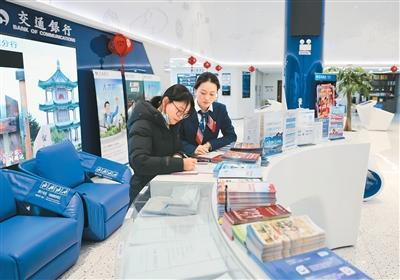
2025年银行理财规模和产品数量持续增长
Jin Rong Shi Bao· 2026-01-06 02:17
Core Insights - The bank wealth management market in 2025 showed a continuous growth trend, with the total scale reaching 33.8 trillion yuan by the end of November 2025, driven by the demand for wealth management and market supply changes [1] - The shift in investor preferences towards "fixed income plus" products, which combine bonds with equity assets for enhanced returns, reflects a broader trend of seeking growth in a low-interest-rate environment [3][4] Market Size and Growth - By the end of 2025, the bank wealth management scale grew to 33.8 trillion yuan, indicating a significant increase in demand for wealth management solutions [1] - The number of bank wealth management products increased by approximately 6,000 in the fourth quarter of 2025, highlighting the expanding product offerings in the market [2] Product Trends - "Fixed income plus" products emerged as a key highlight in 2025, as investors shifted from purely fixed income to products that offer moderate returns through a mix of stable assets and various strategies [3] - The scale of mixed and equity bank wealth management products reached 685.57 billion yuan by December 22, 2025, representing a growth of over 40% compared to the end of 2024, although these products still accounted for less than 2% of the total market [3] Structural Changes - The 2025 wealth management market exhibited a dual trend of "steady growth in scale" and "internal structural optimization," with a clear shift towards a "fixed income dominant, equity-enhanced" structure [4] - The market is expected to continue its steady growth into 2026, with asset allocation strategies evolving towards a more balanced and diversified approach, driven by ongoing wealth management demand [4] Investment Strategies - Experts recommend that investors adopt a long-term investment perspective and consider a "core-satellite" approach to diversify their portfolios across fixed income, equity, and alternative assets [4][5] - Investors are advised to select products from top-tier institutions with strong research capabilities and stable historical performance, while also being mindful of liquidity arrangements in closed-end products [5]
第22届基金业金牛奖评选结果揭晓【国信金工】
量化藏经阁· 2026-01-06 00:08
Market Review - The A-share market showed a mixed performance last week, with the Shanghai Composite Index, CSI 500, and SME Index gaining 0.13%, 0.09%, and -0.01% respectively, while the ChiNext, CSI 300, and SZSE Component Index fell by -1.25%, -0.59%, and -0.58% respectively [5][12] - The financial, oil and petrochemical, and defense industries performed well, with returns of 5.13%, 3.92%, and 3.83% respectively, while retail, utilities, and food and beverage sectors lagged with returns of -3.13%, -2.35%, and -2.28% respectively [5][18] - The People's Bank of China conducted a net reverse repurchase of 1.171 trillion yuan, with a total of 1.3236 trillion yuan maturing, resulting in a net open market injection of 152.6 billion yuan [20] Fund Performance - Last week, actively managed equity, flexible allocation, and balanced mixed funds reported returns of -0.71%, -0.38%, and -0.56% respectively [30] - Year-to-date, alternative funds have shown the best performance with a median return of 52.59%, while actively managed equity, flexible allocation, and balanced mixed funds have median returns of 29.97%, 23.26%, and 16.21% respectively [32] Fund Issuance - A total of 35 new funds were established last week, with a total issuance scale of 11.916 billion yuan, a decrease from the previous week [41] - The majority of new funds were passive index funds (12 funds) and equity mixed funds (8 funds), with issuance scales of 4.116 billion yuan and 0.473 billion yuan respectively [42] Regulatory Updates - The China Securities Regulatory Commission revised the "Regulations on the Management of Sales Fees for Publicly Offered Securities Investment Funds," effective January 1, 2026, to lower investor costs and standardize the sales market [6][10] - E Fund announced a collective name change for its 45 ETF products, becoming the first company to complete standardized naming for all its ETFs [7] Industry Developments - China Construction Bank launched the "Longying Plan" on January 1, 2026, aimed at providing customized FOF market services, marking a significant move into wealth management by state-owned banks [8]

阿联酋成印度高净值人群首选迁居地
Shang Wu Bu Wang Zhan· 2026-01-05 13:59
《海湾时报》2026年1月1日报道,阿联酋持续吸引印度高净值人士迁入,预计2026年接纳规模将居全球 首位。财富管理机构认为,该趋势源于阿联酋在财富安全、税收环境、投资机会和长期稳定性方面的综 合优势,反映其作为全球财富管理中心的吸引力不断增强。 ...
中信证券接待8家机构调研,包括睿远基金等
Jin Rong Jie· 2026-01-05 13:52
Group 1 - The core viewpoint of the news is that CITIC Securities has achieved significant results during the "14th Five-Year Plan" period, with substantial growth in various financial metrics and a strong market position [1][2]. - CITIC Securities completed equity financing of 3.1 trillion yuan, bond financing of 56.9 trillion yuan, and mergers and acquisitions totaling 2.4 trillion yuan, with total assets surpassing 2 trillion yuan [1]. - The company has maintained over 600 billion yuan in annual revenue for five consecutive years, with net profit consistently around 200 billion yuan, and a record net profit of 232 billion yuan for the first three quarters of this year [1]. Group 2 - In wealth management, CITIC Securities has served over 17 million clients with assets under management of approximately 15 trillion yuan, and has a buyer advisory scale exceeding 130 billion yuan [2]. - The company aims to transform its services across five dimensions, focusing on creating a comprehensive financial product system and enhancing digital service capabilities [2]. - Since its A-share listing in 2003, CITIC Securities has distributed over 88.7 billion yuan in cash dividends, maintaining a cash dividend ratio above 30% for the past three years [2]. Group 3 - The participating institution in the research, Ruiyuan Fund, focuses on value investment and has managed five funds, with the Ruiyuan Growth Value Mixed A fund showing a 74.03% growth over the past year [3].
