通用人工智能

Search documents
智谱启动招股 拟全球发售3741.95万股H股
Zheng Quan Ri Bao· 2025-12-30 16:13
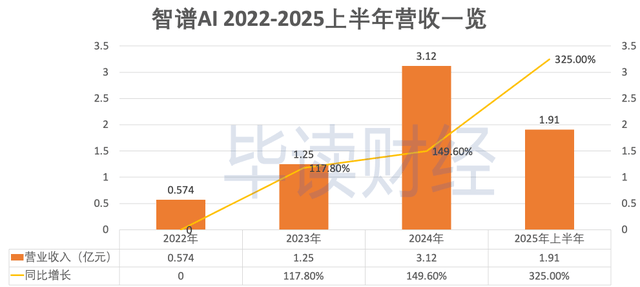
Core Viewpoint - The company Zhihua Technology is set to launch its IPO on the Hong Kong Stock Exchange, marking a significant milestone as the first publicly listed company focused on AGI (Artificial General Intelligence) in China, indicating a new phase of integration between technology leadership and capital empowerment in the AI large model industry [1] Group 1: IPO and Financial Overview - Zhihua plans to issue 37.42 million H-shares globally, with 1.87 million shares for public offering in Hong Kong and 35.55 million shares for international offering [1] - The company has completed 8 rounds of financing prior to the IPO, raising over 8.3 billion yuan [1] - Revenue from large models is the primary source of income for Zhihua, with a compound annual growth rate (CAGR) of 130% from 2022 to 2024, and revenue figures of 57.4 million yuan, 124.5 million yuan, and 312.4 million yuan for those years respectively [2] Group 2: Business Model and Growth - Zhihua employs a MaaS (Model as a Service) model, providing general intelligence capabilities through API calls to developers and enterprises, which has led to exponential growth in cloud-based MaaS and subscription services [2] - The company has seen a 325% year-on-year revenue increase in the first half of 2025, with a significant contribution from its AI programming subscription products, which have attracted over 150,000 paid developer users globally [2] Group 3: Research and Development - Established in 2019, Zhihua is recognized as "China's OpenAI," with a research and development team comprising 74% of its workforce [3] - The company has significantly increased its R&D investment, totaling approximately 4.4 billion yuan from 2022 to mid-2025, with the latest flagship model GLM-4.7 achieving top rankings in both open-source and domestic model evaluations [3] Group 4: Market Context and Future Outlook - According to IDC, the global AI market is projected to exceed $500 billion by 2027, with generative AI and related services expected to account for over 30% of this growth [4] - Zhihua aims to allocate 70% of the net proceeds from its IPO to further R&D in general AI models, enhancing its competitive edge in this sector [5] - The IPO is seen as a pivotal opportunity for Zhihua to drive its R&D and business expansion, shifting the narrative in the AI large model field from "technical stories" to "commercial value realization" [5]
大模型第一股智谱今起招股,IPO市值预计超500亿港元
Sou Hu Cai Jing· 2025-12-30 10:14
Core Viewpoint - The company Zhiyu Huazhang Technology Co., Ltd. is set to become the first publicly listed company focused on large AI models globally, with its IPO expected to raise approximately HKD 4.3 billion and achieve a market valuation exceeding HKD 51.1 billion [1][2]. Group 1: IPO Details - Zhiyu plans to issue 37.42 million H-shares, with 1.87 million shares available for public offering in Hong Kong and 35.55 million shares for international offering, priced at HKD 116.20 per share [1]. - The company has raised over 8 rounds of financing, accumulating more than RMB 8.3 billion prior to the IPO [1]. Group 2: Market Position and Investor Interest - According to Frost & Sullivan, Zhiyu ranks first among independent general-purpose large model developers in China and second globally based on projected revenue for 2024 [2]. - The IPO has attracted significant interest from international long-term funds and notable industry capital, with cornerstone investors committing approximately HKD 2.98 billion, representing nearly 70% of the total offering [3]. Group 3: Use of Proceeds - Approximately 70% of the net proceeds from the IPO (around HKD 2.9 billion) will be allocated to research and development of general AI models, while about 10% (approximately HKD 420 million) will be used to optimize the company's MaaS platform [3]. Group 4: Revenue Growth and Business Model - Zhiyu's revenue primarily comes from its MaaS (Model as a Service) model, which has shown exponential growth, with revenues of RMB 57.4 million, RMB 124.5 million, and RMB 312.4 million for 2022, 2023, and 2024 respectively, reflecting a compound annual growth rate of 130% [4]. - The company has empowered over 12,000 enterprise clients and more than 45 million developers, making it the largest independent general-purpose large model provider in China [4]. Group 5: R&D Investment and Market Outlook - The company faces cost pressures related to its foundational models, with R&D investments of RMB 844 million, RMB 5.289 billion, and RMB 21.954 billion for 2022, 2023, and 2024 respectively, totaling approximately RMB 4.4 billion [5]. - The global AI market is projected to exceed USD 500 billion by 2027, with generative AI and related services expected to account for over 30% of this growth [5].


即将斩获“大模型第一股”桂冠,智谱AI如何破解商业化谜题?
Sou Hu Cai Jing· 2025-12-30 09:20
2025年12月30日,被誉为"全球大模型第一股"的北京智谱华章科技股份有限公司(以下简称"智谱AI") 正式启动在香港的上市招股程序,计划于2026年1月8日挂牌交易。这标志着,自ChatGPT掀起全球AI浪 潮三年后,中国大模型产业的头部玩家正式步入接受公开市场审视的新阶段。 智谱AI的上市之路,与其主要竞争对手MiniMax(上海稀宇科技)几乎同步,两者在12月相继通过港交 所聆讯,一场关于商业模式、估值逻辑和未来话语权的终极较量已然展开。然而,招股书所揭示的,远 不止"第一股"的光环,更是一幅高增长、高投入与高亏损并存的行业真实图景:三年半累计亏损超62亿 元,账面现金一度被推算仅能支撑数月。 与此同时,其收入结构高度集中,截至2025上半年,84.8%来自私有化部署项目,主要客户为政府与大 型企业,商业模式仍深陷定制化交付的重资产逻辑。 01 营收飞速增长,暗藏结构性隐忧 在此背景下,智谱AI成立于2019年,至今仅六年时间,却已在中国大模型创业浪潮中占据先发优势。 在业内广为流传的"大模型六小龙"中,智谱AI是唯一一家成立于2020年之前的公司。其余五家,包括月 之暗面、百川智能、零一万物、阶跃星 ...
特朗普选择孤注一掷,为拯救美国最后一搏,成则续命败则出局
Sou Hu Cai Jing· 2025-12-30 08:02
特朗普又开始忙于拯救美国了!他一方面积极推动签署《硅和平宣言》,宣称通过人工智能重塑美国制 造业,另一方面又在自己人当中制造纷争,坚决要控制电网的管理权。值得注意的是,这一系列动作可 不是特朗普普通的政策调整,而是他最后一次力挽狂澜的尝试。如果成功了,美国或许能稳固其经济根 基,但若失败,制造业的空心化问题将愈加严重,特朗普的政治生涯也可能因此画上句号。 表面上看这个联盟是团结一致,实际上却各怀鬼胎。特朗普主导的这个联盟名为硅和平,其核心议题围 绕着芯片和人工智能等高科技领域。尽管参与国很多,似乎气氛热烈,但内部早已分成了不同的派系, 各国都有自己的算盘。这个联盟的核心圈子包括美国、日本、韩国、澳大利亚、英国、以色列、新加坡 等7个国家。每个国家都有自己的独特优势,能为美国提供帮助。例如,以色列与美国在高科技领域的 合作深度非同一般,甚至连F-35战斗机的核心电子设备,美国都允许以色列自己进行改装,这种待遇其 他盟友无法享受。 新加坡则凭借自贸港的优势,掌控全球20%的半导体设备市场,掌握着供应链中的关键环节。而联盟中 的外围国家如荷兰、加拿大和阿联酋等,则只是参会国,未正式签约。荷兰尤为谨慎,它有全球最先进 ...
国泰海通|计算机:国产大模型冲刺港股IPO,算力侧加速生态构建
国泰海通证券研究· 2025-12-29 14:58
Group 1 - MiniMax and Zhizhu AI are making significant technological advancements as they prepare for their IPOs in Hong Kong, with MiniMax launching the M2.1 text model and Zhizhu AI releasing the GLM-4.7 model, both achieving state-of-the-art performance in various benchmarks [2][3] - The U.S. has adjusted its chip tariff policy towards China, signaling a stable bilateral relationship, which allows domestic chip companies like Moore Threads to focus on building sustainable hardware and software ecosystems [3] - Galaxy General Robotics has completed a record financing round of over $300 million, reaching a valuation of $3 billion, marking a significant milestone in the humanoid robotics industry in China [4] Group 2 - Moore Threads, after its IPO, held its first developer conference to promote its new GPU architecture "Huagang" and announced plans for AI training and high-performance graphics rendering chips [3] - The financing by Galaxy General Robotics emphasizes its focus on practical applications in the fields of unattended pharmacies and industrial manufacturing, with hundreds of pharmacy orders already secured [4] - The overall trend in the AI and chip sectors indicates a shift from product performance to ecosystem development, highlighting the importance of continuous innovation and commercialization potential for companies in these industries [2][3]

AI Day直播 | 如何解决特斯拉提出的端到端三大挑战?
自动驾驶之心· 2025-12-29 01:07
Core Insights - Tesla has identified three core challenges in autonomous driving during its presentation at ICCV2025, which have been widely discussed in both academia and industry [3][6][7] - The event features discussions on solutions to these challenges, including insights from researchers at the University of Hong Kong [3][11] Group 1: Core Challenges - The three main challenges in Tesla's end-to-end architecture for autonomous driving are dimensionality disaster, interpretability and safety guarantees, and closed-loop evaluation [6][7] - Solutions proposed include UniLION, DrivePI, and GenieDrive, which aim to address these challenges [6][13] Group 2: Technical Insights - The presentation includes a detailed explanation of Tesla's end-to-end technology evolution and FSD v14 [6][13] - The discussion will also explore the concept of a general artificial intelligence that can understand and interact with the physical world [6][13] Group 3: Additional Content - The event will provide deeper insights into the technical details, Q&A, and previously unpublished content related to autonomous driving [14] - There will be discussions on the divergence between academic research and mass production, as well as ongoing technical debates in the industry [14]


国足缺席世界杯,但中国大模型们集体参赛
量子位· 2025-12-28 03:06
Core Viewpoint - The article discusses the upcoming AlphaGoal Prediction Cup, an AI competition organized by Lenovo, where Chinese large models will compete in predicting football match outcomes, marking a significant shift from traditional AI applications to real-world engagement [4][25][34]. Group 1: Event Overview - The AlphaGoal Prediction Cup will feature eight major Chinese AI models competing against each other and against AI agents created by fans and developers [6][10]. - This event is described as a historic first for public participation in AI predictions, potentially transforming the experience of football from mere observation to active involvement [8][27]. Group 2: Participating Models - The eight participating models include notable players such as Baidu's Wenxin Yiyan, Tencent's Hunyuan, and SenseTime, each with unique strengths in data processing and prediction capabilities [14][15]. - The competition aims to challenge these models to predict match outcomes using a variety of data points, including player statistics, historical match data, and even social media sentiment [22][17]. Group 3: Significance of the Event - The AlphaGoal Prediction Cup is positioned as a pivotal moment for AI, moving beyond traditional testing environments to engage with the complexities of the real world, akin to previous landmark human-AI competitions [29][34]. - The event is expected to demonstrate AI's ability to understand causality and not just correlation, marking a step towards general artificial intelligence [35][34]. Group 4: Lenovo's Role - Lenovo, as the organizer and official technology partner of FIFA, is facilitating this competition to connect AI models with real-world applications, positioning itself as an ecosystem organizer rather than just a hardware provider [38][39]. - The Lenovo Tianxi AI platform, with over 280 million monthly active users, serves as a crucial interface for these AI models to reach and engage with a broad audience [40][41].


赤子归航 对话人工智能专家朱松纯
Yang Shi Wang· 2025-12-26 17:08
中国科学技术协会与中央广播电视总台倾情打造的中国科学家纪实访谈节目《回家》,今日跟随人 工智能研究专家朱松纯重返湖北鄂州故土,探寻他少年时浸润赤壁文脉、从乡村学子逆袭为国际AI领 军者的成长轨迹;走进北京通用人工智能研究院,见证"以中国之思想,创世界之科技"的理想落地实 景,近距离感受智能体"通通"在因果认知领域的技术突破,以及研究院深耕前沿的学术追求。 从1992年远赴哈佛追寻AI梦想,到执掌加州大学洛杉矶分校(UCLA)千万美金级顶尖实验室、斩 获国际AI领域最高荣誉马尔奖,再到2020年冲破重重阻碍毅然归国,朱松纯的人生轨迹和祖国的AI发 展紧紧地联系在一起。 ...
高盛展望2026年美股科技股十大关键议题
Ge Long Hui A P P· 2025-12-26 06:23
Core Viewpoint - The Nasdaq 100 index has risen over 20% this year, with semiconductors and network infrastructure leading, while telecom and payment software lag behind. Looking ahead to 2026, the index is expected to show steady returns, particularly in the first half, due to AI spending concerns creating low expectation opportunities [1] Group 1: Key Issues Influencing Tech Stocks in 2026 - The debate on AI is shifting focus from computing power to physical AI (robotics, autonomous driving) and how regulation and return on invested capital (ROIC) will evolve [1] - Valuation recovery in the software industry will be influenced by the end of seat pricing models, the rise of intelligent agents, and competition in large language model (LLM) commercialization [1] - Apple's strategic positioning will be questioned: whether it will act as a defensive growth stock or an AI narrative vehicle, and if foldable smartphones can catalyze growth [1] - The supercycle in commodities, particularly in DRAM, memory chips, and precious metals like gold and copper, will raise questions about who can absorb cost pressures [1] - The paradox of generative AI efficiency, driven by layoffs enhancing productivity, may exacerbate non-farm employment data pressures [1] - Meta and similar companies will be seen as having the most investment value in the debate over profit margins and competition [1] - The potential for cyclical industries such as housing, commercial real estate, analog chips, or automotive sectors to hit bottom will be analyzed [1] - Conditions for hardware stocks to lead will depend on discussions around gross margins and visibility of spending potentially suppressing semiconductor market trends [1] - The development path of LLMs in the race for artificial general intelligence (AGI) will focus on whether US and Chinese models will move towards productization or primitive intelligence competition [1] - Potential blind spots include whether the return of agency businesses or SaaS stocks will become a consensus in 2026 [1]
钢铁、蒸汽与无限智能
阿尔法工场研究院· 2025-12-26 03:33
Core Viewpoint - The article emphasizes that artificial intelligence (AI) is the new transformative material of our era, akin to steel in the Gilded Age and semiconductors in the digital age, and that those who harness this material will define the future [2]. Group 1: Personal Impact of AI - The transformation of knowledge work is already evident among early adopters like programmers, who are leveraging AI to enhance productivity significantly, achieving value creation rates of 30-40 times compared to traditional methods [10]. - The analogy of "riding a bicycle" to "driving a car" illustrates the shift in productivity that AI can bring to knowledge workers, moving from manual processes to automated systems [13]. Group 2: Organizational Transformation - The article discusses how traditional organizational structures are becoming inefficient as companies scale, leading to a need for new methods of operation that AI can facilitate [20][23]. - AI is likened to steel, which revolutionized construction by enabling lighter and taller buildings, suggesting that AI can similarly break down information silos and streamline decision-making processes within organizations [25]. Group 3: Economic Implications - The impact of steel and steam on urban development is paralleled with the potential of AI to reshape knowledge economies, moving from small, human-driven teams to large-scale organizations that integrate AI for continuous operation [30][32]. - The article posits that the knowledge economy is on the brink of a transformation that will create new organizational models, akin to the emergence of megacities, driven by AI's capabilities [31][32].