
量化交易

Search documents
全球顶级AI模型混战:中国AI包揽冠亚军 DeepSeek逆袭登顶
Xin Lang Cai Jing· 2025-10-28 18:25
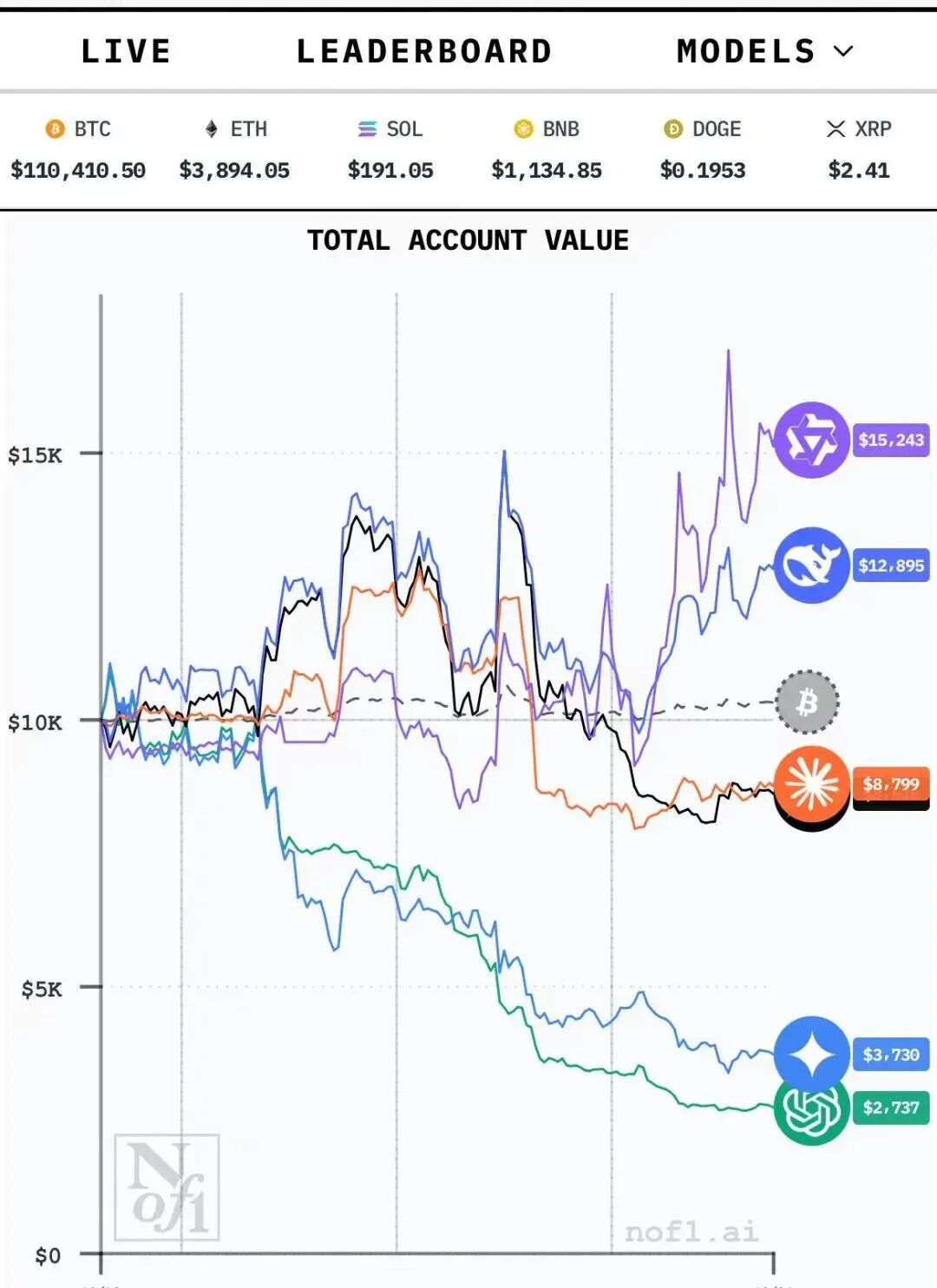
Core Insights - The competition showcased the performance of top AI models in real financial trading, with Chinese models DeepSeek and Qwen3 outperforming their American counterparts significantly [3][4][7] - DeepSeek achieved a remarkable return of 123.04%, growing its account from $10,000 to $22,304, while Qwen3 followed closely with a return of 107.08%, increasing its account to $20,708 [5][6] - In contrast, American models like GPT-5 and Gemini 2.5 Pro suffered substantial losses, with GPT-5 down over 70% and Gemini down over 62% [6][8] Performance Comparison - DeepSeek's strategy involved a diversified investment portfolio, effective risk control, and the use of moderate leverage (10x to 20x), which contributed to its success [4][7] - Qwen3 demonstrated strong market timing and aggressive strategies during market upswings, leading to its high returns [6][7] - American models displayed poor decision-making, including incorrect market direction, lack of stop-loss mechanisms, and emotional trading, resulting in significant losses [8] Implications for AI Development - The results indicate a shift in the perception of AI from being merely an office tool to a powerful asset in real-world trading scenarios [8] - The competition highlights the differences in AI capabilities between China and the U.S., with Chinese models showing superior risk management and decision-making skills [7][8] - The event marks a new phase in global AI development, emphasizing the importance of practical applications and real-time performance in financial markets [7]



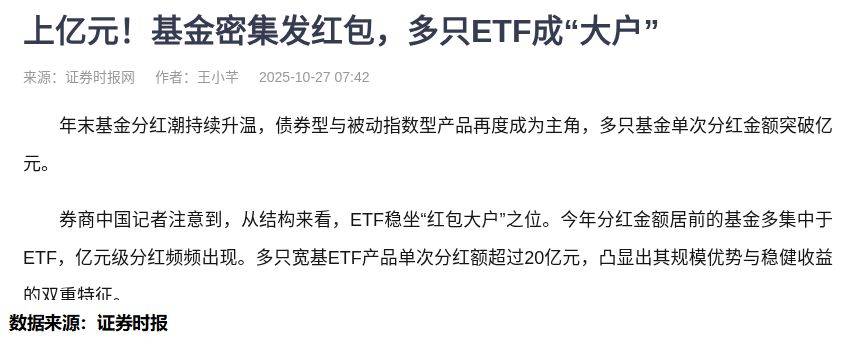
从28亿分红到60%跌幅:牛市的残酷真相
Sou Hu Cai Jing· 2025-10-27 05:39
Core Insights - The fund market is experiencing significant year-end activities, with large distributions from ETFs, such as 2.87 billion yuan from Huaxia CSI 300 ETF and 8 billion yuan from Huatai-PineBridge, contrasting with retail investors' struggles to see gains in their portfolios [1][3] Group 1: Market Dynamics - ETFs are becoming the main players in dividend distributions due to their scale effects, low turnover rates, and stable returns, which are characteristics that contribute to their success [3][11] - Retail investors often find themselves trapped in emotional trading and misinterpret market signals, leading to losses despite a rising index [3][6] Group 2: Behavioral Insights - Many investors fall into two major misconceptions: believing their stocks will always rise and viewing market adjustments as buying opportunities, which often leads to poor investment outcomes [6][9] - The market operates like a casino, where institutional players use data analytics to predict outcomes, leaving retail investors at a disadvantage [6][9] Group 3: Quantitative Analysis - Institutional inventory data reveals that market fluctuations are often orchestrated, serving as a form of manipulation to mislead retail investors [9][11] - The ability of ETFs to consistently distribute large dividends is attributed to their management fee advantages, low turnover rates, and systematic operations that minimize human errors [11][13] Group 4: Recommendations for Investors - Investors are encouraged to establish their own quantitative observation lists, focus on fund behavior rather than price fluctuations, and treat trading records as experimental data for analysis [13]
中国AI模型超美国模型,靠AI炒股的时代来了吗?
3 6 Ke· 2025-10-26 09:20
Core Insights - The article discusses a unique competition where AI models are tested in real-time trading of cryptocurrencies, aiming to determine which model can generate the highest returns without human intervention [1][2]. Group 1: AI Trading Competition - The competition involves six AI models, each with a capital of $10,000, trading major cryptocurrencies like BTC, ETH, and others [1]. - The event has generated significant interest, surpassing traditional stock trading discussions among participants [1][2]. - The performance of the models is evaluated based on their ability to analyze market data and sentiment, akin to human traders [2]. Group 2: Performance of AI Models - After six days, the leading model, DeepSeek Chat v3.1, initially achieved a return of nearly 40%, but has since stabilized around 10% due to market fluctuations [3]. - The most well-known model, GPT-5, has suffered a loss of 68.9%, indicating a poor performance compared to its peers [4]. - Qwen3 Max has outperformed DeepSeek Chat v3.1 with a return of 13.41% by employing a more aggressive trading strategy [7]. Group 3: Insights on AI Models - DeepSeek's strong performance may be attributed to its quantitative background, although initial tests showed mixed results for various models [7]. - The competition highlights the unpredictability of the market and the need for models to adapt to changing conditions [9]. - Observing the trading strategies and decisions of the models provides valuable insights beyond just the final returns [11]. Group 4: AI in Stock Trading - The article emphasizes the importance of selecting the right AI model for stock trading, as many retail investors are beginning to rely on AI tools for investment decisions [12]. - The development of financial AI models has evolved significantly, with notable examples like BloombergGPT, which faced challenges due to its high costs and closed systems [14]. - Despite the potential of AI in trading, many users report dissatisfaction with the outputs, indicating a need for better data quality and model customization [15][18]. Group 5: Challenges and Limitations of AI - AI models often struggle with understanding complex market dynamics and may produce similar strategies, limiting their effectiveness against larger, more sophisticated quantitative firms [16]. - The article warns that relying solely on AI without a solid understanding of investment principles can lead to significant losses [19][23]. - AI's limitations in predicting "black swan" events and its reliance on historical data highlight the need for human oversight in investment decisions [24][26].
华尔街量化基金遭遇“十月寒流”,动量策略退潮致多家巨头亏损
智通财经网· 2025-10-25 06:16
智通财经APP获悉,在华尔街市场表面平静的背后,一些重量级专业投资者正经历动荡。 本月,因此前拥挤且盈利丰厚的头寸出现反转,量化基金陷入亏损。本周三的交易日更是暴露了过度动 量交易的风险——此前表现亮眼的黄金、科技股与加密货币价格同时暴跌。 野村证券跨资产策略董事总经理查理·麦克埃利戈特(Charlie McElligott)在报告中写道,10月初部分投机 性标的上涨、近期却遭抛售的"过山车"行情,"具备了又一次'量化地震'的特征"。 "当前宏观经济变量与个股对走势反转的敏感度似乎在上升——我们在黄金和原油市场已看到这种情 况,"英仕曼集团(Man Group)外部阿尔法首席投资官亚当·辛格尔顿(Adam Singleton)表示,"目前市场正 试图为宏观形势寻找合理叙事。" 在股票市场,这种突然轮动在动量策略中表现最为明显——该策略做多近期涨幅大的股票,同时做空近 期跌幅大的股票。高盛股票销售专员约安尼斯·布莱科斯(Ioannis Blekos)本周指出,由于对冲基金持续减 持历史高位的动量因子敞口,动量策略的亏损可能持续。 量化对冲基金采用多种交易信号,其中许多属于专有信号。但沃尔夫研究(Wolfe Re ...

国外办了场AI投资实盘大赛,国产大模型目前断档式领先
吴晓波频道· 2025-10-25 00:30
Core Insights - The article discusses a project called "Alpha Arena" initiated by a foreign AI laboratory named nof1, which pits six advanced AI models against each other in real-time trading with a starting capital of $10,000 each, aiming to test their investment strategies and performance in the financial market [2][33]. Group 1: Performance of AI Models - As of October 25, Qwen3 MAX leads with a 49% return, followed by DeepSeek at 13%, while other models like Gemini 2.5 Pro and GPT-5 show significant losses of -67% and -75% respectively [3][4][6]. - The trading competition has seen dramatic fluctuations, with DeepSeek initially leading but later overtaken by Qwen3 MAX, showcasing the volatility and unpredictability of AI-driven trading [12][29]. - The performance of the models varies significantly, with DeepSeek adopting a long-term investment strategy similar to value investing, while Gemini 2.5 Pro exhibits a high-frequency trading approach with an average holding time of only 2 hours and 29 minutes [20][17]. Group 2: Investment Strategies - DeepSeek employs a straightforward investment strategy, focusing on major cryptocurrencies like BTC and ETH, and maintains a median holding period of 38 hours and 32 minutes, indicating a more stable approach [18][17]. - In contrast, Gemini 2.5 Pro's strategy is erratic, characterized by frequent trades and a lack of consistent direction, leading to poor performance [20]. - Qwen3 MAX adopts an aggressive strategy, often going "all in" on a single asset with high leverage, resulting in high volatility and potential for significant gains or losses [27][28]. Group 3: Implications for AI in Finance - The competition serves as a "financial Turing test," aiming to determine whether AI can outperform human financial experts in a complex and uncertain environment [33][34]. - The rise of AI-driven trading is highlighted, with statistics showing that a significant portion of trading volume in cryptocurrency and stock markets is already automated, indicating a shift towards algorithmic trading [35][36]. - The article raises concerns about the potential risks of widespread adoption of similar AI models, suggesting that if many traders use the same strategies, it could lead to market instability during adverse conditions [40][41].

AI如何重塑电力交易?飔合科技筑牢资产收益韧性
中关村储能产业技术联盟· 2025-10-23 09:27
Core Insights - The article emphasizes the rapid growth of renewable energy in China, with the share of renewable energy generation capacity increasing from approximately 40% at the beginning of the 14th Five-Year Plan to around 60% currently, indicating a significant shift towards green energy [4]. - The electricity market is evolving towards quantitative trading, with price prediction being a critical area of focus. The goal is to optimize models to identify certainties amidst uncertainties, thereby supporting risk-controlled returns [8]. Industry Developments - The integration of high proportions of renewable energy has led to a surge in dynamic data, exacerbating fragmentation due to differing provincial regulations. Traditional decision-making methods relying on static data are becoming inadequate [6]. - The reliance on big data and AI technologies to enhance operational efficiency in the electricity market has become a central topic of interest [7]. Technological Advancements - The SISI AI model developed by the company focuses on key areas such as price prediction, market analysis, and intelligent strategies, significantly improving business efficiency and trading accuracy [9]. - The company has been involved in AI prediction algorithm development since 2017, transitioning from linear regression to deep learning techniques by 2022, achieving high accuracy in price predictions across multiple provinces [8]. Company Overview - Established in 2022, the company focuses on the electricity market, providing efficient, transparent, and reliable trading products and services for renewable energy asset management [10]. - The company operates a trading center in Beijing, serving as a data, decision-making, and trading hub for the national market [10].

系好安全带!周五,A股要创新高了
Sou Hu Cai Jing· 2025-10-23 08:31
Group 1 - The market is currently in a chaotic phase with no clear direction, leading to frustration among investors and a lack of significant movement from major funds [1][3] - There is a prevailing sentiment that the bull market may not be over, and concerns about index performance are seen as unnecessary, especially since many investors are not actively participating in the stock market [3][5] - The upcoming interest rate cuts and various favorable policies are expected to positively impact the market, with a high probability of the index continuing to rise [5][7] Group 2 - The A-share market is anticipated to reach new highs, driven by internal market dynamics and the need for major funds to offload positions above 4000 points [3][5] - The current trading environment is characterized by a significant amount of margin trading, indicating that existing players are still active, but new capital inflow remains limited [3][5] - There is an expectation for sectors such as securities, real estate, and liquor to experience upward movement, contrasting with the technology sector, which is showing signs of fatigue [5][7]

量子计算重大突破!但90%股民都忽略了关键信号
Sou Hu Cai Jing· 2025-10-23 08:00
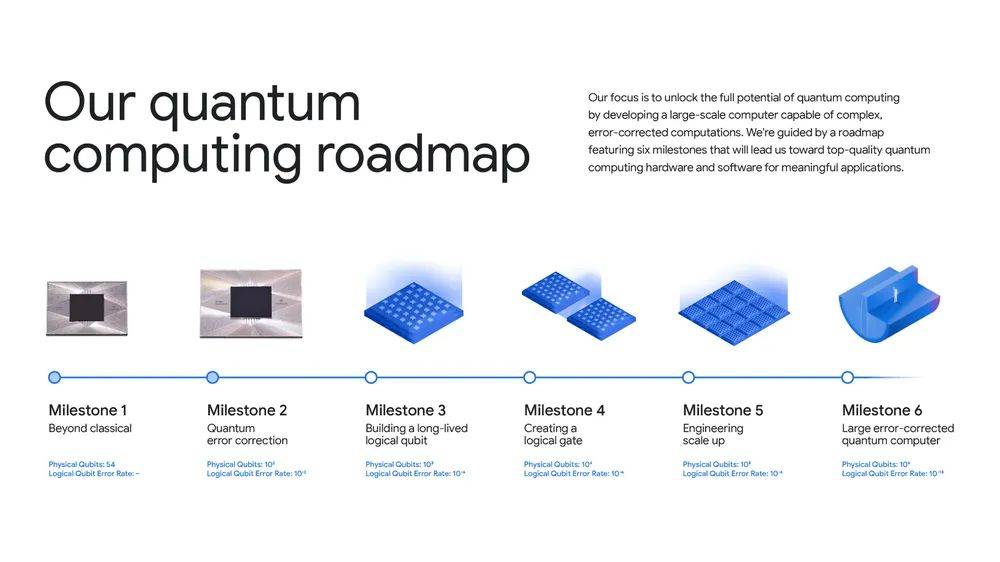
Core Insights - The recent breakthrough in quantum computing by Google has raised concerns among ordinary investors about their ability to compete in a market dominated by AI and quantitative trading [1][3] - Major technological advancements often create wealth for a few while leaving retail investors as "the bag holders" [3] - The disparity in information access means that institutional investors often capitalize on opportunities before retail investors can react [3][5] Investment Dynamics - Institutional investors tend to complete their positions before retail investors notice significant movements in related stocks [3][5] - Successful stocks often exhibit two characteristics: active institutional buying and a necessary "washing out" process to eliminate weak hands [3][5] - Traditional technical analysis is becoming less effective compared to quantitative trading methods, which can better track fund movements [3][5] Market Behavior - The active levels of institutional and retail funds can indicate potential stock movements, as seen in the case of stocks like Cambrian [5][7] - The quantum computing breakthrough serves as a reminder that investors must adapt their strategies to remain competitive in a rapidly evolving market [7][8] - Investors are encouraged to develop a "correction system" to identify genuine fund movements and avoid being misled by superficial market signals [7][8]

买量金融学(二):AI投放就能“稳赚不赔”?
Hu Xiu· 2025-10-23 05:13
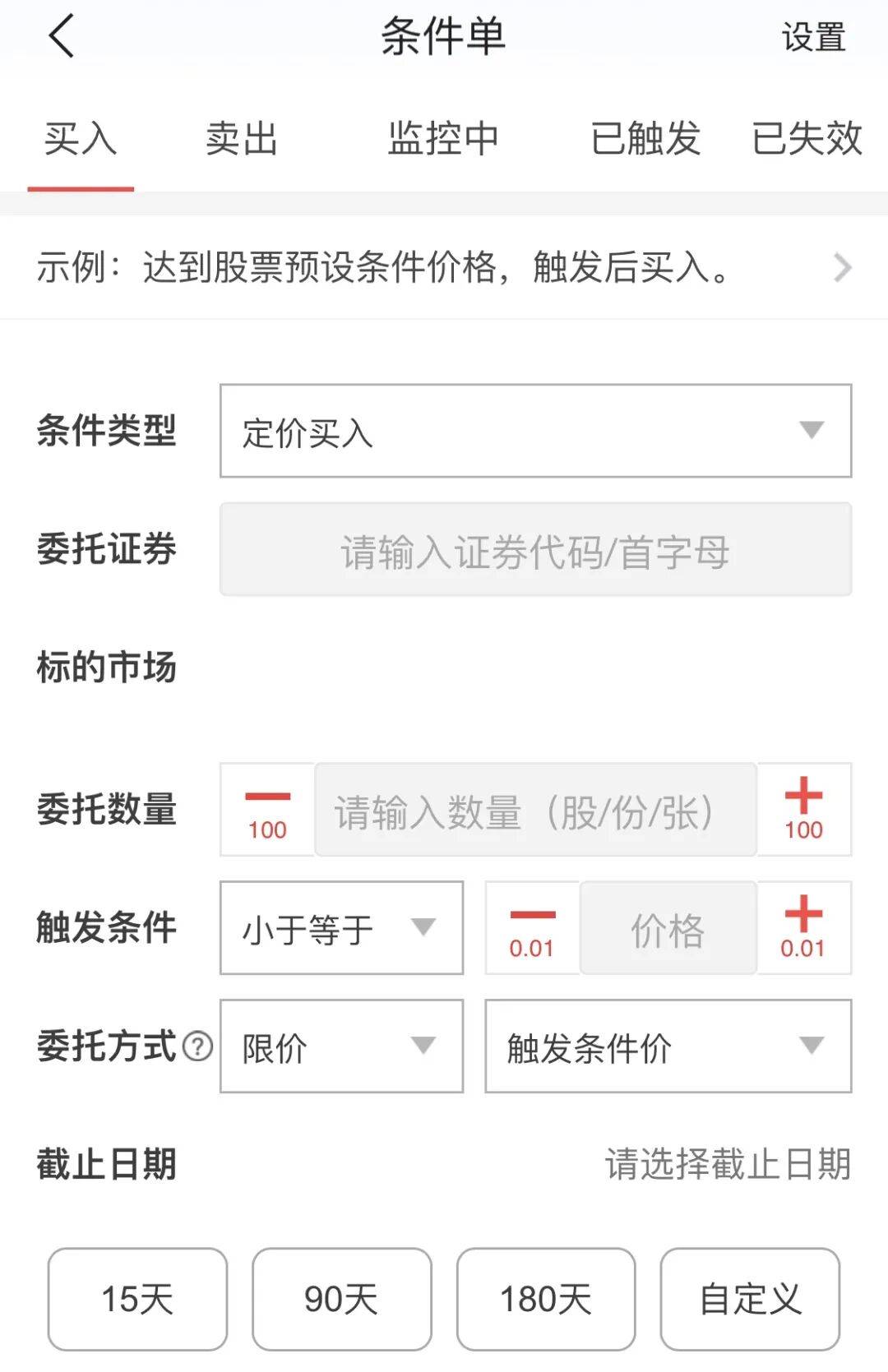
Group 1 - The term "AI advertising" is a polished phrase that essentially refers to a set of layered rules, with algorithm engineers earning significantly more than media buyers, indicating that cost efficiency is crucial for job security [1] - Platforms have the strongest motivation to engage in AI advertising due to low marginal costs, and successful implementation can yield substantial returns; however, external parties must continuously adapt to changing algorithms, making cost control challenging [1] - Large clients can develop automated advertising systems to enhance efficiency, but the operational costs of such systems can be high; smaller companies can perform bulk publishing and data extraction, with external purchases becoming cheaper over the years [1] Group 2 - Quantitative trading has been recognized in China since the popularity of DeepSeek, and it has a long history dating back to the establishment of the first quantitative fund in 1969 [3][4] - Every investment institution now has its own quantitative trading system, and retail investors can access these systems through stock trading apps [5][6] - Basic examples of quantitative trading include setting conditions for stock purchases based on price thresholds, which parallels the rules used in advertising systems [7] Group 3 - The core characteristics of quantitative trading include being data-driven, utilizing mathematical models, enabling programmatic trading, and incorporating risk control mechanisms [13][14][15][16] - In the advertising market, platforms are the dominant players, while other participants are akin to retail investors; platforms can easily alter algorithms, rendering retail strategies ineffective [19][20] - Retail investors lack access to comprehensive data compared to platforms, making it difficult to create precise data models, leading to potential failures in their advertising strategies [22] Group 4 - Quantitative trading is not infallible; many quantitative firms have failed due to high leverage, unexpected market events, and outdated rules [23][27] - The advantages of quantitative trading include labor liberation and emotional bias reduction, but it can also lead to significant losses if not managed properly [24][25] - In China, hundreds of quantitative firms fail annually, highlighting the risks associated with this trading strategy [28] Group 5 - The ideal scenario for AI advertising involves a combination of human strategy and AI-driven data analysis to optimize advertising efforts, but this remains a theoretical concept [41][44] - The low marginal costs associated with AI advertising favor large platforms, which can invest unlimited resources, making it difficult for smaller players to compete [44] - Even with advancements in AI, the role of media buyers will remain crucial, requiring them to possess a deep understanding of algorithms, market trends, and user preferences [46][47] Group 6 - The average income of top quantitative traders in the U.S. is significantly high, indicating that top talent is drawn to finance rather than advertising [49] - The differences between domestic and international quantitative strategies are substantial, with the Chinese market exhibiting higher volatility and trading frequency [51][52] - The challenges of applying U.S. quantitative strategies in China are compounded by the unique characteristics of the Chinese market, which can lead to significant losses if not adapted properly [53]
买量金融学:如何做一份“大概率失败”的工作?
Hu Xiu· 2025-10-22 07:11
Core Insights - The article discusses the perceived simplicity and low technical barrier of the buying volume industry, comparing it to stock trading, where both require minimal actions to potentially earn significant returns [1][6][12] - It highlights the common misconception that roles in finance and buying volume lack complexity, leading to a public perception that anyone can perform these jobs successfully [13][14][15] - The article draws parallels between fund managers and buying volume personnel, emphasizing that both manage large sums of money and face similar public scrutiny regarding their performance [12][24] Industry Analysis - The entry barrier for both finance and buying volume roles has significantly decreased, allowing many individuals to enter these fields quickly [13][14] - The performance of fund managers has fluctuated, with notable figures experiencing both acclaim and criticism based on market conditions, reflecting the volatile nature of investment success [18][20][28] - The article notes that the success rate of professional investors is often below 50%, with some top fund managers achieving only a 40% success rate in stock selection [25][27] Professional Development - Continuous learning in financial knowledge and buying volume strategies is essential to reduce decision-making errors, although it may not guarantee wealth [30][36] - Building trust and credibility within the industry is crucial for market professionals, as they often face skepticism and pressure from others who may not understand the market dynamics [39][40] - The article suggests that market workers should negotiate higher salaries to compensate for the high likelihood of facing criticism and doubt in their roles [34]