AGI(通用人工智能)

Search documents
OpenAI奥特曼:能被ChatGPT消灭的工作不是真正的工作
3 6 Ke· 2025-10-13 10:06
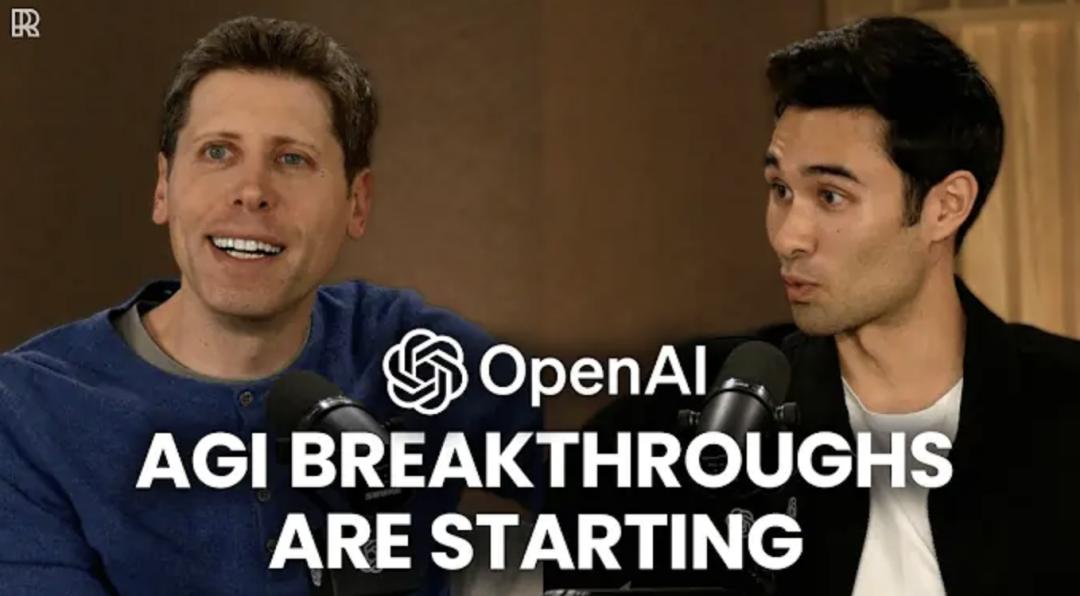
Core Insights - The discussion highlights the rapid advancements in AI technology, particularly focusing on the developments surrounding ChatGPT and its applications, including the introduction of Agent Builder and the potential for a "no-code revolution" in software development [2][5][6] - Sam Altman emphasizes the importance of user feedback and iterative development in understanding how applications will be utilized, suggesting that the future of app distribution will evolve as developers learn from real-world usage [2][3] - The conversation touches on the concept of AGI (Artificial General Intelligence) and its implications for the future of work, suggesting that AI will transform job landscapes and create new opportunities [12][22] Development and Product Insights - The introduction of Agent Builder allows users to create complex systems with minimal coding, marking a significant shift in how software can be developed and deployed [3][5] - Altman notes that the capabilities of AI models have improved dramatically over the past two years, enabling users to build sophisticated agents quickly and efficiently [3][6] - The potential for a billion-dollar company operated by AI agents is discussed, with Altman predicting that such a company could emerge in the coming years [7] Market and User Engagement - ChatGPT has reached 800 million active users, positioning it as a new distribution platform for developers and entrepreneurs [2] - Altman discusses the need for educational resources to help users effectively integrate AI into their workflows, indicating that companies are exploring ways to facilitate this learning process [16] - The conversation also addresses the challenges of AI-generated content, including the phenomenon of "workslop," where AI outputs require significant human revision [15][22] Future Directions and Innovations - Altman expresses excitement about the potential for AI to make novel discoveries and expand human knowledge, indicating that the field is at a pivotal moment [12][13] - The discussion includes the exploration of new business models for AI applications, such as revenue sharing for content creators using the Sora app [19][21] - Altman emphasizes that the ultimate goal is to achieve AGI, with high-quality video generation being a crucial step towards this objective [18] Strategic Considerations - The importance of identifying unique advantages in product development is highlighted, with Altman suggesting that companies should explore their strengths through practical experimentation [9][10] - The conversation reflects on the evolving nature of work in the AI era, suggesting that traditional notions of work may change significantly as AI takes on more tasks [22][23] - Altman also discusses the potential for ChatGPT to evolve into a multifunctional platform, but clarifies that it will not replicate the all-in-one model of WeChat in the U.S. market [24]

OpenAI奥特曼:能被ChatGPT消灭的工作不是真正的工作
量子位· 2025-10-13 08:47
Core Insights - The discussion highlights the evolving role of AI in the workplace, suggesting that many current jobs may not represent "real work" as AI capabilities advance [30] - The conversation also touches on the development of GPT-6 and the potential for AI to achieve AGI (Artificial General Intelligence) [18][19] Group 1: AI Development and Applications - Sam Altman expresses excitement about the integration of applications into ChatGPT, emphasizing the potential for developers to create innovative solutions using the Agent Builder and Agent Kit [5][6] - The conversation indicates that ChatGPT has reached 800 million weekly active users, positioning it as a new distribution platform for developers [5] - Altman notes significant advancements in model capabilities over the past two years, allowing for easier and more complex system development with minimal coding [7][8] Group 2: Future of Work and AI Impact - The dialogue suggests that the number of software applications created will increase dramatically, and the time required for testing and refining ideas will decrease significantly [9] - Altman predicts that the first billion-dollar company operated by agents is still a few years away, but the technology is progressing rapidly [11][12] - The concept of "workslop," where AI-generated content requires additional human editing, is discussed, highlighting the need for education on effective AI usage [21][22] Group 3: AGI and Its Implications - Altman defines AGI as AI surpassing human capabilities in high-value economic tasks, noting that current AI can make novel discoveries, albeit on a small scale [19][20] - The conversation emphasizes the importance of recognizing both the potential and limitations of AI advancements, with a focus on gradual progress towards AGI [18][19] Group 4: AI in Communication and Interaction - Altman argues that voice may not be the ultimate form of interaction with AI, suggesting that various modes of communication will coexist [39][40] - The potential for real-time video interactions is highlighted as a valuable path towards achieving AGI [26] Group 5: Business Models and Future Directions - The discussion includes thoughts on potential revenue models for new applications like Sora, with considerations for user engagement and monetization strategies [27][28] - Altman expresses optimism about the future of AI and its ability to create new opportunities, while also acknowledging the need for a global framework to manage risks associated with powerful AI models [33]

他在 10 天内拼出 ChatGPT,如今影响 7 亿人:ChatGPT 负责人的第一次讲述
AI前线· 2025-10-12 05:32
Core Insights - The rise of ChatGPT is described as a technological legend, evolving from a hackathon project to the fastest-growing consumer software, with over 700 million weekly active users, representing about 10% of the global population, and a monthly retention rate of 90% [2][3][7] - The long-term vision for ChatGPT is to develop it into a "super assistant" that understands user context and can assist in various tasks, evolving beyond its current capabilities [8][9][10] Development and Evolution - ChatGPT was initially a hackathon project named "Chat with GPT-3.5," and its rapid success was unexpected, driven by a culture of maximizing acceleration and direct user feedback [3][11][12] - The development of GPT-5 is anticipated to be a qualitative leap, showcasing advanced capabilities in reasoning, programming, and overall intelligence, with a focus on user experience and speed [4][5][6] - The product's evolution is characterized by continuous updates and improvements based on user interactions, with a strong emphasis on retaining user engagement and satisfaction [25][26][28] User Engagement and Retention - ChatGPT's high retention rates, with approximately 90% monthly retention and 80% six-month retention, indicate strong user loyalty and satisfaction [22][23] - The product's design encourages users to delegate tasks to AI, which requires time for users to adapt and discover its full potential [23][24] - The company has learned that the model and product are intertwined, necessitating iterative improvements based on user feedback and emerging use cases [25][26] Market Position and Strategy - The subscription model, priced at $20 per month, has become a significant revenue source, with the company prioritizing accessibility and user experience over maximizing short-term profits [34][35] - The enterprise market has seen rapid adoption, with significant usage among Fortune 500 companies, highlighting the product's versatility and relevance in professional settings [36][37] Future Directions - The company aims to explore new user interactions beyond traditional chat formats, emphasizing the importance of natural language as a means of communication with AI [30][31] - There is a commitment to addressing high-risk use cases, such as emotional and medical advice, to ensure the technology is utilized effectively and responsibly [48][49] - The ongoing development of ChatGPT is seen as part of a broader movement towards democratizing access to advanced AI tools, with the potential to significantly impact various aspects of daily life [49][50]

OpenAI奥特曼认错:我天生不适合管理公司
量子位· 2025-10-09 07:03
Core Insights - OpenAI is pursuing three main goals: to become a personal AI subscription service, to build large-scale infrastructure, and to achieve a truly useful AGI (Artificial General Intelligence) [2][4][29] - The recent launch of Sora 2 and various investment collaborations, including partnerships with AMD and Nvidia, indicate a strategic shift towards aggressive infrastructure investment [1][29] Group 1: OpenAI's Strategic Goals - OpenAI aims to become a personal AI subscription service, necessitating the construction of vast infrastructure to support this vision [4][29] - The ultimate mission is to create AGI that is genuinely beneficial to humanity, which requires a multifaceted approach beyond traditional business models [4][8] - OpenAI's infrastructure is currently intended for internal use, with future possibilities for external applications remaining uncertain [5][29] Group 2: Sora's Role in AGI Development - Despite skepticism about Sora's relevance to AGI, OpenAI's CEO believes that developing a "truly outstanding world model" through Sora will be crucial for AGI [10][11] - The resources allocated to Sora are relatively small compared to OpenAI's overall computational capacity, emphasizing a balanced approach to innovation and research [13][29] - Sora is seen as a way to engage society with upcoming technological advancements, particularly in video models, which resonate more emotionally than text [16][29] Group 3: Future Interactions and AI Capabilities - OpenAI envisions future interaction interfaces that go beyond basic chat, incorporating real-time video rendering and context-aware hardware [19][21] - The concept of the Turing Test is evolving, with the new benchmark being AI's ability to conduct scientific research, which OpenAI anticipates will happen within two years [21][22] - OpenAI's confidence in its research roadmap and the economic value it can generate has led to a commitment to aggressive infrastructure investments [29][31] Group 4: Leadership and Management Philosophy - OpenAI's CEO acknowledges a preference for an investor role over management, citing challenges in handling organizational dynamics and operational details [41][42] - The transition from an investor to a CEO role has been described as both challenging and rewarding, providing insights into groundbreaking work in AI [41][43] - The future of AI development is closely tied to energy availability, with a call for more efficient energy solutions to support AI advancements [44]

GPU疯狂抢购背后:一场价值万亿的AI豪赌正在上演!
Sou Hu Cai Jing· 2025-10-08 14:41
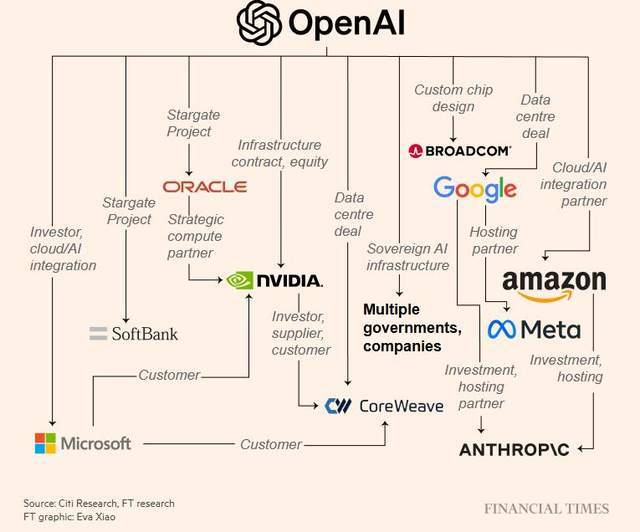
Core Insights - The current chip market is experiencing extreme price inflation, with Nvidia's H100 chip selling for $45,000, comparable to the price of a Tesla Model 3 [1] - OpenAI has signed contracts worth approximately $1 trillion for computing power, which is significantly higher than its projected revenue for the year [3] - Nvidia plans to invest $100 billion over the next decade in OpenAI, specifically for purchasing its own chips, indicating a unique market strategy [5] Group 1: Investment Trends - Major tech companies are making substantial investments in AI infrastructure, with Meta predicting to spend $600 billion by 2028, surpassing Finland's GDP [10] - Microsoft has already purchased 485,000 Nvidia "Hopper" chips and recently signed a $19.4 billion deal for access to over 100,000 GB300 chips [10] - Elon Musk's xAI is constructing a data center filled with over 200,000 Nvidia chips, with estimated costs reaching hundreds of billions [8] Group 2: Market Speculation - Analysts are drawing parallels between the current AI investment climate and the dot-com bubble of 1999, suggesting that Nvidia's investment in OpenAI could signal an impending bubble [12] - A macroeconomic analyst claims that the capital misallocation caused by AI investments is 17 times worse than the internet bubble and four times worse than the 2008 housing bubble [13] - There is a concern that the massive influx of resources into AI, which has yet to prove its profitability, could lead to significant resource wastage [23] Group 3: Opportunities in the Market - Despite the focus on hardware investments, there are still numerous opportunities in application layers and vertical markets for smaller companies [15] - The movement of top talent, such as a notable physicist joining Google DeepMind, indicates potential for smaller firms to leverage expertise for competitive advantage [17] - OpenAI's entry into e-commerce with features like "Instant checkout" presents opportunities for small e-commerce platforms to benefit from increased traffic [17] Group 4: Future Scenarios - Three potential outcomes for the AI investment landscape are proposed: a winner-takes-all scenario, a diverse market with multiple players, or a bubble burst similar to the 2000 internet crash [21] - Historical trends suggest that technology revolutions are rarely monopolized by a single company, indicating a likelihood of coexistence among various firms [21]

微软CEO预警:美国AI可能已经形成了巨大泡沫!
Sou Hu Cai Jing· 2025-10-05 10:52
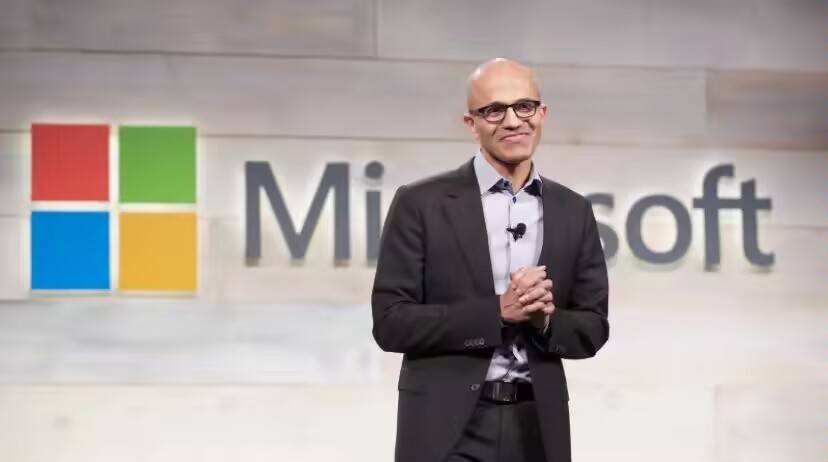
Core Viewpoint - Microsoft CEO Satya Nadella warns of a potential AI bubble in the U.S., stating that the company is heavily invested in AI data centers, which could become significant liabilities if the investment landscape changes [1][5]. Group 1: AI Investment Concerns - Nadella emphasizes that Microsoft and other tech giants are compelled to invest heavily in AI data centers due to competitive pressures, despite doubts about the actual customer value generated by large language models (LLMs) [5]. - The current market dynamics suggest that companies that can tell compelling AI stories are seeing their valuations rise, indicating a speculative bubble [2]. Group 2: Market Valuation Insights - The combined market capitalization of the seven major U.S. tech companies is projected to reach $20 trillion by September 2025, surpassing China's GDP [2]. - Nvidia's market value alone is estimated at $4.5 trillion, comparable to Germany's GDP, highlighting the extreme valuations in the tech sector driven by AI narratives [2].

3000亿天价算力协议背后:OpenAI的“资本大戏”与AGI的泡沫边界
Tai Mei Ti A P P· 2025-09-28 14:36
Core Insights - OpenAI has signed a five-year partnership with Oracle worth up to $300 billion, significantly impacting Oracle's stock price and market capitalization [1] - The deal raises questions about the actual feasibility of such a high-value agreement and reflects a shift in OpenAI's identity from a pure tech innovator to a capital-driven entity [1] - OpenAI's strategy involves substantial long-term commitments and investments, aiming to create a competitive advantage in AI infrastructure [2][3] Financial Reality - The $300 billion contract with Oracle implies an annual expenditure of $60 billion, which is six times OpenAI's current annual revenue [3] - OpenAI is projected to have a net loss of approximately $5 billion in 2025, despite a significant revenue increase [3] - The company's financial commitments far exceed its current revenue-generating capabilities, raising concerns about sustainability [3] Market Dynamics - The market has developed a strong belief in OpenAI's growth potential, leading to a lack of critical analysis regarding its financial health [5] - OpenAI's influence in the AI sector has made it a lever for capital, attracting significant investments based on future expectations rather than current performance [6] - The competitive landscape is pressured by high-value contracts, forcing other companies to follow suit or risk being marginalized [7] Industry Implications - The current investment climate is characterized by a focus on narrative and expectations rather than tangible cash flow, which can lead to inflated valuations [6][11] - OpenAI's approach mirrors past instances in the tech industry where companies leveraged hype for short-term gains at the expense of long-term trust [10][11] - The potential for a market correction exists if the promised returns do not materialize, which could impact investor confidence across the AI sector [8][12] Competitive Landscape - OpenAI's challenges, including delays in product releases and performance issues, have opened a strategic window for competitors, particularly in China [12][13] - Chinese AI companies are making significant advancements and could capitalize on OpenAI's current vulnerabilities to reshape the global AI landscape [12][13] - The ongoing competition may lead to a shift in focus from speculative investments to practical applications and technological advancements [13][14]

奥特曼和量子计算奠基人讨论GPT-8
量子位· 2025-09-28 03:39
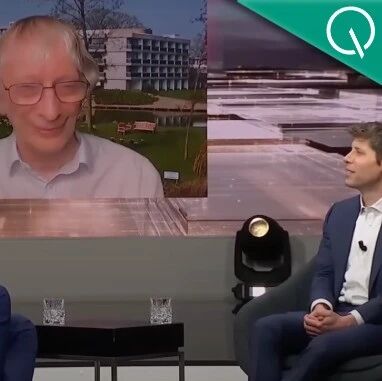
Core Viewpoint - The dialogue between Sam Altman and David Deutsch highlights the ongoing debate about whether AI can evolve into a conscious superintelligence, with differing opinions on the definitions and standards of AGI (Artificial General Intelligence) and ASI (Artificial Superintelligence) [3][8]. Group 1: Discussion on AI and Consciousness - Altman believes that future iterations of AI, such as GPT-8, could potentially understand complex concepts like quantum gravity and explain their reasoning process, challenging Deutsch's skepticism about AI achieving consciousness [22]. - Deutsch argues that while AI can perform impressive tasks, it lacks the intrinsic qualities of human intelligence, such as intuition and the ability to create original ideas, which are essential for true AGI [11][12][18]. Group 2: Perspectives on Human Intelligence - The conversation emphasizes that human intelligence is characterized by the ability to narrate one's own story and actively choose motivations, contrasting with the mechanical processing of information seen in current AI systems [19][21]. - The notion that there is no definitive test for AGI is discussed, suggesting that existing methods cannot adequately measure the capabilities of a truly general intelligence [15][16]. Group 3: Contributions of David Deutsch - David Deutsch is recognized as a foundational figure in quantum computing and information theory, having proposed significant theoretical frameworks that underpin the field [23][24]. - His work includes the development of the Deutsch-Jozsa algorithm, which demonstrated the exponential speedup of quantum algorithms compared to classical ones, laying the groundwork for future advancements in quantum computing [26].
吴泳铭的演讲把阿里市值又拉升了2000多亿 但「全栈」的护城河可能没那么深
Di Yi Cai Jing· 2025-09-25 06:25
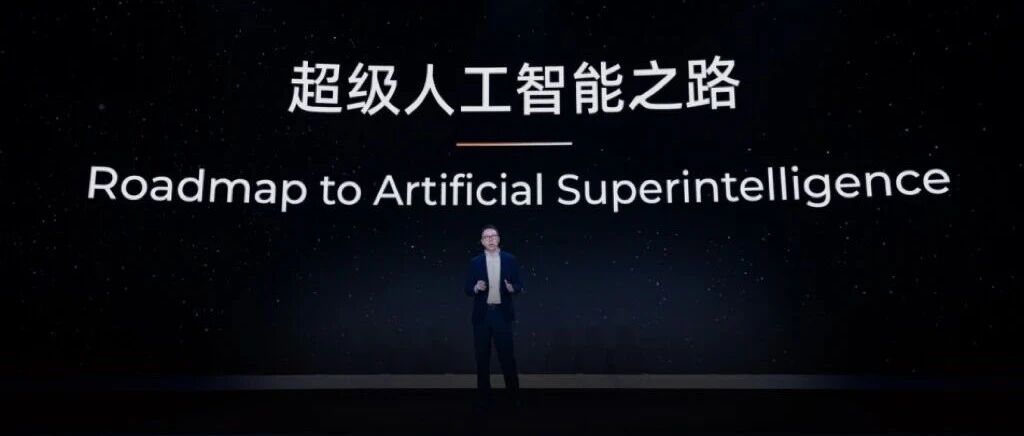
Group 1 - The core idea presented by Wu Yongming at the Yunqi Conference is the development framework of ASI (Artificial Superintelligence), which consists of three stages: emergent intelligence, autonomous action, and autonomous learning. Currently, the industry is in the second stage [1][4][7] - Wu emphasizes that the future AI era will involve numerous agents and robots in homes, factories, and companies, suggesting that individuals may need to utilize 100 GPU chips for their tasks [1][12] - Alibaba Cloud aims to become the computer of the AI era, with the Qwen model serving as the operating system on this supercomputer. The company plans to invest significantly in AI infrastructure, adding to its existing budget of 380 billion yuan over three years [1][9][12] Group 2 - In the capital market, Alibaba has demonstrated that ideas can be more valuable than results. Following the release of its Q2 2025 financial report, Alibaba's stock rose by 12.9% after executives provided insights into the company's strategy in local services [2][4] - Wu's speech at the Yunqi Conference led to a 9.16% increase in Alibaba's stock price, adding approximately 278.5 billion HKD (about 254.6 billion RMB) to the company's market value [4][12] - The Omdia report indicates that over 70% of the Fortune China 500 companies have adopted Generative AI, with Alibaba Cloud and the Qwen model having the highest penetration rate at 53% [15] Group 3 - The AI landscape is evolving, with Wu noting that AI's coding capabilities are crucial for achieving AGI (Artificial General Intelligence). Current AI agents primarily handle standardized and short-cycle tasks [7][8] - Wu highlights the need for models to autonomously learn and iterate to surpass human capabilities, although he does not provide a clear path for achieving this self-iteration [7][8] - The competition in AI and cloud computing is becoming inseparable, with Alibaba Cloud positioned as one of the few companies capable of full-stack self-research and joint innovation in both areas [21][23] Group 4 - Alibaba Cloud's market share in the AI cloud market is reported to be 35.8%, surpassing the combined share of its closest competitors, including Volcano Engine, Huawei Cloud, and Tencent Cloud [23] - However, in terms of token consumption, Volcano Engine has surpassed Alibaba Cloud, holding a 49.2% market share in the public cloud model usage [25]
吴泳铭掌舵两周年,阿里穿过峡谷
36氪· 2025-09-24 13:39
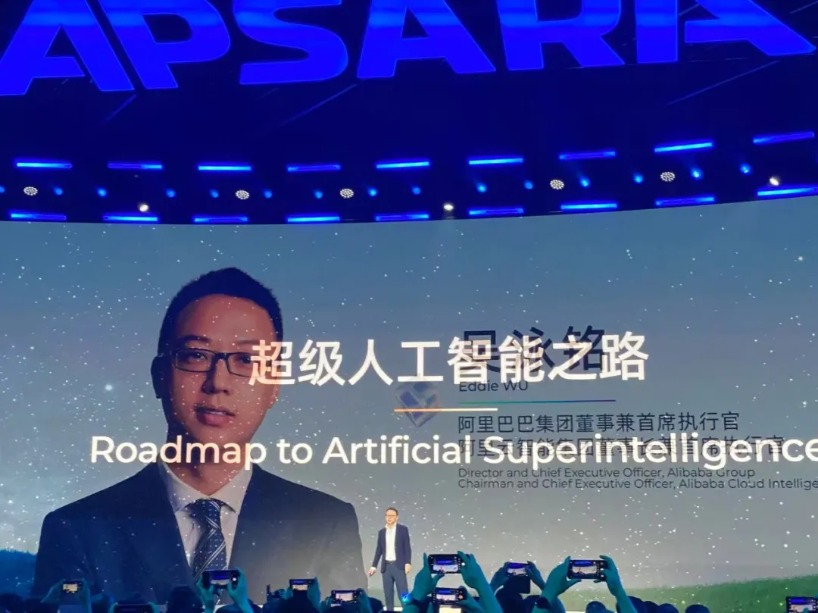
Core Viewpoint - The future of AI is seen as a journey towards Artificial Super Intelligence (ASI), with significant investments in AI infrastructure and a focus on creating a new operating system for AI applications [4][11][27] Group 1: Leadership and Vision - Wu Yongming, the CEO of Alibaba, has maintained a low public profile while driving the company's AI strategy, emphasizing the importance of AI in future business models [2][5] - His vision includes a clear path towards ASI, with AI evolving through three stages: learning from humans, assisting humans, and ultimately self-iterating beyond human intelligence [7][9] Group 2: AI Infrastructure and Investment - Alibaba plans to invest 380 billion yuan over three years to build AI infrastructure, aiming for a tenfold increase in energy consumption by 2032 compared to 2022 [4][17] - The company is focusing on creating a "super AI cloud" that will serve as the next generation of computing resources, essential for supporting numerous AI agents [11][19] Group 3: Strategic Decisions and Market Position - The decision to prioritize public cloud services was made to align with the growing demand for scalable AI solutions, despite previous revenue challenges in this area [15][18] - Alibaba's AI model, Tongyi, has become a leading open-source model, with over 300 models released and significant adoption across various industries, including finance and consumer electronics [17][22] Group 4: Future Outlook and Industry Impact - The company is positioning itself as a full-stack player in the AI space, integrating AI chips, cloud computing, and foundational models to enhance its competitive edge [19][22] - The overarching goal is to prepare for the ASI era, where AI will significantly augment human capabilities and transform industries [23][24]