绿色转型

Search documents
2025中国国际涂料博览会在上海盛大启幕
Sou Hu Cai Jing· 2025-09-04 04:11
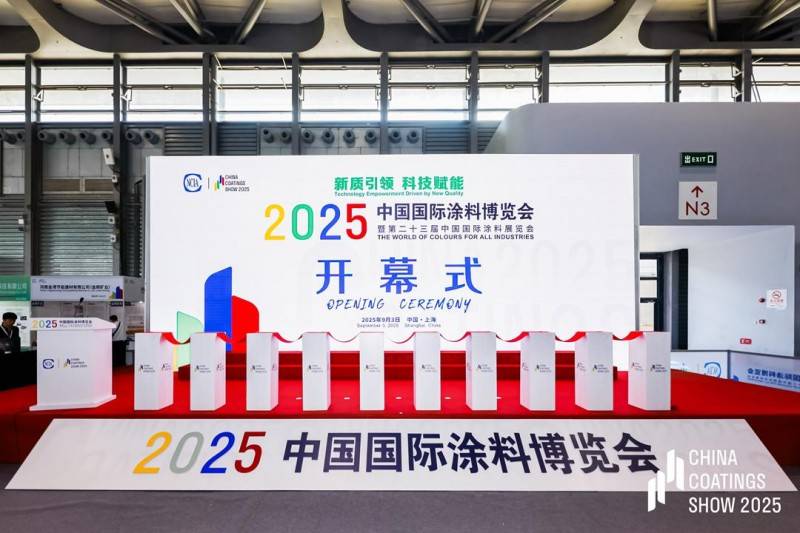
Core Viewpoint - The 2025 China International Coatings Expo marks a significant milestone in the global coatings industry, showcasing China's transition from scale expansion to value creation, with a focus on technological innovation and sustainable development [5][15]. Group 1: Event Overview - The expo is held at the Shanghai New International Expo Center, covering an exhibition area of 100,000 m², with over 500 exhibitors and an expected attendance of over 100,000 professional visitors over three days [1]. - The event is organized by the China Coatings Industry Association and features a theme of "New Quality Leading, Technology Empowering" [1][5]. Group 2: Industry Significance - The expo serves as a high-quality platform for global cooperation and exchange in the coatings industry, reflecting the industry's shift towards high-end, green, and intelligent transformation [5][20]. - The coatings industry in China has achieved global leadership in production and sales for 16 consecutive years, with a complete range of products and a cluster development model [9]. Group 3: Key Participants and Contributions - Notable attendees include leaders from various associations, government officials, and representatives from downstream application units, highlighting the collaborative nature of the event [3][9]. - The expo features participation from over 500 well-known domestic and international coating manufacturers and raw material suppliers, showcasing innovations in environmentally friendly coatings and advanced manufacturing technologies [16][17]. Group 4: Future Outlook - The next China International Coatings Expo is scheduled for July 8-10, 2026, indicating ongoing commitment to industry development and innovation [13]. - The event aligns with national strategies for high-quality development and aims to foster collaboration between academia, industry, and government [20].

产业向“新”向“绿”折射经济增长引擎切换
Zheng Quan Ri Bao· 2025-09-03 16:21
Group 1 - The human-robot industry in China has seen a research intensity exceeding 6% in the first half of the year, with both revenue and net profit achieving double-digit growth [1] - The clean energy sector, particularly hydropower and nuclear power companies, reported revenue growth rates exceeding 4% due to the advancement of major national energy projects [1] - The low-altitude economy, represented by the drone industry, is experiencing rapid development, with new business models such as smart agriculture and low-altitude tourism emerging, contributing to positive revenue growth [1] Group 2 - The measurement of industrial competitiveness has shifted, with R&D becoming a critical factor for survival and development; total R&D investment across the market exceeded 810 billion yuan, with a research intensity of 2.33% [2] - Strategic emerging industries and high-tech manufacturing sectors have demonstrated higher R&D intensity, surpassing the overall average by 3.29 and 4.44 percentage points respectively [2] - BYD has maintained its position as the leader in R&D investment in A-shares, with significant investments leading to breakthroughs in battery, electronics, and new energy vehicles, reshaping the global automotive market [2] Group 3 - The green transformation is becoming a key to unlocking new growth opportunities, with high-energy-consuming industries undergoing low-carbon modifications to enhance vitality; for instance, Baosteel's near-zero carbon production line is nearing installation completion [3] - The "dual carbon" goals are driving a green transformation that reconstructs energy and industrial structures, creating new demands, technologies, and business models, thus injecting lasting momentum into economic growth [4] Group 4 - Emerging industries are rising, highlighting the systemic shift in growth engines; the low-altitude economy not only creates opportunities for drone manufacturing but also activates the entire industrial chain and diverse development scenarios [5] - Companies involved in the low-altitude economy are expanding from drone manufacturing to airspace operations and service scenarios, forming a complete value chain of "hardware + software + services" [5] - The trend towards "new" and "green" reflected in the semi-annual reports is not a short-term phenomenon, as sustained R&D investment, deepening green transformation, and maturing new ecosystems will facilitate a smoother transition of growth engines, supporting high-quality economic development in China [5]
金信期货助力棉纺产业稳健经营与高质量发展交流会圆满举行
Cai Fu Zai Xian· 2025-09-03 10:25
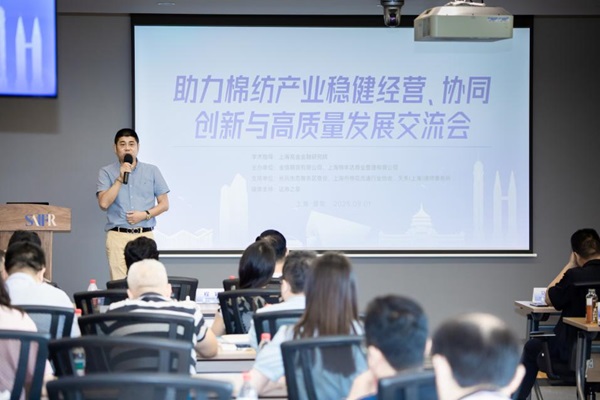
Core Viewpoint - The conference aimed to create a platform for resource sharing, experience exchange, and collaborative innovation in the cotton spinning industry, emphasizing the integration of financial tools with the real economy to enhance risk management capabilities [1][11]. Group 1: Conference Overview - The conference was co-hosted by Jin Xin Futures Co., Ltd. and Shanghai Cotton Fengda Commercial Management Co., Ltd., supported by various industry associations and academic institutions [1]. - Nearly a hundred representatives from the cotton spinning industry, financial institutions, and academic organizations gathered to explore transformation paths and high-quality development [1]. Group 2: Industry Insights - The Deputy General Manager of Hangzhou Wanshili Silk Culture Co., Ltd. highlighted the significance of digital printing technology in revolutionizing the traditional dyeing industry, enabling flexible production and reducing inventory pressure [4]. - The integration of technology and industry is reshaping the competitiveness of the textile sector [4]. Group 3: Financial Tools and Risk Management - Jin Xin Futures' research head discussed the core role of futures tools in risk management, explaining price discovery and hedging functions using cotton yarn price fluctuation cases [5]. - The new regulations on cotton yarn futures are expected to enhance market liquidity and provide more precise risk management solutions for real enterprises [5]. Group 4: Green Transformation and ESG - A panel discussion emphasized the importance of blockchain technology in creating a full-process traceability system for cotton, promoting environmental monitoring and carbon footprint management [8]. - Green transformation is viewed not only as a social responsibility but also as a pathway to enhance brand value [8]. Group 5: Collaborative Innovation - The roundtable discussion focused on collaborative innovation and risk response in the textile industry, proposing cost-reduction and efficiency-increasing strategies through strategic partnerships and e-commerce [9]. - The participants stressed the need for international standards to overcome barriers in green trade and enhance industry resilience through blockchain traceability and ESG practices [10]. Group 6: Future Directions - Jin Xin Futures aims to continue serving the real economy by providing customized risk management solutions and forward-looking market analysis, facilitating the high-quality development of the cotton spinning industry [11].
赋能产业升级,共绘发展蓝图——助力棉纺产业稳健经营、协同创新与高质量发展交流会圆满举行
Qi Huo Ri Bao Wang· 2025-09-03 09:24
Core Viewpoint - The conference aimed to create a platform for resource sharing, experience exchange, and collaborative innovation in the cotton spinning industry, emphasizing the integration of financial tools with the real economy to enhance risk management capabilities [1][14]. Group 1: Conference Overview - The conference was co-hosted by Jin Xin Futures Co., Ltd. and Shanghai Mianfengda Commercial Management Co., Ltd., supported by various associations and institutions, gathering nearly a hundred representatives from the cotton spinning industry and financial sectors [1]. - The event focused on exploring transformation paths and high-quality development for the cotton spinning industry amidst increasing global competition [1]. Group 2: Key Presentations - Hu Xiaobo, General Manager of Jin Xin Futures, highlighted the importance of building a platform for collaboration and resource sharing to help enterprises cope with market fluctuations [1][14]. - Ma Tingfang, Deputy General Manager of Hangzhou Wanshili Silk Culture Co., Ltd., discussed the significance of digital printing technology in revolutionizing the traditional dyeing industry, enabling flexible production and reducing inventory pressure [4][6]. - Yao Xinghang, head of Jin Xin Futures Research Institute, explained the core role of futures tools in risk management, emphasizing price discovery and hedging functions [7][9]. Group 3: Industry Innovations - A panel discussion featured industry leaders discussing collaborative innovation and risk management strategies, including the use of blockchain technology for environmental monitoring and carbon footprint management in cotton cultivation [8][10]. - The discussion emphasized the need for green transformation as a means to enhance brand value and fulfill social responsibilities [8][10]. Group 4: Future Directions - Jin Xin Futures aims to provide customized risk management solutions to help cotton spinning enterprises mitigate price volatility risks, while also offering forward-looking market analysis [14]. - The company is committed to deepening its service to the industry and collaborating with various stakeholders to outline a blueprint for high-quality development in the cotton spinning sector [14].

金融“活水”+绿色“转型”,青岛高新区激活民营企业发展新动能
Qi Lu Wan Bao Wang· 2025-09-03 08:18
Core Insights - Private enterprises are vital for regional economic development, and their vitality and resilience directly impact high-quality economic growth [1] - Qingdao High-tech Zone has implemented comprehensive financial services, efficient project construction environments, and innovative green development paths to support private enterprises [1] Financial Support for Enterprises - Qingdao High-tech Zone has introduced "High-tech Loan 2.0," which allows for loan approval within 3 working days and funds to be disbursed in 2 hours, significantly aiding companies like Qingdao Kiditai Biotechnology Co., Ltd. in expanding production capacity [2] - The "High-tech Loan 2.0" is tailored for technology-based small and micro enterprises, offering pure credit loans without collateral, which aligns with the characteristics of these businesses [2] - Over 230 enterprises have received more than 900 million yuan in credit through the "High-tech Loan" series, demonstrating the effectiveness of the collaborative mechanism between government, finance, and enterprises [3] Project Construction Efficiency - The "Quick Build" initiative in Qingdao High-tech Zone has significantly improved project construction efficiency, reducing approval times and streamlining processes for private enterprises [4] - The initiative integrates multiple approval processes into a single application, cutting down the number of required documents from 15 to 1 and reducing approval time by over 50% [4][5] - Specialized teams provide tailored support throughout the project lifecycle, ensuring timely completion and adherence to regulations [5] Green Development Initiatives - Qingdao Huaxin Crystal Technology Co., Ltd. has successfully transformed waste sulfuric acid into a valuable resource, significantly reducing disposal costs and enhancing sustainability [6][7] - The High-tech Zone has pioneered a model for the directed utilization of hazardous waste, promoting collaboration between companies to minimize environmental risks while fostering economic growth [7] - The implementation of IoT systems for hazardous waste management has improved compliance and reduced storage times, contributing to a more sustainable industrial ecosystem [7] Conclusion - Qingdao High-tech Zone's multifaceted approach, including financial support, project efficiency enhancements, and green initiatives, is empowering private enterprises to innovate and grow, fostering a mutually beneficial relationship with the regional economy [7]
锂电行情强势复苏,杉杉股份上半年核心业务盈利4.15亿元
2 1 Shi Ji Jing Ji Bao Dao· 2025-09-03 05:46
Core Viewpoint - The lithium battery industry is experiencing a strong rebound in the first half of 2025, driven by the dual forces of global energy transition and electrification, with the anode material sector showing significant recovery and concentration improvement [1][2]. Industry Overview - The lithium battery industry has entered a new phase of "recovery and prosperity" in 2025, with a collaborative growth across the entire supply chain, moving away from the low point of 2024 [2][5]. - The demand for lithium battery core materials is witnessing a "volume and price increase" window, driven by the booming markets for electric vehicles and energy storage [3][4]. Market Dynamics - In the first half of 2025, global demand for anode materials continued to grow, with market prices stabilizing and structural optimization occurring within the sector [5]. - The market concentration is increasing, with leading companies leveraging their technological and production advantages to squeeze out smaller competitors [5][12]. Company Performance - Shanshan Co., Ltd. reported impressive financial results for the first half of 2025, achieving revenue of 9.858 billion yuan, a year-on-year increase of 11.78%, and a net profit attributable to shareholders of 207 million yuan, a staggering increase of 1079.59% [1][6]. - The company's anode business has become the core engine driving performance growth, while its polarizer business remains stable, supporting overall positive trends [6][8]. Competitive Advantages - Shanshan holds a leading market share of 21% in the artificial graphite anode materials sector, indicating strong competitive positioning [6]. - The company has successfully introduced new products such as fast-charging anodes and silicon-based anodes, enhancing its technological leadership [6][13]. - Strategic partnerships with major battery manufacturers like CATL and BYD have solidified Shanshan's customer base, ensuring stable sales and facilitating participation in technological advancements [7][10]. Policy Environment - The Chinese government has introduced multiple supportive policies for the lithium battery and energy storage industries, creating a favorable development environment for anode material companies [10][11]. - These policies are expected to stimulate demand for anode materials, further benefiting leading companies like Shanshan [10][11]. Global Expansion - Shanshan is actively pursuing global expansion, with a 100,000-ton anode material production project in Finland progressing well, aimed at serving the European electric vehicle and energy storage markets [11][12]. - The company has also signed strategic cooperation agreements to enhance its global supply chain and respond quickly to market demands [11][12]. Future Outlook - The lithium battery industry's high growth potential is expected to continue, with increasing demand for anode materials driven by the rising penetration of electric vehicles and ongoing energy storage installations [12][13]. - Shanshan's comprehensive advantages in technology, production capacity, customer relationships, and supply chain stability position it well to capitalize on the ongoing industry recovery [12][13].

三大世界级城市群要来了!城市投资逻辑迎来重大转变
21世纪经济报道· 2025-09-03 04:56
Core Viewpoint - The article emphasizes the importance of the recently issued "Opinions on Promoting High-Quality Urban Development" as a roadmap for urban development and investment opportunities in China over the next decade, shifting focus from quantity to quality in urbanization [1] Investment Directions - The primary investment focus should be on three world-class city clusters: Beijing-Tianjin-Hebei, Yangtze River Delta, and Guangdong-Hong Kong-Macau Greater Bay Area, which together account for over 40% of the national economic output, with opportunities in cross-border financial infrastructure and industrial chain collaboration [2] - The development logic of mega cities is shifting from "expansion" to "strengthening," with cities like Beijing focusing on technological innovation and Shanghai on financial openness, creating investment hotspots in related national laboratories and high-end research platforms [2] - Emerging growth areas like Chengdu and the middle reaches of the Yangtze River will focus on urban integration, enhancing efficiency through cross-city commuting networks and industrial cooperation parks [2] Potential in Smaller Cities - Smaller cities and counties are also seen as significant investment opportunities, with some experiencing rapid population inflow, leading to high demand for schools, hospitals, and public services, ensuring high investment certainty [3] - Towns near urban clusters, such as Huqiao in Kunshan, are benefiting from industrial spillover from larger cities, presenting opportunities in supporting facilities like factories and talent housing [3] - Even shrinking cities, like Fuxin in Liaoning and Yichun in Heilongjiang, are exploring green transformation projects, such as wind power and eco-tourism, which, while slow in short-term returns, hold long-term value [3] Investment Logic Reconstruction - Future urban investments will not rely on land finance and scale dividends but will focus on "functional adaptation + efficiency enhancement," assessing projects based on their ability to improve urban capabilities [3] - Each investment must align with the "high-quality development" theme to find its place in the trillion-level urban investment market, whether through urban integration projects or public service enhancements in counties [3]

日本三大化工巨头联手,成立新公司!
合成生物学与绿色生物制造· 2025-09-03 00:56
Core Viewpoint - The collaboration among Asahi Kasei, Mitsui Chemicals, and Mitsubishi Chemical aims to establish a limited liability partnership, Setouchi Ethylene LLP, focusing on carbon reduction technologies and capacity optimization in ethylene production facilities in western Japan, with a goal of achieving a green transition by 2030 [2][5]. Group 1: Ethylene Production and Carbon Emissions - Ethylene is one of the largest chemical products globally, with its production process accounting for 1.8% of global industrial emissions, primarily due to high-temperature energy consumption in steam cracking furnaces [5]. - Japan, as the third-largest ethylene producer, has an annual capacity of approximately 10 million tons, but its carbon intensity is 20%-30% higher than that of Europe and the U.S. [5]. - The Japanese Ministry of Economy, Trade and Industry (METI) plans to achieve a 40% reduction in emissions from the chemical industry by 2030, making the stability, greening, and efficiency optimization of ethylene production crucial for the development of downstream engineering plastics [5]. Group 2: Strategies for Green Transition - The three companies have been discussing specific measures to promote carbon neutrality in ethylene production facilities since last year, focusing on transitioning raw materials from traditional petroleum resources to biomass-based materials and introducing low-carbon fuels [6]. - They plan to optimize production frameworks, including potential capacity reductions for more efficient resource utilization, and have agreed that forming the LLP is the best way to deepen cooperation and accelerate their goals [6]. - Asahi Kasei has developed a "lignin cracking technology" that can convert paper waste and other biomass into ethylene feedstock, which can replace some petroleum-based raw materials. Pilot data shows that with a biomass ratio of 20%, carbon emissions can be reduced by 35%, and costs are 15% lower than traditional bioethanol routes [6]. Group 3: Differences Between Bio-based Olefins and Traditional Ethylene - Bio-based ethylene opens a new pathway for ethylene production, sourced from renewable biomass resources such as agricultural and forestry waste, through a series of biological and chemical conversion processes [7]. - The carbon emissions from bio-based ethylene production are significantly lower, with CO2 emissions ranging from 0.8 to 1.2 kg CO2 per kg of product, representing a 60% reduction compared to petrochemical routes [7]. - However, challenges remain in terms of cost competitiveness, with raw material costs accounting for 60%-70% of total costs, and higher energy consumption compared to petrochemical processes [7]. Group 4: Industry Movements and Innovations - Major companies like Braskem, BASF, and New Energy Blue are pursuing bio-based ethylene as a key focus area in the context of low-carbon sustainability [7]. - Braskem, the sixth-largest petrochemical company globally, has been producing bio-based polyethylene since 2010 and is expanding its bio-based ethylene production capacity in Brazil [8]. - In China, Sinopec has made significant strides in bio-based polyethylene, successfully launching its first bio-based product in September 2024, with an initial production of 2,500 tons [10].
红色土地上正在谱写绿色发展新篇章
Zhong Guo Huan Jing Bao· 2025-09-02 23:21
Core Insights - The article highlights the transformation of revolutionary old areas in China, emphasizing their shift towards ecological sustainability and high-quality development while preserving their historical significance [1][2][3][4] Group 1: Ecological Restoration and Economic Development - Many revolutionary old areas, once hindered by environmental degradation, are now leveraging their ecological resources to develop unique agricultural and tourism industries [1][2] - Longtian, once known as the "Red Desert" due to severe soil erosion, has successfully transformed its environment through systematic governance, leading to a significant improvement in local ecology and economy [2] - Areas rich in mineral resources, such as coal and aluminum, face challenges from historical resource extraction, necessitating comprehensive ecological restoration to revitalize the land [2][3] Group 2: Innovative Industrial Practices - Shanxi's Lüliang is developing a circular economy around traditional coal and coke industries, integrating hydrogen energy and high-end manufacturing into its industrial chain [3] - The steel industry in Hebei's Shexian is evolving with a focus on green practices, enhancing the entire production process from material transport to product delivery [3] Group 3: Agricultural and Cultural Development - Revolutionary old areas are capitalizing on their unique agricultural products, enhancing brand recognition and value through specialized cultivation and processing [3] - The integration of red cultural resources with ecological tourism is becoming a trend, utilizing modern technology to create immersive experiences that promote local history and culture [4] - The enduring spirit of resistance and sacrifice from the revolutionary past continues to inspire local communities to pursue sustainable development and shared prosperity [4]
持续加码“第二家乡市场” 浙江海盐缘何受外资青睐?
Sou Hu Cai Jing· 2025-09-02 14:22
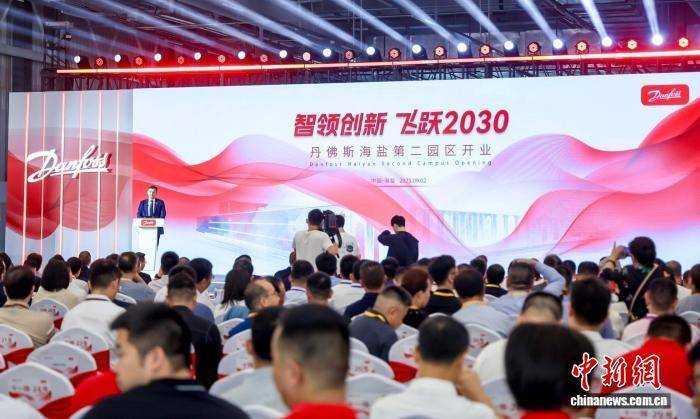
"我们始终坚信中国市场的巨大潜力与发展机遇。海盐第二园区的启用是我们践行'在中国、为中国'战 略的里程碑,也是我们继续投身中国绿色未来的有力举措。"丹佛斯集团总裁兼首席执行官方行健(Kim Fausing)说,依托先进的研发和生产设施,该集团期待与中国合作伙伴紧密协作,共助中国高质量绿色 转型进程。 中新网嘉兴9月2日电(黄彦君)2024年实际利用外资3.43亿美元;制造业外资占比达59%;2025年上半年 规上外资制造业增加值同比增长96.2%……近年来,浙江省海盐县外资利用成效显著、增长势头强劲。 9月2日,丹麦跨国工业集团丹佛斯在中国最大的生产基地——丹佛斯海盐第二园区正式启用。自2005年 落户该县以来,这家电气化、数字化和智能制造领域的龙头企业已10次投资海盐。 9月2日,丹佛斯海盐第二园区启用。主办方供图 在全球经济波动,跨国投资低迷的背景下,海盐为何能与外资企业"双向奔赴"? 从服务创新到制度保障,核心密码在于该地精心构建的"全生命周期陪伴式服务"体系。 以丹佛斯在海盐的"生长"过程为例,为保障其项目顺利推进,海盐创新推出周报制度,定期召集项目专 班、建设单位会商;针对企业碳中和需求,为其量身定 ...