
十五五规划

Search documents
永顺泰:11月14日召开董事会会议
Mei Ri Jing Ji Xin Wen· 2025-11-17 07:59
截至发稿,永顺泰市值为62亿元。 每经头条(nbdtoutiao)——展望"十五五" | 专访尹艳林:让有钱且愿消费的人顺利消费;个税起征点可 提高,最高边际税率可下调,让有关群体少缴税、多收入 每经AI快讯,永顺泰(SZ 001338,收盘价:12.37元)11月17日晚间发布公告称,公司第二届第二十二 次董事会会议于2025年11月14日在公司会议室以现场及通讯方式召开。会议审议了《关于补选公司第二 届董事会非独立董事的议案》等文件。 2025年1至6月份,永顺泰的营业收入构成为:啤酒制造占比96.03%,其他业务占比3.97%。 (记者 王晓波) ...
政策周观察第55期:民企稳定投资政策出台
Huachuang Securities· 2025-11-17 07:30
Policy Developments - The State Council issued measures to promote private investment, allowing private enterprises to enter monopolistic sectors like energy and railways, and supporting participation in low-altitude economy infrastructure[10] - The government aims to reserve over 40% of procurement budgets for small and medium enterprises in projects exceeding 4 million yuan[10] Economic Strategy - Premier Li Qiang emphasized the importance of integrating "two重" construction into the "十四五" plan, focusing on strategic and forward-looking requirements[3] - Fiscal policy during the "十四五" period will maintain an active orientation, adjusting deficit rates and debt levels based on economic conditions[3] Industry Focus - The Ministry of Industry and Information Technology announced plans for the "十四五" development of smart connected new energy vehicles and new battery industries[12] - By 2030, a multi-level renewable energy consumption and regulation system is expected to be established, with new electricity demand primarily met by renewable sources[12] Risk Considerations - There is a risk of delayed policy updates, which could impact the effectiveness of the measures introduced[3]
2025大湾区科技与金融创新发展大会将于11月18日举行
Zheng Quan Shi Bao Wang· 2025-11-17 07:28
Core Points - The 20th China Economic Forum will commence on November 18 in Nansha, Guangzhou [1] - A parallel forum titled "2025 Greater Bay Area Technology and Financial Innovation Development Conference" will be held on the same day, focusing on technology innovation policies and financial empowerment for scientific innovation [1] - Over 200 representatives from government departments, listed companies, financial institutions, and industry experts will participate in the discussions [1] Summary by Categories Event Details - The forum is scheduled for November 18, 2023, in Guangzhou Nansha [1] - The parallel forum will take place from 13:30 to 18:00 on the same day [1] Participants - More than 200 representatives from various sectors including government, listed companies, and financial institutions will attend [1] - Industry experts will also be part of the discussions [1] Discussion Topics - Key topics include technology innovation policies, financial empowerment for scientific innovation, and the "14th Five-Year Plan" [1]
一习话·迈向“十五五”|“以更大气魄深化改革、扩大开放”
Yang Guang Wang· 2025-11-17 07:13
Group 1 - The core viewpoint emphasizes that expanding openness and improving the level of openness is a crucial strategy for China's new achievements in development in the new era [1] - General Secretary Xi Jinping has repeatedly stated that China's determination to expand high-level openness will not change, and the door to China's openness will only open wider [1] - The "14th Five-Year Plan" proposed by the 20th Central Committee emphasizes promoting reform and development through openness, sharing opportunities, and achieving common development with countries around the world [1] Group 2 - The approach moving towards the "14th Five-Year Plan" involves actively integrating into the global economy and implementing broader, deeper, and more extensive openness [1] - The focus is on seeking momentum from reform and vitality from openness, indicating a proactive stance in engaging with the global market [1]
赵伟:“十五五”三大主线与超常规科技攻关
申万宏源宏观· 2025-11-17 05:46
Core Viewpoint - The "15th Five-Year Plan" is a critical period for China's modernization, focusing on restructuring economic growth logic, shifting from optimizing traditional industries to "extraordinary" technological breakthroughs, and emphasizing fiscal and financial reforms to alleviate fiscal constraints and promote growth towards the 2035 vision [2][3]. Group 1: Key Tasks and Economic Context - The "15th Five-Year Plan" serves as a transitional phase, linking the "14th Five-Year Plan" and the 2035 modernization goals, requiring both strategic continuity and innovation [4]. - The plan addresses significant changes in the global landscape, domestic economic transformation, and the impact of a new technological revolution, which collectively shape the macro context for the plan [4][5]. Group 2: Economic Growth Baseline and Targets - To double the economic output by 2035 compared to 2020, the nominal GDP growth rate must average around 4% from 2025 to 2035, while per capita GDP must grow at approximately 3.9% [6][7]. - The plan sets ambitious targets for economic growth, reflecting a commitment to high-quality development and the integration of rapid economic growth with long-term stability [7]. Group 3: Industrial Policy and Technological Innovation - The plan prioritizes the transformation of traditional industries, emphasizing quality upgrades in sectors like mining, metallurgy, and chemicals to enhance global competitiveness [7][8]. - It outlines strategic emerging industries and future industries, including new energy, aerospace, and quantum technology, establishing a gradient development framework [7][8]. - Technological modernization is highlighted as a key support for China's modernization, with a focus on breakthroughs in critical core technologies across various sectors [8][9]. Group 4: Service Sector Development - The service sector is identified as having significant growth potential, with a notable gap in consumer spending compared to developed countries, indicating a potential market of nearly 3 trillion yuan [9]. - Systematic solutions for expanding domestic demand include increasing public service spending and enhancing the supply of quality consumer goods and services [9]. Group 5: Fiscal and Financial Reforms - The "15th Five-Year Plan" emphasizes reforms aimed at enhancing macroeconomic governance, with over 300 reform tasks to be completed by 2029 across various sectors [10][11]. - Key reform areas include market-oriented reforms, fostering new productive forces, and achieving green transitions, with a focus on establishing a unified national market [11][12]. - Financial reforms are crucial for improving local fiscal sustainability, addressing challenges in local government financing, and ensuring a clear division of responsibilities between central and local governments [12][13].

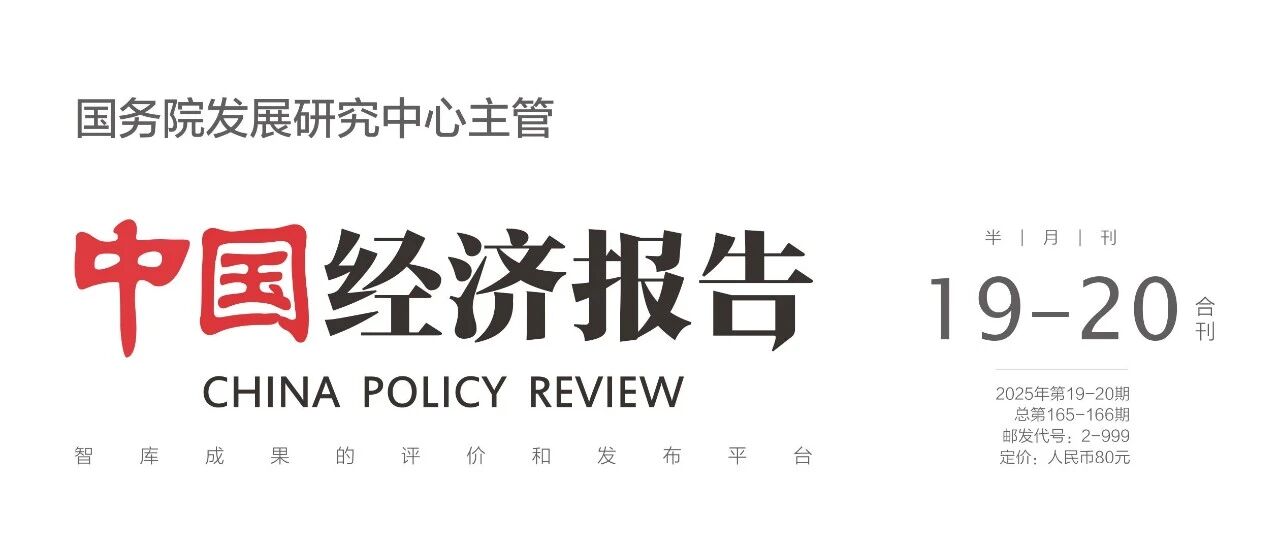
谋篇布局“十五五”·热点问答|如何合理界定“中等发达国家水平”?
Zhong Guo Jing Ji Wang· 2025-11-17 05:34
Core Points - The "14th Five-Year Plan" suggests that by 2035, China's per capita GDP should reach the level of middle-developed countries [2] - There is no clear international definition for middle-developed countries, but it is generally accepted that per capita GDP should exceed the threshold of developed countries (over $20,000) and double the per capita GDP from 2020 by 2035 [2] Summary by Categories - **Economic Goals** - The target for per capita GDP by 2035 is to achieve a level comparable to that of middle-developed countries [2] - The plan emphasizes the need for per capita GDP to exceed $20,000 and to double from 2020 levels by 2035 [2]
“十五五”建议加快新材料领域集群发展
Mei Ri Jing Ji Xin Wen· 2025-11-17 01:55
Core Insights - The New Materials 50 ETF (516710) increased by 0.29%, with significant gains in constituent stocks such as Tianhua Xinneng rising over 10%, Nanda Optoelectronics over 6%, and Jinfatech over 5% [1] Industry Overview - The "14th Five-Year Plan" suggests the development of emerging pillar industries, accelerating the growth of strategic emerging industry clusters in areas such as new energy, new materials, aerospace, and low-altitude economy, which could create several trillion-yuan markets [1] - According to Guoyuan Securities, new materials are crucial for new industrialization, and during the "14th Five-Year" period, materials like rare earth magnetic materials and tin-tungsten minor metals, which are critical, will receive policy support amid increasing international competition [1] Market Potential - These critical materials are not only essential for aerospace but also meet the demands of new energy batteries and high-end equipment industries, indicating that the market size will continue to expand alongside the development of downstream clusters [1] - The New Materials 50 ETF closely tracks the CSI New Materials Theme Index, which selects 50 listed companies involved in advanced steel, non-ferrous metals, chemicals, inorganic non-metals, and other key strategic materials to reflect the overall performance of new materials theme stocks [1]


国信证券晨会纪要-20251117
Guoxin Securities· 2025-11-17 01:24
Key Insights - The report highlights the strong growth potential of Wanyi Technology (688600.SH), a leading domestic helium mass spectrometer manufacturer, which is expanding into analytical and medical instruments to create a second growth curve [11][12][13] - The company has established a solid foundation in industrial detection and online monitoring, with a market share exceeding 40% in helium mass spectrometers, primarily serving sectors such as new energy and automotive components [11][12] - Wanyi Technology's laboratory analysis instruments and medical devices are emerging as new growth engines, with successful product selections in provincial procurement and ongoing development of dialysis machines [12][13] Industry and Company Analysis - The report emphasizes the investment strategy for the metal industry in 2026, focusing on the resonance between supply-demand dynamics and interest rate cuts, anticipating a recovery in profitability and valuation [4] - The electric equipment and new energy sector is highlighted for its lithium battery materials, which are expected to see comprehensive price increases, alongside a sustained demand for domestic energy storage systems [4] - The media industry is advised to focus on trends in prosperity and policy shifts, particularly in AI applications [4] - The food and beverage sector is analyzed through macroeconomic indicators, particularly in relation to the liquor industry [4] - The petrochemical industry is projected to recover in terms of profitability, while the organic silicon sector is expected to enter a price uptrend due to coordinated production cuts [4]

“反内卷”政策效果持续显现,关注PPI回升的投资机会
AVIC Securities· 2025-11-16 23:30
Market Overview - The U.S. government shutdown lasted 43 days, raising concerns about the sustainability of U.S. Treasury bonds and increasing uncertainty regarding the Federal Reserve's interest rate decisions[2] - In October, multiple financial and economic indicators in China showed a decline, but the long-term positive trend of the economy remains intact, supporting the achievement of annual targets[6] PPI Trends - Since June 2025, the PPI year-on-year growth rate has shown a bottoming recovery trend, indicating a potential economic recovery phase[10] - The report identifies two phases of PPI growth: the recovery from the bottom to the pre-positive peak and the return to overall peak levels, with various industries showing different performance in these phases[14] Investment Opportunities - The report suggests focusing on industries that are likely to benefit from the "anti-involution" policy, including small household appliances, paper, chemical products, and cosmetics, which have shown significant improvement since the policy's implementation[18] - The analysis indicates that cyclical sectors such as non-ferrous metals, construction materials, and machinery have outperformed during the recovery phase of PPI[19] Market Sentiment - The overall market sentiment has improved, with an increase in average daily trading volume to 20,438.27 billion yuan, up by 314.77 billion yuan from the previous week[5] - The A-share market's overall price-to-earnings ratio stands at 22.22, reflecting a slight decrease of 0.16% from the previous week, indicating a stable valuation environment[5] Strategic Recommendations - Investors are advised to maintain a balanced portfolio and focus on sectors aligned with the "anti-involution" and new demand trends, while monitoring key policy meetings and changes in the Federal Reserve's interest rate outlook[3] - The report emphasizes the importance of tracking the performance of industries with low capacity utilization and profitability that are expanding capacity, as these are expected to benefit from ongoing policy support[18]
中国式现代化建设的又一次总动员总部署
Bei Jing Ri Bao Ke Hu Duan· 2025-11-16 21:46
Group 1 - The 20th Central Committee's Fourth Plenary Session sets the direction and goals for China's development over the next five years, emphasizing the importance of the "15th Five-Year Plan" in achieving socialist modernization [1][3][4] - The planning system in China has evolved into a comprehensive framework that includes national, regional, and sectoral plans, reflecting the unique characteristics of Chinese-style modernization [2][6] - The "15th Five-Year Plan" is positioned as a critical period for consolidating the achievements of the "14th Five-Year Plan" and preparing for the "16th Five-Year Plan," with a focus on solidifying the foundation for modernization [3][4] Group 2 - The emphasis on expanding high-level opening-up is a strategic choice to respond to global changes and enhance China's influence in international economic governance [6][7] - Beijing plays a crucial role in the national strategy for high-level opening-up, leveraging its service industry and headquarters economy to become a hub for global resource allocation [8] - The "15th Five-Year Plan" aims to enhance the high-quality development of the Beijing-Tianjin-Hebei region, addressing existing challenges and leveraging its innovative resources [9][10] Group 3 - The cultural development during the "15th Five-Year Plan" period focuses on enhancing cultural innovation and addressing contemporary challenges, with an emphasis on integrating cultural resources into urban development [11][12] - The strategic planning for education highlights the importance of cultivating talent and promoting technological innovation as foundational elements for national development [21][22] - The financial and tax reforms during the "15th Five-Year Plan" will focus on optimizing fiscal policies to support economic growth and structural adjustments, ensuring a balance between short-term stability and long-term development [15][16]