绿色低碳转型

Search documents
步入减量提质发展阶段,钢铁企业积极求变
Xin Hua Cai Jing· 2025-08-11 02:34
在8月5日至10日举办的首届中国国际钢铁周上,与会人士认为,钢铁需求的高速增长已成过往,全球钢 铁需求进入一个增长放缓、甚至局部下降的新阶段。 面对"减量时代"的挑战,钢铁企业积极求变,亮出各自的应对之策。企业纷纷摒弃单纯追求规模增长的 旧思维,将目光聚焦产品的高附加值、差异化发展,并致力于从钢材供应商,升级为金属材料解决方案 提供商。以质取胜、数智化推进企业精益高效发展的转型升级大幕,已在全球钢铁业拉开。 钢铁行业需求增长显著放缓 世界钢铁协会总干事埃德温·巴松在第十四届中国国际钢铁大会(首届中国国际钢铁周的主题大会)上 介绍,2020年至2024年,全球钢铁需求复合年均增长率分别为0.43%、3.72%、-3.28%、0.48% 和-0.74%。多家机构预计,未来30年全球粗钢产量将保持年均增速约1%的温和增长,到2050年全球粗 钢产量将达22亿吨至24亿吨。 埃德温·巴松介绍,中国的钢铁需求在全球的占比从2020年起呈减少趋势,预计2025年中国钢铁需求占 到全球的48.2%,2026年占比将降为47.2%。 宝武集团董事长胡望明在大会上表示,基于发达经济体工业化、城镇化与钢铁消费规律,中国钢铁生产 ...
以“数”看“绿”!“两山”答卷二十年
Xin Hua She· 2025-08-11 01:56
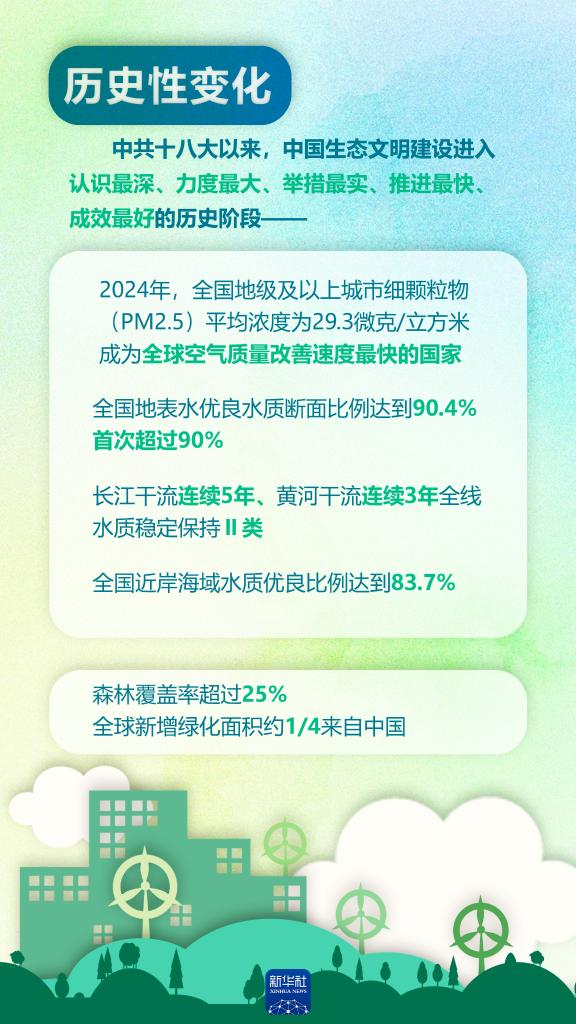
今年是"绿水青山就是金山银山"理念提出二十周年 党的十八大以来,这一理念成为生态文明建设的核心理念和行动指南 二十载光阴流转,源于浙江余村的思想星火,已燎原成神州大地的磅礴实践。 中共十八大以来,中国生态文明建设进入 认识最深、力度最大、举措最实、推进最快、 成效最好的历史阶段 -- 2024年,全国地级及以上城市细颗粒物 (PM2.5) 平均浓度为29.3微克/立方米 成为全球空气质量改善速度最快的国家 全国地表水优良水质断面比例达到90.4% 首次超过90% 长江干流连续5年、黄河干流连续3年全线 水质稳定保持Ⅱ类 全国近岸海域水质优良比例达到83.7% 森林覆盖率超过25% 全球新增绿化面积约1/4来自中国 转折性变化 面对发展与保护协同推进的难题,中国彻 底转变治理思路,从根本上解决生态环境问题 今天,一起以"数"看"绿",感受"两山"理念引领下的二十年山河蝶变 历史性变化 中国坚持绿色发展是发展观的深刻革命 2012年以来,碳排放强度累计下降超过35% 深入打好污染防治攻坚战,着力扭转生态环境 恶化趋势 和华市 绿水青山就是金山银山,核心就在于处理好发展与保护的关系,以高水平保护支撑高质量发展 深入 ...

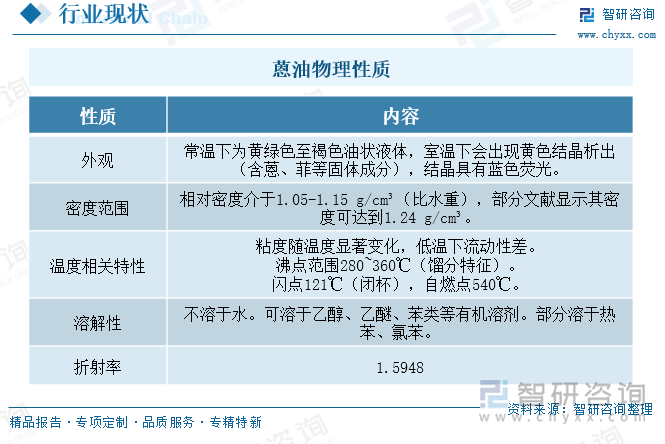
研判2025!中国蒽油行业产量、消费量及毛利润分析:成本下行难抵合规成本攀升,需求疲软引发恶性循环[图]
Chan Ye Xin Xi Wang· 2025-08-11 01:36
Industry Overview - The anthracene oil industry in China is undergoing deep transformation and structural differentiation due to stricter environmental policies, accelerated technological iterations, and adjustments in downstream demand structure [1][6] - In the first half of 2025, China's anthracene oil production was 1.5523 million tons, a year-on-year decrease of 1.25%, while consumption was 1.5622 million tons, down 0.26% [1][7] Market Dynamics - The price of coal tar, a core raw material for anthracene oil, experienced a sharp decline in the first half of 2025, leading to a loss of support for anthracene oil prices [8] - As of late June 2025, the price of anthracene oil was 3,455 yuan per ton, a year-on-year decrease of 21.89% [8] - The gross profit margin for the anthracene oil industry was -44.26 yuan per ton, a year-on-year decline of 133.21%, indicating a significant increase in losses compared to the same period last year [11] Key Enterprises - Shanxi Coking Coal, as a leading enterprise, has an annual coal tar processing capacity exceeding 2 million tons and ranks high in anthracene oil production [13] - The company has introduced French refining technology, achieving a purity of over 90% for refined anthracene, widely used in dye and pharmaceutical fields [15] - Yongdong Chemical focuses on high-quality carbon black products and fine processing of coal tar, with a sustainable circular industry model [17] Industry Trends - The green and low-carbon transition is accelerating, with carbon reduction technologies becoming a core driving force [19] - Technological upgrades are pushing for high-end applications, with breakthroughs in anthracene oil processing technology [20] - Market demand is diversifying, with emerging markets and differentiated strategies becoming key to overcoming challenges [22]


从自身攻坚到全链推进 光伏产业减碳加速破局
Zhong Guo Zheng Quan Bao· 2025-08-10 21:05
Core Viewpoint - The Chinese photovoltaic industry is transitioning towards a model that balances "green manufacturing" and "manufacturing green" as it faces challenges in carbon emissions and resource consumption while expanding capacity [1][2]. Industry Overview - The photovoltaic industry in China is experiencing significant growth, with a cumulative installed capacity of over 1 billion kilowatts as of May 2023, surpassing thermal power for the first time [1]. - The industry is under pressure to enhance its green and low-carbon transformation, with 95% of surveyed companies setting climate goals and 87% disclosing carbon emissions data [1][2]. Carbon Emissions - The total carbon emissions from the 44 companies that disclosed their operational data reached 105 million tons of CO2 equivalent for 2024, with a notable increase from 45.23 million tons in 2022 to 70.57 million tons in 2024, marking a 46.6% rise from 2022 to 2023 and a 5.7% increase from 2023 to 2024 [2]. - The primary drivers of rising carbon emissions are production expansion and potential increases in energy consumption due to technological upgrades [2]. Policy and Regulation - The Ministry of Industry and Information Technology is set to release guidelines to promote high-quality development in the photovoltaic sector, focusing on resource utilization, energy management, and ESG disclosures [2]. - Regulatory guidance from stock exchanges emphasizes the need for companies to disclose 21 ESG-related topics, including emissions and biodiversity [2]. Product Carbon Footprint - The carbon footprint of photovoltaic products is becoming a critical factor in market competitiveness, with strict requirements in regions like France and South Korea [3]. - 25 companies have disclosed carbon footprint data for over 80 products, while 11 others are working on carbon footprint assessments without disclosing quantitative data [3]. Supply Chain Emissions - Scope 3 emissions from the supply chain account for over 90% of total greenhouse gas emissions for companies focused on photovoltaic components, and over 50% for those producing silicon materials [4]. - 20 companies have disclosed their Scope 3 emissions, with several integrating supplier emissions into their management practices [4][5]. Renewable Energy Utilization - 40 companies reported using renewable energy, totaling 57.1 million megawatt-hours in 2024, resulting in a reduction of over 32.55 million tons of CO2 equivalent [5]. - Companies like Sungrow Power Supply and Tongwei Co. have reported that renewable energy constitutes over 60% of their total energy consumption [5]. Water Resource Management - 80% of companies involved in the production of polysilicon, silicon wafers, and solar cells have disclosed water resource consumption data, with some taking targeted actions based on water resource assessments [6]. - The industry faces challenges in recycling retired photovoltaic components, with predictions of significant volumes of waste starting in 2025 [6][7]. Recycling Challenges - 16 out of 31 companies involved in component production have disclosed efforts in waste component recycling, but the lack of a mandatory recycling mechanism and high costs of recycling technologies pose significant challenges [7]. - The industry is encouraged to adopt a circular economy approach, integrating production, usage, and recycling processes [7].






奏响人与自然和谐共鸣的时代乐章
Shang Hai Zheng Quan Bao· 2025-08-10 17:40
Core Viewpoint - China is accelerating the optimization of industrial structure and promoting a comprehensive green transition in its economy and society, aiming to enhance the proportion of green low-carbon industries in the overall economy and establish a high-quality development path that prioritizes ecology, conservation, and green low-carbon practices [1] Group 1: Green Economic Transformation - Since 2012, China has supported an average economic growth of over 6.1% with an average energy consumption growth rate of 3.3%, establishing the world's largest clean power and clean steel production systems [1] - China has built the largest and fastest-growing renewable energy system globally and has created the largest carbon trading market for greenhouse gas emissions, which is operating steadily [1] Group 2: Regional Development Strategies - China has positioned regional coordinated development as a major national strategy, promoting significant regional initiatives such as the coordinated development of Beijing-Tianjin-Hebei, the Yangtze River Economic Belt, and the Guangdong-Hong Kong-Macao Greater Bay Area [1] Group 3: Green Lifestyle Promotion - The concept of a green lifestyle emphasizing simplicity, moderation, and health is gaining popularity across China, with various regions adopting green consumption practices [1] Group 4: Economic Models for Ecological Protection - The report outlines three economic transformation paths: "Protecting Green for Wealth," "Gathering Green for Wealth," and "Borrowing Green for Wealth," which have led to various successful practices and development models over the past 20 years [2] - "Protecting Green for Wealth" focuses on ecological protection and restoration as a prerequisite for economic returns through government-led compensation and policy incentives [2] - "Gathering Green for Wealth" emphasizes the development of green industries through technological innovation and brand building, transforming ecological resources into sustainable economic models [2] - "Borrowing Green for Wealth" promotes the development of green markets and finance, facilitating the market circulation of ecological resources [2] Group 5: Green Finance Development - China has established a multi-level green finance product and market system, leading the world in green credit and green bond issuance [3] Group 6: Global Ecological Civilization Contribution - The concept of "Green Mountains and Clear Water are Gold and Silver Mountains" serves as a guiding principle for global ecological civilization, addressing deep-seated contradictions in development and protection [4][5] - China actively participates in global climate governance, providing stability and support for developing countries in addressing climate change [5][6] - In 2024, China is expected to contribute the largest share of the 585 GW of new global renewable energy capacity, significantly reducing the costs of wind and solar power generation [6]
89页|中国上市发电公司2024年回顾及未来展望报告
Sou Hu Cai Jing· 2025-08-09 23:34
Core Viewpoint - In 2024, China's power generation industry made significant progress in green low-carbon transformation, market mechanism deepening, and corporate value management, with a GDP growth of 5.0% and a social electricity consumption increase of 6.8%, outpacing GDP growth for five consecutive years [1][19]. Group 1: Industry Performance - The total installed power generation capacity reached 3.35 billion kilowatts, a year-on-year increase of 14.6% [1][19]. - Solar power generation capacity increased by approximately 89 million kilowatts, up 45.2%, while wind power capacity rose by about 52 million kilowatts, an 18.0% increase [1][19]. - Renewable energy generation capacity reached 1.9 billion kilowatts, accounting for 56.9% of the total installed capacity, with new energy (wind + solar) and nuclear power capacity surpassing thermal power for the first time [1][19]. Group 2: Financial Performance - Listed power generation companies experienced a slowdown in revenue growth, with total revenue reaching 1.4304 trillion yuan, a 0.8% year-on-year increase [59][62]. - Profitability efficiency slightly declined, but asset scale expanded steadily, with continuous capital expenditure increases [1][59]. - The overall electricity price declined, while the efficiency of electricity fee collection remained stable, and cost control capabilities improved, leading to a more reasonable asset-liability structure [1][59]. Group 3: Market Trends - Market trading volume accounted for 62.7% of total electricity consumption, reflecting a year-on-year increase of 1.3 percentage points [45][48]. - The trading activity in the industry increased, with mergers and acquisitions driving the integration process [2][6]. - The introduction of tax policy adjustments presents new challenges and opportunities, necessitating enhanced compliance management by enterprises [2][6]. Group 4: Future Outlook - The issuance of Document No. 136 marks the entry of renewable energy development into a high-quality phase, with new technologies like artificial intelligence accelerating the industry's smart and green transformation [2][6]. - The sustainable development disclosure standards are becoming increasingly refined, promoting deeper green low-carbon transitions [2][6].
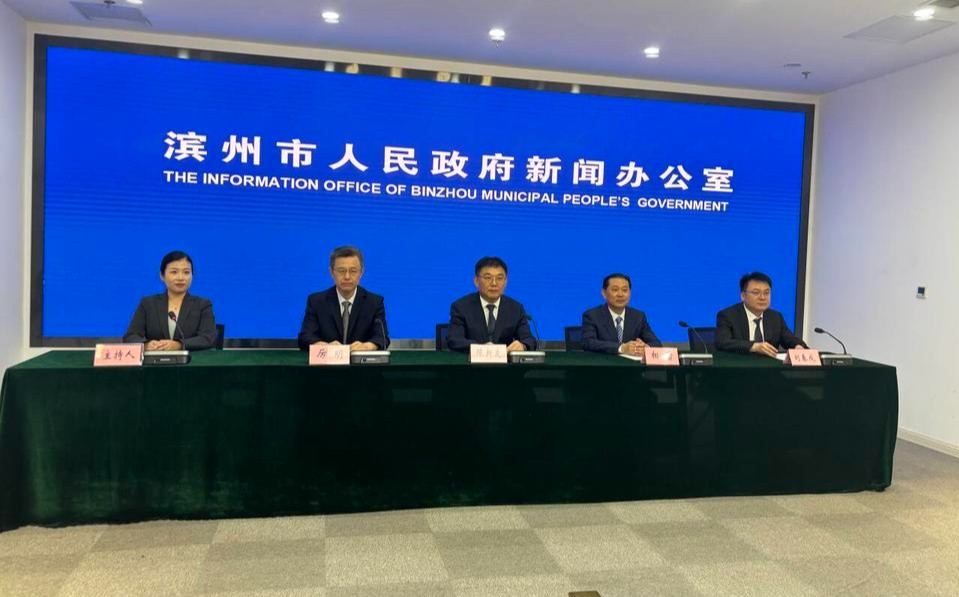
以沾化、无棣、北海为整体,滨州市全力推进北部沿海高质量发展
Qi Lu Wan Bao Wang· 2025-08-09 23:29
Core Viewpoint - The government of Binzhou is implementing a three-year action plan (2025-2027) to promote high-quality development in the northern coastal area, aiming for a GDP of over 850 billion yuan by 2027, with a target of around 1 trillion yuan [2][3][4] Infrastructure Development - The plan includes enhancing infrastructure through five key areas: upgrading smart port functions, improving railway and highway facilities, advancing civil transport airport construction, reinforcing modern water network facilities, and strengthening modern logistics support [2][3] Industrial Development - The action plan focuses on four high-level industrial platforms: aluminum-based materials, high-end chemicals, marine specialty industries, and clean energy clusters, promoting the digitalization and platformization of industrial parks [3][4] - Traditional industries are expected to improve efficiency, with high-end aluminum and fine chemicals projected to generate revenues of 125 billion yuan and 100 billion yuan respectively by 2027 [3] - Emerging industries are set to grow, with seawater desalination capacity exceeding 400,000 cubic meters per day and new energy installations surpassing 10 million kilowatts by 2027 [3] Innovation and Technology - The plan emphasizes enhancing innovation capabilities, aiming for over 70 national and provincial innovation platforms by 2027, and addressing critical technological challenges [4] - The integration of talent, education, industry, and innovation chains is prioritized to strengthen high-level innovation entities and attract top-tier talent [4] Green and Sustainable Development - The action plan includes initiatives for ecological protection and green transformation, targeting an increase in wastewater treatment capacity by 70,000 tons per day and the establishment of over 40 green manufacturing units by 2027 [4] - The promotion of a circular economy and resource utilization is a key focus, aiming for a comprehensive transition to intelligent and green industrial practices [4] Strategic Importance - The initiative is a significant decision by the Binzhou government to optimize industrial layout, enhance development momentum, improve openness, and promote regional coordinated development [4]
如何建设绿色低碳的美丽城市?
Jing Ji Ri Bao· 2025-08-09 23:27
Group 1 - The core idea emphasizes the importance of building green and low-carbon beautiful cities as a fundamental practice of Xi Jinping's ecological civilization thought, which is essential for achieving sustainable development in China [1][2] - The shift in urban development philosophy from "materialism" to "humanism" is highlighted, focusing on creating a livable environment for people and prioritizing their needs [2][3] Group 2 - Optimizing urban spatial structure is identified as a prerequisite for building beautiful cities, advocating for a systematic approach to urban planning that avoids fragmented development and resource wastage [3][4] - The necessity of green and low-carbon transformation is underscored as a core pathway for urban development, promoting the integration of ecological priorities into all aspects of urban planning and management [4]
决胜“十四五” 打好收官战|扩大清洁用能,让绿色能源点亮万家灯火
Xin Hua She· 2025-08-09 15:50
Group 1 - The core viewpoint emphasizes the acceleration of clean energy development in China, driven by renewable energy substitution and technological innovation [1][3][10] - The "14th Five-Year Plan" outlines the goal of building a clean, low-carbon, safe, and efficient energy system, with a focus on non-fossil energy development [3][8] - China has established the world's largest and fastest-growing renewable energy system, with non-fossil energy generation capacity doubling since the start of the "14th Five-Year Plan" [3][5] Group 2 - The Hainan Changjiang Nuclear Power Phase II project is a significant milestone, expected to deliver over 18 billion kilowatt-hours of clean electricity annually, reducing coal consumption by 6.326 million tons and CO2 emissions by 11.68 million tons [2] - The Baihetan Hydropower Station has achieved a cumulative power generation of over 200 billion kilowatt-hours, showcasing advancements in China's hydropower design and construction capabilities [4] - New energy technologies, such as photovoltaic and wind power, are leading globally, with innovations in efficiency and capacity [5][6] Group 3 - The establishment of a zero-carbon demonstration microgrid on Xiyang Island illustrates the integration of new technologies and energy models, meeting local electricity needs while exporting surplus power [6][7] - The national electricity market is undergoing reforms to enhance efficiency and facilitate green electricity transactions, with a target for market-based trading to reach 63% of total electricity consumption by 2024 [9] - The issuance of green certificates has surged, with 1.371 billion certificates issued in the first half of the year, reflecting the increasing greenness of China's energy landscape [9]
经济日报丨“新石油”有望改写能源版图
国家能源局· 2025-08-08 09:09
Core Viewpoint - The article discusses the emergence of "new oil," which refers to green energy sources such as green hydrogen, green ammonia, green methanol, and biofuels, as a viable alternative to fossil fuels in the context of global energy security and sustainable development [3][4]. Group 1: Development of Green Energy - The first successful green ammonia fuel bunkering operation was completed in Dalian, China, marking a significant step towards the feasibility of green ammonia as a substitute for fossil fuels [2]. - The global push for green fuels is being accelerated by the EU and resource-rich countries like Saudi Arabia and Australia, with China positioned as a leader in the development of green hydrogen projects [4]. Group 2: Characteristics of "New Oil" - "New oil" has a higher energy density compared to traditional fossil fuels, making it suitable for industries such as aviation and shipping [3]. - The production of "new oil" primarily utilizes renewable energy sources, aligning with global low-carbon development goals [3]. - The raw materials for "new oil" are abundant, with hydrogen produced through water electrolysis and ammonia synthesized from nitrogen and hydrogen [3]. Group 3: Challenges and Innovations - The transition to "new oil" faces challenges such as high production costs for green hydrogen and the need for improved infrastructure [4]. - Innovative smart power systems are essential for converting unstable renewable energy into stable "new oil," as demonstrated by the intelligent control systems used in the green hydrogen project in Inner Mongolia [4]. Group 4: Future Implications - The widespread adoption of "new oil" is expected to reshape the global energy landscape, reducing dependence on specific fossil fuel regions and altering energy trade dynamics [3]. - Continuous investment in innovation and international cooperation is necessary to enhance the supply and application capabilities of "new oil," contributing to a more sustainable global energy future [5].