双碳目标

Search documents
中国担当全球光热发电主力
中国能源报· 2025-11-23 23:33
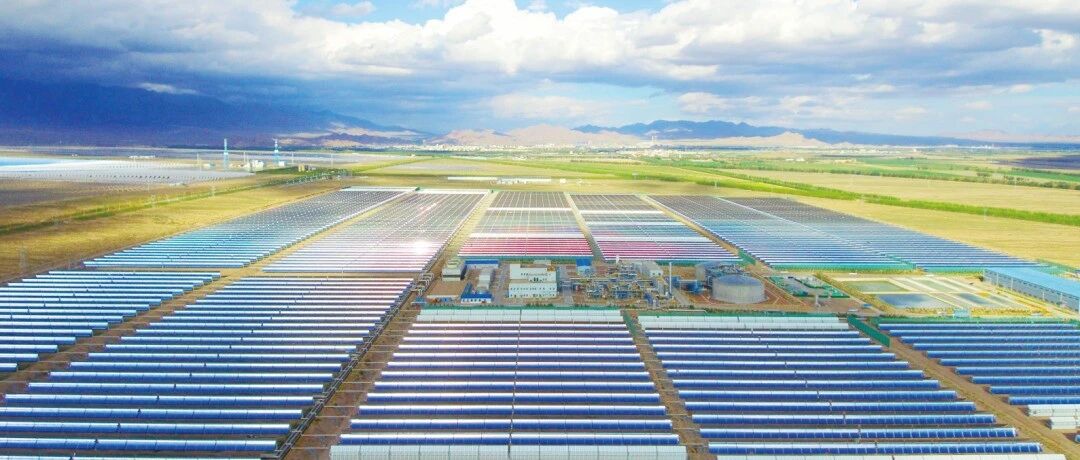
Core Viewpoint - The solar thermal power industry in China is rapidly developing, becoming a key player in supporting high proportions of renewable energy integration and ensuring the stability of the power system, particularly in the context of the "dual carbon" goals and the construction of a new power system [1][4][13]. Industry Development - As of September 2025, China's solar thermal power generation capacity reached 157,000 kilowatts, ranking third globally [3][7]. - The average annual compound growth rate of China's solar thermal power industry is 11.7%, significantly higher than the global average of 4.24% [3][7]. - The levelized cost of solar thermal power has decreased from 1.15 yuan per kilowatt-hour to approximately 0.6 yuan per kilowatt-hour, indicating a substantial improvement in economic viability [3][11]. Technological Advancements - China has mastered mainstream solar thermal technologies, including tower, trough, and Fresnel systems, with a domestic equipment localization rate exceeding 95% [3][11]. - The country has developed a comprehensive solar thermal power industry chain and has published over 40 relevant standards covering manufacturing, design, construction, and operation [11][14]. Strategic Importance - Solar thermal power is recognized as a stabilizing force in the energy system, effectively addressing challenges posed by high proportions of renewable energy sources [6][8]. - The National Energy Administration has emphasized the strategic role of solar thermal power in its recent policy documents, advocating for its integration as a regulatory power source [8][14]. Project Highlights - The Golmud 350 MW tower solar thermal project, currently under construction, is set to be the largest single-unit solar thermal project globally, expected to generate approximately 960 million kilowatt-hours of clean electricity annually [6][10]. - The successful operation of the 50 MW solar thermal demonstration project in Delingha has provided valuable experience for future large-scale projects [10][11]. Future Outlook - By 2030, global installed capacity for solar thermal power is projected to reach 22.4 million kilowatts, with about 10% of global electricity supply expected to come from solar thermal by 2050 [13]. - The industry is anticipated to transition from being a supplementary power source to a supportive power source as its economic viability and application scale continue to expand [11][15].


韩文秀:“十五五”时期在基本实现社会主义现代化进程中具有承前启后的重要地位
Ren Min Ri Bao· 2025-11-23 23:22
Core Viewpoint - The "15th Five-Year Plan" period is crucial for achieving basic socialist modernization, serving as a transitional phase that connects past achievements with future goals [1][2]. Group 1: Economic and Social Development - The "15th Five-Year Plan" is essential for systematically advancing Chinese-style modernization, requiring continuous efforts from the "14th" to the "16th" Five-Year Plans to achieve the second centenary goal [3]. - The period is characterized by both strategic opportunities and challenges, necessitating a focus on self-reliance and high-quality development to navigate complex international dynamics [4]. - Domestic economic conditions are changing significantly, with a shift towards a dual circulation model emphasizing domestic demand and structural adjustments in the economy [5]. Group 2: Key Focus Areas for Development - The "15th Five-Year Plan" aims to consolidate advantages, break through bottlenecks, and strengthen weak links in the economy, ensuring a stable and progressive development trajectory [6][7]. - Addressing bottlenecks in high-quality development is critical, particularly in technology self-sufficiency and risk management in key sectors [8]. - The plan emphasizes the need to strengthen agricultural modernization, improve public services, and enhance safety in foundational sectors [9]. Group 3: Goals for Achieving Modernization - By 2035, achieving a per capita GDP at the level of moderately developed countries is a key indicator of basic socialist modernization [10]. - The development of a modern industrial system and fostering innovation are strategic goals for the "15th Five-Year Plan," with a focus on enhancing the manufacturing sector and emerging industries [11]. - The plan aims to optimize supply and demand structures, emphasizing domestic consumption and investment to drive economic growth [12]. Group 4: Green and Sustainable Development - Green development is a priority, with goals to peak carbon emissions by 2030 and reduce greenhouse gas emissions by 7%-10% from peak levels by 2035 [13]. - The plan integrates carbon neutrality goals with modernization efforts, promoting a low-carbon economy and improving environmental quality [13]. Group 5: Enhancing National Strength - The "15th Five-Year Plan" seeks to enhance both hard and soft national power, focusing on cultural influence and international cooperation [14]. - The plan emphasizes the importance of security in development, aiming to create a new security framework that supports high-quality growth [15].
“十五五”时期在基本实现社会主义现代化进程中具有承前启后的重要地位(学习贯彻党的二十届四中全会精神)
Ren Min Ri Bao· 2025-11-23 22:20
我们党的初心使命是为中国人民谋幸福,为中华民族谋复兴。建党百余年来,党团结带领人民所进行的 一切奋斗,就是为了把我国建设成为现代化强国,让中华民族巍然屹立于世界民族之林。新民主主义革 命时期,经过浴血奋战,实现了民族独立、人民解放,建立了新中国,为现代化建设创造了根本社会条 件。社会主义革命和建设时期,确立了社会主义基本制度,提出努力把我国逐步建设成为一个具有现代 农业、现代工业、现代国防和现代科学技术的社会主义强国。改革开放和社会主义现代化建设新时期, 我们党制定了到21世纪中叶分三步走、基本实现社会主义现代化的发展战略。党的十八大以来,中国特 色社会主义进入新时代,在以习近平同志为核心的党中央坚强领导下,我们全面建成小康社会、实现第 一个百年奋斗目标,迈上了全面建设社会主义现代化国家新征程,正在向第二个百年奋斗目标进军。 "十五五"时期是承前启后、继往开来的重要时期,我们要乘势而上、奋力开创中国式现代化建设新局 面,为基本实现社会主义现代化奠定更加坚实的基础。 (一)做好"十五五"时期经济社会发展工作,对于分阶段有步骤推进中国式现代化意义重大。科学制定 和接续实施五年规划,是我们党治国理政的重要经验,是中 ...
创造多项历史之最!它缘何能跻身三大国际光储盛会?
新浪财经· 2025-11-23 08:07
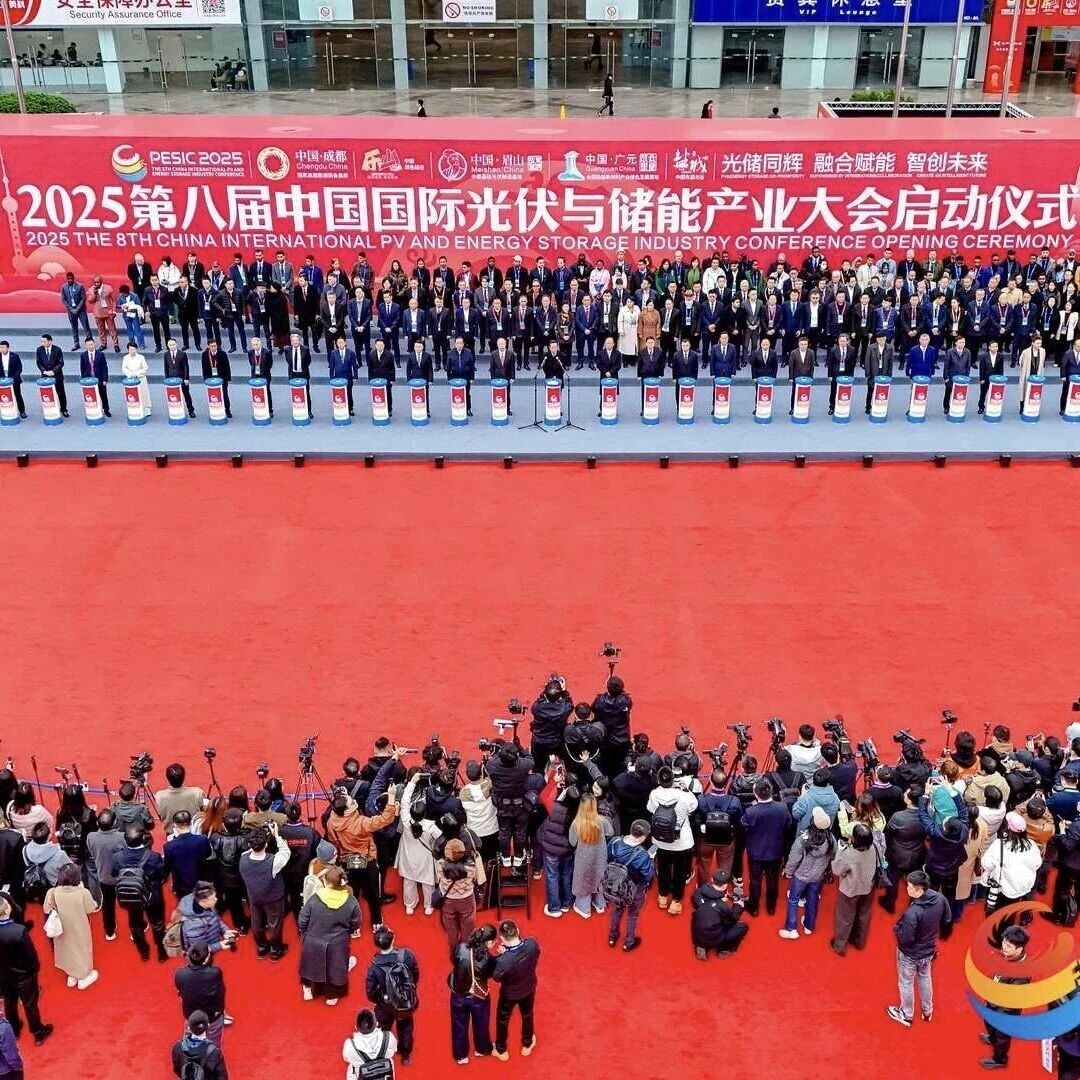
Core Viewpoint - The 2025 8th China International Photovoltaic and Energy Storage Industry Conference was held in Chengdu, emphasizing the theme "Solar Storage Co-prosperity, Integration Empowerment, Intelligent Innovation for the Future," aiming to connect global wisdom and resources for energy transition [2][3] Group 1: Event Overview - The conference maintained high standards and attracted over 5,000 participating and exhibiting companies, with total project signing exceeding 33 billion RMB [2][20] - The event featured 45 sessions, including main meetings, parallel sessions, and award ceremonies, showcasing the industry's robust development and future prospects [2][24] - The conference was attended by over 2,500 key guests, including government leaders, industry experts, and corporate executives, marking a historical high in guest specifications and scale [9][12] Group 2: Industry Impact - The conference highlighted the rapid development of the silicon photovoltaic industry in Sichuan, establishing a strong industrial base in Chengdu, Meishan, and Leshan [21] - The event served as a core platform for industry connections, resulting in significant project signings across various sectors of the energy industry, including photovoltaic and energy storage [20][21] - The conference aimed to address the challenges of "involution" in the industry by promoting high-quality development and collaboration among stakeholders [26] Group 3: International Participation - The conference attracted over 100 international buyers from various regions, enhancing global cooperation in the renewable energy sector [15][16] - Notable international figures, including former government leaders and experts, participated in discussions, showcasing the conference's global influence [16][18] Group 4: Key Initiatives and Releases - The conference released several important documents, including the "Chengdu Declaration" and the "2025 China and Global New Energy Development White Paper," aimed at guiding industry development [26] - A list of the top 100 Chinese energy storage brands was published, featuring leading companies like CATL, BYD, and LONGi, to strengthen brand recognition and innovation in the sector [26]




漳州核电2号机组并网发电 “华龙一号”批量化建设稳步推进
Ren Min Wang· 2025-11-23 07:13
(文章来源:人民网) 漳州核电2号机组并网发电。受访者供图 "华龙一号"是我国具有完整自主知识产权的三代核电技术,是当前核电建设的主力堆型。漳州核电是"华龙一号"批量化建设始发地,规划建设6台"华龙一 号"核电机组。截至目前,漳州核电1号机组已安全稳定发电超88亿度,2号机组预计在年内投入商运,3、4号机组处于土建安装阶段,5、6号机组正在推 进前期工作。 "该基地建成后,预计每年可提供超600亿度的清洁电能,据估算将满足福建南部地区厦门市、漳州市用电总和的75%,改善福建省'北电南送'的电力格 局。"漳州核电相关负责人说。 "从'华龙一号'示范工程到批量化工程,漳州核电1号和2号机组反应堆功率提升了4.4%,相当于1年多发4.4亿度电;1号机组首次换料周期达到了442天,运 维成本进一步降低。"中核集团中国核动力研究设计院副总工程师、"华龙一号"批量化总设计师崔怀明在接受记者采访时表示,"华龙一号"批量化工程也 带动了上下游产业链5400多家企业共同成长,反应堆压力容器等主设备的制造工艺和原材料得到了国产化验证,具有完全自主知识产权的安全级DCS"龙 鳞"系统等成功实现应用,进一步提升了核电产业链自主可控。 ...


10月份全国全社会用电量同比增长10.4%,国际气价周环比上涨
Xinda Securities· 2025-11-23 05:44
10 月份全国全社会用电量同比增长 10.4%,国际气价周环比上涨 【】【】[Table_Industry] 公用事业—电力天然气周报 [Table_ReportDate] 2025 年 11 月 23 日 15666646523.tcy 证券研究报告 行业研究——周报 [Table_ReportType] 行业周报 [Table_StockAndRank] 公用事业 投资评级 看好 上次评级 看好 邮 箱:lichunchi@cindasc.com 邢秦浩 电力公用分析师 执业编号:S1500524080001 联系电话:010-83326712 邮 箱:xingqinhao@cindasc.com 化工行业: 唐婵玉 电力公用分析师 执业编号:S1500525050001 邮 箱:tangchanyu@cindasc.com 信达证券股份有限公司 CINDA SECURITIES CO.,LTD 北京市西城区宣武门西大街甲127号金隅大厦 B座 邮编:100031 [Table_Title] 10 月份全国全社会用电量同比增长 10.4%,国际气 价周环比上涨 2025 年 11 月 23 日 本期内容提 ...
《石油天然气基础设施规划建设与运营管理办法》解读之四︱以系统性制度重构驱动油气行业高质量发展
国家能源局· 2025-11-23 03:08
Core Viewpoint - The newly released "Management Measures for the Planning, Construction, and Operation of Oil and Gas Infrastructure" marks a significant shift in China's oil and gas infrastructure management, transitioning from a single commodity management approach to a comprehensive system that includes crude oil, refined oil, and natural gas [3] Group 1: Planning and Coordination - The management measures emphasize the importance of national oil and gas planning, integrating it with land use and regional planning to address key challenges in project implementation [4] - All cross-border and inter-provincial pipeline projects must be included in the national planning before implementation, aiming to eliminate fragmentation and redundant construction in the pipeline network [4] Group 2: Separation of Transportation and Sales - A core initiative of the revised measures is the mandatory separation of transportation and sales businesses, clarifying the responsibilities of companies involved in national oil and gas pipeline construction [5] - Companies engaged in competitive businesses are prohibited from participating in pipeline investment and operation, promoting fair access to infrastructure for all market participants [5] - The measures also address the bottleneck of provincial pipeline networks, encouraging their integration into the national network through market-oriented approaches [5] Group 3: Natural Gas Reserve Responsibility System - The measures establish a multi-layered natural gas reserve system, redistributing storage responsibilities among supply and transportation companies [6] - Local governments' emergency reserve indicators are set to be more scientifically based, while town gas companies are required to maintain a minimum storage capacity [6] - The market mechanism is emphasized for regulating storage services and prices, aiming to enhance seasonal peak shaving and emergency supply capabilities [6] Group 4: Regulatory Framework - The management measures consolidate various supervisory functions into a comprehensive regulatory framework, combining administrative, data, credit, and social oversight [8] - Legal responsibilities are significantly strengthened, introducing various punitive measures for non-compliance, thereby enhancing the enforceability of the regulations [8]

倒计时4天!2大院士领衔! 近50场报告!第五届非粮生物质高值化利用论坛,11.27-29,杭州!
合成生物学与绿色生物制造· 2025-11-23 01:58
Core Points - The "2025 (Fifth) Non-Grain Biomass High-Value Utilization Forum" will be held from November 27-29, 2025, in Hangzhou, Zhejiang, focusing on innovations and commercialization in the non-grain biomass sector [2] - The forum aims to promote large-scale applications of non-grain biomass utilization to support carbon neutrality goals [2] Event Details - The forum will feature nearly 50 reports discussing key strategic directions such as green pretreatment of biomass, non-grain sugars, biomass-based chemicals and materials, and biomass energy including methanol, fuel ethanol, biogas, and sustainable aviation fuel (SAF) [2] - Registration and check-in will occur on November 27 from 12:00 to 20:00, with various activities scheduled throughout the event [4][9] Organizing Institutions - The forum is co-hosted by DT New Materials and the National Key Laboratory of Biomass Transportation Fuel Technology, with notable figures from various academic and research institutions involved [8][6] Agenda Highlights - The agenda includes specialized forums on non-grain biomass chemicals and materials, as well as biomass energy, with sessions dedicated to topics like biomass methanol, fuel ethanol, and biogas [9][30] - Keynote speeches will be delivered by prominent experts, including academicians and industry leaders, discussing advancements in biomass conversion technologies and sustainable fuel production [23][30] Networking Opportunities - The forum will also host a special session for industry exchanges on sustainable aviation fuel (SAF), inviting over 20 guests from relevant sectors to discuss trends and collaborative opportunities [20][9] Technology Showcase - A technology showcase will be held to connect innovative projects with commercial potential in the biomass utilization field, encouraging industry-academia collaboration [35]

2025年中国采煤机行业发展历程、市场政策、产业链图谱、市场规模、竞争格局及发展趋势分析:市场集中度较高,“强者恒强”趋势明显[图]
Chan Ye Xin Xi Wang· 2025-11-23 01:24
Core Viewpoint - The coal mining machinery market in China is expected to reach a scale of 4.32 billion yuan in 2024, with a year-on-year growth of 11.63%, driven by the increasing demand for mechanized coal mining and technological advancements in the industry [1][10]. Overview - Coal mining machines are essential for underground coal extraction, significantly improving efficiency, output, and safety [2][5]. - The primary types of coal mining machines are drum-type and shearer machines, with drum-type being the most widely used [3]. Development History - Since the reform and opening up, China has introduced advanced hydraulic traction coal mining machines from Germany and the UK, leading to the development of domestic electric traction machines in the 1990s [3][4]. - By the 2000s, domestic machines began to dominate the market, meeting the needs of large-scale coal mines [3]. Market Policies - The Chinese government has implemented various policies to support the development of the coal machinery industry, focusing on safety, technological innovation, and digital transformation [4][5]. Industry Chain - The coal mining machine industry consists of upstream suppliers of raw materials and components, midstream design and manufacturing, and downstream coal mining operations [6][8]. - The production cost structure is primarily composed of direct materials, accounting for over 80% of total costs [8][9]. Current Development - The coal mining machinery market is experiencing significant growth, with a projected market size of 4.32 billion yuan in 2024, reflecting a strong demand for intelligent and efficient mining solutions [10][11]. - The industry is moving towards smart technologies, including AI and remote control capabilities, which are becoming standard features in high-end mining machines [10][11]. Competitive Landscape - The market is highly concentrated, with the top 50 companies producing 726 coal mining machines in 2024, representing 91.55% of the total production [11][12]. - Key players include TianDi Technology, Xian Coal Mining Machinery, and others, with TianDi Technology being a leader in technological innovation and market share [12][13]. Future Trends - Future advancements in coal mining machines will integrate cutting-edge technologies such as 6G, quantum computing, and brain-machine interfaces, aiming for zero emissions and high efficiency [14].


2025年中国磷酸铁锂正极材料行业产业链全景、发展现状、企业布局及未来发展趋势研判:动力储能双轮爆发释放红利,行业高景气态势持续攀升[图]
Chan Ye Xin Xi Wang· 2025-11-23 01:17
Core Insights - Lithium iron phosphate (LFP) cathode materials have significant advantages in safety, cycle life, and cost due to their olivine structure and cobalt-nickel-free formulation, despite limitations in energy density and low-temperature performance [1][5][8] - The demand for LFP materials is driven by the electric vehicle (EV) and energy storage markets, with LFP battery installation in the power battery sector reaching an absolute dominance and over 90% in the energy storage sector [1][6][8] - The industry is transitioning towards high-end technology-driven competition, focusing on technological upgrades and vertical integration of the supply chain, leading to increased market concentration and further segmentation of application scenarios [1][6][10][12] Industry Overview - LFP materials (chemical formula: LiFePO₄) are a key component of lithium-ion batteries, characterized by a stable olivine crystal structure [2][3] - The LFP industry is supported by stable upstream supply of lithium, iron, and phosphorus, with leading companies enhancing product performance through diverse manufacturing processes [1][6] Market Dynamics - In the power battery sector, LFP battery installation reached 402.6 GWh in the first nine months of 2025, accounting for 81.5% of total installations, a year-on-year increase of 62.7% [6][7] - The energy storage market has seen rapid growth, with LFP batteries dominating new installations, achieving 20.58 GW/48.52 GWh in the first half of 2025, representing 94.21% and 87.95% of the market in power and capacity, respectively [7][8] Competitive Landscape - Major companies in the LFP sector include Hunan Youneng, Dofang Nano, and Fulian Precision, with varying production capacities and technological advantages [2][9] - The industry is witnessing a shift towards high-performance products, with companies like Hunan Youneng and Dofang Nano focusing on high-density and long-cycle life products to meet the demands of leading battery manufacturers [9][12] Future Trends - The LFP industry is expected to focus on high-end technological upgrades, improving energy density, fast charging, and low-temperature adaptability [10][11] - Vertical integration of the supply chain will become a mainstream trend, with companies enhancing control over upstream resources and establishing recycling systems to support sustainable development [11][12] - Market competition is shifting from price-based to value-based, with high-performance differentiated products becoming the core competitive advantage [12]