
一带一路

Search documents
云南对建设面向南亚东南亚辐射中心作出新谋划
Xin Lang Cai Jing· 2025-12-25 05:02
中新网昆明12月25日电 (罗婕)24日晚,中共云南省委十一届九次全会新闻发布会在昆明市举行。记者从 会上获悉,云南对建设面向南亚东南亚辐射中心作出新谋划,将以辐射中心建设为统领,用好国家向南 开放平台,统筹推进通道、口岸、物流、产业转移和人文交流等重点任务。 发布会上,中共云南省委常委、省委秘书长,省委新闻发言人王正英介绍,《建议》聚焦今后5年事关 该省经济社会发展全局的重大问题,部署12个方面的重点任务和主攻方向。其中之一便是推进高水平对 外开放,全面塑造开放发展新优势。 地处中国西南边陲的云南,是中国面向南亚东南亚和环印度洋地区开放的重要通道和前沿,区位优势明 显。 在"十四五"即将收官之际回望,云南开放发展已取得重大突破。中老铁路建成通车4年来,累计发送旅 客6300多万人次、运输货物7300多万吨,成为"黄金大通道"。创新实施昆明托管磨憨3年来,磨憨新增 经营主体2400多户,累计完成投资145亿元。磨憨、瑞丽、河口沿边产业园区建设成效明显,服装纺 织、消费电子等产业集群正在形成,"口岸+通道+市场"开放组合初见成效,云南在中国向南开放中的 枢纽功能更加凸显。 云南省发展和改革委员会党组书记、主任陈 ...
万里石涨2.19%,成交额7791.09万元,主力资金净流出199.42万元
Xin Lang Zheng Quan· 2025-12-25 03:27
Core Viewpoint - Wanli Stone's stock price has shown fluctuations with a year-to-date increase of 5.59%, while recent trading patterns indicate a mixed performance over different time frames [2]. Group 1: Stock Performance - As of December 25, Wanli Stone's stock rose by 2.19%, reaching a price of 34.58 yuan per share, with a trading volume of 77.91 million yuan and a turnover rate of 1.19% [1]. - The stock has experienced a 1.74% increase over the last five trading days, a 6.34% decrease over the last 20 days, and a 3.84% increase over the last 60 days [2]. Group 2: Company Overview - Wanli Stone, established on December 18, 1996, and listed on December 23, 2015, is located in Xiamen, Fujian Province, and specializes in the research, design, production, and sales of architectural decorative stone and landscape stone [2]. - The company's revenue composition includes 41.53% from architectural decorative materials, 28.21% from engineering construction, 15.25% from landscape stone, and 15.01% from other products [2]. Group 3: Financial Performance - For the period from January to September 2025, Wanli Stone reported a revenue of 936 million yuan, reflecting a year-on-year growth of 2.74%, while the net profit attributable to shareholders decreased by 17.41% to 2.01 million yuan [2]. - The company has distributed a total of 7.20 million yuan in dividends since its A-share listing, with no dividends paid in the last three years [3]. Group 4: Shareholder Information - As of September 30, 2025, Wanli Stone had 17,300 shareholders, an increase of 4.21% from the previous period, with an average of 11,158 circulating shares per shareholder, a decrease of 4.04% [2]. - Hong Kong Central Clearing Limited is the fifth-largest circulating shareholder, holding 2.81 million shares as a new shareholder [3].

进出口银行浙江省分行为正泰集团财务公司落地首笔代开非融资性保函业务
Sou Hu Cai Jing· 2025-12-25 03:23
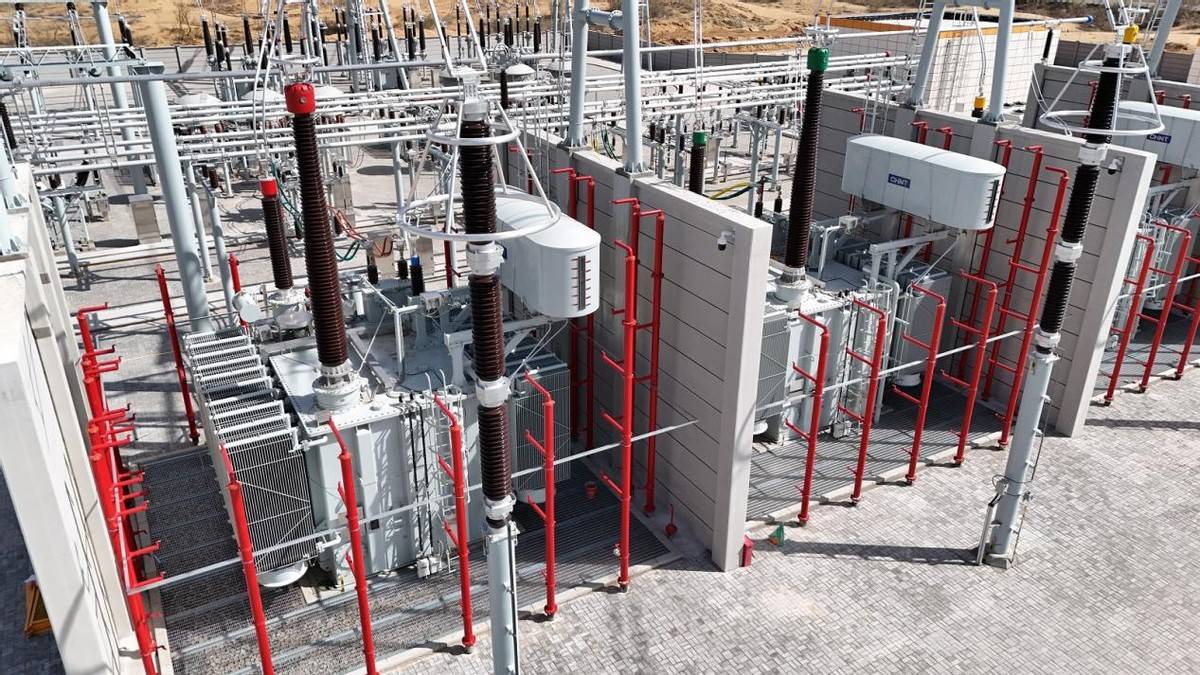
Group 1 - The Export-Import Bank of Zhejiang Province has successfully executed its first non-financing guarantee business for the financial company of Chint Group, marking a significant milestone as it is the first time the bank has provided guarantee services for a private enterprise financial company [1][3] - This transaction involves a cross-border performance guarantee for an EPC project related to the reconstruction of an electric grid in Uzbekistan, specifically for Chint Electric, a subsidiary of Chint Group [3] - The bank established an efficient collaboration mechanism with the enterprise, utilizing standardized processes and specialized risk control cooperation to ensure the successful execution of the business [3] Group 2 - The bank aims to continue innovating financial service models and enhancing its role in providing diversified financial support for enterprise development, in line with its commitment to serving the real economy [3]


中国长城资产支持民企重获新生
Jin Rong Shi Bao· 2025-12-25 03:09
Core Viewpoint - The article highlights the role of China Great Wall Asset Management Co., Ltd. in supporting the restructuring of Beijing Huafu Engineering Co., Ltd., emphasizing the importance of cooperation between state-owned and private enterprises in promoting sustainable development along the Belt and Road Initiative [1][5]. Group 1: Company Background and Challenges - Huafu Engineering, established in 1985 as a Sino-American joint venture, faced a severe debt crisis since 2018, leading to halted projects and potential bankruptcy, affecting over 400 creditors and nearly 7 billion yuan in debts [2]. - The restructuring of Huafu is crucial not only for the company but also for the stability of the local economy and the protection of the rights of its employees [2][3]. Group 2: Role of China Great Wall Asset Management - As the largest creditor, China Great Wall Asset Management closely monitored Huafu's operations and supported its recovery efforts, facilitating communication with government bodies and potential investors [3]. - The company played a pivotal role in ensuring the stability of Huafu's operations during the restructuring process, laying the groundwork for future technological development and market expansion [3]. Group 3: Green Development Initiatives - With Huafu back on track, China Great Wall Asset Management, as its second-largest shareholder, is focused on promoting green development through effective corporate governance and support for environmentally friendly technologies [4]. - Huafu's strengths lie in its advanced biodegradable plastic technology (PBAT) and phosphogypsum utilization technology, which contribute to environmental sustainability and economic benefits [4]. Group 4: Cooperation Between State-Owned and Private Enterprises - The collaboration between China Great Wall Asset Management and Huafu exemplifies the synergy of state-owned financial strength and private sector technical expertise, enabling both parties to explore overseas markets effectively [5]. - This partnership reflects the broader strategy of integrating finance, technology, and industry to support the restructuring of troubled enterprises and enhance their competitiveness in the global market [5].

扬文化之帆 铸债券铁军 在服务“国之大者”中争当行业排头兵
申万宏源证券上海北京西路营业部· 2025-12-25 02:09
Core Viewpoint - The article emphasizes the significant role of the fixed income financing team at Shenwan Hongyuan in supporting China's economic development through innovative financial solutions and strategic initiatives, particularly in the realms of technology, rural revitalization, and the Belt and Road Initiative [1][2][4][6]. Group 1: Technology and Innovation - The fixed income financing team is committed to enhancing high-quality development of new productive forces by embracing innovation and improving professional service capabilities, particularly in response to the launch of the "technology board" in the bond market [2][3]. - The team faced challenges in sourcing quality projects that met regulatory requirements for the first batch of technology innovation bonds, leading to a rigorous project screening process that resulted in successful bond issuance [3]. Group 2: Rural Revitalization - The team actively supports rural revitalization and the construction of a beautiful China by responding to social needs and fulfilling corporate social responsibility, exemplified by the issuance of the first rural revitalization project revenue bonds in Jiangning [4][5]. - The financing efforts have led to multiple industry-first rural revitalization bonds, establishing the company as a leading player in this sector [5]. Group 3: Belt and Road Initiative - The fixed income financing team has played a crucial role in facilitating the Belt and Road Initiative by developing innovative bond products that align with national resource security and long-term funding needs, such as the issuance of bonds for the Simandou iron ore project [6][7]. - The company has consistently ranked among the top three in industry underwriting for two consecutive years, demonstrating its commitment to supporting the Belt and Road Initiative [7].

邮储银行鹰潭市分行创新服务助力小微企业破解新兴市场跨境结算难题
Sou Hu Cai Jing· 2025-12-25 02:08
在"一带一路"倡议深入推进的背景下,江西某汽车零部件有限公司作为一家专注于汽车精密零部件生产 的小微企业,凭借其优质产品成功打入中亚市场。然而,在与亚美尼亚客户签订了一笔零部件供应合同 后,却因当地外汇管制严格、代付流程复杂,面临收款难题。 了解到该企业困难后,邮储银行鹰潭市分行迅速组建专项团队,定制"第三方代付"服务方案。首先全面 梳理了"第三方代付"业务的监管要求,结合亚美尼亚外汇政策特点,对相关材料的真实性与合规性进行 了多维度核验,确保代付行为合法有效,有效规避业务风险。同时,为帮助企业合规操作,团队积极指 导该公司收集境外客户主体资质证明、关联公司关系说明等关键材料,夯实业务基础。 在邮储银行鹰潭市分行的专业支持下,该公司最终顺利完成该笔"第三方代付"跨境收汇业务,境外货款 如期到账,企业不仅成功化解了此次结算危机,更为今后开拓亚美尼亚及更多新兴市场增添了信心。 该案例是邮储银行鹰潭市分行支持中小微企业开拓新兴市场的生动实践,也为同类企业提供了可借鉴的 跨境金融服务样本。未来,邮储银行鹰潭市分行将持续优化服务,助力更多企业"走出去",开拓多元化 国际市场。(来源:邮储银行鹰潭市分行) ...

青山纸业跌2.09%,成交额7.53亿元,主力资金净流出1.13亿元
Xin Lang Cai Jing· 2025-12-25 02:04
Core Viewpoint - Qing Shan Paper Industry's stock price has shown significant volatility, with a year-to-date increase of 65.62%, but recent trading indicates a net outflow of funds, suggesting potential investor caution [1][2]. Group 1: Stock Performance - On December 25, Qing Shan Paper's stock price fell by 2.09% to 4.22 CNY per share, with a trading volume of 7.53 billion CNY and a turnover rate of 7.92%, resulting in a total market capitalization of 94.56 billion CNY [1]. - The stock has increased by 9.33% over the last five trading days, 4.71% over the last 20 days, and 7.65% over the last 60 days [1]. - The company has appeared on the trading leaderboard 14 times this year, with the most recent appearance on October 20, where it recorded a net purchase of 51.29 million CNY [1]. Group 2: Financial Performance - For the period from January to September 2025, Qing Shan Paper reported a revenue of 1.768 billion CNY, a year-on-year decrease of 11.87%, and a net profit attributable to shareholders of 64.99 million CNY, down 25.07% year-on-year [2]. - The company has distributed a total of 321 million CNY in dividends since its A-share listing, with 175 million CNY distributed over the last three years [2]. Group 3: Business Overview - Qing Shan Paper, established on April 1, 1993, and listed on July 3, 1997, is primarily engaged in the production and sale of paper products, including paper bags, board paper, and corrugated paper, as well as other products like pharmaceuticals and electronic products [2]. - The revenue composition of the company is as follows: 67.47% from the pulp industry, 15.32% from pharmaceuticals, 11.45% from paper product processing, 7.54% from optoelectronics, and smaller contributions from other sectors [2]. - The company is classified under the light industry manufacturing sector, specifically in the paper and specialty paper category, and is associated with various concepts such as the Belt and Road Initiative and state-owned enterprise reform [2]. Group 4: Shareholder Information - As of September 30, 2025, Qing Shan Paper had 207,900 shareholders, an increase of 113.93% from the previous period, with an average of 10,640 circulating shares per shareholder, a decrease of 53.26% [2][3]. - Hong Kong Central Clearing Limited is the fifth-largest circulating shareholder, holding 17.0744 million shares, which is a decrease of 4.1228 million shares from the previous period [3].

招金黄金跌3.60%,成交额3640.19万元,主力资金净流出325.04万元
Xin Lang Zheng Quan· 2025-12-25 01:38
12月25日,招金黄金盘中下跌3.60%,截至09:35,报13.40元/股,成交3640.19万元,换手率0.29%,总 市值124.49亿元。 资金流向方面,主力资金净流出325.04万元,大单买入228.80万元,占比6.29%,卖出553.84万元,占比 15.21%。 招金黄金今年以来股价涨237.53%,近5个交易日跌2.12%,近20日涨11.39%,近60日涨33.60%。 今年以来招金黄金已经6次登上龙虎榜,最近一次登上龙虎榜为10月13日。 资料显示,招金国际黄金股份有限公司位于山东省济南市历下区解放东路25-6号山东财欣大厦9层,成 立日期1988年5月11日,上市日期1993年3月12日,公司主营业务涉及矿业开采与自有房产的出租。主营 业务收入构成为:黄金销售98.37%,其他业务1.63%。 招金黄金所属申万行业为:有色金属-贵金属-黄金。所属概念板块包括:黄金股、小金属、年度强势、 中盘、一带一路等。 截至12月10日,招金黄金股东户数6.00万,较上期增加0.00%;人均流通股15476股,较上期增加 0.00%。2025年1月-9月,招金黄金实现营业收入3.40亿元,同比增长1 ...

“一带一路”俄罗斯超薄玻璃市场发展环境及投资建议评估预测报告(2026版)
Sou Hu Cai Jing· 2025-12-25 01:30
Core Insights - The ultra-thin glass market is projected to grow from $13.2 billion in 2025 to approximately $29.5 billion by 2033, indicating a significant expansion driven by various industries [3][5]. Group 1: Market Overview - Ultra-thin glass is characterized by its thickness ranging from micrometers to a few millimeters, produced using modern techniques like float glass process and chemical vapor deposition (CVD) [3]. - The material is widely used in consumer electronics, automotive displays, medical devices, and solar technology due to its lightweight, durability, and optical clarity [3][5]. Group 2: Demand Drivers - The rapid development and widespread adoption of smartphones, tablets, and wearable devices are key drivers for market expansion, with consumer preferences leaning towards sleek, high-resolution displays [5]. - Innovations such as foldable phones and flexible displays heavily rely on ultra-thin glass, which meets the demand for thinner, lighter, and stronger electronic devices [5]. Group 3: Technological Advancements - Continuous improvements in glass manufacturing technologies, including innovations in float glass and CVD processes, have enhanced the production capabilities of ultra-thin glass [5][6]. - These advancements have led to better glass quality, reduced material thickness, and lower overall manufacturing costs, facilitating broader market adoption [5]. Group 4: Industrial Applications - In the automotive and aerospace sectors, ultra-thin glass is increasingly used for next-generation displays, head-up displays (HUD), and lightweight glass to improve fuel efficiency and extend electric vehicle (EV) range [6]. - The material's high optical clarity and lightweight properties are crucial for applications in cockpit displays and cabin interiors in aerospace [6]. Group 5: Challenges - The inherent brittleness of ultra-thin glass poses challenges throughout its lifecycle, necessitating robust handling procedures and high-performance packaging to minimize damage risks [6][7]. - High manufacturing costs compared to traditional materials present a significant barrier to entry in price-sensitive markets, requiring ongoing innovations in industrial-scale production to achieve cost reductions [7]. Group 6: Compatibility and Technical Barriers - Integrating ultra-thin glass with emerging technologies, such as flexible substrates and multi-layer foldable displays, presents significant technical challenges [7]. - Ensuring reliable adhesion with other functional layers and maintaining mechanical durability under repeated bending cycles are critical for the successful application of ultra-thin glass in next-generation devices [7].
牵牢消费“牛鼻子”,激活投资“强引擎”——聚焦省委经济工作会议②
Da Zhong Ri Bao· 2025-12-25 01:02
Group 1: Economic Policy and Consumer Demand - The Shandong Provincial Economic Work Conference emphasizes the need to expand domestic demand with a focus on consumption and investment as key tools [1] - From January to November, Shandong achieved a total retail sales of consumer goods of 38,143.9 billion yuan, reflecting a year-on-year growth of 5.2% [1] - The province has implemented a comprehensive policy system to boost consumption, including six schemes for replacing old consumer goods, which have significantly stimulated sales [1] Group 2: Supply and Demand Coordination - The conference highlights the need for coordinated efforts on both supply and demand sides, particularly in enhancing supply capabilities to meet higher-level consumer demands [2] - Local initiatives in cities like Qingzhou are being developed to enhance consumer experiences and promote local specialties, aiming to stimulate economic activity [2] Group 3: Cultural and Tourism Consumption - The integration of cultural, tourism, and sports sectors is seen as a vital strategy for boosting service consumption, with various events and activities being organized to attract consumers [3] - The tourism sector is identified as a key driver for economic vitality, with local governments focusing on enhancing the appeal of tourist destinations [3] Group 4: Investment Growth and Infrastructure - Shandong has been actively pursuing investment in infrastructure and public services, planning to implement 15,000 key projects annually to stimulate effective investment [4] - From January to November, fixed asset investment in the province grew by 1.3%, with state-owned enterprises showing significant investment increases [4] Group 5: Transportation and External Market Engagement - Shandong High-Speed Group is advancing highway construction and expanding its presence in international markets, with a 28.5% increase in new external contracts signed this year [5] - The group is focusing on integrating into the Belt and Road Initiative, with numerous ongoing international projects [5] Group 6: Future Development Goals - The province aims to stabilize reasonable investment levels while addressing issues related to investment efficiency and supply-demand mismatches [6] - Emphasis is placed on investing in technology innovation and green transformation within the manufacturing sector to enhance competitiveness [6]