
即时零售

Search documents
古井贡酒股价微跌0.41% 即时零售渠道冲击高端白酒价格体系
Jin Rong Jie· 2025-08-13 17:19
Company Overview - Gujing Gongjiu reported a closing price of 145.68 yuan on August 13, down 0.60 yuan or 0.41% from the previous trading day [1] - The company is a well-known liquor producer in Anhui, specializing in the production and sale of high-end liquor, with key products including the Year Original Series and Gujing Gongjiu Series [1] Market Performance - The stock opened at 146.28 yuan, with an intraday high of 146.80 yuan and a low of 143.80 yuan, resulting in a price fluctuation of 2.05% [1] - The trading volume was 31,703 hands, with a total transaction amount of 461 million yuan [1] Pricing Trends - Recent market research indicates that instant retail platforms are significantly impacting the pricing structure of high-end liquor [1] - In the Guangdong-Hong Kong-Macao Greater Bay Area, the retail average price of Gujing Gongjiu's main product, Gu20, decreased from 660 yuan to 597 yuan in Guangzhou, with online channels in Shenzhen averaging around 601 yuan and Foshan at 629 yuan [1] - Price fluctuations are primarily driven by instant retail platforms using subsidies to lower prices, with some channels pricing as low as 545 yuan [1] Capital Flow - On August 13, the net outflow of main funds was 14.32 million yuan, accounting for 0.02% of the circulating market value [1] - Over the past five trading days, there has been a cumulative net inflow of 71.59 million yuan, representing 0.12% of the circulating market value [1]

茅台酱香酒官宣合作美团闪购
Jin Rong Jie· 2025-08-13 14:05
Core Insights - The collaboration between Kweichow Moutai Sauce Liquor and Meituan Flash Purchase aims to enhance the consumer experience by providing authentic Moutai products with a quick delivery promise of 30 minutes [1][2] - This partnership is part of Moutai's strategy to build an instant retail network and transform its distribution channels, with over a thousand certified stores set to launch on the Meituan platform [1][3] Group 1: Partnership Details - The initial phase of the collaboration includes over a thousand "Moutai Sauce • Shared by Thousands" certified stores going live on Meituan Flash Purchase [1] - The partnership focuses on product authenticity, store operations, customer base expansion, and member integration [1] - Meituan Flash Purchase aims to leverage its digital capabilities to attract new customers and increase sales for Moutai Sauce Liquor [2] Group 2: Market Trends - Instant retail is becoming the mainstream method for consumers to purchase liquor, with a significant increase in the share of instant retail channels among liquor brands [2] - A report indicates that 34.9% of liquor companies prioritize the expansion of instant retail channels, surpassing live-streaming e-commerce [2] - During the 618 shopping festival, Meituan Flash Purchase reported over a tenfold year-on-year increase in liquor sales, particularly for renowned brands like Moutai [2] Group 3: Consumer Engagement - The collaboration aligns with Moutai's goal to attract a younger consumer demographic and enhance brand penetration [3] - The instant retail model's "buy and drink immediately" feature resonates with Moutai's consumer-centric approach, allowing the brand to reach diverse consumption scenarios [3] - The partnership is expected to create a more engaging shopping experience for consumers, ensuring the availability of quality Moutai products in various life contexts [3]


武商集团:旗下武商超市已与美团等平台建立深度合作关系 全面布局即时零售业务
Zheng Quan Shi Bao Wang· 2025-08-13 09:34
Core Insights - The company has established deep partnerships with leading life service platforms such as Meituan and Ele.me to fully develop its instant retail business [1] - The company is actively exploring private domain instant retail while integrating offline store networks with online traffic resources to provide a "rapid delivery" service experience within a three-kilometer radius of stores [1] - By 2025, the company plans to focus on launching instant retail platforms in its department store sector, building on its existing instant retail operations in supermarkets [1] - The company's department store sector achieved the highest sales on Meituan's flash purchase event on May 20, and three out of the top five stores during the 618 shopping festival were under the company's brand [1] - The company is currently advancing the launch of its department store sector on Taobao Flash Purchase (Ele.me) while continuously optimizing its instant retail business [1]

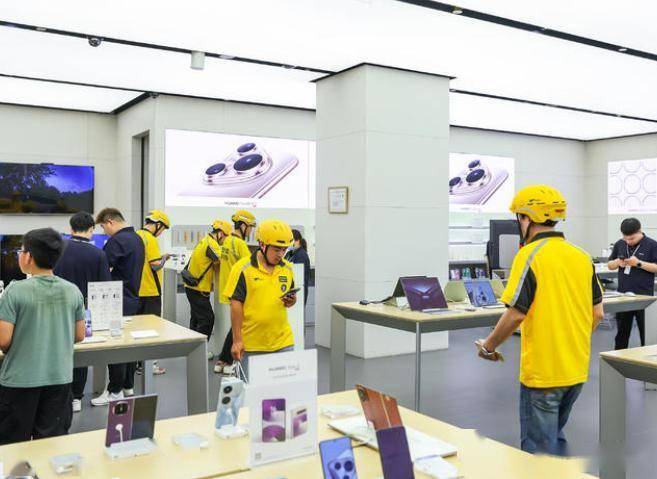
手机闪购成交额暴增超300%,骑手狂奔15分钟极限配送,谁在推动闪购革命?
Sou Hu Cai Jing· 2025-08-13 09:07
Core Insights - The rapid growth of instant retail in Shenzhen is highlighted, with a significant increase in order volume and transaction value across various product categories [3][5][10] Group 1: Instant Retail Growth - Shenzhen's instant retail orders surged by 1500% from March to July 2025 compared to the previous year, with current orders being 20 times higher than the same period last year [3] - Mobile phone sales increased by over 300% year-on-year since June, while smartwatches and tablets saw growth exceeding 200% [3] - 66 non-food brands on Taobao's flash purchase platform achieved monthly sales exceeding 10 million, with 395 brands surpassing 1 million [3] Group 2: Transformation of Physical Stores - Physical stores are evolving into "front warehouses" to meet the demand for rapid delivery, with major brands like Watsons and Xiaomi integrating into Taobao's flash purchase system [5][7] - The average order volume for Xiaomi stores quadrupled over four months, while over half of Miniso's stores doubled their sales [5][3] Group 3: Consumer Behavior and Demand - Two main consumer segments identified: emergency urban consumers (over 60%) and instant gratification seekers, with the latter willing to pay significantly more for immediate access to products [8][11] - High-repurchase, small-volume, and immediately usable products have seen a 200% increase in conversion rates [8] Group 4: Operational Efficiency - Companies are leveraging technology to enhance efficiency, with Xiaomi reducing packing time from 12 minutes to 7 minutes through system integration [9] - The integration of offline and online sales has proven beneficial, with Watsons achieving a fivefold increase in online orders during promotional events [10] Group 5: Challenges and Market Dynamics - The rise of instant retail has led to the closure of 20% of traditional stores unable to meet the 15-minute packing requirement [11] - The market is witnessing a decline in pure e-commerce growth, with instant retail attracting 78% of new customers [11][12]



即时零售加速医药零售变革,两性健康品类成连锁药店增长新动力
Sou Hu Wang· 2025-08-13 08:26
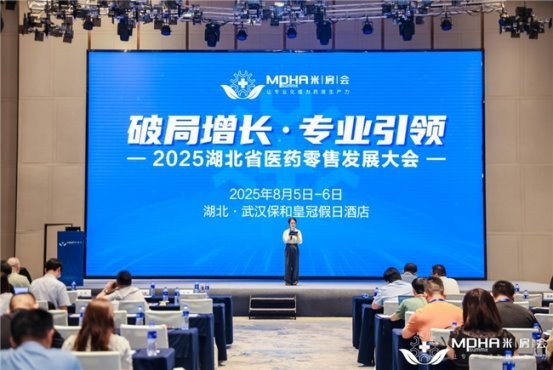
Core Insights - The "2025 Hubei Province Pharmaceutical Retail Development Conference" focused on the theme "Breaking the Growth, Professional Leadership," discussing trends such as O2O, content e-commerce integration, and refined store operations [1] Industry Trends - The rapid development of instant retail is driving a deep transformation in the pharmaceutical retail industry, with sexual health products identified as a key growth engine due to their high repurchase rates and privacy concerns [3][12] - Instant retail platforms like Meituan, JD.com, and Ele.me are reshaping the traffic structure of pharmacies, with significant increases in search and order ratios for male health products compared to traditional channels [4] Company Strategies - The brand "Jin Guan Ai," under De Kai Pharmaceutical, focuses on key products like Tadalafil, Sildenafil, and Dapoxetine, utilizing comprehensive content marketing and platform collaboration to drive traffic to O2O platforms [6][10] - Empirical data from leading chain pharmacies indicate that this model not only boosts sales of targeted categories but also enhances sales of related categories while maintaining profitability [7] Collaborative Efforts - Jin Guan Ai is a joint initiative by China Merchants Jinfu Pharmaceutical and De Kai Pharmaceutical, leveraging Jinfu's compliance and professional service strengths alongside De Kai's capabilities in content e-commerce and traffic operations [8] Operational Excellence - Jin Guan Ai employs a three-stage cognitive model ("Brand in Sight - in Mind - in Heart") to enhance consumer engagement through expert endorsements, short video content, and targeted marketing strategies, achieving a full conversion loop from exposure to purchase [11] - Consumer feedback highlights key reasons for choosing the brand, including quick efficacy, stable drug effects, genuine product assurance, and no side effects, contributing to high trust and repurchase rates [11] Future Outlook - Industry observers believe that high-adhesion and high-repurchase categories like sexual health will be crucial for chain pharmacies to achieve differentiated development amid stock competition [12] - The continuous improvement of digital and localized operational capabilities suggests that O2O growth models like Jin Guan Ai's may be replicated in more regions, opening broader growth opportunities for the pharmaceutical retail sector [12]

【财经分析】订单新高与补贴争议 淘宝布局即时零售的“AB面”
Xin Hua Cai Jing· 2025-08-13 08:01
Core Insights - Instant retail has seen a significant surge, with Taobao's flash purchase surpassing Meituan in daily order volume for the first time, indicating a competitive shift in the market [1][2] - Taobao's aggressive subsidy strategy has led to rapid order growth, but it has also created challenges for merchants, particularly in the restaurant sector, where they feel pressured to participate in these promotional activities [2][3] - The ongoing subsidy war is fundamentally a battle for market dominance among platforms, with significant implications for the sustainability of the industry and the well-being of small merchants [7][8] Group 1: Market Dynamics - Taobao's flash purchase achieved over 90 million daily orders in late July, indicating a strong competitive response to Meituan [2] - The shift in order volume reflects a broader trend of increasing demand for instant logistics services, with user numbers projected to grow from 293 million in 2017 to 799 million by 2024 [4] - The competition has intensified as platforms like JD and Meituan have ramped up their instant retail strategies, posing challenges to Alibaba's traditional e-commerce model [4][5] Group 2: Merchant Challenges - Merchants report being involuntarily included in promotional activities, leading to price distortions and operational disruptions [2][3] - Many small businesses are experiencing a decline in dine-in customers as consumers shift to cheaper delivery options due to subsidies, resulting in significant revenue losses [2][3] - The pressure on merchants is exacerbated by the platforms' control over pricing and promotional strategies, limiting their ability to operate independently [3][7] Group 3: Regulatory and Compliance Issues - The scale of Taobao's subsidy program, amounting to 500 billion yuan, raises concerns about compliance with anti-competitive regulations, especially given its size relative to previous penalties imposed on Alibaba [6][8] - Experts emphasize the need for regulatory frameworks to ensure fair competition and protect the rights of small merchants, advocating for a balanced approach to platform subsidies [6][8] - The long-term sustainability of the instant retail ecosystem depends on establishing fair practices that benefit all stakeholders, including consumers, merchants, and platforms [8]

美团闪购与茅台酱香酒启动深度合作:首批上线门店超千家 共建正品联盟
Zheng Quan Shi Bao Wang· 2025-08-13 08:01
Core Insights - Guizhou Moutai Sauce Aroma Liquor Marketing Co., Ltd. has initiated a deep cooperation with Meituan Flash Purchase, launching over a thousand officially certified stores for "Moutai Sauce Aroma · Shared by Thousands" [2] - The collaboration aims to enhance instant retail networks and channel transformation, providing consumers with a premium buying experience of authentic Moutai within 30 minutes [2] - Meituan Flash Purchase is focusing on intellectual property protection in the liquor industry and is working with multiple brands to establish the first "Liquor Authenticity Alliance" [2] Group 1 - The partnership significantly enriches Meituan Flash Purchase's liquor offerings, catering to consumer demand for purchasing liquor [3] - Instant retail has become the mainstream method for consumers to buy liquor, with 34.9% of liquor companies prioritizing the expansion of instant retail channels, surpassing live e-commerce [3] - During the 6.18 shopping festival, Meituan Flash Purchase reported a more than tenfold year-on-year increase in liquor transaction volume, with notable growth in premium brands like Moutai [3] Group 2 - The characteristics of instant retail align closely with Moutai Sauce Aroma Liquor's consumer-centric approach, making it a key strategy for market expansion [4] - The collaboration with Meituan Flash Purchase allows Moutai Sauce Aroma Liquor to better reach diverse consumer scenarios and attract a younger demographic [4]
美团闪购与茅台酱香酒启动深度合作:首批上线门店超千家,共建正品联盟
Zheng Quan Shi Bao Wang· 2025-08-13 07:58
Core Insights - The collaboration between Kweichow Moutai Sauce-flavored Liquor Marketing Co., Ltd. and Meituan Flash Purchase aims to enhance the consumer experience by ensuring authentic Moutai products are delivered within 30 minutes [1][2] - This partnership is part of Moutai's strategy to build an instant retail network and transform distribution channels, with plans to accelerate the onboarding of more certified stores on Meituan Flash Purchase [1] Group 1: Partnership Details - The initial phase involves over 1,000 certified "Moutai Sauce-flavored · Shared by Thousands" stores launching on Meituan Flash Purchase [1] - The collaboration focuses on product authenticity, store operations, customer base expansion, and membership integration [1] Group 2: Market Trends - Instant retail has become a mainstream method for consumers purchasing liquor, with 34.9% of liquor companies prioritizing the expansion of instant retail channels, surpassing live-streaming e-commerce [2] - During the 6.18 shopping festival, Meituan Flash Purchase reported a more than 10-fold year-on-year increase in liquor sales, particularly for premium brands like Moutai [2] Group 3: Consumer Engagement - The partnership is expected to enhance interaction with younger consumers, aligning with Moutai's goal to attract a new generation of buyers and expand brand penetration [2] - Moutai Sauce-flavored Liquor emphasizes consumer demand as a guiding principle for its collaboration with Meituan Flash Purchase, aiming for precise engagement across diverse consumption scenarios [2]
手机闪购火了!成交额暴增超300%
Sou Hu Cai Jing· 2025-08-13 07:10
Group 1 - The core viewpoint is that since June, a flash purchase platform has reported over 300% year-on-year growth in mobile product transaction value, with other electronic categories like smartwatches, tablets, and laptops also seeing over 200% growth [1][3] - The phenomenon is attributed to the explosion of the "instant retail + flash purchase" model, which has expanded from food services to consumer electronics and apparel, enhancing platform coverage and user response frequency [3][5] - This trend indicates that mobile consumption has entered a "fast-paced" era, where consumer habits are increasingly leaning towards instant gratification, necessitating rapid supply matching by merchants and platforms [5][7] Group 2 - For users, this translates to more choices, faster ordering experiences, and immediate feedback; however, it also raises higher demands on sales strategies, inventory management, and logistics [7]
手机闪购成交额暴增超300%
Jing Ji Guan Cha Wang· 2025-08-13 06:33
Core Insights - The article discusses the emergence of a new consumption model known as "flash purchase," which has expanded from food and beverage to include categories like clothing, footwear, and consumer electronics [1] Industry Trends - Flash purchase has become a popular method for consumers to buy daily necessities and emergency items, indicating a shift in consumer behavior towards instant retail [1] - The frequency of flash purchases has increased, leading to rapid growth in instant sales for mobile phone retail stores [1] Sales Performance - A flash purchase platform reported that since June of this year, the transaction volume for mobile phones has increased by over 300% year-on-year [1] - Sales for smartwatches, tablets, and laptops have also seen significant growth, with transaction volumes increasing by over 200% [1] - The sales of sports shoes and apparel, such as running shoes and sports T-shirts, have similarly experienced a year-on-year increase of over 200% [1]