企业转型

Search documents
英唐智控拟收购光隆集成,100%股权和奥简微电子80%股权
Zhong Guo Ji Jin Bao· 2025-11-09 03:16
Core Viewpoint - Ying Tang Zhi Kong plans to acquire 100% equity of Guanglong Integrated and 80% equity of Ao Jian Microelectronics, marking a significant strategic move towards enhancing its semiconductor capabilities [2][4][11]. Acquisition Details - The acquisition involves issuing shares and cash payments to purchase Guanglong Integrated and Ao Jian Microelectronics [4][5]. - Guanglong Integrated will become a wholly-owned subsidiary, while Ao Jian Microelectronics will be a controlling subsidiary post-transaction [4][5]. - The share issuance price is set at 7.38 yuan per share, which is 80% of the average trading price over the previous 120 trading days [5]. Company Profiles - Guanglong Integrated specializes in the R&D, production, and sales of passive optical devices, with applications in optical network protection, testing systems, AI computing centers, and more [6]. - Financial data for Guanglong Integrated shows revenues of 71.97 million yuan and 55.24 million yuan for 2023 and 2024 respectively, with net profits of 17.46 million yuan and 8.79 million yuan [6]. - Ao Jian Microelectronics focuses on high-performance analog chips, particularly in power management and signal chain categories, and is a joint venture with storage chip giant Zhaoyi Innovation [8][6]. - Ao Jian Microelectronics reported revenues of 18.44 million yuan for the first eight months of 2025, but has not yet achieved profitability [8]. Strategic Rationale - The acquisition aligns with Ying Tang Zhi Kong's strategy to transition from distribution to semiconductor design and manufacturing, aiming to enhance profit margins [10][11]. - The company anticipates significant synergies in market access, product development, and supply chain integration with the acquired firms [12]. - In the first three quarters of the year, Ying Tang Zhi Kong achieved revenues of 4.113 billion yuan, a 2.40% increase year-on-year, but net profits decreased by 43.67% [12].


这家1915年成立的百年企业,完成了一场惊心动魄的自救
创业家· 2025-11-06 10:15
Core Viewpoint - The decline of a product or industry may not solely be due to a lack of consumer need, but rather a deeper issue related to the ability and adaptability of the company or industry [2][3]. Group 1: Market Analysis - The kimono retail market in Japan has seen a drastic decline from 20 trillion yen in 1975 to approximately 2 trillion yen in 2023, a drop of 90% [9]. - The sales of Kyoto Monfu, a kimono company, plummeted by 90% as well, reflecting the broader market trend [11]. Group 2: Strategic Adaptation - Kyoto Monfu's fourth-generation successor, Akira Arakawa, recognized the futility of trying to revive the kimono market and instead decided to pivot the company's focus [14]. - The first step in this strategic shift involved assessing the company's core competencies, leading to the realization that their unique "deep black" dyeing technique was their true asset [18][23]. Group 3: Market Opportunities - As consumer preferences shifted towards second-hand clothing and sustainability, Kyoto Monfu launched the "PANDA BLACK" project in collaboration with WWF Japan, which involved dyeing old clothes to give them a new life [30][31]. - This initiative resonated with consumers' growing interest in eco-friendly fashion, allowing the company to tap into a new market segment [31]. Group 4: Business Model Innovation - Instead of directly selling to consumers, Kyoto Monfu chose to partner with established retailers like BEAMS and Isetan to leverage their customer base, effectively creating a win-win situation for all parties involved [33][36]. - This approach allowed Kyoto Monfu to maintain its core competencies while expanding its market reach through established retail channels [36][39].

东阳光药集采丢标背后单一产品依赖下的生存危机
Xin Lang Cai Jing· 2025-11-06 07:36
Core Insights - The domestic pharmaceutical market is undergoing a new round of reshuffling, with the 11th batch of national drug procurement results recently announced, covering 55 varieties and 453 products in high-demand treatment areas such as anti-infection, diabetes, and hypertension [1] - Dongyang Sunshine Pharmaceutical's loss of the bid for Oseltamivir granules, which contributed over 75% of its revenue in 2023, poses a significant threat to its core business [1] - The company's heavy reliance on hospital channels for over 80% of its sales exacerbates the impact of this loss [1] Group 1: Company Challenges - Dongyang Sunshine Pharmaceutical's product structure is notably singular, leading to a weaker ability to withstand risks compared to peers like Heng Rui Medicine, which has previously faced similar challenges [1] - The company has over 100 products in research across infection, chronic disease, and oncology, indicating a desire for transformation, but significant concerns remain regarding the feasibility of this strategy [1][2] Group 2: Research and Development Issues - The company's R&D investment is characterized by a "high proportion, low absolute value," with R&D expenses of 348 million yuan in the first half of 2025, only one-tenth of Heng Rui's during the same period [2] - The broad but shallow pipeline in the infection sector faces competition from Roche's new drug Marbofloxacin, while insulin products in the chronic disease sector yield low profits despite winning bids [2] - The oncology drug Crizotinib is still in phase three clinical trials, lagging behind competitors, highlighting the company's insufficient R&D capabilities and funding reserves [2] Group 3: Industry Context - Dongyang Sunshine Pharmaceutical's predicament reflects the broader challenges faced by Chinese pharmaceutical companies under the dual pressures of national procurement and the need for innovative transformation [2] - The loss of the bid serves as a performance warning and a survival test for companies still reliant on single-product strategies [2]

与进博会同频共振,“全勤生”大众汽车集团的坚守与期许
Zhong Guo Jing Ji Wang· 2025-11-05 04:50
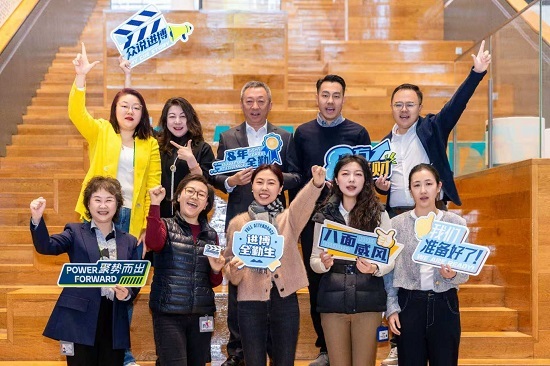
Core Insights - The eighth China International Import Expo (CIIE) commenced on November 5, showcasing Volkswagen Group's commitment with eight models across its four brands, including electric vehicles and high-end smart connected cars [1][4]. Group 1: Significance of CIIE - CIIE is viewed as a unique platform for foreign enterprises to interact with government departments and the public, showcasing technology, products, and development strategies [3]. - The event has evolved from a traditional auto show to a comprehensive international cooperation platform, attracting a broader audience and allowing for the display of the latest innovations [3][5]. - The professionalism and support from the government for CIIE have improved over the years, enhancing the overall exhibition experience [3]. Group 2: Evolution of Product Offerings - Volkswagen's participation reflects its transformation, shifting focus from traditional fuel vehicles to advanced electric technologies and products since the second CIIE in 2019 [4][5]. - The company is set to launch three concept cars—ID.EVO, ID.AURA, and ID.ERA—specifically designed for the Chinese market, featuring the latest electric and range-extending technologies, with plans for local production by 2026 [4]. Group 3: Brand Communication and Social Responsibility - CIIE provides a platform for Volkswagen to enhance brand communication and implement social responsibility initiatives, with a focus on reaching a wider audience through social media and community engagement [5]. - The "Green Belt Action - Volkswagen China Public Welfare Forest Project" was announced at CIIE 2020, demonstrating the company's commitment to ecological restoration in vulnerable areas [5]. Group 4: Future Expectations - Volkswagen representatives expressed hopes for increased promotion of the automotive sector at CIIE and suggested that the event continue to serve as an open communication platform for various industries [6]. - The company aims to leverage CIIE for further business and brand growth, emphasizing the importance of collaboration and mutual benefits in the context of high-level openness [6].
星巴克中国“告别”西雅图
虎嗅APP· 2025-11-04 23:57
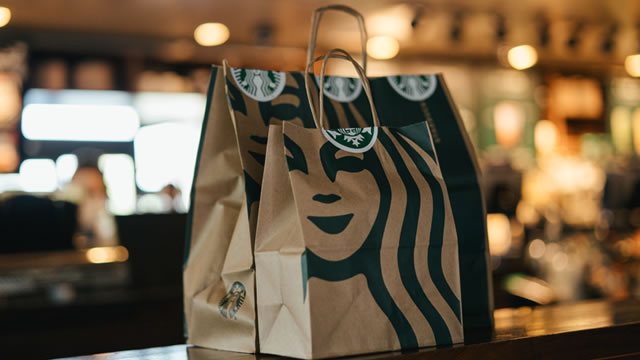
Core Viewpoint - Starbucks has decided to sell 60% of its Chinese business to Boyu Capital for $4 billion, marking a significant shift in its operational strategy in China [4][20]. Group 1: Transaction Details - The transaction is expected to be completed before the second quarter of Starbucks' fiscal year 2026, with Starbucks China continuing to report to Seattle until then [5]. - Boyu Capital will hold a maximum of 60% equity in the joint venture, while Starbucks retains 40% and continues to own the brand and intellectual property [20]. - The valuation of Starbucks' retail business in China is estimated at $13 billion, which includes the equity transferred to Boyu and the retained equity value [20]. Group 2: Management Changes - Liu Wenjuan will succeed Wang Jingying as CEO of Starbucks China after her retirement in January 2025, and will continue to report to Seattle [6][7]. - The decision to not continue the position of Chairman after Wang's retirement indicates a shift in the governance structure of Starbucks China [6]. - There is speculation that the influence of Seattle on Starbucks China has diminished, allowing for greater autonomy in decision-making [6][9]. Group 3: Performance Metrics - Starbucks China reported a revenue of $3.105 billion for the fiscal year 2025, reflecting a 5% year-over-year growth [7]. - The operating profit margin has remained in double digits for four consecutive quarters, indicating a positive trend in financial performance [7]. Group 4: Strategic Vision - Boyu Capital aims to expand Starbucks' store count in China to 20,000, significantly increasing from the current 8,011 stores by the end of fiscal year 2025 [9][22]. - Liu Wenjuan's strategy includes product innovation, dynamic pricing adjustments, and focusing on underperforming stores while targeting younger demographics [10][24]. Group 5: Market Context - The Chinese coffee market is experiencing intense competition, with brands like Luckin Coffee and others rapidly expanding their store networks [22][24]. - Starbucks is perceived to be in need of a transformation to maintain its premium image amidst rising competition and changing consumer preferences [25]. Group 6: Boyu Capital's Background - Boyu Capital has a strong track record in investments, with a historical internal rate of return (IRR) of over 25%, indicating its capability to drive Starbucks China's growth [15]. - The firm has previously invested in various successful projects, enhancing its credibility and potential to support Starbucks in navigating the Chinese market [15][19]. Group 7: Future Implications - The partnership with Boyu is expected to provide Starbucks China with the necessary resources for digital and store upgrades, addressing the need for significant investment in infrastructure [24]. - The collaboration may lead to a more localized decision-making process, allowing Starbucks to respond more effectively to market changes [21].


粤宏远A:回应并购重组进度及资金理财与并购关系问题
Xin Lang Cai Jing· 2025-11-04 04:21
Group 1 - The company is open to accelerating mergers and acquisitions (M&A) or restructuring in the remaining two months of the year, but any significant matters will be disclosed according to regulations [1] - The company emphasizes that engaging in financial management does not hinder its ability to pursue M&A transformation, as both can coexist without affecting overall fund management [1] - The company is utilizing idle funds for low-risk entrusted financial management to ensure the preservation and appreciation of cash assets, which aligns with the interests of the company and its shareholders [1]

绿地控股战略收缩路线图:前三季度由盈转亏 三季度零拿地、零开工
Zhong Guo Jing Ying Bao· 2025-11-03 02:35
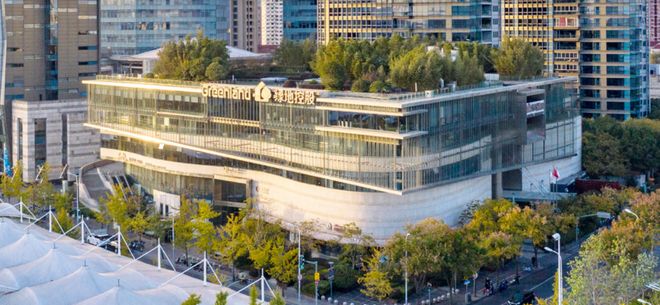
Core Viewpoint - Greenland Holdings is undergoing a painful transformation period, with significant declines in revenue and net profit reported for the first three quarters of 2025 [3][4]. Financial Performance - For the first three quarters of 2025, Greenland Holdings achieved revenue of 127.697 billion yuan, a year-on-year decrease of 20.16%, and a net profit attributable to shareholders of -6.690 billion yuan, a staggering decline of 2927.38% [4]. - In Q3 2025, the company reported revenue of 33.202 billion yuan, down 25.59% year-on-year, and a net loss of 3.183 billion yuan, a decline of 11912.36% [4]. Real Estate Business - The real estate sector remains in a downturn, with contract sales amounting to 47.64 billion yuan, a slight decrease of 1.28%, while sales area increased by 13% to 5.374 million square meters, indicating a "volume up, price down" trend [4]. - New construction area for the first three quarters was only 490,000 square meters, a drop of 55.44%, with no new projects initiated in Q3 [4][5]. Land Acquisition Strategy - Greenland Holdings has adopted a cautious approach in the land market, adding only three new real estate project reserves with a total land area of 116,400 square meters in the first three quarters, and no new project reserves in Q3 [5]. Infrastructure Business - The infrastructure segment showed signs of stabilization, with cash collections of approximately 25.8 billion yuan in Q3 and a total of 84.9 billion yuan for the first three quarters [6]. - The company completed an output value of approximately 23.8 billion yuan in Q3, totaling about 71.1 billion yuan for the first three quarters [6]. Legal Challenges - The number of lawsuits involving Greenland Holdings has surged, with 1,344 new cases reported from October 1 to 20, 2025, involving a total amount of 6.381 billion yuan [7]. - In September 2025 alone, the company faced 3,102 lawsuits with a cumulative amount of 11.187 billion yuan, indicating an average of nearly 90 new lawsuits per day during a 50-day period [7][8]. Strategic Shift - In response to declining performance and transformation pressures, Greenland Holdings is actively exploring new business avenues, including expanding into the automotive industry and seizing opportunities in the electric vehicle export market [9].

我什么都没做错,但过往的行业“蛋糕”,突然没有了
创业家· 2025-11-02 10:10
Core Insights - The article emphasizes that the decline of a product does not necessarily mean that the company is obsolete; rather, it highlights the importance of retaining core capabilities to adapt and survive in changing markets [2][3]. Group 1: Market Decline and Adaptation - The traditional kimono market in Japan has seen a drastic decline, dropping from 20 trillion yen in 1975 to approximately 2 trillion yen in 2023, a 90% decrease [8]. - The company Kyoto Monogatari faced a 90% drop in sales, illustrating the severe impact of market changes on traditional businesses [10]. - The fourth-generation heir of Kyoto Monogatari, Akira Arakawa, recognized that merely calling for a return to traditional culture would not suffice; instead, he opted for a strategic migration to adapt to the new market realities [13][14]. Group 2: Capability Assessment - Arakawa conducted a capability assessment, realizing that the company's true value lay in its unique dyeing technique, specifically the "extreme deep black" dyeing process [22]. - The dyeing process involves three key steps: basic dyeing, the use of a proprietary agent that allows the fabric to "absorb" light, and a patient drying process that enhances the quality of the dye [19][20][21]. Group 3: Market Opportunities - As consumer preferences shifted towards second-hand clothing due to economic and environmental considerations, Kyoto Monogatari identified a new market opportunity [24][26]. - The company launched the "PANDA BLACK" project in collaboration with WWF Japan, which involved revitalizing old garments by dyeing them black, thus appealing to modern consumers [27]. Group 4: Business Model Innovation - Kyoto Monogatari chose not to directly serve consumers but instead partnered with established retailers like BEAMS and Isetan to leverage their market presence, creating a win-win situation for all parties involved [30][32]. - This strategic partnership allowed Kyoto Monogatari to maintain its core capabilities while effectively reaching consumers through established retail channels [34].

董事长徐晰人被刑拘 北大医药转型之路再蒙阴影
Bei Ke Cai Jing· 2025-11-01 01:55
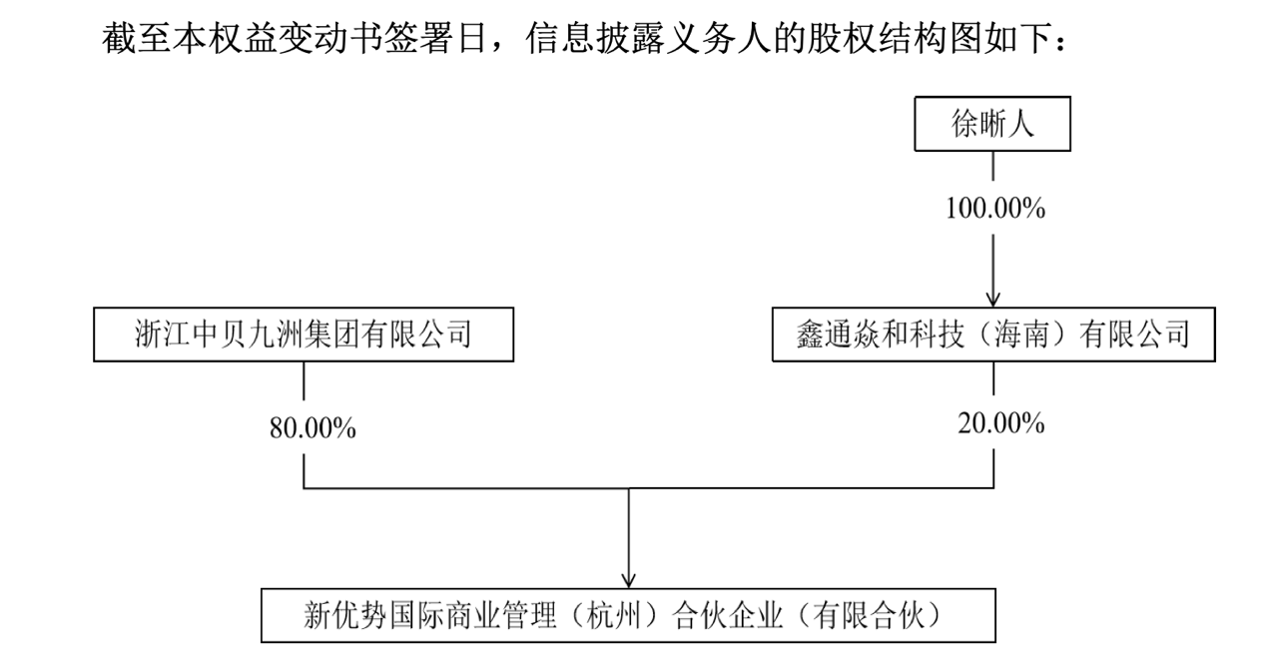
Core Viewpoint - The arrest of Chairman Xu Xiren has caused significant fluctuations in the stock price of Peking University Medicine, reflecting increased uncertainty for the company as it navigates a challenging transition period following a recent ownership change [1][3][4]. Group 1: Company Leadership and Ownership Changes - Xu Xiren was detained just ten months after taking control of Peking University Medicine through a 1 yuan acquisition, leading the company to a path of "de-Peking" transformation [2][5][22]. - Following Xu's detention, the company announced that it had made arrangements for related work, indicating a temporary disruption in leadership [4][17]. - The ownership structure changed significantly when New Advantage International, controlled by Xu, acquired 100% of Southwest Synthesis Pharmaceutical Group, thereby gaining control of Peking University Medicine [5][11]. Group 2: Business Performance and Client Relationships - Peking University Medicine is experiencing a performance downturn, with a reported revenue of 2.74 billion yuan for Q3 2025, a 47.95% year-on-year decline, and a net profit of 356.87 million yuan, down 18.04% [28]. - The company has lost its largest client, Beijing University International Hospital, which accounted for 48.71% of its total sales in 2024, leading to concerns about the sustainability of its main business operations [26][27]. - The termination of the long-term service contract with the hospital is expected to result in a complete halt of main business activities, posing risks of personnel layoffs and further corporate transformation [25][27].

Starbucks turnaround delivers first sales growth in nearly two years
Invezz· 2025-10-30 07:29
Core Insights - Starbucks reported a significant milestone with global same-store sales growth for the first time in nearly two years, indicating the effectiveness of its turnaround strategy [1] Group 1: Financial Performance - The growth in same-store sales suggests a positive shift in consumer demand and operational efficiency [1] - This performance is crucial for the company's recovery trajectory after a challenging period [1] Group 2: Strategic Implications - The reported sales growth reflects the success of Starbucks' ambitious turnaround strategy, which aims to revitalize the brand and enhance customer experience [1] - The company’s ability to achieve this growth may influence investor confidence and market positioning moving forward [1]