全球南方

Search documents
国际观察:金砖国家的共同使命及合作方向
人民网-国际频道 原创稿· 2025-07-04 05:42
Group 1 - The upcoming BRICS summit in July 2025 in Rio de Janeiro is attracting significant attention due to the expanding cooperation among BRICS nations and the challenges posed by the current international landscape [1] - BRICS nations are recognized as a successful exploration of cooperation among emerging economies, enhancing internal collaboration and promoting partial reforms in global governance [1][2] - The expansion of the BRICS "circle of friends" and the uncertainty in the global political and economic landscape are key variables that necessitate a reevaluation of the common mission of BRICS nations [1] Group 2 - Economic development is the primary demand of BRICS nations, which represent the leading tier of emerging economies with significant growth potential and international recognition [2] - BRICS nations are crucial variables in influencing regional socio-economic development, and their cooperation is essential for reducing over-reliance on developed markets [2] - Creating a favorable international cooperation environment and enhancing internal collaboration are common tasks for BRICS nations [2] Group 3 - Promoting reforms in the global governance system is a shared political demand among BRICS nations, which have gained significant importance in global governance over the past decade [3] - The New Development Bank has emerged as a key multilateral financial institution, reflecting the efficiency and vitality of BRICS cooperation [3] - The evolving international landscape presents three global impacts: the rise of technological and industrial revolutions, the irreversible ascent of emerging and developing countries, and the resurgence of protectionism and unilateralism [3] Group 4 - BRICS cooperation should focus on maintaining international security, defending multilateralism, and advancing global governance reforms [4] - Deepening technological cooperation is vital for the sustainable development of emerging economies, leveraging comparative advantages in technology [4] - Promoting cultural exchanges and building an open cooperation network aimed at the "Global South" is essential for enhancing stability and collaboration among BRICS nations [4] Group 5 - BRICS nations should continue to promote integration with the "Global South" while adhering to cooperation principles based on shared interests, enhancing their representativeness and influence [5]
莫迪开启十年来“最长访问”,印度国会议员批:是“环球观光总理”
Huan Qiu Shi Bao· 2025-07-03 22:47
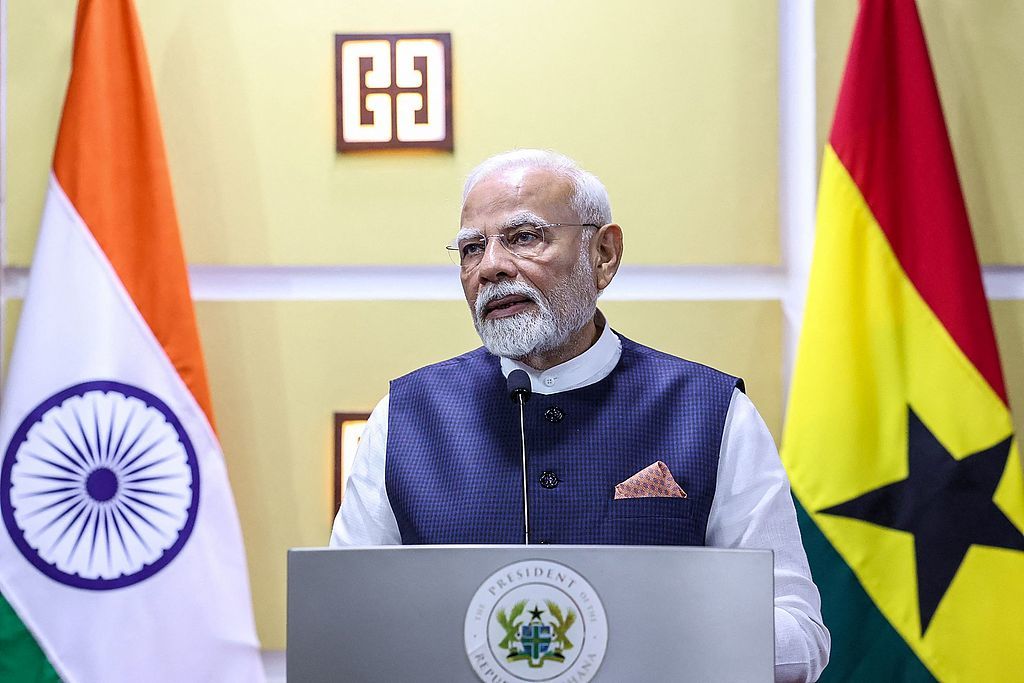
Group 1 - Indian Prime Minister Modi was awarded Ghana's highest honor, the "Star of Ghana," during his visit, marking the first visit by an Indian Prime Minister to Ghana in 30 years [1] - India has invested $2 billion in Ghana across 900 projects, with plans to double bilateral trade within five years [3] - India imports 70% of its gold from Ghana, highlighting the importance of Ghana as a key source for India's gold supply [3] Group 2 - Modi's visit aims to strengthen relationships with the Global South and enhance partnerships across the Atlantic, while also focusing on cooperation within multilateral frameworks like BRICS and the African Union [3] - The visit is part of a longer trip that includes stops in Trinidad and Tobago, Argentina, Brazil, and Namibia, with the BRICS summit in Brazil being a significant event [3] - Modi's government is actively engaging in discussions with Argentina, Peru, and Bolivia regarding cooperation in critical mineral sectors, indicating a strategic focus on securing supply chains for essential minerals [3]

特稿丨南方潮涌——多国人士认为全球南方正在重塑世界经济格局
Xin Hua She· 2025-07-03 13:09
Group 1 - The global South is increasingly reshaping the world economic landscape, with a growing emphasis on multilateral cooperation among developing countries, particularly through mechanisms like BRICS [1][4] - The global South's market is thriving, with developing countries' goods trade increasing 4.6 times since 2000, now accounting for 45% of global trade, up from 30% [4][5] - The global South contributes over 40% to the global economy and accounts for 80% of world economic growth, positioning itself as a key player in global governance and development [4][5] Group 2 - China is actively engaging with the global South, providing development assistance to over 160 countries and promoting initiatives like the Belt and Road Initiative, which fosters cooperation and mutual development [6][7] - The BRICS cooperation mechanism serves as a significant platform for emerging markets and developing countries to unite and advocate for equitable global governance [4][6] - The relationship between China and Latin American countries is being strengthened through platforms like the China-Latin America Forum, promoting sustainable development and policy coordination [7]
中拉共话“命运与共” 文明互鉴“越走越亲”
Ren Min Ri Bao· 2025-07-01 22:19
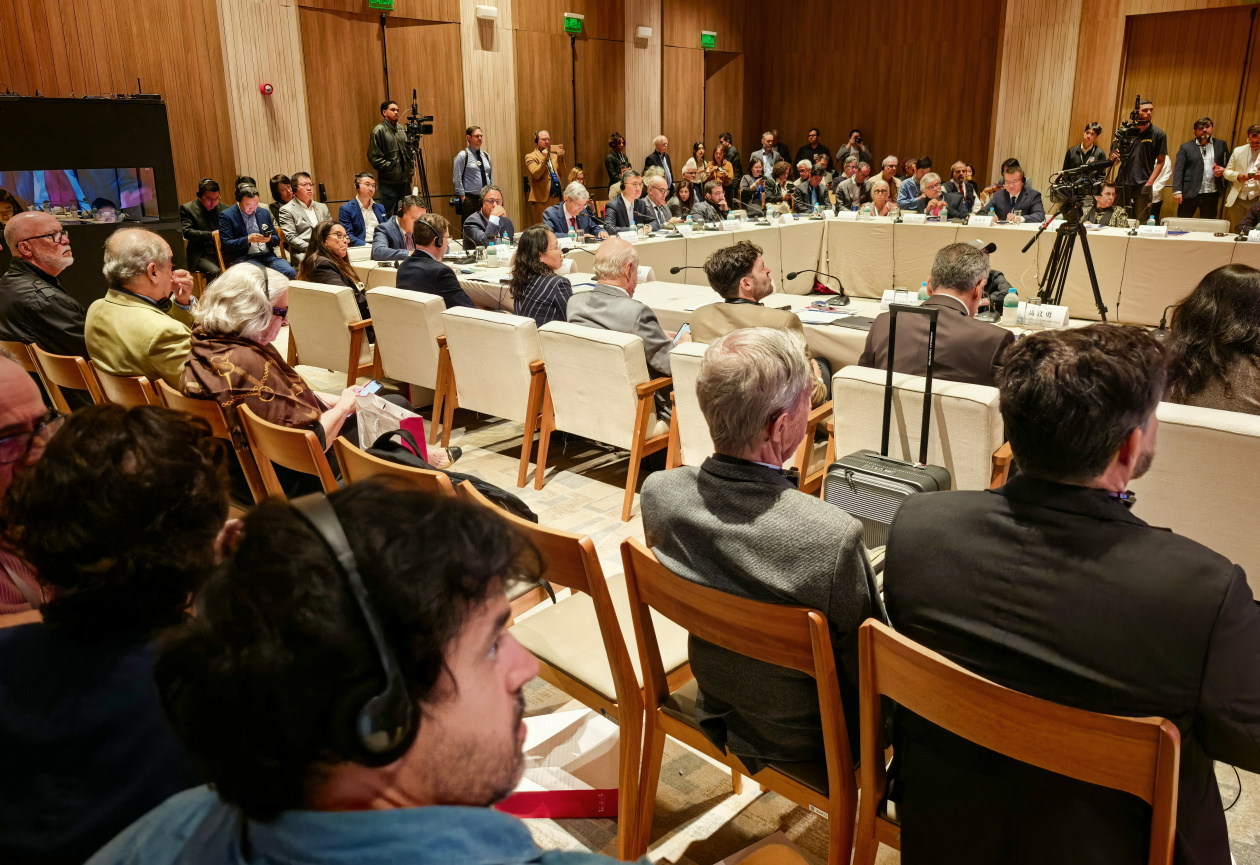
Core Viewpoint - The "Global Times Overseas China Week and Global South Dialogue" series of events in Latin America emphasizes the importance of strengthening cooperation and dialogue between China and Latin American countries to promote a shared future and mutual development [1][2]. Group 1: Event Overview - The series of events took place from June 22 to June 28, featuring seminars and roundtable discussions in Buenos Aires, Argentina, and Rio de Janeiro, Brazil [1]. - Participants agreed that the Global South is becoming a significant force in driving changes in the international order, advocating for enhanced dialogue and cooperation [1]. Group 2: Key Speeches and Perspectives - Chinese Ambassador to Brazil, Zhu Qingqiao, highlighted the "golden period" of China-Brazil relations under the strategic guidance of both countries' leaders, aiming for comprehensive cooperation across various fields [1]. - Brazilian President's Chief Advisor, Celso Amorim, emphasized the importance of expanding political, economic, and cultural exchanges between Latin America and China amid global challenges [1][2]. Group 3: Public Opinion Research - The Global Times Research Institute released the results of a large-scale public opinion survey between China and Latin America, marking a significant step in understanding mutual perceptions [3]. - The survey results indicate a strong foundation for cooperation, with mutual respect and trust being key elements in the development of China-Latin America relations [3]. Group 4: Cultural and Academic Cooperation - Various speakers stressed the need for broader cooperation in education, media, and cultural exchanges to enhance mutual understanding and collaboration [2][4]. - The event served as a platform for media and think tank dialogue, contributing to the construction of a community of shared destiny between China and Latin America [4][5]. Group 5: Future Prospects - Experts noted the complementary nature of China and Latin America's goals in areas such as green development and technology cooperation, highlighting the potential for future collaboration [5]. - The cultural exchanges and media interactions are seen as vital for building trust and enhancing bilateral relations between the two regions [5].
21专访|BCG董事总经理:金砖合作推动全球南方贸易增长
2 1 Shi Ji Jing Ji Bao Dao· 2025-07-01 13:28
Group 1 - The 17th BRICS summit will be held in Rio de Janeiro from July 6 to 7, with China supporting Brazil as the chair for this year [1] - According to BCG, trade between China and global South countries is expected to grow by approximately 6% annually, which is double the global trade growth rate of about 2.9% [1][4] - The BRICS cooperation mechanism is seen as an important platform for emerging market countries and developing nations to strengthen unity and cooperation [2] Group 2 - There is a growing interest among global South countries, particularly in ASEAN and Africa, to join BRICS, indicating the platform's significance for middle-income economies [2] - Chinese companies are increasingly pursuing international expansion, with a notable trend in various sectors beyond technology, including fast-moving consumer goods and durable goods [2][6] - The expansion of BRICS is expected to inject new momentum into cooperation and development among global South countries, providing new opportunities for Chinese enterprises [2][5] Group 3 - The global trade landscape is shifting, with China becoming a key trading partner for many countries in the global South, as evidenced by 63 out of 133 members of a representative group having China as their largest trading partner [4][5] - The BRICS countries are projected to become significant players in global oil production, enhancing their economic influence [5] - The rise of Chinese companies in the global South market is expected to provide consumers with more diverse choices and richer product categories [6] Group 4 - The geopolitical risks are increasing, and Chinese companies need to enhance their resilience and establish "geopolitical muscle" to navigate the complex international environment [3][11] - Companies are advised to diversify their supply chains and establish buffer capacities to mitigate risks associated with geopolitical tensions and trade uncertainties [12][13] - The importance of strategic decision-making is emphasized, as companies should not wait for normalcy to return but rather act proactively to seize innovation opportunities [3][11]
红厅论坛:习近平新时代中国特色社会主义思想-21世纪社会主义研讨会”在委内瑞拉举行
Xin Hua She· 2025-06-27 14:40
委内瑞拉计划部长里卡多·梅嫩德斯说,中国在经济社会发展、生态保护和治理能力现代化等方面 的成功探索,为委内瑞拉制定国家发展战略提供了重要参考。 委方人士介绍,委内瑞拉前总统乌戈·查韦斯提出建设"21世纪社会主义",现执政党统一社会主义 党主张建设公平、自由、人道的"21世纪社会主义"。2024年,委内瑞拉总统马杜罗将 习近平 新时代中 国特色社会主义思想纳入委内瑞拉执政党培训课程。 本次论坛由新华社与委内瑞拉新闻和通信部共同主办,新华社代表通过现场发言和视频连线方式参 与研讨。与会代表一致认为,研讨会为深化两国治国理政经验互鉴、促进人文交流和民心相通提供了重 要平台。 新华社加拉加斯6月27日电(记者 田睿 蒋彪)"红厅论坛: 习近平 新时代中国特色社会主义思想- 21世纪社会主义研讨会"26日在委内瑞拉首都加拉加斯举行。中委两国政府、学界和媒体界等300余名代 表出席会议,围绕多边主义、经济发展及中委合作等议题展开深入交流。会议认为,中国式现代化创造 了人类文明新形态,人类命运共同体理念回答了"建设一个什么样的世界,如何建设这个世界"这一关乎 人类命运的重大课题。 中国驻委内瑞拉大使蓝虎在致辞中指出,中委两 ...
1.8万公里外的思想碰撞,这场圆桌论坛为什么引发广泛关注?
Huan Qiu Shi Bao· 2025-06-27 04:02
Group 1 - The forum held in Rio de Janeiro focused on enhancing cooperation between China and Latin America, emphasizing cultural exchange, technological progress, and mutual understanding [1][5][7] - Chinese President Xi Jinping highlighted the importance of building a community with a shared future between China and Latin America during the fourth ministerial meeting of the China-Latin America Forum [3][13] - The forum served as a platform for various stakeholders, including academia and media, to deepen cooperation and strengthen ties between China and Latin America [5][9] Group 2 - The forum addressed four main topics: cultural exchange and mutual learning, green development and technological cooperation, global South and common interests, and media cooperation and think tank exchanges [15][21] - Participants emphasized the need for collaboration in addressing global challenges, such as climate change, and the importance of leveraging each region's strengths for sustainable development [22][27] - The forum also highlighted the significance of media and think tank cooperation in fostering deeper understanding and combating misinformation between China and Latin America [29][30] Group 3 - A significant outcome of the forum was the release of the first large-scale public opinion survey on mutual perceptions between China and Latin America, which revealed a high degree of consensus on various issues [32] - The survey indicated that both Chinese and Latin American populations recognize the importance of mutual dependence and economic cooperation, as well as shared development philosophies [32] - The findings aim to enhance understanding and cooperation between the two regions, providing a new reference for future collaboration [32]
中拉共话“命运与共”,文明互鉴“越走越亲”,首届“环球南方对话·中拉圆桌论坛”在巴西举行
Huan Qiu Shi Bao· 2025-06-26 22:27
Group 1 - The forum held in Rio de Janeiro focused on cultural exchange, technological progress, and cooperation between China and Latin America, highlighting the strong development momentum in China-Latin America relations [1][2] - The forum featured the release of the first China-Latin America mutual perception survey, indicating a high degree of consensus and shared understanding between the two regions on various issues [4] Group 2 - The event was attended by various stakeholders from politics, academia, media, and business, emphasizing the importance of collaboration in addressing global challenges and enhancing mutual understanding [2][3] - The discussions at the forum aimed to deepen cooperation in key areas such as education, culture, and media, which are essential for strengthening the China-Brazil relationship [3][4]
王毅同亚美尼亚外长米尔佐扬举行会谈
news flash· 2025-06-26 12:46
Core Viewpoint - The meeting between Chinese Foreign Minister Wang Yi and Armenian Foreign Minister Mirzoyan emphasizes the historical friendship and mutual respect between China and Armenia, highlighting the importance of bilateral cooperation and the desire to deepen ties in various fields [1] Group 1: Bilateral Relations - Both countries are described as ancient civilizations with a long-standing relationship, rooted in the historical Silk Road [1] - China expresses willingness to work with Armenia to enhance mutual trust and cooperation, aiming to create more benefits for both peoples [1] Group 2: Global Context - Wang Yi discusses the rise of the "Global South" and the obsolescence of bloc confrontations, advocating for a multipolar international order [1] - China promotes a foreign policy of partnership without alliance and dialogue without confrontation, emphasizing the need for democratic international relations [1] Group 3: Support for Sovereignty - China reaffirms its support for Armenia in maintaining national sovereignty and independence, appreciating Armenia's adherence to the One China principle [1] - Mirzoyan praises China's historical civilization and modern achievements, expressing Armenia's commitment to deepen cooperation in connectivity and trade [1] Group 4: Multilateral Cooperation - Both parties discuss enhancing cooperation within the framework of the Shanghai Cooperation Organization and address issues such as the Iran conflict [1]
澳前总理顾问:美制造业“空心化”不是贸易造成的 再全球化不可逆
Sou Hu Cai Jing· 2025-06-24 16:19
Group 1 - The article emphasizes that the recent U.S. tariff increases are ineffective and that the trend of re-globalization is irreversible [1][3] - It discusses the anxiety in the U.S. regarding its declining global dominance, which has led to current tensions, particularly in the context of U.S.-China relations [3][4] - The article highlights that the U.S. has shifted from multilateralism to a more transactional approach, which reveals a lack of strategic coherence [3][4] Group 2 - It points out that the U.S. manufacturing sector's decline is not solely due to trade agreements but is a result of a deep transformation of American capital over the past 40 years [4][5] - The article notes that while the U.S. continues to produce high-end and advanced technology products, these sectors are capital-intensive and cannot replace the jobs lost in labor-intensive manufacturing [4][5] - It mentions that emerging economies are increasingly seeking alternatives to the U.S. dollar for trade, particularly in the context of regional trade agreements [5][6] Group 3 - The article concludes that the U.S.-China trade dispute reflects a broader historical trend towards multipolarity and diversification of global reserve currencies [5][6] - It asserts that the world is not experiencing de-globalization but is instead advancing re-globalization under new conditions and rules [5][6]