
全球治理

Search documents
王毅:要积极回应全球南方诉求,完善全球治理架构
Xin Hua Wang· 2025-10-27 11:08
Group 1 - The core viewpoint emphasizes the rise of the Global South and the need for developing countries to participate equally in global governance decisions [1][2] - The reform of the international financial system is lagging and does not reflect the significant changes in the global economic landscape, with support for adjustments in IMF quotas and World Bank equity reviews [1] - The UN Security Council has failed to effectively respond to major crises, and there is a call for reforms to increase the representation and voice of developing countries, particularly addressing African demands [1] Group 2 - The Global South is seen as a key player in the transformation of global governance, with upcoming major events hosted by South Africa, Brazil, and Qatar [2] - China expresses full support for Southern countries in hosting these events, contributing to global governance from a Southern perspective [2] - The initiative aligns with global needs and reflects the direction of public sentiment towards more inclusive governance [3]
加沙战争结束了,但和平还没到来
Xin Jing Bao· 2025-10-26 23:12
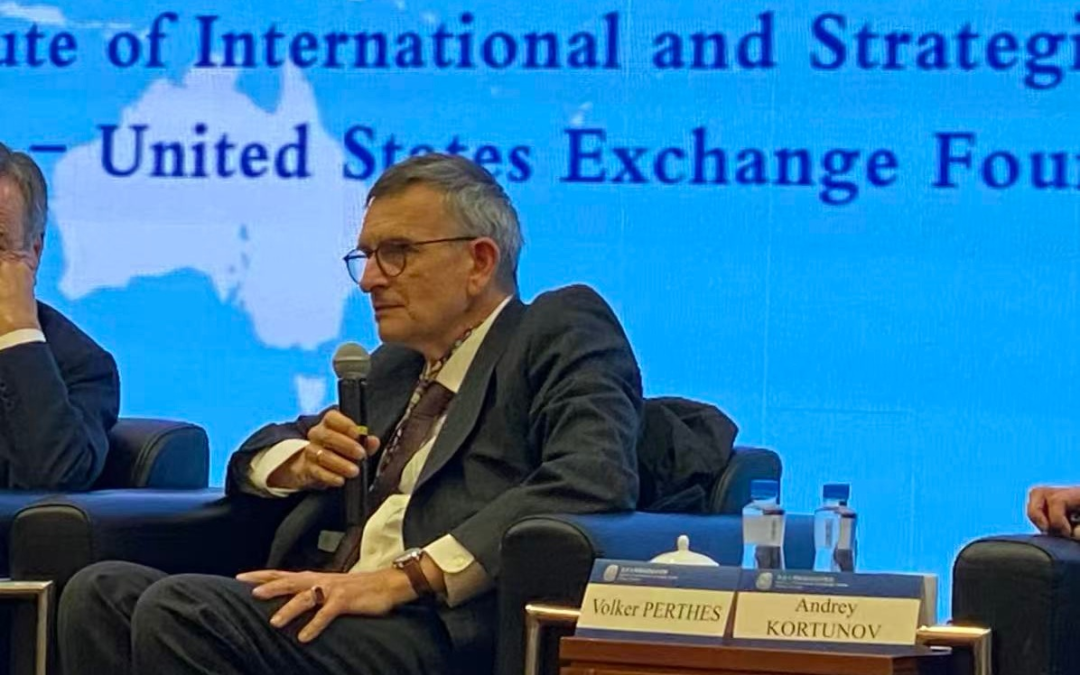
Group 1 - The core viewpoint of the articles is that while the recent ceasefire agreement between Israel and Hamas marks the end of the two-year Gaza war, lasting peace remains elusive, with ongoing violations of the ceasefire and significant challenges ahead [1][3][4] - The first phase of the ceasefire agreement was reached on October 9, 2023, with Hamas releasing all hostages and Israel freeing nearly 2,000 Palestinian prisoners, but subsequent violence has raised concerns about the stability of the ceasefire [3][4] - Volker Perthes, a senior researcher, emphasizes that achieving peace requires addressing numerous complex issues, including the governance of Gaza, demilitarization of Hamas, and the withdrawal of Israeli forces [3][4][5] Group 2 - The two-state solution is presented as the best approach to resolving the Israeli-Palestinian conflict, with both sides needing security and self-determination [4][6] - Perthes argues that alternatives to the two-state solution could lead to worse outcomes, such as ethnic cleansing or apartheid-like conditions, highlighting the necessity for a mutually acceptable resolution [6][7] - The ongoing conflict has resulted in over 67,000 Palestinian deaths and significant destruction in Gaza, underscoring the urgent need for effective international mediation [7][10] Group 3 - The United Nations has been criticized for being marginalized in peace and security efforts, with the current ceasefire being primarily driven by the United States and other regional players [8][9] - Perthes calls for reform within the UN to enhance its effectiveness in global governance, particularly in light of the changing geopolitical landscape [9][10] - The lack of consensus among the permanent members of the UN Security Council hampers the organization's ability to address contemporary global challenges effectively [9][10]
专访丨APEC应坚守多边主义引领亚太合作——访联合国前秘书长潘基文
Xin Hua Wang· 2025-10-26 08:21
Core Viewpoint - The article emphasizes the importance of multilateralism in addressing global challenges and promoting economic cooperation in the Asia-Pacific region, as highlighted by former UN Secretary-General Ban Ki-moon during an interview [1][2]. Group 1: Multilateralism and APEC - APEC should lead economic cooperation in the Asia-Pacific by addressing climate change, ensuring supply chain stability, and developing digital standards [1]. - The upcoming APEC informal leaders' meeting in South Korea aims to produce practical outcomes that inject new momentum into global development and cooperation [1]. - APEC has played a significant role in promoting free trade and investment in the region since its establishment in 1989, empowering developing countries and fostering sustainable economic growth [1]. Group 2: Global Governance Initiatives - Ban Ki-moon supports the global governance initiative proposed by President Xi Jinping, which emphasizes fairness, inclusivity, and the importance of cooperation on global issues such as climate change and food security [2]. - The combination of China's cooperation framework with the UN's reform roadmap can effectively mobilize resources and bridge the gap between developed and developing countries, leading to a more just global governance system [2]. - The rise of unilateralism and protectionism threatens international cooperation, and China can play a constructive role in maintaining multilateralism and promoting global governance reform [2]. Group 3: China's Role in Global Issues - China's investments in renewable energy, technological innovation, and public health cooperation enable the provision of global public goods that benefit the masses [3]. - China's leadership in areas such as climate change and global health illustrates the principle that collective efforts are essential to overcoming global challenges [3].
“加沙战争结束了,但和平还没到来”
Xin Jing Bao· 2025-10-26 00:18
Group 1: Current Situation in Gaza - The Israeli military conducted a drone strike in eastern Deir al-Balah, Gaza, resulting in the death of two Palestinians, shortly after a ceasefire agreement was reached [1] - The ceasefire agreement, mediated by the US, Qatar, and Egypt, was announced on October 9, but Israel quickly resumed bombing, citing violations by Hamas [1][4] - Volker Perthes, a senior researcher, stated that while the war has ended, peace remains distant, highlighting ongoing violations of the ceasefire [1][4] Group 2: Challenges to Peace Negotiations - Perthes believes that while the ceasefire can be maintained, it is susceptible to violations and new issues arising from the long-standing conflict [4] - Key obstacles to achieving lasting peace include the governance of Gaza, demilitarization of Hamas, and the withdrawal of Israeli forces [4][5] - The complexity of negotiations is compounded by the need for agreements on international security forces and the relationship between the Palestinian Authority and Gaza's administration [5] Group 3: Two-State Solution Perspective - Perthes asserts that the two-state solution remains the best approach for resolving the Israeli-Palestinian conflict, despite significant challenges [6][7] - He emphasizes that both Israelis and Palestinians desire self-determination and security, making the two-state solution the most viable path forward [6][7] - The lack of a comprehensive solution could lead to renewed violence, especially if Palestinians perceive a lack of political prospects [6][8] Group 4: Role of the United Nations - Perthes critiques the marginalization of the United Nations in global governance, particularly in peace and security matters, suggesting that reform is necessary for the UN to regain its effectiveness [2][8][10] - He notes that the current geopolitical landscape requires a reevaluation of the UN's structure, particularly the Security Council, which has not adapted to contemporary power dynamics [10][11] - The UN's three pillars—peace and security, human rights, and sustainable development—are under threat, necessitating a stronger commitment to multilateralism [11][12]

2025海博会首推市场化办展“新机制”
Zhong Guo Xin Wen Wang· 2025-10-24 12:39
Core Viewpoint - The 2025 China Marine Economy Expo will be held from October 28 to 30 in Shenzhen, focusing on the theme "Digital Intelligence Deep Blue, Co-creating the Future" and introducing a market-oriented exhibition mechanism to enhance business engagement and collaboration [1][3]. Group 1: Event Overview - The expo will cover an exhibition area of 40,000 square meters and aims to provide comprehensive services for enterprises, including demand matching and resource linking [1]. - Seven major forums will be organized during the expo, addressing topics such as blue economy, marine law, and global governance, with participation from academia, industry, and government representatives [3]. Group 2: Key Initiatives - The expo will launch three major "blue lists," including the Blue Innovation Enterprise List, Outstanding Exhibitor Awards, and Blue Economy Contribution Awards [3]. - A collaboration agreement will be signed to establish the Shenzhen International Marine Innovation Research Institute, aimed at enhancing deep-sea technology and innovation [3]. Group 3: Economic Impact - Shenzhen's marine production value has surpassed 500 billion yuan, with 110,000 marine-related market entities and a notable presence of specialized and innovative enterprises [4]. - The South China Sea's eastern oil field has maintained a stable production of over 20 million tons for three consecutive years, and the ship finance leasing asset scale has reached 17.9 billion yuan, leading in South China [4].

中国代表:联合国改革要把握好四组关系
Yang Shi Xin Wen Ke Hu Duan· 2025-10-24 06:20
Core Viewpoint - The UN80 reform aims to enhance the efficiency and effectiveness of the United Nations, focusing on providing better support and services to member states, particularly developing countries, rather than merely reducing its size [1][2]. Group 1: Relationship Management - The relationship between member states and the UN Secretariat is crucial, with member states holding the responsibility for authorization while the Secretariat must provide comprehensive support and enhance coordination among its departments [2]. - The Secretariat should leverage artificial intelligence for auxiliary support while ensuring safety management and cost-effectiveness in online authorization registration [2]. Group 2: Authorization Process - The relationship between authorization formulation and execution is emphasized, with member states needing to focus on core issues during authorization to ensure effective execution and resource allocation [2]. - Understanding past execution and financial resources is essential for member states to make optimal decisions regarding authorization [2]. Group 3: Reform Objectives - The reform should aim to eliminate bureaucratic inefficiencies while maintaining the stability and coherence of UN operations, ensuring adherence to core values such as multilingualism [2]. - The reform is intended to inject confidence and momentum into multilateralism through tangible results [2][3].
美国彼得森国际经济研究所杰弗里·肖特:全球贸易体系面临两大核心挑战|2025外滩年会
Guo Ji Jin Rong Bao· 2025-10-24 05:01
Core Insights - The 2025 Bund Summit will be held from October 23 to 25 in Huangpu District, Shanghai, focusing on the theme "Embracing Change: New Order, New Technology" [1] Group 1: Global Trade Dynamics - Jeffrey J. Schott, a senior researcher at the Peterson Institute for International Economics, emphasized the importance of "trust" and "enforcement" in the global trade system, which he views as core challenges [3] - Schott highlighted that the stability of U.S.-China relations and the multilateral trade mechanism relies on predictable policies and ongoing dialogue [3][4] - He noted that uncertainty in bilateral relations increases operational costs for businesses and creates political risks, advocating for a reduction in uncertainty to facilitate normal trade and investment [5] Group 2: U.S.-China Relations - Schott stated that restoring basic trust is essential for resolving U.S.-China trade tensions, which he believes is a long-term process [5] - He pointed out that even in areas of significant disagreement, communication should be maintained due to the profound impact that policy changes from either country can have on the global economy [3][5] - Schott expressed skepticism about the U.S. rejoining the Comprehensive and Progressive Agreement for Trans-Pacific Partnership (CPTPP) in the short term [5] Group 3: Multilateral Trade Agreements - Schott described the CPTPP as a beneficial complement to the World Trade Organization (WTO) rather than a replacement, noting that the U.S. withdrawal from the Trans-Pacific Partnership (TPP) was a mistake [5] - He mentioned that China's potential accession to the CPTPP would be a cautious and gradual process, with limited short-term progress expected [5] Group 4: WTO and Sanctions - Schott denied claims of WTO marginalization, asserting that it still plays a crucial role but requires updates to reflect contemporary technological and trade dynamics [6] - He differentiated between the quantity of sanctions and their policy impact, stating that current sanctions do not significantly threaten the dollar's status as the world's primary reserve currency [6] - Schott warned that long-term instability in U.S. domestic economic policy could lead to questions about the future of the dollar, similar to the historical decline of the pound [6] Group 5: Service Trade - Schott criticized the U.S. public discourse for often overlooking the significant contributions of service trade, which he considers a vital component of modern globalization [7]

拥抱变局!2025外滩年会揭幕 聚焦新秩序、新科技
Guo Ji Jin Rong Bao· 2025-10-23 17:04
Group 1: Conference Overview - The theme of the conference is "Embracing Change: New Order, New Technology," featuring 21 roundtable discussions and 11 closed-door meetings focused on key issues in economics, finance, and technology [1] - The conference aims to contribute to Shanghai's development as a globally influential international financial center and enhance China's role in international governance [1] Group 2: Key Participants - Prominent figures from the global economic and financial sectors are attending, including former central bank leaders from Europe, Japan, and Israel, who will discuss global monetary policy and trends [2] - Several finance ministers and former finance ministers will gather to explore macroeconomic policy coordination amid challenges to public finance sustainability [3] Group 3: European Perspective - Europe is navigating a complex phase of maintaining its influence in global governance while facing internal challenges and transatlantic tensions [4] - The conference includes discussions on European policy directions, strategic choices, and the impact of tariff policies on global trade, featuring representatives from various European institutions [4] Group 4: Focus on AI and Technology - The conference places significant emphasis on artificial intelligence (AI), with discussions covering its applications, impacts, and governance [5] - Notable experts, including award-winning economists and computer scientists, will analyze AI's long-term effects on global economic growth and labor markets [5][6] Group 5: China's Innovation and Financial Services - Specific sessions will address China's breakthroughs in AI technology and innovation mechanisms, aiming to enhance the health of the manufacturing sector and promote a virtuous cycle of technology, industry, and finance [6] - The conference will also focus on improving Shanghai's cross-border financial services and enhancing its status as an international financial center [7] Group 6: Asset Management Trends - The conference will explore new trends in asset management amid geopolitical conflicts and rapid technological changes, emphasizing the importance of asset management capabilities in assessing the strength of international financial centers [7] - Reports on global green finance governance and China's macroeconomic policies will be released during the conference [7]
拥抱变局!2025外滩年会揭幕,聚焦新秩序、新科技
Guo Ji Jin Rong Bao· 2025-10-23 14:52
Group 1: Conference Overview - The 2025 Bund Summit will open on October 23, focusing on the theme "Embracing Change: New Order, New Technology" with 21 roundtable discussions and 11 closed-door meetings [1] - The summit aims to contribute to Shanghai's development as a global financial center and enhance China's role in international governance [1] Group 2: Key Participants - The summit will feature prominent figures from the global economic and financial sectors, including former central bank leaders from Europe, Japan, and India, who will discuss global monetary policy trends [2] - Several finance ministers and former finance ministers will gather to explore macroeconomic policy coordination amid challenges to public finance sustainability [3] Group 3: European Perspective - Europe is navigating a complex phase of maintaining its influence in global governance while facing internal challenges and transatlantic tensions [4] - The summit will include discussions on European policy directions and the impact of tariff policies on global trade, featuring representatives from various European institutions [4] Group 4: Technology and AI Focus - The summit will place significant emphasis on technology, particularly artificial intelligence (AI), with discussions covering its applications, impacts, and governance [5] - Notable speakers include leading experts in AI and economics who will analyze the long-term effects of AI on global economic growth and industry structure [5] Group 5: China's Innovation and Digital Currency - Specific sessions will address breakthroughs in China's AI technology and innovation mechanisms, aiming to enhance the health of China's manufacturing sector [6] - Discussions on digital currencies and their impact on sovereign currencies and cross-border payment innovations will also be a key focus [6] Group 6: Shanghai's Financial Development - The summit will address enhancing Shanghai's cross-border financial services and provide practical suggestions for elevating its status as an international financial center [7] - Asset management trends in the context of geopolitical conflicts and monetary policy shifts will be explored, emphasizing the competitiveness of global asset management centers [7] - The summit will release reports on global green finance governance and China's macroeconomic policies [7]
潘基文:中国在推动多边合作和促进全球治理上持续发挥积极作用
Zhong Guo Xin Wen Wang· 2025-10-23 07:50
Core Viewpoint - The former UN Secretary-General Ban Ki-moon emphasizes China's positive role in promoting multilateral cooperation and global governance, highlighting its constructive leadership and initiatives that align with UN principles [1] Group 1: China's Role in Global Governance - China, as one of the five permanent members of the UN Security Council, has played an active role in promoting multilateral cooperation since joining the UN [1] - Ban Ki-moon mentions China's initiatives, including the "Global Development Initiative," "Global Security Initiative," and "Global Governance Initiative," which resonate with the UN's three pillars of work [1] Group 2: UN's Importance - Despite ongoing global conflicts, the UN remains an irreplaceable foundation for maintaining world peace and promoting development [1] - Ban Ki-moon expresses deep respect for China's demonstrated leadership and sense of responsibility in the international arena [1]