品牌转型

Search documents
五年间累计亏损超13亿,呷哺呷哺「不好吃了」?
36氪· 2025-08-07 13:24
Core Viewpoint - The article discusses the struggles of the hot pot chain company Xia Bo Xia Bo, highlighting its significant financial losses and challenges in maintaining market share amidst increasing competition in the hot pot industry [4][5][6][14]. Financial Performance - Xia Bo Xia Bo is expected to report revenues of approximately 1.9 billion yuan and a net loss between 80 million to 100 million yuan for the fiscal year ending June 30, 2025 [5]. - Since 2021, Xia Bo Xia Bo has been on a losing streak, accumulating losses of approximately 1.326 billion yuan over five years [6][9]. - The company's net losses from 2021 to 2024 were 293 million yuan, 353 million yuan, 199 million yuan, and 401 million yuan, with an additional loss of about 80 million yuan in the first half of 2025 [9]. Brand Performance - Xia Bo Xia Bo's core revenue sources are its two brands: Xia Bo Xia Bo and its high-end sub-brand Cou Cou, which has been underperforming [11]. - In 2024, Cou Cou's revenue decreased significantly, with a net loss of 353 million yuan, accounting for nearly 90% of the group's overall losses [12]. - The average customer spending at Cou Cou dropped from 142.3 yuan to 123.5 yuan, and table turnover rates fell from 2 times to 1.6 times compared to the previous year [12]. Market Position and Competition - Xia Bo Xia Bo's stock price has plummeted to 0.77 HKD, with its market capitalization dropping from 29 billion HKD to 830 million HKD [8][13]. - The hot pot market is becoming increasingly competitive, with new brands emerging and capturing market share, which has led to a decline in Xia Bo Xia Bo's visibility among consumers [20][21]. - The overall hot pot market in China is projected to grow to 668.9 billion yuan by 2025, but the growth rate is expected to slow from 10% in 2019 to 4.3% in 2025 [20]. Challenges Faced - Xia Bo Xia Bo faces challenges from various competitors, including fast-casual hot pot brands and regional players that offer lower prices and better operational efficiency [22]. - The company has struggled with unclear positioning and failed attempts to transition from a fast-food model to a light dining experience, leading to a loss of its original value proposition [16][17]. - The hot pot industry is experiencing a significant exit of businesses, with over 210,000 stores closing in the past year, indicating a highly competitive environment [23].

威富集团继续亏损 北面还能独撑多久?
Bei Jing Shang Bao· 2025-08-05 14:07
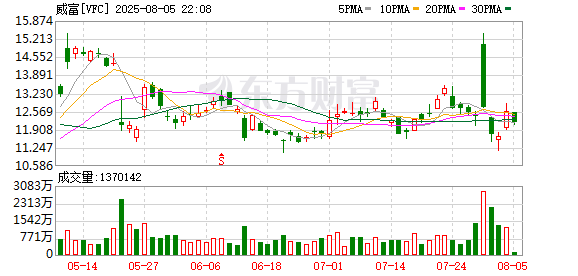
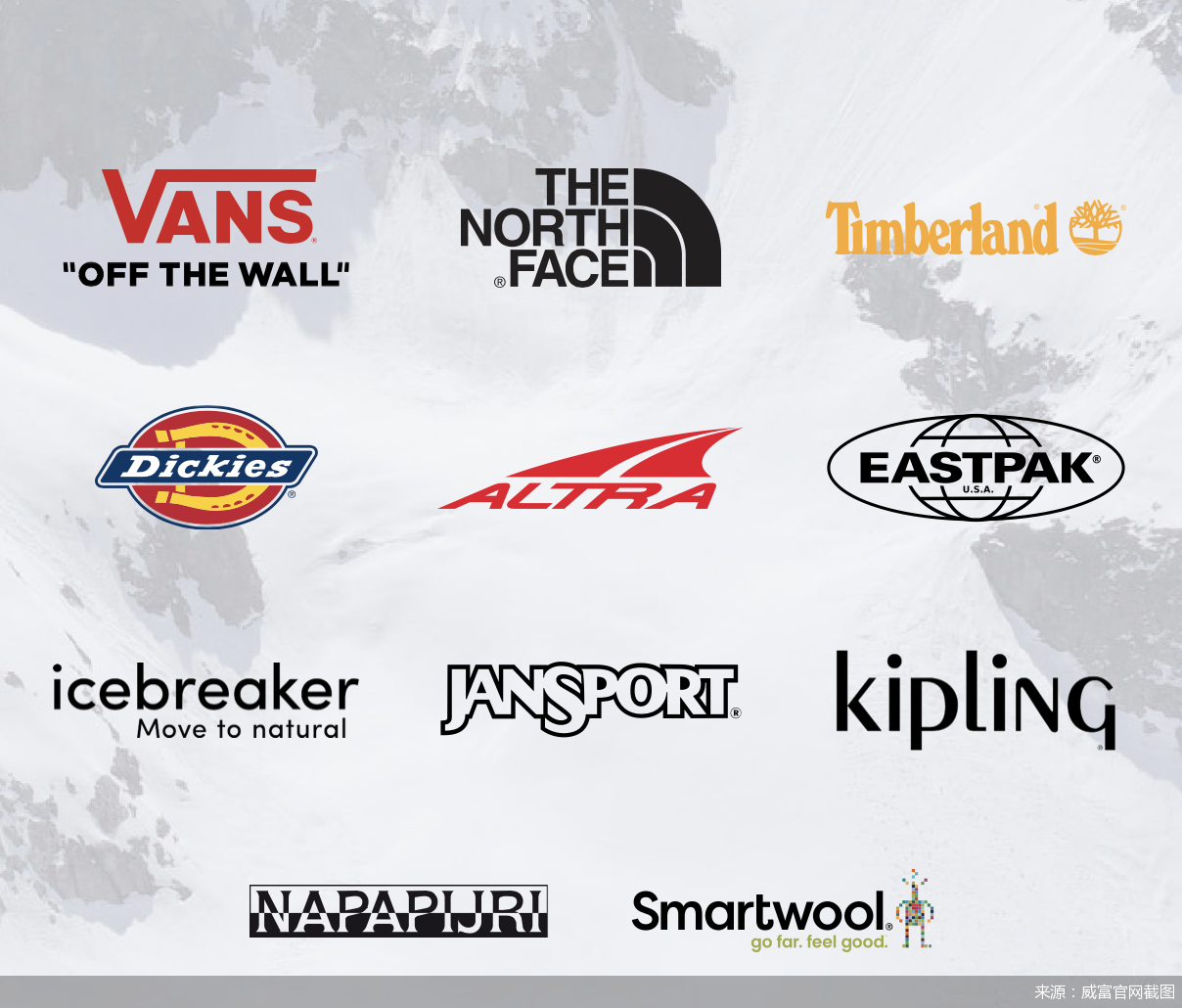
Core Viewpoint - Despite the implementation of a restructuring plan for nearly two years, the company continues to report losses, with a slight improvement in performance noted in the latest quarterly results [2][4]. Financial Performance - For the first quarter of fiscal year 2026, the company reported total revenue of $1.8 billion, remaining stable compared to the previous year [2]. - The operating loss was $56 million, which is an improvement compared to the expected loss of $110 million to $125 million [2]. - The Vans brand experienced a revenue decline of 15% year-over-year, generating $498 million in the first quarter [2][3]. Brand Performance - The Vans brand has consistently faced revenue declines, with a 16% drop to $2.35 billion in fiscal year 2025 and a 24% decline in fiscal year 2024 [3]. - In contrast, The North Face brand achieved a 5% year-over-year growth, reaching $557 million in revenue for the first quarter [2][3]. Restructuring Efforts - The company announced a restructuring plan in October 2023, with a focus on transforming the Vans brand as a key task [3]. - The global president of Vans was replaced shortly after the restructuring announcement, with a new hire from Lululemon aimed at accelerating the brand's transformation [3][4]. - The management expressed confidence in the ongoing transformation, stating that the company is entering a growth phase despite the current challenges faced by the Vans brand [4]. Strategic Focus - The company is closing underperforming Vans stores and reducing discount activities to drive growth for the brand [4]. - Emphasis on product innovation, youth-oriented and fashionable products, and enhancing digital capabilities is seen as essential for the Vans brand to regain market traction [4].

威富集团继续亏损,北面还能独撑多久?
Bei Jing Shang Bao· 2025-08-05 12:53
Core Viewpoint - Despite the implementation of a restructuring plan for nearly two years, the company continues to report losses, with a first-quarter revenue of $1.8 billion for fiscal year 2026, remaining flat year-over-year, and an operating loss of $56 million, which is an improvement compared to the expected loss of $110 million to $125 million [1][2]. Group 1: Financial Performance - The company's first-quarter performance exceeded expectations, with revenue trends stable compared to the previous year, but profitability showing significant improvement [1]. - The Vans brand continues to struggle, reporting a revenue decline of 15% year-over-year to $498 million in the first quarter of fiscal year 2026 [1]. - In fiscal year 2025, Vans' revenue decreased by 16% to $2.35 billion, contributing to a 4% decline in the company's total revenue to $9.5 billion [2]. Group 2: Brand Performance and Strategy - The North Face and Timberland brands have shown positive momentum, with The North Face achieving a 5% year-over-year growth to $557 million in the first quarter [1]. - The restructuring plan emphasizes the transformation of the Vans brand, which is considered a key task, and the company has appointed a new global president for Vans to accelerate this transformation [2][3]. - The management expresses confidence in future growth, stating that the transformation is progressing as planned and is expected to lead to sustainable revenue and profit growth [3]. Group 3: Market Challenges and Recommendations - The outdoor market is becoming increasingly competitive, with brands like Nike, Adidas, and various specialized outdoor brands posing significant challenges to The North Face [2]. - To regain market opportunities, the Vans brand needs to focus on product innovation, enhance digital capabilities, and improve brand image [4].
彪马失速,想用阿迪的方式自救
3 6 Ke· 2025-08-01 03:03
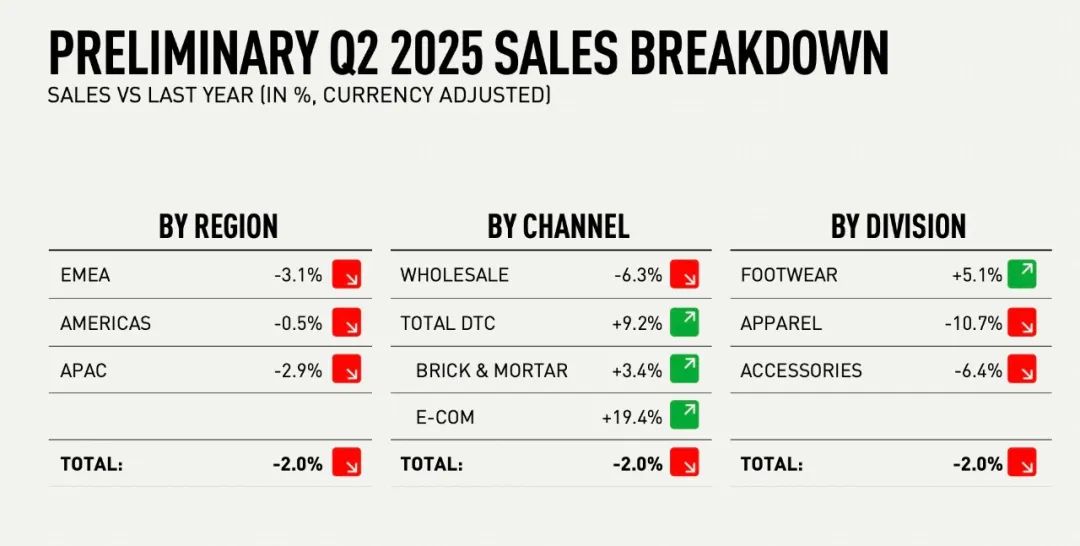
Core Insights - PUMA reported a 2.0% decline in Q2 sales to €1.942 billion, marking the first quarterly sales drop in nearly two years, leading to a significant stock price drop of over 19% on the announcement day [1][3] - The company's market capitalization fell to approximately €3 billion, contrasting sharply with competitors like On and Deckers Brands, which have market caps around $16 billion [1] - In contrast, Adidas reported a 12.7% revenue increase to €6.153 billion in the first half of the year, with a 51% surge in operating profit, showcasing a successful recovery from pandemic-related challenges [1][11] Financial Performance - PUMA's sales declined across all major regions: EMEA down 3.1%, Americas down 0.5%, and APAC down 2.9% [4] - Inventory levels rose by 18.3% year-on-year to €2.151 billion, indicating excess stock [3][4] - Footwear was the only category to show growth at 5.1%, while apparel and accessories saw declines of 10.7% and 6.4%, respectively [4] Management Changes - PUMA appointed former Adidas CIO Andreas Hubert as COO to oversee global procurement and operations, including sustainability and product innovation [2][3] - The new CEO Arthur Hoeld, also from Adidas, is expected to implement strategies learned from his previous experience to revitalize PUMA [3][12] Competitive Landscape - PUMA is struggling to compete in key categories like football and running, where it lags behind Nike and Adidas in sponsorships and product popularity [3][4][6] - The company has lost visibility in the training segment after the contract with fitness influencer Pamela ended, impacting brand recognition [6][10] - PUMA's new running shoe, VELOCITY NITRO, has not generated significant consumer interest compared to competitors like HOKA and On [6][10] Strategic Directions - PUMA's management has indicated a lack of expectation for sales growth for the remainder of 2025, predicting a low double-digit percentage decline [10] - The company aims to leverage successful strategies from Adidas, focusing on strong performance categories and enhancing product visibility [17][18] - PUMA is encouraged to streamline its product offerings to focus on fewer, high-impact items to improve market presence [18][23]
VF(VFC) - 2026 Q1 - Earnings Call Transcript
2025-07-30 13:00
Financial Data and Key Metrics Changes - Q1 revenue was $1.8 billion, flat on a reported basis and down 2% year over year in constant dollars, which was better than the guidance of down 3% to down 5% [31][36] - Adjusted gross margin increased by 200 basis points to 54.1%, driven by higher quality inventory and lower discounts [34] - Adjusted loss per share was $0.24 compared to $0.35 in Q1 of the previous year [35] Business Line Data and Key Metrics Changes - Vans revenue decreased by 15%, with 40% of the decline attributed to channel rationalization actions [11][33] - The North Face grew by 5%, with strong performance in footwear and bags, aiming for higher growth in the future [13][32] - Timberland's revenue increased by 9%, reflecting growth across all channels [15][33] Market Data and Key Metrics Changes - APAC region grew by 4%, while the Americas and EMEA regions were down 3% and 2%, respectively [33] - Excluding Vans, the Americas region was up 3% year over year [33] Company Strategy and Development Direction - The company is focused on transforming into a growth-oriented organization, with significant cost reductions and improvements in operational efficiency [7][10] - Plans to enhance product and marketing strategies across brands globally, aiming for a unified approach [8][9] - The company is committed to reducing leverage to below 2.5 times by fiscal 2028 [9][42] Management's Comments on Operating Environment and Future Outlook - Management expressed confidence in the turnaround strategy, emphasizing the importance of growth and the potential for each brand [10][28] - The anticipated impact of tariffs is expected to negatively affect gross profit by $60 million to $70 million in fiscal 2026, but management believes they can mitigate this through pricing and sourcing actions [39][41] - The company expects operating income to be up year over year in fiscal 2026, despite tariff impacts [41] Other Important Information - The company has made changes to segment reporting to better reflect key areas of focus across brands [44] - The return of the Vans Warp Tour was highlighted as a significant marketing initiative, with strong ticket sales and brand engagement [25][26] Q&A Session Summary Question: What were the expectations for the Vans Warp Tour and its impact? - Management expected modest impact initially but saw enormous demand with sold-out events and significant merchandise sales [50][53] Question: Can you clarify the $60 million to $70 million gross profit impact from tariffs? - The impact is primarily in the back half of the year, and management is working on offsetting this through pricing and other actions [58][59] Question: What are the long-term views on gross margin improvement? - Management sees opportunities for gross margin improvement across all brands, particularly through premiumization strategies [67][70] Question: How will unit volumes be affected by price increases due to tariffs? - Management expects a one-to-one relationship between price increases and unit volume declines, but believes it could be slightly better due to industry-wide impacts [78][80] Question: What is the outlook for free cash flow and net debt? - Management expects free cash flow to be up year over year, with net debt anticipated to decline as they work towards their leverage targets [121][123]
为什么运动品牌的Slogan都不鼓励卷了?
Hu Xiu· 2025-07-26 00:53
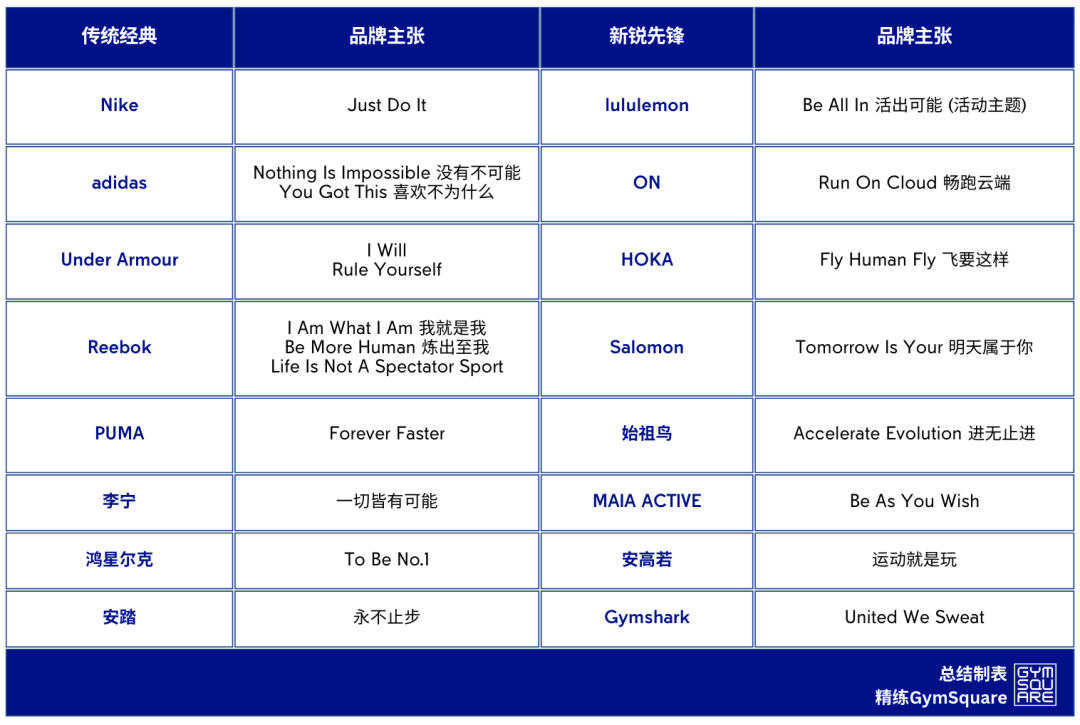
Group 1 - The core viewpoint of the article highlights a shift in the branding strategies of sports companies, moving from a focus on extreme competition to a more inclusive and enjoyable approach to sports, particularly appealing to Generation Z [1][2][16] - Adidas has updated its long-standing slogan from "Impossible Is Nothing" to "You Got This," emphasizing personal sports experiences rather than extreme challenges [1][8] - Other brands like HOKA and lululemon have also changed their slogans to reflect a focus on enjoyment and personal experience in sports, indicating a broader trend among both established and emerging brands [3][12][13] Group 2 - The changing slogans of major sports brands reflect a transformation in brand identity, targeting the new consumer base of Generation Z, who prioritize personal experience over celebrity endorsements [3][19][30] - The standards for what constitutes "good" in sports are becoming more diverse and inclusive, moving away from a strict focus on performance to a broader acceptance of various forms of participation [4][25][32] - The rise of community-focused flagship stores and the emphasis on inclusivity in marketing strategies are becoming essential for brands to foster a sense of belonging among consumers [6][31][33] Group 3 - The trend of prioritizing personal experience and enjoyment in sports aligns with the growing popularity of "self-pleasing consumption" among younger generations [20][34] - Brands are increasingly recognizing the importance of mental well-being alongside physical fitness, with a significant portion of consumers engaging in sports for emotional management [34][36] - The article notes that traditional sports brands are facing challenges in growth and are adapting by embracing lifestyle branding, which blurs the lines between sports and everyday life [26][35]
周大福(01929):同店持续向好,门店调整影响减弱
HTSC· 2025-07-24 04:02
Investment Rating - The report maintains a "Buy" rating for the company with a target price of HKD 16.00 [6][5]. Core Insights - The company's retail sales for FY26Q1 showed a year-on-year decline of 1.9%, but a quarter-on-quarter increase of 9.7 percentage points, indicating a recovery in consumer sentiment and improved sales performance in certain product categories [1][2]. - The same-store sales decline in mainland China narrowed to -3.3%, supported by the growth of priced products and a low base effect from the previous year [2][3]. - The company is focusing on optimizing its product mix and closing underperforming stores, which is expected to enhance operational efficiency and support a positive outlook for the company's fundamentals [1][4]. Summary by Sections Retail Performance - For FY26Q1, the company's retail sales in mainland China and Hong Kong/Macau showed a year-on-year decline of 3.3% and an increase of 7.8%, respectively [1][2]. - The same-store sales growth (SSSG) for mainland China was -3.3% year-on-year but improved by 2.2% quarter-on-quarter, while Hong Kong saw a growth of 0.2% year-on-year and 9.5% in Macau [2]. Product Mix and Margins - The proportion of fixed-price products is steadily increasing, which supports the resilience of the gross margin [3]. - Retail sales of high-margin priced gold products in mainland China increased by 20.8% year-on-year, contributing to the overall profitability of the company [3]. Store Optimization - The company continues to implement its channel optimization strategy, closing 347 stores while opening 40, resulting in a net reduction of 307 stores [4]. - The remaining stores are expected to effectively capture customers from closed locations, positively impacting profitability [4]. Profit Forecast and Valuation - The report forecasts the company's net profit attributable to shareholders for FY26, FY27, and FY28 to be HKD 76.3 billion, HKD 83.6 billion, and HKD 92.3 billion, respectively [5][10]. - The target price of HKD 16 corresponds to a price-to-earnings (PE) ratio of 21 times for FY26, reflecting the company's position as an industry leader with improving same-store sales and profitability [5][10].

想走高端的迪卡侬,细分赛道消费者不一定买账
Xin Lang Cai Jing· 2025-07-21 01:06
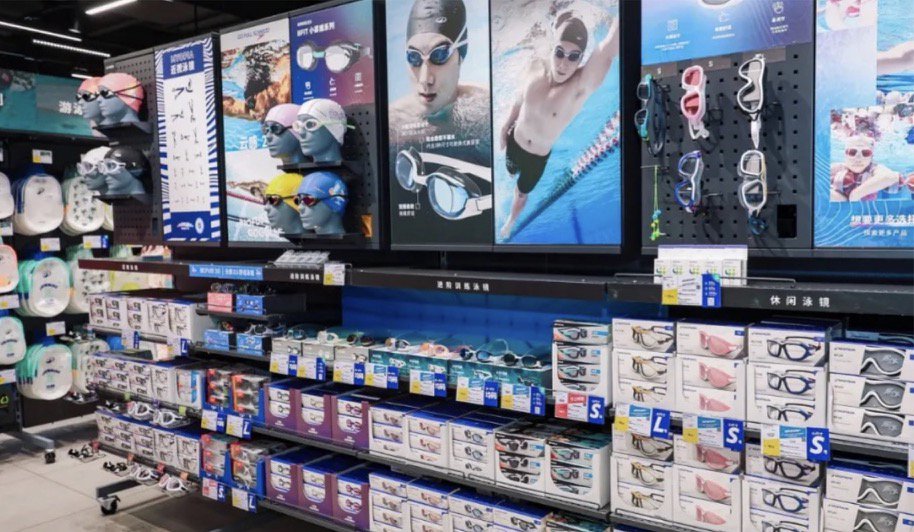
Core Insights - Decathlon is shifting its strategy by opening more stores in urban areas, focusing on promoting its high-end professional brands, which is seen as a significant transformation for the company [1][4][6] Store Expansion and Location Strategy - Recently, Decathlon opened new stores in Shanghai, Beijing, and Nanjing, each exceeding 1000 square meters, located in prime urban areas, contrasting with its previous suburban warehouse model [1][3] - The new Beijing store is Decathlon's first in the Xicheng District, situated in a key commercial area, while the Nanjing store is based in the Jiangning Baijiah Lake business circle, and the Shanghai store is in the Xintiandi area, near famous landmarks [1][3] Store Design and Customer Experience - The new stores feature upgraded spatial layouts and display designs, emphasizing efficient showcasing of professional equipment and enhanced customer service [1][3] - Activities such as obstacle course races and immersive sports experiences for surfing and climbing are organized to engage customers [1][3] Focus on High-End Brands - Decathlon is increasingly promoting its high-end brands, particularly VAN RYSEL in cycling, which is currently the most resource-intensive brand for Decathlon in the Chinese market [3][6] - The company aims to attract a broader customer base and explore diverse business models through independent brand stores [4][6] Financial Performance and Market Position - In 2023, Decathlon reported revenues of €15.6 billion, with a growth rate of only 1.15%, and projected revenues of €16.2 billion for 2024, reflecting a modest growth of 3.8% [6][10] - The company is facing challenges in the budget market, leading to the introduction of high-end brands to enhance product premium capabilities [6][10] Competitive Landscape - Decathlon faces intense competition from established brands in various sports sectors, such as Giant and Trek in cycling, and HOKA and Adidas in running, which dominate consumer preferences [7][9] - The company is attempting to build emotional connections with customers through knowledgeable staff and community engagement in urban areas [9][10] Transition Challenges - The transition to high-end branding is accompanied by increased costs, as indicated by a 15.5% decline in net profit to €787 million despite revenue growth [10] - The current sales success of low-cost items suggests that Decathlon's transformation will require significant time to establish a strong foothold in the high-end market [10]
牧高笛能在高端户外市场分一杯羹吗?
Xin Lang Cai Jing· 2025-07-18 12:18
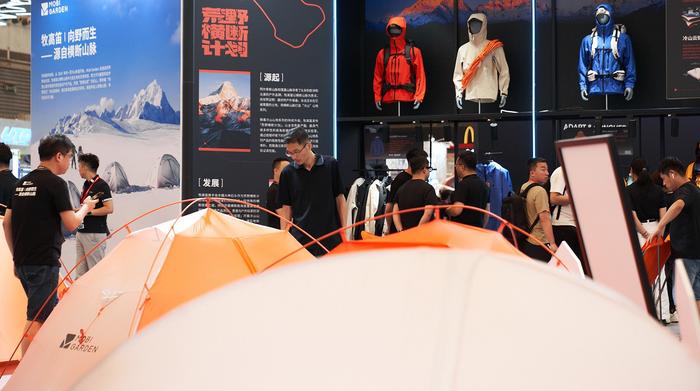
Core Viewpoint - MobiGarden, an outdoor equipment brand, is expanding its physical presence in China with new store openings, aiming to reshape its brand image and product offerings in response to changing market dynamics and consumer preferences [1][6]. Group 1: Store Expansion and Brand Positioning - MobiGarden is set to open a new store in Nanchang, which is not a flagship store but operated by a distributor, while planning a second flagship store in Beijing [1][6]. - The flagship store in Shanghai features a simplified design and a broader range of products, including higher-priced items, compared to its online offerings [1][2]. - The new store layout emphasizes a combination of camping gear and apparel, aiming to enhance cross-selling opportunities and increase average transaction value [6][10]. Group 2: Sales Performance and Market Trends - MobiGarden experienced a significant sales increase during the pandemic, with a 61.34% rise in revenue to 867 million yuan in the first half of 2022, and a net profit growth of 111.8% [4]. - Post-pandemic, the camping segment has cooled, leading to a 12.56% decline in revenue from tents and equipment in 2024, while apparel and accessories saw mixed results [5][8]. - The brand's transition from camping gear to apparel is challenged by established competitors in both the budget and mid-high-end markets [8][10]. Group 3: Product Line Adjustments - In 2024, MobiGarden restructured its product lines into "sleep systems," "carrying systems," and "wear systems," focusing on high-performance apparel and backpacks [6]. - The introduction of the "Cold Mountain" series features advanced technologies aimed at enhancing the brand's professional image [6]. - MobiGarden's marketing strategy includes a focus on professional attributes to shift consumer perception from low-cost products to higher-end offerings [6][10].

奢饰品现复苏迹象?继历峰销售攀升后,巴宝莉业绩也好于预期
Hua Er Jie Jian Wen· 2025-07-18 10:27
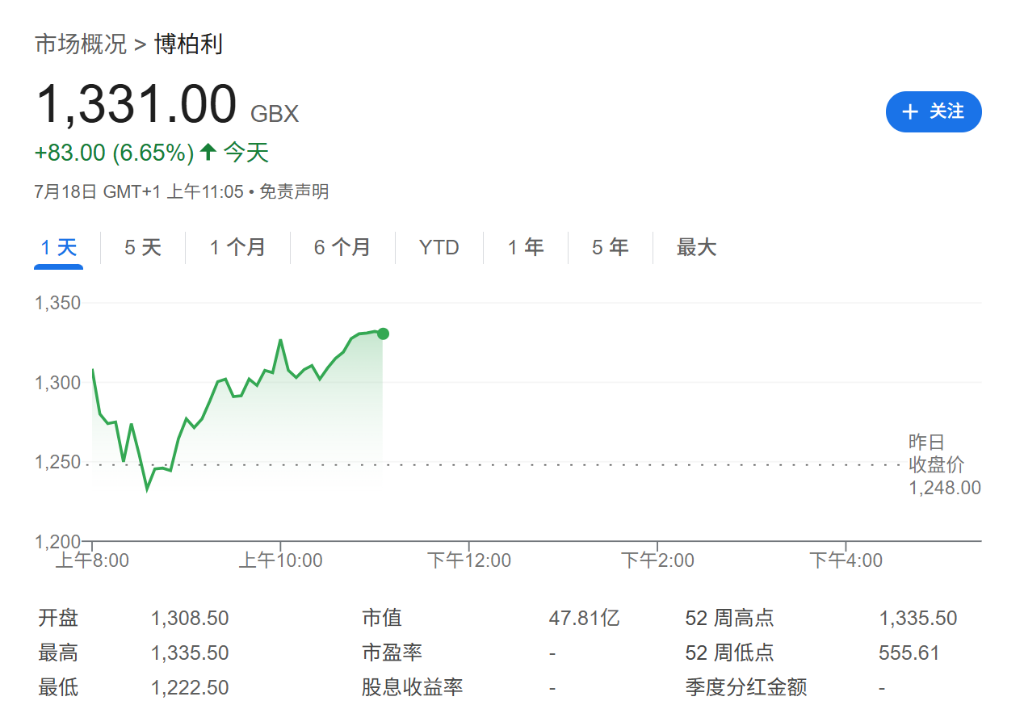
Core Insights - Burberry's transformation efforts are showing initial results amid a general slowdown in luxury goods demand [1][4] - The company's same-store sales declined by only 1% in the quarter ending June, outperforming analysts' expectations of a 3.7% drop [1][4] - Burberry's stock price surged by 6.6% following the announcement, with a year-to-date increase of 27% [1] Group 1: Performance Highlights - Under CEO Joshua Schulman's leadership, Burberry's revival plan is on track, with strong growth in the Americas offsetting weaknesses in other regions [3][4] - The Americas market saw a 4% year-on-year sales increase, significantly exceeding the expected 0.8% growth [4] - Sales of lightweight jackets performed well, indicating the effectiveness of the brand's focus on its iconic outerwear products [4] Group 2: Strategic Initiatives - Burberry is re-establishing its "British heritage" and targeting entry-level luxury consumers, moving away from the previous management's ultra-high-end strategy [4] - The company is undergoing significant cost-cutting measures, including a planned reduction of about 20% of its workforce, primarily affecting UK office roles and global retail positions [4] - Four regional presidents have been appointed to the executive committee to enhance decision-making proximity to consumers [4]