
市场竞争

Search documents
营收领跑但净利增速承压,“电解液”老大天赐材料盈利能力不敌新宙邦
Xin Lang Cai Jing· 2025-08-27 02:58
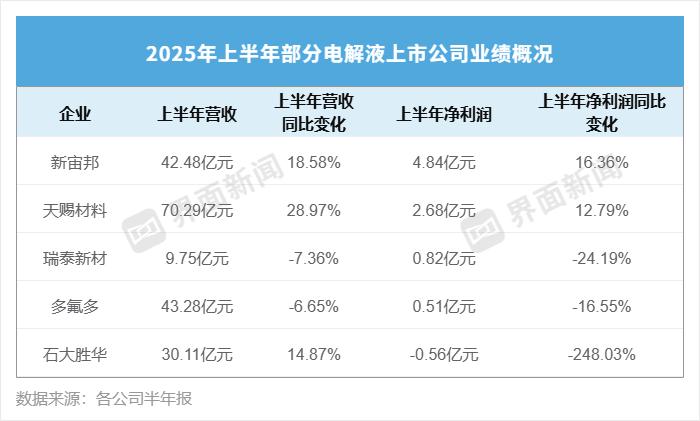
Core Viewpoint - The performance of domestic lithium battery electrolyte companies showed a divergent trend in the first half of the year, with two companies reporting profit growth while three experienced declines, including one that reported a loss [1]. Company Performance Summary - **New Zobang**: Revenue of 4.248 billion yuan, up 18.58% year-on-year; net profit of 484 million yuan, up 16.36% [2]. - **Tianqi Materials**: Revenue of 7.029 billion yuan, up 28.97% year-on-year; net profit of 268 million yuan, up 12.79% [2]. - **Ruitai New Materials**: Revenue of 975 million yuan, down 7.36% year-on-year; net profit of 82 million yuan, down 24.19% [2]. - **Duofluor**: Revenue of 4.328 billion yuan, down 6.65% year-on-year; net profit of 51 million yuan, down 16.55% [2]. - **Shida Shenghua**: Revenue of 3.011 billion yuan, up 14.87% year-on-year; net loss of 56 million yuan, a decline of 248.03% [2]. Market Dynamics - The lithium battery electrolyte industry is facing overcapacity and intense competition, leading to a significant decline in product prices and overall profitability [9][10]. - The average price of lithium iron phosphate electrolyte fluctuated between 17,600 to 23,600 yuan per ton in the first half of the year, marking a low point compared to the past three years [11]. - The market concentration of the domestic electrolyte market is increasing, with Tianqi Materials holding over 30% market share, followed by BYD and New Zobang, together accounting for 62.4% of the market [12]. Strategic Responses - Major electrolyte companies are seeking new growth points through overseas expansion and technological innovation [14]. - Tianqi Materials plans to publicly issue H-shares and apply for a listing on the Hong Kong Stock Exchange to support overseas projects [15]. - Companies are investing in the development of solid-state electrolytes and sodium-ion battery materials, with New Zobang achieving stable delivery of solid-state electrolytes and sodium-ion battery electrolytes [16].


利通科技(832225):2025中报点评:橡胶管主业受益行业复苏,核电、液冷、海洋管新品与装备打开成长空间
Soochow Securities· 2025-08-27 01:41
Investment Rating - The report maintains an "Accumulate" rating for the company [1] Core Views - The company's main business of rubber hoses benefits from the recovery of the domestic machinery industry, although Q2 performance declined due to tariff impacts [2] - The company has successfully expanded its product offerings in nuclear power, liquid cooling, and marine hoses, which opens up new growth opportunities [4] - The company is focusing on high-pressure equipment and polymer materials, enhancing its service offerings in various sectors [4] Financial Performance Summary - In H1 2025, the company achieved revenue of 237 million yuan, a year-on-year increase of 7%, and a net profit of 53 million yuan, up 14% year-on-year [2] - The revenue from domestic and overseas markets was 125 million yuan and 112 million yuan, with a year-on-year growth of 31% and a decline of 11% respectively [2] - The gross profit margin increased by 1.19 percentage points to 41.9%, and the net profit margin rose by 1.24 percentage points to 22.13% [2] - The company’s main products, including hose assemblies and hydraulic hoses, showed stable growth in revenue and gross profit margins [3] Product and Market Expansion - Hose assemblies and related fittings accounted for nearly 50% of total revenue, with a gross margin of 52.59% [3] - The company is expanding into high-performance international brand replacements and is set to benefit from the demand for oil extraction and the replacement of old hoses [4] - The company has completed sample trials for various nuclear power hoses and is in the process of supplying samples for liquid cooling hoses [4] Earnings Forecast and Valuation - The forecasted net profits for 2025 to 2027 are 138 million yuan, 173 million yuan, and 210 million yuan respectively, with corresponding P/E ratios of 23, 18, and 15 [4]

麦格米特: 中汇会计师事务所(特殊普通合伙)关于深圳麦格米特电气股份有限公司申请申请向特定对象发行股票审核问询函
Zheng Quan Zhi Xing· 2025-08-26 16:45
Core Viewpoint - Shenzhen Magmi Electric Co., Ltd. is undergoing a stock issuance review process, addressing financial inquiries and providing detailed explanations regarding its revenue growth, profit fluctuations, and operational cash flow discrepancies. Financial Performance - The company's reported revenues for the reporting periods were 5.48 billion, 6.25 billion, 4.59 billion, and 1.15 billion yuan, with a net profit of 479.39 million, 625.11 million, 458.69 million, and 115.03 million yuan, showing a year-on-year decline of 18.39% in the most recent period [1][2] - The non-recurring net profit attributable to the parent company was 255.72 million, 355.50 million, and 227.70 million yuan, indicating a lack of growth in net profit despite revenue increases [1][2] - The gross profit margins for main business segments were 23.57%, 24.54%, 25.07%, and 22.77%, with margins for smart home appliances, new energy vehicles, and intelligent equipment being higher than comparable companies [1][2] Cash Flow and Working Capital - The net cash flow from operating activities was -20.74 million, 309.93 million, 137.69 million, and 326.15 million yuan, highlighting discrepancies with net profit due to increased raw material purchases and slow customer payments [1][2] - The company’s accounts receivable increased, indicating potential cash flow challenges [1][2] Sales and Market Position - The company’s export revenues were 1.69 billion, 1.94 billion, and 1.83 billion yuan, reflecting a strong international market presence [1] - The company has established long-term partnerships with major clients across various sectors, including smart appliances and industrial automation, enhancing its market position [5][11] Industry Context and Policy Support - The company operates in key growth areas such as new energy, smart grid, and industrial automation, supported by favorable government policies aimed at promoting technological advancements and green manufacturing [11][12] - Recent government initiatives encourage the adoption of electric automation technologies, providing a conducive macroeconomic environment for the company [11][12] Product Development and Innovation - The company has developed a diverse range of products in smart appliances, power supplies, and industrial automation, leveraging its technological capabilities to meet market demands [7][8][9] - The company’s products have gained recognition from major global players, indicating its competitive edge in technology and market reach [6][7]
三角轮胎: 三角轮胎2025年半年度报告
Zheng Quan Zhi Xing· 2025-08-26 16:13
Core Viewpoint - Triangle Tyre Co., Ltd. reported a decline in key financial metrics for the first half of 2025, primarily due to rising raw material costs, increased operational expenses, and a decrease in sales volume, reflecting challenges in the tire industry amid a competitive market environment [2][3]. Financial Performance - The company's operating revenue for the first half of 2025 was approximately CNY 4.78 billion, a decrease of 4.50% compared to the same period in the previous year [2]. - Total profit for the period was CNY 465.58 million, down 35.42% year-on-year [2]. - Net profit attributable to shareholders was CNY 395.88 million, a decline of 35.31% compared to the previous year [2]. - The net cash flow from operating activities was CNY 365.72 million, down 23.43% from the previous year [2]. Business Overview - Triangle Tyre specializes in tire design, manufacturing, and marketing, with over 99% of its revenue derived from tire-related products [3]. - The company produces a wide range of tires, including those for commercial vehicles, passenger cars, engineering vehicles, and specialty vehicles, with over 50% of its products exported to international markets [3][4]. Market Position - Triangle Tyre is recognized as a leader in technological innovation within the Chinese tire industry and ranks 8th among Chinese tire companies based on revenue for 2024 [3]. - The company is positioned 25th in the global tire industry according to the Tire Business publication [3]. Industry Context - The global tire market is mature, with significant competition from established brands like Bridgestone and Michelin [3]. - The Chinese tire industry is the largest in production and consumption, benefiting from domestic demand and the rapid development of new energy vehicles [3]. - The first half of 2025 saw a 2.0% year-on-year increase in China's rubber tire production, with exports also showing growth [3]. Operational Challenges - The company faced a 9.06% decline in tire sales volume, selling approximately 1.11 million tires in the first half of 2025 [3]. - The increase in raw material prices, particularly for natural and synthetic rubber, has significantly impacted profit margins [3][4]. - Despite these challenges, the company reported a 12.89% increase in revenue in the second quarter compared to the first quarter of 2025, indicating some recovery [3]. Strategic Initiatives - Triangle Tyre is focused on global brand development and innovation in tire technology, aiming to enhance product differentiation and maintain industry leadership [3]. - The company has established strategic partnerships with quality suppliers to manage raw material costs effectively [3]. - A digital transformation strategy is being implemented to improve operational efficiency and product quality through advanced manufacturing technologies [3].

中国政法大学国际法学院/涉外法治学院成功举办“本地生活服务市场竞争问题学术研讨会”
Cai Fu Zai Xian· 2025-08-26 03:35
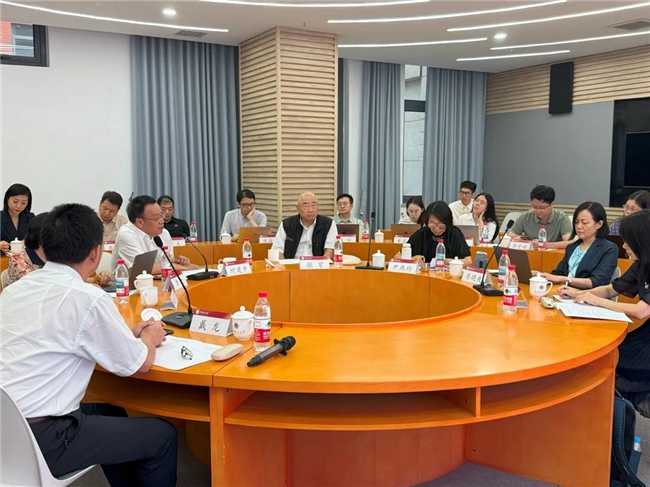
Core Viewpoint - The conference focused on the competitive landscape of the local life service market under the digital economy, discussing issues such as platform subsidy games, data governance, and merchant rights protection, aiming to explore legal pathways for the normative development of the platform economy [1][3]. Group 1: Conference Overview - The conference was hosted by the China University of Political Science and Law, gathering experts from academia, practice, and industry to discuss the new competitive dynamics in the local life service market [1]. - The opening remarks highlighted the importance of the local life service market for livelihood security and economic vitality, emphasizing the dual nature of technological innovation and potential exclusionary risks [3]. Group 2: Key Discussions - Professor Shi Jianzhong pointed out that the local life market relies on digital technology to compress consumption time and space, warning that subsidy competition is essentially a game of exclusive data access [8]. - Zhang Qiong emphasized that the legality of subsidy practices should focus on whether platforms abuse their relative advantages to force merchants to bear costs, potentially violating the Anti-Unfair Competition Law [8]. - Li Qing suggested that the government should implement a mechanism linking consumer vouchers with platform concessions to mitigate the profit squeeze on small merchants [8]. Group 3: Legal and Regulatory Insights - Professor Yuan Xiaoshuang noted that while in-store and home delivery services are complementary, subsidies can distort consumer decision-making, advocating for the protection of merchants' pricing autonomy under the E-commerce Law [13]. - Professor Li Yongjian highlighted that evaluation and search data are critical inputs in the takeaway market, warning that preferential treatment of self-operated businesses by platforms could violate the Anti-Monopoly Law [13]. - Professor Jiao Haitao pointed out that platforms forcing merchants to participate in promotions and setting minimum discounts could trigger violations of the Anti-Unfair Competition Law and Pricing Law [13]. Group 4: Regulatory Framework and Policy Recommendations - Professor Yang Dong proposed a three-dimensional regulatory framework focusing on "platform-data-algorithm," suggesting dual-track review standards for efficiency defenses and market blocking [18]. - Professor Wang Yong emphasized that while subsidies promote instant retail development, practices like "lowest price across the network" should undergo dynamic efficiency testing [18]. - Professor Chen Bing stressed the need to prevent algorithmic discrimination and regulate data blocking through key facility theory [18]. Group 5: Conclusion and Future Directions - Professor Fan Xiaobo concluded the conference by thanking participants and highlighting that the discussions deepened theoretical understanding of platform competition issues, providing important references for policy-making and law enforcement [22].
思考乐教育再跌超6% 较年内高点已腰斩 新校区投入令利润短期承压
Zhi Tong Cai Jing· 2025-08-25 07:00
Core Viewpoint - Thinker Education (01769) has seen its stock price drop over 6%, reaching a low of 2.22 HKD, which is a 57.6% decline from its yearly high of 5.23 HKD [1] Financial Performance - For the six months ending June 30, 2025, the company reported revenue of 439 million RMB, representing a year-on-year growth of 10.1% [1] - The profit attributable to the company's owners was 62.93 million RMB, a decrease of 23.9% year-on-year [1] - After excluding share-based compensation expenses, the adjusted net profit attributable to owners was 81 million RMB, down 13.1% year-on-year [1] Margin Analysis - The gross margin for the first half of the year was 34.3%, which is a decline of 10.1 percentage points year-on-year [1] - The decline in gross margin is attributed to the new learning center in Guangzhou being in a ramp-up phase, leading to higher initial costs for rent and salaries, while initial revenues from experiential courses were relatively low [1] Market Dynamics - Revenue growth has slowed compared to 2024, primarily due to challenges in the Shenzhen market [1] - Increased competition in the Shenzhen market, along with personnel changes and management adjustments, have contributed to the slowdown in revenue growth [1]
由盈转亏!光伏辅材企业明冠新材业绩下滑,净利润同比暴跌713.54%
Hua Xia Shi Bao· 2025-08-23 05:40
Core Viewpoint - Mingguan New Materials Co., Ltd. continues to face significant challenges in the first half of the year, with major declines in key financial metrics, including a 36.85% drop in revenue and a net loss of 52.71 million yuan, reflecting a 713.54% year-over-year decline [2][6]. Financial Performance - The company reported a revenue of 382 million yuan in the first half of the year, down from the previous year [2]. - The net profit attributable to shareholders was a loss of 52.71 million yuan, with a significant decline in non-recurring net profit, which was a loss of 54.72 million yuan, marking a 974.65% decrease [2]. - The net cash flow from operating activities was -166 million yuan, a decrease of 373.16% compared to the same period last year [2][8]. Subsidiary Performance - Eight subsidiaries significantly impacted the company's net profit, with the highest revenue from the Vietnam subsidiary at 207.15 million yuan, but this represented a sharp decline from 393.95 million yuan in the previous year [4]. - Several subsidiaries, including Suzhou Jiaming and Shenzhen Mingguan, reported no revenue in the first half of the year [4]. Market Dynamics - The company's sales volume of solar cell backplanes dropped by over 70%, primarily due to the decline in single-glass component usage and intensified price competition [6][7]. - The overall sales volume of photovoltaic component packaging materials decreased by 16%, with revenue from these materials falling by 39% [6]. - The price of backplanes has decreased by approximately 10% compared to the previous year, reflecting the competitive market environment [6][9]. Industry Trends - The market concentration for backplane production has increased, with only a few major players remaining operational, leading to a more stable market structure [8]. - The overall operating rate for backplane manufacturers has decreased, with many companies shutting down production [8]. - The price of backplanes is expected to remain stable in the short term, with profitability unlikely to improve significantly due to the current market conditions [9].


金宏气体:上半年净利润8220.13万元 同比下降48.65%
Zheng Quan Shi Bao Wang· 2025-08-22 08:57
Core Viewpoint - Jin Hong Gas (688106) reported a revenue of 1.314 billion yuan for the first half of 2025, reflecting a year-on-year growth of 6.65%, while the net profit attributable to shareholders decreased by 48.65% to 82.2013 million yuan [1] Financial Performance - The company achieved an operating income of 1.314 billion yuan, which is a 6.65% increase compared to the previous year [1] - The net profit attributable to shareholders was 82.2013 million yuan, showing a significant decline of 48.65% year-on-year [1] - Basic earnings per share were reported at 0.17 yuan [1] Market Strategy - In response to a complex and changing market environment, the company actively expanded its market presence, resulting in a continuous and rapid increase in sales [1] - The company faced intensified market competition, which led to a decline in the selling prices of some products and a decrease in overall gross profit margin compared to the same period last year [1] Investment and Asset Management - The company is strategically increasing capital expenditures and enhancing research and development investments despite the challenging market conditions [1] - There was a decline in asset disposal income compared to the same period last year [1]

蔚来李斌回应全新ES8预售定价:为了活下去,做了最合理的决定
Mei Ri Jing Ji Xin Wen· 2025-08-22 04:06
8月22日,蔚来董事长李斌回应全新ES8预售定价时表示:"新车预售定价对原有用户的心理会有一定影 响,但为了活下去,我们做了一个对公司整体发展最合理的决定。现有的预售价仍有毛利,如果蔚来继 续保持高价或者更高的毛利率,会很难参与市场竞争。" ...

李斌回应新款ES8新车定价:如果蔚来继续保持高价,很难参与市场竞争!蔚来活下去最重要
Ge Long Hui· 2025-08-22 02:40
Core Viewpoint - NIO's CEO Li Bin stated that maintaining high prices would hinder the company's ability to compete in the market, emphasizing that the survival of NIO is the most important factor [1] Group 1 - The new ES8 has a significantly lower cost compared to the previous model, yet it still maintains a profit margin at the current price [1] - The company is focusing on competitive pricing to ensure its market presence and sustainability [1]