
消费金融

Search documents
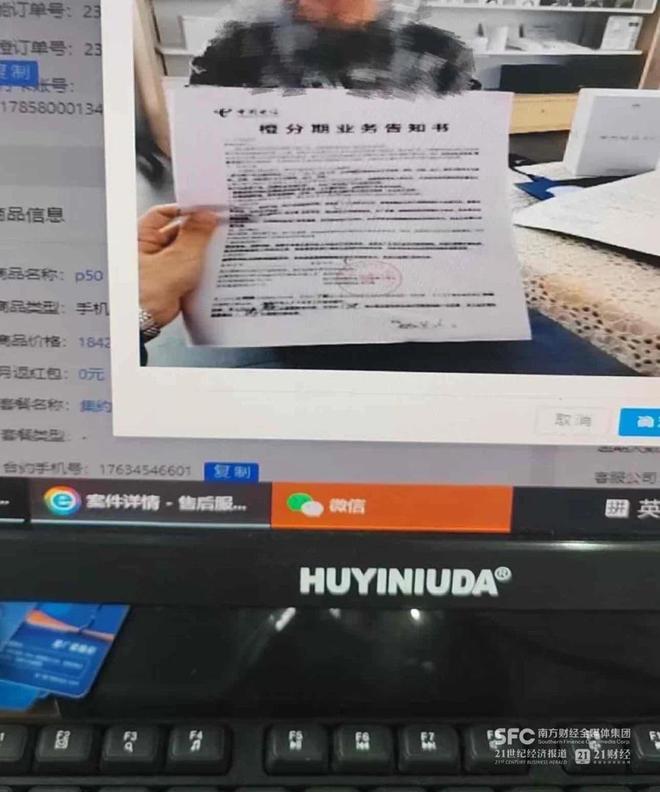
话费竟然变成36个月贷款,营业员:说清楚就没人签了
2 1 Shi Ji Jing Ji Bao Dao· 2025-08-13 04:27
Core Viewpoint - The article highlights the growing concern over misleading sales practices in the telecommunications industry, particularly regarding the "Orange Installment" program, which has led to numerous consumer complaints about unauthorized loans disguised as promotional offers [1][2][5]. Group 1: Consumer Experiences - Many consumers, including notable cases like Yang Xiaoru and Feng Wei, reported being misled into signing contracts for installment loans while believing they were simply receiving free products [1][5][12]. - A significant number of complaints have been filed against the "Orange Installment" program, with 5,850 complaints recorded by Black Cat Complaints as of August 5 [1]. - Consumers often receive unsolicited calls from individuals claiming to be telecom employees, leading to confusion and unauthorized agreements [1][5]. Group 2: Sales Practices and Regulatory Challenges - Sales representatives frequently downplay the financial implications of the contracts, emphasizing free gifts while neglecting to clarify the installment nature of the agreements [14][15]. - The complexity of the financial arrangements and the lack of clear communication contribute to a regulatory gray area, complicating oversight by different regulatory bodies [1][20]. - The article suggests that the telecom operators and financial institutions involved in these schemes operate under different regulatory frameworks, making it difficult to enforce compliance [20][21]. Group 3: Recommendations for Improvement - Experts recommend that financial and market regulators collaborate to address the root causes of these misleading practices, focusing on the partnerships between licensed financial institutions and telecom operators [2][20]. - There is a call for clearer communication and transparency in the sales process to ensure consumers fully understand the terms of any financial agreements they enter into [19][21]. - The article emphasizes the need for telecom companies to refine their business practices and prioritize their core services over aggressive financial product offerings [20][21].



话费竟然变成36个月贷款,营业员:说清楚就没人签了
21世纪经济报道· 2025-08-13 04:10
Core Viewpoint - The article discusses the controversial practices surrounding the "Orange Installment" program by Chinese telecom operators, highlighting consumer complaints about deceptive sales tactics that bind customers to long-term loans disguised as promotional offers [1][2][12]. Group 1: Consumer Experiences - Many consumers, including a comic artist, reported being misled into signing contracts for installment loans under the guise of receiving free electronic products [1][4]. - Complaints about the "Orange Installment" program have surged, with 5,850 complaints reported by Black Cat Complaints as of August 5 [1]. - Consumers often receive unsolicited calls from individuals claiming to be telecom employees, leading to confusion and unintentional contract signings [1][10]. Group 2: Sales Practices - Telecom sales representatives frequently use phrases like "free gift" or "0 yuan purchase" without clearly disclosing the installment nature of the agreements [11][12]. - The pressure on sales staff to meet performance targets leads to a lack of transparency in explaining the financial implications of the contracts [11][12]. - The sales process often involves misleading tactics, such as emphasizing that the agreement is not a loan, which confuses consumers [10][11]. Group 3: Regulatory Challenges - The regulatory environment complicates oversight, as telecom operators and financial institutions fall under different regulatory bodies, making it difficult to enforce compliance [1][15]. - Experts suggest that a joint effort between financial and market regulators is necessary to address the issues stemming from the collaboration between telecom operators and financial institutions [2][15]. - The article emphasizes the need for clearer communication and better regulatory frameworks to protect consumers from deceptive practices [15][17]. Group 4: Financial Implications - The "Orange Installment" program ties monthly phone bills to loan repayments, creating a risk of negative credit impacts if payments are missed [12][13]. - Consumers may face significant financial consequences, including potential damage to their credit scores, if they fail to meet payment obligations [13][17]. - The article highlights the importance of consumer education regarding financial products to mitigate misunderstandings and potential exploitation [10][17].

每秒15万消费背后:“金手指”普惠万家,点燃湾区烟火气
Nan Fang Du Shi Bao· 2025-08-13 01:09
Group 1: Economic Performance - Guangdong's total retail sales of consumer goods reached 14.66 billion yuan per second, with tourism revenue at 3.5 billion yuan and 1,498 express deliveries completed [2] - In the first half of this year, Guangdong's total retail sales of consumer goods grew by 3.5% year-on-year, accelerating by 1.0 percentage point compared to the first quarter [2][3] - Per capita consumption expenditure for Guangdong residents was 18,434 yuan, reflecting a year-on-year increase of 4.9% [3] Group 2: Consumer Finance Role - Consumer finance companies are crucial in stimulating consumption, with a focus on "universal" and "beneficial" financial services [2][4] - The "2025 China Consumer Finance Index" indicates that Shenzhen and Guangzhou have a comparative advantage in consumer finance strength [5] - The implementation of the "Guangdong Province Consumption Promotion Special Action Plan" includes measures to enhance credit support for personal consumption loans [4] Group 3: Innovative Financial Services - Companies like China Post Consumer Finance are exploring "small and beautiful" scene-based financial services tailored to local consumption characteristics [6] - China Post Consumer Finance has issued loans totaling 7.1 billion yuan through partnerships with platforms like "Ele.me" to cater to young consumers [6] - The company has also launched initiatives such as "buy-back" policies and special offers for graduates to support consumer spending [7] Group 4: Risk Management and Financial Stability - The consumer finance sector faces challenges with high non-performing loan transfer amounts, necessitating robust risk management practices [8] - China Post Consumer Finance is optimizing its asset-liability structure while enhancing profitability through careful risk management [9] - The company has established a diversified financing system to improve funding stability and reduce risk costs [9]

运营商的“免费产品”里,藏着一笔你没看懂的贷款
2 1 Shi Ji Jing Ji Bao Dao· 2025-08-13 00:41
Core Viewpoint - The article highlights the issues surrounding the "Orange Installment" program by Chinese telecom operators, where consumers unknowingly sign up for installment loans disguised as promotional offers, leading to widespread complaints and potential financial risks for consumers [1][2][3]. Group 1: Consumer Experiences - Many consumers, including notable cases like Yang Xiaoru and Feng Wei, reported being misled into signing contracts that turned their monthly phone bills into long-term loans without clear communication from sales staff [2][4][6]. - A significant number of complaints have been filed against the "Orange Installment" program, with 5,850 complaints recorded by Black Cat Complaints as of August 5 [3]. - Consumers often receive electronic products as part of the promotion, which are tied to installment contracts, leading to confusion and unexpected financial obligations [2][3]. Group 2: Sales Practices and Regulatory Challenges - Sales staff often downplay the financial implications of the contracts, emphasizing that they are not loans, which contributes to consumer misunderstanding [8][9]. - The complexity of the financial arrangements and the lack of clear communication from sales representatives create a "gray area" in regulation, complicating oversight from different regulatory bodies [3][12]. - The operational model of the "Orange Installment" program involves telecom operators partnering with financial institutions, which adds layers of complexity to regulatory compliance [10][13]. Group 3: Recommendations for Improvement - Experts suggest that a collaborative approach between financial and market regulators is necessary to address the issues stemming from the partnership between telecom operators and financial institutions [12][13]. - There is a call for telecom operators to clarify their business practices and improve the transparency of their financial products to protect consumers [12][14]. - The need for stricter compliance with consumer protection laws and better training for sales staff is emphasized to prevent misleading sales tactics [14].

打破区域空间限制,延伸零售业务版图——城商行拓展消费金融赛道
Xin Hua Wang· 2025-08-12 06:26
近日,银保监会发布《关于华融消费金融股份有限公司变更股权的批复》公告,同意宁波银行受让 中国华融资产管理股份有限公司(以下简称"中国华融")持有的华融消费金融股份有限公司(以下简 称"华融消金")70%股权。随后,中国华融和宁波银行发布关于股权交割完成的公告,这意味着宁波银 行正式获得消费金融牌照。 近年来,城商行加码布局消费金融公司趋势明显。除宁波银行之外,目前,北京银行、上海银行、 江苏银行、南京银行等头部城商行均已拿下消费金融牌照,并且不断加大持股比例。城商行为何热衷于 布局消费金融?今年消费金融公司财报中又透露出哪些信号? 拓展业务空间 5月7日,宁波银行发布关于华融消金70%股权受让完成公告。公告显示,华融消金收到银保监会批 复,对股权转让事宜予以核准。该行已完成股权受让相关事宜,持有华融消金70%股权。 在业内人士看来,消费金融牌照已成为城商行打破区域地理空间限制、延伸其零售版图的一大利 器。中国银行研究院研究员杜阳表示,城商行属区域性银行,其经营版图相对受限,虽然避免了金融风 险的跨区域传导,但其发展也在一定程度上受到制约。城商行获得消费金融公司牌照后,可以开展部分 不受地域限制的业务,既创造了 ...

优化金融供给助消费市场复苏
Xin Hua Wang· 2025-08-12 06:15
Group 1: Economic Recovery and Consumer Confidence - The "May Day" holiday saw a resurgence in consumer activity, with retail and catering sectors showing recovery, as evidenced by a 18.9% year-on-year increase in sales for key retail and catering enterprises [1] - Consumer confidence is crucial for economic stability, and banks are enhancing consumer credit offerings to support this recovery, with personal loan balances reaching 7.9 trillion yuan and new loans of 358.4 billion yuan in Q1 [2][3] - The service sector is experiencing a strong rebound, supported by government policies and improved employment and income prospects, which are expected to enhance consumer willingness and ability to spend [4] Group 2: Innovative Financial Products and Services - Banks are innovating credit card offerings to stimulate consumption, with activities such as installment plans and fee waivers, leading to significant user engagement and spending [5][6] - The introduction of targeted consumer loan products, such as "Xing Shuan Loan" by Industrial Bank, aims to meet everyday consumer needs and enhance accessibility to credit [3] - The rise of consumption finance companies, which have seen a loan scale of approximately 8% of the short-term consumer loan market, indicates a growing sector that complements traditional banking services [8][9] Group 3: Digital and Inclusive Financial Services - Financial institutions are leveraging digital platforms to distribute consumer vouchers and enhance financial inclusion, with significant amounts of government vouchers being issued to stimulate spending [3][4] - The use of big data and digital tools is emphasized for tailoring financial products to meet the needs of diverse consumer groups, particularly new citizens [9][10] - The focus on responsible lending practices is highlighted, with a need for regulatory guidance to prevent over-lending and ensure sustainable growth in the consumer finance sector [10]
金融总量增长既“稳”又“实”
Jin Rong Shi Bao· 2025-08-08 08:02
Core Viewpoint - The People's Bank of China has implemented a moderately loose monetary policy, leading to significant growth in broad money (M2) and social financing scale, indicating a stable and real financial growth environment [1][2]. Monetary Policy and Financial Growth - As of April 2025, M2 balance reached 325.17 trillion yuan, growing by 8% year-on-year, which is 1 percentage point higher than the previous month [1]. - From January to April, the cumulative increase in social financing scale was 16.34 trillion yuan, an increase of 3.61 trillion yuan compared to the same period last year [1]. - The balance of RMB loans reached 265.70 trillion yuan, with a year-on-year growth of 7.2% [1]. - The central bank's actions, including reserve requirement ratio cuts, have maintained ample liquidity and supported commercial banks in meeting the financing needs of the real economy [1]. Government Bond Issuance - The acceleration of government bond issuance has been a major driver of the rapid growth in social financing scale, with net financing exceeding 5 trillion yuan from January to April, a year-on-year increase of 3.6 trillion yuan [2]. - In April, the issuance of special government bonds and local government special refinancing bonds contributed approximately 970 billion yuan to net financing, increasing the social financing growth rate by 0.3 percentage points [2]. - The fiscal budget deficit rate has been raised to 4%, with plans to issue nearly 12 trillion yuan in new government bonds, marking a historical high [2]. Credit Growth and Structure - Despite market expectations, credit growth remained high in April, with RMB loan growth maintaining above 8% after adjusting for local debt replacement effects [4]. - The structure of credit has improved, with inclusive small and micro loans reaching 34.31 trillion yuan, growing by 11.9% year-on-year, and medium to long-term loans for manufacturing at 14.71 trillion yuan, growing by 8.5% [6]. - The proportion of loans to small and micro enterprises has increased from 31% to 38%, while loans to large and medium-sized enterprises have decreased from 69% to 62% [6]. Sectoral Focus and Future Outlook - Financial institutions are increasingly directing credit resources towards manufacturing and technology innovation, with the share of manufacturing loans in total medium to long-term loans rising from 5.1% to 9.3% [7]. - The market anticipates stable financial growth in the near term, supported by effective macroeconomic policies and a focus on enhancing consumer demand [5]. - The development of consumer finance is crucial for expanding effective consumption demand, although there are concerns about high leverage among households [8].
“618”大促观察:藏在“囤货清单”里的消费新动向
Jin Rong Shi Bao· 2025-08-08 07:59
Group 1: E-commerce Performance - JD.com's "618" event achieved a record high with over 2.2 billion total orders and a user growth of over 100% year-on-year [1] - Tmall reported that 453 brands surpassed 100 million yuan in sales during the "618" event, marking a 24% year-on-year increase [1] - E-commerce platforms extended promotional periods and introduced new strategies, focusing on customized themes and niche categories [1] Group 2: Consumer Trends - Different consumer demographics, including the elderly, are showing diverse purchasing behaviors during the "618" event, reflecting a shift in consumption patterns [1][2] - The elderly demographic is increasingly engaging with technology and outdoor activities, demonstrating a significant increase in spending on AI products and outdoor gear [2][3] - The consumption preferences of the elderly are evolving from traditional categories to more lifestyle-oriented products, indicating a deeper transformation in their purchasing behavior [3][4] Group 3: Trade-in Policies - Trade-in policies have expanded to include a wider range of products, with subsidies increasing from hundreds to thousands of yuan [6] - E-commerce platforms are leveraging government subsidies alongside their own promotions to encourage consumers to trade in old products for new ones [6][7] - The trade-in initiatives have significantly boosted sales, contributing to a 1.6 percentage point increase in retail sales growth in the first quarter [7] Group 4: Consumer Finance - Consumer finance companies are actively participating in major promotional events like "618," offering flexible financing options to enhance consumer spending [8] - Various promotional activities, such as interest-free offers and interactive campaigns, are being introduced to attract consumers [8][9] - The integration of financial services into consumer spending is expected to stimulate market activity and enhance consumer satisfaction [9]


合规与展业如何“齐步走”?
Jin Rong Shi Bao· 2025-08-08 07:52
Core Viewpoint - The article discusses the growing involvement of trust companies in consumer finance, highlighting their unique advantages and the various business models they employ to support consumer spending and financial inclusion [1][2]. Group 1: Trust Companies' Involvement in Consumer Finance - Trust companies leverage their flexible institutional advantages and diverse funding channels to play a unique role in the inclusive finance sector, particularly targeting middle and low-income groups and small enterprises [2]. - The main business models for consumer finance trust services include "assistance loan" model, "flow loan" model, and asset securitization model, with specific examples of trust companies engaging in these models [2]. - In 2023, 23 trust companies engaged in consumer finance, with a total business scale of 4,536.67 billion yuan, indicating significant market participation [3]. Group 2: Consumer Complaints and Regulatory Environment - Trust companies face consumer complaints in the consumer finance sector, with notable figures such as 9,897 complaints received by Guomin Trust in 2024, primarily related to consumer finance [4]. - The National Financial Regulatory Administration has issued guidelines to strengthen the management of internet lending by commercial banks, which will also apply to trust companies' inclusive finance services [4][5]. - Trust companies are encouraged to enhance consumer rights protection through better management of partner institutions, marketing practices, and personal information security [4]. Group 3: Technological Integration and Risk Management - Trust companies are advised to integrate technology such as big data, blockchain, cloud computing, and artificial intelligence to improve the innovation and service levels of inclusive finance products [5]. - Emphasis is placed on comprehensive risk management throughout the consumer finance process, addressing risks at pre-loan, during-loan, and post-loan stages [5].
消费金融公司提升专业服务能力
Jin Rong Shi Bao· 2025-08-08 07:52
Core Viewpoint - The consumption finance companies play a crucial role in connecting financial resources with consumer demand, actively exploring practices to enhance specialized service capabilities and expand financial supply in the consumption sector [1]. Policy Support and Market Dynamics - The "Guiding Opinions on Financial Support to Boost and Expand Consumption" has established a systematic policy framework for financial support in consumption, prompting companies to explore multi-level and differentiated paths to stimulate domestic demand [2]. - Consumption finance institutions are clearly positioned to provide credit services for retail financial consumers [2]. - Companies are focusing on upgrading traditional businesses and innovating through technology to create a financial service network that covers the entire lifecycle of urban and rural residents' consumption needs [2]. Innovations and Product Offerings - Companies like Zhaolian and Mashang have developed comprehensive product systems covering various consumption scenarios such as shopping, travel, education, and home decoration [2]. - Ant Financial has increased financial supply by targeting underserved populations, aligning with online consumption trends, and offering interest-free options to reduce consumer costs [2]. Self-Acquisition and Risk Management - The Opinions encourage consumption finance companies to enhance their self-acquisition and risk control capabilities while reasonably determining comprehensive loan interest rates [3]. - Companies are accelerating the development and optimization of self-operated channels due to the saturation of third-party channel traffic and rising customer acquisition costs [3]. - Digital transformation is emphasized to replace some manual judgment with digital models, adapting to the characteristics of small and scattered consumer finance businesses [3]. Customer Engagement and Technology Utilization - Companies like Zhaolian and Mashang have prioritized building self-operated capabilities, with Zhaolian's app now offering tailored loan proposals based on user profiles and credit status [4]. - Nanyin Fabao has enhanced customer research to provide customized discount policies, while Zhongyuan Consumer Finance has improved customer acquisition precision by aligning with key consumption periods [4]. - Haier Consumer Finance leverages its industrial background to expand scenario-based financial services, covering over 11,000 merchants and providing installment services to 3 million users [4]. Future Outlook - The future of consumption finance lies in accurately allocating financial resources to areas that create genuine consumer demand, utilizing technology to lower service costs, and enhancing user experience through scenario innovation [5].