碳市场

Search documents
李家超:加强与大湾区碳市场的试点合作,试验跨境交易结算路径
Zheng Quan Shi Bao Wang· 2025-09-17 04:13
Core Viewpoint - The Hong Kong Special Administrative Region Chief Executive, John Lee, announced the 2025 Policy Address, highlighting the launch of the Core Climate international carbon trading platform by the Hong Kong Stock Exchange in 2022, which is the only platform globally that settles voluntary carbon credits in Hong Kong dollars and Renminbi [1] Group 1: Carbon Trading Initiatives - The Core Climate platform aims to strengthen collaboration with the Greater Bay Area's carbon market through pilot projects, testing cross-border trading settlement paths, and building a regional carbon market ecosystem [1] - Hong Kong will work with relevant regulatory bodies and institutions in mainland China to explore the country's participation in the international carbon market, including establishing voluntary carbon credit standards and methods [1] - The initiatives will also cover the registration, trading, and settlement of carbon reduction credits [1]

全国碳市场中长期发展时间表、路线图确定—— 碳市场2.0,中国这样布局
Ren Min Ri Bao Hai Wai Ban· 2025-09-16 06:37
Core Insights - The article discusses the development and significance of China's national carbon market, which has entered a new phase aimed at enhancing its vitality and international influence [4][5][9]. Group 1: Carbon Market Overview - The national carbon market consists of two components: a mandatory carbon market for key emission units and a voluntary carbon market to encourage self-reduction efforts [6][11]. - As of August 22, 2023, the mandatory carbon market has seen a cumulative trading volume of over 680 million tons of carbon emission allowances (CEA) with a transaction value of 47.41 billion yuan [7]. - The voluntary carbon market has registered 2.49 million tons of certified voluntary emission reductions (CCER) with a transaction value of 210 million yuan [7]. Group 2: Future Goals and Development - The government aims for the mandatory carbon market to cover major industrial sectors by 2027 and to establish a comprehensive quota control system by 2030 [9]. - The voluntary carbon market is expected to achieve full coverage of key areas by 2027 and to align with international standards by 2030 [9][10]. Group 3: Financial Mechanisms and Innovations - The article highlights the introduction of carbon pledge and repurchase policies to enhance financing channels for emission-reducing enterprises [13]. - Carbon emissions can now be used as collateral for loans, and insurance products related to forestry carbon sinks are being developed [14]. Group 4: Market Dynamics and Participation - The article emphasizes the need to expand the participant base in both carbon markets to improve liquidity and effectiveness [15][16]. - The current structure primarily involves high-emission enterprises, and expanding participation could lead to more continuous price signals in the market [16].


买卖什么? 如何更有活力? 碳市场2.0,中国这样布局
Ren Min Ri Bao Hai Wai Ban· 2025-09-16 03:35
Core Viewpoint - The establishment of a national carbon market in China marks a significant step towards utilizing market mechanisms to address climate change and promote green transformation in the economy and society [1][5]. Group 1: Carbon Market Structure - The national carbon market consists of two main components: the mandatory carbon market, which started in 2021, and the voluntary carbon market, set to launch in 2024 [2][6]. - The mandatory carbon market will cover over 2,000 key emission units by 2024, with a nearly 100% compliance rate for quota clearance [3][6]. - The voluntary carbon market aims to incentivize self-directed emission reductions and is expected to achieve full coverage in key areas by 2027 [6]. Group 2: Market Performance and Impact - As of August 22, 2023, the mandatory carbon market has seen a cumulative transaction volume of over 680 million tons of carbon emission allowances (CEA), with a total transaction value of 47.41 billion yuan [3]. - The voluntary carbon market has recorded a cumulative transaction of 2.49 million tons of certified voluntary emission reductions (CCER), amounting to 210 million yuan [3]. - The carbon market is expected to drive the transformation of key industries, including steel, cement, and aluminum, by promoting the use of renewable energy and enhancing energy efficiency [3][6]. Group 3: Future Development Goals - By 2027, the mandatory carbon market aims to cover all major industrial sectors, transitioning to a total control system for carbon emissions by 2030 [6]. - The voluntary carbon market is set to establish a transparent and unified methodology by 2030, aligning with international standards [6]. - The government plans to increase the proportion of paid carbon allowances, moving from a free allocation system to a combination of free and paid allocations [6]. Group 4: Financial Mechanisms and Innovations - The carbon market will introduce policies for carbon pledging and repurchase, allowing companies to use carbon assets as collateral for loans, thereby enhancing financing channels [9]. - Carbon emissions can also be insured, with innovative products like forestry carbon index insurance being developed to protect against carbon loss due to natural disasters [10][11]. - The establishment of a robust carbon pricing mechanism is expected to stimulate green technology innovation and attract broader participation from financial institutions and individuals in the carbon market [12].
2025服贸会 | 国内外政、企、学界代表共话绿色经济创新与全球合作
Bei Jing Shang Bao· 2025-09-12 14:28
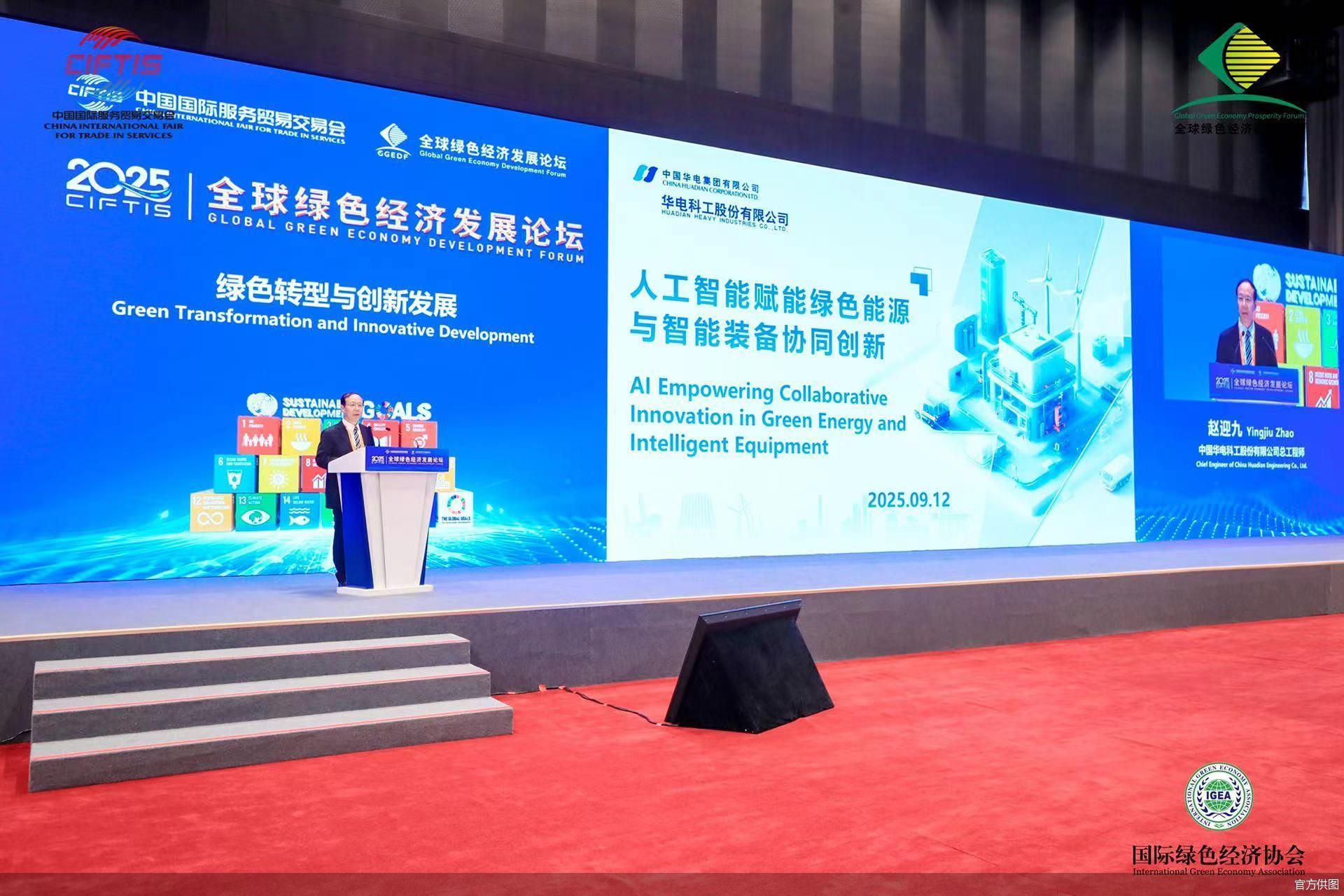
Group 1: Global Green Transition - The global green transition has entered a critical stage driven by innovation, with discussions focusing on green economic innovation and global cooperation at the 2025 Service Trade Fair theme forum [1] - Future green bonds and SDGs bonds are expected to become crucial financial tools for achieving the UN's 2030 Sustainable Development Goals, with multilateral development banks playing a significant role in financing and technical assistance [2] Group 2: Emerging Markets and Green Industry - Emerging markets in Asia, Africa, and Latin America are becoming increasingly important growth engines for China's green industry, shifting from "product export" to "industry export" through local operations and technology licensing [3] - The competitive advantage in the green industry will transition from price advantage to value leadership, focusing on brand competitiveness, technological originality, and standard-setting [3] Group 3: Carbon Market and Business Growth - The expansion of the mandatory carbon market in China will create new business growth opportunities for enterprises by broadening market control and integrating various stakeholders into a unified management system [4] - The improvement of the carbon market is expected to foster rapid development in emerging fields such as carbon verification, monitoring, consulting, and finance [4] Group 4: Energy Sector Transformation - The green low-carbon transition in the energy sector is a multidisciplinary technical integration challenge, requiring tailored solutions for each project and strong project management capabilities [5] - Artificial intelligence is becoming a core driver for the transformation of green energy and equipment manufacturing, enhancing efficiency and enabling cost reduction and zero-carbon goals [6] Group 5: Zero Carbon Parks - The construction of zero-carbon parks focuses on optimizing energy structure and improving energy efficiency through various steps, including energy supply and consumption accounting, carbon emission assessment, and feasibility analysis [7] - The core value of creating zero-carbon parks is to achieve cost reduction and efficiency improvement, enhance brand image, and foster green industry development through technological innovation and industrial transformation [8]
国内外政、企、学界代表共话绿色经济创新与全球合作
Bei Jing Shang Bao· 2025-09-12 14:20
Group 1: Global Green Economy Development - The global green transition has entered a critical stage driven by innovation, with discussions on green economy innovation and global cooperation at the 2025 Service Trade Fair theme forum [2] - Future green bonds and SDGs bonds are expected to become crucial financial tools for achieving the UN's 2030 Sustainable Development Goals, with multilateral development banks playing a significant role in financing [2] - Emerging markets in Asia, Africa, and Latin America are identified as increasingly important growth engines for China's green industry development, shifting from "product export" to "industry export" [2] Group 2: Carbon Market and Business Growth - The expansion of the mandatory carbon market in China is set to create new business growth opportunities for enterprises by enhancing market mechanisms and reducing overall emission costs [3] - The improvement of the carbon market will stimulate the rapid development of new sectors such as carbon verification, monitoring, consulting, and finance [3] Group 3: Energy Sector Transformation - The green low-carbon transition in the energy sector is a multidisciplinary technical integration challenge, requiring tailored solutions for each project and strong project management capabilities [4] - Artificial intelligence is emerging as a core driver for the transformation of green energy and equipment manufacturing, enhancing efficiency and enabling cost reduction and zero-carbon goals [5] Group 4: Zero Carbon Park Development - The focus of building zero-carbon parks is on optimizing energy structure, improving energy efficiency, and enhancing production processes [6] - The creation of zero-carbon parks aims to achieve cost reduction and efficiency improvement, enhance brand image, and foster green industry development through technological innovation [7]

全国碳市场建设按下“升级键”
Zhong Guo Hua Gong Bao· 2025-09-12 01:43
Core Viewpoint - The release of the "Opinions" by the Central Committee and the State Council marks a significant step towards the establishment of a national carbon market, indicating a long-term policy direction for carbon market development [1] Group 1: Carbon Market Expansion - By 2027, the national carbon emission trading market is expected to cover major industrial sectors, with a focus on expanding the range of covered industries and greenhouse gases based on industry development and carbon emission characteristics [2] - The carbon market is driving structural transformation and upgrading of industries, with key emission enterprises expected to adopt renewable energy and improve energy efficiency, thus enhancing their green market competitiveness [2] - The expansion of the carbon market will lead to a rapid increase in the number of trading entities and the total amount of tradable quotas, promoting a resource allocation mechanism that encourages cross-industry competition [2] Group 2: Market Dynamics and Pricing Mechanism - The "Opinions" propose a combination of free and paid quota distribution to enhance market activity, transitioning from a focus on intensity control to a total quota control system by 2030 [4][5] - The establishment of a reasonable pricing mechanism is crucial for accurately reflecting market signals, with the carbon price serving as an indicator of resource scarcity [8][9] - A stable carbon price is essential for the effectiveness of market incentives, and the development of carbon finance is seen as a key mechanism for supporting green low-carbon transformation [9]
碳资产或成为人民币国际化的“新资产锚”
2 1 Shi Ji Jing Ji Bao Dao· 2025-09-11 22:52
Core Viewpoint - The construction of China's carbon market is accelerating, with the government aiming to create a more effective, vibrant, and internationally influential carbon market to support carbon peak and carbon neutrality goals [1] Group 1: Carbon Market Development - China's carbon market consists of three parts: the national carbon market launched in July 2021, covering over 2,200 key emission units in the power sector, with a cumulative trading volume of 680 million tons and a total transaction value of 47.41 billion yuan as of August 2025 [2] - The voluntary greenhouse gas emission reduction trading market (CCER) started in January 2024, with a cumulative certified voluntary emission reduction of 2.49 million tons and a transaction value of 210 million yuan as of August 2025 [2] - Local carbon markets have been piloted since 2011 in various regions, allowing non-national market sectors to trade and manage emissions [2] Group 2: Carbon Financial Market - The carbon financial market includes financing, trading, and support tools, with carbon bonds being the most significant financial instrument, totaling 805.739 billion yuan issued from 2021 to the end of 2024 to support green and low-carbon transitions [2] - Trading tools in the carbon market include carbon futures, options, forwards, swaps, and loans, while support tools encompass carbon indices, insurance, and funds [2] Group 3: Challenges and Development Strategies - Despite significant achievements, the national carbon market faces challenges such as insufficient industry inclusion, low market liquidity, and the need for improved price formation mechanisms [3] - The government has proposed new development strategies to address these issues, emphasizing coordinated development among the national carbon market, CCER, and local markets, as well as enhancing market vitality through product diversification and regulatory improvements [3] - Key areas for strengthening include management systems, carbon emission accounting, data quality oversight, and the development of carbon financial products [3] Group 4: Implementation and International Cooperation - The government has outlined key directions for implementation, including improving the national carbon market's clearing mechanism and enhancing international cooperation [4] - The existing clearing model needs adaptation to meet the demands of the rapidly developing carbon market and financial sector [4] - There is significant potential for increasing the internationalization of China's carbon market, which is crucial for supporting the internationalization of the renminbi and financial openness [4]
用好“环境粮票”提高减排效率
Jing Ji Ri Bao· 2025-09-11 22:44
Core Viewpoint - The recent document outlines a plan to establish a national carbon emissions trading market by 2030, focusing on a quota system that combines free and paid allocations to drive market-based emissions reductions [1][2][3] Summary by Sections Quota System - Quotas are described as "environmental food stamps" issued by the government to companies, allowing them to sell excess allowances if they manage to reduce emissions effectively [1] - The plan includes a timeline for adjusting quota distribution methods, prioritizing total quota control for stable-emission industries by 2027 [1] Transition from Intensity Control to Total Control - The current method of carbon quota distribution is based on intensity control, which limits emissions per unit of output but does not cap total emissions [1] - This approach has limitations, including unclear reduction expectations and insufficient constraints on emissions, prompting a shift to total emissions control [1] Market Mechanism and Paid Allocation - The carbon market, which will include sectors like steel and cement by 2024, is expected to cover over 60% of national CO2 emissions, facilitating the breakdown of national reduction targets to the enterprise level [2] - The transition from free to paid quota distribution is necessary to enhance market liquidity and reduce volatility, as evidenced by the EU's experience with a 60% paid allocation rate [2] Implementation and Fairness - The document emphasizes the need for a balanced approach in quota distribution, ensuring it is neither too lenient nor too strict, to meet national reduction goals while being fair to advanced companies [3] - Strict regulations will be enforced to ensure accurate carbon emissions data and compliance in quota transactions, enhancing the traceability of each quota [3] Future Outlook - The implementation of these measures is expected to accelerate the transition to a market-driven carbon market, positioning it as a key driver for green transformation in the industry [3]
团结香港基金:香港或可考虑引入碳税等外部激励措施 推动碳市场发展
Zhi Tong Cai Jing· 2025-09-10 13:09
Group 1 - The core viewpoint emphasizes the need for Hong Kong to accelerate its transition towards green and sustainable development through various measures, including carbon emission data disclosure, bank emission reductions, and the carbon credit market [1] - The suggestion includes mandatory disclosure of Scope 1, 2, and 3 carbon emissions data by listed companies starting this year, allowing companies to purchase carbon credits to offset remaining emissions [1] - The Hong Kong Monetary Authority (HKMA) is urged to require banks to achieve carbon neutrality in their operations by 2030, utilizing the local carbon market to manage residual emissions [1] Group 2 - Large events in Hong Kong generate carbon emissions, and it is suggested to adopt practices from the Paris Olympics and Qatar World Cup to encourage local events to offset emissions through the carbon credit market [1] - The proposal includes considering external incentives such as carbon taxes, drawing from Singapore's experience, to enhance the effectiveness and usage of the carbon market [1] - The Hong Kong Stock Exchange's publication of "Carbon Credit: Buyer’s Guide" is seen as a positive step to promote the development of the carbon market, helping companies understand its mechanisms and addressing current demand issues [2]
经济日报丨碳市场助电力行业绿色转型
国家能源局· 2025-09-10 07:09
Core Viewpoint - The article discusses the recent release of the "Opinions on Promoting Green and Low-Carbon Transition and Strengthening National Carbon Market Construction," which outlines the path and steps for improving and expanding the national carbon market, emphasizing its role as a crucial policy tool for addressing climate change and facilitating a comprehensive green transition in the economy and society [2]. Group 1: Carbon Market Development - The carbon market is essential for actively responding to climate change, with the power industry being a key player in achieving the "dual carbon" goals [2]. - Since the launch of the national carbon market, the power industry has shown strong commitment to carbon emission control, achieving a quota completion rate of over 99% annually from 2019 to 2023, reaching a record high of 99.98% in 2023 [2]. - From 2018 to 2024, the carbon dioxide emissions per unit of electricity generated decreased by 12.1%, while emissions per unit of thermal power generation dropped by 2.2% [2]. Group 2: Changes in the Power Industry - Over the past four years, the power industry has seen significant improvements in carbon reduction awareness and carbon trading practices, with over 80% of key emission units establishing carbon emission management systems [3]. - The carbon price has increased from 48 yuan per ton at the market's inception to a peak of 90 to 100 yuan per ton, indicating the initial effectiveness of the price discovery mechanism [3]. - The application and innovation of low-carbon technologies have accelerated, driven by the carbon market, which has promoted energy-saving renovations and the development of carbon capture and utilization technologies [3]. Group 3: Cost Reduction and Future Directions - The carbon market allows companies to use China Certified Emission Reduction (CCER) credits to offset 5% of their compliance quotas, reducing the burden on key emission units and promoting energy structure adjustments [4]. - The construction of the national carbon market is a continuously evolving system, requiring a long-term mechanism for carbon emission quota allocation that considers the dual pressures of energy supply and transition in the power industry [4]. - There is a need to enhance data quality management for carbon emissions and strengthen the collaborative mechanisms between the carbon market and the electricity market [4].