被动投资

Search documents
银行理财周度跟踪(2025.8.11-2025.8.17):资管年会谋篇市场新生态,债市波动引理财净值回调-20250820
HWABAO SECURITIES· 2025-08-20 08:18
Investment Rating - The report does not explicitly provide an investment rating for the industry. Core Insights - The 2025 Asset Management Annual Conference highlighted the need for a competitive restructuring in the asset management sector, focusing on multi-asset and multi-strategy investment approaches [3][11]. - The report indicates a general decline in the annualized returns of cash management products and fixed-income products, reflecting market volatility and changing investor sentiment [5][16][18]. - The report emphasizes the importance of enhancing research capabilities and service quality in the asset management industry to adapt to market changes and investor needs [12][13]. Regulatory and Industry Dynamics - The 2025 Asset Management Annual Conference took place on August 16, focusing on the theme of "Breaking the Deadlock and Restructuring - Rebuilding Competitiveness in Asset Management" [3][11]. - Key executives from various financial institutions shared insights on the future of multi-asset investment strategies and the importance of AI infrastructure in driving growth [11][12]. Peer Innovation Dynamics - The report discusses the launch of the "日鑫悦益" product system by浦银理财, which includes strategic upgrades across four main product lines to enhance functionality and investment strategies [4][14]. - 招银理财 introduced the SMARP index, aimed at optimizing asset allocation and dynamic risk management across various asset classes [15]. Yield Performance - For the week of August 11-17, 2025, cash management products recorded an annualized yield of 1.31%, down 3 basis points from the previous week, while money market funds yielded 1.20%, down 1 basis point [5][16][20]. - The report notes a general decline in annualized yields for fixed-income products across different maturities, influenced by market factors such as U.S.-China tariff concerns and consumer loan policies [18][19]. Net Value Tracking - The report indicates that the net value ratio of bank wealth management products rose to 1.52%, an increase of 0.65 percentage points week-on-week, reflecting a widening credit spread [6][24][26]. - The widening credit spread is noted to be at historical low levels since September 2024, suggesting limited value for investors [26].
中邮理财高级业务专家唐倩华:ETF成资管新势力,赋能固收+
2 1 Shi Ji Jing Ji Bao Dao· 2025-08-20 07:09
Core Insights - The article discusses the significant growth and potential of the ETF market, highlighting its alignment with current market conditions and investor preferences [1][3]. Group 1: ETF Market Characteristics - The ETF market is characterized by rapid growth, a wide variety of products, and substantial future potential [3]. - ETFs have become a crucial force in the asset management market, covering multiple asset classes including stocks, bonds, commodities, and convertible bonds [3]. - The ecosystem surrounding ETFs is continuously improving, with various investment strategies and financial industry extensions being developed [3]. Group 2: Factors Driving ETF Growth - Multiple factors contribute to the rapid rise of ETFs, including ongoing regulatory support, significant capital inflows, and the public fund industry's focus on ETFs as a key growth area [3][4]. - The low cost, high efficiency, and transparency of ETFs make them particularly suitable for the current market environment [3][4]. Group 3: Support for Fixed Income Plus Strategies - ETFs provide strong support for fixed income plus strategies, enhancing large asset allocation through quantitative dimensions [4]. - The introduction of Smart Beta quantitative strategies has effectively increased client confidence by clearly communicating expected returns, holding periods, and risk probabilities [4][5]. Group 4: Low-Risk Asset Preferences - Current market trends show that clients prefer low-risk assets, often viewing wealth management products as alternatives to deposits [6]. - Despite favorable performance in fixed income plus strategies, growth in wealth management products remains concentrated in pure fixed income and ultra-low volatility products [6]. Group 5: Addressing Asset Allocation Challenges - The industry faces challenges in aligning client demands with market trends, particularly in a low-interest-rate environment [6][7]. - A multi-asset, broad allocation approach is necessary to address the issue of asset scarcity, which requires enhanced research capabilities and a redefined investment culture [7].


突破4.8万亿,谁在推动ETF市场狂奔?
3 6 Ke· 2025-08-20 01:02
Core Insights - The equity market has shown significant profitability this year, with the Shanghai Composite Index up 11.20%, the Shenzhen Component Index up 13.51%, and the ChiNext Index up 21.49% as of August 19 [1] - The total scale of ETFs in the market has surged to over 4.8 trillion yuan, an increase of 1.04 trillion yuan or 27.88% compared to the end of 2024, indicating a profound shift in capital market funding dynamics [1] ETF Market Dynamics - The top 15 public fund companies dominate the ETF market, managing a total of 4.1 trillion yuan, which accounts for 85.42% of the entire market [2] - Huaxia Fund leads the industry with 111 ETFs totaling 817.63 billion yuan, driven primarily by its 105 stock ETFs, which account for 773.08 billion yuan [2][3] - E Fund follows closely with 99 ETFs managing 747.18 billion yuan, with stock ETFs comprising 95 of those, totaling 686.96 billion yuan [3] - Other significant players include Huatai-PB Fund with 50 ETFs at 535.35 billion yuan, and Southern Fund and Harvest Fund with 65 and 58 ETFs, managing 330.65 billion yuan and 303.28 billion yuan respectively [3] Growth of ETF Categories - Broad-based ETFs have emerged as the biggest winners, with the CSI 300 theme ETF surpassing 1.1 trillion yuan, marking the first trillion-level ETF category [4] - Industry-themed ETFs, particularly in hard technology sectors like AI and biomedicine, are gaining traction as essential tools for capital allocation [4] - Bond ETFs have also crossed 500 billion yuan, serving as a stabilizing factor in a declining interest rate environment, reflecting strong demand for stable returns [4] Institutional Investment Trends - Institutional allocation in broad-based ETFs has increased by 19.64 percentage points since early 2024, with institutional penetration in stock ETFs reaching 62.14% [5] - By the end of 2024, over 40% of stocks in stock funds are held through ETFs, a historical high [5] - The rise of ETFs is reshaping market ecology, pushing active funds to focus on long-term value rather than short-term rankings [5]
公募基金观察(20250811-20250815):ETF交易活跃度提升,本年度规模增长超1万亿
Huachuang Securities· 2025-08-19 11:12
Investment Rating - The industry investment rating is "Recommended," indicating an expected increase in the industry index by more than 5% over the next 3-6 months compared to the benchmark index [29]. Core Insights - The ETF market has shown significant growth this year, with a total scale increase of over 1 trillion yuan, reaching 4.77 trillion yuan as of August 15, 2025, which is a 27.9% increase year-to-date [8][9]. - The trading activity of ETFs has surged, with total trading volume approaching 2 trillion yuan last week, marking the second-highest record in history [8]. - The report highlights that the growth in ETF scale is primarily driven by net asset value increases, with notable growth in bond and commodity ETFs [9]. Summary by Sections Stock ETFs - As of August 15, 2025, the total scale of stock ETFs is 3.21 trillion yuan, reflecting a 2.8% increase month-on-month and an 11.2% increase year-to-date [2]. - The top five stock ETFs by subscription last week included various ETFs focused on broad market indices [2]. Industry-Themed ETFs - The scale of industry-themed ETFs reached 780 billion yuan, with a year-to-date increase of 30.4% [3]. - The top-performing industry-themed ETFs last week were primarily in the financial technology and healthcare sectors [3]. Style Strategy ETFs - The scale of style strategy ETFs is 133 billion yuan, with a year-to-date increase of 29.8% [3]. - Major inflows were observed in specific dividend and value-focused ETFs [3]. Cross-Border ETFs - Cross-border ETFs reached a scale of 716 billion yuan, marking a 68.9% increase year-to-date [4]. - Significant inflows were noted in ETFs linked to the Hang Seng Index and technology sectors [4]. Commodity ETFs - The scale of commodity ETFs is 153 billion yuan, with a year-to-date increase of 102.1% [4]. - Net inflows into commodity ETFs this year totaled 57.4 billion yuan [4]. Bond ETFs - Bond ETFs reached a scale of 541.4 billion yuan, reflecting a 211.2% increase year-to-date [4]. - This segment has seen over 300 billion yuan in net inflows this year, indicating its importance as a tool for institutional investors [4].
鲁政委:ETF产品具备四大核心优势
Sou Hu Cai Jing· 2025-08-19 07:10
Core Viewpoint - The development of passive investment, particularly through ETFs, presents significant advantages and growth potential in China's financial market, especially in the context of a low-interest-rate environment [2][4][6]. Group 1: Advantages of Passive Investment - Passive investment offers four core advantages: cost savings, time efficiency, reduced stress, and comparable returns to active investment [4]. - Cost savings are notable, with passive investment potentially saving around 6% over ten years compared to active funds, primarily due to lower fees [4]. - Time efficiency is achieved as passive products, like ETFs, allow investors to avoid the complexities of individual stock selection, thus mitigating risks associated with poor stock choices [4][5]. - The stress of relying on star fund managers is alleviated through passive investment, which reduces the risk of manager changes and focuses on asset allocation for sustainable returns [5]. Group 2: Growth Potential of ETFs - China's ETF market is experiencing rapid growth, surpassing the growth rate of active products, with over 60% of investors now holding ETF products [6]. - The bond ETF segment is particularly noteworthy, expanding significantly in response to the demand for low-fee, high-liquidity products amid declining interest rates [6]. - Internationally, ETFs have shown resilience and growth across various market conditions, highlighting their competitive advantages of low cost, transparency, and efficiency [6]. Group 3: Challenges and Market Outlook - The passive investment market in China faces challenges, particularly in optimizing index construction, as significant long-term return disparities exist among different indices [7]. - There is substantial room for improvement in the valuation of China's capital markets, with current stock market capitalization only at three-quarters of its GDP's global share [8]. - The ongoing integration of A-shares and H-shares is crucial, as the valuation of both markets is expected to align more closely with international standards amid China's economic growth and market opening [8].
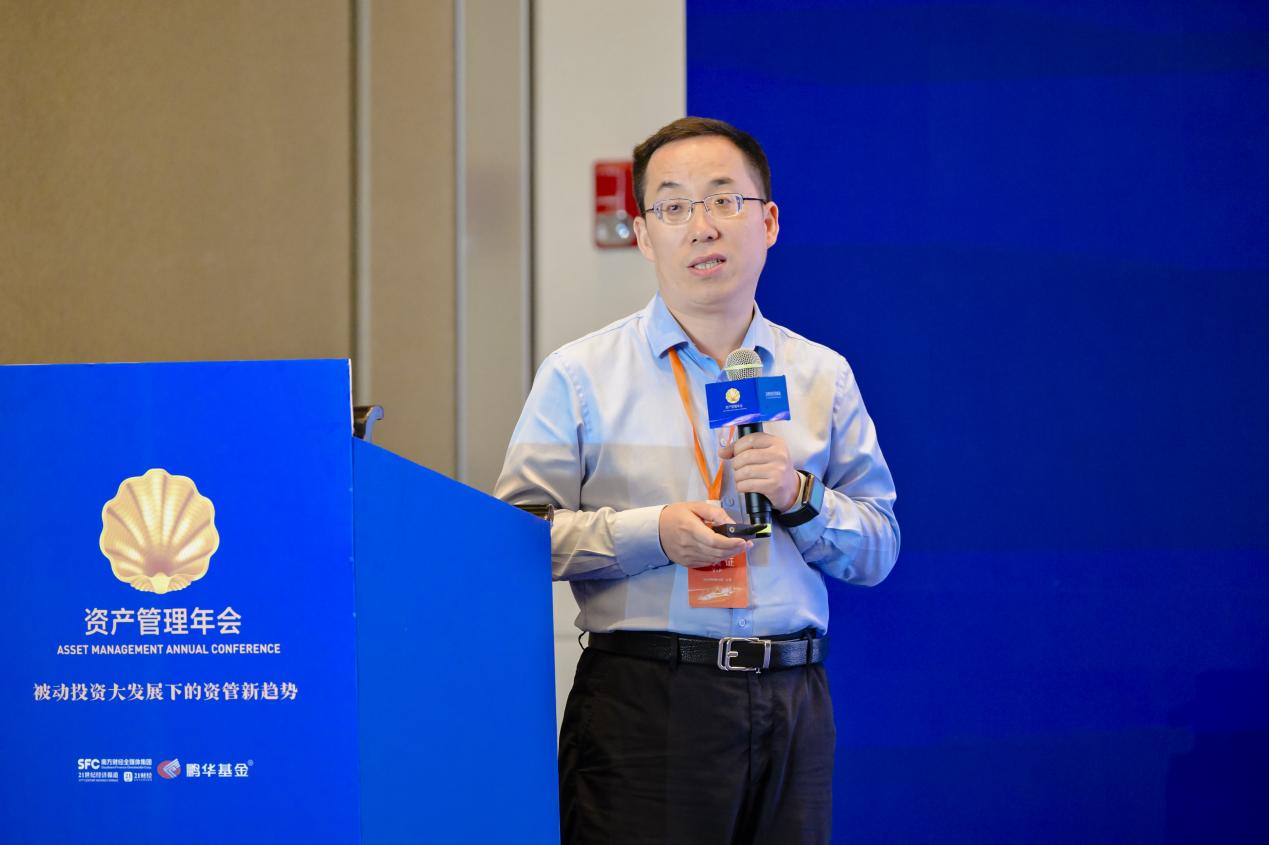
光大理财李永锋:资管机构携手合作? 共同打造财富管理新生态
2 1 Shi Ji Jing Ji Bao Dao· 2025-08-19 05:32
Core Viewpoint - The asset management industry is experiencing significant opportunities for collaboration among various institutions to enhance wealth management services and meet customer needs [1][2]. Group 1: Industry Collaboration - The asset management sector's internal cooperation is more significant than competition, with institutions positioned differently in the wealth management ecosystem [1]. - The industry is encouraged to work together to better serve clients' asset allocation and wealth management needs, especially in the context of China's high-quality economic development [1]. Group 2: Passive Investment Trends - Passive investment is gaining momentum in China, with the domestic ETF market reaching 4.5 trillion RMB by July 2025, showing a rapid growth from 1 trillion RMB in 17 years to 2 trillion RMB in just 3 years [3]. - The penetration rate of ETFs in China is approximately 12%, compared to 32% in the U.S., indicating substantial growth potential [3]. - The characteristics of ETFs, such as low fees, high transparency, and risk diversification, make them attractive tools for wealth management institutions [3][4]. Group 3: Bond ETFs and Future Development - The domestic bond ETF market has reached 510 billion RMB, becoming a preferred asset for bank wealth management due to its natural asset allocation properties [5]. - There is a strong demand for bond ETFs from bank wealth management, and collaboration opportunities will increase if the fund industry can diversify bond ETF offerings [5]. - Four specific recommendations for the future of passive investment and ETFs include optimizing index compilation, enhancing the index product system, developing index allocation schemes, and accelerating the innovation of new products [6].
光大理财李永锋:资管机构携手合作 共同打造财富管理新生态
2 1 Shi Ji Jing Ji Bao Dao· 2025-08-19 05:18
Core Viewpoint - The asset management industry is experiencing significant opportunities for collaboration among institutions, emphasizing the importance of a customer-centric approach to meet wealth management needs [4][5]. Group 1: Industry Collaboration - The asset management sector's internal cooperation is more significant than competition, with various institutions positioned differently within the wealth management ecosystem [4]. - The industry plays a crucial role in increasing residents' property income and enhancing direct financing, aligning with national economic development goals [4]. - The wealth management sector has successfully generated substantial returns for clients, earning public trust and recognition [4]. Group 2: Growth of Passive Investment - Passive investment, particularly through ETFs, has become a major trend in the global asset management industry, with the U.S. market seeing passive investment surpass active investment for the first time in 2023 [5]. - By the end of 2024, the U.S. ETF market is projected to exceed $10 trillion, accounting for 70% of the global ETF total [5]. - In China, the domestic ETF market has reached 4.5 trillion RMB by July 2025, with a significant increase in institutional investor participation from 42% in 2022 to 59% in 2024 [5]. Group 3: ETF Advantages - ETFs are characterized by low fees, high transparency, liquidity, and risk diversification, making them attractive for wealth management institutions [7]. - The demand for absolute return strategies has increased post the 2018 regulatory changes, leading to a preference for a "micro-hedging" approach in ETF allocations [7]. - The bond ETF market in China has reached 510 billion RMB, highlighting its appeal as a suitable asset for bank wealth management [7]. Group 4: Future Development Suggestions - Recommendations for the passive investment and ETF sector include optimizing broad index compilation, enhancing the index product system, developing comprehensive index allocation schemes, and accelerating the innovation of new product varieties [8][9]. - There is a need to diversify factor-based products beyond dividend-focused offerings to improve strategy variety [8]. - The collaboration between asset management and the capital market is essential for driving growth and meeting institutional needs [9].
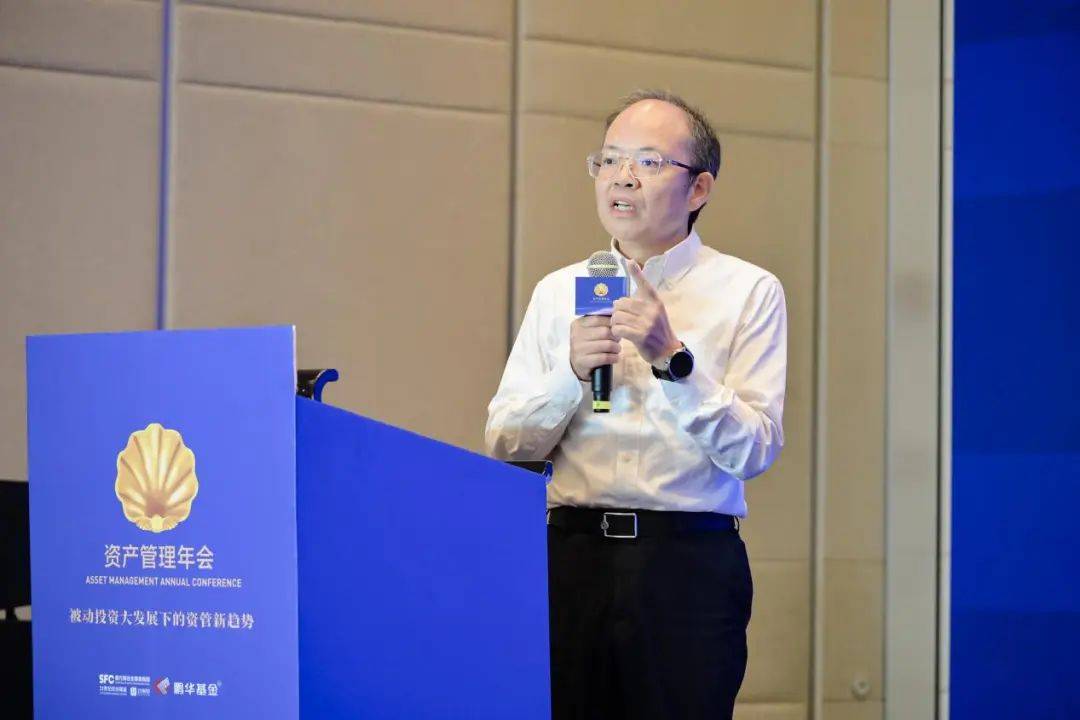
百年保险资管董事长杨峻:被动投资大发展重塑资管价值创造逻辑
2 1 Shi Ji Jing Ji Bao Dao· 2025-08-18 10:58
Core Viewpoint - The rise of passive investment is reshaping the asset management industry, leading to three profound impacts: the toolization of Beta, the specialization of Alpha, and the intensification of the Matthew effect [1][5]. Group 1: Growth of Passive Investment - Passive funds are experiencing rapid growth across global markets, including the US, Europe, Japan, and China, with ETFs leading this trend [3]. - In China, the management fee for broad-based index ETFs has dropped to 15 basis points (bps), while thematic ETFs range from 20 to 60 bps, compared to 120 bps for active equity funds, highlighting a significant cost advantage for passive products [3][4]. - The new "National Nine Articles" policy supports the establishment of a fast-track approval process for ETFs, enhancing the efficiency of fund registration [3]. - Passive investment aligns with investor preferences, as it has a lower cognitive barrier and clearer investment themes, with pension finance being a significant driver of growth [3]. Group 2: Performance and Market Dynamics - Although there is some debate regarding performance, the difficulty for active equity funds to consistently outperform passive funds is increasing. In the US, only 21% of active funds outperformed passive funds over the past decade, while in China, 58% of active equity funds outperformed their passive counterparts in 2023, a decrease of 5 percentage points from 2022 [4]. - Passive investment products have become essential tools for both institutional and individual investors, meeting demands for transparency, low volatility, and cost efficiency [5]. Group 3: Alpha Specialization and Active ETFs - The challenge for active fund managers is significant, as deep Alpha extraction requires focusing on areas with low pricing efficiency and opaque information. Despite the overall trend, certain sectors like real estate and bonds still show potential for excess returns [6]. - Active ETFs may emerge as a key solution to balance low costs, high liquidity, and excess returns, combining active management capabilities with the transparency and liquidity of ETFs [7]. Group 4: Matthew Effect and Market Concentration - The Matthew effect is intensifying in the asset management industry, with the profitability of global asset management declining from 14.4 bps in 2021 to 11.6 bps in 2023, particularly in North America and the Asia-Pacific regions [8]. - In the passive equity fund sector, the top ten institutions are projected to hold 66% of the market share by 2024, with the top ten ETF providers accounting for 80% of the ETF market, compared to only 46% in the active equity fund space [8].

兴业银行首席经济学家鲁政委:ETF产品具备四大核心优势
2 1 Shi Ji Jing Ji Bao Dao· 2025-08-18 10:58
在"被动投资大发展下的资管新趋势"主题论坛上,兴业银行首席经济学家鲁政委发表主旨演讲,重点探 讨了指数ETF产品的优势所在及未来发展空间。 他指出,在金融产品中,兼具低费率和高流动性的产品非ETF莫属。目前我国债券ETF仅占债券市场总 规模的11%,对照国际经验,国内债券ETF产品仍具有进一步的可观增长潜力。随着低利率环境持续, 固收类产品必将向高流动性方向靠拢,这一趋势将有望推动债券ETF规模进一步扩大。 演讲中,鲁政委全面分析了被动化投资的四大优势:省钱、省时、省心,且收益不逊于主动投资。 在"省钱"方面,被动投资十年可节省约6%的成本,而高费率正是主动型基金跑输指数型基金的主因。 目前我国基金费率呈阶梯式分布:主动权益类最高,固收+次之,纯固收最低。随着市场成熟,随着市 场进入低利率时期,被动产品的成本优势愈发明显。 在"省时"方面,其优势则体现在投资效率的提升。与平日里选购商品时的仔细对比不同的是,许多投资 者在选股时容易忽视基本面分析。而被动型产品通过一篮子股票组合,为投资者有效了规避在个股选择 方面的困扰。以ETF为例,其分散化特征使得即便部分成分股表现不佳,整体组合风险依然可控。历史 数据证明, ...

百年保险资管董事长杨峻:被动投资大发展重塑资管价值创造逻辑
Sou Hu Cai Jing· 2025-08-18 10:57
Core Viewpoint - The rise of passive investment is reshaping the asset management industry, leading to three significant impacts: the toolization of Beta, the specialization of Alpha, and the intensification of the Matthew effect [1][4]. Group 1: Growth of Passive Investment - Passive funds are experiencing rapid growth globally, outpacing active management in markets such as the US, Europe, Japan, and China [3]. - In China, passive strategies, particularly ETFs, are witnessing explosive growth due to their low fees, with broad-based index ETFs having management fees as low as 15 basis points (bps) compared to 120 bps for active equity funds [3][4]. - Policy support is enhancing the development of passive investment, with the new "National Nine Articles" establishing a fast-track approval process for ETFs [3]. - The preference for passive investment aligns with investor needs, as it has a lower cognitive barrier and is increasingly driven by retirement finance, with over 80% of index fund holders in the US being from personal retirement accounts and corporate pension plans [3][4]. Group 2: Performance and Market Dynamics - Although there is some debate regarding performance, the difficulty for active equity funds to consistently outperform passive funds is increasing, with only 21% of active funds in the US outperforming passive funds over the past decade [4][6]. - In China, 58% of active equity funds outperformed their passive counterparts in 2023, a decrease of 5 percentage points from 2022, indicating growing challenges in achieving excess returns in the A-share market [4][8]. Group 3: Impacts on Asset Management Industry - The passive investment trend is leading to the toolization of Beta, making passive products essential for both institutional and individual investors [5]. - For institutional investors, ETFs are becoming crucial for asset allocation, meeting demands for transparency, low volatility, and cost efficiency [5]. - The specialization of Alpha is highlighted by the need for active managers to focus on areas with low pricing efficiency and information opacity to generate excess returns [6][7]. - The Matthew effect is intensifying, with the top ten institutions in the passive equity fund space holding 66% of the market share, and 80% in the ETF sector, compared to only 46% in active equity funds [8].