
产业升级

Search documents
国家发展改革委:前三季度我国经济运行稳、动能足、质效升、韧性足、潜能大
Xin Hua Cai Jing· 2025-10-31 05:37
Core Viewpoint - The Chinese economy demonstrated stability and resilience in the first three quarters of the year, with a GDP growth of 5.2% year-on-year, supported by various policy measures and a strong performance in key sectors [1][3]. Economic Performance - GDP growth reached 5.2% year-on-year, maintaining a leading position among major global economies [1]. - Retail sales of consumer goods increased by 4.5%, accelerating by 1.2 percentage points compared to the same period last year [1]. - The industrial added value for large-scale enterprises grew by 6.2%, marking the highest growth since 2022 [1]. Innovation and Industry Growth - China's innovation index entered the global top ten, bolstering the development of emerging industries [1]. - The added value of equipment manufacturing and high-tech manufacturing increased by 9.7% and 9.6%, respectively, with their shares in large-scale industry rising by 2.1 and 0.8 percentage points year-on-year [1]. - The integrated circuit manufacturing and smart device manufacturing sectors saw significant growth, with added values increasing by 22.4% and 12.2% [1]. Quality and Efficiency Improvement - The governance of disorderly competition has led to improvements in key product prices and corporate profits [2]. - The profits of large-scale industrial enterprises grew by 3.2% year-on-year, with a notable increase of 21.6% in September alone [2]. Export Resilience - Despite external challenges, goods exports maintained a growth rate of 7.1% [2]. - The export structure has become more optimized, with high-tech and high-value-added products experiencing growth rates of 11.9% and 9.6%, respectively [2]. - Exports to countries involved in the Belt and Road Initiative increased by 12.4%, and exports to ASEAN countries have seen an upward trend for eight consecutive months [2]. Potential for Growth - Consumer demand and structural upgrades in key industries are showing new highlights, with service retail sales growing by 5.2% [2]. - The number of inbound tourists surged by 17.8% in the first three quarters, aided by various visa-free policies [2]. - The production of high-end, green, and intelligent products is on the rise, with significant increases in the output of civilian drones (43.2%), industrial robots (29.8%), new energy vehicles (29.7%), and lithium-ion batteries for vehicles (46.9%) [2].
政策驱动与产业深耕:地方产业基金的投资逻辑、方向与核心要求
Sou Hu Cai Jing· 2025-10-31 02:28
Investment Logic - Local Government Industrial Funds (LGIFs) serve as a combination of policy tools and market-driven operations, prioritizing policy implementation while also considering market returns [2] - The primary goal is to align with national and local industrial policies, as seen in the semiconductor fund in Anhui, which emphasizes domestic substitution and technological breakthroughs over mere financial returns [2] - LGIFs exhibit a strong capacity for early-stage risk tolerance, particularly in high-tech projects, with early-stage investments projected to increase from 12% in 2023 to 28% by 2025 [3] Investment Direction - Investment focus is on strategic emerging industries and the upgrading of traditional industries, with a significant emphasis on hard technology and future industries [5] - Notable investments include a single contribution of 224 billion yuan to the semiconductor sector and 20 billion yuan for AI and biotechnology in Shanghai [6] - Traditional industries are being transformed through smart and green initiatives, with funds supporting projects in industrial internet and clean energy [7] Core Requirements - Compliance is critical, with strict controls on fund allocation and risk management, prohibiting investments in real estate and high-pollution sectors [8] - Professional management is essential, requiring fund managers to have at least three years of experience and a minimum capital of 10 million yuan [9] - Sustainability is emphasized through leveraging social capital and innovative exit mechanisms, such as integrating invested companies into local supply chains [10][11] Conclusion - The rise of LGIFs signifies a deep integration of policy and market attributes in China's capital market, shifting from fiscal subsidies to industrial empowerment and precise investments [12]
高度重视科技研发及供销渠道建设 贵研铂业营收利润稳步增长
Quan Jing Wang· 2025-10-31 01:02
Financial Performance - In the first three quarters of 2025, the company's operating income reached 45.179 billion yuan, a year-on-year increase of 22.21% [1] - The net profit attributable to shareholders was 501 million yuan, up 12.43% compared to the same period last year [1] - The weighted average return on net assets for the first three quarters was 6.86%, an increase of 0.24 percentage points year-on-year [1] - In Q3 2025, the operating income was 15.625 billion yuan, showing a year-on-year growth of 24.76% [1] - The net profit attributable to the parent company in Q3 was 176 million yuan, a significant increase of 37.60% year-on-year [1] R&D and Innovation - The company emphasizes technological research and development as a core focus, aiming to cultivate independent innovation capabilities [2] - It has established a comprehensive and multi-dimensional technological innovation system supported by various national and provincial research platforms [2] - R&D expenses for the first three quarters of 2025 amounted to 248 million yuan, reflecting a year-on-year increase of 26.49% [2] Capital Raising and Project Development - The company has announced a plan to issue A-shares to specific targets, aiming to raise no more than 1.291 billion yuan [3] - Of this amount, 484 million yuan is allocated for the construction of a national key laboratory for precious metal functional materials and an AI laboratory for new materials [3] Supply Chain and Market Expansion - The company is focused on building stable supply and sales channels to support long-term and high-quality development of its precious metal business [4] - It has established strong partnerships with quality suppliers to ensure stable raw material supply [4] - The company is developing a secondary resource recycling industrial base to enhance its resource security and control capabilities [4] Industry Upgrading and Strategic Initiatives - The Shanghai Rare Precious Metals Innovation Platform and the Shanghai Sheshan New Materials Industrial Base project have recently commenced construction [5] - This project aims to create an integrated industrial cluster for research, production, incubation, and testing services in the rare precious metals sector [5] - The company plans to focus on national strategic services, enhance brand advantages, and strengthen its position in the precious metals new materials industry [5]

城市24小时 | 增速倒数,能源大省再提“转型”
Mei Ri Jing Ji Xin Wen· 2025-10-30 15:53
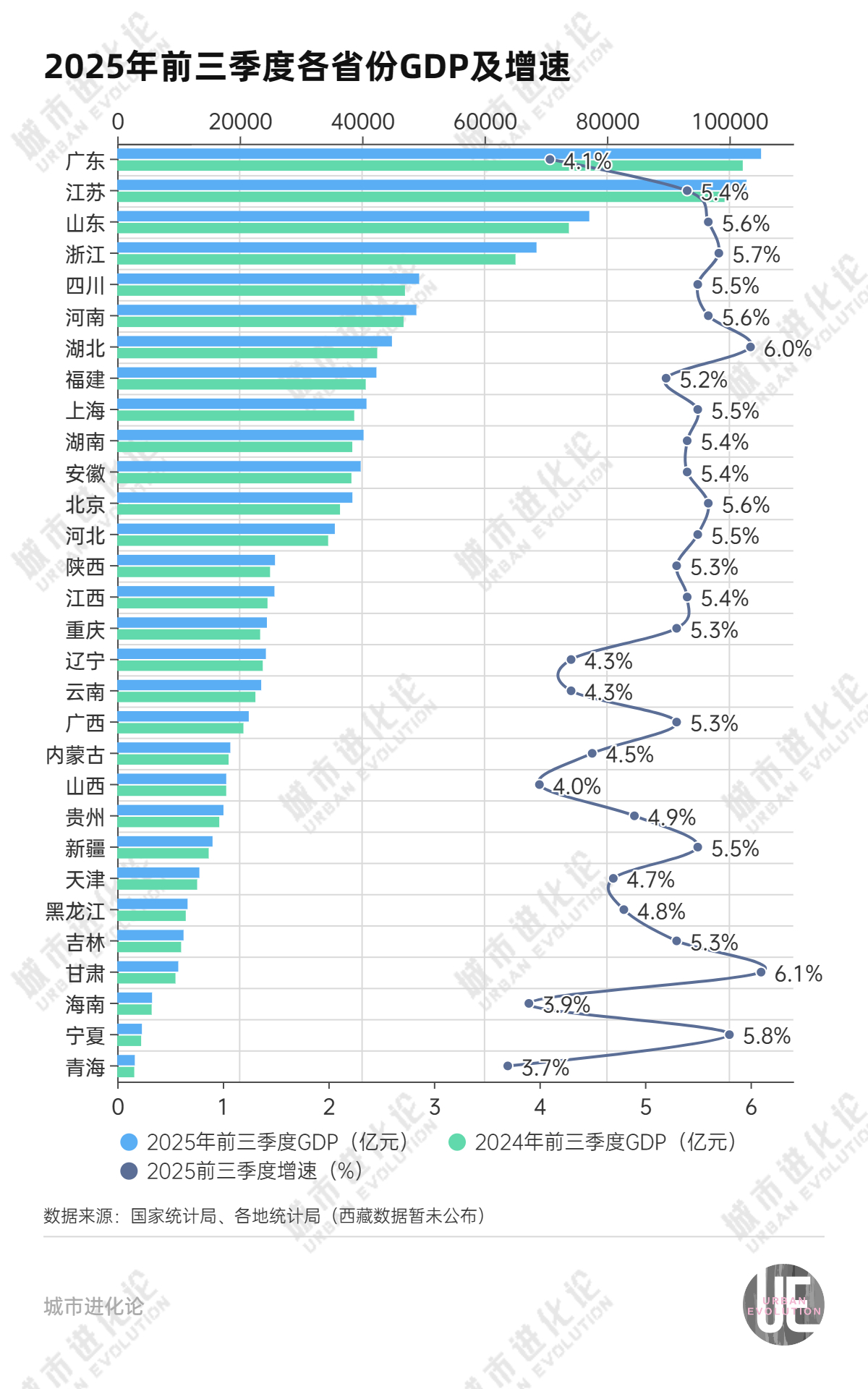
Economic Data Overview - As of now, 30 provinces in China have released their GDP data for the first three quarters, with only Tibet remaining [1] - 19 provinces outperformed the national average GDP growth rate of 5.2%, with Gansu leading at 6.1% and Fujian matching the national rate [1] - 10 provinces lagged behind the national average, with Qinghai, Hainan, and Shanxi having the lowest growth rates at 3.7%, 3.9%, and 4.0% respectively [1] Shanxi Province Economic Performance - Shanxi's GDP growth remains weak, with a mere increase compared to last year's 1.8%, ranking last nationally [4] - The province's GDP for the first three quarters grew by 4.0%, a slight acceleration of 0.2 percentage points from the first half of the year, despite a decline in the coal industry [4] - The added value of the secondary industry in Shanxi was 690.725 billion yuan, growing by 3.5% [4] Coal Industry Impact - Shanxi's economy is heavily influenced by the coal industry, which once accounted for over 30% of GDP and 50% of fiscal revenue [5] - From January to September, the coal mining and washing industry saw a 20% decline in revenue and a 51% drop in total profit, despite a 13% decrease in operating costs [5] - The added value of the coal industry in Shanxi grew by 5.6%, but this was a 1.5 percentage point decline from the first half of the year [5] Transition and Development Initiatives - Shanxi has been pushing for a transformation away from coal dependency since becoming a pilot for energy reform in 2019 [6] - The province aims to enhance its coal industry through smart technology and shift towards high-value products, with significant investments in wind, solar, and hydrogen energy [6] - In the first three quarters, the added value of equipment manufacturing in Shanxi grew by 6.9%, with new energy equipment manufacturing increasing by 160% [6] - Investments in high-tech services, new energy vehicle manufacturing, and renewable energy generation saw growth rates of 13.2%, 36.5%, and 26.4% respectively [6]

航天动力子公司引入3亿战投 聚焦主业破局
Zheng Quan Shi Bao Wang· 2025-10-30 14:45
Core Viewpoint - Aerospace Power (600343) has successfully raised 300 million yuan through its wholly-owned subsidiary, Xi'an Yuanxin Aerospace Power Fluid Equipment Co., Ltd., by introducing six strategic investors, which will enhance its capital structure and focus on core business development [1][2] Group 1: Capital Increase and Strategic Investors - The capital increase will change the registered capital of Xi'an Yuanxin to 319.1254 million yuan, while Aerospace Power will maintain its controlling position [1] - Among the six investors, Beijing Guochuang New Energy Vehicle Equity Investment Fund is an associated party of Aerospace Power's actual controller, making this transaction an affiliated transaction [1] - The specific information regarding the other five investors and their shareholding proportions has not been disclosed [1] Group 2: Business Focus and Financial Performance - Xi'an Yuanxin, formerly known as Xi'an Aerospace Pump Industry Co., Ltd., focuses on manufacturing and sales of hydraulic power machinery and components, automotive parts R&D and manufacturing, and other related products [1] - Aerospace Power reported a revenue of 510 million yuan for the first three quarters of this year, a year-on-year decline of 14.19%, with a net loss attributable to shareholders of 109 million yuan [2] - The capital injection aims to accelerate the industrialization of torque converters and high-end equipment manufacturing, enhancing the conversion of liquid power technology and market application [2] Group 3: Industry Collaboration and Future Prospects - The introduction of investors from the new energy vehicle sector may provide business synergy advantages for Xi'an Yuanxin, which has included automotive parts R&D and manufacturing in its main business scope [2] - The new energy vehicle industry is experiencing rapid growth, and this strategic investment could lay the foundation for Xi'an Yuanxin to expand into the new energy vehicle supporting market [2]

新华财经晚报:美方将取消针对中国商品加征的10%所谓“芬太尼关税”
Xin Hua Cai Jing· 2025-10-30 14:03
Domestic News - The U.S. will cancel the 10% "fentanyl tariff" on Chinese goods, while the 24% reciprocal tariff will remain suspended for another year [1] - China's foreign trade imports continue to expand steadily, with agricultural product imports reaching $57.1 billion, a year-on-year increase of 2.6%, and imports of electromechanical products and high-tech products growing by 5% and 8.6% respectively [1] - The Ministry of Finance, Ministry of Commerce, Ministry of Culture and Tourism, General Administration of Customs, and State Taxation Administration issued a notice to enhance the duty-free shop policy starting November 1, 2025, to boost consumption and attract foreign spending [2] - The National Bureau of Statistics reported that cultural enterprises achieved operating income of 1,095.89 billion yuan in the first three quarters, a year-on-year increase of 7.9%, with 16 sub-sectors showing a 14.1% growth [3] International News - The Bank of Japan maintained its benchmark interest rate at 0.5%, marking the sixth consecutive meeting without change, aligning with market expectations [4] - Singapore's labor market is performing better than expected, with total employment increasing and unemployment rates remaining stable at low levels [4] - Microsoft reported a quarterly revenue of approximately $77.7 billion, driven by significant growth in its cloud computing business, reflecting an 18% year-on-year increase [4]
福莱新材第三季度净利润同比增长102.23%
Zheng Quan Ri Bao Wang· 2025-10-30 13:13
Core Insights - The company reported a revenue of 2.097 billion yuan and a net profit of 64.6 million yuan for the first three quarters of 2025, with a significant increase in Q3 revenue and net profit compared to the previous year [1] - The growth in performance is attributed to the expansion of revenue scale, steady increase in gross profit, and additional government subsidies [1] - 2025 marks a year of full capacity release for the company, which is enhancing its core competitive advantages through an integrated strategy in film, glue, and coating industries [1] Financial Performance - In Q3 2025, the company achieved a revenue of 762 million yuan, representing a year-on-year growth of 23.12%, and a net profit of 13.67 million yuan, up 102.23% year-on-year [1] - The overall revenue for the first three quarters was 2.097 billion yuan, with a net profit of 64.6 million yuan [1] Strategic Initiatives - The company is focusing on industry integration and application diversification to reduce production costs and enhance product delivery stability and flexibility [1] - It is actively expanding its business by deepening cooperation with downstream customers and exploring overseas markets, particularly in the film label sector [1] - The company is also positioning itself in the rapidly growing consumer electronics and automotive electronics sectors, aiming to enhance its competitiveness in electronic-grade functional materials [1] Capital Raising - The company announced a 710 million yuan private placement that has been accepted by the Shanghai Stock Exchange, aimed at funding expansion projects in label printing materials, electronic-grade functional materials, and upgrading its R&D center [2] - This capital raise is expected to support the company's strategic initiatives, allowing it to capitalize on industry trends and expand market share [2]

方大炭素三季度营收稳健增长,战略转型夯实高质量发展根基
Zheng Quan Shi Bao Wang· 2025-10-30 12:37
Core Insights - The company reported a third-quarter revenue of 932 million yuan, reflecting a year-on-year growth of 16.60%, demonstrating operational resilience in a complex market environment [1] - Despite a cumulative revenue decline in the first three quarters due to industry cycles and product price fluctuations, the positive changes in the third quarter signal a stable development trajectory for the company [1] - The total profit for the third quarter reached 111 million yuan, marking a year-on-year increase of 25.34%, indicating a gradual recovery in the profitability of the main business [1] Financial Performance - The company has effectively managed asset allocation and investment, contributing significantly to fair value changes, which enhances profit elasticity [1] - Cash flow management remains a focus, with net cash inflow from financing activities reaching 275 million yuan, showcasing the company's advantages in financing channels and capital security [1] Strategic Initiatives - As a leading enterprise in the carbon industry, the company emphasizes innovation and green transformation, with its subsidiary actively advancing capacity transfer and site renovation for a new 30,000-ton ultra-high-power graphite electrode project [2] - This initiative aims to address historical issues and upgrade the production system towards automation and intelligence, injecting new momentum into the company's long-term competitiveness [2] Shareholder Returns and Financial Structure - The company maintains stable shareholder returns, having distributed cash dividends totaling approximately 75.53 million yuan based on the 2024 profit distribution plan, reflecting its commitment to investor rights and returns [2] - The total asset scale remains stable compared to the end of the previous year, with the debt-to-asset ratio maintained within a reasonable range, indicating a solid overall financial foundation [2] Future Outlook - The application prospects for carbon new materials in metallurgy, new energy, and aerospace remain broad, driven by changes in the global economic landscape and deepening industrial upgrades [2] - The company is well-positioned to seize opportunities in industry recovery and policy support, leveraging its technological accumulation, capacity layout, and green transformation strategy to continuously enhance its comprehensive competitiveness [2]

江西财经大学联合主办宏观经济形势秋季研讨会
Sou Hu Cai Jing· 2025-10-30 10:05
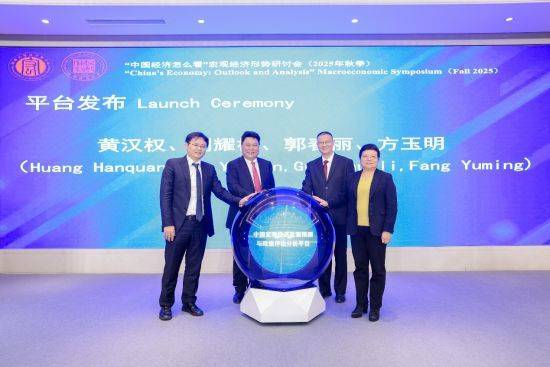
Core Viewpoint - The "China Economic Outlook" seminar highlighted the resilience and potential of China's economy amidst external uncertainties, emphasizing the importance of macroeconomic policies and structural optimization for achieving annual targets [1][2]. Group 1: Economic Performance and Policy Direction - The National Development and Reform Commission's Macro Economic Research Institute reported that China's economy has shown strong resilience and steady progress in 2023, maintaining stable growth despite rising external uncertainties [1]. - The seminar discussed the macroeconomic situation, fiscal policy orientation, technological innovation, regional economic development, foreign trade, and future policy focus, with experts agreeing that the 20th Central Committee's fourth plenary session has provided a blueprint for high-quality economic development [2][6]. Group 2: New Analytical Platform - The "China Macroeconomic Monitoring, Forecasting, and Policy Evaluation Analysis Platform" was launched to provide dynamic monitoring, trend forecasting, and policy effect evaluation, combining effective market mechanisms with proactive government involvement [4]. - The platform integrates data collection, modeling algorithms, and visualization features, marking a significant step towards intelligent macroeconomic analysis [4]. Group 3: Future Economic Strategy - Experts emphasized the need for a balanced approach to domestic economic work and international trade, advocating for stronger macroeconomic policies to stabilize market expectations and social confidence [6]. - There is a call to continue promoting technological innovation and industrial upgrading, optimizing regional economic layouts, and expanding high-level openness to solidify the recovery of the domestic economy [6].
全球科技竞争路线图:胜任者有力,自胜者强
Western Securities· 2025-10-30 08:03
Group 1: Global Technology Competition Scenarios - The global technology competition may unfold in three scenarios: 1) Benchmark scenario: strategic equilibrium is achieved globally, with China maintaining its manufacturing lead but facing challenges in complex technology fields[1] - 2) Optimistic scenario: China becomes the innovation leader, shifting the global innovation production center's geographic location[1] - 3) Pessimistic scenario: China's industrial upgrade progresses slower than expected[1] Group 2: Key Technologies and Innovations - Key technologies include frontier technologies such as AI, semiconductors, quantum computing, and biotechnology, as well as advanced manufacturing and critical infrastructure technologies[1] - In AI, the performance gap between Chinese and American models is narrowing, with the number of significant AI models in the U.S. at 40 compared to China's 15 in 2024[2] - In semiconductors, China's institutional advantages and large-scale market are expected to help local companies overcome technological barriers[2] Group 3: Economic and Policy Implications - The U.S. manufacturing sector is projected to gain 244,000 jobs in 2024 due to reshoring initiatives and foreign direct investment[2] - Risks include policy uncertainty, economic risks from demand weakness and inflation, and supply chain disruptions due to geopolitical factors[3] - The U.S. government is focusing on enhancing supply chain resilience and economic security through increased spending and subsidies[2] Group 4: Biotechnology and Healthcare - In biotechnology, both the U.S. and China show similar overall performance, with the U.S. excelling in gene engineering and vaccine research, while China leads in drug production due to large-scale public investment[2] - In 2023, the U.S. FDA approved 55 new drugs, with 3 from Chinese developers, while China's NMPA approved 87 drugs, including 5 innovative drugs[2]